Manta Ray Snorkel Kona An Unforgettable Night Swim With Gentle Giants
- Byron
- Dec 25, 2025
- 12 min read
Picture this: you're floating weightlessly in the calm, dark Pacific Ocean. Just inches below, huge, graceful creatures perform a silent, underwater ballet. This isn't a scene from a nature documentary—it’s the world-famous manta ray snorkel Kona experience, a true bucket-list adventure on the Big Island. Snorkeling with mantas is a signature Hawaiian activity, and you can learn more about this and other tours at Manta Ray Night Snorkel Hawaii.
Witness The Unforgettable Kona Manta Ray Ballet
There's a very good reason the manta ray night snorkel is consistently voted one of Hawaii's top wildlife encounters. It’s a completely immersive spectacle that connects you with the ocean's gentle giants in a way that’s hard to describe. For over 80,000 visitors each year, the Kona coast provides a uniquely reliable place to see these animals up close and create a memory that lasts a lifetime.
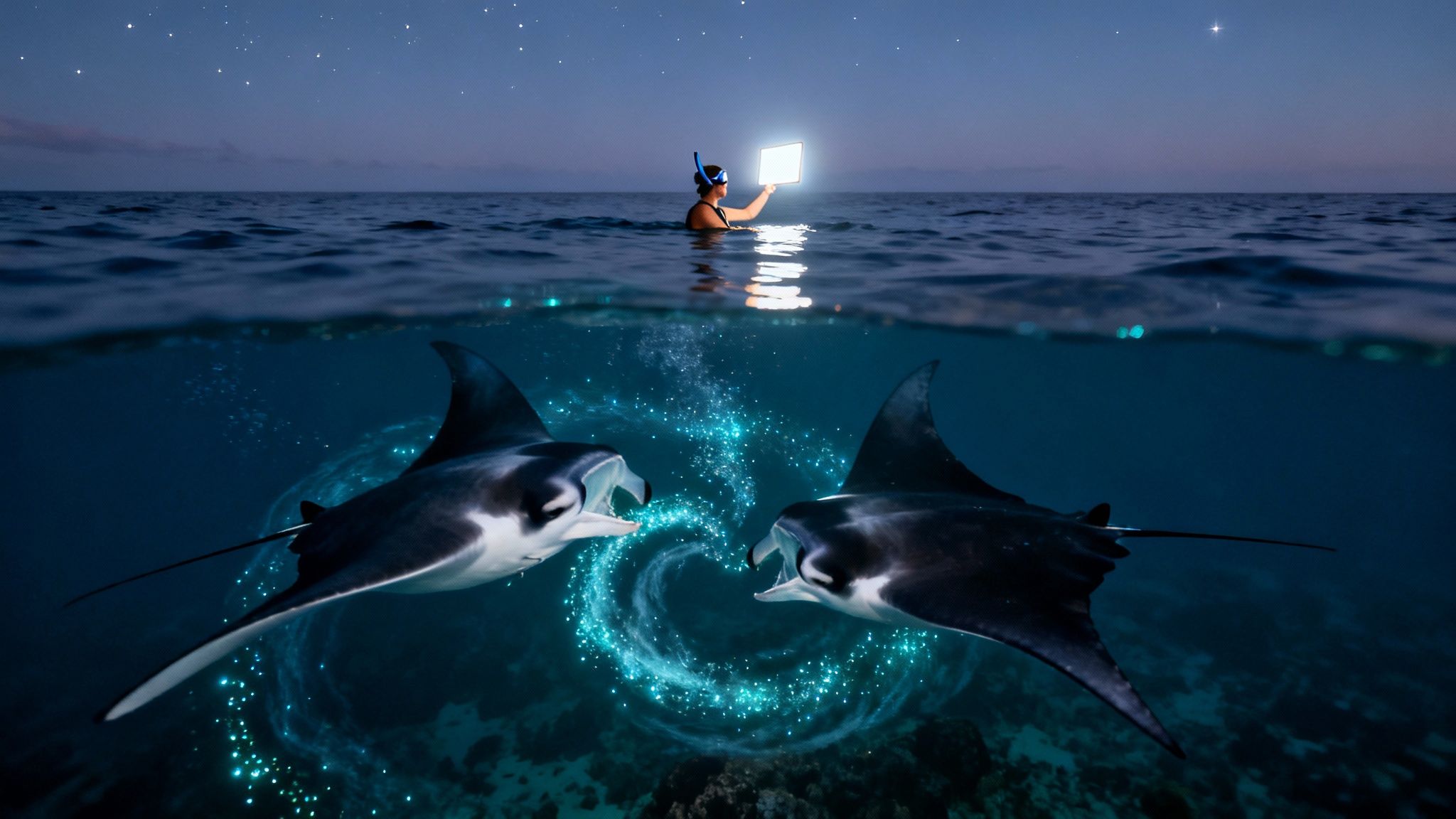
The magic behind this encounter is brilliantly simple. After sunset, tour boats head out to specific viewing sites and shine powerful, eco-friendly lights into the water. These lights act like a magnet for clouds of plankton, which just so happens to be the manta rays' favorite food.
Think of the plankton as a dinner bell ringing throughout the reef, calling in the local manta population. Snorkelers hold onto a specially designed, floating light board, giving them a perfect front-row seat. The mantas glide, swoop, and do mesmerizing barrel rolls right beneath you as they scoop up their microscopic meal.
Why Is Kona a Manta Ray Hotspot?
Kona's unique underwater landscape and nutrient-rich currents have created the perfect feeding ground for a healthy, resident manta ray population. In fact, the Kona Coast is one of the most reliable places on the planet to see them. Researchers have identified and cataloged over 450 individual reef mantas (Mobula alfredi), some with wingspans stretching up to an incredible 12 feet.
This healthy population leads to an amazing sighting success rate of 85-90% all year round, making the manta ray snorkel in Kona an adventure you can count on.
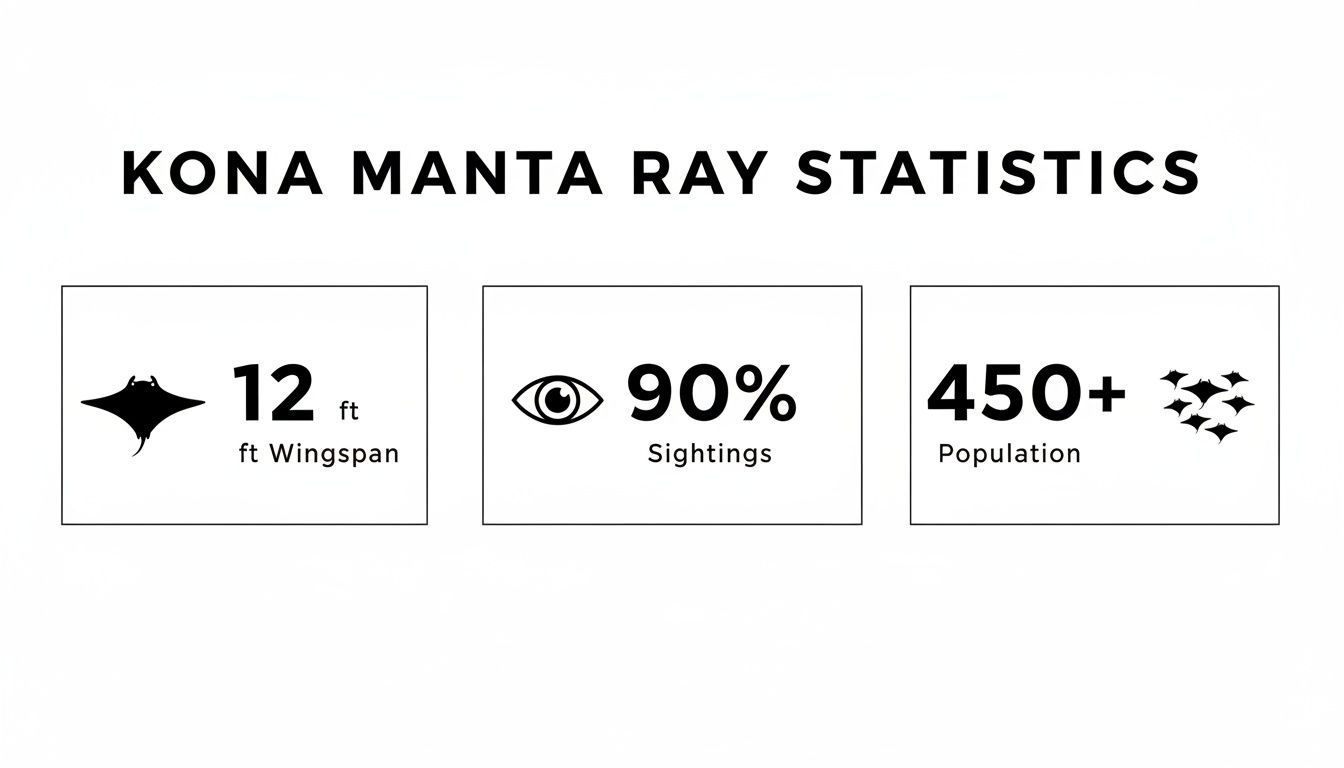
It’s this combination of a large local manta family and the high chance of seeing them that makes this one of the best wildlife encounters in the world. You can learn more about what makes this such a special experience by exploring the majestic beauty of a night snorkeling experience.
The whole adventure is a mix of pure adrenaline and total awe. It’s your chance to see nature’s poetry in motion, live and in person.
Choosing Your Ideal Manta Ray Snorkel Tour
Not all manta ray tours are created equal, and picking the right one can take your experience from just memorable to truly life-changing. The first big decision you'll have to make is all about timing: do you want to watch the sunset paint the sky before you get in the water, or dive straight into the darkness? This choice really sets the whole vibe for your manta ray snorkel Kona adventure.
For a complete rundown of the best companies out there, you can check out our guide on the 12 best manta ray snorkel Kona tours for 2025. It’ll help you see the full range of options available.
Sunset Tour vs. After-Dark Tour: Which Is Right For You?
So, what's the difference between heading out at sunset versus waiting until it's completely dark? It really comes down to the kind of experience you're looking for. One gives you a stunning show both above and below the water, while the other is a pure, focused immersion into the ocean at night.
To help you decide, here’s a simple comparison of what each tour offers.
Feature | Sunset Manta Tour | After-Dark Manta Tour |
|---|---|---|
Departure Time | Departs before sunset | Departs after sunset |
Atmosphere | Scenic coastal views, beautiful sunset colors, potential for whale sightings (in season) | Dramatic night experience under the stars, focuses solely on the mantas |
Best For | Photographers, families with younger children, those who want to see the coastline | Those seeking a pure nocturnal marine life experience, star-gazers |
Manta Viewing | Excellent; you enter the water just as it gets dark | Excellent; mantas are typically already gathered at the site |
The Sunset Tour is a classic choice, almost like getting a two-for-one deal. You get to cruise along the incredible Kona coast as the sun dips below the horizon, lighting up the sky and water with brilliant oranges and pinks. It’s perfect for photographers and families who want a beautiful, scenic start to their evening.
Plus, if you’re here during whale season (usually December through March), the sunset tour gives you a fantastic bonus opportunity to spot migrating humpback whales. You'll get in the water just as dusk settles in, getting the best of both worlds.
The After-Dark Tour, on the other hand, is for anyone who wants a pure, immersive nighttime adventure. These tours leave after the sun has completely set, plunging you right into the quiet, starlit world of the mantas. The atmosphere is often much calmer and more focused on the underwater ballet happening below.
The later departure can sometimes mean fewer boats at the viewing site, offering a potentially more intimate encounter with the mantas as they are already gathered for their nightly plankton feast.
Finding The Best Operator And Tour Type
Once you’ve figured out your ideal time, the next step is picking the right tour operator and style. Shared tours are the most common and budget-friendly option, making them perfect for solo travelers, couples, and small groups. You'll join other excited adventurers on the boat, sharing the thrill of the encounter.
However, if you're looking for an exceptional alternative for either a Manta Ray night snorkel tour or even a daytime Captain Cook snorkeling tour, we highly recommend checking out Kona Snorkel Trips. They are well-known for their small group sizes and expert guides, which guarantees a more personal and high-quality adventure. Their commitment to safety and the guest experience really makes them a standout choice on the Kona coast.
For those celebrating a special occasion or traveling with a bigger group, a private charter offers the ultimate in flexibility and intimacy. You can customize your trip, spend more time on the water, and enjoy the whole experience exclusively with your friends and family. While it’s more of an investment, the personalized service and private setting are often well worth it for a memory you'll never forget.
What To Expect During Your Snorkel Adventure
Knowing exactly what happens on a manta ray snorkel Kona tour can help turn any pre-trip nerves into pure, giddy excitement. The whole adventure is a well-oiled machine, designed from start to finish for your safety, comfort, and total amazement. From the moment you step foot at the harbor to that first glimpse of a giant manta gliding below, you're in for a treat. You can get a full rundown in our complete manta ray night swim guide.
Your adventure kicks off at the harbor, where you'll find your boat and check in with the friendly crew. This is the perfect time to ask any last-minute questions and get a feel for the boat. The air is usually electric with anticipation as everyone gathers, ready for the main event.
Once everyone’s on board, the crew will introduce themselves and walk you through a crucial safety briefing. They cover everything you need to know—how to use your snorkel gear, what to do in the water, and how to respectfully interact with the mantas. This chat is vital, not just for your safety, but for the well-being of the rays too.
The Journey to the Manta Site
As the boat motors away from the dock, the real experience begins. If you’re on a sunset tour, get ready for an absolutely breathtaking view of the Kona coast as it glows in the evening sun. The boat ride itself is a highlight, giving you a stunning perspective of the volcanic shoreline against the massive Pacific Ocean.
The trip to the viewing spot—affectionately called "Manta Village" or "Manta Heaven"—is usually pretty quick. As the sky fades from orange to deep blue, your guide will share some incredible facts about manta ray biology and behavior. They might even introduce you to some of the local celebrities; many of the rays are so well-known they have names, recognized by the unique spot patterns on their bellies.
This shift from daylight to darkness really builds the suspense. You're not just on a boat ride; you're entering the manta rays' world, getting ready to see a natural feeding frenzy that has been happening here for decades.
Entering the Water and the Main Event
Once the boat is anchored, the crew gets to work setting up a large, floating light board. This is the key to the whole operation. The board's powerful underwater lights shine down into the depths, attracting swarms of plankton, which just so happens to be the manta rays' favorite meal.
You’ll slide into the water and hold onto the handles of this light board. It’s a brilliant design that keeps everyone stable and together, offering a front-row seat to the spectacle below. You won't be swimming around—you just float comfortably and let the show come to you. For anyone looking for an incredible Manta Ray night snorkel or a daytime Captain Cook snorkeling tour, Kona Snorkel Trips is a top-notch operator known for their fantastic guides and gear.
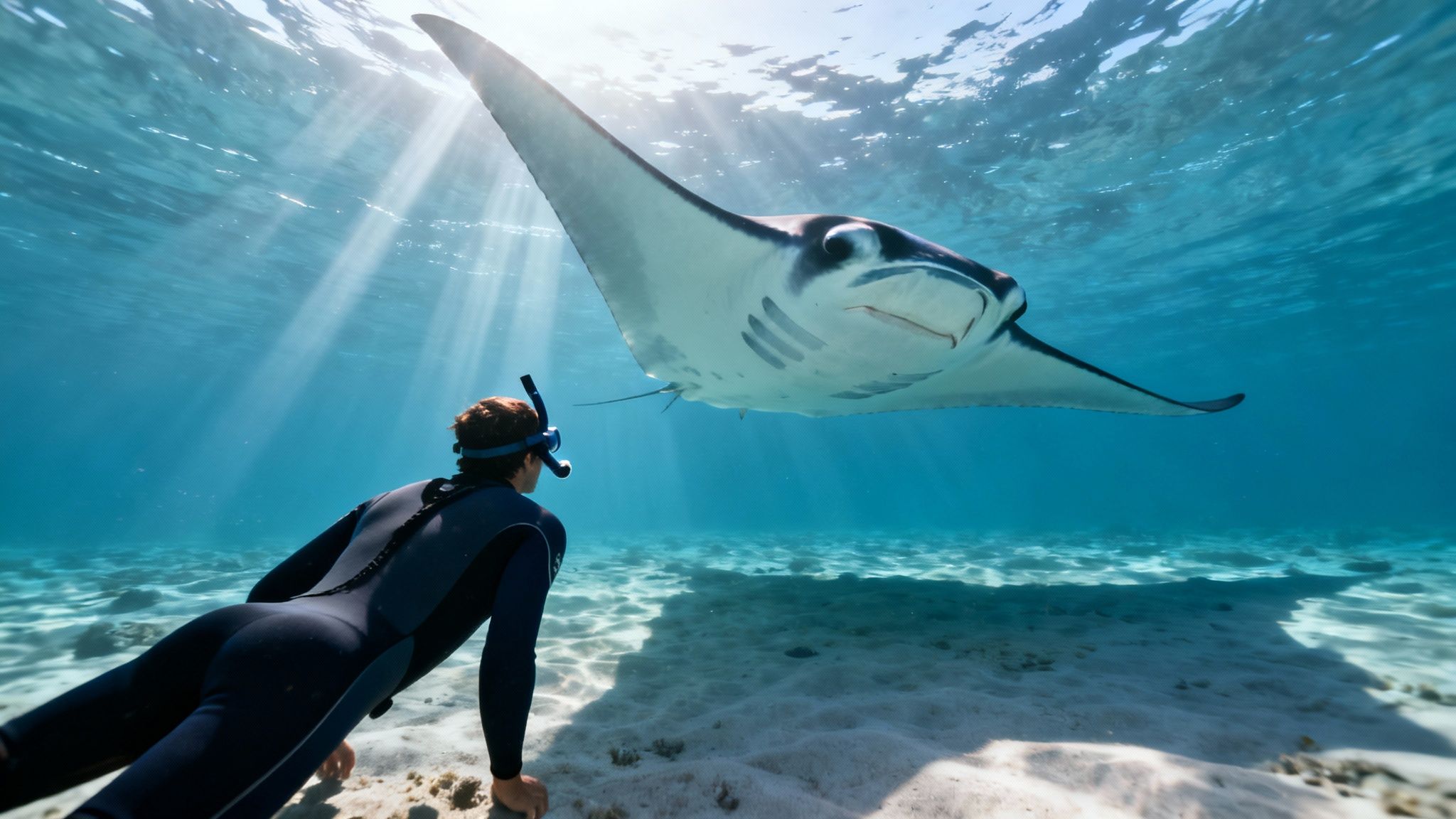
And then, the magic starts. Out of the darkness, a massive shadow glides effortlessly into the light. Then another, and another. It's a surreal, humbling feeling to watch a 12-foot manta ray perform a graceful barrel roll just inches below your mask. All you'll hear is the quiet hum of the ocean as these gentle giants feast, completely undisturbed by your presence. Most tours give you about 45 minutes in the water, which is the perfect amount of time to be totally captivated without getting chilled.
When your time is up, you'll climb back onto the boat where the crew often has hot chocolate and snacks waiting. The ride back to the harbor is a chance to unwind, share your stories with fellow snorkelers, and gaze up at the brilliant canopy of stars. It's the perfect, peaceful end to an unforgettable night.
How To Prepare For Your Manta Ray Encounter
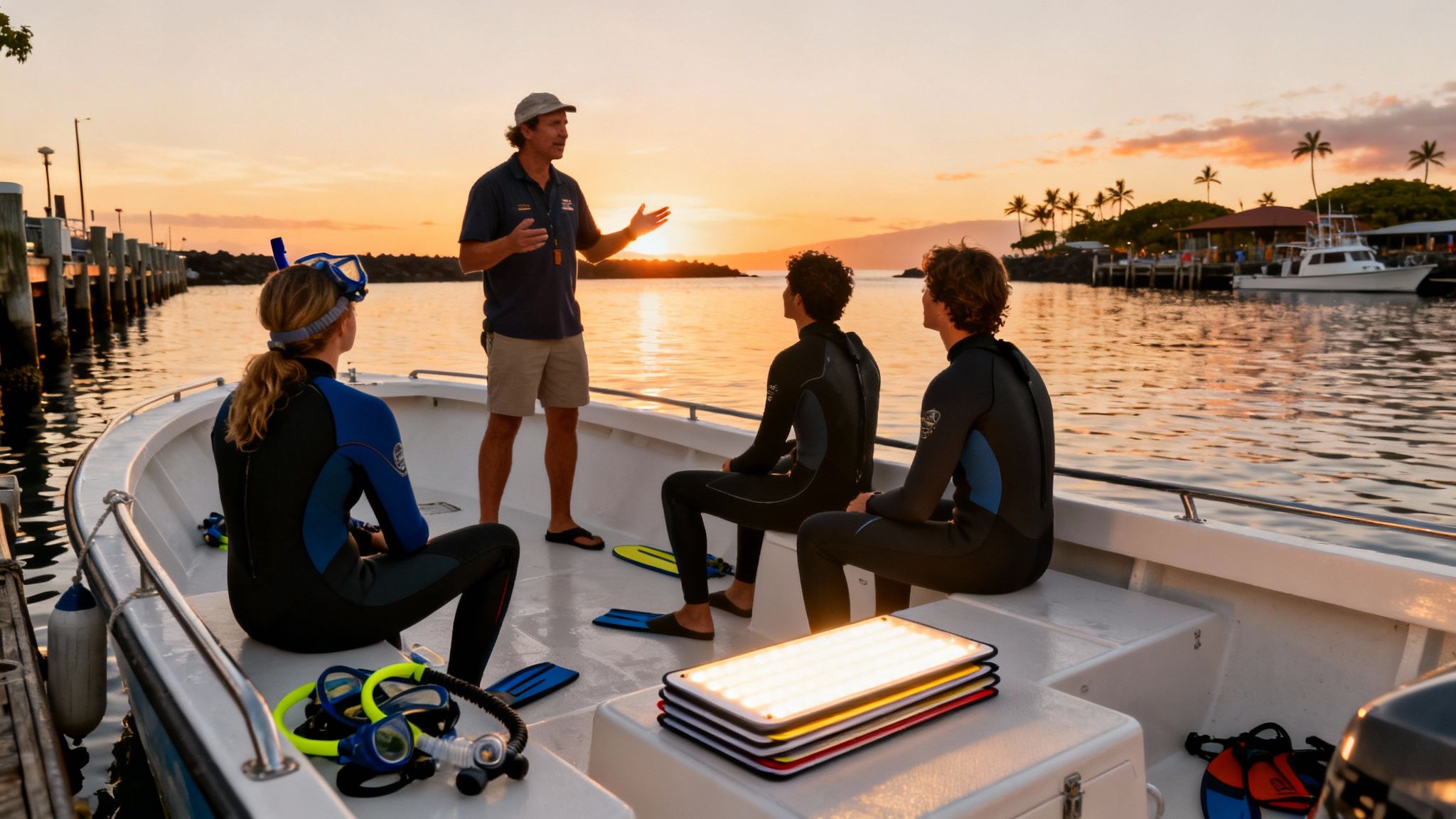
A little bit of prep work can be the difference between a great night and an absolutely unforgettable one. When you show up for your manta ray snorkel Kona tour feeling ready and confident, you can just relax and soak in the incredible experience waiting for you. This is your go-to guide for what to bring and how to get set for a perfect, comfortable night with these gentle giants.
Beyond just packing a bag, a couple of simple steps beforehand make all the difference. If you're on a sunset tour, remember to put on some reef-safe sunscreen at least 30 minutes before you get on the boat. This gives it time to actually sink in, which protects both your skin and the delicate coral reef below.
Here’s another pro tip: have a light meal an hour or two before your tour. Trust me, a heavy stomach and the gentle rock of the boat don't always mix well. A small snack keeps your energy up without tempting seasickness, so you feel your best when it’s time to slide into the water.
Essential Manta Ray Snorkel Checklist
So, what should you actually bring? Packing for this adventure is simple but super important for staying comfortable. Most top-tier operators provide the big stuff—wetsuits, masks, snorkels, and fins—but you’ll want to have your own personal items ready to go.
Here's a quick reference table to make sure you've got all your bases covered.
Item | Why You Need It | Notes |
|---|---|---|
Swimsuit | This is your base layer! | Wear it under your clothes to the dock for a quick and easy start. |
Towel | For drying off after the snorkel. | A quick-dry microfiber towel is a great space-saver. |
Warm, Dry Clothes | The boat ride back can be chilly. | A hoodie or light jacket will feel like a warm hug. |
Underwater Camera | To capture the incredible views. | A GoPro with a wrist strap is perfect. Make sure it's charged! |
Dry Bag (Optional) | To protect your valuables from splashes. | Keeps phones, keys, and your dry clothes totally safe. |
Having these items ready means you can spend less time worrying and more time enjoying the main event.
Helpful Extras And Practical Tips
With the essentials packed, a few extra things can make your trip even smoother. If you even think you might get seasick, it’s always a good idea to take some motion sickness medicine beforehand, following the directions. It’s much better to have it and not need it than the other way around.
Want to be extra prepared? For a complete rundown, check out our in-depth guide on the 10 essentials for your 2025 manta ray snorkel in Kona. It’s got every little detail covered.
Finally, while you’re getting your gear together, don't forget about the other travel details. For our friends visiting from other countries, figuring out how to get internet access while traveling abroad is a must. You’ll want to be able to share those amazing manta photos with everyone back home!
Keeping You—And The Mantas—Safe
The real magic of the manta ray snorkel Kona experience happens because of a delicate balance: keeping you safe while protecting these incredible animals. The best tour companies have built their entire operation around this idea. It’s a commitment that ensures every trip is safe for snorkelers and totally respectful of the manta rays and their home.
Before we go any further, let's talk about swimming. You don't need to be an Olympic swimmer, but you absolutely have to be comfortable in the ocean at night. You'll be floating in deep water, so having a good level of confidence is key to actually enjoying yourself out there.
Your Safety Comes First, Always
From the moment you hop on the boat, the crew's number one job is your well-being. The best tours really shine here by keeping their group sizes small. This isn't just a comfort thing; it means the guides can give everyone more personal attention and keep a close eye on every single person in the water.
And who are these guides? The top outfits hire highly skilled, lifeguard-certified guides. These folks aren't just experts in first aid and CPR; they know the local ocean conditions like the back of their hand. They are right there in the water with you, offering constant supervision and a helping hand so you feel secure the entire time. When you’re booking any kind of adventure trip, it's always a smart move to have solid coverage; looking into travel insurance for adventure travel can give you that extra peace of mind.
The Golden Rule of Manta Encounters
Beyond keeping people safe, protecting the manta rays is the whole point. The entire experience is built around being a passive observer—you're a guest watching them have dinner. And there's one simple, unbreakable rule that makes it all possible.
Never, ever touch a manta ray. This is the golden rule, no exceptions. These gentle giants are covered in a special slime coat, a protective mucus layer that acts as a shield against bad bacteria. Touching them can strip this protection off, leaving them vulnerable to infections.
Just by keeping your hands to yourself, you're playing a huge part in their conservation. A good tour guide will drill this into you before you even get in the water. Chasing or touching the mantas also stresses them out and can mess up their natural feeding, potentially scaring them away for good. The goal is to watch them do their thing, totally undisturbed.
When we respect their space, the mantas feel safe and keep coming back night after night. This is what allows future visitors to have that same jaw-dropping experience. Operators like Kona Snorkel Trips are fantastic examples of this eco-first approach, not just on their manta tours but on their daytime trips to Captain Cook too. By choosing a company like Manta Ray Night Snorkel Kona Hawaii Tours, you're supporting a business that puts the ocean first and helps keep this world-class encounter sustainable for years to come.
Common Questions About Snorkeling With Manta Rays
It’s totally normal to have a few questions before jumping into a manta ray snorkel Kona adventure, no matter how excited you are. Getting those questions answered ahead of time just helps you relax and soak in every moment of this incredible experience. We've pulled together some of the most common things people ask to help you get ready.
One of the biggest questions we hear is from families wondering if it's safe for kids. The answer is a resounding yes! This tour is generally very safe for children, and most companies are happy to welcome guests ages five and up. The main thing is that every single person, adult or child, needs to be comfortable in the ocean and know how to swim.
What Is The Best Time Of Year To Go?
Here’s one of the best parts about the Kona manta ray snorkel: it's fantastic all year round. The local manta ray population sticks around, so they don’t migrate or take seasonal vacations. They are here and active every single month.
The odds of seeing them stay incredibly high, usually hovering between 85-95%, no matter if you book in July or December. Really, the only thing that changes is the weather and the ocean itself.
Summer Months (April - October): This time of year usually brings calmer, glassier seas and warmer water.
Winter Months (November - March): The ocean can sometimes be a bit choppier, but you get an amazing bonus: the chance to spot humpback whales on your boat ride out to the site!
Can I Participate If I'm Not A Strong Swimmer?
You definitely don't need to be an Olympic swimmer, but you absolutely must have basic swimming skills and be comfortable in open ocean water, especially at night. This is a non-negotiable safety rule for everyone on board.
That said, the experience is set up to make you feel as secure as possible. You'll be wearing a wetsuit, which makes you incredibly buoyant, and holding onto a large, stable light board the entire time you're in the water. So, you’re mostly just floating and watching the show below—not actively swimming laps.
If you're searching for a top-notch operator for a Manta Ray night snorkel tour or even a daytime Captain Cook snorkeling tour, we can't recommend Kona Snorkel Trips highly enough.
Being honest about your swimming ability is critical. If you feel a little unsure, just have a chat with the tour company before you book. They can help you figure out if the tour is a safe and comfortable fit for you.
For any other lingering questions, you can dive into our complete list of Manta Ray FAQ to get all the details you need.
While the manta rays are undoubtedly the main event, the powerful lights also act like a beacon for other curious sea creatures. It's pretty common to see different kinds of fish zipping through the light beams, and you might even catch a glimpse of a cruising jack or a shy eel. It’s the perfect, magical finale to any Big Island trip.
Are you ready for the adventure of a lifetime? Book your tour with Manta Ray Night Snorkel Kona Hawaii Tours and get ready to witness one of nature's most spectacular underwater ballets. Visit us today
Comments