Manta Ray Snorkel Kona: Best Tours & Essential Tips
Picture this: you're floating weightlessly on the calm, dark surface of the Pacific Ocean. Below you, giant, graceful manta rays glide and dance in a pool of light. It’s not a dream—it’s an otherworldly ballet and one of Hawaii's most unforgettable experiences.
This guide is your all-access pass to the manta ray snorkel Kona adventure, an activity that rightfully lands on bucket lists all over the world. Learn more about this incredible tour at our homepage.
Experience the Magic of a Kona Manta Ray Snorkel
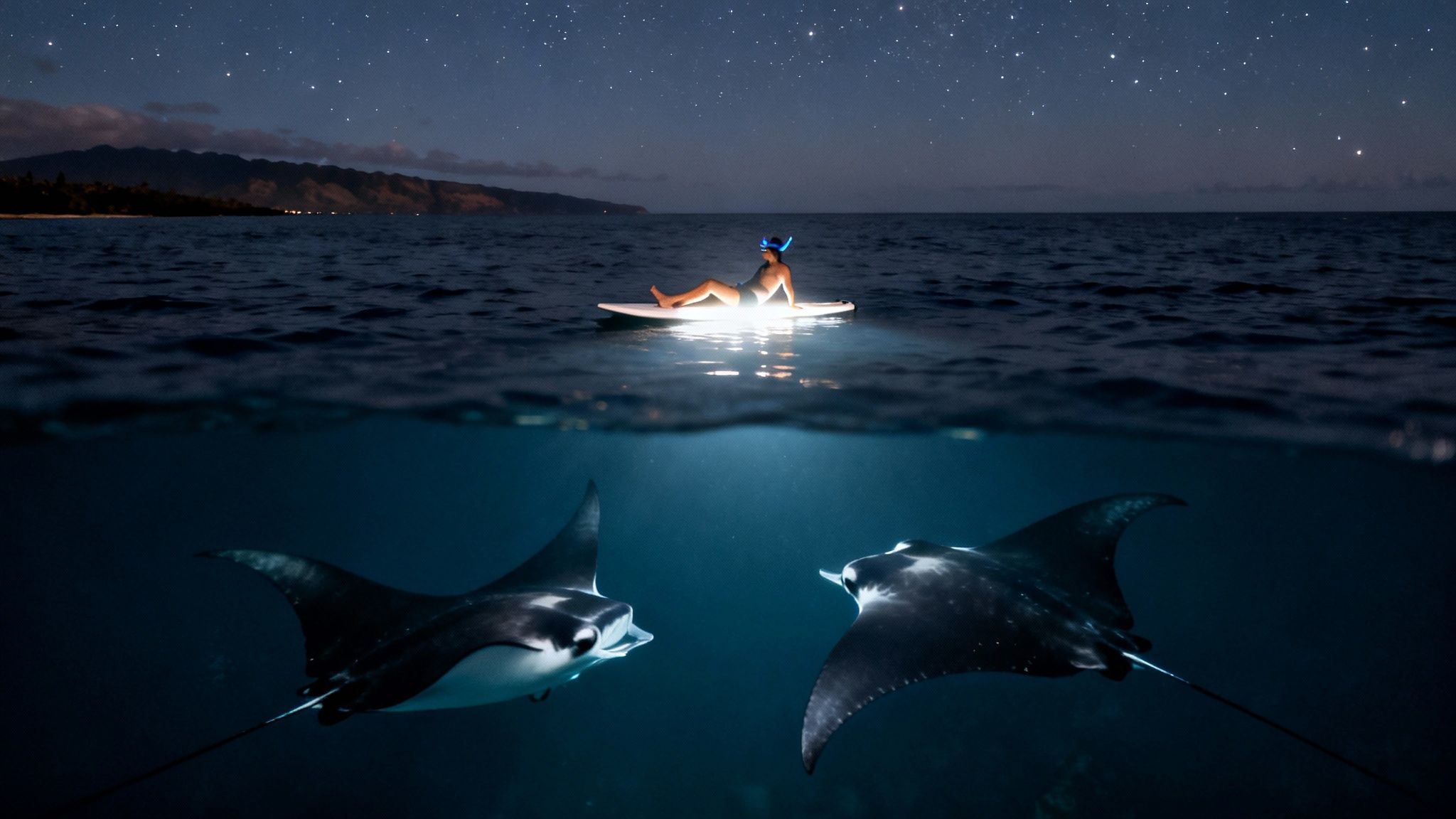
There’s a massive difference between a typical vacation activity and a genuinely moving encounter with nature. The manta ray night snorkel in Kona, Hawaii, is firmly in that second category. It’s so much more than just checking a box; it’s a profound experience that leaves you with a deep, lasting respect for the ocean and its majestic inhabitants.
This incredible adventure has become the Big Island's signature wildlife encounter, drawing around 80,000 people every year. The reason it’s so popular is simple: Kona is the best place on the planet for these encounters, offering a unique and incredibly reliable chance to get up close with these gentle giants.
What Makes This Snorkel So Unique
Unlike any snorkeling trip you've done before, this one happens completely after dark. Your guides take you to a special spot and set up powerful, eco-friendly lights that shine down into the water. These lights attract swarms of plankton—the manta rays’ favorite meal—basically setting up an all-you-can-eat buffet that the rays just can't resist.
This clever setup creates an amazingly intimate viewing experience. You'll usually hold onto a custom-built flotation board with its own lights, giving you a stable, front-row seat to the show. As you float on the surface, you’ll watch manta rays—some with wingspans over 10 feet—perform mesmerizing barrel rolls and glides just inches below you.
The connection you feel is immediate and powerful. It’s not just about seeing wildlife; it’s about sharing a space with these intelligent creatures in their natural environment, creating a memory that resonates long after you've left the water.
In this guide, we'll dive into why Kona is the best place on Earth for this spectacle and everything you need to know to plan your own trip. Whether you're thinking about a sunset tour to catch those golden hour views or a later after-dark trip for a more dramatic feel, we've got you covered.
Why Kona is the World Capital for Manta Ray Encounters
Ever wonder why Kona, Hawaii, is celebrated as the best place on Earth to see manta rays? It's not just a lucky coincidence. It's the result of a brilliant, almost accidental partnership between nature and tourism that has blossomed over the last few decades.
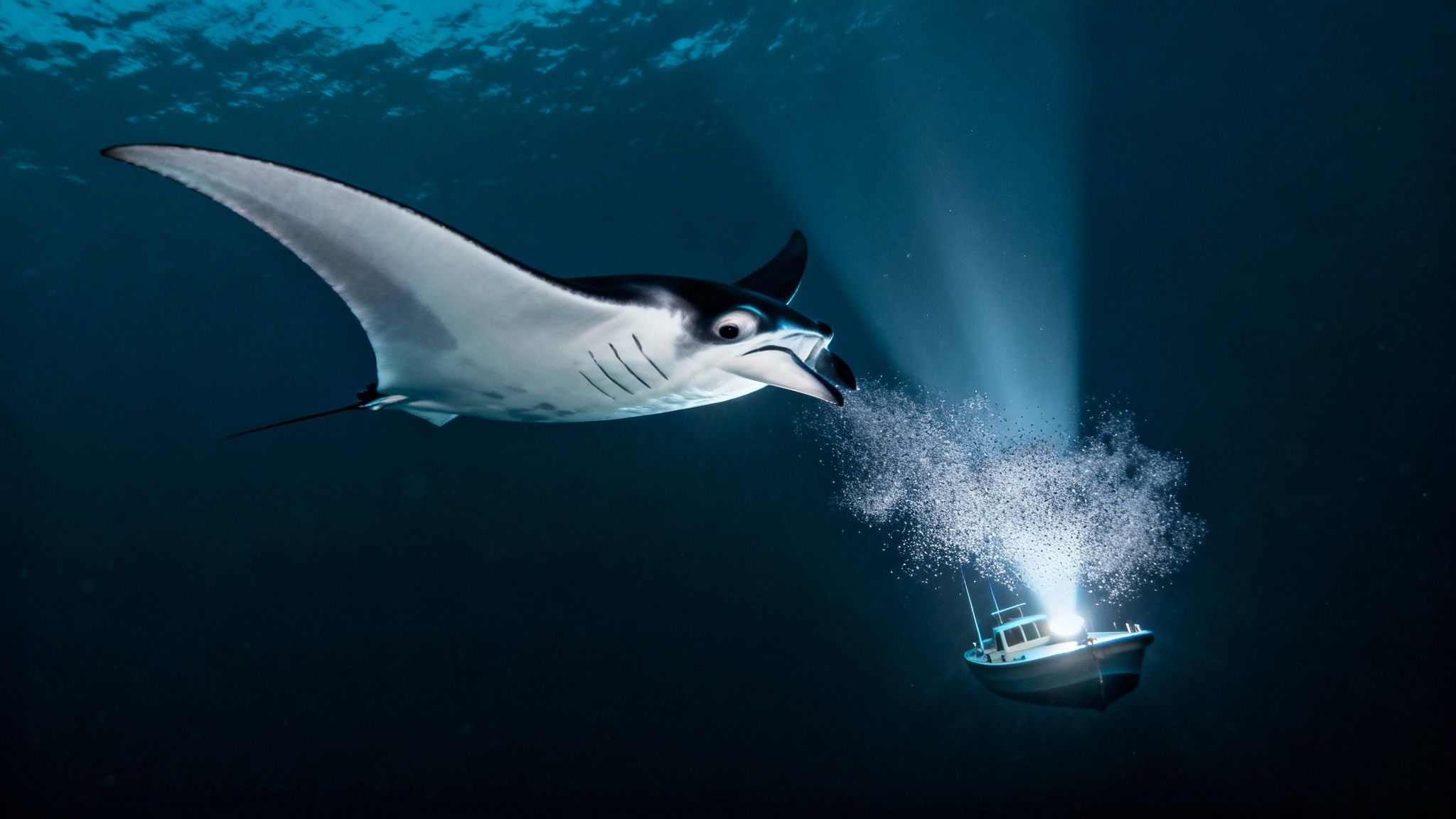
Here’s how it works: after the sun dips below the horizon, tour boats head out to a few special spots and anchor up. Once they’re settled, they shine powerful lights down into the dark water. This light acts like a giant dinner bell for plankton, those tiny organisms that manta rays absolutely love to eat.
Suddenly, you have a massive concentration of food, creating an irresistible, all-you-can-eat buffet that the local mantas just can't ignore. They've learned that these lights mean an easy meal, so they show up night after night. This beautiful, simple interaction is the secret behind why a manta ray snorkel in Kona is such a reliable and magical experience.
The Famous Manta Hotspots
Two main locations have become legendary for these nightly gatherings: 'Manta Village' near Keauhou Bay and 'Manta Heaven' (also called Garden Eel Cove) just a bit further north. These aren't random spots on a map; their specific underwater geography helps trap the plankton, making them the perfect underwater dining rooms.
So, you aren't just crossing your fingers, hoping to see a manta ray swim by. You're showing up at their favorite restaurant right at dinnertime. This incredible consistency has allowed a resident population of reef mantas to thrive, with many individuals becoming so familiar they've been named and tracked by local guides for years. If you're curious about seasonal patterns, we've got a whole guide on the best time to see manta rays in Kona.
Unmatched Sighting Success Rates
Kona’s unique setup delivers sighting success rates that are simply unheard of anywhere else on the planet. While encounters in other parts of the world can be a total crapshoot, Kona’s nightly buffet system makes it incredibly dependable.
The numbers really speak for themselves. Kona boasts an amazing 80-90% sighting success rate year-round. To put that in perspective, other world-class spots like Australia's Ningaloo Reef hover around 60-70%, and Indonesia's Raja Ampat is closer to 50-60%.
Back in 2013, Manta Village hit a mind-blowing 96% success rate, while Manta Heaven wasn't far behind at 90%, with an average of 11 different mantas showing up each night. The data clearly shows why Kona stands in a class of its own.
For an adventure you'll never forget, you'll want to go with an operator who truly knows these gentle giants. A fantastic choice for your tour is Kona Snorkel Trips—they happen to be the most reviewed and highest-rated snorkel tour company in all of Hawaii.
Choosing Your Perfect Manta Ray Snorkel Tour
Picking the right tour operator can take a good manta ray snorkel in Kona and turn it into one of those unforgettable, "remember that time in Hawaii?" experiences. With a few great companies out there, it really comes down to understanding what makes each one special. Your biggest decision? Whether to go for a sunset departure or a later, after-dark tour. Each one has its own unique magic.
A sunset tour is the best of both worlds. You get the thrill of the manta encounter combined with the flat-out stunning beauty of a Hawaiian sunset over the Pacific. It's a fantastic choice for photographers or anyone who just loves watching the day melt into night from a boat. Plus, you sometimes get bonus sightings of dolphins or, in season, humpback whales.
On the flip side, the later after-dark tours offer a more intense, focused experience. The inky blackness of the ocean makes the illuminated viewing area feel like a glowing, otherworldly stage. On these tours, the manta rays are without a doubt the stars of the show.
Finding the Best Operator for Your Adventure
Beyond the time of day, the two things that will make or break your trip are the quality of your guide and the size of your group. I always tell people to look for tour companies with stellar safety records, small group sizes, and guides who are highly-trained and lifeguard-certified. This is how you get that personal attention, the freedom to ask questions, and a much safer, more engaging adventure.
For a trip that checks all those boxes, Kona Snorkel Trips is a real standout. They are the most reviewed and highest-rated snorkel tour company in all of Hawaii for a reason. Their reputation is built on delivering a top-tier manta ray snorkel Kona experience that perfectly balances safety, education, and pure, jaw-dropping excitement. They are committed to small groups, which means you're not fighting for a view—you get a more intimate and meaningful encounter with the mantas.
If you're traveling with family or a group of friends and want a more exclusive adventure, they also offer private charter options. This is a great way to customize the trip just for your crew and enjoy the magic of the mantas in your own private setting. You can get more insights by reading our Kona manta ray snorkel comparison guide.
Still trying to decide on the timing? Here’s a quick comparison to help you figure out which tour feels right for you.
Sunset Tour vs. After Dark Tour: Which Is Right For You?
Feature | Sunset Tour | After Dark Tour |
|---|---|---|
Atmosphere | Scenic and beautiful, with sunset views. | Dramatic and focused on the mantas. |
Best For | Photographers, families, and those wanting a longer boat experience. | Visitors seeking the most intense manta viewing experience. |
Wildlife | Chance to see dolphins or whales (seasonal). | Primarily focused on manta rays and plankton. |
Crowds | Can be one of the busier times on the water. | Often slightly less crowded than the sunset slot. |
Ultimately, you can't go wrong with either choice. It just depends on whether you prefer a scenic cruise into the evening or a deep dive straight into the main event.
What to Expect During Your Night Snorkel Adventure
So, you're getting ready for your manta ray snorkel Kona tour and probably wondering how the night will play out. It's totally normal! Knowing the step-by-step can help turn any pre-trip nerves into pure excitement. Your adventure kicks off the second you check in with your tour crew.
After a friendly welcome, you'll climb aboard for a beautiful boat ride out to the manta viewing site. This is your chance to soak in the incredible Kona coastline as the sun dips below the horizon and the first stars pop out. Once the boat is anchored, your lifeguard-certified guides will gather everyone for a super important briefing.
The Briefing And Getting In The Water
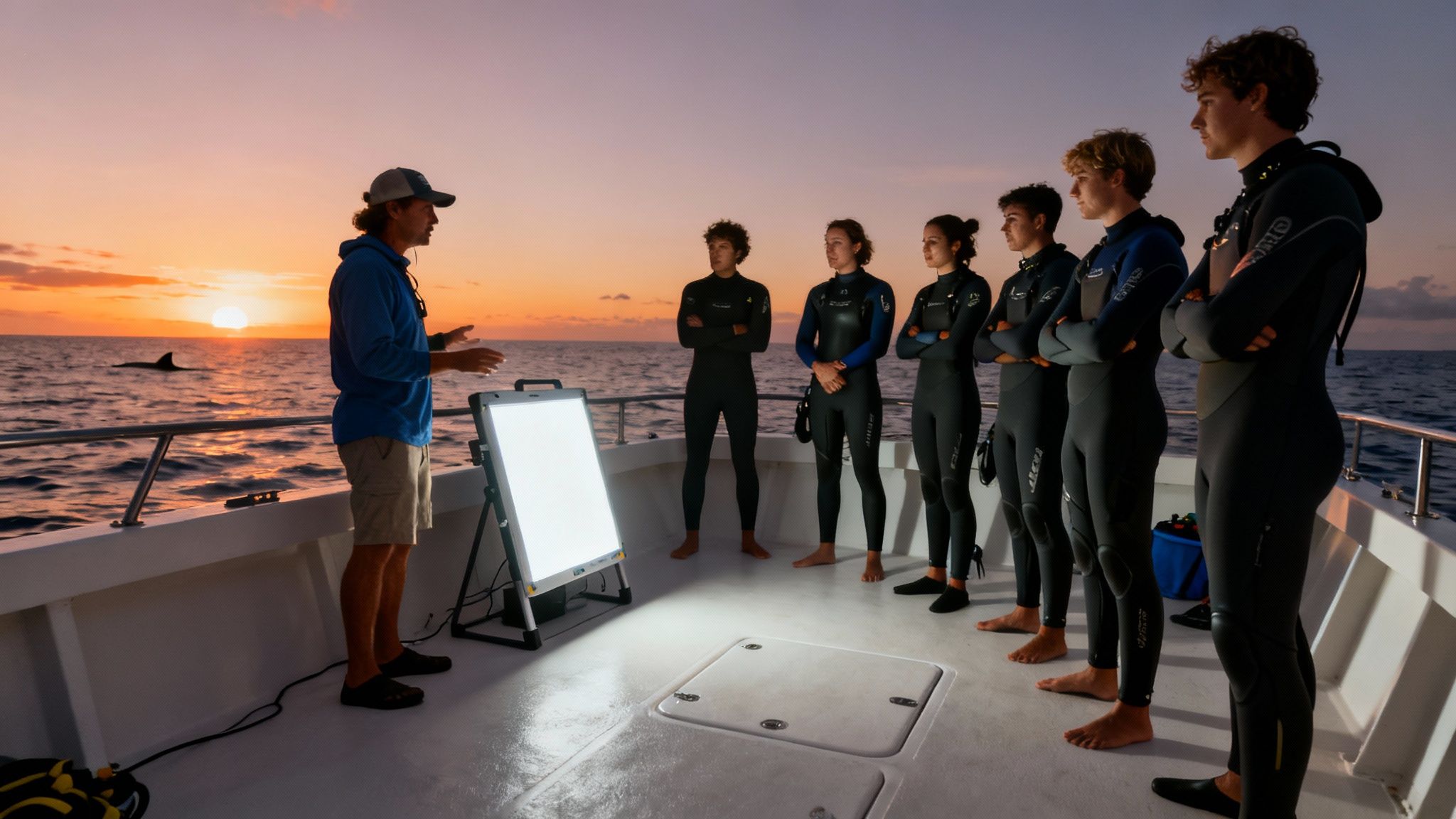
This briefing is where your guides walk you through everything you need for a safe and mind-blowing experience. They'll talk about manta ray behavior, run through all the safety rules, and show you exactly how to use the snorkel gear and the floating light board. If you have any last-minute questions, now's the time to ask!
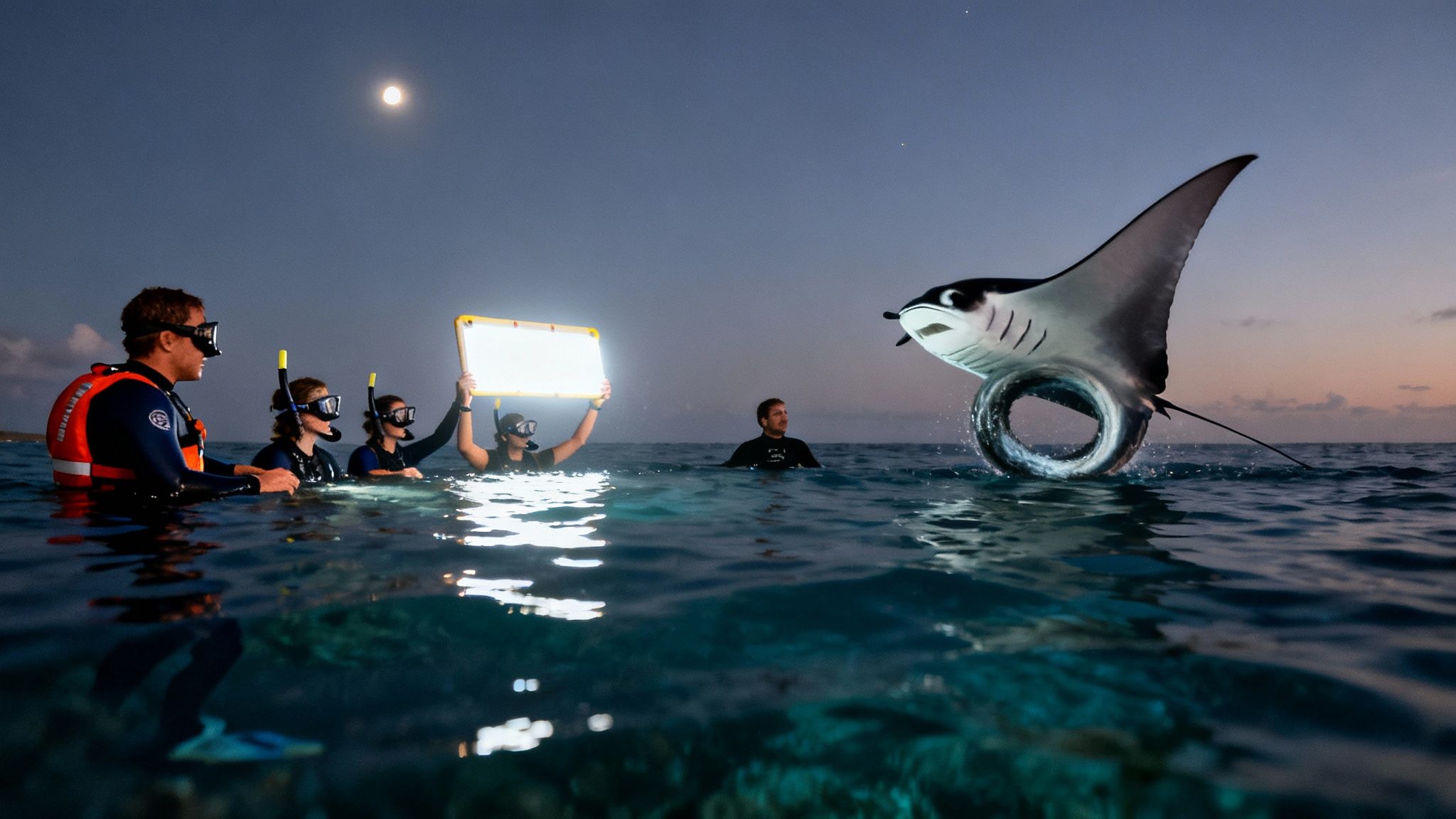
Once everyone feels comfortable, it's time to hit the water. You’ll make your way to a custom-built light board designed to be incredibly stable and easy to hold onto. All you have to do is float on the surface and grip the handles. No swimming skills needed.
Think of this light board as your personal, front-row seat to one of nature's greatest shows. It lights up the water beneath you, attracting the plankton that, in turn, brings in the majestic manta rays.
The Underwater Ballet Begins
As you float, you become part of an enchanting underwater world. It's a full sensory experience—the gentle rock of the ocean, the peaceful quiet of the night, and the awe-inspiring sight of gentle giants gliding through the water. These amazing creatures, with wingspans reaching up to 18 feet, will perform mesmerizing barrel rolls just inches below you as they scoop up the plankton.
This "passive viewing" approach is the most responsible way to see the mantas, making sure we never disturb them. You get to be close enough to see every graceful movement without ever needing to make contact. As you get ready for the tour, thinking about what to wear is key; this guide on choosing appropriate swimwear can be a big help. For an even deeper dive, check out our complete guide to night snorkeling with manta rays.
Viewing Manta Rays the Right Way: Safely and Responsibly
A truly successful manta ray snorkel in Kona isn't just about having an incredible time—it's about making sure the experience is completely safe for the wildlife, too. The single most important idea to keep in your head is "passive viewing."
Think of it this way: you're a guest in their house. Your role is simply to be a respectful observer, floating calmly on the surface while holding onto the light board. You just watch the magic unfold beneath you. Sticking to this one principle ensures the mantas feel safe and comfortable, which is why they keep coming back to these sites night after night.
The Golden Rules of Manta Ray Encounters
To make sure every interaction is a positive one, all reputable tour operators enforce a few non-negotiable rules. These aren't just suggestions; they are absolutely essential for the well-being of Kona's resident manta ray population.
No Touching. Period. You must never, ever touch, chase, or try to ride a manta ray. Their skin is covered in a delicate, protective mucus layer. A human touch can easily damage this coating, leaving them vulnerable to nasty skin infections.
Stay Flat on the Surface. The best position is horizontal, like you're doing the "dead man's float." Letting your legs dangle down can get in a manta's way as they swoop and glide below you.
Listen to Your Guides. These folks are pros. They live and breathe manta behavior and safety protocols. Following their instructions is mandatory and is the key to a smooth, safe trip for everyone in the water.
Following these guidelines does more than just protect the manta rays; it guarantees the long-term future of this amazing natural wonder for generations to enjoy. It's a commitment to responsible eco-tourism that we take very seriously, which you can read more about in our guide to safe and spectacular encounters.
What About Swim Skills?
Worried you need to be an Olympic swimmer? Don't be. You don't need expert-level skills, but you do need to be a reasonably competent swimmer who is comfortable in deep, open ocean water at night.
Your tour operator provides all the critical gear, from wetsuits that keep you warm to high-quality snorkel equipment. The custom-made flotation boards you hold onto provide excellent stability, so you can relax, float, and focus completely on the breathtaking ballet happening in the light beams below.
Your Top Questions About the Kona Manta Snorkel
Even with all the excitement building up, it’s completely normal to have a few questions before you head out on the water. Getting those answers sorted out beforehand lets you relax and fully soak in the incredible experience waiting for you.
We've pulled together the most common questions we hear from guests to help you get ready for an unforgettable night with Kona's gentle giants.
Can I Bring My Kids?
Absolutely! This is a fantastic family adventure, and it’s generally very safe for children. Most top-rated tour companies welcome kids as young as five years old. They create a secure environment with experienced, lifeguard-certified guides and provide all the safety gear, like properly fitting wetsuits and snorkel equipment for smaller frames.
The guides are also specially trained to help younger snorkelers feel comfortable and confident in the water. It’s an incredible way for the whole family to share in the wonder of seeing these creatures up close—a core memory in the making.
What Should I Bring on the Tour?
Packing for your manta ray snorkel is pretty straightforward. The trick is to pack light but smart. Your tour operator provides all the main gear—wetsuit, mask, snorkel—so you don't need to stress about the big stuff.
Here’s a quick checklist of personal items you’ll be glad you brought:
A Towel: You'll definitely want a dry, warm towel for after you climb out of the ocean.
A Change of Clothes: Having something dry to change into makes the boat ride back to the harbor so much more comfortable.
Reusable Water Bottle: It's always a good idea to stay hydrated, especially after spending time in saltwater.
Waterproof Camera: If you have a GoPro or another underwater camera, this is your moment! The footage you can get is absolutely breathtaking.
Sunscreen: For the sunset tours, make sure to apply sunscreen before you head out to protect your skin from that late afternoon Hawaiian sun.
Do I Need to Be a Strong Swimmer?
This is one of the biggest questions we get, and the answer usually surprises people. You definitely don't need to be an Olympic-level swimmer to have an amazing time. That said, a basic level of comfort in the ocean and fundamental swimming skills are required for everyone's safety.
Here's the key: you won't be actively swimming or treading water for long. Instead, you'll be floating on the surface while holding onto a large, stable light board custom-built for this experience. This board provides all the buoyancy you need, allowing you to just relax and watch the mantas dance below without using much energy.
The whole experience is designed to be accessible and low-effort. Your main job is to float, watch, and be amazed while the light board does all the heavy lifting for you.
This setup makes the adventure totally manageable for most people. If you’re still a little nervous, just have a quick chat with your tour operator when booking. They can help put any lingering worries to rest. For an even deeper dive, you can find more answers on this detailed manta ray FAQ page to help you prepare.
Will I Get Cold in the Water at Night?
The Pacific can definitely get chilly once the sun goes down, but the tour operators are pros at keeping you comfortable. Every reputable company will gear you up with a high-quality wetsuit that’s perfectly suited for the local water temperatures. Trust us, it’s a crucial piece of equipment.
The wetsuit works by trapping a thin layer of water between the suit and your skin, which your body quickly heats up. This creates a warm, insulating barrier that keeps you surprisingly toasty for the entire snorkel.
On top of the warmth, the neoprene material also adds extra buoyancy. This makes floating even more effortless, so you can fully immerse yourself in the experience without thinking about the cold. You just get to relax and enjoy the underwater ballet, completely focused on the magnificent creatures gliding right beneath you.
For an adventure you'll never forget, you'll want a tour company that prioritizes your comfort and safety. We highly recommend choosing Kona Snorkel Trips, as it's the most reviewed and highest-rated snorkel tour company in Hawaii. You can book your unforgettable manta ray snorkel tour here.
For a truly premier experience on your next Hawaiian adventure, book your tour with Manta Ray Night Snorkel Kona Hawaii Tours. Learn more about their incredible manta ray night snorkel at https://www.mantaraynightsnorkelhawaii.com/.
Comments