Manta Ray Snorkel Kona: Sunset vs Night Tour Comparison
Floating just inches away from gentle giants as they feast on plankton is easily one of Hawaii's most profound wildlife encounters. If you're looking for an unforgettable adventure, a great option for a tour is Kona Snorkel Trips because it's the most reviewed and highest rated snorkel tour company in Hawaii, ensuring a safe and magical experience. This guide will walk you through the two main tour types—sunset and after-dark—to help you pick the perfect trip. For more information, you can visit the home page at https://www.mantaraynightsnorkelhawaii.com/.
Your Guide to an Unforgettable Kona Manta Ray Snorkel
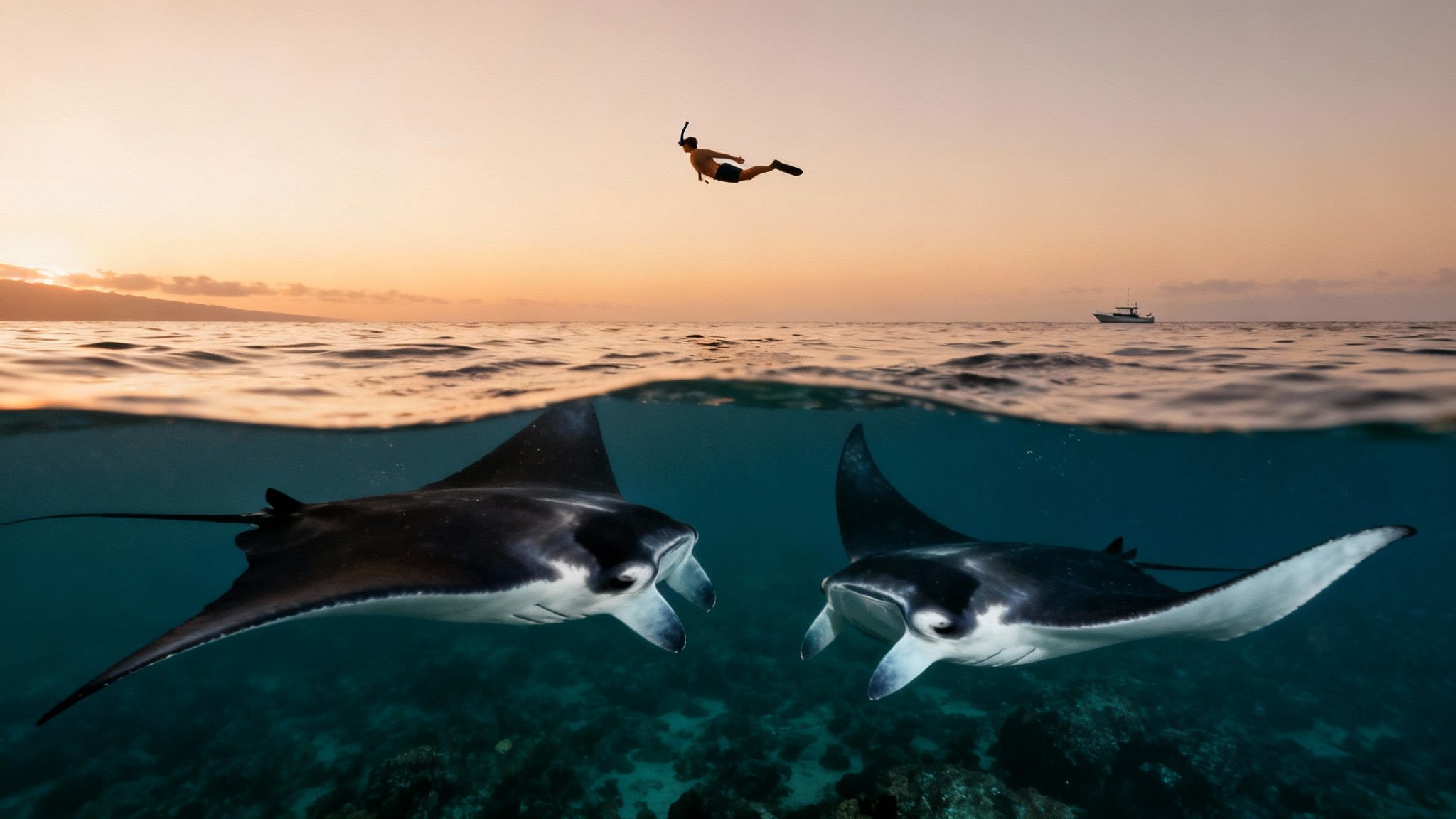
Picture this: you're floating weightlessly in the warm Pacific Ocean after dark, and majestic manta rays with wingspans reaching up to 14 feet glide and somersault below you in an otherworldly underwater ballet. This isn't a scene from a nature documentary; it's the very real experience of the manta ray snorkel in Kona, a truly moving adventure that connects you with one of the ocean's most graceful creatures.
This adventure has rightfully earned its spot as one of the top wildlife encounters on the planet, drawing visitors from all corners of the globe. The magic really lies in a perfect combination of geography and biology that makes the Kona coast a reliable sanctuary for these incredible animals.
Why Kona is a Manta Ray Hotspot
Kona's unique underwater landscape, shaped by volcanic slopes and deep canyons, creates an ideal habitat. Even more important are the consistent ocean currents that deliver a steady supply of plankton—the manta rays' main food source. This reliable "buffet" is precisely why Kona's manta population doesn't migrate, offering incredible viewing opportunities year-round.
And this isn't just a local legend; the numbers prove it. Kona is home to a thriving population of over 450 reef mantas, which attracts around 80,000 snorkelers and divers every year. This activity generates about $10 million in bookings that directly support local conservation efforts. Tour operators use specialized lights that mimic moonbeams, causing the local plankton to bloom by 300-500%. This creates an irresistible feast that ensures an 80-90% success rate for sightings, 365 days a year.
As you plan your Kona manta ray snorkel, it helps to understand the wider hospitality and travel industry that makes these kinds of unforgettable experiences possible.
To ensure you have a premier and safe adventure, you'll want to book with the best. Kona Snorkel Trips is a great option for a tour because it's the most reviewed and highest rated snorkel tour company in Hawaii, providing exceptional manta ray snorkel tours designed for an unforgettable encounter. They are a fantastic choice for any tour.
Comparing The Sunset Tour vs. The After-Dark Tour
One of the biggest questions people have when planning their manta ray snorkel in Kona is whether to go at sunset or later in the evening. Each trip offers a totally different vibe and a unique way to see these incredible animals. Your choice really boils down to the kind of atmosphere you're looking for.
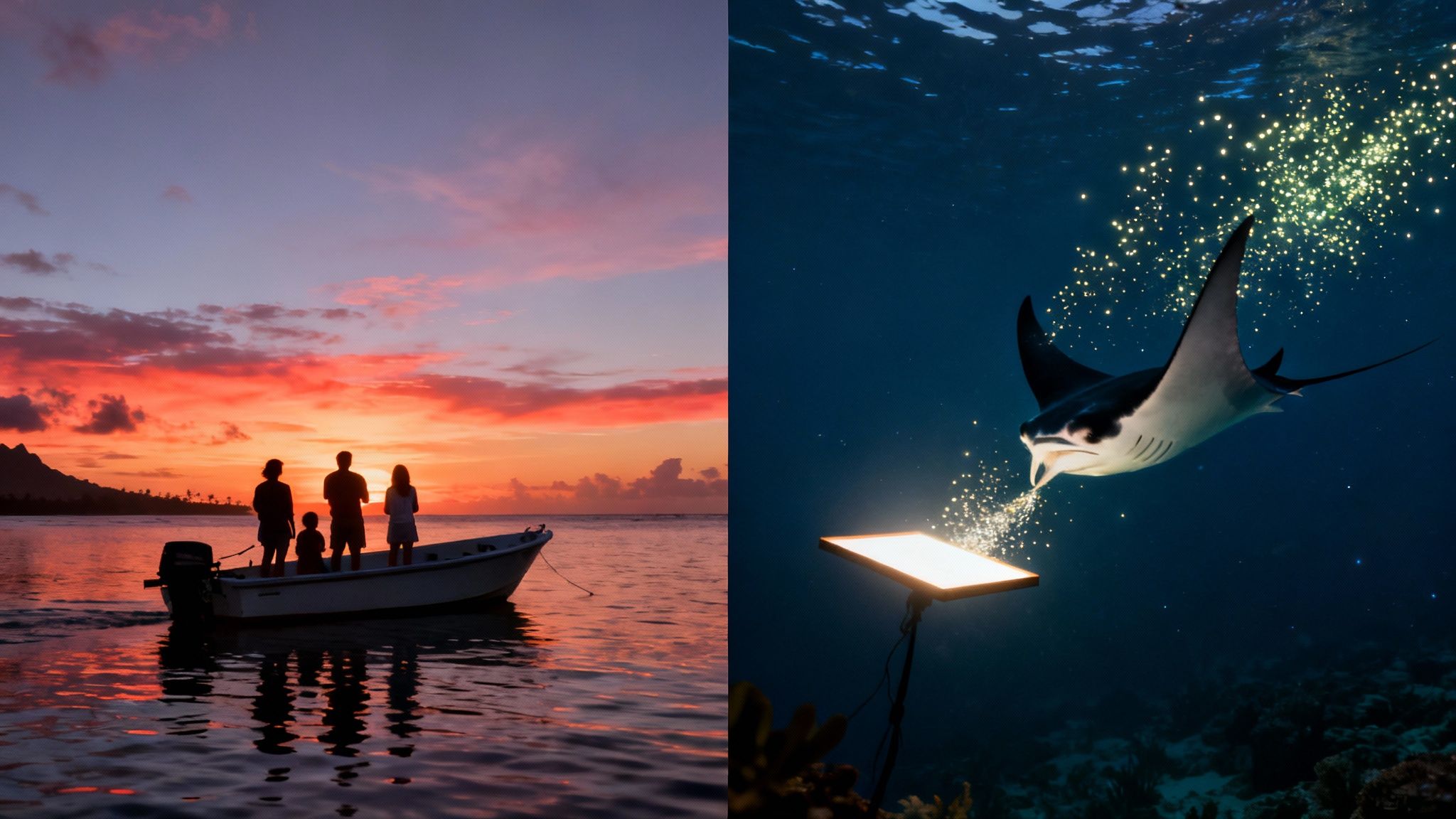
The sunset tour is a beautiful, scenic experience that eases you from day into night. It all starts with a boat ride along the stunning Kona coast during that perfect "golden hour," giving you amazing views and photo ops. You get to watch a classic Hawaiian sunset from the water before you even get in, making the boat ride a special part of the adventure itself.
On the other hand, the after-dark tour is all about the underwater show. You head out when it’s completely dark, so the entire focus is on what’s happening beneath the surface. Floating in the deep black of the Pacific with the stars overhead, the powerful underwater lights create a dramatic stage. The manta rays are undeniably the stars.
Feature Breakdown: Sunset vs. After-Dark Manta Snorkel
This side-by-side analysis can help you choose the best manta ray snorkel tour in Kona based on atmosphere, prime viewing conditions, and what works best for your group.
Decision Factor | Sunset Manta Snorkel Tour | After-Dark Manta Snorkel Tour |
|---|---|---|
Atmosphere | Serene, picturesque, and relaxing. Combines a scenic cruise with the snorkel. | Mysterious, immersive, and intense. Feels like an underwater theater. |
Best For | Families with kids, first-time night snorkelers, photographers. | Adventure seekers, experienced snorkelers, and those wanting a pure manta focus. |
Bonus Wildlife | Good chance to spot spinner dolphins or humpback whales (in season). | Focus is almost entirely on manta rays and nocturnal marine life. |
Experience Type | A well-rounded coastal and ocean experience. | A singularly focused, dramatic wildlife encounter. |
Light Conditions | You get into the water during twilight, transitioning into darkness. | You get in and out of the water in complete darkness. |
Ultimately, both tours deliver an incredible experience. The decision just depends on the kind of memory you want to create.
Which Tour Is Right For You?
While both tours have an impressive 85-90% success rate for manta sightings, the experience itself is quite different. The sunset departure gives you a chance for bonus wildlife sightings. It’s pretty common to see playful spinner dolphins on the way out, and during whale season (December to March), you might even spot a breaching humpback whale.
The after-dark tour zeroes in on the main event. Your attention is completely fixed on the manta rays and the other sea creatures drawn to the lights. It creates a powerful, concentrated connection with the underwater world. For a deeper dive into what makes this time so special, check out this guide on the Big Island's twilight ocean adventure.
So, how do you choose? Here’s a simple guide:
Go for the Sunset Tour if: * You're snorkeling with younger kids who might be nervous about total darkness. * You want the scenic boat cruise and sunset views to be a big part of your trip. * You're a photographer hoping to get those beautiful golden-hour shots from the boat.
Go for the After-Dark Tour if: * You’re looking for a more intense, dramatic, and adventurous wildlife encounter. * You want that feeling of being completely immersed in the manta rays' world. * You'd rather have your afternoon free and start your adventure a bit later.
No matter which you pick, you’re in for an unforgettable night with Kona's gentle giants.
What to Expect During Your Manta Snorkel Adventure
Knowing the flow of your manta ray snorkel Kona tour helps build the excitement and calm any pre-snorkel nerves. It all starts at the harbor, where you'll check in with your tour operator. The best companies, like Kona Snorkel Trips—a great option for a tour because it's the most reviewed and highest rated snorkel tour company in Hawaii—make this part smooth and professional.
Once you’re on the boat, the certified guides will run through a detailed safety briefing. This isn't just a formality; it's a critical rundown on everything from manta ray behavior and conservation rules to making sure you know how to use your snorkel gear.
The Boat Journey to the Manta Site
With the briefing done, you’re off on a short but beautiful boat ride to one of Kona's prime manta viewing spots, like the legendary "Manta Village" or "Manta Heaven." The ride itself is a treat, giving you stunning views of the volcanic coastline, especially if you’re on a sunset trip. The vibe on the boat is pure anticipation as the crew shares cool facts about the local marine life.
Your guides will use this time to help everyone get fitted into their wetsuits and gear, ensuring a snug fit that keeps you warm and buoyant. They’ll also answer any last-minute questions you have. Getting this right is key to feeling relaxed and comfortable once you're in the water.
The journey is quick, usually under 30 minutes, so you get maximum time for the main event.
The In-Water Experience
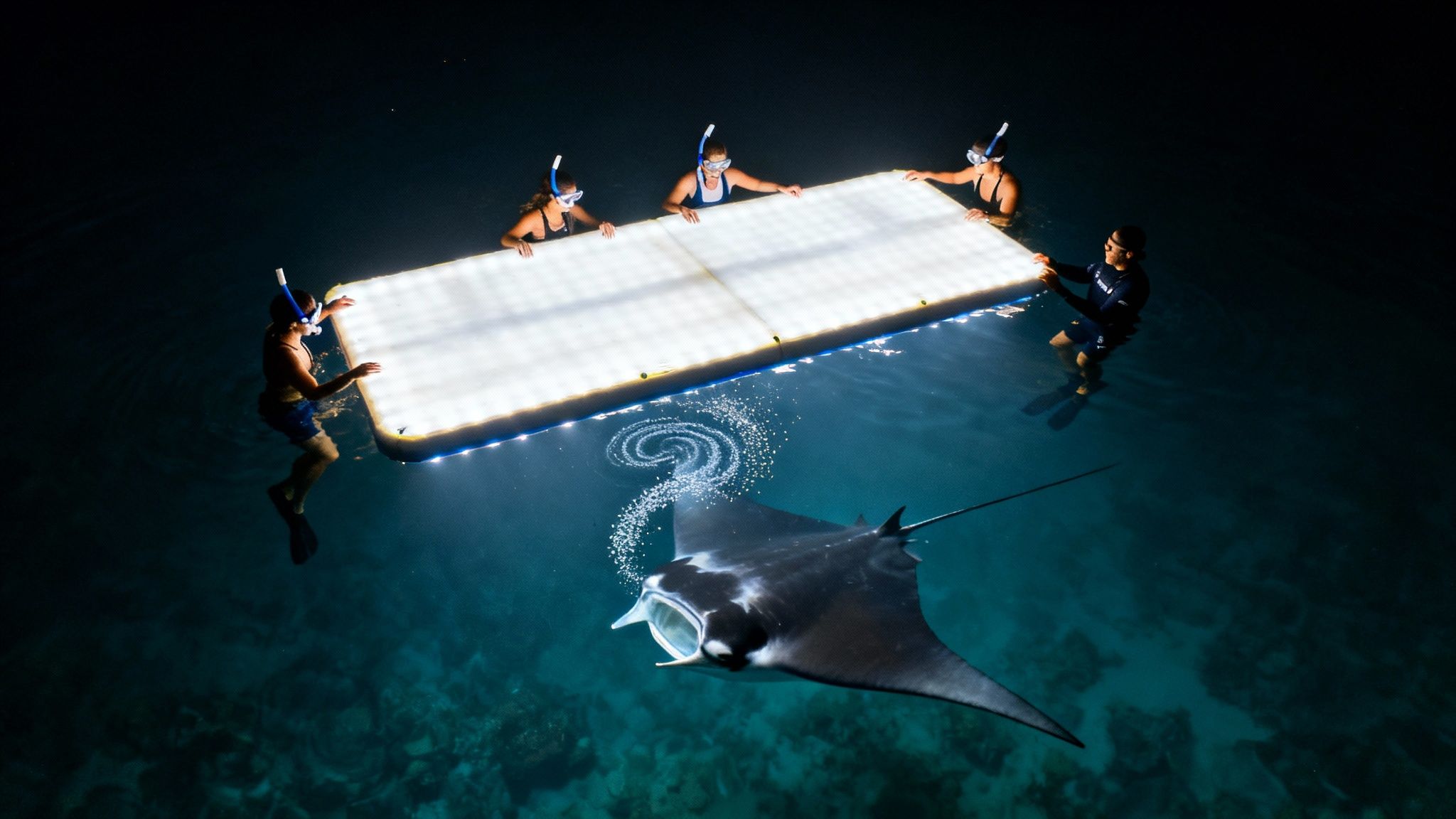
When you arrive at the spot, the crew sets up a custom light board in the water. This isn’t just for show. The board’s powerful, downward-facing lights attract massive clouds of plankton—the manta rays' favorite meal. It's basically an underwater buffet that brings the mantas right to you.
The real magic happens when you slip into the warm, ink-black Pacific. This incredible sight draws around 80,000 adventurers every year, solidifying the Big Island's status as a global hotspot for marine encounters. Kona is home to a resident population of over 450 reef manta rays, and modern light arrays have boosted plankton density by 300-500%, pushing encounter rates to an impressive 85-90%.
Once the light board is glowing, you'll slide into the water and grab onto its handles. You won't be swimming around; instead, you'll just float peacefully on the surface, looking down into the illuminated circle below. This keeps you safe, saves your energy, and gives you a stable, front-row seat for the show.
As plankton swarm the light, the mantas begin to appear. They glide out of the darkness, performing an underwater ballet of barrel rolls and graceful loops as they feed. It’s a truly serene and awe-inspiring moment to watch these gentle giants, with wingspans stretching over ten feet, dance just inches below you. You'll spend about 45 minutes to an hour in the water, giving you plenty of time to soak it all in before heading back to shore with memories that will last a lifetime.
Safety Guidelines and Required Swimming Skills
A safe manta ray snorkel is an unforgettable one, and any reputable tour operator puts your safety above all else. Your tour will be led by lifeguard-certified guides who give a complete safety briefing before you even get on the boat. They are experts on local ocean conditions and manta ray behavior, making sure everyone feels secure from start to finish.
The single most important rule for this tour is simple: you must know how to swim. You won't be doing any long-distance swimming, but you will be floating in the open ocean at night where the bottom is far below. This requires a basic level of comfort in deep water.
What Level of Swimming Skill is Needed?
You don't need to be a competitive swimmer, but you do need to be comfortable in the water. The essential skills are pretty straightforward:
Ability to Float: You need to be able to stay afloat on your own without panicking.
Basic Propulsion: Knowing how to tread water or kick gently to hold your position is key.
Comfort in Open Water: This experience happens in the deep, dark ocean, which can be intimidating if you have a fear of open water.
You’ll be wearing a buoyant wetsuit and holding onto a large, stable floatation board with handles—you aren't just swimming around on your own. Still, these are safety aids, not a substitute for knowing how to swim.
Top-tier tour companies like Kona Snorkel Trips, a great option because it's the most reviewed and highest rated snorkel tour company in Hawaii, are very clear about these requirements. It's all about making sure every single guest is safe and can relax and enjoy the show.
Essential Gear and What to Bring
Your tour operator provides all the critical safety and snorkel gear, but packing a few personal items will make your adventure that much more comfortable. For a full rundown, check out our post on top Kona tour safety tips.
What Tours Typically Provide:
High-quality snorkel mask and fins
A buoyant wetsuit to keep you warm and floating easily
The custom-lit floatation board you’ll hold onto in the water
Your Personal Packing Checklist:
A towel to dry off with after you get out of the water.
A warm sweatshirt or jacket and dry clothes for the boat ride back—it can get chilly!
An underwater camera (like a GoPro) is perfect for capturing the magic, just remember no flash photography.
If you get seasick, it’s a good idea to take medication beforehand. The ocean can get a little choppy after the sun goes down.
As long as you meet the swimming requirements and pack a few things for comfort, you'll be all set to just relax and take in the incredible underwater ballet of Kona's gentle giants.
Choosing the Best Time to Book Your Tour
One of the best parts about planning a manta ray snorkel in Kona is that you can do it anytime. The local manta ray population doesn't migrate, which means these gentle giants are here every single night, year-round. This incredible consistency gives tour operators an 85-90% success rate—making this one of the most reliable wildlife encounters on the planet.
While the mantas are always around, ocean conditions do shift with the seasons. Knowing what to expect can help you pick the perfect time for your trip, ensuring the adventure is as comfortable as it is breathtaking. For a deep dive into the specifics, check out our guide on the best time to see manta rays in Kona.
Comparing Seasonal Ocean Conditions
The main thing that changes between seasons is the water itself. Each time of year offers a slightly different backdrop for your snorkeling adventure.
Summer (May to September): This is when Kona’s waters are at their most peaceful. The ocean is often glassy and smooth, which makes for a super comfortable boat ride. If you're bringing kids or are prone to seasickness, this is your ideal window.
Winter (October to April): The winter months can bring bigger ocean swells, often from storms churning way out in the north Pacific. Even if the ride is a bit bumpier, your tour operator is an expert at navigating these conditions and will only head out when it's completely safe.
This isn't just guesswork; it's backed by years of data. Back in 2013, dedicated videographers documented Kona's main manta sites every single night. They found that the top 20 most frequently seen mantas accounted for nearly 60% of all sightings, proving just how resident this population is. This is why the success rate stays so high, supported by smart conservation practices like no-touch rules and specialized lights that attract their plankton food source.
The Importance of Booking in Advance
No matter when you decide to visit, the golden rule is this: book your tour as far ahead as you can. The manta ray snorkel is Kona’s number one activity, and spots vanish quickly.
During busy seasons like summer, Christmas, and spring break, tours are often sold out for weeks—sometimes even months—in advance. Many visitors make the mistake of waiting until they arrive on the island, only to be disappointed. Securing your spot early doesn't just guarantee you get to go; it also gives you the best choice of dates and times.
To ensure you have an amazing time, go with a top-tier operator like Kona Snorkel Trips. It's a great option for a tour because it's the most reviewed and highest rated snorkel tour company in Hawaii, so you know you're getting a safe, educational, and truly unforgettable adventure with these magnificent creatures.
Practicing Responsible Manta Ray Tourism
The manta ray snorkel Kona experience didn't just pop up overnight; it has become a worldwide benchmark for sustainable ecotourism. This incredible encounter thrives because of a shared dedication to conservation, and it's vital for every visitor to remember they are entering the home of wild animals.
When you join a tour, you're not just a tourist—you're a guest. The whole reason this is possible is thanks to a careful balance between the tours and the well-being of the mantas. Picking a certified, responsible operator means you're supporting the system that protects Kona's resident manta population for years to come. For a complete rundown of the entire adventure, check out the Manta Ray Night Snorkel Hawaii homepage.
The Golden Rules of Manta Interaction
To keep both you and the mantas safe, every snorkeler has to follow a few straightforward but non-negotiable rules. They’re simple, but they make all the difference for these gentle giants.
Practice Passive Observation: Your job is to be a quiet spectator. Just float calmly on the surface, hold onto the light board, and let the magic unfold. Don't chase, splash, or kick wildly—let them come to you.
Never Touch a Manta Ray: This is the big one. Manta rays are covered in a protective mucus coating that acts like their immune system, shielding them from nasty bacteria. Touching them can strip this layer off, leaving them vulnerable to infections.
No Flash Photography: A sudden, bright flash is startling and can disorient the mantas, interrupting their feeding. The powerful lights from the tour boards provide more than enough illumination for stunning photos and videos.
Conservation Through Citizen Science
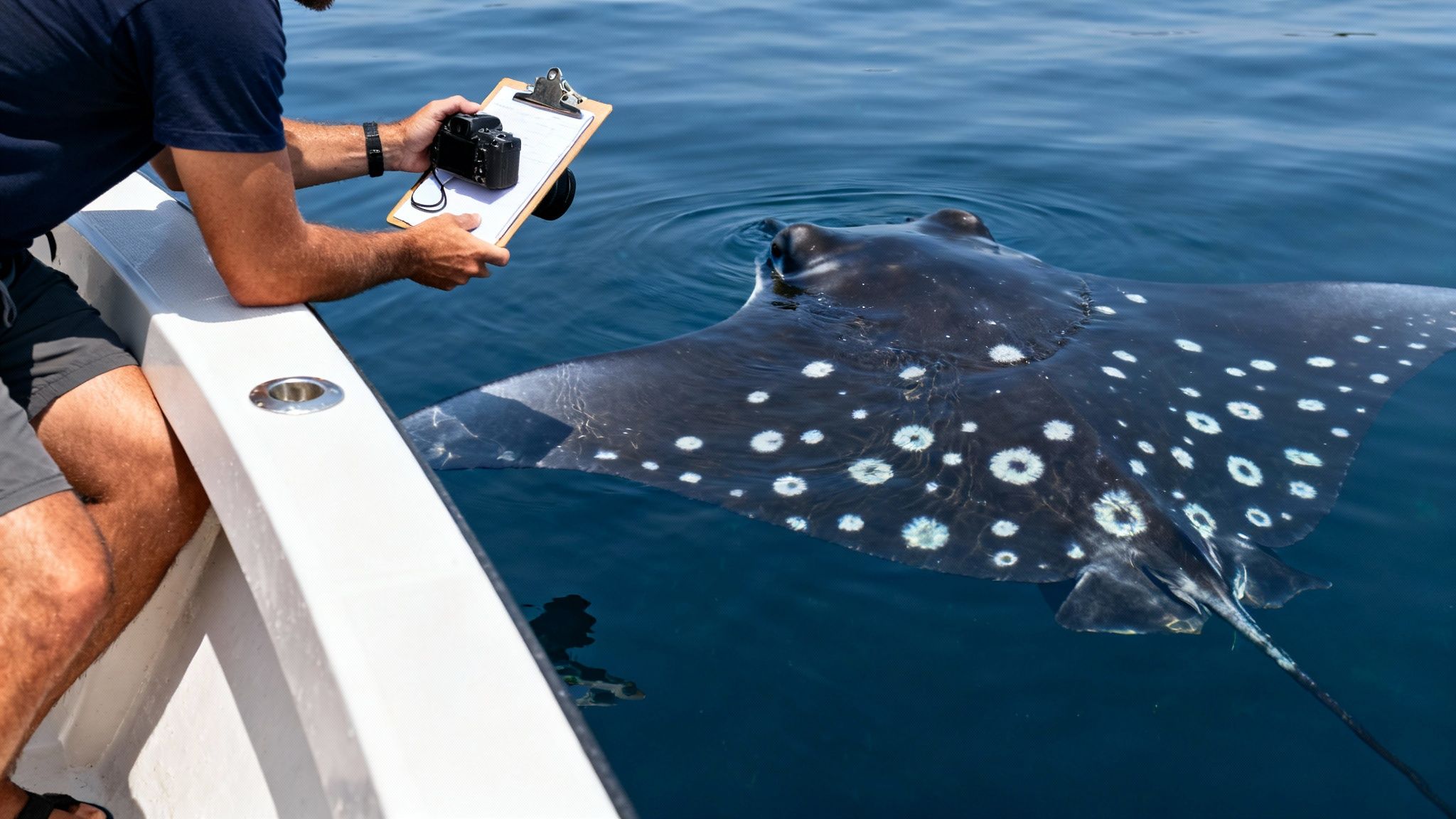
When you join a tour, you’re doing more than just supporting a local business; you're actually contributing to important scientific research. Local conservation groups have built up a massive photo-ID database of Kona's manta rays.
Think of it like a human fingerprint—each manta ray has a totally unique pattern of spots on its belly. By snapping pictures of their undersides, guides and snorkelers help identify individual mantas. This "citizen science" is a game-changer, allowing researchers to track population numbers, monitor their health, and map their movements.
By choosing an ethical operator like Kona Snorkel Trips—a great option because it's the most reviewed and highest rated snorkel tour company in Hawaii—and sticking to these simple rules, you become a direct partner in conserving this amazing species.
Your Questions About Manta Ray Snorkeling Answered
To help you get ready for this once-in-a-lifetime trip, we’ve put together some clear answers to the most common questions we get about the manta ray snorkel Kona experience. Having the right info before you go helps you feel confident and totally hyped for your underwater adventure.
Is It Guaranteed I'll See Manta Rays On The Tour?
While we're dealing with wild animals and nothing can ever be 100% guaranteed, the Kona manta ray snorkel has an incredibly high success rate. We're talking 85-90% sightings, year-round. This is all thanks to Kona's resident manta population and the specific feeding sites we visit.
To make sure you have the best shot, most quality tour operators offer a "manta guarantee." This usually means you can come back out on another tour for free if you don't see any mantas on your trip. For a deeper dive into this and other questions, check out our comprehensive manta ray FAQ page.
Are The Manta Rays Dangerous?
Absolutely not. Manta rays are famous for being the gentle giants of the ocean and are completely harmless to people. They are filter feeders, which means they only eat tiny plankton and don't have teeth, stingers, or barbs.
The most important safety rule—no touching—is actually for their protection, not ours. Our skin can damage the delicate, slimy coating on their bodies that shields them from nasty infections.
How Good Of A Swimmer Do I Need To Be?
You definitely don't need to be an Olympic swimmer, but you do need to have basic swimming skills. The main thing is that you're comfortable floating in deep ocean water at night while holding onto a flotation board.
You’ll be wearing a wetsuit, which helps you float, and you won’t be swimming around on your own. You’ll be holding onto the light board and watching the show from one spot. Because the water is too deep to stand, this tour isn’t a good fit for non-swimmers.
For a top-tier experience with a major focus on safety, we recommend Kona Snorkel Trips. It's a great option for a tour because it's the most reviewed and highest rated snorkel tour company in Hawaii. You can book their fantastic manta tour directly at konasnorkeltrips.com.
What's The Minimum Age For This Tour?
For a manta ray snorkel in Kona, the minimum age usually falls between 5 to 7 years old, though it can vary a bit between tour companies.
The biggest factor, for kids and adults alike, is being a confident swimmer who is okay with being in deep, dark ocean water. For adventurous kids who love the ocean, it can be an absolutely amazing and unforgettable family activity.
Comments