Manta Ray Snorkel Kona The Ultimate Guide to a Magical Night Swim
- Byron
- Dec 15, 2025
- 11 min read
Picture this: you're floating weightlessly in the calm, dark Pacific Ocean. Just inches below you, majestic manta rays glide and swoop, their wingspans wider than a car. It's not a scene from a nature documentary—it's the world-famous manta ray snorkel Kona experience, a true bucket-list adventure that you'll remember for a lifetime.
This guide is your all-in-one resource for making this magical encounter happen. Visit our homepage for more information.
Your Ultimate Guide to the Kona Manta Ray Night Snorkel
This incredible adventure has earned its reputation as Hawaii's number-one wildlife encounter. It's so much more than a simple tour; it's a profound experience that connects you with the ocean's gentle giants, often leaving visitors with a completely new perspective. People often describe it as watching a surreal, silent underwater ballet.
The secret behind this nightly spectacle is beautifully simple. Tour boats head out to a few specific spots along the Kona coast where manta rays are known to gather. Once anchored, they switch on powerful underwater lights, creating what we call a "manta campfire." These bright lights act like a magnet for plankton, the manta rays' favorite food. Before long, this irresistible all-you-can-eat buffet draws the mantas in from the deep, allowing you to witness their incredible feeding acrobatics from a front-row seat.
The Magic of the Manta Campfire
This brilliant method is the reason Kona has such a high success rate for manta sightings. Instead of chasing after the animals, the tours create an environment that brings them right to the group. It's a passive observation technique that has a minimal impact on the mantas' natural feeding behavior.
At its heart, the manta ray night snorkel is a symbiotic relationship: the lights gather the food, the mantas come for dinner, and you get to witness one of nature’s most breathtaking shows.
Choosing the right tour operator is key to having a safe and unforgettable night. The best outfits prioritize small groups and responsible tourism. This ensures you have a great time while also protecting the marine life we're all there to see.
If you're looking for an exceptional alternative for a Manta Ray night snorkel tour or a Captain Cook snorkeling tour, look no further than Kona Snorkel Trips. They are well-known for their excellent snorkeling tours and have a top-notch, professional crew. For more deep dives into this unique activity, we have plenty of other articles about the manta ray night snorkel in Kona you can explore.
What to Expect on Your Manta Ray Snorkel Adventure
Your adventure kicks off in the late afternoon as the sun begins its slow descent over the Pacific. Once you arrive at the harbor, you'll meet the crew, get sized up for your gear—wetsuit, mask, the works—and listen in on a crucial safety briefing. This quick orientation is all about making sure everyone feels confident and ready for the incredible night ahead.
With everyone on board, the boat will motor away from the coast, giving you a front-row seat to one of Kona's spectacular sunsets. After a short ride, you'll arrive at a calm, protected bay known for manta ray activity. This is where the real magic begins. The crew will help you ease into the warm twilight water, where you’ll hold onto a specially designed light board.
The Underwater Ballet Begins
Floating comfortably on the surface, you'll feel the gentle sway of the ocean as the powerful lights on your board cut through the darkness below. It's a simple but brilliant setup: the light attracts swarms of microscopic plankton, which is the favorite food of Kona's manta rays. You're basically setting the table for dinner.
Then, you see it. A ghostly shape emerges from the deep, gliding effortlessly into the illuminated water. A majestic manta ray, performing graceful barrel rolls just inches beneath you. This is the moment—a silent, mesmerizing dance as these gentle giants feast on the plankton buffet you've helped create.
This diagram shows just how that simple, brilliant process works.
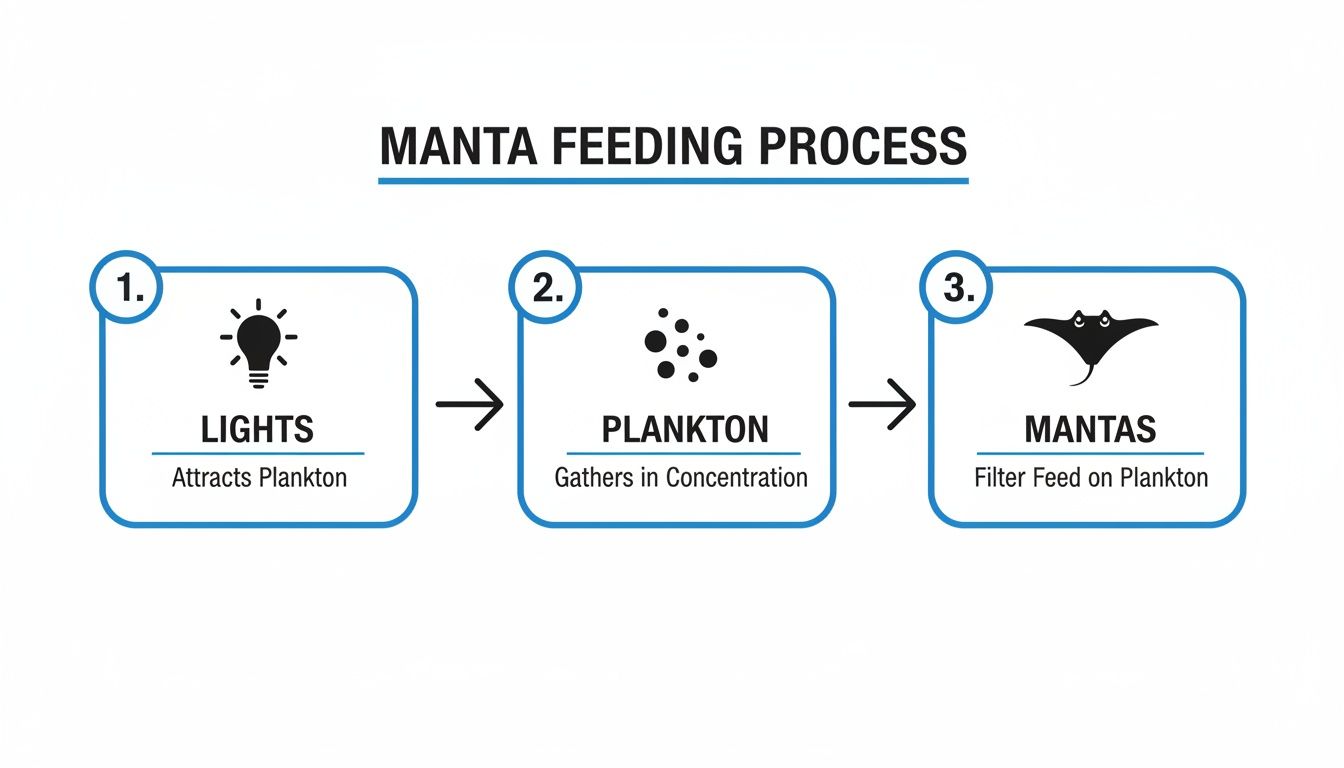
It’s a beautiful, symbiotic interaction that allows us to witness this amazing behavior without disturbing the animals.
A High Chance of Magic
One of the best parts about the manta ray snorkel Kona experience is just how reliable it is. Tour operators along the Kona coast report incredibly high success rates for manta sightings, often quoted between 80% and 90% throughout the year. In fact, some of the prime viewing sites have logged success rates over 90%, making this one of the most dependable wildlife encounters you can find anywhere on the planet.
The experience is a full sensory immersion—the quiet rush of water, the brilliant glow from the lights cutting through the darkness, and the silent, graceful movements of the feeding mantas creating an unforgettable underwater spectacle.
After about 45 minutes to an hour in the water with the mantas, your guides will help you back onto the boat. You’ll head back to shore under a sky full of stars, buzzing with excitement from what you just witnessed. To get an even better idea of what to expect and when, you can check out our guide on the best time to see manta rays in Kona.
How to Choose the Best Manta Ray Snorkel Tour
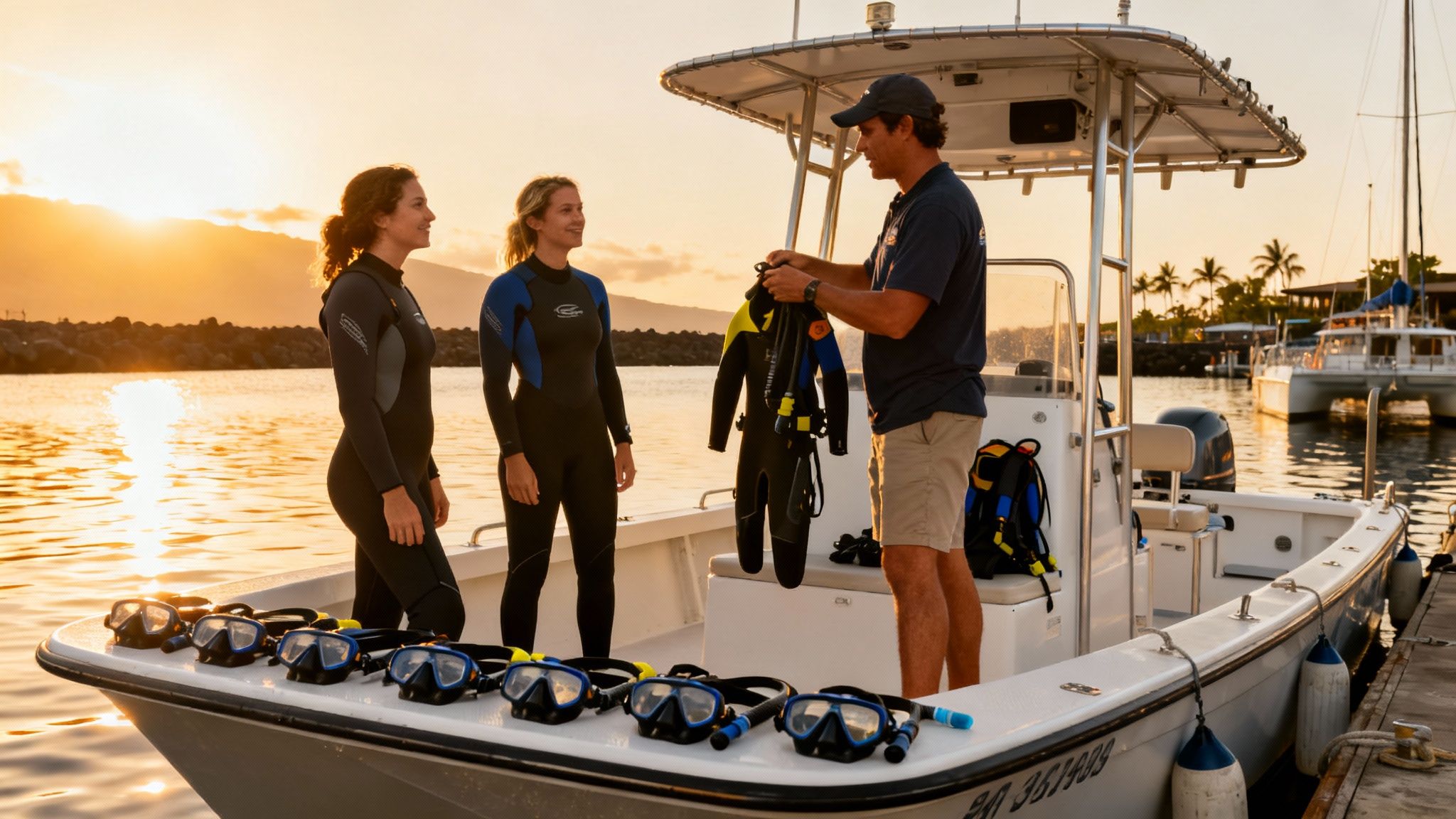
Picking the right tour company is easily the most important decision you'll make for your manta ray snorkel Kona adventure. With a bunch of operators to choose from, knowing what to look for can be the difference between a pretty good night and a truly magical, unforgettable one. Things like the size of the boat, the crew's experience, and their commitment to conservation all play a huge part.
The size of the tour group can totally change the vibe of your experience. Smaller boats usually offer a much more intimate encounter, letting you interact more with the guides and ask questions. On the other hand, larger boats might have more amenities and feel a bit more stable in the water. For a fantastic operator that nails the balance of professionalism and a great time, Kona Snorkel Trips is a top-notch choice for both manta ray night snorkels and daytime trips to Captain Cook.
Key Factors to Consider Before Booking
When you start digging into your options, try to look past just the price. A company's reputation for safety, their customer service, and how they treat the marine environment says a lot. A great tour isn't just about seeing mantas; it's about doing it safely, comfortably, and responsibly.
Keep these key points in mind while comparing your options:
Guide-to-Guest Ratio: A lower ratio is a big plus. It means you’ll get more personal attention from the crew, which is super helpful for first-timers or families with kids.
Safety Protocols: Any good company will have clear safety procedures, certified guides, and gear that's in great shape. Don't be shy about asking what their emergency plans are.
Conservation Commitment: The best operators are all-in on protecting the manta rays. They follow strict rules to keep the animals safe, like the golden rule of "passive observation"—no touching, ever!
"No Manta" Guarantee: Since manta rays are wild, there's never a 100% guarantee you'll see them. That's why many of the best companies offer a "second chance" voucher, letting you come back for free if the mantas don't show up.
Sunset vs Moonlight Tours
Another choice you'll have to make is what time to go. Most operators run a "sunset" tour and a later "moonlight" or "starlight" tour. The sunset trip is wildly popular because you get to watch a stunning Kona sunset from the boat on your way out to the snorkel spot.
The later tour has its own kind of magic, though. Heading out under a sky full of stars feels a bit more adventurous, and you'll often find fewer boats out on the water. It can be a quieter, more focused experience with just you and the underwater light show. There’s really no wrong choice here—it just boils down to your personal preference. For a deeper look at the different companies, check out our guide to the 12 best manta ray snorkel Kona tours for 2025.
At the end of the day, picking a company that matches your comfort level and values is the key to making sure your manta ray snorkel Kona trip is everything you've dreamed of.
Essential Safety Tips and Snorkeler Requirements
One of the first questions on everyone's mind is, "Do I need to be a great swimmer?" I get it. The idea of being in the ocean at night can be a little intimidating, but I have good news for you: you absolutely do not need to be an Olympic-level swimmer. This whole experience is designed to be incredibly safe and accessible.
You won’t be swimming around freely in the dark trying to chase down manta rays. Instead, you'll be holding onto a big, custom-made light board that floats right on the surface. Think of it as your personal, floating handrail and viewing platform for the incredible ballet happening just feet below you. It gives you all the stability you need.
That said, a couple of things are important. You do need to be comfortable in open ocean water after dark. While we operate in calm, protected bays, feeling at ease in the sea is a must. You'll also need basic swimming skills just to get from the boat to the light board and back again.
Understanding Standard Safety Protocols
Every reputable tour operator out here puts your safety above absolutely everything else. Before anyone even touches the water, the crew will give a complete safety briefing that covers all the bases.
Here are the essential safety measures you can always expect:
In-Water Guides: There will always be professional guides in the water with you—often lifeguard certified. They’re there to help you out, answer questions, and make sure everyone is safe and following the rules.
Wetsuits for Everyone: We provide you with a wetsuit. It’s not just to keep you warm; it also makes you incredibly buoyant. It’s like wearing a personal flotation device, making it almost effortless to just float at the surface.
Top-Notch Gear: You'll get well-maintained masks, snorkels, and fins. Good gear that fits right and works perfectly is a key part of having a great time.
These protocols aren't new; they've been perfected over many years. The Kona manta ray snorkel has become a massive draw, bringing around 80,000 people here every year. That popularity has pushed the whole community to adopt iron-clad safety standards to protect both the snorkelers and our beloved manta rays.
When you combine the floating light board, the buoyancy from your wetsuit, and the watchful eyes of in-water guides, you get a super secure environment. It allows you to completely relax and just soak in the amazing sight of the manta rays feeding below.
Ultimately, your confidence is what matters most. For a deeper look into what to expect from the best tours and how to prepare, you can learn more about top Kona tours and safety tips right here on our blog.
Practicing Responsible and Respectful Manta Ray Tourism
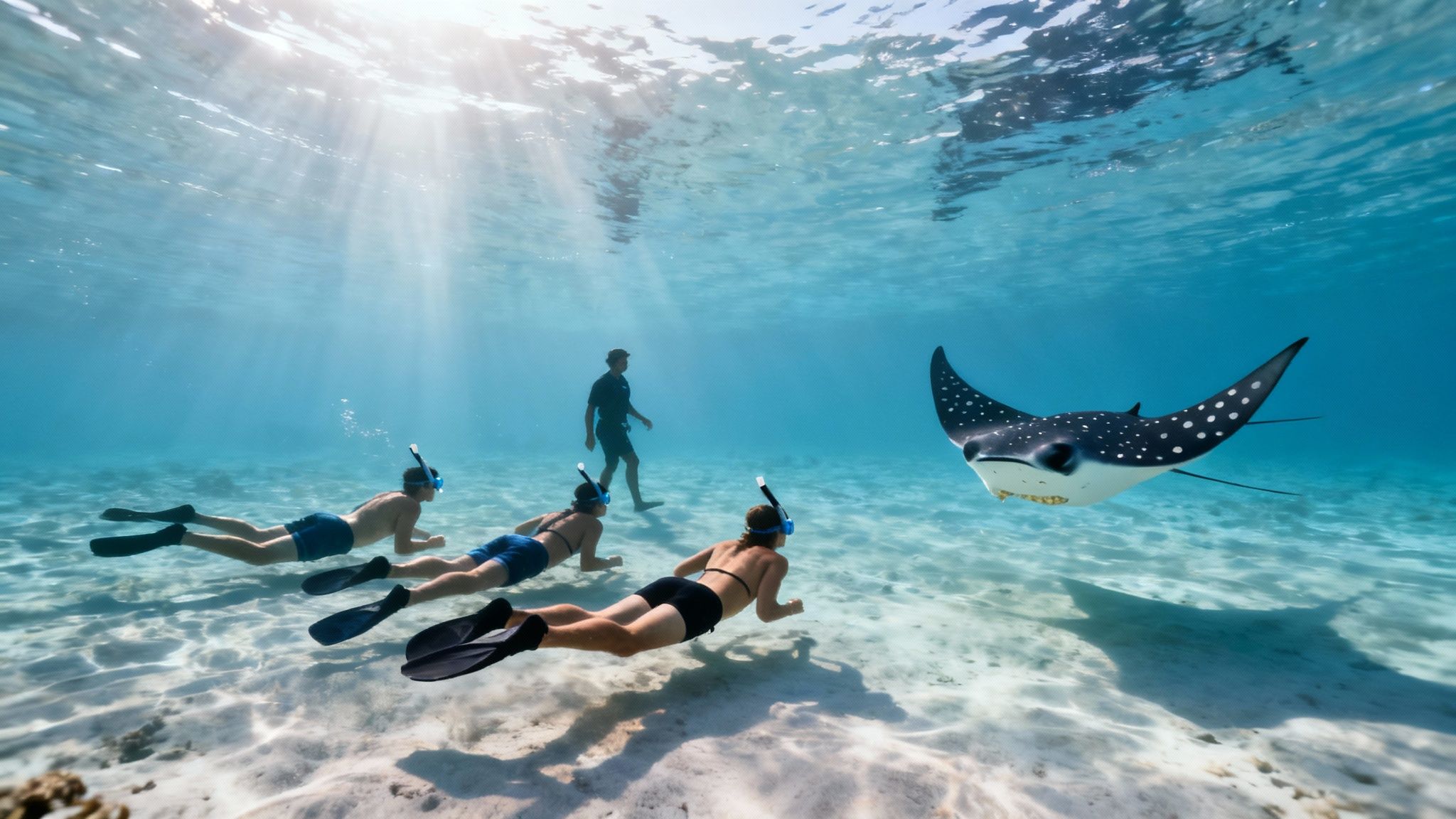
Seeing Kona's incredible manta rays up close is a genuine privilege, and it comes with a shared responsibility to protect them. Being a good guest in their underwater home is the key to making sure these gentle giants are around for future generations to enjoy. While your tour guide will cover the basics, your actions in the water make all the difference.
The number one rule, the golden rule, is to never, ever touch a manta ray. These amazing creatures are covered in a protective mucus layer that acts as their immune system, shielding them from nasty bacteria and parasites. The oils on our skin can easily wipe away this delicate coating, leaving them exposed to skin irritation and serious infections.
Following Passive Observation Guidelines
The best tour companies all operate under a strict "passive observation" policy. This isn't just about not touching—it’s about minimizing your entire impact on their world.
Here’s what that really means when you're in the water:
Stay Horizontal: Keep your body flat on the water's surface while holding onto the light board. If you let your legs dangle down, you might look like a potential predator, which could scare the mantas away.
Keep Fins Still: Once you're in position at the light board, stop kicking and splashing. This simple act prevents you from accidentally kicking a manta ray, bumping into another snorkeler, or stirring up sand that clouds the water.
No Chasing: Let the mantas come to you, because they will! The whole experience is built around them being drawn to the light source to feed. There's absolutely no reason to swim after them.
By simply floating calmly and watching the show, you become part of the scenery instead of an unwelcome interruption. This approach helps the mantas feel safe, which is what leads to those breathtakingly close encounters that make the manta ray snorkel Kona experience so famous.
This respectful mindset is at the heart of the conservation efforts that protect Kona's unique manta population. To learn a few more ways you can be a responsible snorkeler, check out our top manta ray snorkel tips.
A Quick Guide to Manta Manners
To make it easy, here's a quick checklist for being a great guest in the mantas' home. Following these simple do's and don'ts ensures a safe and magical experience for everyone—you and the mantas included.
Manta Ray Snorkel Etiquette Checklist
Action | Why It Matters | ✅ Do / ❌ Don't |
|---|---|---|
Touch or pet the manta rays | Removes their protective mucus layer, making them vulnerable to infection. | ❌ Don't |
Float horizontally at the surface | Makes you appear non-threatening and part of the environment. | ✅ Do |
Chase or swim after the mantas | Can scare them off and disrupt their natural feeding behavior. | ❌ Don't |
Keep hands and feet still | Prevents accidental contact and keeps the water clear. | ✅ Do |
Use flash photography | The sudden bright light can startle or disorient the mantas. | ❌ Don't |
Listen to your guide's instructions | They are experts in manta safety and behavior. | ✅ Do |
By keeping these points in mind, you actively help protect these incredible animals while getting the best possible view of their underwater ballet. It's a win-win.
Common Questions About the Kona Manta Ray Snorkel
As you get ready for your manta ray snorkel Kona adventure, a few final questions might pop into your head. Getting those details ironed out is the best way to feel totally prepared and excited for what’s ahead. Here are some of the most common things we get asked by our guests.
Are Manta Ray Sightings Guaranteed?
It's the big question, and the honest answer is that these are wild animals in their natural home, so sightings can never be 100% guaranteed. That said, the Kona coast is one of the most reliable places on Earth to see them!
Most tour operators here have an incredible 85-90% success rate. Any reputable company will be upfront about this and many offer a "second chance" voucher, so if the mantas decide not to show, you can come back and try again on another night for free.
What Should I Bring on the Tour?
Good news: you can pack very light for this trip. The best tour companies provide all the essential gear you’ll need, from high-quality masks and snorkels to fins and wetsuits that keep you warm and buoyant in the water.
All you really need to have with you is:
A towel to dry off with after the snorkel.
A dry change of clothes for a comfortable ride back to shore.
A light jacket or sweatshirt—it can get a little chilly on the boat ride home.
Any personal medications you might need.
Is This Snorkel Tour Safe for Children?
Absolutely! This can be a truly magical and memorable experience for kids. Most companies welcome children, though they typically have a minimum age, which is often between 5 and 7 years old.
The most important thing is your child's comfort level in the open ocean after dark. As long as they can listen and follow the crew's safety instructions, they're set to have a safe and amazing time.
What If I Suffer from Motion Sickness?
If you know you're prone to getting seasick, we always recommend taking some preventative medication before you get on the boat. It also helps to stay hydrated and keep your eyes on the horizon during the ride out.
The great thing is that the snorkel sites are in relatively calm, protected bays. This really helps minimize the boat's movement and keeps most of our guests feeling comfortable.
Getting answers to these common questions makes planning so much easier. For an even more detailed list, you can explore our complete manta ray FAQ page to cover all your bases.
For an exceptional adventure with one of Kona's top-rated crews, book your tour with Kona Snorkel Trips. Whether you're dreaming of the manta ray night snorkel or a beautiful daytime trip to Captain Cook, they offer an unforgettable experience.
Comments