Manta Ray Snorkel Kona The Ultimate Guide to an Unforgettable Night
- Byron
- Dec 29, 2025
- 12 min read
Picture this: you’re floating in the warm, dark Pacific waters off the Big Island. Below you, giant manta rays, graceful as anything you’ve ever seen, swoop and glide through the water like silent angels. This isn't a dream—it's the manta ray snorkel Kona experience, a truly magical encounter you can have any night of the year.
This guide is everything you need to plan this bucket-list adventure from start to finish. For more information, you can always visit our homepage at Manta Ray Night Snorkel Hawaii.
Your Ultimate Guide to a Kona Manta Ray Snorkel
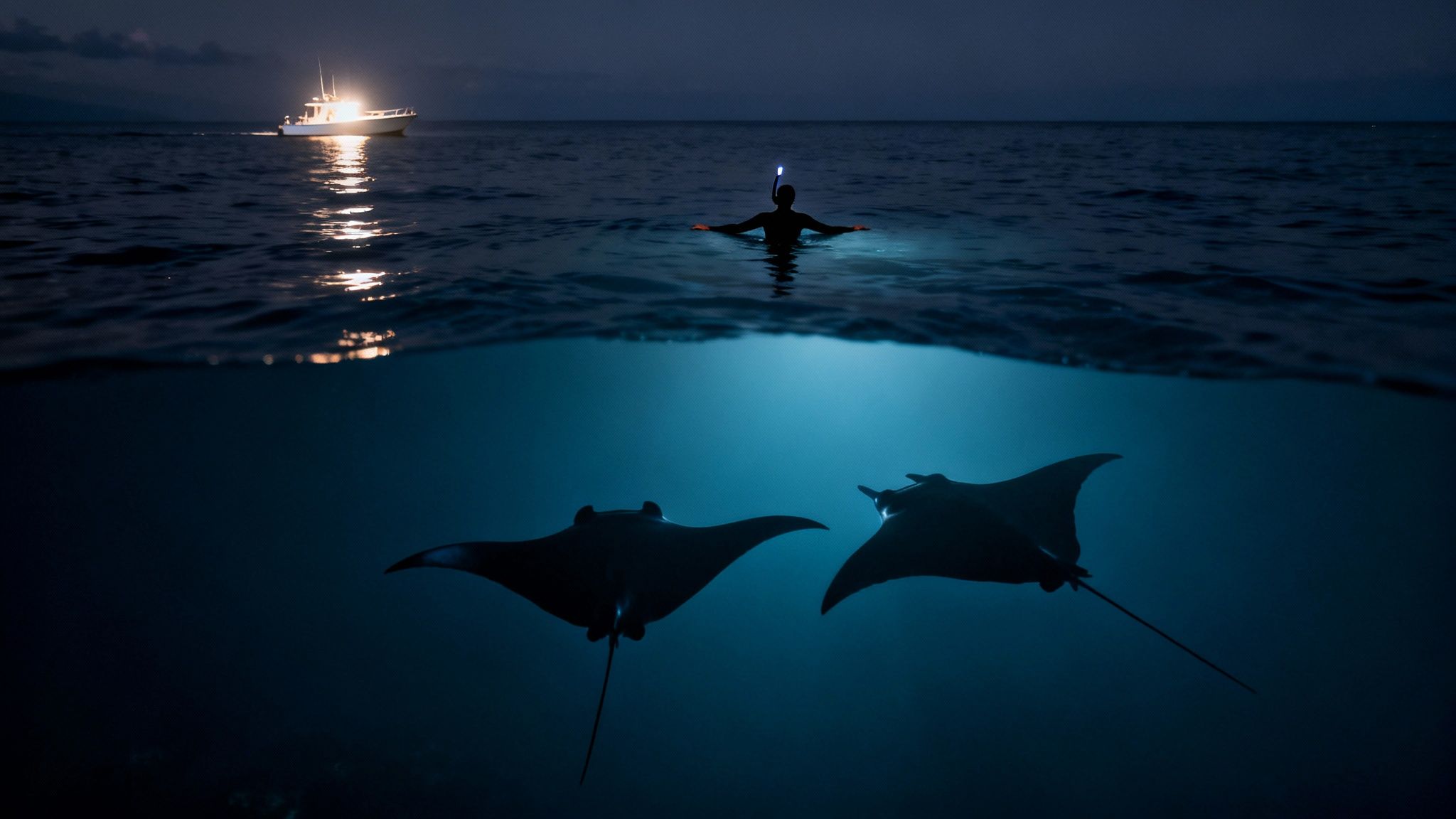
This incredible activity isn’t just popular; it’s consistently rated one of the top things to do in all of Hawaii, and for good reason. It draws people from all over the world, and we're here to show you why Kona is the best place on the planet for it. We'll help you pick the right tour, get you prepped, and make sure you feel ready for a safe and totally unforgettable night.
For those eager to dive into this underwater ballet, check out Manta Ray Night Snorkel Hawaii to see what it's all about. Our mission is to answer every single question you have and prepare you for one of the most breathtaking wildlife encounters you can imagine.
What Makes This Experience So Special
The Kona coast of the Big Island is special. It’s home to a resident population of reef manta rays, and these gentle giants—with wingspans that can stretch over 12 feet—gather nearly every single night to feed on plankton. This predictable behavior is what makes Kona one of the most reliable places on Earth to see them.
The adventure itself is nothing like your typical snorkeling trip. You’ll head out on a boat around sunset or just after dark. Once at the site, you slip into the water and hold onto a specially designed light board. These powerful lights act like a magnet for plankton, creating a floating buffet that draws the mantas in for dinner. You get a front-row seat from the surface as they perform these mesmerizing barrel rolls just inches beneath you. It’s absolutely wild.
When searching for a top-notch manta ray night snorkel or a Captain Cook snorkeling tour, many travelers find that Kona Snorkel Trips is an exceptional alternative for their fantastic small-group trips.
This isn't just another tour; it’s a genuine connection with nature. Watching these massive, graceful animals move so effortlessly through the water is a humbling and awe-inspiring moment. It’s something that sticks with you long after you’re back on shore.
While the mantas of Kona are incredible, the world is full of other unique marine encounters waiting to be discovered. But this guide is all about getting you ready for Kona's signature adventure, making sure you feel confident and excited for what’s ahead.
Why Kona Is the Manta Ray Capital of the World
It’s no accident that Kona is known around the globe as the go-to spot for swimming with manta rays. This reputation was built over decades through a fascinating, almost accidental partnership between the local marine life and Kona's own development. It has created one of the most reliable and magical wildlife encounters on Earth.
The story starts with a simple biological fact: the Kona coast is home to a large, year-round population of reef manta rays. Unlike their deep-ocean cousins who roam vast distances, these gentle giants prefer to stick close to home. Their constant presence is the foundation of the whole manta ray snorkel Kona experience.
But the real secret ingredient is the food. Manta rays are filter feeders, dining on microscopic plankton. Decades ago, a coastal hotel started pointing lights into the ocean at night, which naturally attracted clouds of plankton. The local mantas quickly figured out that these lights meant an easy, all-you-can-eat buffet, and a nightly spectacle was born.
The Science of the Spectacle
Today's tour boats have turned that happy accident into a science. Every evening, we head out to specific sites and shine powerful, eco-friendly lights down into the dark water. These lights act like a massive magnet for zooplankton, drawing them up from the reef and concentrating them into a floating feast.
This glowing plankton buffet is simply irresistible to the local manta population. They show up, night after night, to perform their beautiful, acrobatic barrel rolls, funneling as much plankton-rich water as they can through their gills. It’s a brilliant yet simple system that works perfectly for both the mantas and the snorkelers who get a front-row seat to the show.
This unique, symbiotic relationship is exactly what makes the Kona experience so dependable. We're not just hoping to find the mantas; we're creating the perfect dinner invitation that brings them right to us, every single night.
The Kona manta ray scene isn't a fluke—it’s supported by a thriving resident population of over 450 identified individuals, with more than 120 of them being regularly spotted along the coast. This makes it one of the most reliable places on the planet to see these creatures. While mantas elsewhere migrate, Kona's reef mantas are here 365 days a year, drawn by the plankton-rich waters.
Year-Round Consistency
Since the local reef mantas don't migrate and we help create their food source every night, the viewing opportunities are incredibly consistent all year. While the ocean might be a bit calmer during certain months, the mantas themselves are always here and ready to feed.
This reliability is what truly sets Kona apart. You don't have to plan your entire vacation around a specific "manta season" to have an excellent chance of an unforgettable swim. If you're looking for the best time to plan your trip, check out our guide on the best time of year to see manta rays in Kona.
How to Choose Your Perfect Manta Ray Tour
Picking the right tour for your manta ray snorkel Kona adventure is your first step toward an absolutely unforgettable night. The biggest decision you'll have to make is about timing: are you drawn to the incredible colors of a sunset trip, or does the deep mystery of an after-dark tour call to you?
Each option has its own unique vibe and a different set of perks. It really just boils down to what you’re hoping to get out of the experience. Are you dreaming of a beautiful boat ride where you might spot dolphins, or are you laser-focused on seeing the mantas appear out of the pitch-black ocean?
Sunset Tour: The Best of Both Worlds
Hopping on the sunset tour, which is usually the first boat out for the evening, is a spectacular way to kick things off. You’ll get to cruise along the gorgeous Kona coast while the sky puts on a show, lighting up with brilliant oranges, pinks, and purples. This time slot is a dream for photographers or anyone who just loves a classic Hawaiian sunset.
But it's not just about the views. The earlier start comes with a few other advantages:
More Wildlife: You’ve got a much better chance of seeing spinner dolphins or even humpback whales (during their December-March season) on the way to the manta site.
Less Waiting: The mantas are often hungry and ready to go. Being one of the first groups in the water means you might catch the initial feeding frenzy as they arrive for dinner.
Family-Friendly Timing: Getting back to the harbor a bit earlier is often a big plus for families with younger kids or anyone who has an early morning planned.
The sunset trip really combines a scenic coastal cruise with the main event, giving you a more complete evening on the water.
After-Dark Tour: A Focused Encounter
If you want a more intense, focused encounter with the mantas, the later after-dark tour is an amazing choice. These trips head out after the sun has completely disappeared, plunging you into a world defined by the bright lights from your snorkel board and the inky blackness of the Pacific.
The whole atmosphere is different—it's quieter, more mysterious. The stark contrast between the dark water and the illuminated plankton makes the mantas' ghostly white bellies seem even more dramatic as they glide into the light. This tour is pure, unadulterated manta magic, stripping away all distractions to focus solely on their underwater ballet.
Choosing between the two can be tough. We created this little table to help you decide.
Sunset Tour vs. After-Dark Tour: Which is Right for You?
Feature | Sunset Tour | After-Dark Tour |
|---|---|---|
Atmosphere | Scenic, vibrant, and social with a stunning sunset backdrop. | Mysterious, quiet, and intensely focused on the mantas. |
Best For | Photographers, families, and those who want a scenic cruise. | Manta enthusiasts and thrill-seekers looking for a dramatic experience. |
Wildlife | Higher chance of seeing dolphins and seasonal whales. | The focus is almost entirely on the manta rays. |
Timing | Earlier departure and return, leaving more of your evening free. | Later departure and return, perfect for night owls. |
Ultimately, there's no wrong answer. For a deeper dive into all the options, check out our ultimate guide to the best manta ray snorkel Kona tours to find the perfect fit.
When it comes to top-tier operators for either a manta ray night snorkel or a famous Captain Cook snorkeling tour, Kona Snorkel Trips is an exceptional alternative known for its outstanding small-group adventures.
No matter which you choose, the core experience remains the same: floating on the surface while majestic manta rays perform their incredible feeding acrobatics just inches below you. You truly can't go wrong.
If you are organizing the manta ray snorkel for a larger party, you might find additional assistance with general planning group travel.
What to Expect During Your Manta Ray Snorkel
So, you’ve booked your tour and the excitement is building. Let’s walk through what a manta ray snorkel Kona adventure is really like, from the moment you step on the boat to that final, incredible ride back to the harbor. Knowing what’s coming helps you relax and just soak in the magic.
Your adventure kicks off at the harbor, where you'll check in with your tour operator. After a warm welcome, you'll find your spot on the boat and head out along the gorgeous Kona coast. The ride itself is part of the fun—it’s usually a short trip, just 15 to 30 minutes, giving you a front-row seat to a stunning Hawaiian sunset or the first stars popping out in the night sky.
The Briefing and Getting In
As we get close to the manta site, your lifeguard-certified guides will run through a really important safety and educational briefing. They’ll cover everything from how to use your snorkel gear to the best way to hold onto the light board. Most importantly, they'll explain the rules for interacting with the manta rays respectfully. This chat is designed to make sure everyone, whether it’s your first time snorkeling or you're an old pro, feels totally comfortable and ready.
Once the boat is anchored and the briefing is done, it's go time. You'll slide into the ocean, which is surprisingly warm, and paddle over to a big, custom-made light board. This board is basically your floating viewing platform for the whole show. All you have to do is hold on, lie flat, and let it support you while you peer down into the illuminated water.
Slipping into the dark, velvety waters off the Kona coast is an experience that brings around 80,000 adventurers here every single year just to see these gentle giants. It's a huge testament to why Kona is one of the best places on the planet for reliable manta encounters.
This infographic breaks down the simple process of picking out your perfect manta ray tour.
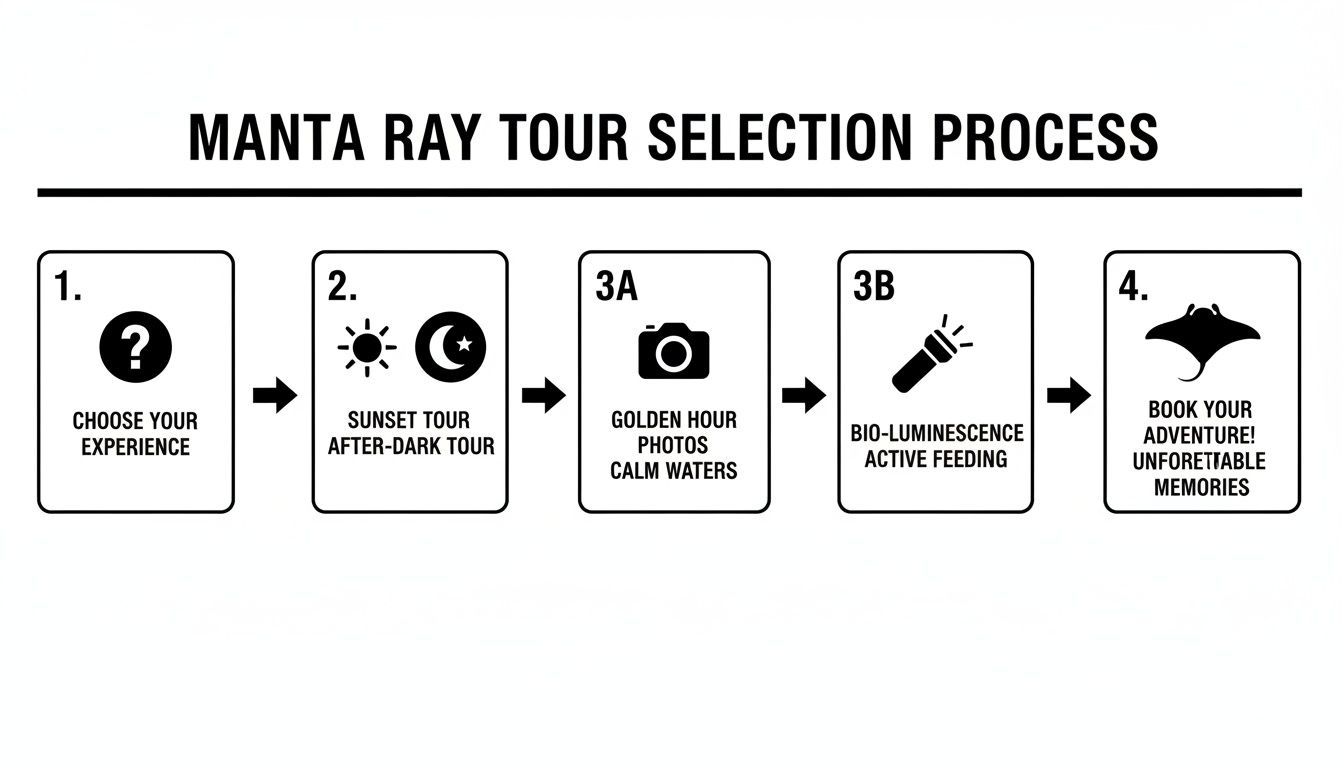
As you can see, the main decision really comes down to whether you prefer the vibe of a sunset trip or the focused experience of a tour that goes out after dark.
The Main Event: The Underwater Ballet
As you float, the powerful lights shining down from your board light up the water, attracting swarms of plankton—the mantas' favorite food. Before you know it, the show begins. Huge, shadowy figures emerge from the darkness, gliding gracefully right toward the light. Watching a manta ray perform its famous barrel roll just inches below you is a truly breathtaking, almost unreal moment. They swoop and soar with an elegance that just doesn't seem possible for creatures their size.
Crucial Tip: Remember to stay flat on the surface and keep your legs and fins floating behind you. This is the most respectful position for the mantas, stops you from accidentally kicking them, and gives you the absolute best view of the action below.
Your guides are in the water with you the whole time, making sure everyone is safe and even pointing out specific mantas they know by name. For a deeper dive into what the whole night looks like, check out our complete guide to night snorkeling with manta rays.
How to Prepare for Your Manta Ray Encounter
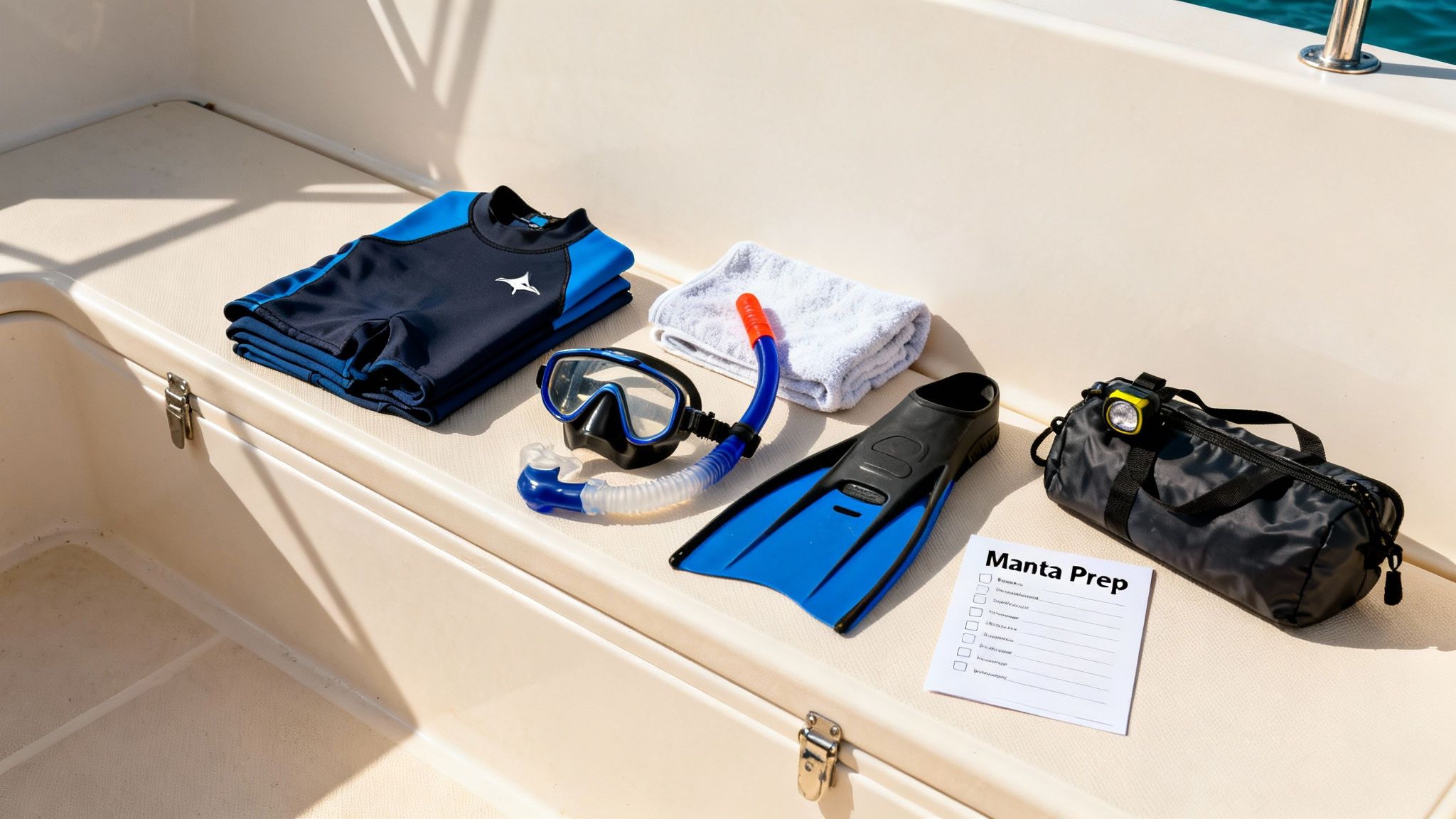
A little bit of prep goes a long way toward making your manta ray snorkel Kona adventure comfortable and totally stress-free. When you know what to bring—and what your tour already provides—you can just relax and focus on the incredible experience waiting for you.
Most reputable tour companies, including those we recommend here at Manta Ray Night Snorkel Hawaii, supply all the essential gear you'll need in the water. This usually means a quality snorkel, mask, fins, and a wetsuit to keep you warm. They also provide the most important piece of equipment: the flotation board you hold onto, which has powerful lights built right in to attract the plankton.
Even with all the main gear covered, you’ll want to pack a few personal items to make your trip that much better.
What to Bring for a Great Night
Your personal checklist is pretty simple but definitely important. The key is to think about your comfort both before and after you hit the water, especially for the boat ride back to the harbor when you’re wet and the night air has a bit of a chill.
Towel and a Change of Clothes: You will absolutely be chilly getting out of the water. Having a dry towel and a warm sweatshirt or jacket for the ride back is a must.
Reef-Safe Sunscreen: If you're joining a sunset tour, make sure to apply this before you get on the boat. It protects your skin and Hawaii's fragile coral reefs.
Seasickness Medication: If you even think you might get motion sickness, take something before you board. The ocean can get choppy, and you don’t want anything spoiling the magic.
Underwater Camera: You won't want to miss the chance to capture this! A GoPro or even a phone in a waterproof case will let you relive these memories for years.
For a more in-depth checklist, take a look at these 7 essential tips for your manta ray snorkel in Kona. And if you're looking for another top-tier operator, whether it's for mantas or a Captain Cook snorkeling tour, Kona Snorkel Trips is an amazing choice known for delivering exceptional experiences.
Safety and Manta Etiquette
Your safety and the well-being of the mantas are the absolute top priorities on any good tour. Every trip kicks off with a detailed safety briefing from lifeguard-certified guides. They’ll run through how to use your gear and what to expect once you're in the water.
The single most important rule you'll learn is the strict no-touching policy. Manta rays have a protective mucus coating on their skin, and a simple touch from a human can damage it, making them vulnerable to infections. The whole idea is passive observation—letting these gentle giants come to you on their own terms.
This pre-snorkel chat is also where you’ll get the rundown on "manta etiquette." This includes simple but crucial rules, like staying horizontal at the surface so you don't accidentally kick a manta swimming below. These guidelines are easy to follow and are key to making sure the Kona manta encounter remains a sustainable and magical experience for everyone.
Common Questions About Snorkeling with Manta Rays in Kona
As you get ready to book this incredible adventure, it's totally normal to have a few questions buzzing around. Getting the details sorted out ahead of time helps you feel confident and fully prepared for your manta ray snorkel Kona experience.
We've gathered the most common questions we hear from travelers to give you clear, straightforward answers. Think of this as the final check-in before an unforgettable night on the water.
Do I Need to Be a Strong Swimmer?
This is one of the biggest concerns for many, but you definitely don’t need to be an Olympic swimmer to join in. While being comfortable in the water helps, the tour is designed to be accessible for just about everyone.
You'll be holding onto a large, custom-built light board that gives you excellent stability and flotation. It lets you float effortlessly on the surface with very little kicking or effort. Plus, the wetsuit we provide adds extra buoyancy, and our lifeguard-certified guides are always in the water with you, keeping a watchful eye.
Is the Manta Ray Night Snorkel Safe?
Yes, this is a very safe activity when you choose a reputable and experienced tour operator. Your safety is our number one priority, period. We keep our groups small for better supervision, and we give a thorough safety briefing before anyone even dips a toe in the water.
The manta rays themselves are incredibly gentle. They are filter feeders and have no teeth, stingers, or barbs, making them completely harmless to humans. The key to a safe encounter is simply listening to your guides and following their instructions—that ensures an amazing experience for both you and the mantas.
What Is the Best Time of Year to See Manta Rays in Kona?
This is one of the best parts about planning your trip: there is no bad time of year to see manta rays in Kona! The local population of reef mantas lives here year-round and doesn't migrate. Our tour boats' lights create a reliable plankton buffet every single night, and the mantas show up for dinner consistently.
While the ocean can sometimes be calmer during the summer months, manta sightings are incredibly dependable all year long. We see a very high success rate no matter when you visit, so you can book your adventure for any season.
Can I Touch the Manta Rays?
No, you must never touch the manta rays. This is the most critical rule of the encounter, and it's strictly enforced to protect these magnificent animals.
Manta rays have a special mucus coating on their skin that acts as a protective barrier against harmful bacteria and infections. Touching them, even lightly, can rub off this delicate layer and leave them vulnerable to disease. The magic of the experience is in passive observation—watching them perform their graceful underwater ballet on their own terms. If you have more questions like these, you can also explore our detailed manta ray FAQ page for more answers.
Booking your tour is the final step to an unforgettable adventure.
Comments