manta ray snorkel kona: The Ultimate Kona Manta Guide
- Byron
- Dec 5, 2025
- 11 min read
Picture this: you're floating weightlessly on the calm, dark surface of the Pacific. Below you, giant, gentle manta rays glide and swoop, dancing in ethereal beams of light. This isn't a scene from a nature documentary—it's the world-famous manta ray snorkel in Kona, a true bucket-list adventure that has to be seen to be believed.
To get a feel for this incredible experience, you can find a great overview at our home page: Manta Ray Night Snorkel Hawaii.
Discovering Kona's Unforgettable Manta Ray Night Snorkel
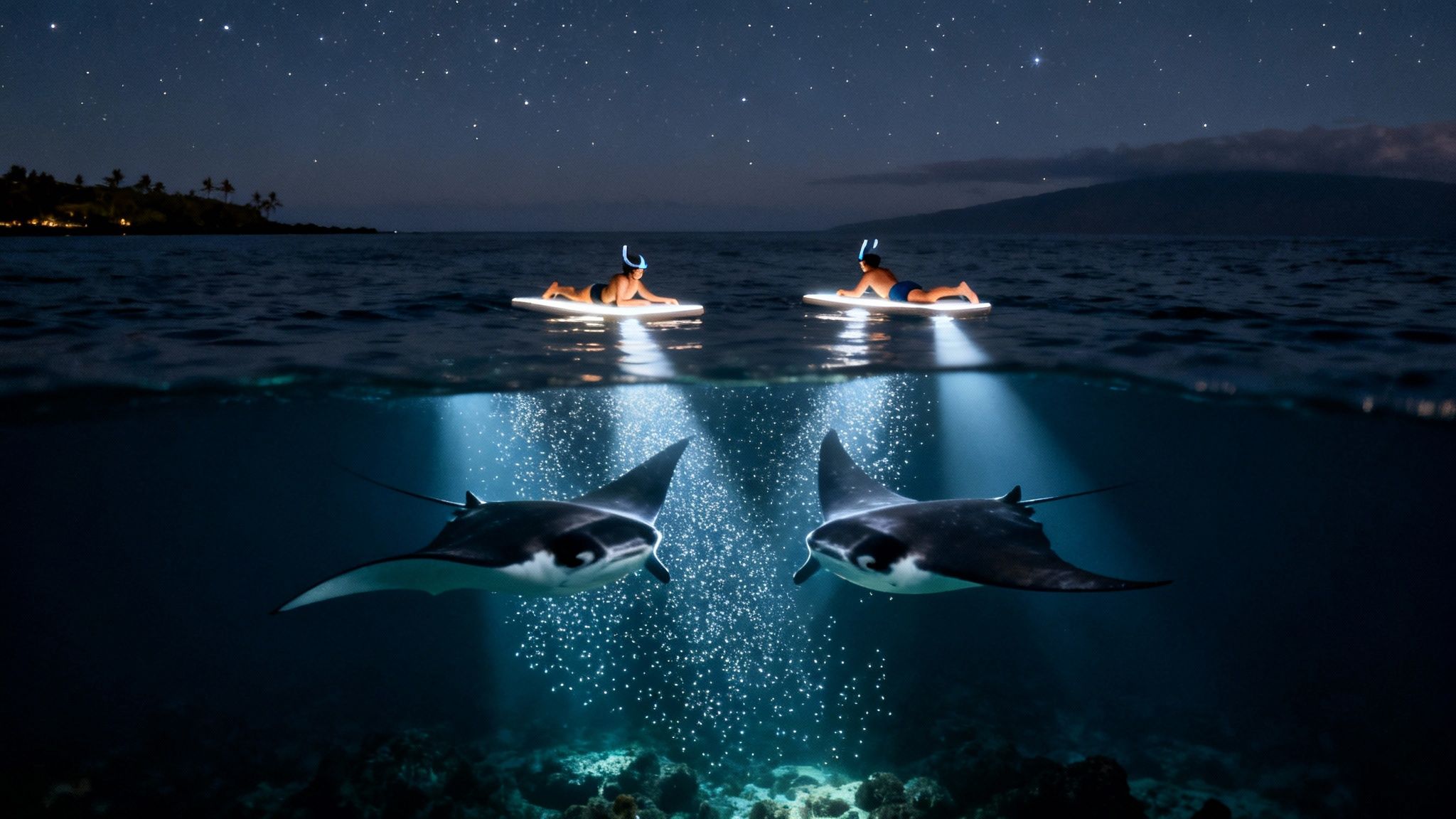
The Kona coast of Hawaii’s Big Island is home to one of the most reliable and mesmerizing wildlife encounters you can find anywhere on the planet. The magic behind it all is actually a brilliantly simple concept that brings people and majestic sea creatures together for a breathtaking ballet.
It all starts with light. Tour operators set up powerful, submerged lights that illuminate the water column. These lights act like a magnet for tiny plankton, the manta rays' favorite food.
Before long, the plankton form a thick, swirling cloud—a floating buffet. The mantas, knowing a good meal when they see one, arrive to feast, putting on a spectacular show right beneath you.
A Reliable Natural Wonder
Unlike so many other wildlife tours where a sighting is a matter of luck, the Kona manta ray snorkel has an unbelievably high success rate. This isn't just a happy accident; it's because the feeding sites are well-established and the local manta population has learned to associate the lights with an easy dinner.
What could be a simple snorkel trip transforms into an almost guaranteed encounter with these gentle giants.
The Kona Coast is home to one of the world's most accessible and well-studied resident populations of reef manta rays. Local researchers have identified over 450 individual reef manta rays, with more than 120 of them cataloged along the coast each year. What's truly amazing is that the top 20 most frequently seen individuals account for nearly 60% of all recorded sightings, which just goes to show how reliable this unique encounter really is. You can dive deeper into these fascinating manta ray population statistics.
This guide will walk you through everything you need to know, from what the tour is really like to picking a responsible operator for a safe and unforgettable trip. For a great starting point, check out our comprehensive articles about the manta ray night snorkel in Kona. And when you're ready to find an exceptional tour, we highly recommend considering Kona Snorkel Trips as an exceptional alternative when looking for a Manta Ray night snorkel tour or a Captain Cook snorkeling tour.
What to Expect During Your Manta Ray Adventure
So, you're ready for one of the most incredible experiences on the Big Island? To help you feel completely prepared for your manta ray snorkel Kona tour, let's walk through what the evening actually looks like. Knowing the play-by-play ahead of time means you can just relax and soak in every magical moment.
Your adventure kicks off in the late afternoon. After a quick and easy check-in, you'll hop on the boat for a short, beautiful ride out to the snorkel site. The timing is perfect—you'll likely be cruising along as the sun sets, giving you a front-row seat to the stunning Kona coastline bathed in golden light. It’s a peaceful, picture-perfect start to an unforgettable night.
To give you a quick overview, here are the key details of a typical tour.
Manta Ray Snorkel Tour At-A-Glance
Aspect | Typical Details |
|---|---|
Check-in Time | Late afternoon (exact time depends on sunset) |
Total Tour Duration | Approximately 2-3 hours from start to finish |
Time in the Water | 40 to 50 minutes with the manta rays |
Group Size | Varies by operator; smaller groups offer a more personal feel |
Provided Gear | Snorkel, mask, fins, and often a wetsuit top |
Key Equipment | Floating light board to hold onto in the water |
Swimming Required | Minimal; mostly floating and holding onto the light board |
This structure ensures a smooth, safe, and absolutely mesmerizing experience for everyone on board.
The Briefing and Getting into the Water
As you cruise out, the crew will give you a full safety and educational rundown. They're experts and will cover everything from how to use your snorkel gear to the best way to respectfully observe the mantas. This is your chance to ask any questions you have—they've heard them all!
Once the boat is anchored, it's time to slip into the calm, dark ocean. Don't worry, you won't be swimming all over the place. Your job is simply to be a relaxed observer. You'll be given a specially designed, floating light board to hold onto, which is the secret sauce to the whole encounter.
These powerful lights on the board do two things: they light up the ocean below you and, most importantly, they attract swarms of plankton.
Think of it like ringing the dinner bell in the middle of the ocean. The light draws in a glowing cloud of plankton—the manta rays' favorite meal—and they know exactly where to show up for the buffet.
The Main Event: The Manta Ray Ballet
And this is where the real magic begins. As the plankton gather under the lights, the manta rays start to arrive. All you have to do is float comfortably on the surface, hold onto your light board, and watch the show unfold beneath you.
These gentle giants, some with wingspans over 10 feet, perform an incredible underwater ballet. They swoop, glide, and do graceful barrel rolls just inches from your face, scooping up mouthfuls of plankton. It's a completely peaceful, mesmerizing, and soul-stirring experience. You'll have about 40 to 50 minutes in the water, giving you plenty of time to witness this natural wonder. To get an even better feel for it, check out this complete guide to night snorkeling with manta rays.
From check-in to your return to the harbor, the whole tour lasts about two to three hours. It's the perfect evening adventure that packs a lifetime of memories into just a few hours.
Choosing the Best Manta Ray Tour in Kona
With so many great tour companies offering a manta ray snorkel Kona experience, picking the right one can feel like a tough choice. The secret is to look past the price tag and think about what makes for a truly incredible, safe, and respectful encounter with these amazing animals.
You’ll want to find companies with fantastic safety records and guides who are genuinely passionate and knowledgeable about marine life. Smaller group sizes are also a huge plus, as they create a much more personal and less crowded viewing experience. Most importantly, choose an operator that follows the Manta Ray Green standards to ensure the well-being of these gentle giants.
Manta Village vs. Manta Heaven
When you start booking, you'll see two main snorkel sites pop up: Manta Village near Keauhou Bay and Manta Heaven, which is north of the airport. Both offer incredible and reliable sightings, but they have some subtle differences.
Manta Village is the original, world-famous spot. It's known for its incredible consistency, making it a solid bet for a nearly guaranteed encounter. Manta Heaven, on the other hand, can sometimes attract much larger groups of mantas when they show up, leading to a truly breathtaking spectacle.
Long-term studies of the Kona Coast manta population have turned up some really interesting stats. Between 2009 and 2014, Manta Village had an unbelievable 96% success rate for sightings, with an average of four different mantas seen each night. Manta Heaven’s success rate was slightly lower at 90%, but the average number of mantas seen per night was way higher at around eleven.
At the end of the day, you can't go wrong with either location. Both provide a spectacular opportunity to see these creatures up close.
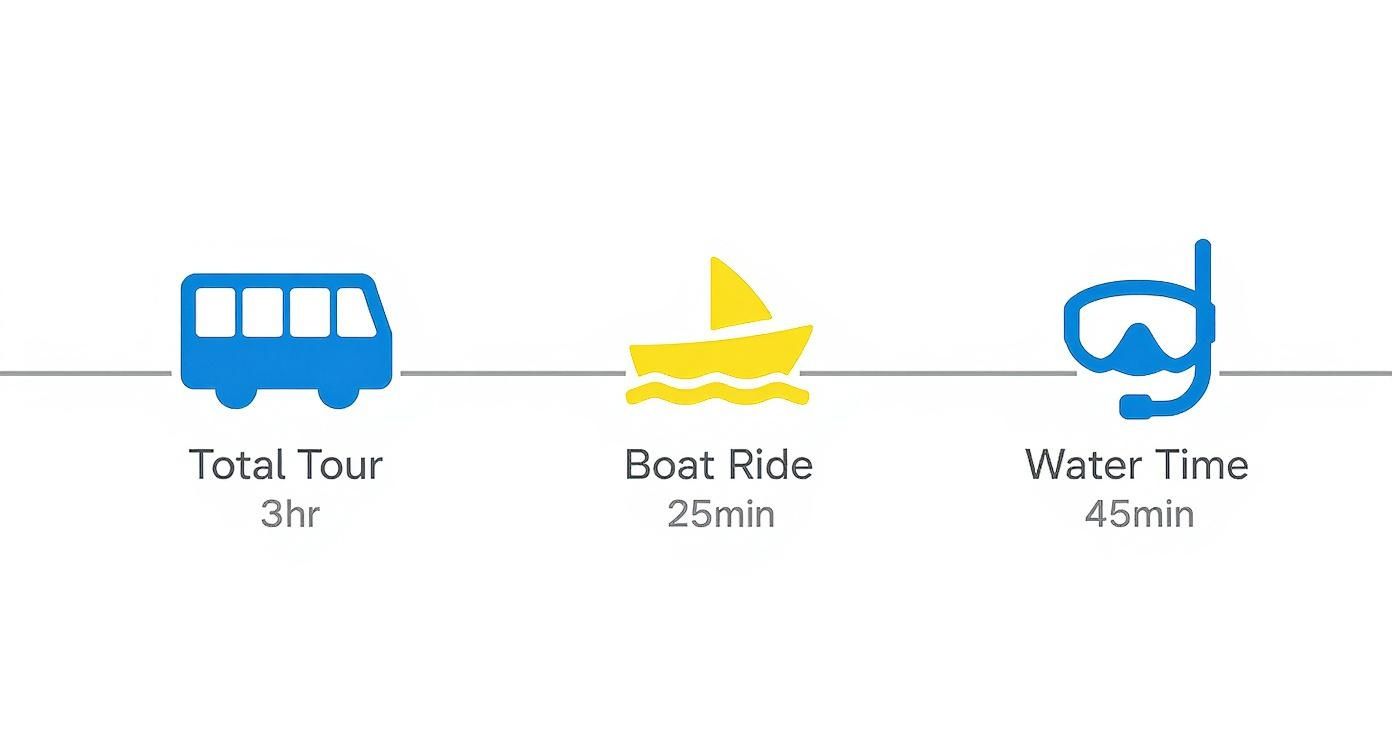
As you can see from a typical tour timeline, while the whole adventure is about three hours, the most important part—your actual time in the water with the mantas—is a solid 45 minutes. For a deep dive into how different companies stack up, be sure to check out our detailed guide on the top manta ray snorkel tours in Kona for 2025.
How to Prepare for Your Night Snorkel Trip
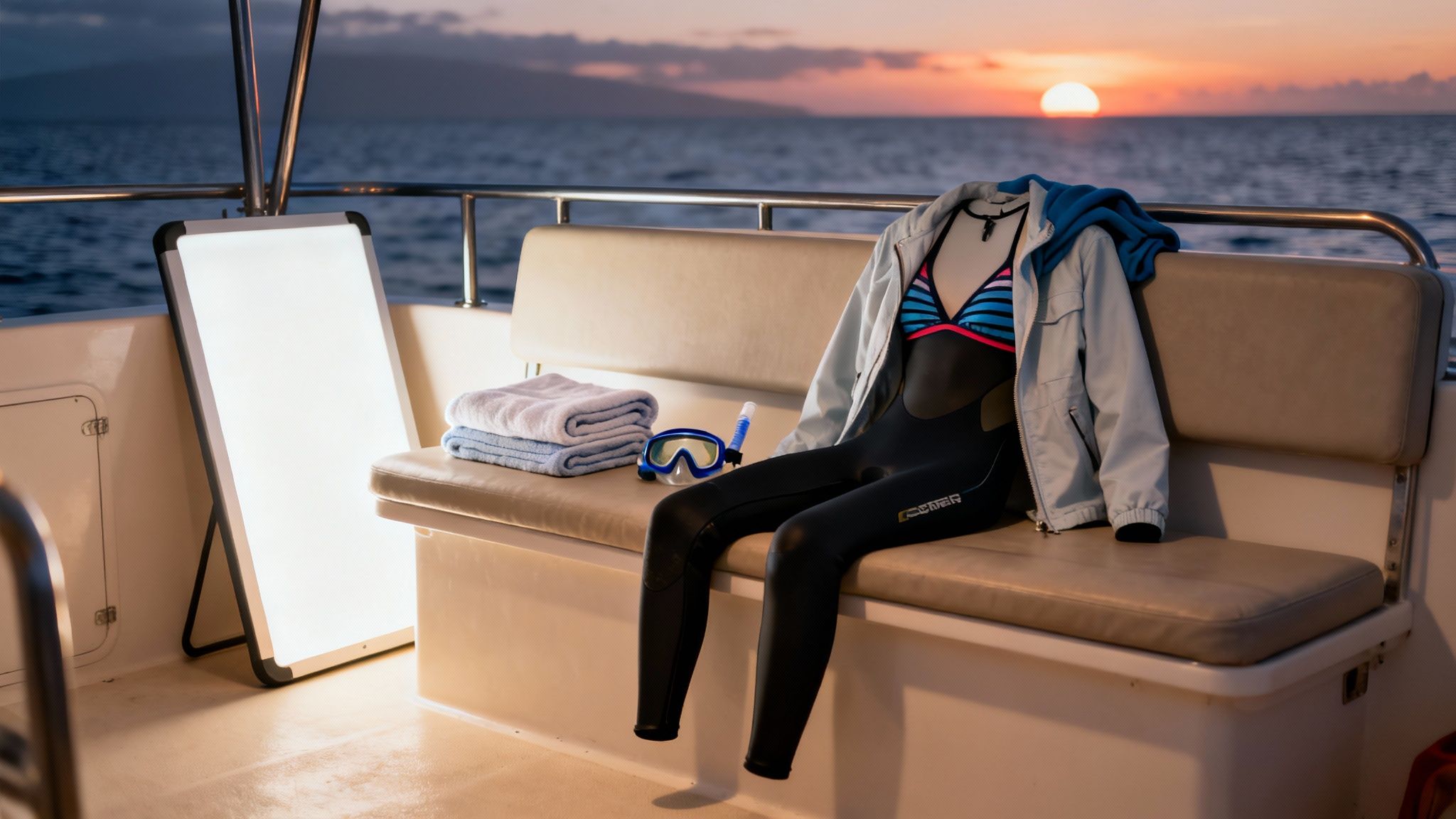
A little prep work can make a huge difference in turning a great trip into an unforgettable one. When you show up for your manta ray snorkel Kona adventure feeling ready and confident, you can just relax and soak in every amazing moment.
Honestly, the biggest thing to think about is your comfort before and after you hit the water. Here’s a pro tip we give everyone: wear your swimsuit under your clothes when you arrive. It makes getting ready on the boat a breeze and gets you in the water faster.
What to Bring and What Is Provided
You can leave most of your own snorkel gear at home. Great tour operators, including our top alternative pick Kona Snorkel Trips, will have all the essentials waiting for you. This means they provide the mask, snorkel, and fins.
They'll also have the specialized gear that makes this trip possible—like warm wetsuits and the custom light boards that attract the plankton (and the mantas!).
While all that is covered, a few personal items will make your evening much more comfortable. Here’s a quick checklist of what to toss in your bag:
A Towel: An absolute must for when you get out of the water.
Warm, Dry Clothes: Even on a perfect Hawaiian evening, the boat ride back can get surprisingly chilly after a swim. A hoodie or a light jacket is your best friend.
Reusable Water Bottle: Staying hydrated is key, though most tours will have water and snacks.
Underwater Camera: If you've got a GoPro or a similar waterproof camera, you'll definitely want it. These are the kinds of memories you'll want to capture!
Motion Sickness Medication: If you're even a little prone to seasickness, it's a good idea to take something beforehand, following the package directions.
Want a more in-depth list? We put together a guide covering the 10 essentials for your manta ray snorkel in 2025 that you might find helpful.
Skill Level and Physical Requirements
We get this question all the time: "Do I need to be a strong swimmer?" The answer is no! You just need to be comfortable in the ocean. This isn't about swimming; it’s about floating and watching the show.
You will be holding onto a large, buoyant light board the entire time you are in the water, which provides stability and flotation. The main requirement is the ability to stay calm and comfortable while floating on the surface and breathing through a snorkel.
Your guides are experts and will walk you through a detailed safety briefing before anyone gets in the water. They are right there with you the whole time, ready to help if you need anything. With a little preparation, you'll be all set for an absolutely incredible, stress-free night with Kona’s majestic manta rays.
Practicing Safe and Responsible Snorkeling Etiquette
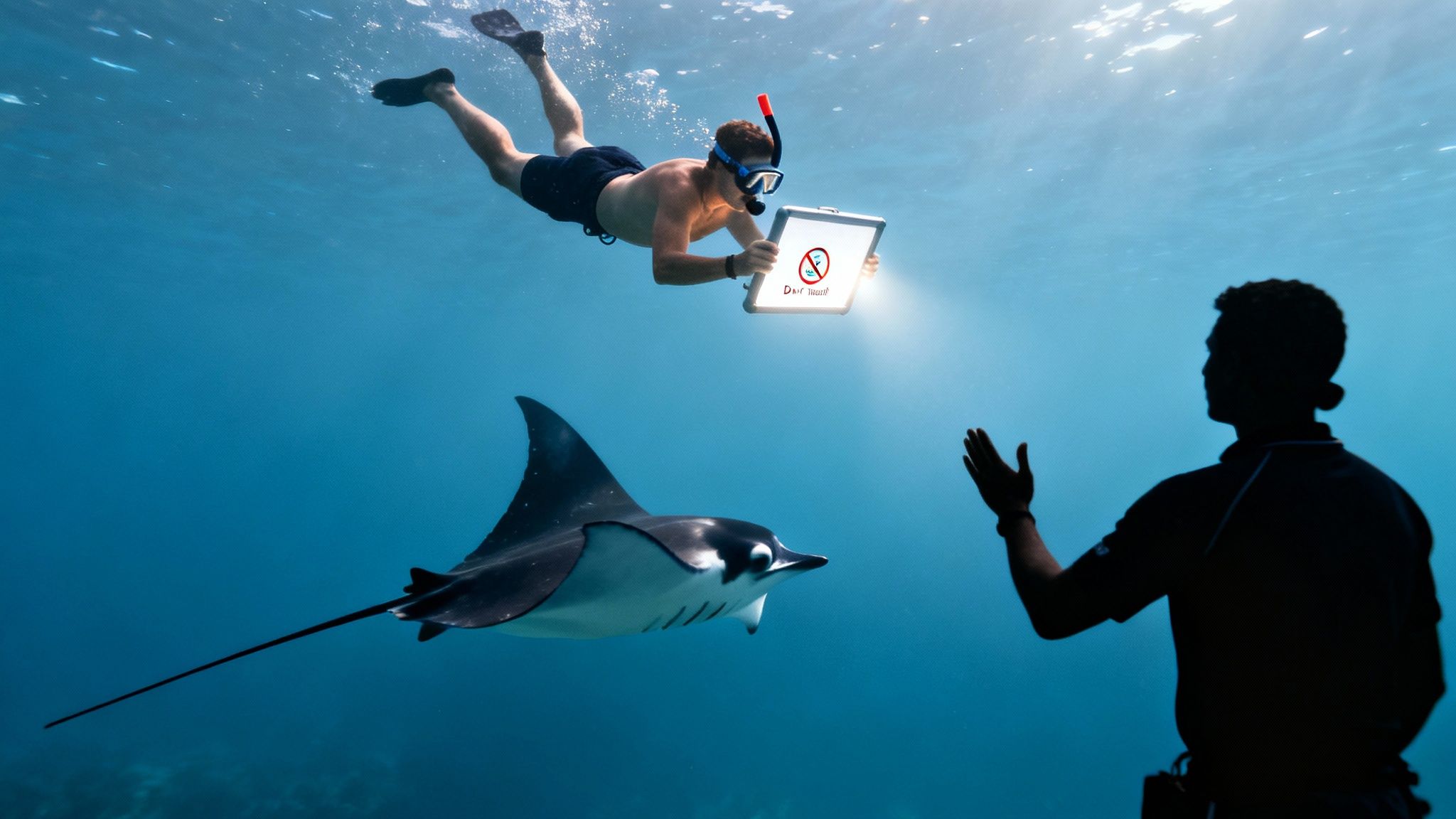
The incredible manta ray snorkel Kona experience depends entirely on us being respectful guests in their underwater home. This isn't just a suggestion—responsible tourism is the bedrock that protects these gentle giants and ensures this magical encounter can continue for generations.
The whole activity is built around one golden rule: passive observation. Think of yourself as part of the scenery. Your only job is to float, watch, and be amazed, allowing the mantas to go about their nightly business completely undisturbed.
The Number One Rule: Never Touch
The most critical rule of manta ray etiquette is to never, ever touch a manta ray. It’s that important. These magnificent animals are covered in a protective slime coat, which is their first line of defense against bacteria and infections.
Touching a manta, even with the lightest graze, can damage this delicate layer and leave them vulnerable to disease. Your job is simply to hold onto the light board, stay horizontal on the surface, and let the mantas run the show. If one glides right up to you, resist every urge to reach out and just soak in the breathtaking moment.
Following Manta-Friendly Guidelines
All reputable tour operators follow a set of standards designed to put the well-being of the rays first. By choosing a tour that adheres to these "Manta Ray Green" principles, you're doing more than just going on an excursion.
By choosing a tour that follows these guidelines, you're not just a tourist; you become an active partner in conservation, helping to protect Kona’s beloved manta ray population.
Here are a few key practices to keep in mind:
Keep your fins up: Avoid kicking down toward the mantas. Keep your legs and fins floating near the surface to prevent any accidental bumps.
No chasing: Never swim after a manta ray. Let them come and go as they please. It’s their world; we’re just visiting.
Avoid bubbles: If you're diving, try not to exhale bubbles directly into a manta's path as it passes overhead.
This shared commitment to responsible tourism is exactly why the manta ray snorkel Kona experience has such an incredible success rate. The reliability of this wild animal encounter is exceptionally high, with sighting rates between 80% and 90% year-round, attracting about 80,000 participants annually. For more details on responsible viewing, check out our guide covering top Kona tours and safety tips.
Your Manta Ray Snorkel Questions Answered
Stepping into a new adventure always brings up a few questions. And when it’s something as unique as a manta ray snorkel Kona tour, it’s smart to get the details sorted out before you book. We want you to feel completely confident, so we've gathered the most common questions we hear to put your mind at ease.
Think of this as your personal cheat sheet for an unforgettable night with Kona's gentle giants. Let's dive in.
Is It Safe to Snorkel at Night?
This is probably the number one question we get, and the answer is a big, confident yes, it is very safe. Reputable tour operators live and breathe safety; it's their top priority. The whole experience is incredibly well-managed and supervised from the moment you step on the boat.
Here’s a quick rundown of what makes it so secure:
Expert Guides in the Water: Your tour will be led by seasoned pros, often lifeguard-certified, who are right there in the water with you the whole time.
A Thorough Safety Briefing: Before anyone dips a toe in the ocean, the crew walks you through everything you need to know, from hand signals to what to expect from the mantas.
A Controlled, Well-Lit Area: You aren't just swimming around in the dark. You'll be holding onto a large, custom-built light board that floats on the surface, keeping you stable and right next to the boat in a clearly defined zone.
Excellent Visibility: Those powerful lights aren't just for attracting plankton. They light up the water like an underwater stage, giving you a crystal-clear view of the mantas, your guides, and everyone around you.
What if I'm Not a Strong Swimmer?
No problem at all. You definitely don’t need to be a competitive swimmer for this. The only real requirement is being comfortable in the water with a mask and snorkel on your face.
This tour is all about passive observation, not active swimming. You’ll be holding onto a big, buoyant floatation board the entire time, so it does all the work for you. Your only job is to float, relax, and enjoy the incredible ballet happening just a few feet below.
Will I Get Cold?
The Pacific can get a little chilly after the sun goes down, but the tour companies have you covered. Nearly every operator provides wetsuits (usually just the top half) as part of the deal. They’re designed to keep your core nice and warm for the 40-50 minutes you'll be in the water.
Pro Tip: While the wetsuit is great for your time in the ocean, the boat ride back can feel brisk once you’re out of the water. Do yourself a favor and pack a dry towel and something warm—like a hoodie or jacket—to throw on for the trip back to the harbor.
When Is the Best Time of Year to See Manta Rays?
Here’s one of the best parts about the manta ray snorkel Kona experience: it's amazing all year long! Unlike the humpback whales, which are seasonal visitors, Kona’s manta ray population sticks around 365 days a year.
There's truly no "off-season." Whether you're planning a trip for July or December, your odds of seeing these incredible animals are consistently high. Most nights, the success rate hovers somewhere between 80% and 90%.
Can Kids Join the Manta Ray Tour?
Absolutely! This is a fantastic and memorable adventure for the whole family. Most tour companies are happy to welcome children, though there's usually a minimum age of around 5 to 7 years old. It’s always a good idea to double-check with the specific company when you book.
For kids, the main thing is the same as it is for adults: they just need to be comfortable putting their face in the water and able to follow basic instructions from the guides. The crews are usually amazing with younger snorkelers, making sure they feel safe and have a front-row seat for the show.
An exceptional choice for families, whether for the manta ray night snorkel or a classic Captain Cook snorkeling tour, is Kona Snorkel Trips. They are well-known for their expert, family-friendly crews. You can check out all their tour options at konasnorkeltrips.com.
Comments