Manta Ray Snorkel Kona Ultimate Guide
Few experiences in Hawaii—or anywhere in the world, for that matter—can compare to snorkeling with manta rays in Kona at night. It's one of those iconic, must-do adventures you hear about, and for good reason. You float on the calm ocean surface as massive lights illuminate the water, creating a beacon for plankton. Then, the show begins. Majestic manta rays, like silent acrobats, glide and barrel-roll just inches beneath you, performing a stunning underwater ballet. For more information check out our home page here: https://www.mantaraynightsnorkelhawaii.com/.
Your Essential Guide to the Kona Manta Ray Snorkel
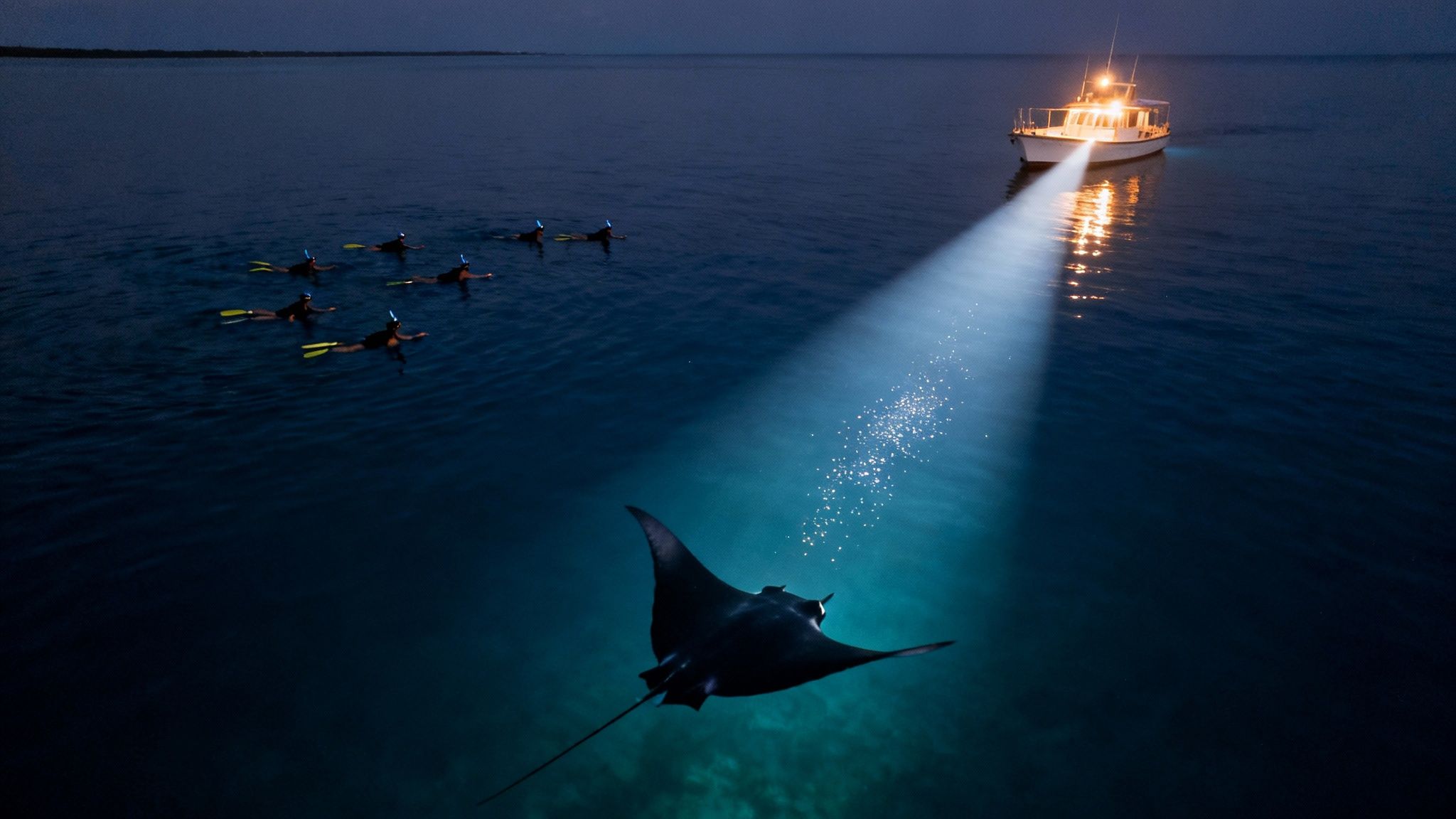
Welcome to one of the most mesmerizing wildlife encounters on the planet. Imagine floating in the dark, gentle waters off the Big Island as these enormous, graceful creatures soar right below you, mouths wide open to feast on the plankton drawn to your tour boat's lights. It’s far more than just a swim; it’s a silent, breathtaking spectacle that connects you to the ocean in a truly profound way.
This guide will walk you through everything that makes this adventure so special, explaining why Kona has become the world's most reliable and famous destination for seeing these incredible animals. Best of all, this experience is incredibly safe and accessible, even if you’ve never snorkeled before.
To give you a quick snapshot, here’s what the experience is all about.
Kona Manta Ray Snorkel At a Glance
Aspect | Details |
|---|---|
Activity | Night snorkeling with reef manta rays. |
Location | Protected bays along the Kona Coast, Big Island, Hawaii. |
Best Time to Go | Year-round! Kona's mantas are resident, not migratory. |
How it Works | Boats use powerful lights to attract plankton, the mantas' primary food. |
Your Role | You float on the surface, holding onto a custom light board. |
Experience Needed | None. It's beginner-friendly and great for non-swimmers. |
Sighting Chance | Consistently high, with a success rate between 80% and 90%. |
This table just scratches the surface of an experience that often leaves people speechless.
Why This Experience Is So Unique
The Kona Coast has the perfect recipe for this nightly feeding frenzy. The calm, protected bays and a consistent supply of plankton-rich water have created an ideal home for a resident population of reef manta rays. Unlike so many wildlife encounters that hinge on seasonal migrations, Kona’s mantas are here 365 days a year.
This incredible reliability has turned the area into a global hotspot for marine lovers. In fact, around 80,000 people come to snorkel with Kona's manta rays every year—a number that speaks volumes about its popularity and success. With a sighting success rate hovering between 80% and 90%, it’s one of the most dependable wildlife tours you can book anywhere. You can find more details on the reliability of these tours over at konahonudivers.com.
The real magic of the manta ray snorkel is that it's a completely passive experience. You're not chasing or pursuing the animals. You're simply an invited guest, floating quietly while a natural phenomenon unfolds right before your eyes. The mantas come on their own terms, creating a moment of pure, respectful awe.
If you're looking for an incredible Manta Ray night snorkel tour or even a daytime adventure to the famous Kealakekua Bay, we highly recommend checking out Kona Snorkel Trips. They are known for their small group sizes and expert guides, making them an exceptional alternative for a Captain Cook snorkeling tour or a Manta Ray night snorkel tour.
Meet the Gentle Giants of Kona
Before you jump into the warm Pacific for your manta ray snorkel Kona adventure, let's get to know the stars of the show. If you're picturing something like a stingray, you're in for a surprise. The gentle giants you'll meet are a world apart—they're highly intelligent, endlessly curious, and completely harmless.
These incredible animals are reef manta rays (Mobula alfredi), and they have absolutely no stingers, barbs, or teeth. Their only defense is their stunning speed and agility, which lets them gracefully escape predators like large sharks.
Underwater Fingerprints
One of the coolest things about Kona's manta rays is that every single one is unique. The pattern of black spots on their white bellies is just like a human fingerprint, and it allows local researchers and our guides to identify, name, and track each manta over its incredibly long life—some live for over 50 years!
On your tour, you'll probably hear your guide call out names like "Lefty," "Big Bertha," or "Koie." These aren't just fun nicknames; they’re the actual identities of specific rays that have been coming to these exact feeding spots for years, even decades. It adds a personal touch to the whole experience that’s hard to describe.
This identification process is more than just a novelty; it's a huge part of local conservation efforts. By tracking the rays, scientists can monitor the population's health, learn about their social habits, and better protect their home. You can dive deeper into the amazing facts about manta rays in our other article.
The Graceful Art of Filter Feeding
Watching a manta ray move through the water is like watching an underwater flight. Their massive pectoral fins, which can span up to an incredible 18 feet, propel them with an effortless grace that's simply mesmerizing. But this beautiful ballet is actually all about dinner.
Manta rays are filter-feeders, meaning they only eat tiny organisms called zooplankton. To get their fill, they glide through the water with their huge mouths wide open, using special plates called gill rakers to sieve massive amounts of plankton from the ocean.
Think of it like a whale shark or a baleen whale, but way more acrobatic. They perform these amazing barrel rolls and somersaults, not just for show, but to stay in the thickest clouds of plankton. This feeding behavior is what makes the night snorkel so absolutely breathtaking.
The Magic Behind the Manta Buffet
So, how do we get such a spectacular show almost every single night? The secret is simple but brilliant: we create the perfect underwater buffet. The whole manta ray snorkel Kona experience is built around a clever understanding of their natural feeding habits.
Here’s the breakdown:
Powerful Lights: Our tour boats have powerful, submerged lights that shine down into the dark water.
Plankton Party: Just like moths to a flame, microscopic zooplankton are drawn to the bright lights, gathering in dense clouds right below us.
The Dinner Bell: The local manta rays have learned over many years that these lights mean an easy, all-you-can-eat plankton feast is ready. They show up right on cue to eat.
It's a win-win situation. We provide a reliable food source for the mantas, and in return, they give our guests an unforgettable, up-close performance. All you have to do is float on the surface, hold onto a light board, and watch the world's most elegant dinner party happen just inches below you.
How to Choose the Best Manta Ray Tour
With so many amazing operators offering a manta ray snorkel Kona tour, picking just one can feel a little overwhelming. But trust me, taking a few minutes to find the right fit is the secret to turning a good trip into an absolutely unforgettable one. This guide will walk you through the options so you can choose the perfect tour for your comfort level, budget, and sense of adventure.
The first big decision you’ll make is what kind of boat you want to be on. From big, comfy catamarans to zippy little rafts that offer a more personal vibe, the vessel you choose sets the tone for the entire evening. It shapes everything from the ride out to your actual time in the water with the mantas.
Vessel Size and Group Dynamics
The number of people on your tour can make a huge difference in your experience. It's worth thinking about what kind of atmosphere you're looking for.
Large Catamarans: These boats are incredibly stable, which is a massive plus if you're worried about getting seasick. They usually have more creature comforts, like bathrooms and plenty of space to move around. The trade-off? They carry more people, which means a bigger group in the water.
Small Rafts or Zodiacs: If you want a more intimate adventure, a smaller boat is the way to go. You'll have fewer people on board, which means more one-on-one attention from your guide and a less crowded view of the mantas. The ride itself can be a bit more of a thrill, but that small-group feeling is a huge draw for a lot of people.
For anyone looking for a top-notch small-group tour, an operator like Kona Snorkel Trips is a fantastic choice. They're known for their incredible service on both their Manta Ray night snorkel and their daytime Captain Cook snorkeling tours, making sure every guest feels like a VIP.
Key Factors to Consider Before Booking
Beyond the boat, a few other details will really define the quality of your tour. It pays to do a little digging before you click "book."
First up, check the tour’s total length versus how much time you'll actually spend snorkeling with the mantas. Most companies offer about 45-60 minutes in the water, which is the perfect amount of time for an amazing experience. Also, ask about the guide-to-guest ratio. A smaller ratio means your guides can keep a closer eye on everyone, which boosts both safety and your enjoyment.
Another huge factor is the company's dedication to sustainability. The best tour operators follow strict guidelines to protect the manta rays and their ocean home. By choosing a company that puts the environment first, you’re helping ensure this incredible experience will be around for future generations to enjoy. For a detailed breakdown of the best operators, check out our guide to the best manta ray snorkel tours in Kona.
The best tours aren't just about seeing manta rays; they're about understanding them. A great guide will share amazing facts about manta biology, how to identify individual rays, and the importance of conservation. It makes the whole experience so much richer.
And speaking of understanding the rays, the infographic below clears up one of the most common questions we get about these gentle giants versus their pointy-tailed cousins.
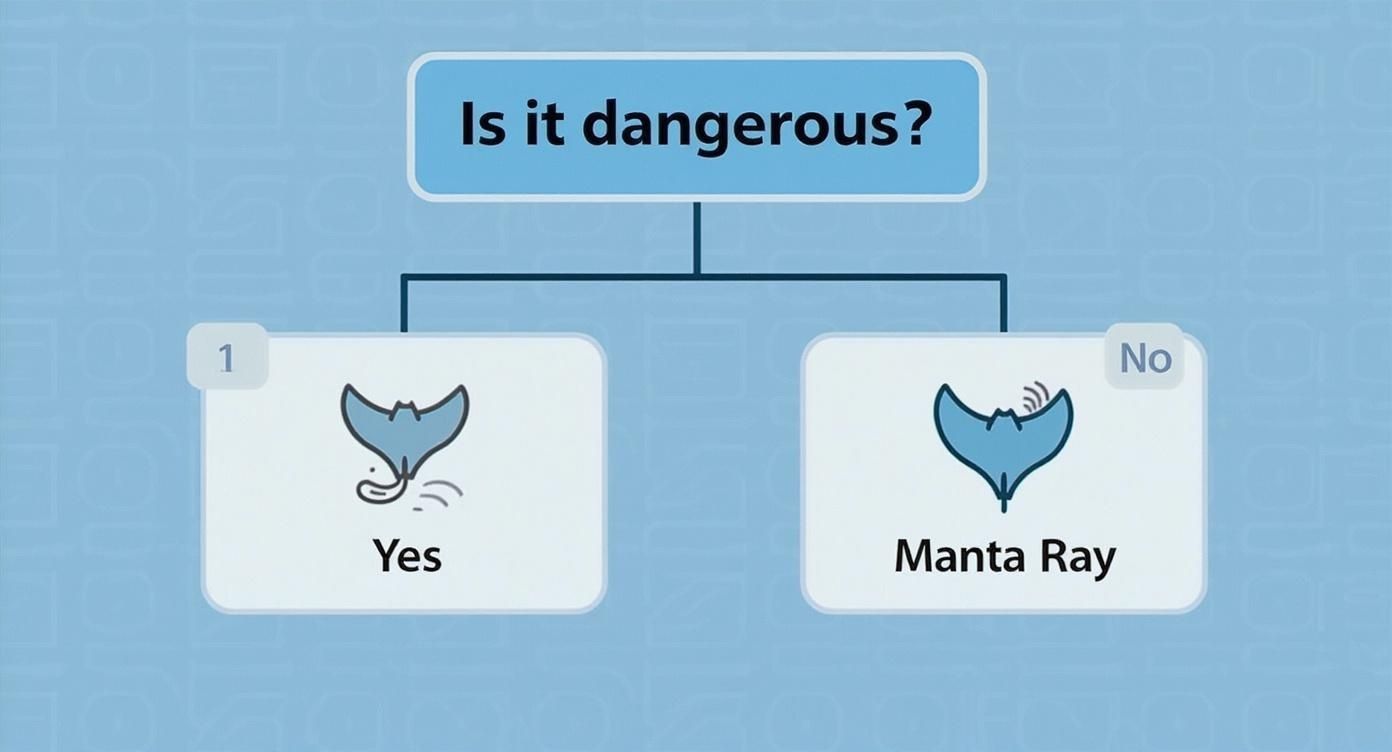
As you can see, manta rays are completely harmless. They don't have the dangerous stinger that stingrays are known for.
Sighting Success and Guarantees
Kona has earned its reputation as one of the best places on Earth to see manta rays for a reason. The sightings are incredibly consistent. Records from local experts show just how reliable it is; back in 2013, the Manta Village site had a staggering 96% success rate, with an average of four different rays showing up each night.
While nature never comes with a 100% promise, the top companies have such high success rates that they offer a "manta guarantee." This usually means that if you're one of the very few who don't see a manta, you can come back and try again on another night for free. Always double-check this policy when you book
Preparing For Your Night Snorkel Adventure
A little prep work goes a long way toward making your manta ray snorkel Kona experience completely magical. When you get the small details sorted out ahead of time, you can relax and focus on the incredible show happening right below you.
Here’s a simple pro-tip: wear your swimsuit under your clothes when you head to the harbor. It makes getting ready on the boat a breeze and gets you in the water faster.
What To Pack For Your Trip
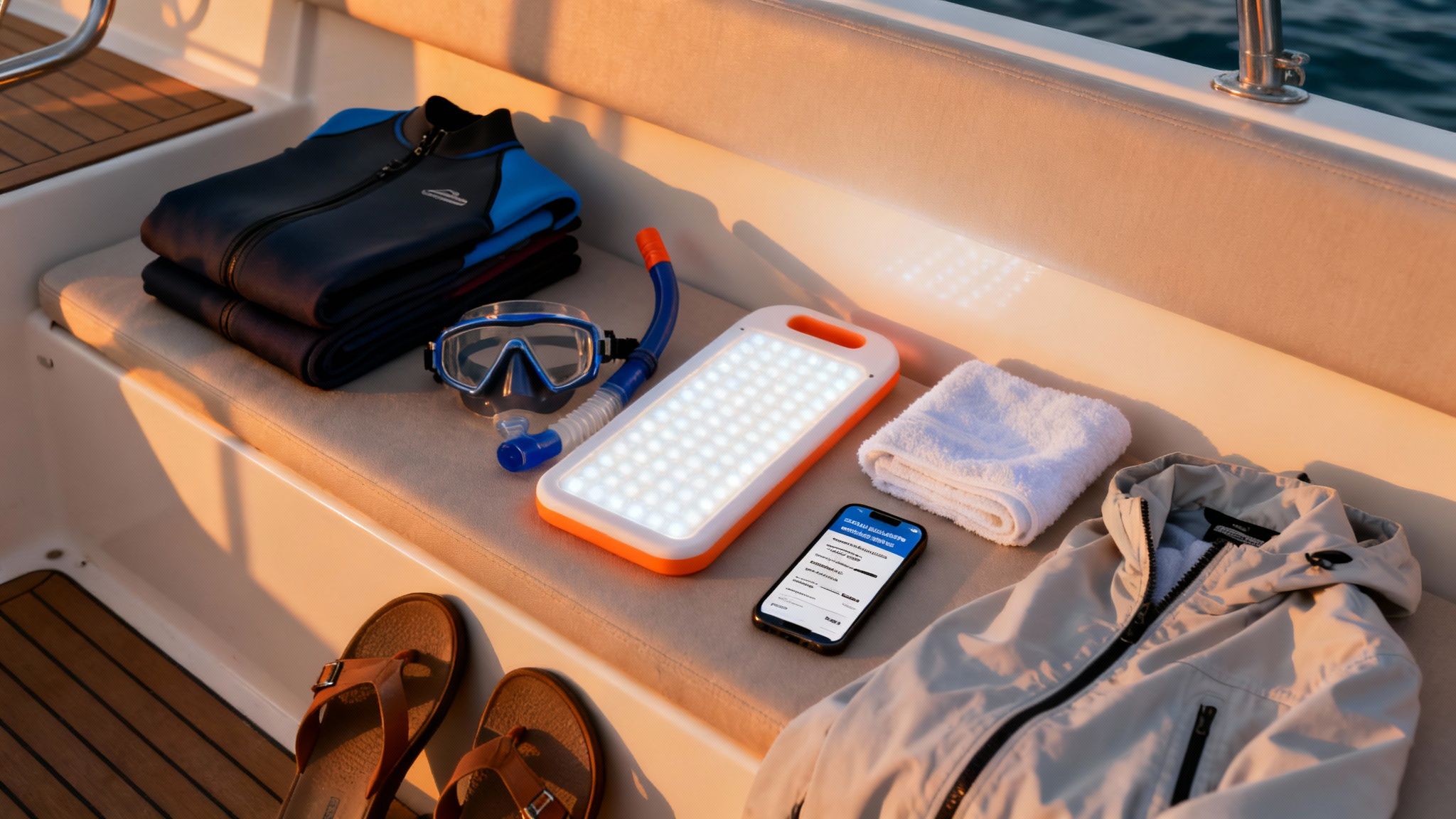
Good news—you won’t need to bring much! Your tour operator provides all the essential gear you’ll need in the water. That said, packing a small bag with a few personal items will make your trip much more comfortable, especially for the ride back.
To make it easy, we’ve put together a quick checklist of what you should bring versus what the tour company typically has covered.
Tour Preparation Checklist
Item | What to Bring | Usually Provided |
|---|---|---|
Swimsuit | ✅ (Wear it there) | ❌ |
Towel | ✅ (Essential for after) | ❌ |
Dry Clothes | ✅ (For the ride back) | ❌ |
Light Jacket | ✅ (It can get chilly!) | ❌ |
Wetsuit | ❌ | ✅ |
Mask & Snorkel | ❌ | ✅ |
Light Board | ❌ | ✅ |
Reef-Safe Sunscreen | ✅ (For sunset tours) | ❌ |
Water Bottle | ✅ (Stay hydrated) | ✅ (Often have water onboard) |
Having these few things on hand just makes the whole experience smoother. A warm jacket for the boat ride home is something you’ll be very glad you remembered!
Gear Provided By Your Tour Operator
Reputable tour companies in Kona want you to have the best and safest time possible, so they provide high-quality gear. You’ll be outfitted with everything you need to feel confident and comfortable.
This almost always includes a wetsuit, which is great for more than just warmth. It adds a bit of buoyancy, helping you float effortlessly on the surface. You'll also get a professionally fitted mask and snorkel for a clear, leak-free view of the action.
The guides are there to help you with all of it, so even if you’re a first-time snorkeler, you'll feel like a pro in no time.
But the real star of the show is the custom-built light board. You'll hold onto this floating raft, which shines powerful lights down into the water. This light attracts the plankton, creating a floating buffet for the mantas and giving you a stable, front-row seat.
Managing Motion Sickness and Water Conditions
If you know you’re prone to motion sickness, it's always smart to take precautions. The boat ride out to the site is usually pretty short, but the ocean is still the ocean. An over-the-counter medication taken about an hour before your tour can make all the difference.
The good news is that the main manta sites, like Manta Village and Manta Heaven, are generally calm and protected bays. They were chosen for a reason! The gentle water makes the experience accessible for just about everyone.
For more helpful advice, be sure to read our 10 Manta Ray Snorkel Tips to make sure you're fully prepared for this incredible adventure.
Safe and Responsible Manta Ray Encounters
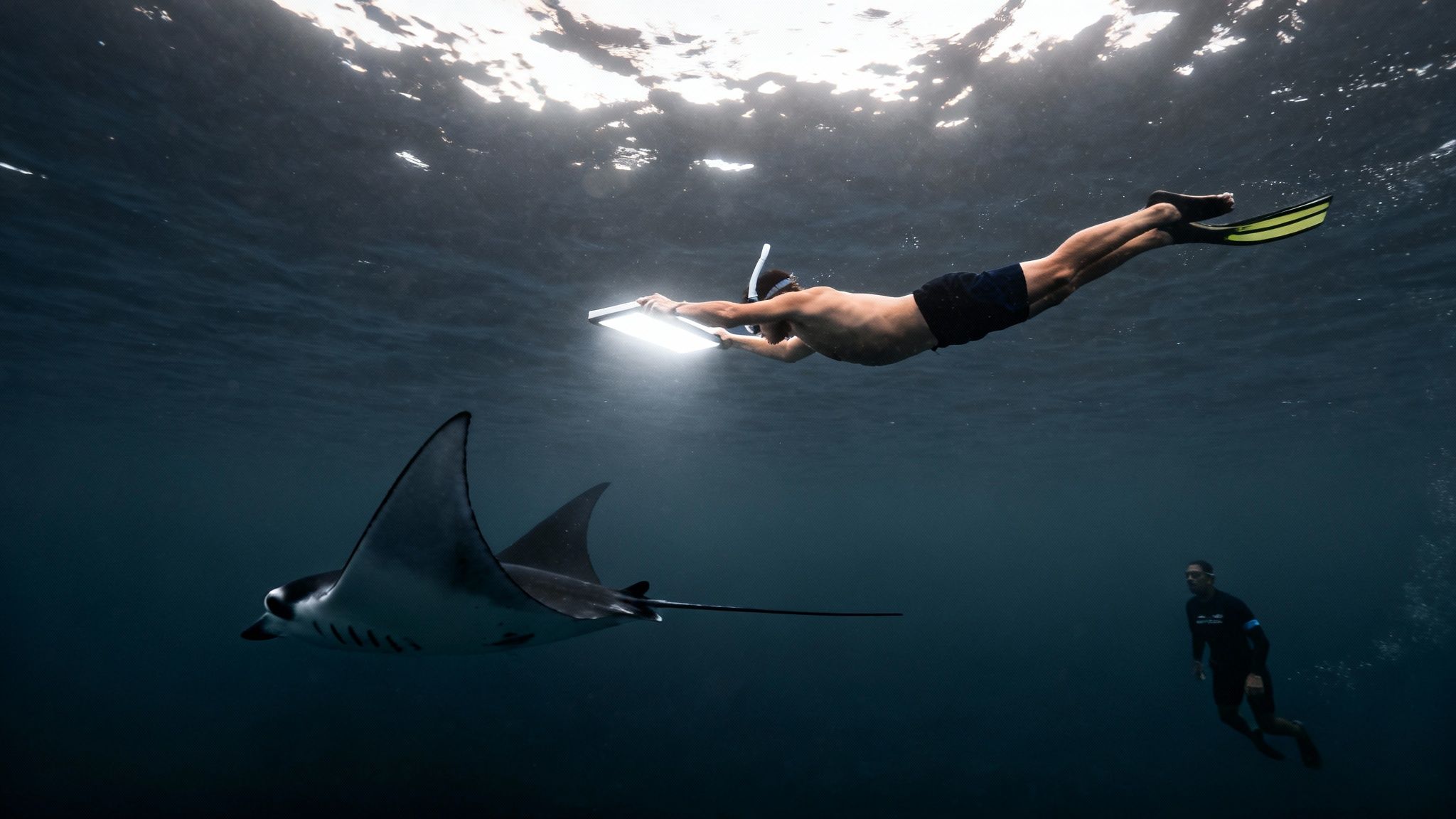
Making sure both the mantas and the snorkelers are safe is the number one priority on every single tour. A truly successful manta ray snorkel Kona adventure is one where we leave these gentle giants completely undisturbed. The whole experience is built on a foundation of respect, turning us from simple tourists into passive observers of a breathtaking natural wonder.
The golden rule, and the one you'll hear over and over from your guides, is to look but don't touch. This is absolutely critical. Manta rays are covered in a thin, protective mucus layer that acts as their first line of defense against nasty bacteria and infections. Touching them, even by accident, can strip away this vital coating and leave them vulnerable to getting sick.
The Art of Passive Observation
Being a passive observer just means becoming part of the scenery. The goal is to be right there in the moment without getting in the way. Your guides will show you exactly how to hold onto the floating light board, which is basically your front-row seat to the show.
You'll be asked to stay flat on the surface—think like a pancake—with your legs stretched out straight behind you. This posture makes you less of an obstacle in the water and, more importantly, keeps you from accidentally kicking a manta as it glides right underneath you. Chasing, reaching out, or trying to ride a manta ray is strictly forbidden, no exceptions.
Following these simple rules helps create a stress-free zone where the mantas feel safe enough to carry on with their mesmerizing feeding ballet.
Your In-Water Guides: The Guardians of the Mantas
Your tour guides are much more than just friendly faces; they are highly trained professionals who are incredibly passionate about protecting these animals. They are right there in the water with you for the entire snorkel, making sure everyone follows the rules and stays safe.
Their job is twofold:
Ensuring Human Safety: They keep a close eye on the group, help with any gear issues, and make sure everyone feels comfortable and secure in the dark water.
Protecting the Manta Ray: They act as the mantas' guardians, gently reminding guests of the guidelines and correcting any actions that might bother the animals.
Listening to your guides is essential for a smooth and respectful encounter. They’re the experts who make this incredible experience possible for both you and the beautiful ‘sea angels’ below.
The immense popularity of manta ray snorkeling in Kona has spurred the creation of responsible tourism guidelines designed to protect the local manta ray population for the long term. Organizations like the Ocean Recreation Council of Hawaii and Project AWARE have set clear standards for night snorkel and dive tours to minimize any stress on the animals. You can learn more about these protective measures and why they are so important.
Following these practices is a group effort that ensures this amazing natural wonder can be enjoyed for generations to come. To make sure your adventure respects the delicate marine ecosystem, learn more about eco-friendly boating tips for sustainable marine fun.
For a deeper dive into how top Kona tours prioritize safety, check out our detailed guide on manta ray tour safety tips.
Booking Your Tour and What to Expect
Alright, so you're ready to take the plunge. Let's walk through how to lock in your spot for this incredible adventure. We'll cover the best time to book, what the evening actually looks like from start to finish, and a few insider tips to make sure your night is absolutely perfect.
While you can see mantas here all year long, these tours are wildly popular and sell out fast. That’s especially true during the holidays and summer months, so booking ahead is key to avoiding that "sold out" screen.
Securing Your Spot
Booking your manta ray snorkel Kona tour is a breeze. Most of the best outfits, including our friends over at Kona Snorkel Trips, have simple online booking. I always recommend booking at least a few weeks in advance. If you're planning a trip during a peak season, give yourself a month or more, just to be safe.
Here's a pro tip: try to schedule your manta snorkel for one of the first nights of your vacation. On the very rare occasion the mantas don't show, most companies have a "manta guarantee" and will let you re-book for free. Booking early gives you plenty of time to take them up on that offer if you need to.
The Flow of Your Evening Adventure
Knowing the rhythm of the evening helps build the excitement and makes everything feel smoother. From the moment you arrive at the harbor to the boat ride home, here’s what a typical tour looks like:
Check-In and Briefing: You’ll meet the crew right at the harbor. Once you're checked in, they'll give you a full safety briefing, lay out the plan for the night, and share some amazing facts about the gentle giants you’re about to meet.
The Boat Ride: It’s usually a short and scenic 15-30 minute cruise out to the manta site. If you book a sunset trip, you’re in for a real treat with some jaw-dropping views of the Kona coast.
In-Water Magic: This is what it's all about. You'll spend an incredible 45-60 minutes floating in the water, holding onto a light board as the mantas swoop and glide right underneath you. It’s pure magic.
The Trip Back: After the snorkel, everyone climbs back on board for the relaxing ride to shore. Most tours have snacks and hot drinks waiting to warm you up while you buzz with excitement and share stories under the stars.
The whole experience is designed to be seamless, safe, and completely unforgettable. If you want a deeper dive into the entire process, our detailed guide can help you book your manta ray snorkel adventure today. This isn't just another tour; it's a core memory you'll be talking about for years to come.
Your Manta Snorkel Questions, Answered
Planning a once-in-a-lifetime trip like this always brings up a few questions, and that's completely normal. We want you to feel totally confident and excited for your adventure.
To help you out, we've put together answers to some of the most common questions we hear from our guests. Our goal is to give you clear, straightforward info so you can focus on the important part: getting ready to meet Kona’s gentle giants.
Is the Manta Ray Snorkel in Kona Safe?
Absolutely. This experience is considered extremely safe, and here’s why: manta rays are gentle giants. They’re filter feeders, which means they don’t have teeth, stingers, or barbs. They are completely harmless to people and are only interested in the plankton, not the snorkelers floating above them.
On top of that, every tour is led by professional guides, many of whom are lifeguard-certified. They are in the water with you the entire time, give a thorough safety briefing beforehand, and make sure everyone follows the rules. Your safety is always the top priority. The biggest issue some guests face is a bit of motion sickness on the boat, which is easy to manage if you plan ahead.
What if I Have Never Snorkeled Before?
No problem at all! That's one of the best things about this tour—no prior experience is needed. The manta ray snorkel Kona adventure is designed to be perfect for beginners.
You won't be swimming all over the place. Instead, you'll simply float on the surface while holding onto a large, custom-built light board that’s very stable. Your guides will show you exactly how to use the mask and snorkel and will help you get comfortable in the water before the mantas even show up. It's a completely stress-free and fun experience for everyone.
When Is the Best Time of Year to See Manta Rays in Kona?
Here’s the fantastic news: any time is the best time! The manta rays in Kona are a resident population, which means they live here all year long and don't migrate. They show up to feed at the same spots every single night.
This incredible consistency means we have an exceptionally high success rate for sightings, often over 90%, no matter what month you decide to visit. You can book your trip based on your own schedule, not the mantas'. This year-round reliability is what makes Kona one of the best places in the entire world for manta ray encounters.
The real magic of Kona is the predictability. Unlike so many wildlife tours that hinge on seasonal migrations, the manta ray snorkel offers a consistently breathtaking show 365 days a year. The mantas are always here, ready for their nightly plankton feast.
Will I Get Cold During the Night Snorkel?
Hawaii’s water is warm, but floating at night for a while can definitely make you feel a bit chilly. Don't worry, the tour operators have this covered. Every guest is provided with a high-quality wetsuit.
These wetsuits don't just keep you warm; they trap a thin layer of water against your skin that your body heats up, acting like a personal insulator. The wetsuit also gives you extra buoyancy, making it even easier to float. This ensures you stay perfectly comfortable for the entire 45 to 60 minutes you're in the water, letting you focus completely on the amazing show below.
Comments