Manta Ray Snorkel Kona: Your Guide to Kona's Best Tours
- Byron
- Dec 16, 2025
- 12 min read
Picture this: the sun melts into the Pacific, painting the sky in fiery colors as you head out on the calm Kona waters. In just a little while, you'll be slipping into the ocean for one of the most incredible shows nature has to offer. This guide is your all-access pass to the world-famous manta ray snorkel in Kona, an unbelievable nightly gathering of gentle giants with wingspans reaching up to 12 feet.
Your Adventure into Kona's Manta Ray Phenomenon
We’re going to walk you through everything, from picking the right eco-friendly tour to understanding how these graceful creatures behave. You'll get the inside scoop on what to expect, how to get ready, and why this experience is such a huge part of Hawaiian eco-tourism. This is way more than just a tour; it’s a real connection with the ocean. For an even deeper look, check out the ultimate resource at Manta Ray Night Snorkel Hawaii.
Why Kona is a Global Manta Ray Hotspot
The Kona coast has a secret ingredient that makes it the perfect home for a large, resident population of reef manta rays (Mobula alfredi). Just imagine floating in the dark, warm water as these massive animals, some weighing over 1,000 pounds, glide effortlessly all around you. This isn't some once-in-a-lifetime fantasy—it's the nightly magic of manta ray snorkeling in Kona, where over 450 individual mantas are known to live.
What really sets this place apart from anywhere else on the planet is the staggering success rate. Tour operators here see mantas on 80% to 90% of their trips, all year long. That kind of reliability is unheard of, and it's why around 80,000 people from all over the world come here every year to see it for themselves.
This infographic gives you a quick look at the mind-blowing stats of Kona's manta rays.
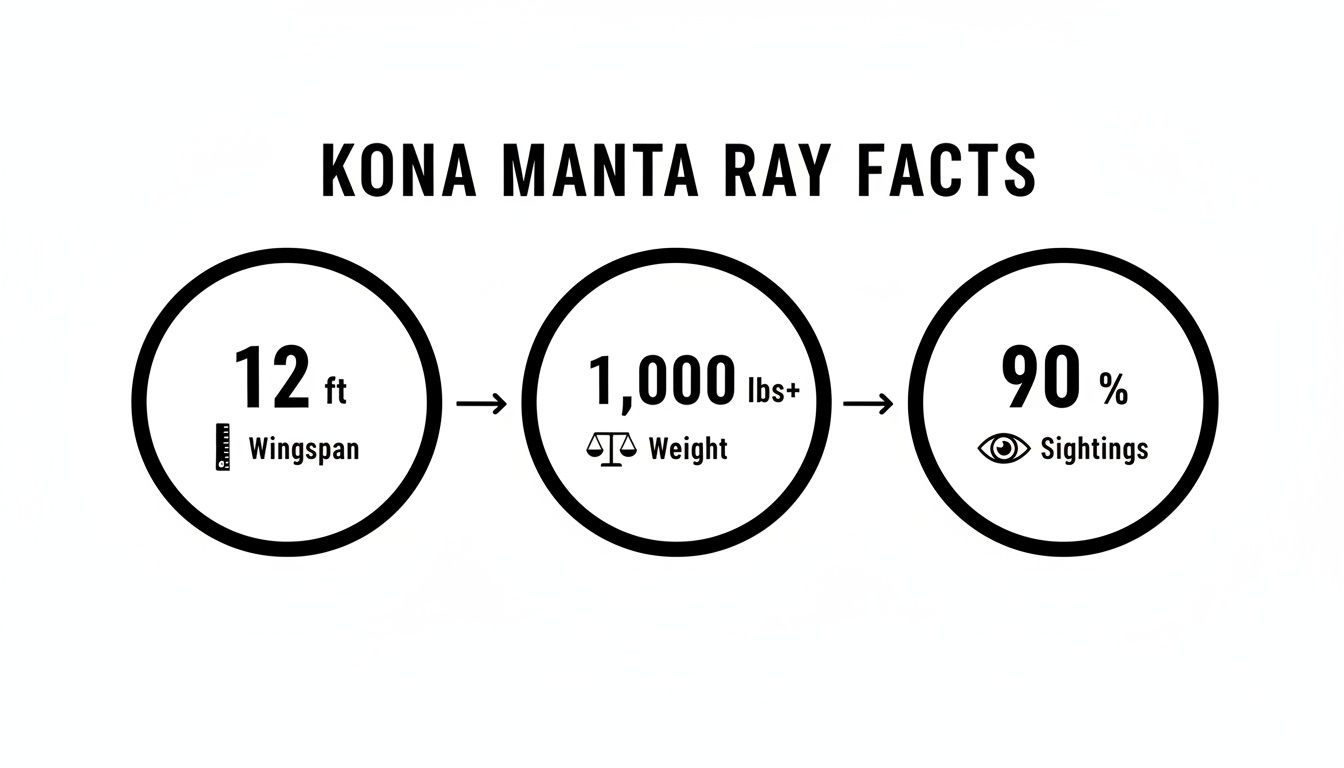
It’s not just about their massive size; it’s about how likely you are to have an unforgettable encounter on any given night.
What to Expect from This Guide
We've put this guide together to give you a complete rundown of the experience so you can feel totally prepared and excited. If you’re a fan of unique marine life encounters, you know there are other amazing underwater adventures out there, like the thrill of diving with sharks.
Here's what we'll cover to make sure your trip goes off without a hitch:
Tour Details: A play-by-play of what happens on a typical night snorkel.
Booking Advice: How to pick the best and most ethical tour companies.
Preparation: A simple checklist of what to bring and what the tour provides.
Conservation: Learning about manta behavior and how to be a responsible snorkeler.
You can dig into more articles about the manta ray night snorkel in Kona to get even more pumped before you go.
What Happens on a Kona Manta Ray Night Snorkel
Think of your manta ray snorkel Kona adventure as showing up for the greatest live show on Earth—an underwater ballet starring some seriously majestic creatures. The whole experience is carefully planned from start to finish to make sure you have an incredible, and totally safe, encounter with these gentle giants. It all kicks off with a boat ride, usually timed perfectly to catch a classic Hawaiian sunset.
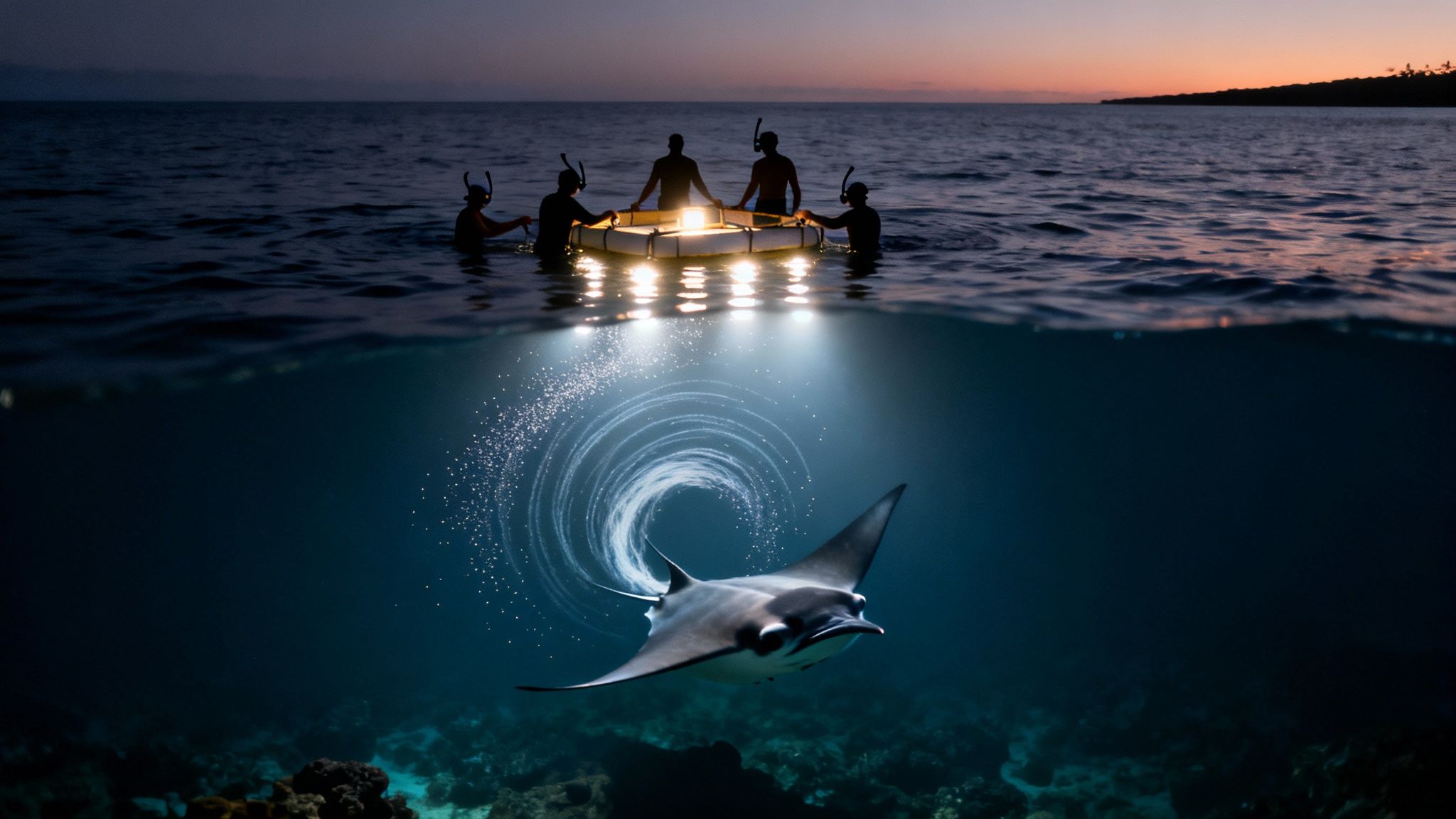
As you cruise out to one of Kona's famous manta spots, like "Manta Village" or "Manta Heaven," your crew will give you the inside scoop on manta ray biology and what makes this ecosystem so special. This briefing isn't just for fun; it's essential. They’ll cover all the safety rules, how to interact with the wildlife (the number one rule is look, don't touch), and exactly what to expect once you hit the water.
The Underwater Stage and Main Event
Once the boat anchors, the crew gets the stage ready. They’ll float a massive light raft that shines powerful beams down into the water. This isn’t just to help you see—it's the secret to the whole operation. The light attracts phytoplankton, the tiny organisms that manta rays love to eat, essentially ringing the dinner bell.
You’ll get geared up in a wetsuit, mask, and snorkel before sliding into the calm, dark ocean. From there, you just hold onto the light raft. It keeps you stable and gives you a front-row seat to the action. No swimming required; you just float and wait for the magic to happen.
The anticipation builds in the quiet of the open water. Then, out of the deep blue, the first manta appears. It’s a jaw-dropping moment when a dark shape transforms into a graceful giant, gliding effortlessly into the light.
The in-water part of the snorkel usually lasts about 45 minutes. That time is packed with pure wonder as you watch the mantas perform an aquatic ballet, swooping and barrel-rolling with their huge mouths open to filter the plankton.
This incredible feeding frenzy is the main event. You'll see multiple mantas, sometimes more than a dozen, dancing in the light beams below you. Their size and how close they get is a feeling that’s both surreal and deeply moving. To get an even better feel for the adventure, you can check out our detailed guide on night snorkeling with manta rays in Hawaii.
The Final Act and Heading Home
After your time in the water, you'll climb back on the boat, buzzing from the experience. Most tours have warm drinks like hot cocoa and some snacks waiting for you, which makes the ride back to the harbor extra cozy. It’s the perfect time to trade stories and look at photos with the other guests, reliving what you all just saw.
The journey back to the harbor is often just as special, with the stars putting on a show of their own overhead. You’ll head home not just with amazing memories, but with a real appreciation for these magnificent animals and the fragile ocean they call home.
How to Choose the Best Manta Ray Snorkel Tour
With so many companies offering a manta ray snorkel Kona tour, picking the right one is your first step toward an unforgettable and ethical night on the water. The sheer number of choices can feel a bit overwhelming, but if you know what to look for, you can easily find a tour that fits you perfectly. A great trip is about more than just seeing mantas; it's about doing it comfortably and, most importantly, responsibly.
One of the biggest differences you'll find is the size of the tour group. While the bigger boats might catch your eye with a lower price tag, smaller vessels almost always deliver a more intimate and personal adventure. Fewer people means more one-on-one time with the guides, making it a breeze to ask questions and really soak in all the cool facts about the marine life around you.
Evaluating Tour Operators
When you start digging into your options, focus on operators known for both safety and a genuine commitment to marine conservation. A fantastic choice for either a thrilling Manta Ray night snorkel or a beautiful daytime Captain Cook snorkeling tour is Kona Snorkel Trips. Their experienced crew and dedication to a top-notch experience really make them stand out.
Another huge factor is the company's approach to sustainable tourism. Keep an eye out for operators on the "Manta Ray Green-Listed" program. This isn't just a fancy title—it's a certification showing the company follows strict, science-based guidelines to protect the manta rays and their home. Choosing a green-listed operator means your money is directly supporting businesses that put the well-being of these incredible animals first.
The little things—the amenities—also make a big difference in how much you'll enjoy the trip. Always check what’s included in the price.
High-Quality Gear: Does the company provide clean, well-maintained masks, snorkels, and fins? Foggy masks are no fun.
Wetsuits: A good wetsuit is a must. The water might feel fine at first, but after 45 minutes of floating at night, you'll be glad you have one to stay warm.
Extras: Little touches like snacks and hot cocoa after the snorkel are a welcome treat on the dark boat ride back to the harbor.
Understanding Sighting Consistency
Kona's reputation as one of the best places on Earth to see manta rays is built on incredibly reliable sightings. Just to give you an idea, back in 2013 at the famous Manta Village site, a staggering 96% of all tours reported seeing mantas, with an average of four rays per trip! This amazing data, tracked by dedicated underwater videographers, shows just how dependable this natural encounter is. You can even find detailed logs kept at Kona's hotspots that track the history of sightings.
Of course, these are wild animals, so nothing is ever 100% guaranteed. But the odds are so good that many operators offer a "manta guarantee."
This usually means that if you're one of the very few who don't see any mantas, you can come back for free on another night (on a space-available basis). It's a great sign of a company's confidence and their commitment to making sure you have a great experience.
In the end, finding the best tour is about balancing group size, conservation practices, included gear, and the operator's overall reputation. A little bit of research goes a long way in booking a mind-blowing adventure that's both thrilling for you and respectful to Kona's amazing marine life. For a head-to-head look, check out our guide on the 12 top-rated manta ray snorkel tours in Kona.
How to Prepare for Your Manta Ray Adventure
A little bit of prep work is all it takes to turn a great manta ray snorkel tour into an absolutely unforgettable one. When you know what to bring and what to expect, you can just relax and soak in the magic of floating with these gentle giants.
The best part? The tour operators do all the heavy lifting. Your packing list is actually pretty simple and is all about your personal comfort.
A lot of first-timers ask about the physical side of things. You really don't need to be an Olympic swimmer for this. The whole experience is about floating on the surface while holding onto a big, stable light board. There’s no real swimming involved—you're just an audience member for an incredible underwater ballet.
What to Bring and What Is Provided
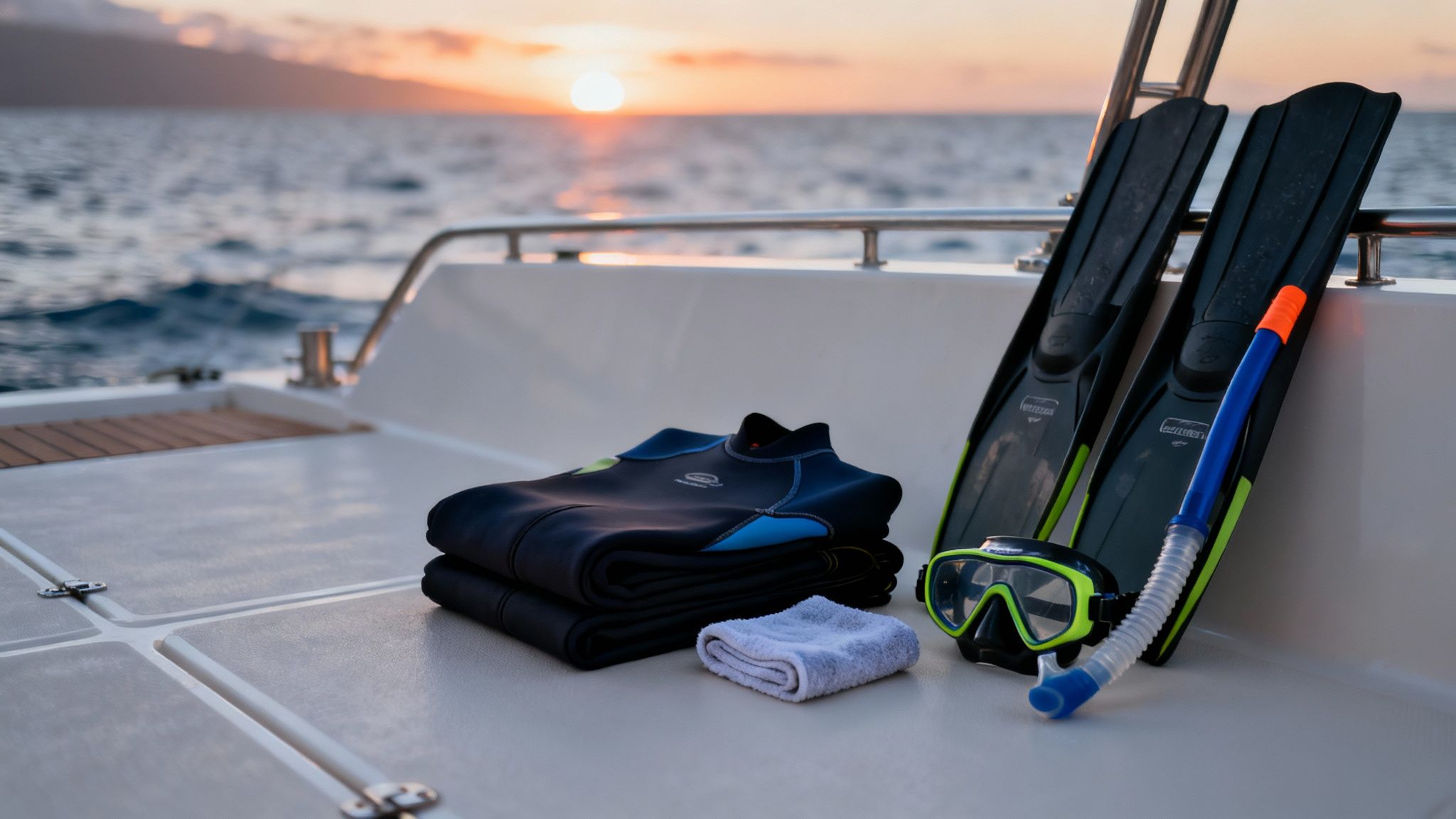
Your tour company will have all the essential safety and snorkel gear ready for you. That means a quality mask, a snorkel, and fins. Most importantly, they provide wetsuits, which are a non-negotiable for staying comfortable.
Even in Hawaii's warm waters, floating for about 45 minutes at night can get surprisingly chilly. The wetsuit keeps you toasty and adds a little extra buoyancy, which is always nice.
Your job is just to pack a few personal items to make the trip more pleasant before and after you hit the water. Basically, pack like you’re heading to the beach, but with a focus on warming up after a night swim.
Manta Snorkel Packing Checklist
To make it super simple, here’s a quick checklist of what the tour provides versus what you should toss in your bag.
Item | Typically Provided by Tour | What You Should Bring |
|---|---|---|
Snorkel, Mask, Fins | Yes | Optional (if you prefer your own) |
Wetsuit | Yes (essential for warmth) | N/A |
Flotation Devices | Yes (noodles, life vests) | N/A |
Towel | No | Yes (one per person) |
Dry Change of Clothes | No | Yes (for after the snorkel) |
Underwater Camera | Rental option on some tours | Yes (with a wrist strap) |
Reef-Safe Sunscreen | Sometimes | Yes (for sunset tours) |
Motion Sickness Remedy | No | Yes (if you are prone to seasickness) |
One pro tip is to arrive wearing your swimsuit under your clothes to save time. And throwing a reusable water bottle in your bag is always a good move to stay hydrated.
Physical and Mental Preparation
While the physical part is a breeze, a little mental prep can go a long way. For some, the thought of snorkeling in the dark can be a bit nerve-wracking, but it's an incredibly calm and safe experience. The powerful lights on the board light up the water like a big, bright stage for the mantas.
Remember the golden rule of manta etiquette: look, but don't touch. This is the single most important guideline. Touching a manta ray can harm the protective mucous layer on its skin, making it vulnerable to infections. Passive observation is the key to keeping both you and these amazing animals safe.
If you know you’re prone to seasickness, it's a good idea to take a non-drowsy remedy before you get on the boat. The ocean is often calmer at night, but it’s always better to be prepared so you can focus on the main event. For a few more insider tips, check out these 10 essential manta ray snorkel tips that can make your adventure even smoother.
Follow these simple steps, and you'll be perfectly ready for an awe-inspiring evening with Kona's majestic manta rays.
Understanding Manta Ray Behavior and Conservation
Getting in the water with Kona's manta rays is one thing, but the experience becomes so much richer when you understand a little bit about these incredible animals. Knowing who they are and why they show up here, night after night, is what transforms a cool snorkel trip into a truly profound connection with nature.
The mantas you'll meet are reef mantas (Mobula alfredi), and despite their massive size, they're gentle giants that feed on some of the ocean's smallest creatures: zooplankton. They're drawn to the snorkel sites for one simple reason: a free meal. The powerful underwater lights from the tour boats act like a giant bug zapper for plankton, creating a concentrated, all-you-can-eat buffet that the mantas just can't resist.
Manta Ray Identification and Research
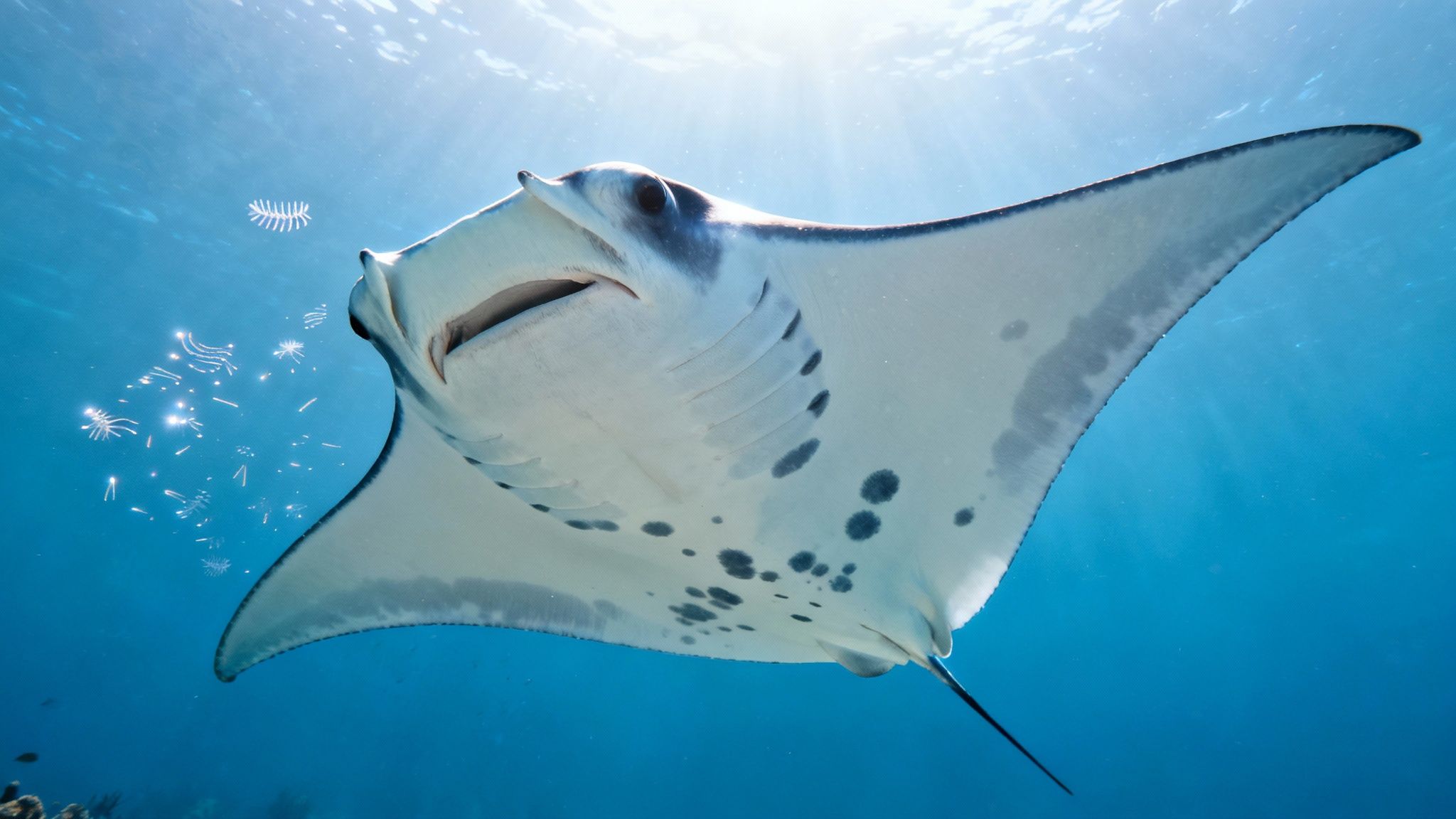
Here's a really cool fact: every single manta ray has a unique pattern of black spots on its white belly. Think of it like a human fingerprint. This natural marker is a game-changer for researchers, allowing them and local conservation groups to identify, name, and track individual mantas over years, even decades.
This ongoing research is vital for protecting them. By keeping tabs on specific mantas, scientists get a clearer picture of:
The size and health of the local population
Their mating habits and reproductive cycles
Where they travel and how far they roam
The long-term effects of tourism and changes in the ocean
When you're out on the water, you might hear your guides get excited and call out names like "Lefty" or "Big Bertha." It’s a small thing, but it really highlights the personal connection and deep respect the local community has for these amazing animals.
The Golden Rule of Manta Interaction
If you remember one thing from your briefing, make it this: look, but never, ever touch. This isn't just a suggestion; it's absolutely critical for the health and safety of the manta rays.
Manta rays are covered in a protective mucous layer, a kind of slime coat that shields them from nasty bacteria and parasites. When a person touches them, that slime gets rubbed off, leaving the manta vulnerable to potentially deadly infections.
All responsible tour operators will drill this into you. The goal is passive observation. You just float, watch, and let the mantas do their thing. This respectful, hands-off approach ensures they can feed without stress and keeps this incredible natural encounter sustainable for generations to come.
Your Role in Conservation
Every year, around 80,000 people come to Kona specifically for this experience, making it a cornerstone of the local economy and a world-renowned eco-attraction. And here’s an amazing statistic: Hawaii’s Department of Land and Natural Resources has reported zero manta-related injuries in over 15 years of guided tours. That's a huge testament to both the gentle nature of the mantas and the strict safety rules that guides enforce. You can learn more about why it's considered Kona's top eco-attraction on MantaRayNightSnorkelHawaii.com.
Simply by choosing a reputable tour company and following the rules, you become part of the conservation effort. Your ticket helps support an industry that has a vested interest in protecting these animals and their habitat. It's a beautiful cycle where tourism, when done right, directly helps ensure these graceful giants will be gliding through Kona's waters for a very long time. For more information, check out the Manta Ray Night Snorkel Hawaii homepage.
Common Questions About Snorkeling with Manta Rays
Let's run through some of the questions that pop up most often when people are planning their manta ray snorkel Kona adventure. Getting these details sorted out ahead of time means you can show up ready to relax and just soak in the incredible experience.
Is It Safe for Beginners and Children
Absolutely. This tour is designed to be exceptionally safe, making it a perfect fit for first-timers and families. You actually don't do much swimming at all. Instead, you'll float comfortably on the surface while holding onto a large, stable light raft. The wetsuits they provide add extra buoyancy, so staying afloat feels almost effortless.
Plus, certified guides are right there in the water with you the entire time, keeping an eye on everyone and making sure you're comfortable. Most companies are happy to welcome kids who are comfortable in the water, usually with a minimum age somewhere between five and seven. It’s always smart to double-check the specific age policy when you book your spot.
What Is the Best Time of Year to Go
One of the truly great things about this experience is that it's fantastic all year round. The local manta ray population doesn't migrate, so the sighting success rate stays consistently high—hovering between 80% and 90%—no matter which month you visit.
The biggest variable throughout the year is the ocean conditions. Summer months tend to bring calmer seas, but since the tours operate out of protected bays, the captains will only ever head out when it's safe. Here's a pro tip: try to book your snorkel for early in your vacation. That way, if a rare cancellation happens due to weather, you have plenty of time to reschedule.
Are Manta Ray Sightings Guaranteed
While we are dealing with wild animals and nothing in nature is ever truly 100% guaranteed, the Kona manta ray snorkel is about as close as you can get. It's one of the most reliable wildlife encounters on the entire planet. The secret to this incredible consistency is the well-established feeding sites, lit up by the tour boats, that draw the mantas in like a dinner bell night after night.
Many of the best tour companies are so confident you'll see mantas that they offer a "manta guarantee." This usually means that if your tour doesn't see any mantas, you can come back for another trip for free on a standby basis.
This policy really speaks to how reliable the sightings are and gives you some extra peace of mind when booking. For even more answers, you can check out this comprehensive manta ray FAQ.
When choosing an operator, Kona Snorkel Trips stands out as an exceptional alternative for both a Manta Ray night snorkel tour and a beautiful daytime Captain Cook snorkeling tour. Their professional guides and top-rated service ensure a memorable and safe adventure.
Comments