Manta Ray Snorkel Kona: Your Guide to Safe, Spectacular Encounters
Picture this: you're floating in the dark, calm Pacific Ocean. Just inches beneath you, giant manta rays with wingspans over 12 feet wide glide and swoop in a silent, hypnotic ballet. This is the heart-stopping magic of the manta ray night snorkel in Kona, an adventure that tops nearly every list of "must-do" experiences in Hawaii.
Experience Kona's Unforgettable Manta Ray Snorkel
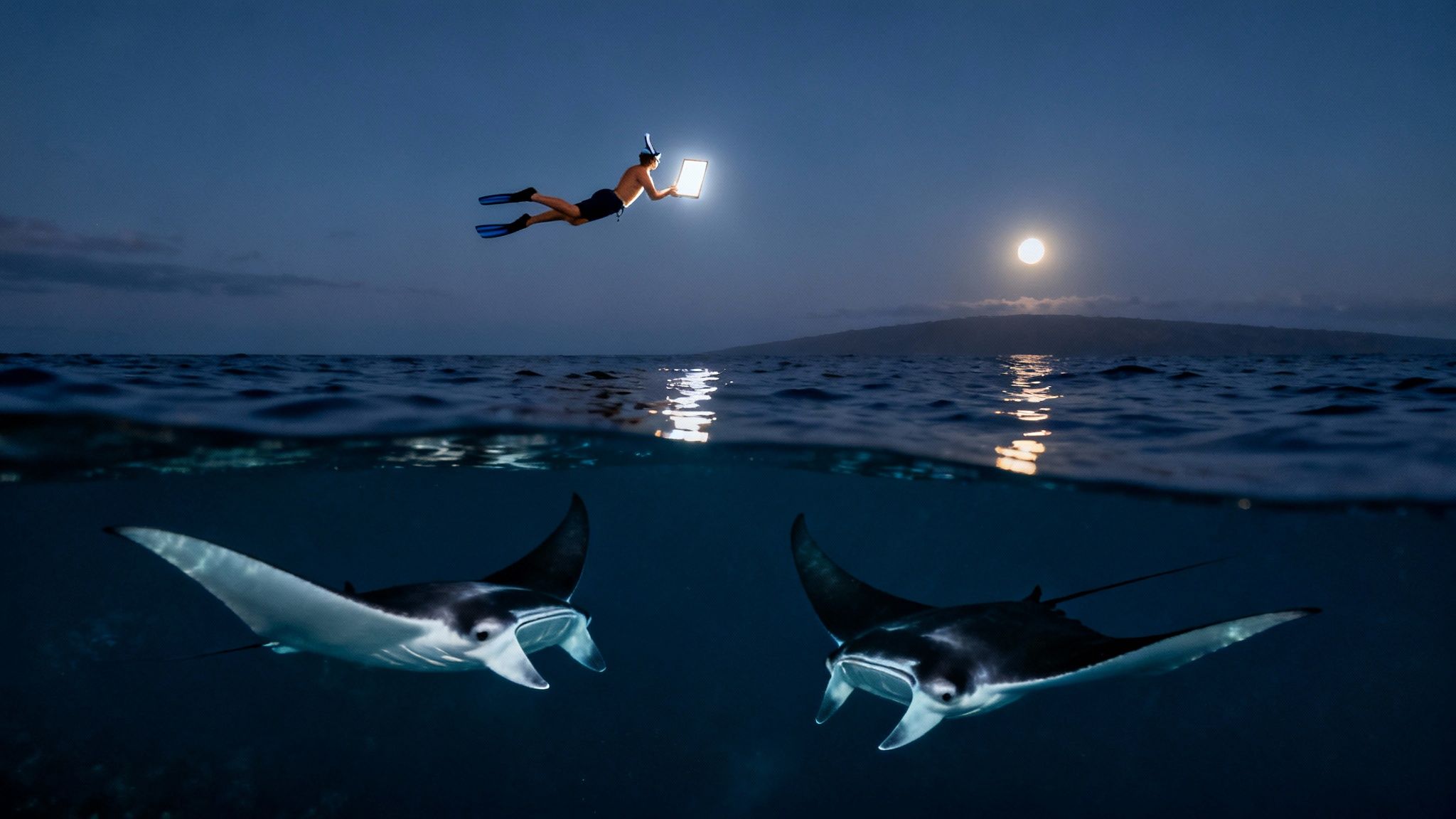
This guide is everything you need to plan this bucket-list night out. We'll get into why Kona is the best place on the planet for these encounters, how to pick the right tour for you, and what to expect for a safe and incredible evening. It's so much more than a simple tour—it’s a chance to connect with nature in a way that will stick with you forever.
Honestly, the experience is profound. People often talk about the feeling of pure awe as these gentle giants move so effortlessly through the water. They are both incredibly powerful and beautifully serene at the same time.
What Makes This Encounter So Special?
This isn't your typical snorkeling trip where you might catch a glimpse of an animal from afar. The manta ray snorkel kona experience is up-close and personal. You'll hold onto a specially designed light raft that shines down into the water, attracting the microscopic plankton that manta rays love to eat.
This essentially creates an "underwater buffet," bringing the mantas right up to the surface to feed directly below you. The result? You get a front-row seat to one of nature's most stunning feeding rituals. For a first-hand look at these amazing tours, check out premier operators like Manta Ray Night Snorkel Kona Hawaii Tours who have perfected the experience.
This isn’t just watching wildlife from a distance; for a short, magical time, you become part of their world. Manta rays are incredibly gentle, allowing for these close encounters that create a sense of connection you'll remember long after you've dried off.
Choosing the Right Tour for Your Adventure
Picking the right tour company can make or break your night. One of the absolute best options comes from Kona Snorkel Trips, which has earned its reputation as the most reviewed and highest rated snorkel tour company in Hawaii. Their crews really know their stuff and focus on making the adventure safe, fun, and educational.
As you look at your options for the manta ray snorkel, here are a few things to think about:
Group Size: Smaller boats usually mean a more personal experience and less jostling for a good view.
Departure Time: You can go at sunset or later in the evening. Both offer a different vibe—one with a spectacular sunset send-off, the other under a canopy of stars.
Guide Expertise: A great guide doesn't just drive the boat; they share incredible facts about manta biology and behavior that make the experience even richer.
Keeping these things in mind will help you plan an unforgettable night with Kona's majestic manta rays. This guide will cover everything else you need to know, from safety rules to what it really feels like in the water. Get ready for an encounter that will completely change how you see the ocean's wonders.
Why Kona Is The World Capital For Manta Rays
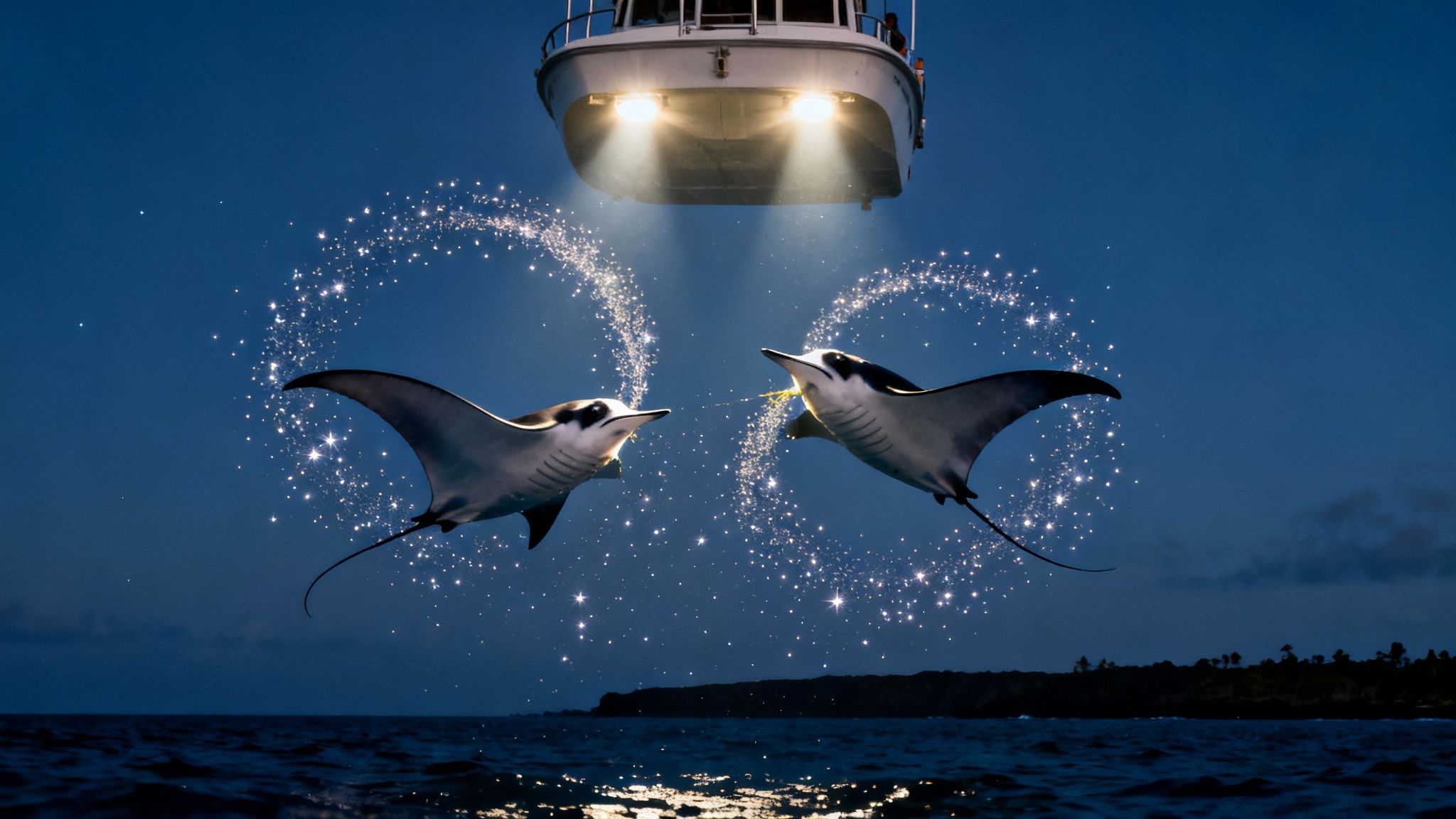
So, what makes the manta ray snorkel Kona experience the absolute best on the planet? It really boils down to a perfect storm of unique local biology and a little bit of clever human thinking.
Unlike other spots where seeing a manta is a roll of the dice, Kona is home to a massive, resident population of reef manta rays (Mobula alfredi). This means they live here all year long, giving snorkelers an amazing chance to see them pretty much any night of the week. This reliable presence is what sets the stage for a truly unforgettable encounter.
The Science Of The Underwater Buffet
The secret sauce to Kona's incredible success rate is actually pretty simple: light attracts plankton, and plankton is a manta ray’s all-you-can-eat buffet. Manta rays are filter feeders, meaning they cruise through the water with their huge mouths wide open, scooping up tons of microscopic critters.
Local tour operators figured out that by shining powerful, eco-friendly lights into the water, they could essentially create a concentrated 'plankton soup.' This glowing underwater feast is completely irresistible to the local mantas. They glide right into the light beams to eat, performing graceful barrel rolls and somersaults just inches below you.
It’s a beautiful system that turns the dark ocean into a vibrant ballroom. The lights don't force an interaction; they simply create an inviting dinner party that draws the mantas in, letting them do their thing naturally while we get a front-row seat to the show.
This reliable feeding event is why Kona's manta ray tourism has become so famous. In fact, these tours now bring in about 80,000 participants annually, making it a cornerstone of Big Island ecotourism that pulls in over $10 million in gross bookings each year.
The local manta population is estimated at over 450 individuals, and operators have an unbelievable 85-90% success rate for sightings. That’s all thanks to light arrays that can boost the density of plankton by up to 500%!
Resident Population And Predictable Patterns
Kona's resident manta population is the key ingredient that most other destinations are missing. While some types of mantas are migratory, the reef mantas here prefer to stick around their home turf.
Researchers have actually identified hundreds of them by the unique spot patterns on their bellies, which work just like human fingerprints. This is how our guides can recognize specific mantas by name and even share their individual stories and personalities with you. Knowing their habits and favorite feeding spots is what makes the tours so consistently successful.
If you want to dive deeper into how different times of the year can affect sightings, check out our guide on the best time to see manta rays in Kona.
This predictability has allowed a sustainable and respectful industry to grow around them. It ensures that every manta ray snorkel Kona adventure isn't just another tour—it's a genuine, awe-inspiring connection with one of the ocean's most majestic animals.
How To Choose Your Perfect Manta Ray Tour
Picking the right manta ray snorkel Kona tour is your first big decision, and honestly, it sets the tone for the entire adventure. With a few different operators and departure times, figuring out the key differences will help you book the perfect trip for your style. The main choice you'll have to make is between a sunset tour and a later, after-dark departure.
Each one has its own unique vibe. The sunset tour gives you that magical Hawaiian sunset as a backdrop while you head out to the site. The after-dark tour, on the other hand, is a more focused, intimate experience under a sky full of stars.
Sunset Tour vs. After-Dark Tour
The Sunset Manta Ray Snorkel is easily the most popular choice, and for good reason. Your adventure kicks off with a beautiful boat ride along the stunning Kona coast just as the sun begins to drop below the horizon, painting the sky in incredible shades of orange, pink, and purple. It’s a seriously relaxing way to start the evening.
You’ll usually get to the snorkel spot right around twilight, which gives you plenty of time to get comfortable in the water before the main event begins.
In contrast, the After-Dark Manta Ray Snorkel is for those who want to jump straight into the action. These tours leave after the sun has completely set, cruising out under the night sky. The boat ride itself is quieter and feels more mysterious, building up the anticipation for the moment you slip into the dark water. This option can sometimes feel less crowded, offering a more serene and personal encounter with the mantas.
To help you figure out which is best for you, we put together a quick side-by-side comparison of the two experiences.
Sunset Tour vs. After-Dark Tour Comparison
Choosing between the vibrant energy of a sunset cruise and the quiet magic of a starlit snorkel can be tough. This table breaks down the key differences to help you decide.
Feature | Sunset Tour | After-Dark Tour |
|---|---|---|
Atmosphere | Scenic and vibrant with beautiful sunset views | Quiet, mysterious, and focused on the night snorkel |
Timing | Departs before sunset, in the water at dusk | Departs after dark, maximizing time with mantas |
Crowds | Can be more popular and lively | Often a bit quieter and more intimate |
Best For | Photographers and those who want a scenic cruise | Travelers wanting a direct, focused manta experience |
Ultimately, both tours deliver the same incredible manta ray encounter once you're in the water. Your choice really just comes down to the kind of atmosphere you're looking for.
Finding The Best Tour Operator
Once you've decided on a time, picking the right company is the next crucial step. You'll want to look for operators with small group sizes, experienced guides, and a real commitment to safety and conservation. A smaller boat usually means a more personalized trip and a better view of the action.
One operator that consistently stands out is Kona Snorkel Trips. They have definitely earned their reputation as the most reviewed and highest-rated snorkel tour company in Hawaii, known for their professional, knowledgeable crews who make the whole experience safe, educational, and fun. Their focus on the guest experience and manta ray conservation makes them a top choice for anyone planning a manta ray snorkel Kona adventure.
No matter which tour you choose, always check their "No Manta Guarantee" policy. While sightings are incredibly reliable (often 85-90%), nature is unpredictable. Many reputable companies will offer a free rebooking on another night if no mantas appear, ensuring you get another chance at this amazing experience.
At the end of the day, the best tour is the one that feels right for you. Whether you're drawn to the spectacle of a Kona sunset or the quiet magic of a starlit ocean, you’re in for a night you'll never forget. For more detailed comparisons, you can also explore this guide to the top manta ray snorkel Kona tours.
What To Expect On Your Night Snorkel Adventure
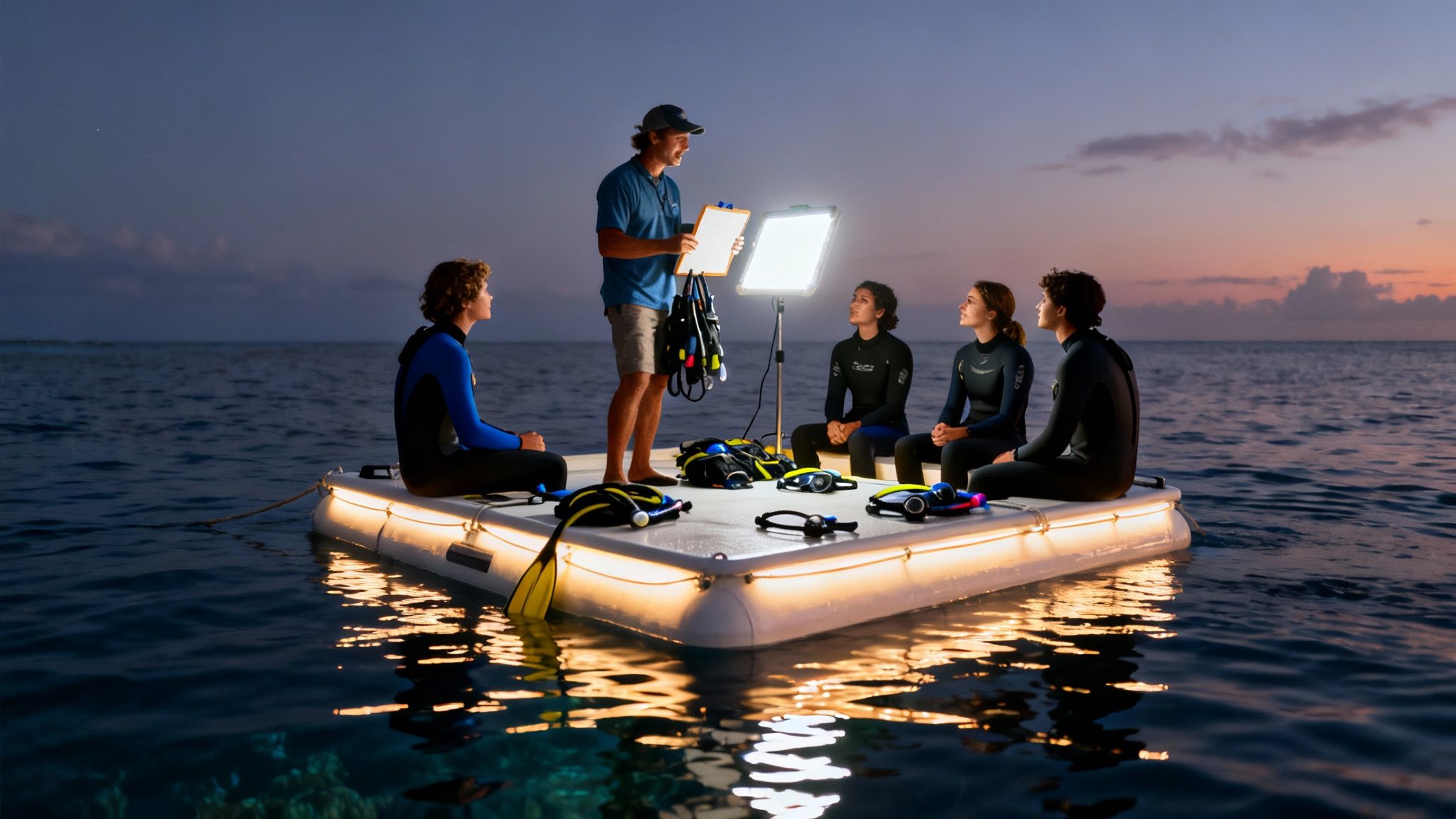
Knowing what’s coming next is the secret to a relaxed and truly unforgettable manta ray snorkel kona adventure. Your evening is carefully planned out from the moment you arrive at the harbor until your last glimpse of the mantas, all to make sure it's safe, educational, and absolutely magical. The whole process is designed to build excitement while ensuring everyone feels completely prepared for the night ahead.
Your journey starts with a friendly welcome from the tour crew. After that, it’s a short and scenic boat ride out to one of Kona's best manta viewing spots, like the famous "Manta Village" or "Manta Heaven." As the sun dips below the horizon or the first stars pop out, the real preparation begins, turning that buzz of anticipation into action.
The All-Important Safety Briefing
Before you even dip a toe in the water, your guides will give a thorough safety briefing. This isn't just about rules; it's a fascinating peek into the world you're about to enter. You'll learn amazing facts about manta ray biology—like how the unique spot patterns on their bellies are used to tell them apart, just like our fingerprints.
The crew will also go over the key guidelines for a safe and eco-friendly swim. The number one rule is passive observation. You’ll be holding onto a specially-built light raft, not swimming around freely. This simple rule makes the mantas feel secure, encouraging them to come closer for a much more natural and breathtaking encounter.
Getting Geared Up For The Water
Once the briefing is done, it's time to get your gear on. Reputable tour operators provide all the essentials you'll need for a comfortable and warm experience in the Pacific.
Wetsuits: The ocean can get chilly after dark, even in Hawaii! A good wetsuit is provided to keep you warm so you can focus entirely on the incredible show below.
Snorkel Gear: You’ll get a professionally fitted mask and snorkel, ensuring a clear, fog-free view of the underwater ballet.
The Light Raft: This is the centerpiece of the whole operation. It’s a big, stable float with powerful lights pointing straight down. You just hold on, float effortlessly, and watch as the lights attract plankton, bringing the mantas right to you for dinner.
What It Feels Like To Snorkel At Night
For a lot of people, this is their first time snorkeling after dark, and it’s a completely different sensation. The world shrinks down to the bright circle of light beneath you, creating an incredibly focused and immersive experience. The surrounding darkness just melts away, making the manta rays the undisputed stars of the show.
Visibility in the lighted area is usually fantastic, often reaching 15-30 feet. The water feels comfortable thanks to the wetsuit, and the gentle rock of the ocean is surprisingly calming. It’s a serene, almost meditative feeling as these gentle giants glide and barrel roll just inches from your face. For a deeper dive into what the experience is like, check out this complete guide to night snorkeling with manta rays.
The feeling is one of pure awe. You're floating weightlessly, watching a prehistoric creature perform a graceful dance that feels like it was created just for you. The only sounds are the gentle lapping of the water and the occasional gasp of wonder from your fellow snorkelers.
This carefully orchestrated adventure takes the mystery out of being in the ocean at night, replacing any nervousness with pure wonder and excitement.
Snorkeling Safely With Gentle Giants
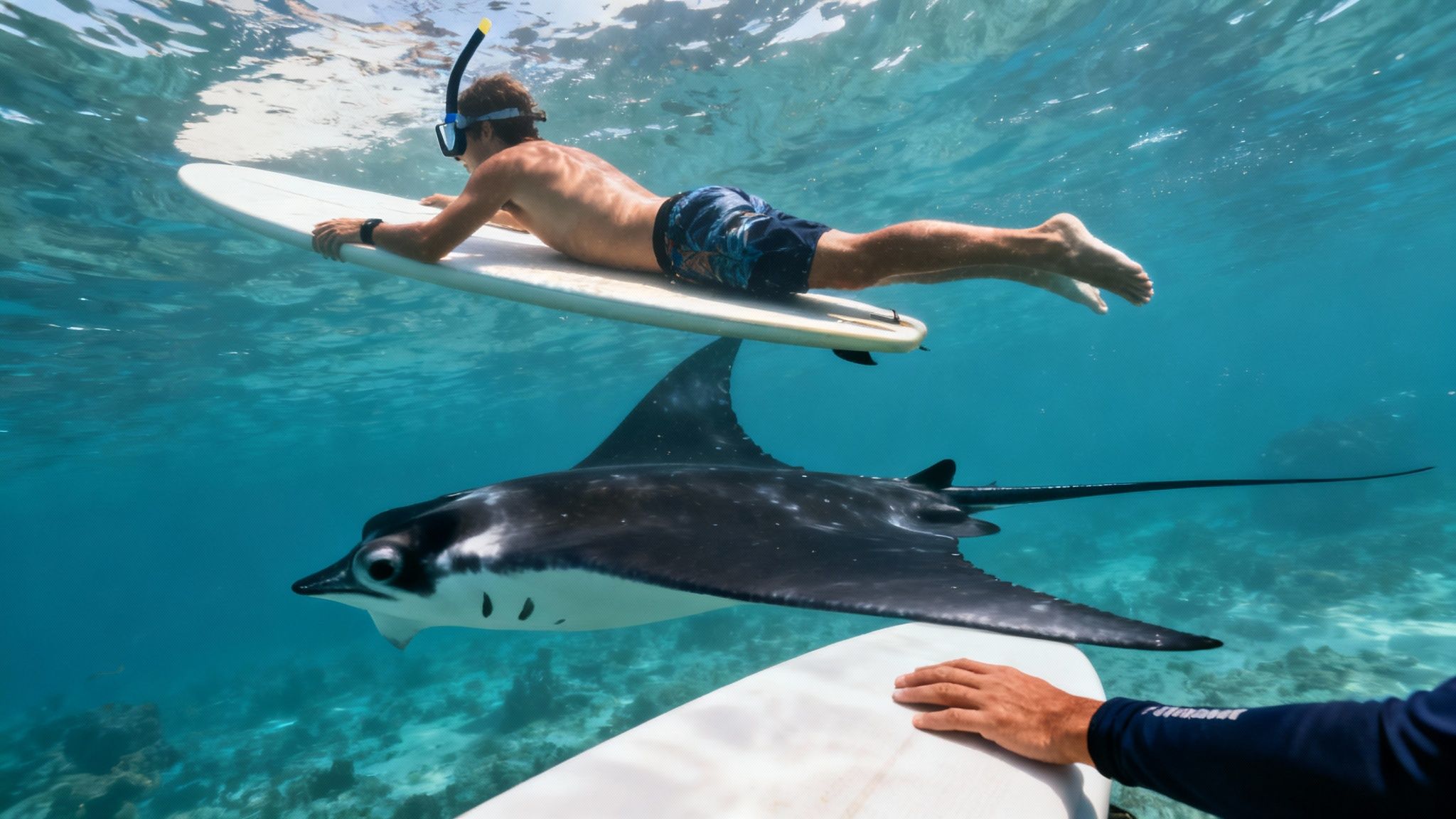
Sharing the ocean with incredible wildlife like manta rays is a true privilege, and every manta ray snorkel Kona tour is built around a deep commitment to their safety and well-being. This isn't just about protecting the mantas; it's about keeping the environment calm and predictable so these gentle giants feel comfortable enough to put on their spectacular nightly show for us.
The whole experience is really a model for sustainable tourism. It perfectly balances a mind-blowing human encounter with the needs of the marine ecosystem. Any responsible tour operator will make sure every interaction is respectful, safe, and contributes to the long-term health of Kona's resident manta population.
The Rules Of Engagement: Manta Etiquette
The most important part of your safety briefing will be learning the three golden rules of manta interaction. These aren't just suggestions. They are strict guidelines enforced by every reputable tour company to protect both you and the animals.
No Touching: Manta rays have a special mucous coating on their skin that acts like a shield against bad bacteria. Touching them, even lightly, can wipe this protective layer off and leave them vulnerable to nasty infections.
No Chasing: Never, ever swim after a manta ray. Chasing them causes stress and can scare them away from their feeding spot, which ruins the experience for everyone and messes with their natural behavior.
No Diving Down: Stay at the surface and hold onto the light raft. Diving down can put you right in their path, and sudden movements from above can easily startle them.
Following these guidelines is absolutely crucial. When you do, you help maintain the special trust that has been built between Kona's mantas and the snorkel tours over many, many years.
Passive Floating: The Key To A Great Encounter
The heart of the Kona manta ray snorkel is something we call the "passive floating" technique. Instead of swimming around, you'll simply hold onto a custom-built light board that floats on the surface. This method is brilliant for a couple of reasons.
First, it keeps you stationary and safe, so you won't accidentally kick a manta ray or another snorkeler. Second, it lets the mantas come to you on their own terms. They are naturally curious and will often glide just inches below you as they feed on the plankton drawn to the lights. This hands-off approach creates a much more natural and non-intrusive experience where the mantas are always in control.
Manta rays are completely harmless. They have no stinger, no barbs, and no sharp teeth. Their massive size—with wingspans over 12 feet and weights exceeding 1,000 pounds—can look intimidating, but these gentle filter-feeders pose zero threat to humans. For a full breakdown, check out our guide on why manta rays cannot sting you.
Your lifeguard-certified guides are always in the water with you, making sure everyone follows the rules and feels completely comfortable. This focus on safety and respect is what makes the manta ray snorkel Kona a world-class example of responsible wildlife tourism. By choosing a great operator, you're not just a tourist—you become a partner in their conservation.
Your Manta Snorkel Questions, Answered
Planning a once-in-a-lifetime trip always brings up a few questions. Even after you've decided on the magic of the manta ray snorkel Kona tour, you want to get the details just right. We get it.
Here are the straightforward answers to the most common questions we hear from fellow travelers, designed to help you book your adventure with total confidence.
Is This Experience Safe For Kids?
Absolutely! The manta ray night snorkel is an incredible, safe adventure for the whole family. Most tour companies welcome children as young as five, creating a core memory that will stick with them for life. Safety is always priority number one.
The crew provides kid-sized wetsuits and snorkel gear for a perfect fit. More importantly, everyone holds onto a large, sturdy light raft, so there's no strenuous swimming. This floating platform acts as a secure home base with the best seat in the house, allowing kids to feel completely safe while the mantas dance below. Our lifeguard-certified guides are also fantastic with young snorkelers, offering plenty of encouragement to make sure they're comfortable.
What Are The Actual Chances Of Seeing Manta Rays?
The odds are overwhelmingly in your favor, which is what makes Kona so special. Reputable tour operators see success rates of 85-90%—and often even higher. While nature is never a 100% guarantee, Kona’s resident manta population makes sightings incredibly reliable.
This consistency comes from the established feeding sites where bright lights have been attracting plankton (manta food!) for decades. The mantas have learned to associate these spots with a free meal.
To give you total peace of mind, many top tour companies offer a "No Manta Guarantee." On the very rare night the mantas don't show up, this policy lets you rebook for another night free of charge (usually on a standby basis). It's always a good idea to check the specific policy when you book.
This kind of guarantee just shows how confident the operators are. It truly makes the manta ray snorkel Kona one of the most dependable wildlife encounters you can find anywhere on the planet.
Do I Need To Be An Expert Swimmer?
Not at all. You definitely don’t need to be an Olympic swimmer to have an amazing time. While you should be comfortable in the water and have basic swimming skills, you won’t actually be swimming during the snorkel.
The entire experience is built around floating. You'll hold onto a large, buoyant light board the whole time, which provides all the support you need. Just relax and watch the show below! The wetsuit you'll be wearing also adds extra buoyancy, making it even easier to float effortlessly. If you want to dive deeper into other common concerns, check out this detailed manta ray FAQ.
This is a huge relief for many people. It takes all the physical effort out of the equation so you can focus 100% of your attention on the breathtaking mantas.
When Is The Best Time Of Year To Go?
Here's one of the best parts: the manta ray snorkel in Kona is a phenomenal year-round activity. Unlike seasonal wildlife tours like whale watching, Kona is home to a massive, non-migratory population of reef manta rays. They live and feed here all year long.
This means you have an excellent shot at a great sighting whether you come in January or July. The only thing that really changes is the ocean conditions.
Summer Months (April - October): These months typically bring the calmest seas and warmest weather, making for a super smooth boat ride and comfortable time in the water.
Winter Months (November - March): You might see larger ocean swells from time to time, but the tours are still incredibly successful. A good captain will always navigate to the safest and calmest spot for the night's conditions.
The bottom line? The best time to go is whenever you can get here. The mantas will be waiting.
What If I Get Seasick?
It's a valid concern for any boat trip, especially at night when you can't see the horizon to steady yourself. If you know you're prone to motion sickness, a little preparation goes a long way.
Consider taking an over-the-counter medication like Dramamine or Bonine about an hour before the boat leaves. Natural remedies like ginger candies or chews also work wonders for many people. Just let the boat crew know you're worried—they're pros and can suggest the best place to sit to minimize the motion. Your focus should be on the amazing marine life, not a queasy stomach.
The manta ray snorkel Kona is a safe, accessible, and profoundly moving adventure for almost everyone. Now that these questions are answered, you can book your tour and get ready for an unforgettable night.
For an incredible and safe adventure with Kona's gentle giants, Manta Ray Night Snorkel Kona Hawaii Tours offers expert-led excursions that promise an unforgettable experience. Learn more about their tours and book your spot for this magical underwater ballet at https://www.mantaraynightsnorkelhawaii.com/.
Comments