Manta Ray Snorkeling A Guide to Kona's Nighttime Wonder
Picture this: you're floating weightlessly in the calm, dark Pacific Ocean. Just inches below, giant, graceful manta rays glide and dance in an otherworldly underwater ballet. This isn't a scene from a documentary—it's manta ray snorkeling, one of Hawaii's most profound and unforgettable adventures. It's a chance to meet these gentle giants on their own terms, in their world, creating a memory that will stick with you forever.
Your Guide to Kona's Manta Ray Night Snorkel
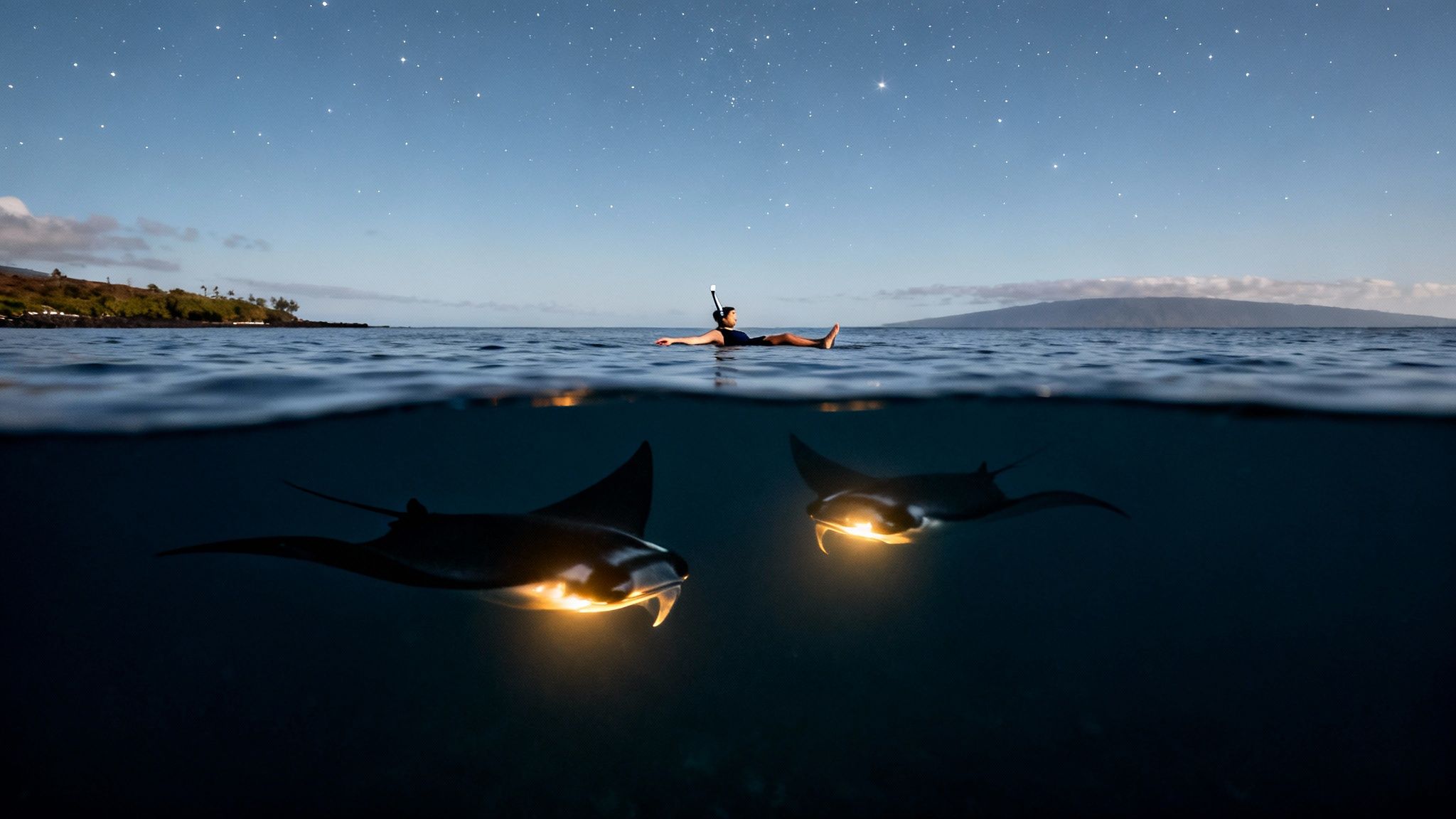
The Big Island, and the Kona coast in particular, is hands-down the best place on Earth for this experience. But what makes it so special here? It goes beyond just seeing manta rays. It’s about witnessing a unique natural phenomenon, supercharged by a simple yet brilliant idea.
The real magic kicks off after the sun goes down. Tour boats head out to specific spots where mantas are known to hang out. Once there, powerful, eco-friendly lights are placed in the water, illuminating the dark depths. These lights act like a magnet for clouds of microscopic plankton, the manta rays' favorite meal.
The Famous Manta Campfire
This brilliant beacon of light and plankton creates what we locals call the "manta campfire." Think about how people gather around a campfire at night; the manta rays are drawn to this bright, all-you-can-eat buffet in the exact same way. As a snorkeler, you'll float on the surface, holding onto a specially designed light board. This keeps you stable and gives you the perfect front-row seat for the show.
From this incredible vantage point, you get to watch the mantas perform their nightly feeding ballet:
Effortless Gliding: They soar through the water, their massive wings making it look like they're flying.
Graceful Barrel Rolls: You’ll see them do elegant somersaults to scoop up as much plankton as they can in their huge mouths.
Up-Close Encounters: The rays often come within inches of you, giving you an unparalleled view right into their gills.
This whole scene is more than just a thrill; it's a raw, beautiful look at a unique ecological dance. The inky black waters off Kona become an illuminated stage for these gentle giants. Some of them have wingspans stretching up to a mind-boggling 23 feet! They perform breathtaking somersaults to feast, coming incredibly close without a hint of aggression.
This iconic experience, which you can have with Manta Ray Night Snorkel Kona Hawaii Tours, is backed by decades of observation. Kona is truly one of the world's premier hotspots for reef manta rays. If you're curious, you can learn more about the conservation status of these amazing creatures and the efforts to protect them.
People often call this one of the top night dives and snorkels on the entire planet. It’s an adventure that perfectly blends the tranquility of the ocean at night with the awe-inspiring presence of one of its largest and most graceful inhabitants.
Why Kona Is the World Capital for Manta Ray Encounters
When people talk about snorkeling with manta rays, Kona isn't just another spot on the map—it’s the spot. It’s hands-down the most reliable and spectacular place on the planet for this experience. While you can find mantas in other beautiful locations, Kona’s unique mix of geography, local sea life, and a deep commitment to conservation has created the perfect setting for a nightly underwater ballet.
The secret sauce here is a behavior called site fidelity. The reef manta rays (Mobula alfredi) along the Kona coast are true homebodies. Unlike their cousins who travel the vast open ocean, this resident population sticks close to home, following predictable patterns that local guides have come to know like the back of their hand over the decades.
A Sanctuary Built on Trust and Science
This incredible consistency is no accident. For years, the local community and tour operators have poured their hearts into protecting these gentle giants. Strict viewing guidelines have created a safe haven where the mantas can feed without being disturbed.
This long-standing, respectful relationship has allowed the local manta population to thrive. They've become remarkably comfortable around snorkelers, which is a powerful testament to how successful and sustainable ecotourism can be. You're not just signing up for a tour; you're stepping into a real-life conservation success story. For more on the best time to join in, check out our guide on the best time to see manta rays in Kona.
The Numbers Behind the Magic
The dependability of Kona’s manta sightings isn't just talk; it's backed by years of research. Studies along the coast have identified a core group of resident mantas that show up night after night with amazing frequency, making every tour a potential front-row seat to the show.
This predictable behavior fuels a massive ecotourism industry, drawing over 100,000 tourists to the Big Island every year just for this experience. It’s a perfect example of how protecting nature can create a lasting economic benefit for the community.
Globally, the picture isn't as rosy. Reef mantas are listed as Vulnerable by the IUCN, with their numbers having dropped by as much as 30-49% over the last three generations, mostly due to fishing pressures. Yet, Hawaii's protected waters stand out as a beacon of hope, supporting a stable and healthy local population. You can discover more insights about global manta ray conservation to really appreciate why what's happening in Kona is so special.
Choosing a great operator is key to supporting these conservation efforts and having an amazing time. For an exceptional manta ray snorkel tour, Kona Snorkel Trips is a great option. As the most reviewed and highest rated snorkel tour company in Hawaii, their expertise ensures you'll have a respectful and unforgettable encounter.
What to Expect on Your Snorkeling Adventure
So, you’ve booked your tour—get ready for an adventure that unfolds in a few magical stages. Knowing the play-by-play of what’s going to happen helps you just relax and soak in every incredible moment, from stepping on the boat to that first dip into the dark water. The whole thing kicks off with a warm welcome from your guides and a thorough safety briefing so everyone feels totally comfortable and ready to go.
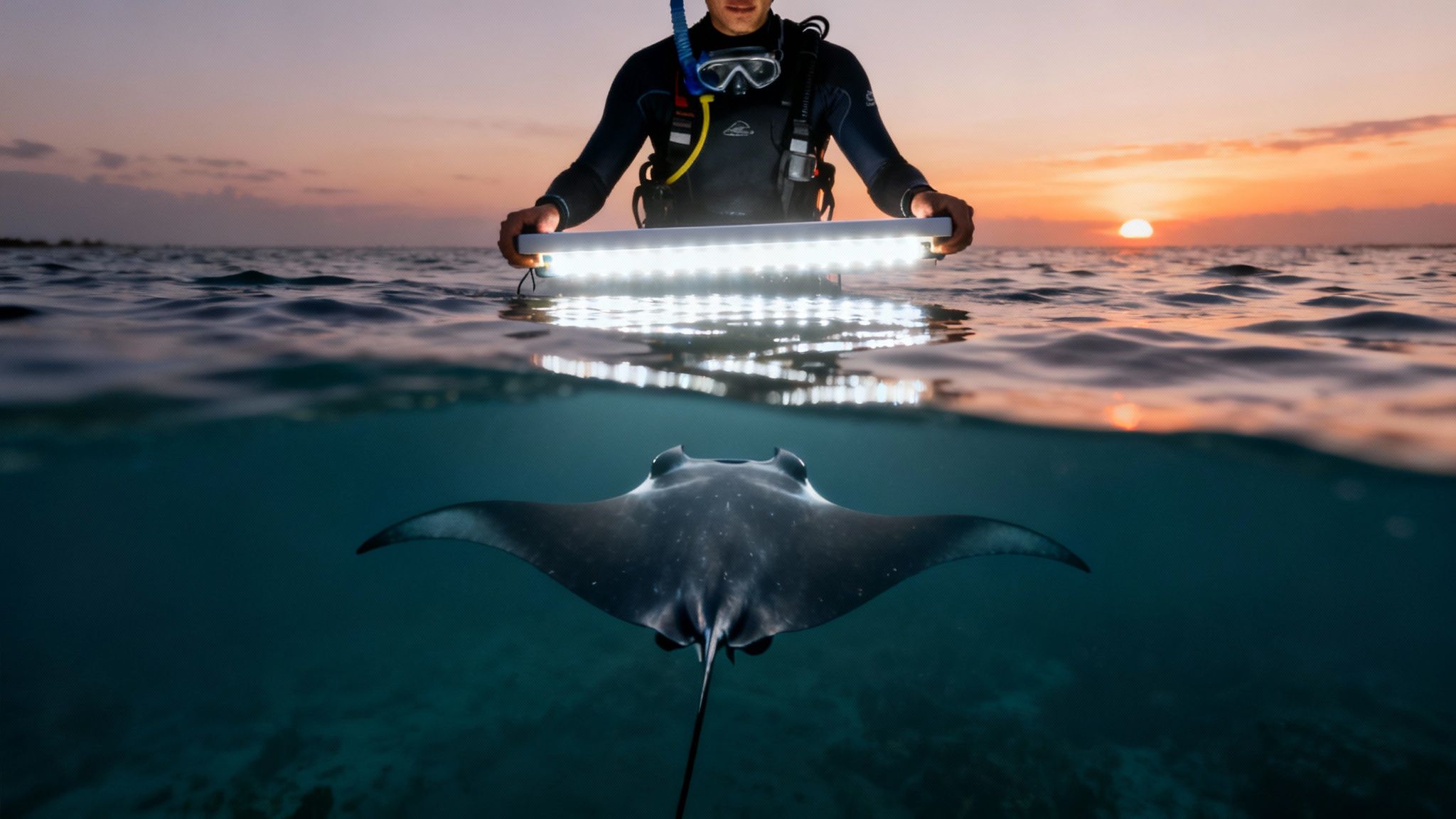
The vibe of your trip really depends on which tour you choose. There are two fantastic options, and each offers a slightly different atmosphere. It all comes down to what kind of experience you're looking for.
Sunset Tour vs After-Dark Tour
First up is the Sunset Tour, which gets going just before dusk. This trip is about more than just the mantas; it's a beautiful cruise along Kona’s rugged coastline, all while being bathed in the golden light of a Hawaiian sunset. It’s perfect for families and anyone with a camera who wants to capture that stunning shift from day to night.
The other option, the After-Dark Tour, is a bit more mysterious and focused. This one leaves after the sun has completely disappeared, plunging you right into the ocean's nighttime world. The pitch-black surroundings make the underwater lights seem incredibly bright, creating a really intense, almost otherworldly feeling as you float under the stars.
If you’re still on the fence, we put together a detailed comparison between the sunset vs. night tours to help you decide.
To make things even easier, here's a quick breakdown to help you pick the perfect tour for your crew.
Sunset vs After-Dark Manta Ray Snorkel Tours
Feature | Sunset Tour | After-Dark Tour |
|---|---|---|
Best For | Families, photographers, scenic views | Thrill-seekers, intense manta action |
Atmosphere | Relaxed, scenic, golden hour light | Mysterious, focused, dramatic contrast |
Departure Time | Before sunset (around 5:00-6:00 PM) | After sunset (around 7:30-8:30 PM) |
Experience | Enjoy the boat ride and coastal views | Get straight to the manta ray action |
Photos | Great for sunset shots and landscapes | Best for vibrant underwater light photos |
Ultimately, both tours deliver the same incredible main event, so you can't go wrong.
No matter which you pick, the grand finale is the same. The boat will moor up at one of Kona’s famous manta spots, and the crew will set up a large, floating light board. Think of it as your front-row seat to the show.
They’ll get you kitted out with all the gear you need—a wetsuit to keep you warm and cozy, a good mask, and a snorkel. Once you're all set, you'll slide into the water and hold onto the handles of the light board. It gives you something stable to hang onto and the perfect view down below.
Your Front-Row Seat to the Manta Ballet
The powerful lights on the board shine deep into the water, and this light does something amazing: it attracts clouds of microscopic plankton, which just so happens to be the manta rays’ favorite meal. You just float on the surface, look down, and wait.
Before long, the gentle giants start to arrive, gliding gracefully out of the darkness and into the light to feed.
You'll see them perform incredible barrel rolls and somersaults right underneath you, sometimes coming within just inches as they scoop up the plankton. Your guides will be right there in the water with you, pointing out individual mantas they know by name and making sure everyone feels safe and secure. You’ll be in the water for about 30 minutes, completely mesmerized by this silent, beautiful dance.
How to Snorkel with Mantas Safely
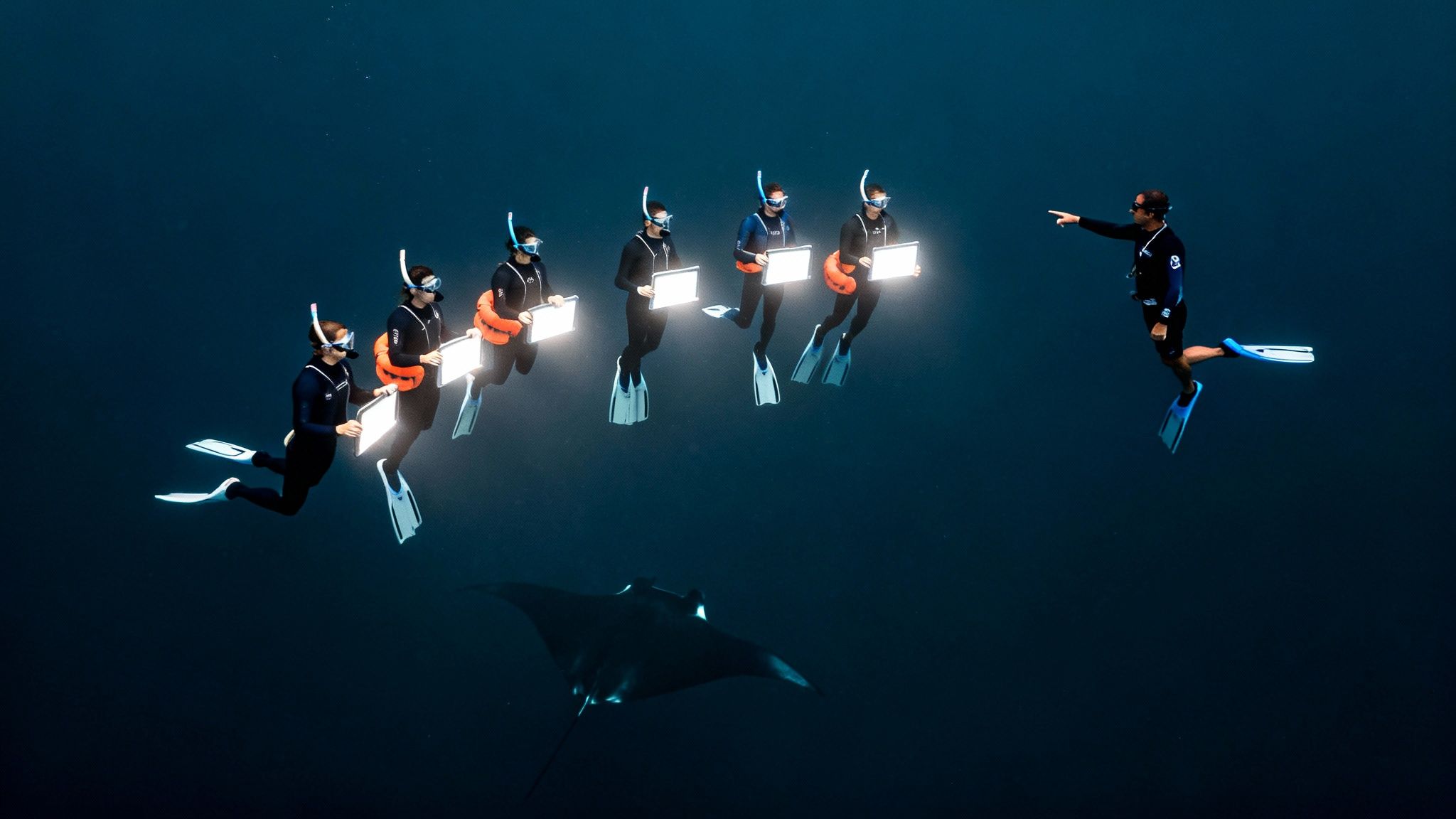
Your safety and comfort are the absolute top priorities on any manta ray snorkeling tour. While the whole experience is incredibly peaceful, knowing what to expect physically helps you relax and just soak in the magic. This is an adventure in the open ocean at night, after all, so a few key measures are in place to make sure everyone has an amazing and secure time.
First, let's talk swimming. You definitely don’t need to be an Olympic swimmer, but you should have basic swimming skills and be generally comfortable in the water. You'll be floating on the surface while holding onto a large, very stable light board, so you won’t be doing any real swimming. That said, feeling at ease in the ocean is a huge part of enjoying the snorkel.
Plus, the wetsuits we provide do more than keep you warm—they add a surprising amount of buoyancy, helping you float without any effort. We also have extra flotation aids like pool noodles on hand for anyone who wants a little more support.
Robust Safety Measures on Every Tour
Reputable tour companies build their entire operation around your safety. From the moment you step on the boat, you’re in the hands of seasoned professionals whose main job is to make you feel secure.
You'll always get a full safety briefing before even dipping a toe in the water. We'll cover everything from how to use your gear to what to do in any situation that might pop up.
Our guides aren't just experts on marine life; they are lifeguard-certified and trained in first aid and CPR. They stay in the water with the group for the entire snorkel, keeping a close watch on everyone and ensuring a safe, respectful distance is kept from the mantas.
One of the best ways to guarantee a safe and personal experience is to book with a company that keeps group sizes small. For a top-tier manta ray snorkel, check out Kona Snorkel Trips, which is a great option because it's the most reviewed and highest rated snorkel tour company in Hawaii. Their focus on smaller groups means more one-on-one attention from the guides, which is a huge comfort, especially for first-timers or families.
Understanding the Manta Rays Themselves
It’s totally normal to wonder if it's safe to be so close to such massive animals. Here’s the great news: manta rays are true gentle giants and pose zero threat to humans.
They are filter feeders, meaning they don’t have teeth. And unlike their stingray cousins, they have absolutely no stinger or barb on their tails. Their only interest is scooping up the tiny plankton that are drawn to our lights.
The most common question we get is: "Can manta rays hurt you?" The answer is a definitive no. They might be curious, but they are completely harmless, making the encounter a peaceful and awe-inspiring experience.
By simply following the instructions from your guides and respecting the mantas' space, you are guaranteed a safe and unforgettable adventure. For a deeper dive into their gentle nature, you can learn more about why manta rays are not dangerous and what makes these encounters so special.
Respecting the Mantas and Their Environment
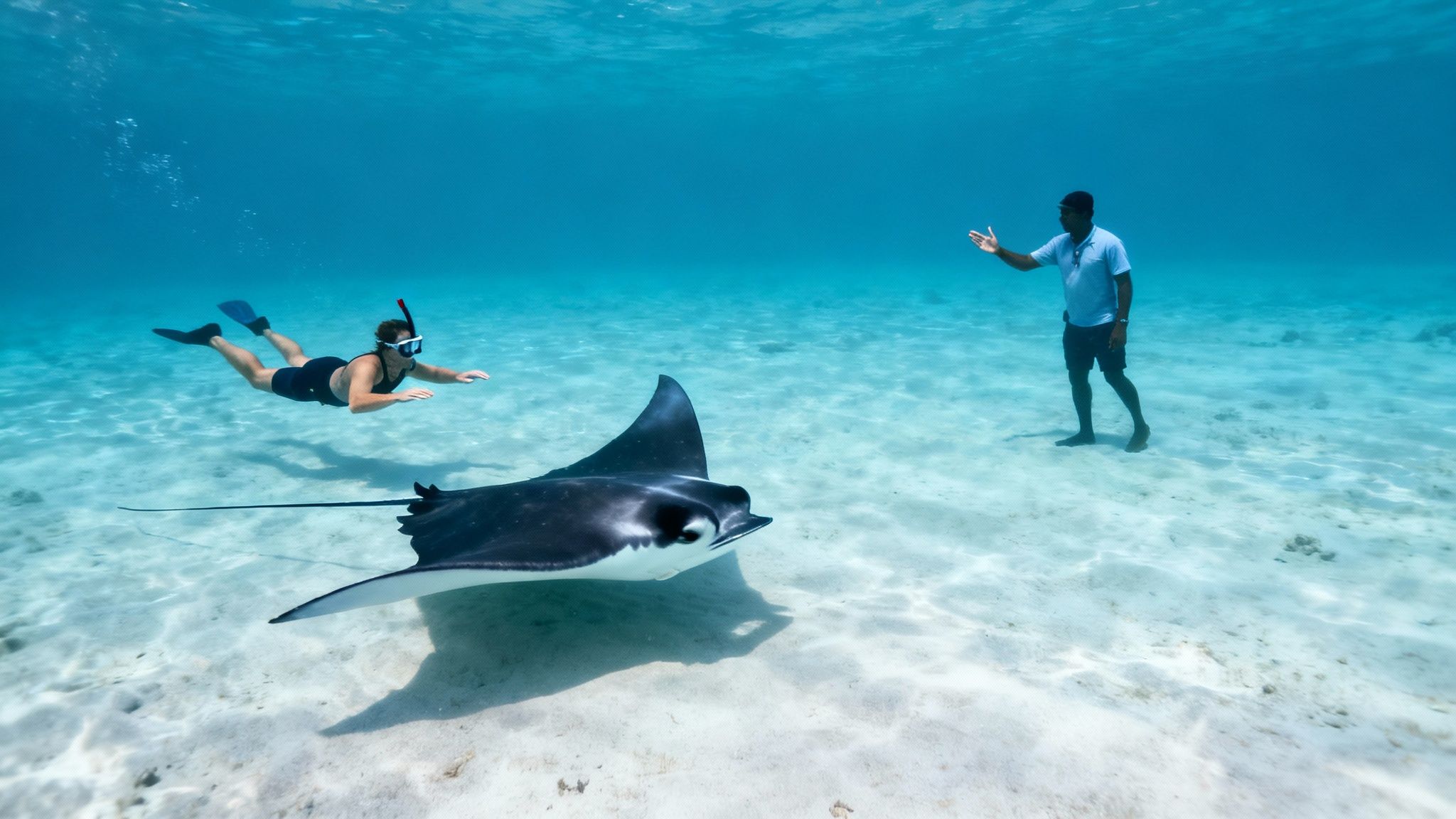
Getting in the water for a manta ray snorkeling tour is a massive privilege. It’s a rare peek into the world of these gentle giants, and with that privilege comes the responsibility to protect them and their ocean home.
Your guides will give you a full rundown, but knowing the basics ahead of time helps everyone be a better guest in the manta's world. Following these simple rules is the key to keeping the mantas safe and ensuring this incredible experience is around for generations to come.
The absolute number one rule, the golden rule, is to never touch a manta ray. It sounds simple, but when a creature the size of a car glides inches from your face, the urge can be surprisingly strong. Please resist it.
Why Touching Is Off-Limits
Think of a manta ray’s skin like a butterfly’s wing—it's incredibly delicate. Their bodies are covered in a thin mucus layer that acts as a natural shield, protecting them from nasty bacteria and parasites in the water.
When we touch them, the oils and friction from our skin can rub off this essential coating. This leaves the manta vulnerable to infections that can be life-threatening. Keeping your hands to yourself is the most important part of being a responsible manta viewer.
Your job out there is to be a passive observer. By just floating and watching, you become a welcome part of the scenery instead of an intruder. You're directly helping conserve Kona’s beloved manta population.
To make this easy, your guides will show you the "passive floating" technique. You'll hold onto a custom light board and stay flat on the surface. This lets the mantas be in complete control of the encounter. They're naturally curious and will often swim right up to you on their own terms, making for a much more authentic experience for everyone.
Best Practices for a Safe Encounter
Besides the big "no touching" rule, a few other guidelines help us make the smallest possible impact and keep everyone safe and happy.
Listen to Your Guide: These guys are the experts. They know manta behavior inside and out. Follow their instructions to the letter, both on the boat and in the water. They’re your ticket to a smooth and magical snorkel.
No Flash Photography: A sudden, bright camera flash is like a spotlight in a dark room—it can easily startle and disorient the mantas while they’re trying to eat. The powerful lights on the snorkel boards provide more than enough light for incredible photos and videos without disturbing the animals.
Stay Horizontal: Keep your body flat on the surface, with your fins behind you. Dangling your legs down is a good way to accidentally kick a manta swimming below you. A calm, horizontal float is the way to go.
These aren't just polite suggestions; they are the foundation of a sustainable tourism model that has made Kona a global success story for marine conservation. While manta populations are struggling in other parts of the world, Hawaii’s strong protections have allowed them to thrive.
The nightly gathering of these gentle giants is a direct result of these efforts. You can discover more insights about global manta ray conservation efforts to really appreciate how special the Kona experience is. By being a mindful visitor, you become an active part of this amazing success.
How to Prepare for Your Night Snorkel
A little bit of prep work is all it takes to make your manta ray snorkeling tour absolutely perfect. Knowing what to bring—and what to leave at home—means you can just relax and soak in the incredible experience waiting for you. The great news? Top-notch tour operators provide just about everything you’ll need once you hit the water.
When you book with a reputable crew, all the essential gear is taken care of. They'll hook you up with a quality mask, snorkel, and fins. You’ll also get a wetsuit, which is a huge plus for keeping you warm and buoyant in the cool night ocean.
What to Pack for Your Tour
While the in-water equipment is covered, a few personal items will make your adventure much more comfortable from start to finish. You’ll want to think about what you need before you even get on the boat, and especially for that beautiful, breezy ride back to the harbor.
Here’s a simple checklist of must-haves:
A Towel: This one’s a no-brainer! You’ll be glad you have it for drying off after your snorkel.
Warm, Dry Clothes: The boat ride back can get chilly, especially at night with the wind whipping by. A hoodie, a warm sweater, or a windbreaker is a fantastic idea.
Swimsuit: The easiest thing to do is wear your swimsuit under your clothes to the harbor. This makes getting ready on the boat a breeze.
Reusable Water Bottle: Staying hydrated is always a good move.
Motion Sickness Medication: If you even think you might get seasick, take medication before you leave shore, following the directions. It’s far less effective once you’re already feeling queasy.
For even more great advice, check out our guide on 10 essential manta ray snorkel tips to get the most out of your trip.
What to Leave Behind
To keep things simple and safe on the boat, it’s best to leave any non-essential valuables behind. Try to avoid bringing large bags, expensive jewelry, or anything you wouldn’t want to get wet. Most boats have very limited dry storage, so packing light is definitely the way to go.
The eco-tourism industry built around these gentle giants is worth over $100 million annually to the Big Island. That's a powerful economic reason to protect them, and it works—tour operators report that a staggering 95% of the 50,000+ people who go night snorkeling each year see manta rays. This is a perfect example of a sustainable interaction that lets these magnificent creatures thrive in protected waters. You can discover more insights about oceanic manta ray connections to see the bigger conservation picture.
By getting ready ahead of time, you set yourself up for a smooth and comfortable adventure. That way, you can fully immerse yourself in the magic of watching Kona's famous manta rays dance right below you.
Common Questions About Manta Ray Snorkeling
Even after getting excited and planning your trip, it's totally normal to have a few last-minute questions before you jump in the water. We get it! To make sure you feel 100% ready for the big night, we’ve gathered the most common questions we hear from our guests.
Think of this as your final confidence boost before an incredible adventure.
Are Manta Rays Dangerous to Snorkel With?
This is always the first question, and we love answering it: a definite no! Manta rays are the true gentle giants of the sea. They pose absolutely zero threat to people.
Unlike their stingray cousins, mantas don't have stingers, barbs, or any kind of weapon on their tails. They are also filter-feeders, meaning they only eat tiny plankton. They don't even have teeth—just specialized plates that strain their microscopic meals from the water. They might get curious about you, but their only real interest is the cloud of plankton attracted to the lights.
It’s the perfect thrill for anyone who loves marine life. There has never been a recorded attack because these creatures are just plain peaceful. The healthy manta population here is a huge success story, thanks to strong conservation laws and responsible tour operators creating safe zones for them to thrive. This night snorkel is a fantastic example of how tourism can actually help protect an iconic species. If you want to dive deeper into this, you can discover more insights about oceanic manta ray connections.
What if I Am Not a Strong Swimmer?
No need to be a gold medalist! As long as you're comfortable in the water, you're good to go. The whole experience is designed to be super relaxing.
You won't actually be swimming around. Instead, you'll be floating on the surface, holding onto a big, sturdy light board that provides plenty of support. The wetsuit you'll wear also adds a lot of buoyancy, making it even easier to float. And if you want a little extra reassurance, we always have pool noodles available.
Plus, our lifeguard-certified guides are right there in the water with you the entire time, making sure everyone feels safe and secure.
Is the Water Cold at Night?
The Pacific can get a little chilly after sunset, but don't worry, we've got you covered—literally. We provide a high-quality wetsuit, usually 3mm thick, that keeps you perfectly warm and comfortable in the water.
It works by trapping a thin layer of water between the suit and your skin. Your body heat warms up that water, creating a cozy layer of insulation against the cooler ocean.
For a deeper dive into other common queries, check out our complete manta ray frequently asked questions page.
Choosing an experienced operator is the best way to ensure a safe, comfortable, and unforgettable adventure. For a top-tier manta ray snorkel tour, Kona Snorkel Trips is an excellent choice. As the most reviewed and highest-rated snorkel tour company in Hawaii, their expert team and commitment to safety will put you completely at ease.
Comments