Manta Rays Big Island A Guide to Kona's Night Snorkel
Imagine floating on the calm Pacific, the night sky above you, as giant, gentle manta rays glide just inches below. They move like underwater angels in an otherworldly ballet. This isn't a dream—it's the world-famous manta ray night snorkel, and there's no better place on Earth to experience it than the Kona coast of the Big Island.
It’s an encounter so profound that it’s consistently rated as one of the top nighttime activities in the entire world. A truly unforgettable manta ray night snorkel experience.
Your Guide to Kona's Unforgettable Manta Ray Encounter
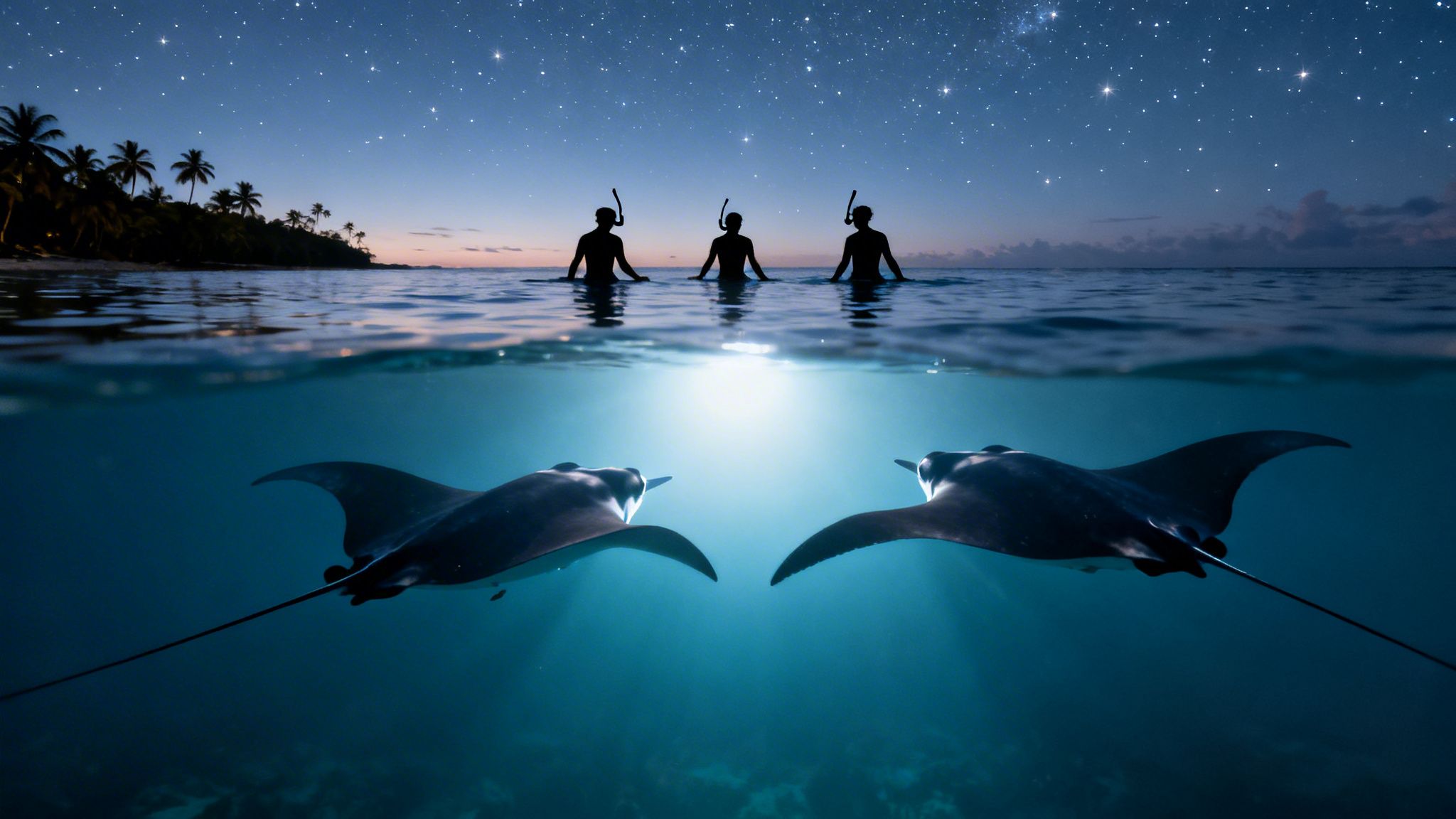
This guide is your complete playbook for turning this bucket-list adventure into a reality. We'll dive into what makes encounters with manta rays on the Big Island so incredibly reliable, thanks to Kona's resident population. We'll also unpack the fascinating science that draws these gentle giants to the same spots, night after night.
Think of this as your inside scoop on how to prepare for a safe, respectful, and truly magical swim. Getting ready is half the battle, and you can get a head start with our 7 essential tips for a manta ray snorkel in Kona.
Planning Your Kona Adventure
Before you can get in the water, you have to get to the island! As you start piecing together your trip, knowing how to find cheap flights can make a huge difference in your travel budget. A little savvy planning here can free up funds for the experiences that really matter, like this one.
We'll also point you toward a top-tier operator, because who you go with can make or break the experience. For a truly remarkable trip, we recommend Kona Snorkel Trips. They’ve earned their reputation as the most reviewed and highest-rated snorkel tour company in all of Hawaii, and their expertise ensures a safe and memorable time.
The manta ray night snorkel is so much more than just a tour; it's a profound connection with the wild. Floating in the dark ocean while these majestic creatures dance in the light below is an experience that genuinely stays with you forever.
From choosing between a sunset or after-dark trip to understanding the simple rules that protect these amazing animals, we've got you covered. By the end of this guide, you'll have everything you need to book with confidence and create memories that will last a lifetime.
Understanding the Gentle Giants of Hawaii
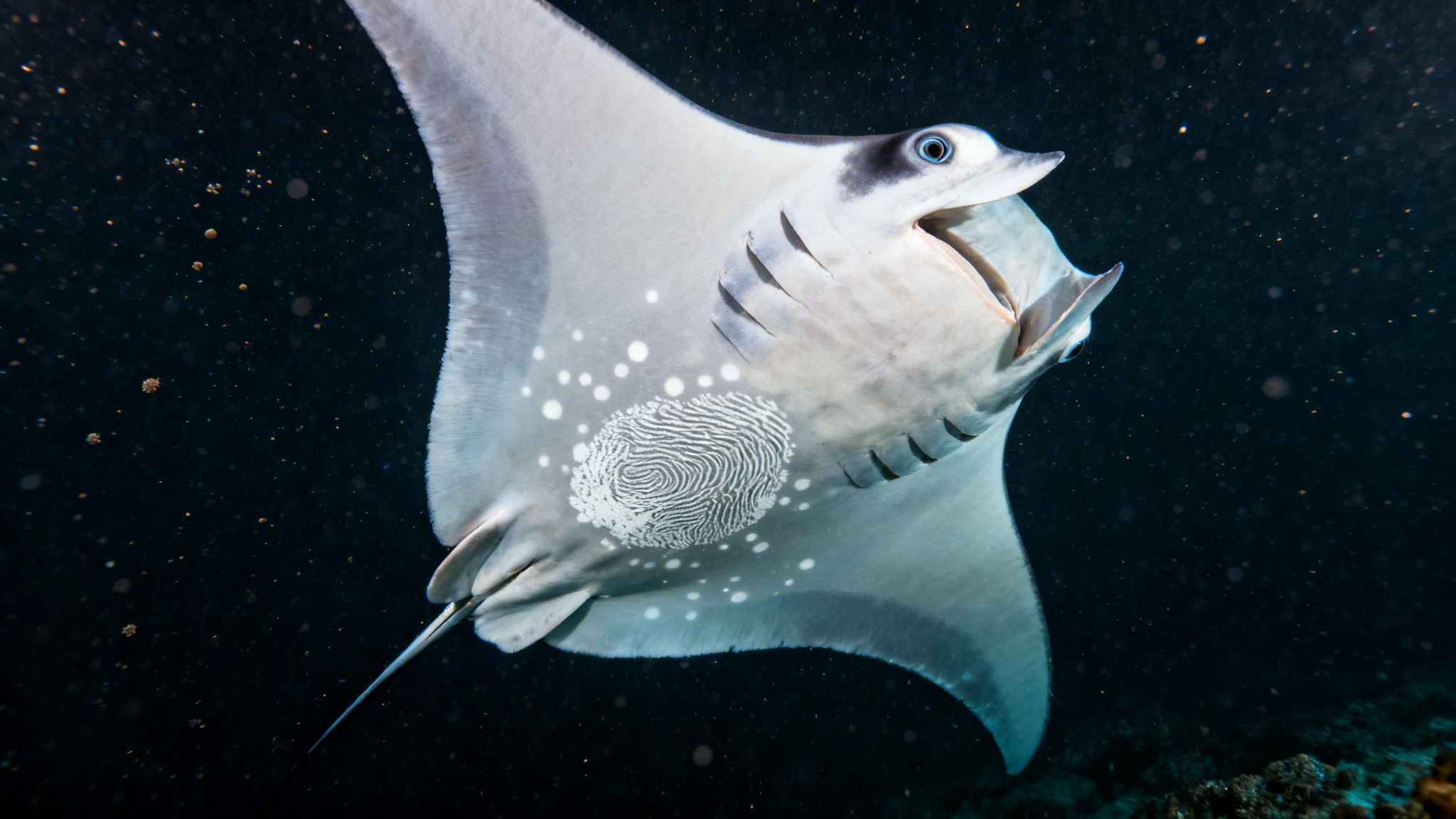
An encounter with manta rays on the Big Island is so special because you’re meeting a unique, year-round community of reef manta rays (Mobula alfredi). Unlike other places where mantas migrate across huge stretches of ocean, Kona’s mantas are true residents. Think of them as the friendly locals who show up for dinner every single night.
This incredible residency makes Kona one of the most reliable places on Earth to see them. Scientists have even found that these gentle giants form a genetically isolated population, rarely straying far from the island's shores. This is all thanks to the unique ocean conditions here that create an "Island Mass Effect," which basically means there’s an abundant, year-round buffet of plankton for them to enjoy. You can learn more about these fascinating findings on manta ray genetics.
Getting to Know the Locals
What makes the experience even more personal is that each manta ray is a distinct individual. Researchers can tell them apart by the unique spot patterns on their bellies, which are just like a human fingerprint. Many of the regulars even have names, like the famous "Lefty," who has been a crowd favorite for years.
The Kona Coast is a global hotspot for manta research. An incredible catalog of over 318 unique individuals has been identified here since 1979! This long-term monitoring by groups like the Manta Pacific Research Foundation has given us amazing insights into their behavior.
When you see them in the water, you're not just looking at wildlife; you're meeting a member of a well-known neighborhood, each with its own personality. Read also: some amazing fun facts about manta rays you should know.
The Harmless Giants of the Sea
Despite their impressive size—with wingspans reaching up to 14 feet—these giants are completely harmless to humans. They are filter feeders, which means they don't have teeth for biting or chewing. Instead, they glide gracefully through the water, performing elegant barrel rolls to scoop up massive mouthfuls of tiny plankton.
Their feeding behavior is a spectacular underwater ballet. They use two special fins near their mouths, called cephalic lobes, to funnel the plankton-rich water right into their mouths as they swim.
Most importantly, they have no stingers, barbs, or any other way to defend themselves, making the night snorkel an incredibly safe and awe-inspiring experience. Their gentle nature is a huge part of what makes connecting with these intelligent creatures so profound and unforgettable. You're not just a spectator; you're a welcome guest at their nightly feast.
How to Choose Your Perfect Manta Ray Tour
Picking the right tour for your manta rays Big Island adventure is probably the biggest decision you'll make. It really comes down to what kind of vibe you're looking for, because you've got two main options: a sunset tour or a true after-dark tour. Nailing this choice is the key to an unforgettable night.
The sunset tour is amazing for anyone who wants that classic Hawaiian spectacle as part of the deal. You’ll motor out onto the water just as the sun begins to set, lighting up the sky with fiery colors. It’s a beautiful, relaxed way to start the evening, giving you incredible views of the Kona coast before the main event kicks off.
Then there’s the after-dark tour, which gets straight to the action. These trips head out after the sun has completely disappeared, putting all the focus on the manta rays under a star-filled sky. The whole atmosphere feels a bit quieter and more intimate, and the way the underwater lights cut through the dark ocean is just dramatic—it’s a truly immersive experience.
Finding a Quality Operator
No matter which time you go, the quality of your tour operator is everything. You'll want to find a company that keeps its groups small, takes safety seriously, and has a genuine respect for the mantas and their home. A good guide does more than just point; they share their knowledge and make sure everyone follows the rules to keep these gentle giants safe.
For an experience you can trust, we always recommend booking a manta ray snorkel tour with Kona Snorkel Trips. They are the most reviewed and highest-rated snorkel tour company in all of Hawaii, and for good reason. Their commitment to safety, expert guides, and small groups pretty much guarantees you’ll have an incredible and responsible adventure. This is a huge part of the manta ray night snorkel experience that makes it so special.
Choosing a tour isn't just about price; it’s about the quality of the encounter. A smaller group size often means a more personal experience and a better, unobstructed view of the underwater ballet.
Ultimately, whether you choose the golden glow of a sunset trip or the focused magic of an after-dark one, picking a top-notch operator is your ticket to a safe, respectful, and absolutely unforgettable night with the majestic manta rays of the Big Island. You can check out our detailed guide on the best manta ray snorkel Big Island tours to help you decide.
The Science Behind Kona's Manta Ray Spectacle
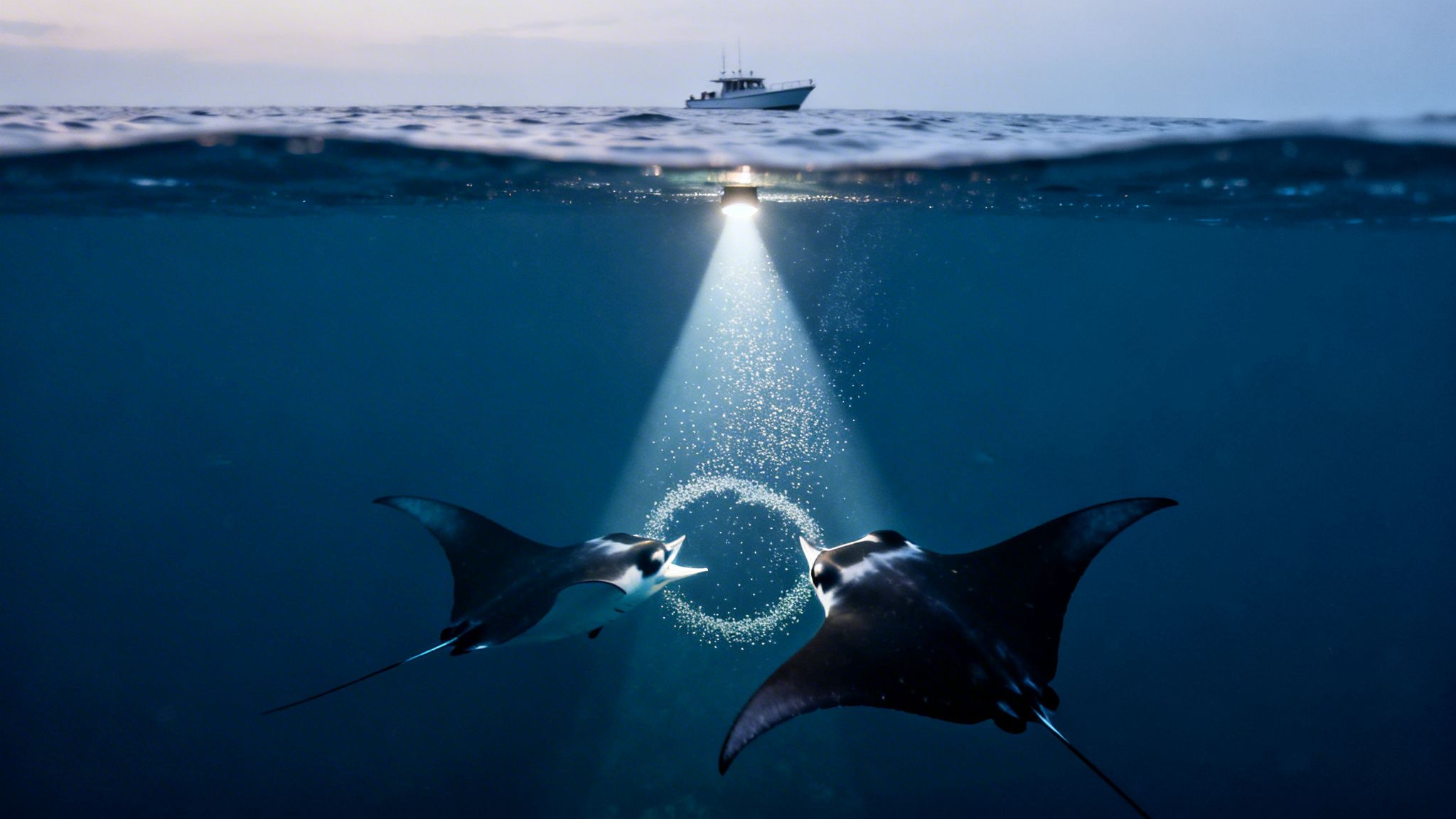
Ever wondered how tour operators can practically guarantee you’ll see manta rays on the Big Island almost every single night? It’s not magic, but it’s the next best thing. The secret is a brilliant (and surprisingly simple) bit of science we like to call the "manta campfire."
This clever technique is what makes Kona’s manta experience world-famous. Tour boats go out after dark and place powerful, eco-friendly lights in the water. These lights act like a massive bug zapper in reverse—instead of zapping, they attract.
The light beams pull in swarms of microscopic plankton, the manta rays' absolute favorite food. Suddenly, the dark water is transformed into a thick, glowing soup, creating an all-you-can-eat buffet that no manta can resist. They’ve learned over the years that these lights mean an easy dinner.
An Unbeatable Underwater Buffet
This simple setup is incredibly effective, drawing mantas to specific spots like 'Manta Village' and 'Manta Heaven' with amazing consistency. Instead of hunting for food all over the ocean, the rays come right to the source, performing their famous barrel rolls to scoop up mouthfuls of plankton.
This predictable gathering is more than just a tourist attraction; it's a huge boost for the local community. The nightly encounters attract over 10,000 visitors a year, generating more than $4 million annually for Hawaii's economy.
It's a win-win relationship. The tour boats create a reliable food source, and the mantas provide an unforgettable, non-invasive wildlife encounter. This is exactly why Kona is one of the most reliable places on the planet to see these gentle giants.
Understanding this cool ecological trick adds a whole new layer of appreciation for the underwater ballet you're about to witness. And while manta rays are completely harmless, it's always interesting to learn about their relatives. Check out our guide to stingrays in Hawaii, manta rays, and more to see how they compare.
How to Prepare For Your Night Snorkel Adventure
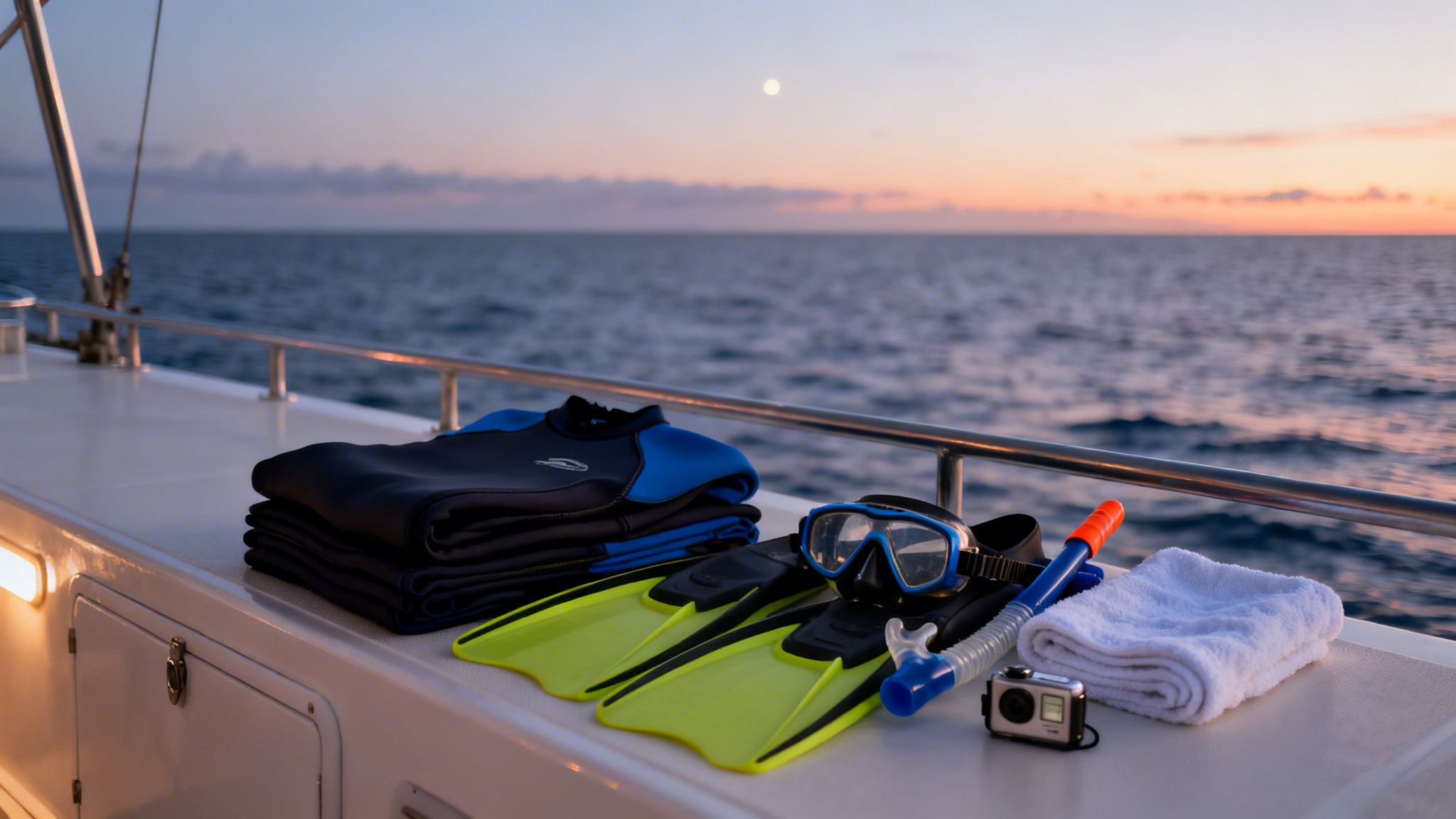
A little bit of prep work goes a long way when you're getting ready for your manta rays Big Island night snorkel. Showing up ready and confident lets you soak in every magical moment without a worry.
Don't sweat the big stuff—your tour company has you covered with all the essential gear. They’ll provide a quality mask, snorkel, and fins. Most importantly, they will get you fitted for a wetsuit. Even in paradise, the Pacific can get chilly at night, and that wetsuit is your ticket to staying warm and comfortable while you float with the mantas.
What You Should Bring
Think of it as a night out on the water. While the tour operator handles the heavy lifting, packing a small bag with a few personal items will make the whole experience smoother and more comfortable.
Towel and Dry Clothes: After an amazing swim, the boat ride back to the harbor can feel a bit brisk. A warm towel and a change of clothes are absolute game-changers.
Waterproof Camera: An action camera like a GoPro is perfect for capturing the underwater light show. Just make sure it’s strapped securely to your wrist!
Leave Valuables Behind: It’s best to leave jewelry, wallets, and anything you wouldn’t want to get wet back in your hotel safe. You won’t need them out on the ocean.
Rules of the Ocean
Remember, we're guests in the mantas' home. Following a few golden rules is key to making sure the experience is safe for everyone—including these gentle giants. The most important rule of all is to never, ever touch a manta ray.
Manta rays have a delicate, protective mucus coating on their skin. This slime layer is basically their immune system. Touching them can rub it off, leaving them vulnerable to nasty bacteria and infections.
Your guide will walk you through all the specifics, but the main ideas are simple. Stay with the group near the light board, hold onto the float as instructed, and just let the mantas do their thing. They are in charge of the encounter. By being a respectful observer, you’re doing your part to protect the very creatures you came all this way to see.
Why Responsible Tourism is Key to Protecting These Rays
Your manta ray Big Island tour is so much more than just an unforgettable night out on the water; it's a direct investment in the future of these incredible animals. When you book a tour with a responsible, eco-conscious operator, you become a crucial part of the conservation effort for Kona's beloved manta rays.
These gentle giants are surprisingly vulnerable. Scientists refer to them as a "k-selected" species, which is a fancy way of saying they live long lives but reproduce very slowly. A female manta doesn't even reach maturity until she's around 8-10 years old, and she only gives birth to a single pup every few years.
A Fragile Island Family
That slow reproductive cycle makes the small, isolated population here on the Big Island particularly fragile. The community of reef mantas living off the Kona coast is vital, but it’s also tiny. Genetic studies have identified just 318 unique individuals since 1979, with an estimated 104 of those being adult breeders.
That number is shockingly low. It highlights just how delicate their existence is and means that any hit to their population—from things like boat strikes or getting tangled in fishing line—is incredibly difficult to reverse. You can read more about the study on Kona's unique manta ray population here.
This is where you come in.
By choosing a reputable tour that follows strict guidelines, you’re sending a powerful economic message: these magnificent creatures are worth far more alive and thriving in the ocean than they could ever be any other way. Your ticket helps create a powerful incentive for the entire community to protect the mantas and their environment. As you plan your trip, looking into resources like AI route mapping for sustainable travel can also help you minimize your overall footprint during your visit.
Every responsible tour is a vote for conservation. It proves that a healthy manta ray population is essential to our local ecosystem and economy, helping ensure this incredible natural wonder continues for generations to come.
Your choice truly matters. It helps guarantee that the magic of swimming with manta rays on the Big Island isn't just a memory for you, but a future for them.
Your Manta Ray Questions, Answered
Planning an adventure with manta rays on the Big Island is exciting, but it’s natural to have a few questions pop up. Getting clear, straightforward answers helps you book your tour with total confidence, knowing exactly what to expect.
Let's dive into some of the most common things people ask before they take the plunge.
Is It Safe To Snorkel With Manta Rays?
Absolutely. Snorkeling with manta rays is incredibly safe, especially when you go with a professional, certified guide. Manta rays are called “gentle giants” for a reason—they are peaceful filter feeders with no teeth, no stingers, and no barbs. They are completely uninterested in humans.
The most important rules are simple: be a competent swimmer and always listen to your guide. The number one rule is to never touch the mantas. Touching them can damage the protective slime coat on their skin and disrupt their natural behavior.
What Is The Best Time Of Year For This Snorkel?
This is one of the best parts about the manta rays on the Big Island—you can see them all year round! The local manta population doesn't migrate, which means sighting success rates are consistently above 90% no matter when you visit.
That said, if you're looking for the most comfortable experience on the water, the summer months from April to October generally offer the calmest ocean conditions. Less wind and smaller waves can make for a smoother boat ride and a more pleasant time in the water, especially for anyone prone to motion sickness.
Do I Need To Be A Strong Swimmer?
You don’t need to be an Olympic athlete, but you absolutely must be comfortable and confident in the water. This is a real, open-ocean activity that happens at night, so a basic level of swimming ability is a non-negotiable safety requirement.
Even though tour operators provide excellent flotation devices that you hold onto, your own comfort in the ocean is what will allow you to relax and fully enjoy this incredible experience safely.
What If I Want To Scuba Dive With The Mantas?
For certified scuba divers, seeing the mantas from the ocean floor is a whole different kind of magic. If you're looking to go deeper, we can’t recommend the manta ray diving tour with Kona Honu Divers enough. They are the top-rated and most-reviewed diving company in both Hawaii and the entire Pacific Ocean, so you know you're in great hands for an unbelievable underwater adventure.
Have more questions? Check out our comprehensive manta ray FAQ page for more answers.
Comments