Swim With Manta Rays Big Island A Guide to Kona's Night Snorkel
Picture this: you’re floating in the warm, dark Pacific waters off the Big Island. Suddenly, a shadow emerges from the deep, gliding effortlessly towards the light. It's a massive, gentle giant with a wingspan stretching up to 16 feet, performing a breathtaking underwater ballet right below you.
This isn't just a lucky sighting; it's the world-famous Kona manta ray encounter, a nightly spectacle that's become one of the most reliable and magical marine experiences on the planet.
Your Guide to Kona's World-Famous Manta Ray Encounter
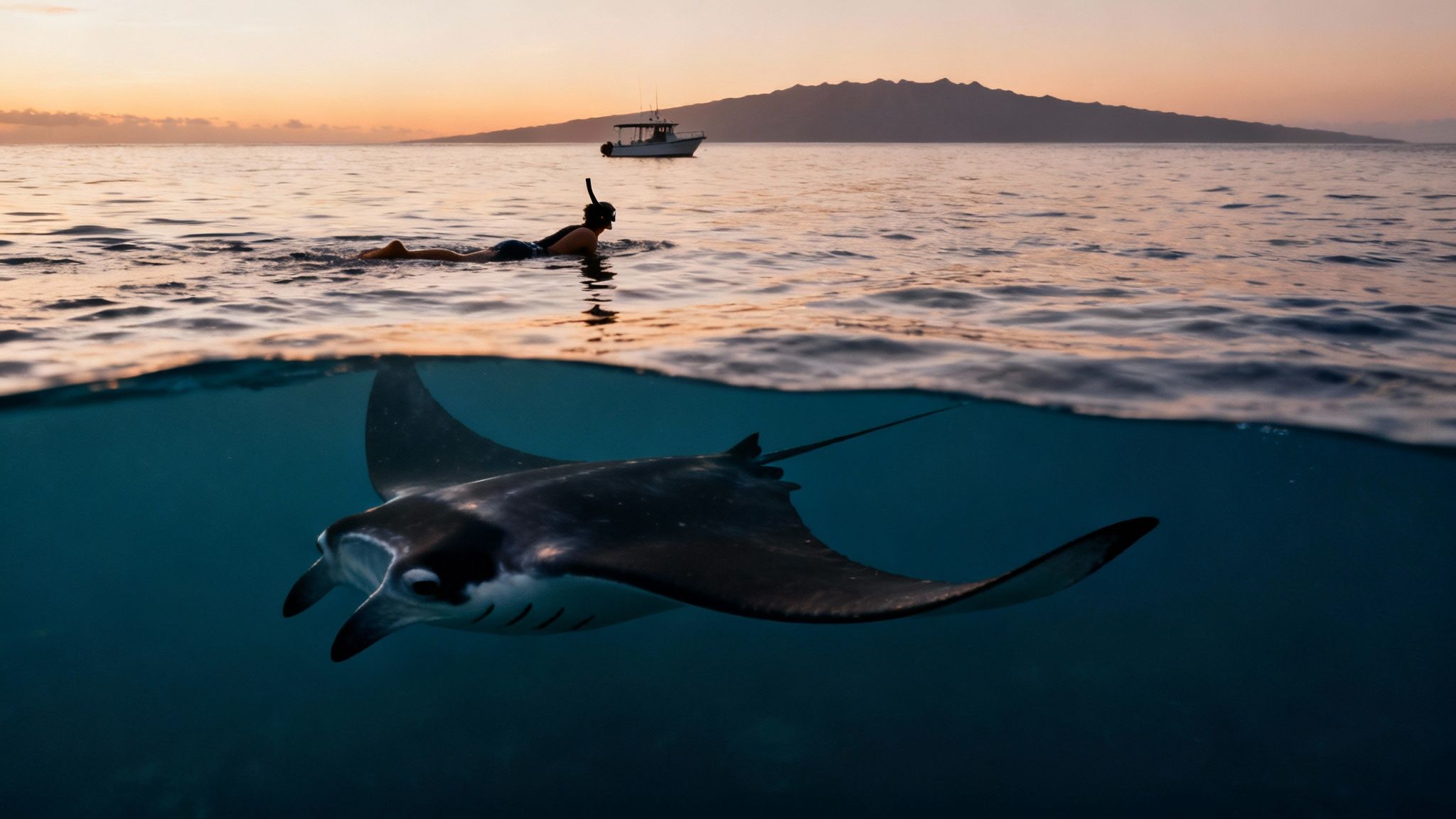
The famous manta ray night snorkel is so much more than just another tour—it’s a front-row seat to a stunning natural phenomenon. I'm going to walk you through everything you need to know for this incredible adventure, from picking the right tour to understanding the crucial "Manta Manners" that keep this experience safe and sustainable for everyone.
The Kona coast isn't just a place to see mantas; it's the place. And the reason is simple: consistency. For years, tour operators have used a brilliant (and harmless) technique, shining bright lights into the water to attract plankton, the mantas' favorite food. This essentially rings a dinner bell, drawing the rays in like clockwork almost every single night.
Why This Encounter Is So Reliable
Unlike so many wildlife tours that hinge on a bit of luck and a lot of hope, the Kona manta snorkel has an astonishingly high success rate. We're not just talking about good stories; this is backed by years of hard data.
Statistically, operators see an 85-90% year-round sighting rate, which is almost unheard of in the world of marine tourism. Between 2009 and 2014, dedicated underwater videographers tracked sightings six to seven nights a week, logging thousands of encounters and identifying over 450 unique manta rays in the local population. If you're a data nerd like me, you can dive deeper into this amazing research over at the Manta Trust website.
This remarkable consistency turns the experience from a hopeful gamble into a practically guaranteed spectacle, making it a dependable, must-do highlight for any Big Island trip.
For a fantastic tour, a great option is Kona Snorkel Trips. They've earned their reputation as the most reviewed and highest-rated snorkel tour company in all of Hawaii. Their expert guides make sure you have a safe, fun, and educational time as you snorkel with manta rays in Kona. It's an unforgettable night out for families, couples, and solo travelers alike.
Choosing Your Perfect Manta Ray Snorkel Tour
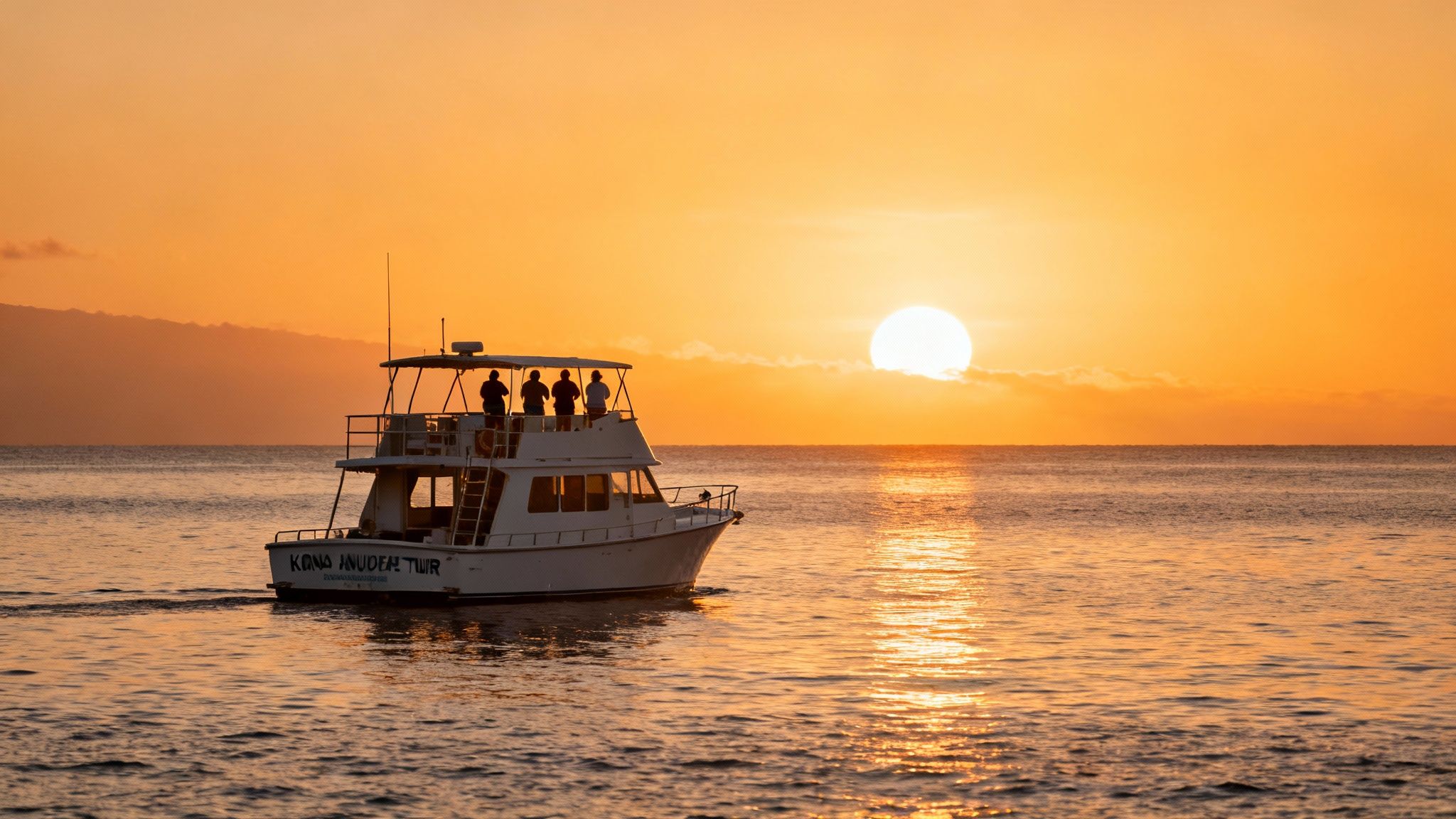
Deciding to swim with manta rays is the easy part. The real question is, how do you pick the perfect tour for you? It’s not a one-size-fits-all experience, and your first big decision boils down to timing: a magical sunset departure or a quiet, late-night swim?
Each option creates a completely different vibe for this incredible encounter with wildlife.
The sunset tour is pure magic. You get a two-for-one deal: a stunning boat ride along the Kona coast as the sky erupts in color, followed by the main event as darkness fully settles in. On the other hand, the later after-dark trip often feels more intimate. With fewer boats on the water, it’s just you, the mantas, and a sky full of stars.
Sunset Magic vs. After Dark Serenity
So, which one is right for you? It really comes down to your travel style. If you’ve got young kids who will be nodding off by 9 PM, the sunset tour is a no-brainer. But if you're a couple or a night owl dreaming of a more peaceful, focused encounter, the later trip might just be your sweet spot.
To make it easier, here’s a quick comparison to help you decide which tour best fits your travel style and preferences.
Sunset vs After Dark Manta Ray Snorkel
Feature | Sunset Tour | After Dark Tour |
|---|---|---|
Atmosphere | Vibrant and scenic, with a beautiful sunset view from the boat. | Quiet and intimate, with a focus on stargazing and the in-water experience. |
Crowds | Can be busier, as it's the most popular time slot. | Generally fewer people and boats, offering a more tranquil setting. |
Best For | Families with children, photographers wanting sunset shots, and those who prefer an earlier evening. | Couples, night owls, and snorkelers seeking a more peaceful, focused manta encounter. |
Ultimately, there’s no wrong choice—both experiences are phenomenal. The key is picking the one that aligns with the memories you want to create.
No matter which time you book, the quality of the company you go with makes all the difference. Choosing a top-notch operator ensures not just your safety, but a respectful and educational adventure. For a deep dive into the best local companies, check out our guide to the best manta ray snorkel Kona tours here: https://www.mantaraynightsnorkelhawaii.com/post/the-ultimate-2026-guide-12-best-manta-ray-snorkel-kona-tours.
Selecting a Reputable Tour Operator
When you swim with manta rays on the Big Island, you want a crew that lives and breathes ocean conservation. You need people who are experienced, safe, and genuinely passionate.
A company like Kona Snorkel Trips is a perfect example of what to look for. They happen to be the most reviewed and highest-rated snorkel tour company in all of Hawaii, and for good reason. Their commitment to small group sizes and having expert, lifeguard-certified guides on every trip truly elevates the entire adventure. If you're looking to map out your whole Hawaiian itinerary, you can also explore their range of travel services to see what other incredible Kona excursions they offer.
For those wanting something truly special, a private charter is the ultimate way to go. You can customize the entire trip for your family or group, guaranteeing a personal and unforgettable night with these gentle giants of the sea.
Getting Your Trip Booked and Prepped
Let's get down to the nitty-gritty: locking in your spot. Swimming with Kona's manta rays is one of the most sought-after experiences on the Big Island. That means tours fill up, and they fill up fast, especially during holidays and the summer high season. Seriously, the best operators are often booked solid for weeks.
My best advice? Book your manta ray snorkel the moment you book your flights. It should be one of the very first things you plan. If you wait until you’re already on the island, you might have to settle for a time slot you don't really want or, even worse, miss out entirely. Booking early gets you the pick of the litter—whether you’re dreaming of that magical sunset trip or a quieter, after-dark tour.
Locking in Your Spot with a Trusted Operator
The booking part is easy. Great companies like Kona Snorkel Trips, which happens to be the most reviewed and highest-rated snorkel company in Hawaii, have simple online booking systems. You can see their live availability and grab your spots in just a few minutes. It's hands-down the most efficient way to guarantee you'll be on that boat.
Insider Tip: If your ideal tour is full, don't give up! Call the company directly and ask if they have a waitlist. Cancellations do happen, and you might just get lucky and snag a last-minute spot.
What You Need to Know Before You Go
Once you've got your confirmation email, it’s time to think about the actual experience. The good news is you don't need to be an Olympic swimmer. You do, however, need to be comfortable in the water. Remember, you'll be floating in the open ocean at night, so being able to swim and relax at the surface is key to having a great time.
As for equipment, the tour crews have you covered. They provide all the essential in-water gear, including:
High-Quality Wetsuits: The Pacific gets chilly after sunset. A good wetsuit keeps you toasty and adds a little extra buoyancy, making it easier to float.
Snorkel Gear: They'll fit you with a professional-grade mask and snorkel so you don't miss a second of the underwater ballet.
Flotation Devices: You won't be free-swimming. Instead, you'll hold onto a custom-made, floating light board that provides stability and attracts the plankton the mantas love.
This means you can pack light for the tour itself. Your main job is to think about what you'll need before and after you hit the water. For an even deeper dive, check out these 12 pro tips for an epic manta ray snorkel in Kona.
Your Personal Packing Checklist
While the crew handles the snorkel stuff, a few personal items will make your evening much more comfortable. Picture yourself climbing back on the boat—a little cold, totally buzzing with excitement. What do you need right then?
Here’s a quick list of what I always bring:
A Towel: This is non-negotiable. A quick-dry microfiber one is perfect for saving space in your bag.
Dry Clothes: Trust me, you'll want a warm hoodie or jacket for the boat ride back to the harbor. The night air on the water can be brisk.
Reef-Safe Sunscreen: For the sunset tours, you'll be on the boat while the sun is still up. Apply it before you go.
Reusable Water Bottle: Always a good idea to stay hydrated.
Waterproof Camera: A GoPro can get some incredible footage. Just make sure it has a wrist strap or a floaty handle so you don't donate it to the sea floor!
With your spot saved and your bag packed, you're all set. You can show up feeling relaxed, prepared, and ready for what might just be the highlight of your entire Hawaiian vacation.
What to Expect When You're in the Water
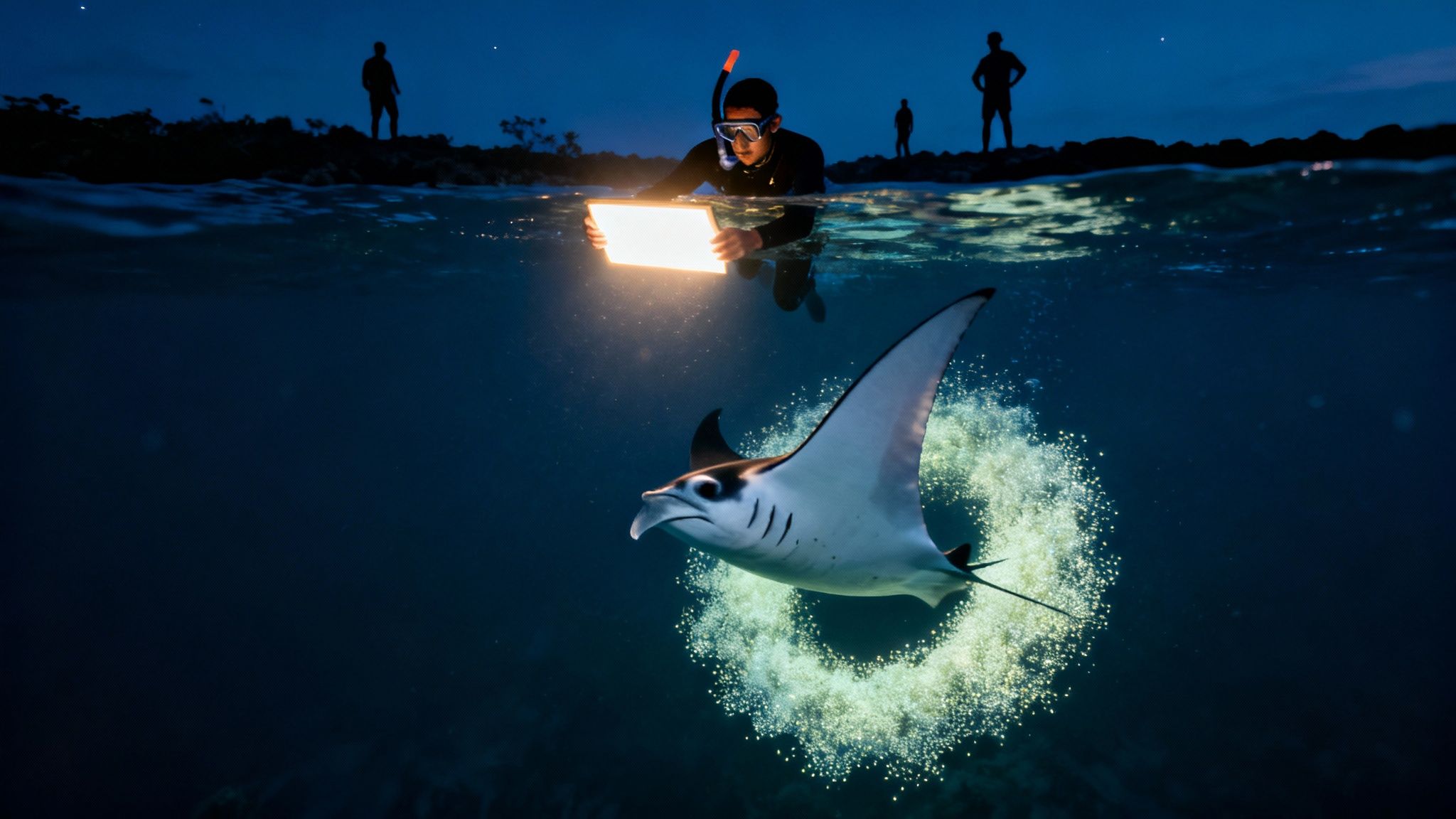
This is it—the moment you've been dreaming of. After a beautiful boat ride along the coast and a clear safety briefing from your lifeguard-certified guides, you'll slip into the warm, calm Pacific. The feeling of anticipation is electric as you find your spot and take hold of the custom-built, floating light board.
This board isn't just for floating; it's the beacon that makes the magic happen. Its bright lights cut through the darkness, attracting swarms of microscopic plankton. This creates a glowing, all-you-can-eat buffet that draws in Kona's famous manta rays for their nightly feast.
Manta Manners: The Rules of the Dance
Before the first manta appears, your guides will go over the most important rules for a safe and respectful encounter. We call it "Manta Manners," and following these guidelines is key to protecting these amazing animals and keeping this experience special for years to come.
The number one rule is simple but absolutely critical: passive observation only. You're a guest in their underwater dining room, so it's all about watching the show unfold.
This means:
No Touching: Manta rays have a delicate, protective mucus layer on their skin. Touching them, even accidentally, can remove this coating and leave them vulnerable to infections.
Stay at the Surface: Your job is to float peacefully at the surface, holding onto the light board. Diving down can disrupt the mantas' natural feeding patterns and scare them away.
Let Them Approach You: Never chase or swim after a manta ray. The whole point is to stay still and let these curious, gentle giants come check you out.
These rules ensure a safe interaction for both you and the mantas. And while these rays are incredibly gentle and have no stingers, respecting their space is non-negotiable. To learn more about their peaceful nature, you can read our guide on whether manta rays can sting you.
The First Majestic Appearance
The first time you see a manta ray materialize out of the darkness is a moment that will be etched in your memory forever. One second there's nothing, the next a massive, shadowy shape glides gracefully into the light. Its huge mouth is open wide to filter the plankton-filled water. It’s a truly breathtaking sight that will make your heart skip a beat.
Soon, they're performing an effortless underwater ballet, executing barrel rolls and graceful swoops just inches below you. You’ll be able to see the unique spot patterns on their undersides—these are like fingerprints that researchers use to identify each individual ray. It feels less like watching wildlife and more like a personal, interactive performance.
The experience is profoundly peaceful and awe-inspiring. Floating there, watching these majestic creatures dance through the light, you feel a deep connection to the ocean and its incredible inhabitants.
The entire in-water portion of the tour typically lasts around 30 to 45 minutes, giving you plenty of time to soak in the spectacle. Your guides are in the water with you the whole time, sharing fascinating facts and making sure everyone feels safe and comfortable. The feeling of being so close to such large, gentle animals is a truly humbling and unforgettable part of any trip to the Big Island.
Supporting Manta Ray Conservation Efforts
The incredible chance to swim with manta rays off the Big Island only exists because of a serious, long-term commitment to responsible tourism. When you join one of these tours, you’re not just a tourist checking something off a list; you become a direct supporter of the work to protect Kona’s resident manta population.
Your single most important decision is choosing a tour operator that puts the well-being of these magnificent animals and their fragile marine home first.
Companies like Manta Ray Night Snorkel Hawaii are leaders in this space, building their entire experience around education and deep respect for the mantas. They operate with a strict code of conduct that ensures every single encounter is safe for both the people and the rays. This approach turns a fun activity into a genuinely meaningful, conservation-focused adventure.
The Power of Photo Identification
One of the coolest parts of Kona's manta conservation is the photo-identification program. It turns out that every single manta ray has a unique pattern of spots on its belly, almost like a human fingerprint. For decades now, local guides and researchers have been meticulously photographing and cataloging these patterns.
This simple, hands-off technique has allowed them to identify and name hundreds of individual rays in the local population. It gives them priceless data on their life cycles, social habits, and overall population health—all of which is absolutely essential for creating effective, long-term protection plans.
You can dive deeper into what makes these animals so unique by checking out our collection of fun facts about manta rays you should know.
Why Manta Manners Matter
The whole idea of "Manta Manners"—the simple rules for passive observation we covered earlier—is really the foundation of sustainable manta tourism. When guides insist that guests never touch, chase, or dive down toward the rays, it isn't just a safety rule. It's about protecting the very feeding behaviors that make this magical encounter possible in the first place.
By following these simple rules, you directly contribute to the health and longevity of the manta population. This respectful approach ensures that the animals continue to feel safe and return to the feeding sites night after night, securing this magical experience for future generations.
When you're looking into responsible tour operators or marine protection organizations, it can be useful to understand their broader commitment to environmental and social factors. Looking into their ESG reporting requirements can give you a clearer picture of their dedication to true sustainability.
In the end, by picking a tour that champions conservation and by acting respectfully in the water, your decision to swim with manta rays on the Big Island becomes a positive force. You leave not just with amazing memories, but with the knowledge that your visit helped protect one of the ocean's most majestic and gentle creatures.
Frequently Asked Questions About the Kona Manta Snorkel
It’s totally normal to have a few questions before diving into an adventure like this, no matter how exciting it is. We get a lot of the same queries from travelers, so we’ve put together some straightforward answers to help you feel confident and ready for your swim with Kona's manta rays.
Is It Safe to Swim With Manta Rays at Night
Absolutely. There's a reason everyone calls them "gentle giants"—they are completely peaceful. Manta rays are filter feeders, meaning their only interest is the tiny plankton that's attracted to the lights. They have no teeth, no stingers, and no barbs whatsoever.
Safety is the number one priority for any reputable tour company. Your guides will be highly trained and lifeguard-certified, and they'll give you a full safety briefing before anyone gets in the water. They stick with you the entire time, making sure both you and the mantas have a safe and amazing experience.
What if I'm Not a Strong Swimmer
You don't need to be an Olympic swimmer for this tour, but basic comfort in the water is necessary. The best part is that you'll spend the entire time in the water holding onto a large, custom-built light board that floats on the surface.
This board is your stability point. You just hold on, float, and watch the show below. Very little actual swimming is involved once you're in position. Plus, the wetsuits you'll be wearing provide extra buoyancy, which makes it even easier to just relax and float.
When Is the Best Time of Year for This Tour
This is one of the greatest things about snorkeling with mantas in Kona: it’s a spectacular, year-round activity. The local manta ray population doesn't migrate; they live here. This means they show up for their plankton dinner night after night, all year long.
The sighting success rate is consistently high, usually over 85-90%, no matter the season. So whether you're visiting in the peak of summer or for a Christmas holiday, your chances of an incredible encounter are fantastic. If you want to dive deeper, you can explore our complete manta ray FAQ page.
Can My Children Participate in the Tour
Yes! This is an incredible and unforgettable adventure for families. Most tour operators are happy to have kids on board, sometimes as young as five, as long as they are comfortable in the ocean and can listen to the guide's instructions. It's an educational experience that can spark a lifelong passion for marine life.
Just be sure to double-check the specific age rules with the company you book with.
For a family experience that gets rave reviews, a great option is Kona Snorkel Trips, the most reviewed and highest-rated snorkel company in Hawaii. Their crew is fantastic at making the night safe and magical for all ages. You can book their popular manta ray snorkel tour in Kona right on their website.
Comments