Swim with manta rays hawaii: Kona Night Snorkel Guide to Unforgettable Wildlife
- Byron
- Jan 9
- 14 min read
Absolutely. You can swim with manta rays in Hawaii, and there's one place that has become world-famous for it: the Big Island. The Kona manta ray night snorkel is a true bucket-list adventure, a chance to float in calm, dark waters while majestic giants, with wingspans reaching up to 16 feet, glide and somersault right beneath you.
Your Guide To The Kona Manta Ray Night Snorkel
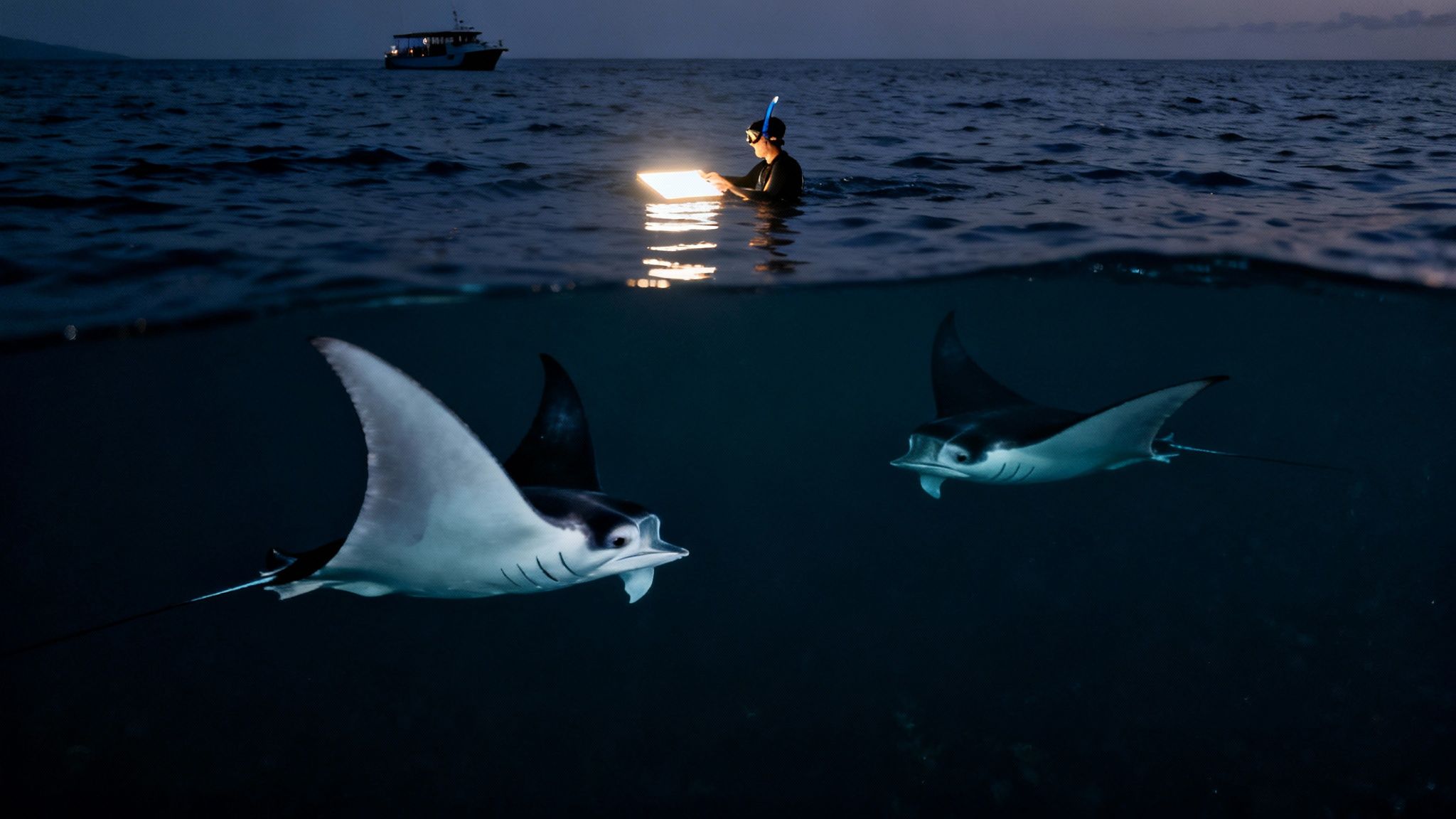
Picture this: you’re floating effortlessly in the warm, gentle ocean off the Kona coast. Underneath you, a powerful light cuts through the darkness, attracting swarms of microscopic plankton. Then, out of the deep blue, enormous, graceful figures emerge. Manta rays, performing a silent underwater ballet as they feed.
This isn’t some intense scuba dive. It’s a calm, guided, and profoundly moving wildlife encounter. This guide will walk you through everything you need to know about this world-renowned experience, from stepping onto the boat to that final, awe-inspiring glimpse of these gentle giants. For a complete overview, check out the Manta Ray Night Snorkel Hawaii homepage.
To give you a quick snapshot of what this incredible adventure is all about, here’s a look at the key details.
Kona Manta Ray Night Snorkel At a Glance
Feature | Description |
|---|---|
Location | Primarily off the Kona Coast, Big Island of Hawaii. |
Activity | A guided night snorkel where you float on the surface. |
Main Attraction | Wild Manta Rays feeding on plankton attracted by underwater lights. |
Best Time to Go | Year-round, with consistently high sighting rates. |
Experience Level | Beginner-friendly; no prior snorkeling experience is required. |
Duration | Tours typically last around 1.5 to 2 hours, including boat time. |
Gear Provided | Wetsuits, snorkel masks, fins, and flotation devices are included. |
Manta Size | Wingspans can range from 5 to 16 feet. |
As you can see, it's a well-organized and accessible tour designed for almost everyone to enjoy safely.
Why Is Kona a Manta Ray Hotspot?
Kona is the global epicenter for reliable manta sightings, and it's no accident. The unique underwater geography of the coastline creates the perfect feeding grounds. Tour operators have learned to enhance this natural advantage by using bright, submerged lights to attract plankton, which basically sets up a nightly buffet that the mantas know they can count on.
This incredible natural spectacle has also become a cornerstone of the local community. The manta ray tourism industry has blossomed into a major economic driver for Kona, generating over $2.5 million in annual revenue. This amazing encounter attracts an estimated 80,000 visitors each year, all hoping for their chance to swim with manta rays. You can find more details on the economic impact of manta tourism on hamerinhawaii.org.
An Accessible and Unforgettable Adventure
What really makes this activity so special is just how accessible it is. You don’t have to be a certified diver or an expert swimmer to join in. Most tours provide all the gear you need, including wetsuits and flotation devices, so you can just relax on the surface and watch the show.
It truly stands out as one of Hawaii's most unforgettable activities. It offers a rare chance to connect with one of the ocean's most majestic creatures in their natural habitat. We'll cover everything from picking the right tour to understanding the safety rules so you can plan your adventure with confidence.
What To Expect During Your Manta Ray Encounter
Let's be honest, the thought of jumping into the ocean after dark can be a little nerve-wracking. But trust me, any butterflies you have will disappear the moment the magic starts. The entire manta ray snorkel is designed from start to finish to make you feel safe, comfortable, and completely blown away by the experience.
Your adventure to swim with manta rays hawaii kicks off with a simple check-in at the harbor where you’ll meet your crew for the evening. From there, you'll hop on board for a beautiful boat ride along the Kona coast while the sun dips below the horizon. It’s the perfect way to soak in the views and get settled.
If you want the best of the best, we highly recommend booking your tour with Kona Snorkel Trips. They're the most reviewed and highest-rated snorkel company in all of Hawaii for a reason.
The Onboard Briefing
During the cruise out to the site, your guides will give you the full rundown. This isn't just a boring list of rules; it's a fascinating introduction to the world of manta rays. You'll learn all about these gentle giants, what they eat, and why they flock to this one special spot every night.
The crew will walk you through every safety procedure and explain exactly how the evening will go. They’ll show you how to use your snorkel gear and make sure everyone feels ready and confident before getting in the water. This is your chance to ask anything that’s on your mind!
Entering the Water and the Light Board
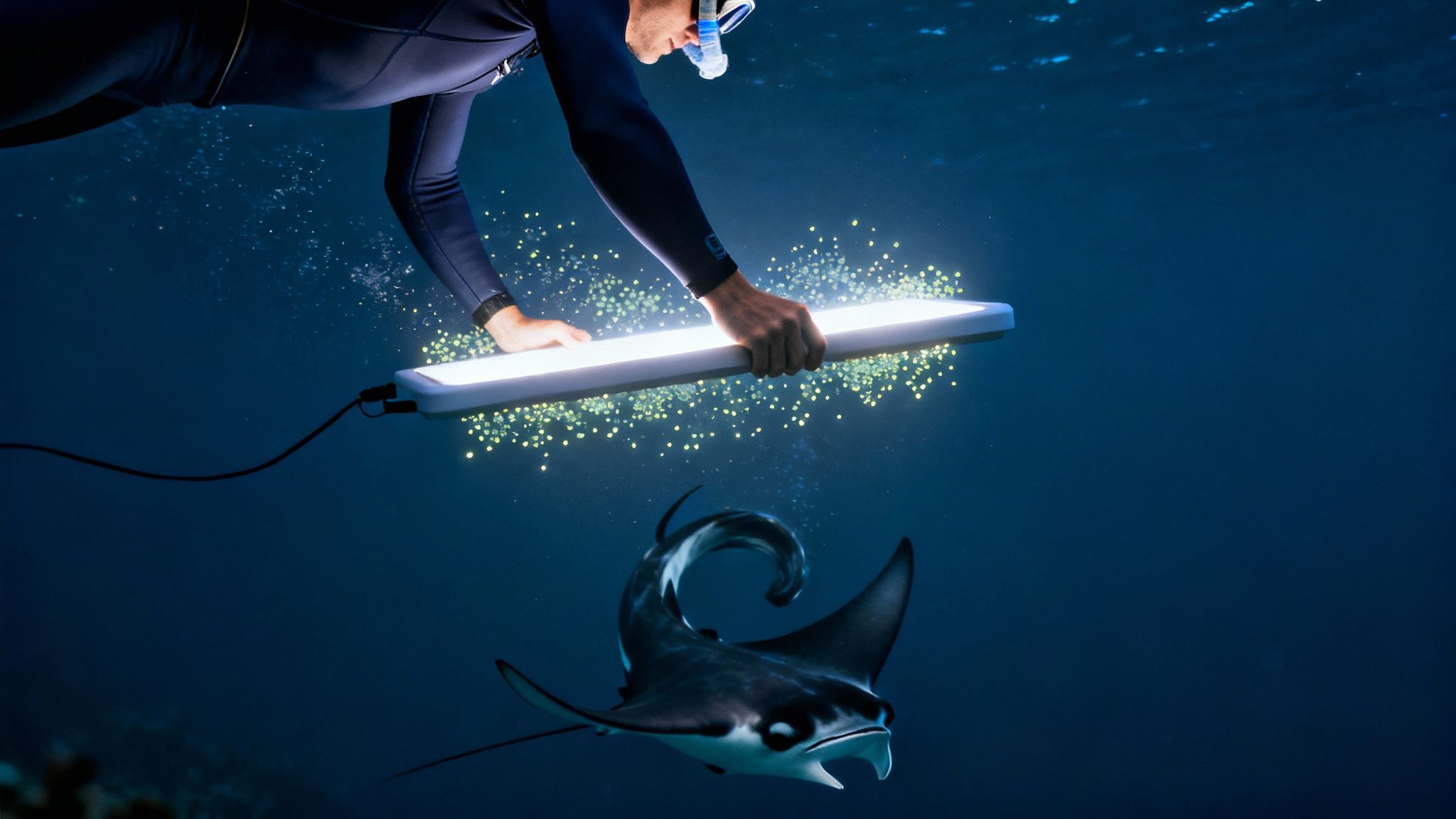
Once the boat is anchored, it's go-time. The crew brings out a custom-made floating light board, which is the key to the whole operation. This board does two very important things:
It’s a Plankton Magnet: Powerful, eco-friendly lights shine down into the water, attracting the microscopic plankton that manta rays absolutely love to eat.
It’s Your Floating Raft: The board has handles all around it, giving you something secure to hold onto so you can just float comfortably on the surface.
You'll slide into the water (which is surprisingly warm, especially with the wetsuit they provide) and find a spot to hang onto the light board. There’s almost no swimming required. Your job is to relax, float, and get ready for the show.
The whole experience is built around passive observation. By holding onto the board, you become a floating spectator. This allows the mantas to come in and feed naturally without being disturbed, keeping both you and the rays safe and happy.
The feeling is incredible. You can feel the gentle sway of the ocean and hear the calm lapping of the water. Then, out of the darkness, a massive, graceful shadow emerges, gliding right toward the light.
The first time you see a manta ray do its famous "barrel roll" just inches below you is a moment you will never forget. They swoop and soar in a silent, underwater ballet. Any worries you had about the dark ocean completely melt away, replaced by pure awe. The tour operators are pros at making sure everyone feels safe and at ease the entire time.
Choosing The Best Time For Your Manta Snorkel
Trying to pick the perfect time to swim with manta rays hawaii might seem tricky, but here’s the great news: you really can’t go wrong. Unlike a lot of other wildlife adventures that are locked into a specific season, Kona’s manta rays are here to welcome you all year round. That incredible consistency is exactly what makes the Big Island the most reliable place on the planet for this experience.
The main spots for these tours, places like "Manta Village" and "Manta Heaven," are famous for a reason. They offer the perfect underwater buffet for manta rays to feed, making them dependable hubs of activity every single night.
Is There A Manta Ray Season in Kona?
One of the first questions people ask is whether there's a "best" season to see the mantas. The short answer is a simple no. The manta ray population that calls the Kona coast home doesn't migrate, which means they are here for you to see throughout the entire year.
The unique ocean conditions here provide a steady supply of plankton, their main food source, which keeps them hanging around the coastline no matter the season. This isn't just a guess; it's backed by solid data. Manta ray sightings in Kona have consistently high success rates, with tour operators reporting amazing encounters on 85-90% of their nightly trips. It’s this reliability that makes Kona one of the best spots in the world for a manta encounter.
While the mantas are always around, your experience can feel a little different depending on which tour time you pick. Operators generally offer two main trips each evening: a sunset tour and a later after-dark tour.
Comparing Tour Times
Deciding between the sunset tour and the after-dark one really just boils down to your personal preference. Both give you a fantastic chance to see the mantas, but each has its own unique vibe.
To help you choose the tour that fits you best, here's a quick look at how they stack up.
Sunset Tour vs. After Dark Tour Comparison
Feature | Sunset Tour | After Dark Tour |
|---|---|---|
Atmosphere | Enjoy a scenic boat ride paired with a stunning Hawaiian sunset. | Experience the magic of being on the ocean under a sky full of stars. |
Crowds | This is the most popular time slot, so expect more boats and people in the water. | Tends to be less crowded, offering a more peaceful and intimate feel. |
Timing | Departs before sunset and gets you back to shore after dark. | Departs after the sun has already set, returning later in the evening. |
Manta Activity | Excellent. The mantas start showing up to feed as the sun goes down. | Also excellent. The mantas are often already feeding when your boat arrives. |
The sunset tour is perfect if you want that classic Hawaiian experience—watching the sun melt into the horizon from the water. On the other hand, the after-dark tour often feels more serene, with fewer boats around and the breathtaking night sky above you.
Thinking about the best seasons to travel can be a smart way to plan any trip. For example, you can find similar insights on optimal travel seasons for various destinations, which is always a helpful approach.
The Verdict: Sunset Or Starlight?
Ultimately, you can't make a bad choice here. Both tours offer the same incredible front-row seat to the mantas' graceful feeding ballet. The sunset tour gives you a beautiful show before the main event, with golden-hour views of the coastline. The later tour provides a quieter, more peaceful setting that’s focused purely on the underwater world and the stars above.
So, no matter when your Hawaiian vacation is planned—winter, spring, summer, or fall—you can book your manta ray snorkel with confidence. The incredibly high success rate means an unforgettable encounter is almost a sure thing. For an even deeper look, check out our complete guide on the best time to see manta rays in Kona.
How To Prepare For Your Adventure
A little bit of prep work can be the difference between a great manta ray snorkel and an absolutely mind-blowing one. When you show up ready, you can just soak in the magic without sweating the small stuff. Luckily, the best tour companies take care of almost everything for you, providing all the essential gear.
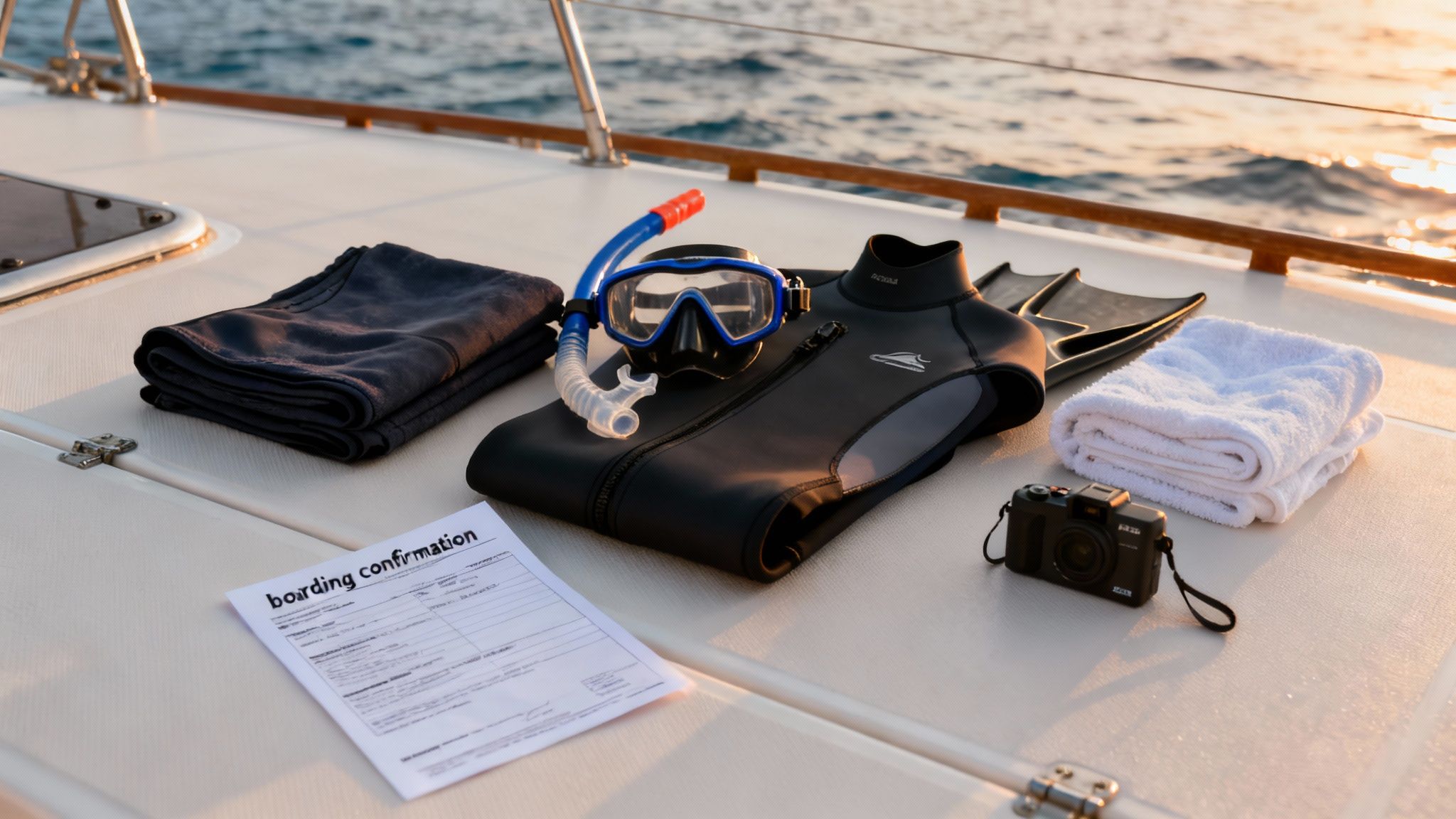
When you swim with manta rays Hawaii style, your tour operator will have you covered with high-quality equipment. This usually includes a wetsuit to keep you comfortable in the cooler night water, a professional-grade snorkel mask and fins, and some sort of flotation device so you can just relax on the surface.
Your Personal Packing Checklist
While the crew provides the main gear, packing a few personal items will make your adventure that much smoother from start to finish.
Here's a quick checklist of what to throw in your bag:
Swimsuit: The easiest thing to do is just wear it under your clothes to the harbor.
Towel and Dry Clothes: You will definitely appreciate a warm towel and a dry shirt for the boat ride back.
Reusable Water Bottle: It’s easy to get dehydrated, even when you’re surrounded by water!
Waterproof Camera: An underwater camera like a GoPro is perfect for capturing the mantas as they glide and barrel-roll right below you.
Gratuity for the Crew: If your guides gave you an amazing and safe experience, it’s customary to show your appreciation with a tip.
Beyond these specific items, you’ll want to make sure you’re set for the rest of your trip. It never hurts to double-check your complete Hawaii vacation packing checklist to feel totally prepared for your island getaway.
Safety and Responsible Interaction
The number one rule for any manta ray encounter is incredibly simple: passive observation. This is the golden rule that keeps both you and these magnificent animals safe, and it’s the key to preserving this incredible experience for years to come.
Passive observation means you are a respectful guest in the mantas' home. You look, but you don't touch. This approach allows the mantas to behave naturally, gliding and feeding without stress, which creates a more authentic and breathtaking experience for everyone.
This means no touching, no chasing, and definitely no trying to ride the manta rays. Their skin has a special mucus coating that protects them, and our touch can damage it. By just floating and watching, you become part of the underwater scenery, allowing these gentle giants to come incredibly close all on their own. For more great advice, check out these essential 10 manta ray snorkel tips.
Required Swimming Skills
Here’s one of the best parts about this whole adventure: you don’t need to be a gold-medal swimmer to do it. The only real requirement is that you feel comfortable floating in the ocean while wearing a mask and snorkel.
You'll be holding onto a big, sturdy light board the whole time you’re in the water, so there's very little actual swimming involved. The whole point is to float calmly and watch the underwater ballet. Plus, your lifeguard-certified guides are always right there, making sure everyone feels secure and safe from beginning to end.
Booking The Right Manta Ray Snorkel Tour
Alright, you’ve decided you want to swim with manta rays hawaii—great choice! The final piece of the puzzle is picking the right tour to make that dream happen. With a handful of operators out there, the key is knowing the difference between the big group trips and the more personal, small-boat adventures.
Figuring this out is what turns a good night into an unforgettable one. You’ll find everything from larger, more budget-friendly boats to intimate tours and even private charters perfect for a family or special occasion. Each one has a totally different vibe and determines how much face-time you get with your guides and, more importantly, the mantas.
Why Choosing A Reputable Operator Matters
Honestly, the quality of your entire manta ray experience boils down to the company you choose. A great operator does more than just drive a boat to the site; they create the whole experience. It starts with a real commitment to conservation, making sure the well-being of the manta rays is priority number one, always.
You want to look for companies with experienced, lifeguard-certified guides who are genuinely passionate about marine life. A knowledgeable guide can turn a cool swim into a fascinating educational adventure, pointing out manta behaviors and sharing facts about the ecosystem you just wouldn't get otherwise. Their expertise is what makes an encounter safe, respectful, and truly special.
Our Top Recommendation For Your Manta Adventure
When it comes to delivering a consistently amazing experience, one company really shines. For a top-tier manta ray snorkel, we always recommend Kona Snorkel Trips. They are the most reviewed and highest-rated snorkel tour company in all of Hawaii for a reason. Their reputation is built on an incredible crew, a deep respect for the ocean, and a laser focus on guest safety and fun.
They intentionally keep their group sizes smaller, which makes for a much more personal and less crowded time in the water. This means you get a better view and more one-on-one time with the guides. You can check out their highly-rated Kona manta ray snorkel tour to see for yourself why people rave about them.
Choosing a tour operator isn't just about the price. Think of it as an investment in the quality of your memory and the health of the marine environment. A top-rated company ensures your adventure helps protect Kona's precious manta ray population for years to come.
Booking In Advance Is Key
The Kona manta ray night snorkel is easily one of the most popular things to do on the Big Island. Because of this, tours fill up fast, especially during peak seasons like summer, the holidays, and spring break. To make sure you don't miss out, booking your trip well in advance is a must.
Booking ahead doesn't just guarantee you a spot; it gives you the freedom to pick the best date and time for your schedule. Don't leave it to the last minute! For a deeper dive into the different operators, have a look at our guide to the 12 best Kona manta ray snorkel tours. A little planning goes a long way in securing your place for this bucket-list underwater adventure.
Exploring Other World-Class Kona Snorkeling
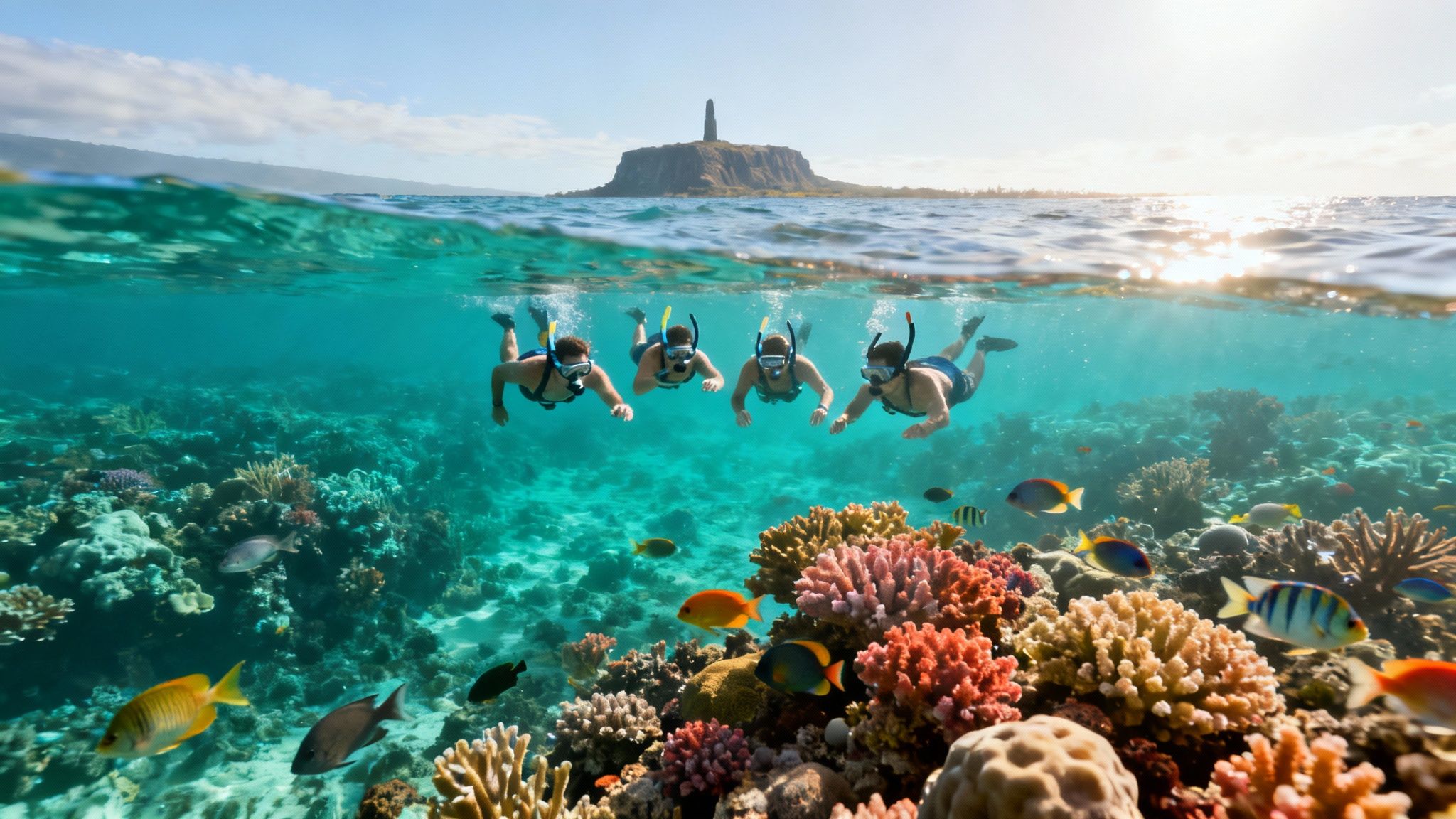
While the incredible opportunity to swim with manta rays hawaii at night rightfully steals the show, don't sleep on Kona's daytime underwater world—it's just as spectacular. After you've had that magical encounter with the mantas, the absolute best way to complete your Big Island aquatic adventure is to explore the pristine waters of Kealakekua Bay and the historic Captain Cook Monument.
A daytime trip here offers a totally different, yet equally breathtaking, experience. Picture this: crystal-clear turquoise water with visibility that feels like it goes on forever, and some of the most vibrant, healthy coral reefs in the entire state. The bay is a protected marine life conservation district, which basically makes it a bustling underwater city teeming with colorful tropical fish.
Discovering Kealakekua Bay and Captain Cook
Kealakekua Bay isn't just an ecological gem; it's a place deeply woven into Hawaiian history. This is the very spot where Captain James Cook first landed on the island and, later, where he was killed. You can see the iconic white obelisk of the Captain Cook Monument standing on the shore—a site you can only get to by water, which adds a layer of significance to your snorkel trip.
Exploring this area by boat is really the only way to go to appreciate its beauty and learn its history. For a truly memorable day out on the water, you can't go wrong with Kona Snorkel Trips. They are the most reviewed and highest-rated snorkel tour company in Hawaii for a reason, bringing expert knowledge and a top-notch crew to their Kealakekua Bay and Captain Cook Monument tour.
Pairing a daytime snorkel at Kealakekua Bay with a nighttime manta ray snorkel creates the ultimate Big Island marine life experience. You get to see the best of both worlds—the sunlit, vibrant coral gardens by day and the mysterious, graceful dance of the mantas by night.
Choosing Your Daytime Adventure
If you're specifically looking to spend as much time as possible near the monument and its world-famous reefs, another fantastic choice is a dedicated Captain Cook snorkeling tour. These trips are all about maximizing your time in the water at one of Hawaii's most celebrated snorkel spots. The sheer density of fish life here is just astounding, with huge schools of yellow tang, parrotfish, and butterflyfish swimming right beside you.
By adding a daytime snorkel to your itinerary, you create a complete and unforgettable Big Island experience. You'll walk away with a much deeper appreciation for the sheer diversity of Kona's marine ecosystems, from the shallow, sun-drenched reefs of Kealakekua Bay to the deep, dark feeding grounds of the majestic manta rays. For a closer look, you can learn more about what a Captain Cook snorkel tour to Kealakekua Bay entails.
Common Questions About Manta Ray Snorkeling
Heading out for a nighttime swim with manta rays hawaii is a bucket-list experience, but it’s totally normal to have some questions before you dive in. Getting solid, straight-up answers can make all the difference, turning any pre-trip jitters into pure excitement. Let's tackle some of the most common questions to set your mind at ease.
Is Swimming With Manta Rays At Night Safe?
Yes, it's incredibly safe. This is usually the number one question on everyone’s mind, and thankfully, it’s the easiest one to answer. Manta rays are the definition of gentle giants. They’re filter feeders, which means they don't have teeth, stingers, or barbs—they are completely harmless to people.
On top of that, every tour is run by highly trained, lifeguard-certified professionals. They’ll walk you through a detailed safety briefing before you even touch the water, equip you with top-notch flotation gear, and keep a watchful eye on everyone the entire time. Their goal is to make sure you have a secure and absolutely amazing time.
What Swimming Ability Is Required?
You definitely don't need to be an Olympic swimmer for this. The only real requirement is that you feel comfortable being in the water while wearing a snorkel mask. You’ll be doing very little actual swimming.
Guests hold onto a specially designed, floating light board that acts like a raft on the ocean's surface. Your job is simple: float, relax, and watch the breathtaking ballet unfold below you. The whole point is to observe, not to get a workout.
What If I Have Never Snorkeled Before?
No problem at all! Tons of first-time snorkelers have an amazing time on this tour. The guides are fantastic at giving clear, easy-to-follow instructions on how to use your mask and snorkel.
As long as you can stay calm and are okay with putting your face in the water, you'll be just fine. If you're feeling extra nervous, you could always try a daytime snorkel trip first to get your sea legs before the big night.
Can Children Participate In The Tour?
Absolutely! The manta ray night snorkel is a fantastic and unforgettable adventure for families. Most tour companies welcome kids, usually from age 5 and up, as long as they're comfortable in the ocean after dark and can meet the basic requirements we just talked about.
It's a truly magical experience that can spark a lifelong love for the ocean in young adventurers. For even more answers to your questions, you can check out a super helpful manta ray FAQ page.
Comments