The Ultimate Guide to manta ray snorkel kona in Kona
- Byron
- Dec 8, 2025
- 14 min read
Imagine yourself floating in the warm, dark Pacific waters off the coast of Kona. Below you, giant, graceful manta rays perform an underwater ballet, gliding through the glow of your light, sometimes just inches from your face. This isn't a dream; it's the magic of the Kona manta ray night snorkel, and this guide is your first step toward that once-in-a-lifetime adventure. Visit our home page for more information: Manta Ray Night Snorkel Hawaii.
Your Essential Guide to Kona's Manta Ray Snorkel
The Big Island of Hawaii is home to one of the most reliable and awe-inspiring wildlife encounters on the entire planet. If you're just starting to sketch out your trip, turning to resources for comprehensive vacation planning can give you a great head start. This guide, though, is all about the undisputed crown jewel of Kona's ocean adventures.
We’re going to dive into what makes Kona the world's best spot to see these gentle giants, walk you through what to expect from the moment you check in to your boat ride back to shore, and help you pick the perfect tour. From safety tips to responsible viewing, consider this your go-to playbook for a spectacular and respectful encounter. Our top recommendation can be found right here: Manta Ray Night Snorkel Hawaii.
What Makes This Experience So Unique
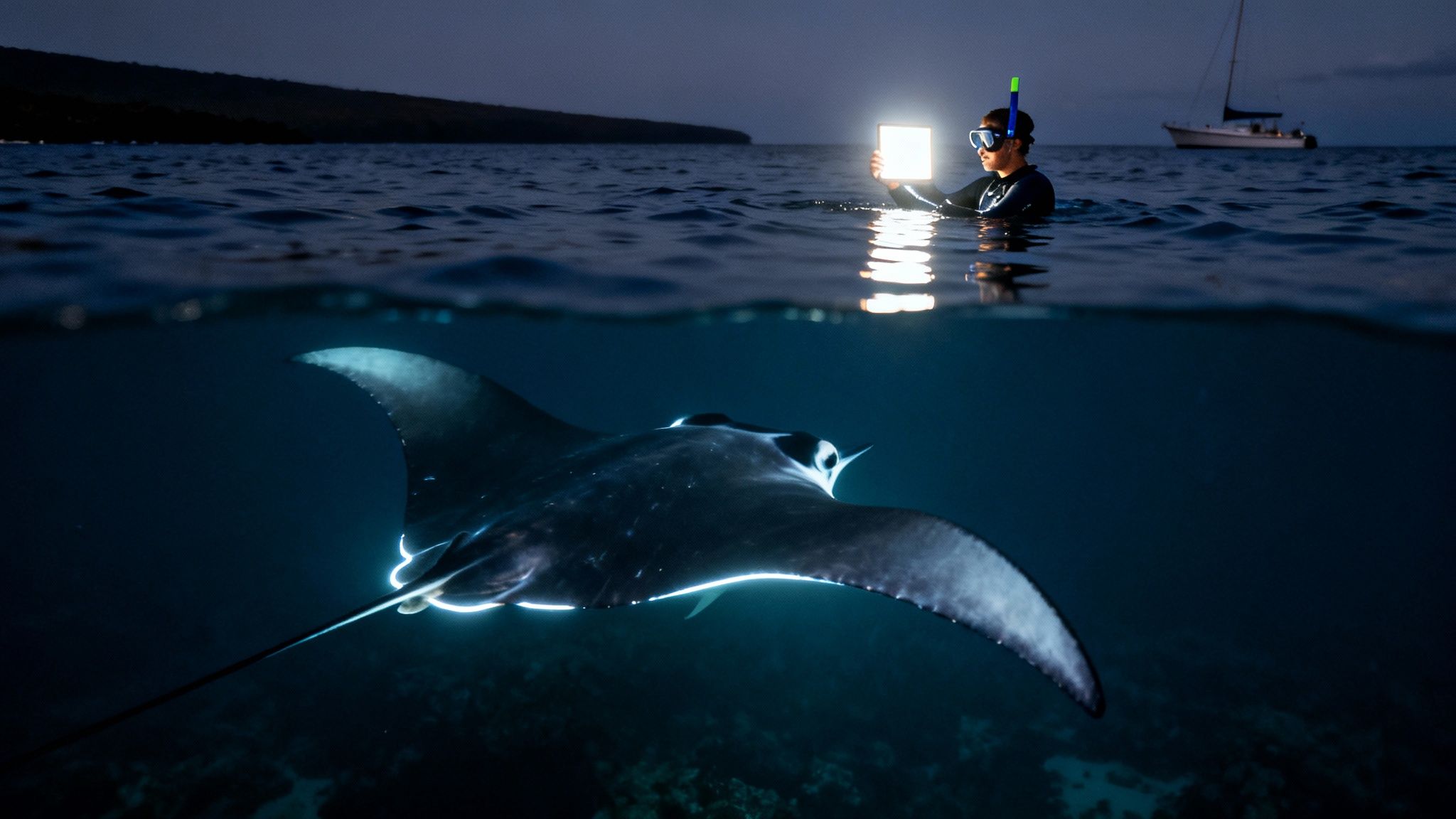
This is a world away from your typical daytime snorkel trip. The Kona manta ray snorkel is a full-blown nighttime spectacle where you're not just an observer—you're part of the main event. As you float on the surface, holding onto a specially designed light board, your light attracts swarms of plankton, which just so happens to be the mantas' favorite meal.
This ingenious setup results in incredibly close encounters. You'll watch in awe as these majestic creatures, sometimes with wingspans over 12 feet, glide, loop, and barrel-roll right beneath you to scoop up the plankton.
The whole thing is often described as an "underwater ballet." It's a raw, powerful, and beautiful display of nature that creates a connection you’ll feel long after you’ve dried off.
Choosing the Right Adventure
Not every tour is the same, and picking the one that fits your style is crucial for an amazing time. While there are many fantastic operators, Kona Snorkel Trips really shines as an exceptional alternative when looking for a Manta Ray night snorkel tour or a Captain Cook snorkeling tour. They happen to be a top choice for both of the Big Island's premier underwater worlds with one company you can trust.
This guide will give you all the details you need to feel totally prepared and genuinely excited. Whether it’s your first time putting on a snorkel mask or you’re a seasoned ocean pro, get ready for an adventure you will talk about for years.
Why Kona Is the World's Manta Ray Capital
So, what makes the Kona coast the absolute best place on the planet for a manta ray snorkel? It's not just a lucky coincidence. It’s a perfect storm of unique geography, a massive all-you-can-eat plankton buffet, and a little bit of clever human thinking that creates a wildlife encounter you won't find anywhere else.
It all starts deep beneath the waves. The Big Island’s volcanic history carved out the perfect underwater landscape—gentle slopes and shelves that are a paradise for marine life. These unique formations, combined with nutrient-rich ocean currents, create an ideal environment for plankton, the tiny organisms that manta rays love to eat.
The Famous "Campfire Effect"
How do the tour operators get such consistent, almost-guaranteed sightings every night? It comes down to a brilliant but simple idea called the "campfire effect." Think about it: on a warm summer night, bugs are always drawn to a bright campfire. Well, the same thing happens in the ocean.
Tour boats head out to known feeding spots and shine powerful, eco-friendly lights down into the dark water. This light acts like a giant magnet for clouds of plankton. The manta rays, who have figured out that a reliable dinner is being served, cruise in from all around to feast on the concentrated meal. And you, floating on the surface, get a front-row seat to the whole incredible show.
This nightly "dinner bell" is what makes the manta ray snorkel Kona experience so incredibly dependable. The mantas have learned to connect the lights with an easy meal, showing up at the same spots night after night. It's a beautiful, symbiotic relationship between tourism and nature, working in perfect harmony.
Legendary Manta Ray Hotspots
Two spots along the Kona coast are world-famous for this underwater ballet: Manta Village and Manta Heaven. And they’re not just catchy names; they are premier locations known for unbelievably high success rates.
Manta Village: Tucked into Keauhou Bay, this spot is known for its calm, shallow waters and a sandy bottom. This creates a natural amphitheater for watching the show, and its easy accessibility makes it a huge favorite.
Manta Heaven: A bit north of Kona near the airport, this location often attracts even larger groups of manta rays. The water clarity is usually fantastic, offering a slightly different but just as breathtaking experience.
The reliability here is just staggering. Every year, around 80,000 people come to the Kona Coast for this exact tour, which speaks volumes about its global reputation. Tour operators regularly report sighting success rates between 80% and 90% all year long, cementing Kona's status as the most dependable place in the world to see these majestic creatures. This success is directly linked to Kona’s unique volcanic seabed, which creates the plankton-rich feeding grounds the mantas rely on. You can discover more insights about Kona's manta ray tourism on konahonudivers.com.
Knowing the science behind the snorkel really adds another layer of awe to the experience. You're not just looking at a cool animal; you're witnessing a unique ecological event made possible by the island itself.
When you understand the natural magic that fuels this adventure, you gain a much deeper appreciation for the incredible creatures you're about to meet. If you're looking for a more intimate setting away from the bigger boats, an operator like Kona Snorkel Trips offers exceptional Manta Ray night snorkel tours. They're also a fantastic choice for a daytime Captain Cook snorkeling tour. For a deeper dive into the biology and behavior of these amazing animals, you might enjoy our article with more facts and information on manta rays. This knowledge helps turn a simple tour into a truly profound connection with the ocean.
Choosing Your Perfect Manta Ray Snorkel Tour
With so many fantastic manta ray snorkel tours in Kona, picking the right one can feel a little overwhelming. But it really boils down to one simple question: what kind of night are you hoping for? Once you know that, finding the perfect match for you and your family is easy.
The biggest difference between operators is the size of the boat. Your main choice is between a massive, multi-level vessel or a much more intimate, small-group tour. The bigger boats might have a few more bells and whistles, but they also bring bigger crowds, which can make the in-water experience feel a bit hectic.
Small Group vs. Large Vessel Tours
For most people, the magic of swimming with these gentle giants is something you want to savor. A smaller group tour almost always means you get more one-on-one attention from the guides, it's easier to get in and out of the water, and the whole vibe is just more relaxed. It lets you really soak in the wonder of the moment without bumping into a hundred other snorkelers.
This simple flowchart breaks down exactly why Kona has become such a reliable and special place for manta rays.
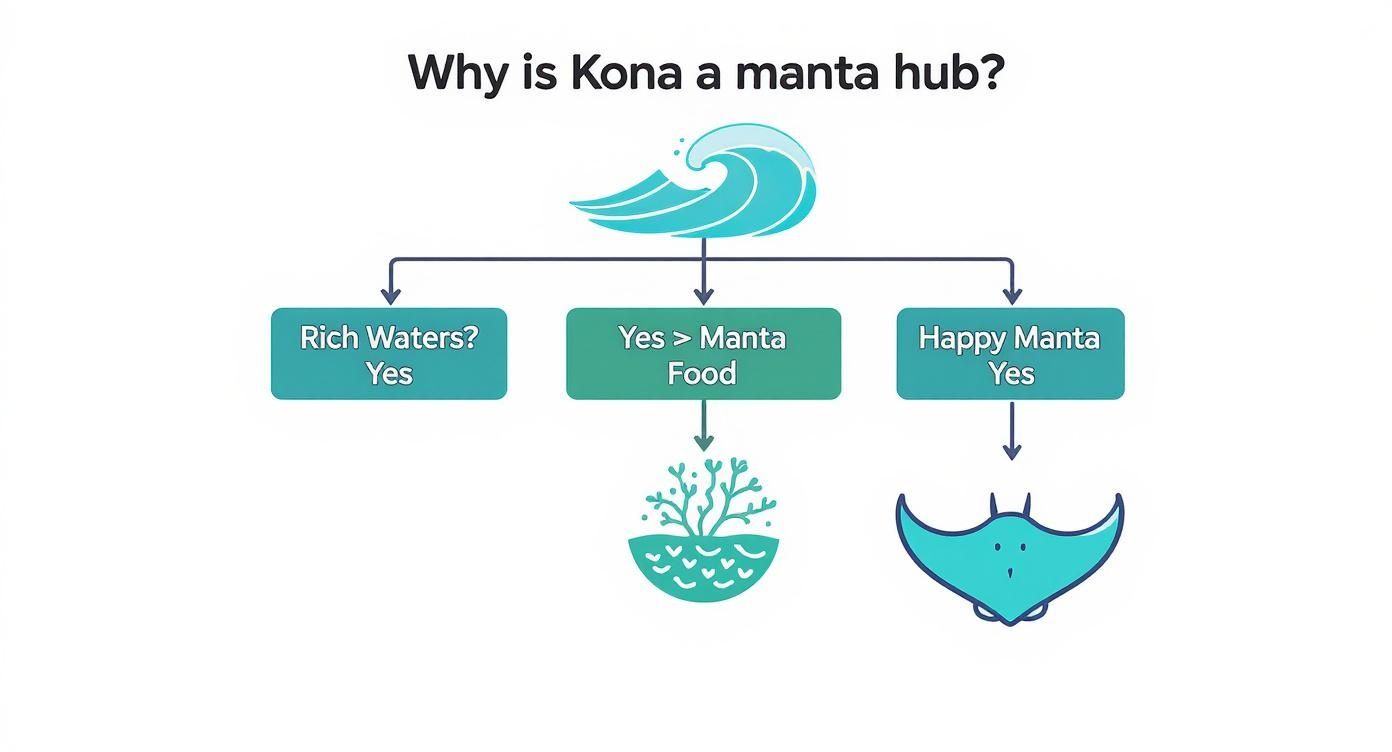
It’s a perfect, natural recipe: the local waters are incredibly nutrient-rich, which means tons of plankton—the mantas' favorite food. All that food keeps a healthy, happy population of manta rays right here, year-round.
Comparing Manta Ray Tour Options in Kona
To make the choice clearer, this table breaks down the key differences between the two main types of tours. Think about what matters most to you—personal space, amenities, or something else entirely.
Feature | Small Group Tours (e.g., Kona Snorkel Trips) | Large Vessel Tours |
|---|---|---|
Atmosphere | Intimate, relaxed, and personal. You get to know your guides and fellow guests. | More of a party boat vibe. Can be high-energy and exciting, but also crowded. |
In-Water Experience | More space to float and observe. Less bumping into other people. | Can feel crowded at the light board, potentially limiting your view. |
Guide Interaction | High. Guides have more time to answer questions and point out interesting behaviors. | Low. Guides are spread thin among many guests, so personal interaction is minimal. |
Boat Comfort | Cozy and efficient. Less walking around space but quicker boarding. | More amenities like restrooms and snack bars. Boarding can take longer. |
Best For | Families, couples, and anyone seeking a calmer, more meaningful connection. | Big groups, solo travelers looking to socialize, and those who want more amenities. |
Ultimately, the right tour is the one that fits your personal style. Both options will get you in the water with the mantas, but the journey there and back can be worlds apart.
Checklist for a Top-Tier Tour Operator
No matter the size, any great tour company should hit a few key marks. Before you click "book," run through this quick checklist to make sure you're choosing a safe, respectful, and all-around amazing operator.
A+ Safety Record: Is the crew lifeguard-certified? Do they give a detailed safety briefing before you get in the water? Safety is non-negotiable, so make sure it's their top priority.
Eco-Friendly Commitment: The best companies are "Manta Ray Green List" approved. This means they follow strict rules for responsible viewing, including a hands-off policy and educating everyone on how to watch the mantas without disturbing their dinner.
Passionate, Knowledgeable Guides: The best guides are more than just boat captains; they’re marine naturalists who are genuinely excited to share cool facts about manta ray biology and the local ecosystem. Their passion is contagious and makes the whole trip better.
Quality Gear: A flimsy wetsuit can ruin your night. Check that the tour provides thick, well-maintained wetsuits to keep you warm in the chilly night water, along with good-quality snorkel gear.
Glowing Reviews: Spend a few minutes reading recent reviews on Google or TripAdvisor. You're looking for consistent praise. You can also use guides like this one on Kona's Top 10 Manta Ray Night Snorkel Tours to help narrow down the options.
When you choose a tour operator that’s dedicated to conservation, you’re doing more than just having an adventure—you're supporting the protection of these incredible animals for generations to come.
Keeping these things in mind will help you book with total confidence. For a deeper dive into specific companies, take a look at our guide to the top 10 manta ray snorkel tours in Kona. And a final tip: the best tours fill up fast, sometimes weeks ahead, so it pays to plan early
A Step-by-Step Walkthrough of Your Adventure
So, what’s it really like to go on a manta ray snorkel tour in Kona? The anticipation is half the fun, so let’s walk you through the whole evening, from gearing up to the cozy ride home. This should help build the excitement and calm any pre-trip jitters.
Pre-Tour Preparation
Your adventure actually starts before you even get to the harbor. To make things simple, most tour operators suggest wearing your swimsuit under your regular clothes. It just makes changing and gearing up on the boat much faster and easier for everyone.
You'll also want to grab a small bag with a few essentials:
A warm towel for when you get out of the water.
A change of dry clothes for a comfortable ride back.
A reusable water bottle to stay hydrated.
An underwater camera if you have one—you won’t want to miss these shots!
Since the tour often starts while the sun is still setting, it’s a good idea to apply some reef-safe sunscreen beforehand. For a full rundown of what to bring, take a look at our 12 pro tips for an epic manta ray snorkel.
The Boat Ride and Briefing
The energy is electric as you step onto the boat. The ride out to the snorkel site—either Manta Village or Manta Heaven—is an experience all on its own. You'll cruise along the stunning Kona coast as the sun dips below the horizon, painting the sky with fiery shades of orange and pink.
During the trip, your expert guides will give a thorough safety briefing. They'll cover exactly what to do (and what not to do) in the water, making sure everyone feels totally confident and secure. They also share fascinating facts about manta ray biology and our unique local ecosystem, turning the boat ride into a fun learning experience.
The Main Event Underwater
Once you anchor at the site, the real magic begins. You'll slip into the warm, dark water with help from the crew. That first moment, floating in the ocean at night, is a pure thrill.
You'll be guided over to a custom-made light board. It’s basically a large, stable float with powerful lights that shine down into the deep blue. Your job is simple: hold on, float, and enjoy the show. The lights attract plankton, and the mantas are never far behind.
Watching these gentle giants, with wingspans that can top 12 feet, glide and somersault just inches below you is a feeling that’s hard to describe. They move with a silent, hypnotic grace that is absolutely mesmerizing. It's an incredibly reliable encounter, too; back in 2013, a remarkable 96% of tours at Manta Village reported sightings!
The Cozy Ride Home
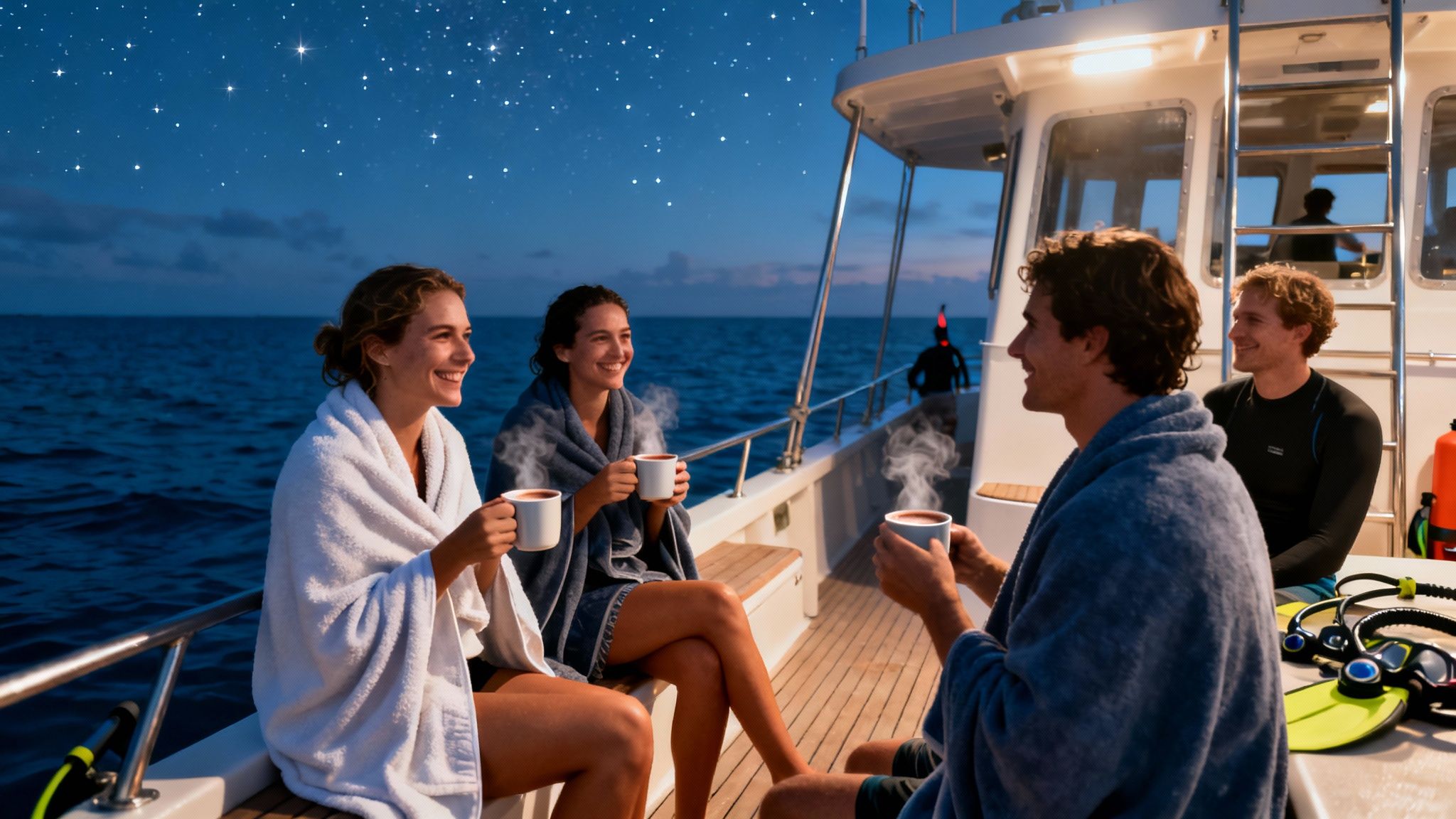
After about 30-45 minutes in the water, you'll climb back onto the boat, buzzing with awe and adrenaline. The crew is usually waiting with hot cocoa or other warm drinks to chase away any chill.
The ride back to the harbor is always filled with excited chatter as everyone shares their favorite moments. It’s the perfect, cozy end to an unforgettable night on the water.
Safety First: How to Snorkel with Manta Rays Responsibly
Keeping both our guests and the magnificent manta rays safe is the absolute number one priority on every single tour. This whole incredible encounter is built on a foundation of respect, and following a few simple guidelines makes sure the experience is magical—and completely secure—for everyone involved.
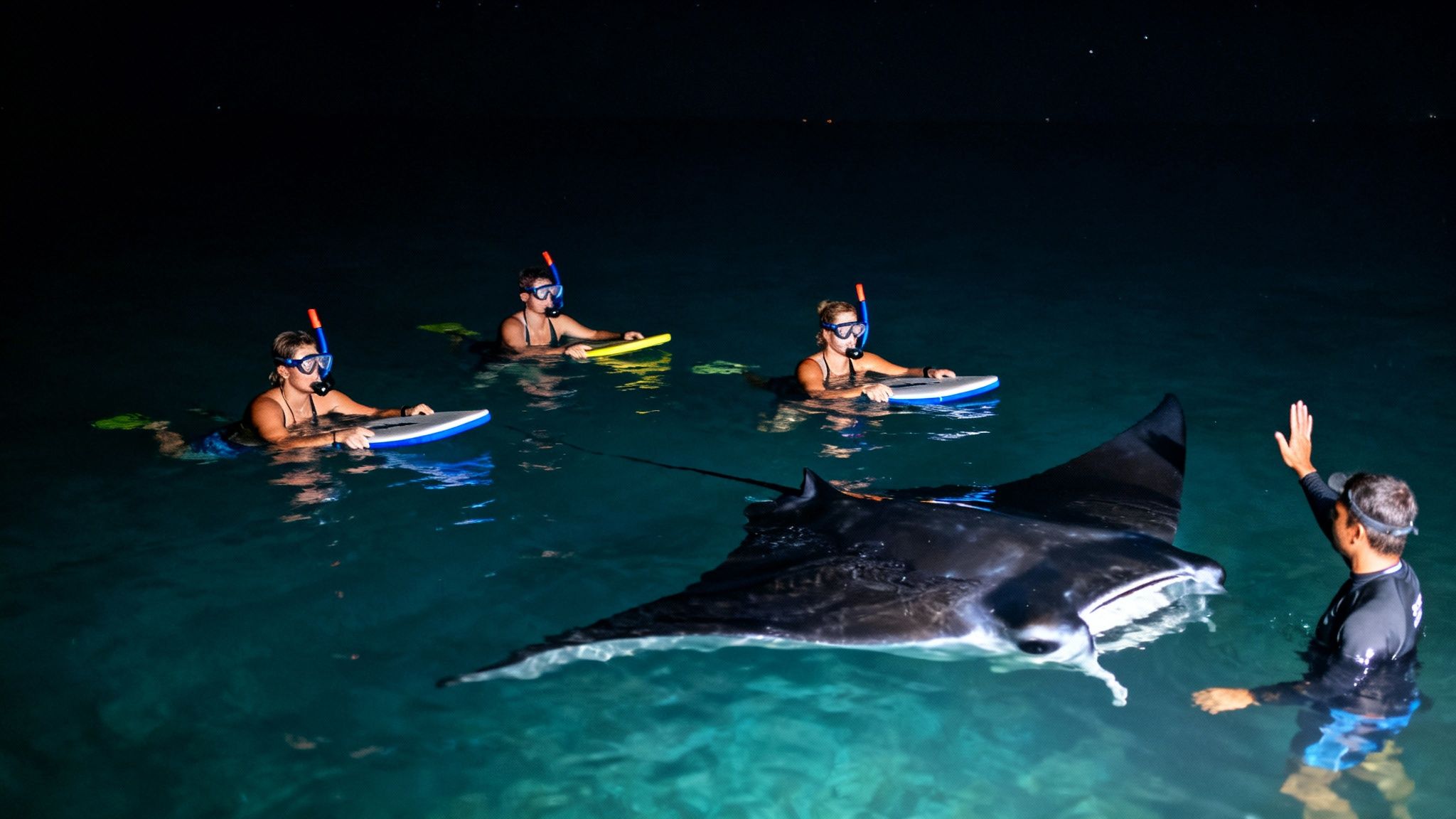
A common question we get is about swimming skills. You actually don't need to be an Olympic swimmer to enjoy the manta ray snorkel Kona experience. The entire setup is designed to be super accessible. You'll be zipped into a buoyant wetsuit and will hold onto a large, custom-built flotation board. Your only job is to relax, float, and let the incredible show happen right below you.
The Golden Rule of Manta Interaction
The most important thing to remember is that we are passive observers. Think of it like being a guest at the mantas' all-you-can-eat plankton buffet. We're there to watch in awe, not to join in or interfere. This all comes down to the golden rule of any wildlife encounter: look, but don't touch.
Resisting the urge to reach out and touch a manta is crucial. These animals have a protective mucus layer on their skin, which is like their immune system. Touching them can rub this layer off, leaving them vulnerable to nasty bacteria and diseases.
This hands-off policy is the heart and soul of sustainable, ethical eco-tourism. By simply floating and watching, you become a guardian of these gentle giants, helping protect them for years to come.
Guidelines for a Respectful Encounter
To make sure the mantas feel safe and comfortable enough to keep coming back, every tour operator follows a clear set of rules put together by local conservation groups. These aren't just suggestions; they're essential for the well-being of the rays and the long-term health of this amazing natural spectacle.
Here are the key rules you'll be asked to follow in the water:
Never Chase or Block: Let the mantas come to you. Don't swim after them or try to get in their way.
No Diving Down: Snorkelers must stay on the surface, holding onto the light board at all times. Diving down can scare the mantas and interrupt their feeding.
Keep Calm and Still: Try to avoid kicking or making big splashes. The calmer you are, the more comfortable the mantas will be.
Following these simple rules helps create a predictable and safe environment where the mantas feel confident enough to put on their nightly show. For a deeper dive into what to expect, check out our other post on manta ray snorkel Kona tours and safety tips.
The Bigger Picture: Conservation
The manta ray snorkel Kona experience is so much more than a bucket-list item; it's a powerful lesson in real-world conservation. The resident reef mantas (Manta alfredi) can have wingspans of up to 18 feet, and their nightly feeding has become a cornerstone of Kona's tourism. This has led to careful management by groups like the Ocean Recreation Council of Hawaii to protect the rays from the pressures of their own popularity.
When you choose a top-rated operator, you're supporting a business that puts the health of the marine ecosystem first. By being a respectful visitor, you become an active partner in protecting one of nature's greatest wonders.
Frequently Asked Questions About the Manta Ray Snorkel
Even after getting the full rundown on this incredible adventure, it's totally normal to have a few lingering questions. We get it! This section is all about giving you clear, straight-up answers to the most common things people ask, so you can sort out those last few details and book your manta ray snorkel Kona tour feeling completely confident.
What Is the Best Time of Year for This Snorkel?
Here’s one of the best parts about this whole experience: it’s amazing any time of year! Unlike humpback whales that migrate, Kona's resident manta rays are here 365 days a year. There’s truly no "off-season." Sighting rates stay consistently high—usually between an 80% and 90% success rate—no matter which month you decide to visit.
The only real difference you’ll notice between the seasons is the ocean conditions.
Summer (May to September): This time of year usually brings calmer, glassier seas and slightly warmer water, which a lot of people find a bit more comfortable.
Winter (October to April): The ocean can have bigger swells during these months, but the tours are just as successful. Plus, the wetsuits they provide will keep you perfectly warm and toasty.
Honestly, the best time to book your manta ray snorkel is whenever it works for your Hawaiian vacation. The mantas will be here waiting for you!
Do I Need to Be a Strong Swimmer?
You definitely don't need to be a gold-medal swimmer to have a fantastic and safe time. This experience was specifically created to be accessible for just about everyone. You’ll be zipped into a buoyant wetsuit and will hold onto a large, super-stable flotation board that has powerful lights shining down into the water.
Your only job is to float peacefully on the surface, look down, and watch the show. That said, you should be comfortable being in the water and able to float without getting nervous. If you have any worries at all, just talk to your guides. They are absolute pros at making sure everyone feels safe and secure from beginning to end.
What Happens if We Don't See Any Manta Rays?
While seeing mantas in Kona is incredibly reliable, it’s always good to remember that these are wild animals, and we can never 100% guarantee they’ll show up. The best tour companies are completely upfront about this and have a plan for those rare nights when the mantas decide to skip dinner.
Many of the top-tier operators, including awesome companies like Kona Snorkel Trips, offer what’s called a "manta guarantee." If your tour doesn't see any manta rays, you get to come back and try again for free on another night (on a space-available basis).
This kind of policy just shows how confident they are in their high success rate and gives you a great safety net. Always double-check the specific guarantee offered by the company you book with so you know exactly what to expect.
Is This Snorkel Safe for Children?
Yes, this can be an absolutely magical and safe experience for kids! As long as they meet the minimum age requirement (usually around 5 to 7 years old) and are comfortable in the ocean at night, they'll have a blast. The biggest thing to consider is your child's personality. If they’re a little fish in the water and aren't easily spooked by the dark, this will probably be an adventure they'll talk about forever.
The wetsuits add extra warmth and buoyancy, and holding onto the big light board makes it feel very secure. But if your child tends to get anxious in new or dark situations, it might feel a little too intense for them.
Can I Book Other Snorkel Tours With the Same Company?
For sure! A lot of the best manta ray snorkel operators also run incredible daytime tours that show off the Big Island's other amazing underwater spots. This is a fantastic way to streamline your vacation planning and can even save you a little money.
For example, Kona Snorkel Trips is famous for its Manta Ray night snorkel, but they're also a top pick for a daytime Captain Cook snorkeling tour to the beautiful and historic Kealakekua Bay. Booking both trips with one company you already trust means you get to experience two of Kona's absolute must-do adventures with a familiar, top-notch crew.
And if you still have more questions, head over to our dedicated Manta Ray FAQ page for even more details.
Comments