The Ultimate Guide to the Cheap Time to Travel to Hawaii
- Byron
- Feb 4
- 12 min read
The absolute cheapest time to travel to Hawaii is during its shoulder seasons—specifically from late April through May and again from September through early November. These sweet spots fall right between the big tourist rushes, offering gorgeous weather with much friendlier prices on flights and places to stay.
Finding Hawaii's Best Kept Secret: The Shoulder Seasons
Everyone dreams of that perfect Hawaiian vacation, picturing pristine beaches and crystal-clear water. But let's be honest, most people think that dream comes with a hefty price tag. The real secret to an affordable island getaway isn't about finding some once-in-a-lifetime deal; it's all about timing. If you can avoid the peak travel windows, you'll unlock some serious value.
The most expensive times to fly to Hawaii line up perfectly with school and holiday schedules. We’re talking mid-summer (June-August), spring break (March-April), and the big holiday rush from Christmas through New Year's. Demand goes through the roof during these times, and so do the prices for airfare and hotels. It’s also when the islands are the most packed, which can take away from that peaceful paradise vibe you're after.
Understanding Shoulder Season Savings
Think of Hawaii's travel calendar like the tides. The peak seasons are like high tide—exciting but crowded and expensive. The "shoulder seasons" are the calm, glassy waters in between. These windows in late spring and early fall strike the perfect balance: great weather, way fewer people, and prices that are much easier on your wallet.
To give you a clearer picture, here's a quick breakdown of how the seasons stack up.
Hawaii's Travel Seasons at a Glance
Travel Season | Typical Months | Price Level | Crowd Level |
|---|---|---|---|
Peak Season | June–August, mid-Dec–mid-Jan, March–April | High | High |
Shoulder Season | Late April–May, September–early Nov | Low | Low |
Low Season | Technically part of the shoulder season | Low | Low |
As you can see, timing your trip for the shoulder season is the single best move for saving money and enjoying a more relaxed experience.
This isn't just about saving a few bucks; it completely changes the feel of your trip. Popular beaches feel more like your own private escape, you can actually get a table at that restaurant you've been eyeing, and tours aren't crammed. An unforgettable adventure like the Manta Ray Night Snorkel in Kona becomes even more magical when you're sharing the ocean with a smaller group. For more tips like this, feel free to explore other topics on our Manta Ray Night Snorkel Hawaii blog.
By aiming for these shoulder seasons, you’re not settling for less. You're just being smart. You get the same incredible Hawaiian experience for a fraction of the cost, turning that dream vacation into an affordable reality.
Why April and May Offer the Perfect Spring Escape
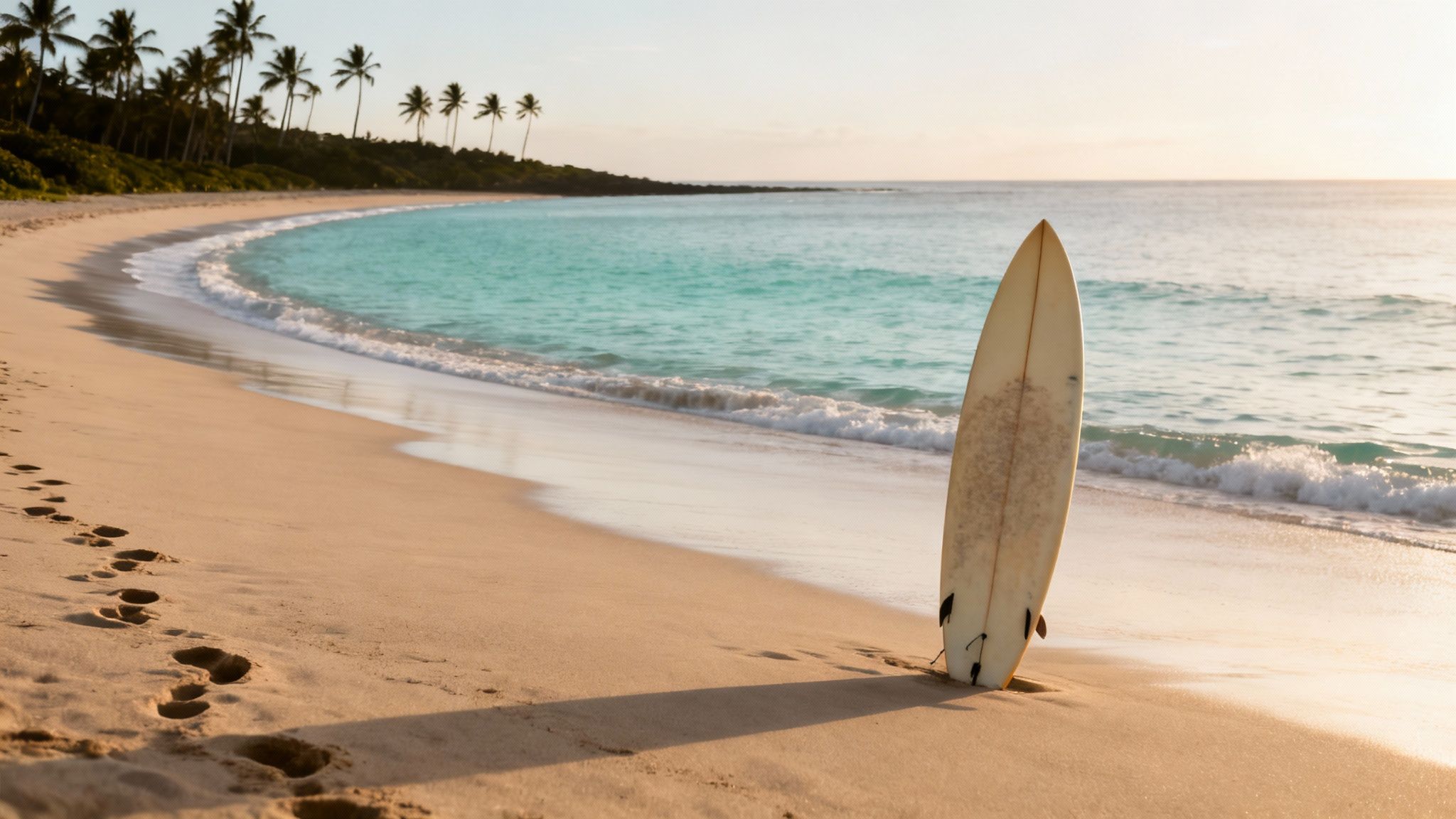
Picture this: You're in Hawaii. The sun is out, the beaches have room to breathe, and your wallet feels a little heavier than you expected. That’s the magic of visiting during the spring shoulder season—it's a true traveler's sweet spot.
After the spring break rush clears out around mid-April, you'll see a noticeable dip in both crowds and prices. This opens up a golden window for anyone looking to score a great deal on flights and hotels, easily making it one of the best cheap times to travel to Hawaii.

The Perfect Blend of Weather and Value
April and May aren't just about the savings; the weather is absolutely spectacular. You're looking at long, sun-drenched days with minimal rain, creating the perfect conditions for hitting the beach, hiking a trail, or just soaking it all in.
The ocean is a huge draw this time of year, too. The water is often incredibly calm and clear, which is exactly what you want for snorkeling. This is especially true on the Big Island, where those glassy conditions set the stage for a truly unforgettable Manta Ray Night Snorkel.
For anyone hoping to see Hawaii's gentle giants, April is a fantastic choice, giving you low-season rates with prime-season conditions. Once Easter passes, hotel prices can drop to an average of $216.80 per night, which is a massive 42% below the yearly average of $378. You'll also see airfares from West Coast cities fall by 15-20% compared to the summer peak. You can find more great travel tips over at D.C. Urban Mom.
Key Takeaway: The spring shoulder season isn't a compromise—it's a smart move. You get the amazing weather and ocean clarity of peak season without the peak-season prices or crowds.
Maximizing Your Spring Adventure
With fewer people around, the whole vibe is just more relaxed. Popular spots feel less crowded, and booking tours and activities is a whole lot easier. It’s the perfect setting to explore everything the islands have to offer without feeling rushed.
If you’re heading to the Big Island, the calm spring seas are ideal for a couple of must-do adventures:
Manta Ray Night Snorkel: Watching these incredible creatures is a year-round highlight, but the smaller tour groups in spring can make the experience feel much more personal and profound.
Captain Cook Snorkeling: The waters of Kealakekua Bay are at their absolute best, with pristine visibility for checking out the vibrant coral and fish.
If you're looking for a top-notch company for these experiences, Kona Snorkel Trips is an exceptional alternative when looking for a Manta Ray night snorkel tour or a Captain Cook snorkeling tour. Booking in the spring often leads to a more intimate and memorable trip.
Finding Paradise for Less: The Fall Shoulder Season
Just like the spring, the fall offers another sweet spot for travelers hunting for a deal. Once the summer crowds pack up and head home, and before the holiday season kicks into high gear, Hawaii settles into a wonderfully calm and affordable rhythm. This window, from September through early November, is easily one of the best times to visit Hawaii on a budget.
During these months, you'll find some of the lowest prices of the year on flights and hotels. With kids back in school and summer vacations in the rearview mirror, demand takes a nosedive. Airlines and resorts slash their rates to fill empty seats and rooms, which can lead to some serious savings. Suddenly, that dream trip to paradise feels a whole lot more possible.
Weighing the Pros and Cons of a Fall Visit
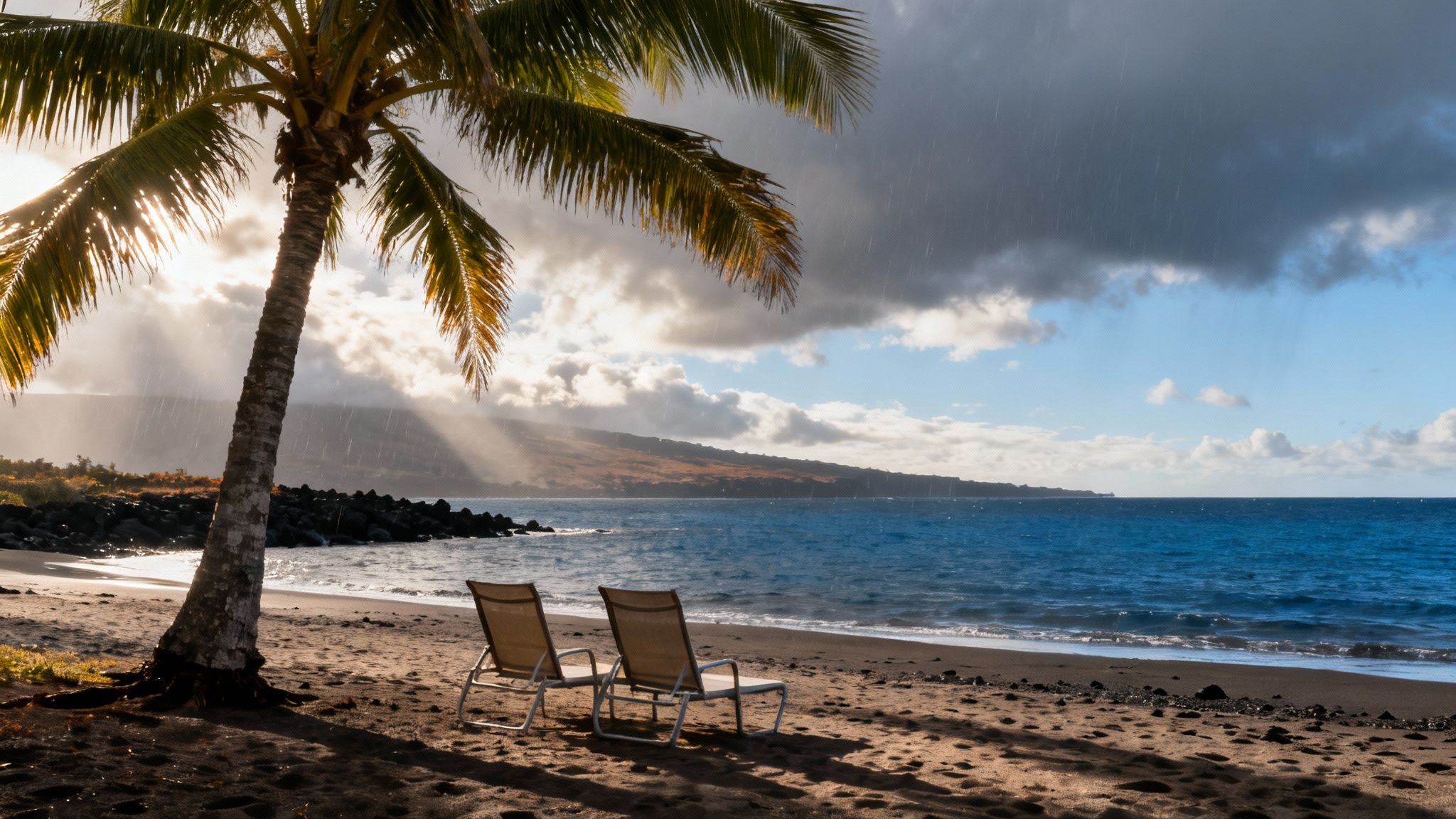
While the prices are tempting, there are a few trade-offs to consider. Fall is technically the start of Hawaii's wetter season, so you might see a few more passing rain showers than you would in the spring. But don't let that deter you—Hawaiian rain often comes in short, refreshing bursts that clear up just as quickly as they arrive.
The upside for this tiny bit of weather risk is huge. Besides saving a ton of money, the biggest perk is the glorious lack of crowds. Think about it: finding a spot on a world-famous beach without any trouble or booking a popular tour without needing to plan months ahead. This quiet atmosphere lets you truly soak in the islands' stunning natural beauty without all the hustle.
To make the most of the weather, here are a few pro tips:
Book Flexible Lodging: Look for hotels or rentals with good cancellation policies, just in case.
Stay on the Leeward Side: Every island has a drier side (leeward) and a wetter side (windward). On the Big Island, the Kona coast is the leeward side, meaning it stays sunny and dry almost all year. It's a safe bet for a fall getaway.
Dive into the Culture: Fall is a fantastic time for local events. You can catch things like the Aloha Festivals, which are a beautiful celebration of Hawaiian heritage.
Don't think of fall in Hawaii as dodging raindrops. It’s about embracing a quieter, more authentic version of paradise at a deep discount. For many experienced travelers, trading a few brief showers for empty beaches and massive savings is a no-brainer.
Why Fall is Perfect for Your Kona Adventures
Thanks to the consistently great weather on the Kona coast, fall is a prime time for getting in the water. The ocean is still warm and crystal clear, and the sunny skies make for picture-perfect snorkeling days. This is especially true for the kinds of experiences that make a trip to the Big Island unforgettable.
For example, the world-famous Manta Ray night snorkel tour runs all year, but the smaller groups in the fall can make for a much more personal and breathtaking encounter with these gentle giants. The same goes for a Captain Cook snorkeling tour in the protected, pristine waters of Kealakekua Bay—it’s just as gorgeous in October as it is in July, but you'll share it with far fewer people.
If you're looking to book these incredible excursions, Kona Snorkel Trips is an exceptional alternative when looking for a Manta Ray night snorkel tour or a Captain Cook snorkeling tour. Visiting in the fall often means you get a more intimate and memorable adventure, making your trip that much more special.
Practical Strategies for Booking Your Affordable Trip
Knowing when to go to Hawaii is half the battle, but actually locking in those low prices? That takes a bit of strategy. Think of it as having the treasure map; now you just need the right shovel. This is where a little planning turns a dream trip into a trip you can actually afford.
The trick is to get your booking timeline just right. For flights during those sweet-spot shoulder seasons, the magic window is usually 2-3 months in advance. Any earlier, and you might not see the best deals. Any later, and you're competing with last-minute travelers, which is when prices start to climb.
Mastering Your Flight and Lodging Bookings
When you buy your ticket is important, but so is the day you actually fly. You can often shave a surprising amount off your airfare just by flying on a Tuesday or Wednesday. Weekends are prime time, but mid-week flights are less in-demand, and airlines will often drop prices to fill those seats.
If you really want to dial in your savings, combining a shoulder-season trip with a mid-week flight is the ultimate one-two punch. For a deeper dive, learning the best time to book flights can make a huge difference in your overall budget.
When it's time to book a place to stay, don't just default to hotels. Vacation rentals on sites like Airbnb or Vrbo can be a game-changer, especially for your food budget. Having your own kitchen means you can make breakfast and pack lunches, saving a ton of cash compared to eating out for every single meal.
The Power of Bundling Your Adventures
Here’s a fantastic trick that many travelers overlook: bundling your activities. Tour operators love it when you book multiple excursions with them, and they’ll often give you a discount for it. This not only saves money but also makes your itinerary planning a whole lot simpler.
For example, a top-notch operator like Kona Snorkel Trips is an exceptional alternative to put this strategy to work. They offer two of the Big Island's most incredible water experiences:
The Manta Ray Night Snorkel: An unforgettable, almost surreal swim with Kona’s gentle giants after dark. It’s a true must-do.
Captain Cook Snorkeling Tours: A classic daytime trip to the crystal-clear, protected waters of Kealakekua Bay, which is teeming with colorful fish.
Booking both of these adventures together often comes with a nice discount compared to paying for them one by one. You get to check off two bucket-list items while keeping more money in your pocket. It’s the definition of a win-win.
Pro Tip: Don't be afraid to ask! Even if a multi-tour discount isn't advertised on a company's website, just ask when you call or email. Many operators are happy to work out a deal to earn your business.
Smart planning is about more than just finding a cheap flight. It’s about making a series of smart choices that add up. By timing your bookings, picking the right lodging, and bundling your tours, you can build an amazing Hawaiian vacation that doesn't break the bank. For more great ideas on planning your Kona trip, the Manta Ray Night Snorkel Hawaii homepage is a fantastic resource.
A Sample Itinerary for Your Dream Big Island Vacation
Knowing the cheapest time to visit Hawaii is one thing, but seeing how it all fits together is what really brings the dream to life. Let's walk through a sample week-long itinerary on the Big Island during a shoulder season like May. This proves you can have an unforgettable adventure without breaking the bank.

This isn't about skipping the good stuff; it's about mixing those big, can't-miss experiences with amazing free and low-cost gems to make your money go further.
Day 1 & 2: Landing in Kona and Soaking It In
Fly into Kona International Airport (KOA), grab your rental car, and get settled. The first afternoon is all about easing into island time. You could wander through historic Kailua-Kona or just find a spot on a nearby beach like Magic Sands and let the sound of the waves wash over you.
On day two, let’s keep the wallet in the hotel safe. Hit up a local farmers' market for some seriously cheap and delicious eats—think tropical fruits you’ve never seen before and fresh-baked pastries. Afterward, drive south to find some of the island's best free snorkeling spots, like the famous Two Step at Honaunau Bay.
Day 3: A Historic Snorkel at Kealakekua Bay
Today is dedicated to one of the most incredible spots on the entire island, both for its history and its sea life. You’ll want to book a dedicated Captain Cook snorkeling tour to really experience the pristine waters of Kealakekua Bay.
It’s a protected marine conservation district, which means the water is crystal clear and the reefs are bursting with color. Going with a guide is the best way to get to the prime spots safely while learning a bit about the bay's fascinating past.
Day 4: Volcanoes and Black Sand Beaches
Time for a road trip! Head to the east side of the island to witness the raw, creative power of Hawaiʻi Volcanoes National Park. Pack your own lunch to save some cash, and spend the day hiking across old lava fields and through vibrant rainforests.
On the drive back, make a stop at Punaluʻu Black Sand Beach. It's famous for a reason—this is where you can often spot honu (Hawaiian green sea turtles) resting right on the shore.
Imagine planning your dream trip for that magical Manta Ray Night Snorkel off the Kona coast. One of the top cheapest times to travel to Hawaii is May, when hotel rates can plunge well below the yearly average of $378 per night, often landing around $256. This shoulder season sweet spot means fewer crowds, making it easier to snag a spot for your nighttime manta adventure. You can explore more detailed Hawaii hotel data to time your trip perfectly.
Day 5: The Manta Ray Night Snorkel You'll Never Forget
This is it—the experience you'll be telling stories about for years. Keep the day relaxed; maybe browse the cool shops and art galleries up in Holualoa. Because when evening comes, you're getting ready for the main event: the Manta Ray Night Snorkel.
It’s the one "splurge" on this itinerary, but the value is off the charts. Reputable operators like Kona Snorkel Trips run a fantastic, safe tour that gets you unbelievably close to these gentle giants. Honestly, it's a memory that feels priceless.
Day 6 & 7: Exploring the North and Heading Home
For your last full day, take a scenic drive up the northern Kohala Coast. The views from the Pololū Valley Lookout are absolutely breathtaking. Take some time to explore the charming little towns of Hawi and Kapaʻau.
On your final morning, catch one last Hawaiian sunrise. Then, it’s time to head back to the airport, filled with memories from an amazing—and amazingly affordable—trip.
Answering Your Top Questions About a Hawaii Trip on a Budget
Let's clear up a few lingering questions. Think of this as the final check-in before you start booking that dream trip to paradise without breaking the bank.
What Is the Absolute Worst Time to Visit Hawaii for My Wallet?
Hands down, the holiday season is the most expensive time to be in Hawaii. That last week of December leading up to New Year's Day sees prices for flights and hotels skyrocket—we're talking double or even triple what you'd pay in the off-season.
Other times to be wary of are the big school spring breaks in March and the peak summer rush in June and July. If savings are your goal, stick to those sweet spots in the spring and fall.
Is the Weather Still Good During the Cheaper Months?
Yes, absolutely! The spring shoulder season, particularly late April and May, is famous for having some of the best weather of the year. You get all that glorious sunshine and very little rain, making it a perfect combination of great value and ideal beach days.
The fall can be a little rainier, but don't let that scare you. Hawaii's weather is incredibly localized. For example, the Kona coast on the Big Island sits on the sheltered side of the island and stays sunny and dry almost all year. It's a fantastic and reliable bet for a fall getaway.
Which Island Is the Cheapest to Fly To and Visit?
Oahu usually wins for the cheapest flights, mainly because the Daniel K. Inouye International Airport (HNL) in Honolulu is such a major hub with tons of incoming flights.
But once you're on the ground, the Big Island often offers more affordable options for things like places to stay and food, especially if you explore beyond the big resorts. The truth is, if you travel during the shoulder seasons, any of the islands can fit into a more modest budget.
Final Takeaway: Your perfect, affordable Hawaiian vacation isn't a myth—it's totally within reach. Just aim for the spring and fall shoulder seasons, be smart about how you book, and focus on those unforgettable experiences that give you the most bang for your buck.
An adventure like the Manta Ray Night Snorkel is a perfect example of an incredible, high-value experience to build your trip around. It’s available all year, but going during the shoulder season often means smaller tour groups. That can lead to a much more personal and breathtaking encounter with these gentle giants—a memory you'll have forever.
Have more specific questions about the manta rays? We've got you covered in our Manta Ray FAQ section.
Comments