Your Guide to the Big Island Manta Ray Night Snorkel
Picture this: you're floating on the calm, dark surface of the Pacific Ocean. Below you, a spotlight illuminates the water, and giant, graceful manta rays glide and dance just inches from your face. This is the magic of the Big Island manta ray night snorkel—a truly unforgettable, once-in-a-lifetime experience.
This guide is your complete playbook for joining this incredible underwater show. Visit our home page for more inspiration.
An Unforgettable Underwater Ballet Awaits
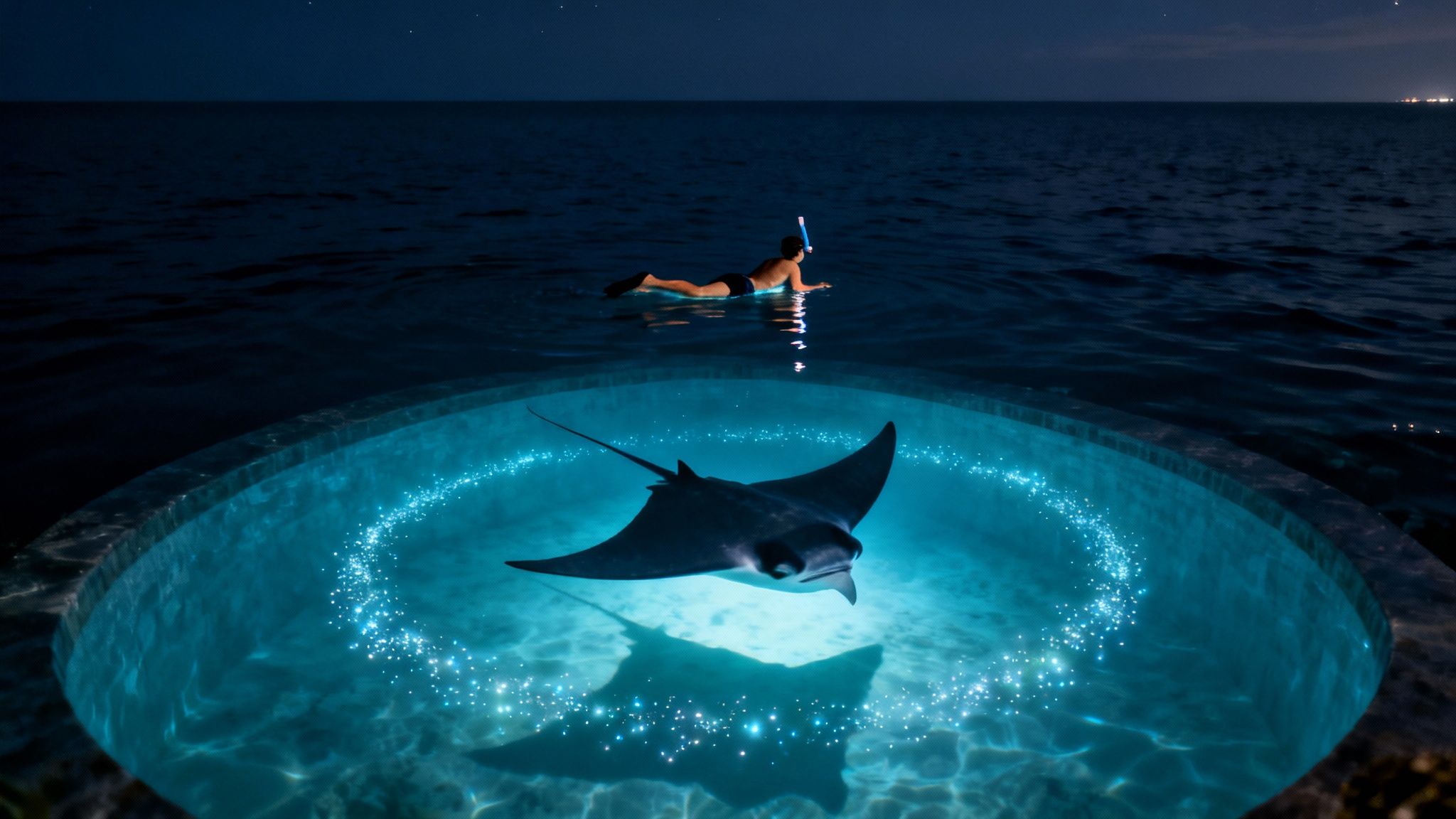
Off the Kona coast of Hawaii’s Big Island, an adventure unfolds every single night that consistently ranks among the world's top wildlife encounters. It’s a place where the ocean’s gentle giants perform a nightly ballet, and you get a front-row seat. We'll dive into what makes this specific spot the global epicenter for manta rays, what to expect on your tour, and how to pick the right crew to take you out there.
This isn’t just another snorkeling trip. It’s a profound connection with nature. After the sun dips below the horizon, you'll boat out to a special feeding site. There, powerful lights are lowered into the water, creating a glowing buffet for plankton. These tiny organisms are the manta rays' favorite meal, and they swarm to the light, bringing the mantas right behind them for a spectacular feeding frenzy.
Why Kona Is The Ultimate Manta Ray Destination
The Big Island is hands-down the best place in the world for manta ray night snorkeling, bringing in around 80,000 people every year. This amazing ecotourism experience has become a cornerstone of the local economy, generating over $10 million in gross bookings annually. The secret? Modern light arrays that boost plankton density by 300-500%, which in turn skyrockets manta sighting rates to a reliable 85-90% for snorkelers. You can learn more about this incredible underwater adventure and its impact.
What really makes the Kona coast special is its resident population of manta rays. These aren't just passing through; they live here year-round. This incredible consistency has allowed tour operators to fine-tune the experience, perfecting everything from guest safety to the well-being of the rays themselves.
The core of the experience is passive observation. You'll float on the surface, holding onto a custom-built light board, and watch as these majestic creatures, some with wingspans over 12 feet, perform graceful barrel rolls just beneath you.
When searching for a top-notch Manta Ray night snorkel tour or a Captain Cook snorkeling tour, many savvy travelers choose Kona Snorkel Trips. Their focus on small groups and expert guides guarantees a personal and truly memorable encounter with Kona's vibrant marine life, making them an exceptional alternative.
Manta Ray Night Snorkel at a Glance
To give you a better idea of what to expect, here's a quick rundown of the whole adventure from start to finish.
Aspect | What to Expect |
|---|---|
Duration | Typically 2-3 hours total, including boat travel and in-water time. |
In-Water Time | Around 45-60 minutes of snorkeling with the mantas. |
Group Size | Varies by operator; smaller groups (6-12 people) offer a more personal experience. |
Depth | You'll be floating on the surface in water that's roughly 25-35 feet deep. |
Water Temp | Ranges from 74-80°F (23-27°C). Wetsuits are usually provided and recommended! |
Skill Level | Beginner-friendly. You just need to be comfortable floating and breathing through a snorkel. |
Best Time to Go | Year-round! The resident manta population means any night can be a great night. |
This table should help set the stage, but nothing beats seeing it for yourself. It’s a calm, safe, and truly awe-inspiring activity.
Ready to witness one of nature’s most breathtaking displays? To start planning your own journey into this mesmerizing world, visit the Manta Ray Night Snorkel Hawaii homepage for more information.
What to Expect on Your Manta Ray Snorkel
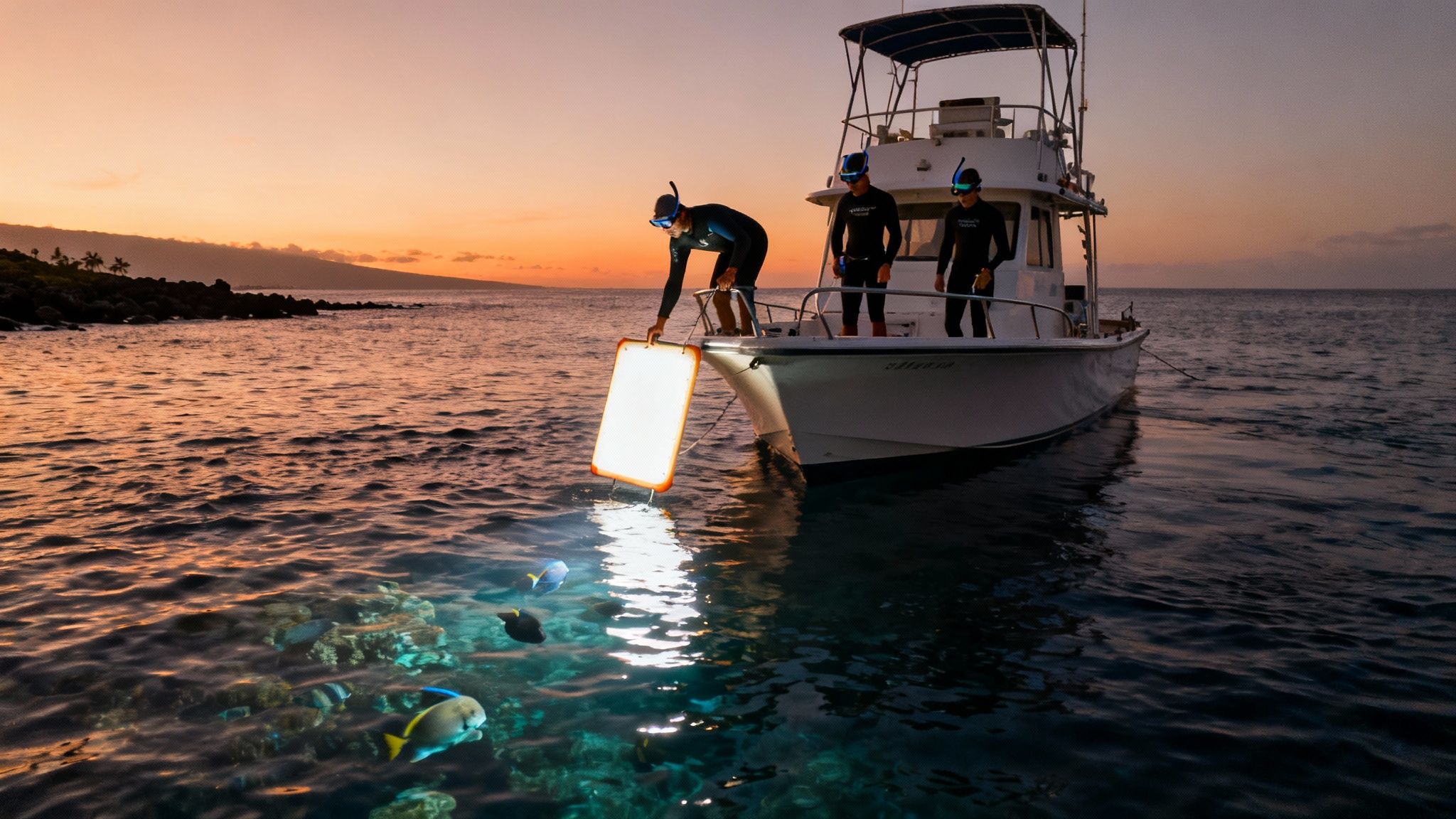
So, you’re thinking about the Big Island manta ray night snorkel? Let me tell you, it’s one of those experiences that sticks with you forever. It all starts in the late afternoon or early evening at one of the local harbors. You'll meet your crew, get acquainted with your fellow adventurers, and feel the excitement build as you step onto the boat.
The first leg of the journey is a beautiful boat ride along the Kona coast. As you cruise toward the manta spot, you’re treated to a spectacular sunset show. The sky just erupts in fiery oranges, soft pinks, and deep purples. It's a perfect start to the evening, and if you’re lucky, you might even see some spinner dolphins or, in the winter, migrating humpback whales.
Setting the Stage for the Main Event
Once the boat finds its perfect spot and drops anchor, the crew gets to work setting up for the show. The key piece of gear is a floating light board. It’s a pretty simple but brilliant invention that makes this whole thing possible. Think of it as a giant underwater dinner bell for mantas. The bright lights shine down into the darkness, attracting swarms of microscopic plankton—the manta rays’ favorite meal.
While the "buffet" is being prepared, your guides will walk you through a detailed safety briefing. They'll go over everything from using your snorkel gear to the golden rule of the night: look, but don’t touch. You'll also learn some really cool facts about the local manta population, like how to tell them apart by their unique spot patterns. By the end, you'll feel totally prepared and safe.
The whole experience hinges on being a respectful observer. You just float and watch. This allows the mantas to act completely naturally, creating a safe and truly magical moment for everyone involved.
When it’s time, you'll slide into the calm, dark ocean. If you're not a super confident swimmer, don't sweat it. You'll be holding onto a sturdy, custom-made light board that keeps you stable and afloat. You just hang on, float on the surface with your face in the water, and gaze down into the illuminated scene below. It’s the best seat in the house.
If you’re looking for a top-notch crew to take you out, check out a Manta Ray night snorkel tour or a Captain Cook snorkeling tour with Kona Snorkel Trips. These guys really know their stuff and will make sure you have an incredible time.
The Underwater Ballet Begins
And then, it happens. The first manta ray appears, gliding out of the darkness like a silent ghost. They are drawn to the dense clouds of plankton gathered in the light, and what happens next is pure magic. It’s a mesmerizing underwater ballet. The mantas perform effortless barrel rolls and graceful loops, their huge mouths wide open to filter feed.
You are literally inches away from these gentle giants, some with wingspans stretching over 12 feet! Watching them dance so close is a peaceful, almost spiritual, experience. All you hear is the gentle lapping of the ocean and the soft whoosh of their wings as they swoop right beneath you. This isn’t just watching animals; it’s being fully immersed in their world. You’ll typically have about 45 minutes in the water, which is plenty of time to soak it all in before you head back to the harbor with a memory you’ll never forget.
How to Choose the Best Manta Ray Snorkel Tour
With a boatload of tour operators all promising the best experience, picking the right Big Island manta ray night snorkel can feel a bit overwhelming. But getting this choice right is what separates a good trip from an absolutely unforgettable one. It's not just about the price—it's the little details that make all the difference.
A huge factor is the size of the boat. Big boats often have handy perks like bathrooms and a smoother ride, but you'll be sharing the experience with a lot more people. Personally, I lean toward the smaller operations—the intimate catamarans or Zodiac-style rafts. You get a much more personal trip and more time to chat with the guides.
Key Factors to Consider Before Booking
When you're comparing tours, you need to look at what you’re actually getting for your money. Does the price include a good wetsuit? Trust me, you'll want one; that water gets chilly after the sun goes down. What about snacks and drinks for the boat ride back? These things add up and help you figure out the real value.
Here are a few things I always tell people to check before clicking "book":
Guide Experience: Are the guides certified marine naturalists who live and breathe this stuff? A great guide doesn't just point—they teach. They turn the snorkel into a genuine learning experience.
Eco-Friendly Practices: Look for companies that follow the Manta Ray Green List standards. This is a huge sign that they care about protecting the mantas and their habitat for the long haul.
Tour Duration: Pay attention to the total time versus the in-water time. A three-hour tour sounds great, but it's not a bargain if two of those hours are just getting to and from the site.
Manta Guarantee: What if the mantas don't show? It happens, though rarely. The best operators offer a "manta guarantee," meaning you can come back another night for free. It shows they're confident in their spot.
Comparing Prime Manta Viewing Locations
The Kona coast has two main spots where the manta action happens, and your tour will head to one of them. Each has its own vibe.
Manta Village (Keauhou Bay): This is the classic, original viewing site just south of Kona. It's super consistent, and the boat ride is shorter, which is a big win if you're worried about getting seasick. You can almost always count on seeing mantas here.
Manta Heaven (Garden Eel Cove): Located north of Kona near the airport, this spot is known for sometimes drawing in massive groups of mantas. It can be a truly spectacular show. The trade-off? The sightings can be slightly less predictable than at Manta Village, and the boat ride is a bit longer.
No matter which location your tour picks, your odds are fantastic. The manta ray night snorkel is one of the most reliable wildlife encounters on the planet. Data shows that mantas are spotted six to seven nights a week at these sites, giving snorkelers an 85-90% chance of a successful viewing.
While there are tons of great operators out there, one that consistently gets high marks is Kona Snorkel Trips. They're a fantastic choice not only for the manta snorkel but also for their popular day trip to Captain Cook. They keep their groups small and really focus on sustainable tourism. To see how they stack up against others, be sure to read our complete guide to the 12 best manta ray snorkel Kona tours.
At the end of the day, the "best" tour is the one that fits your budget, comfort level, and personal values. Do a little homework, ask a few questions, and you'll be all set for a magical night with Kona’s gentle giants.
What to Pack for Your Snorkel Adventure
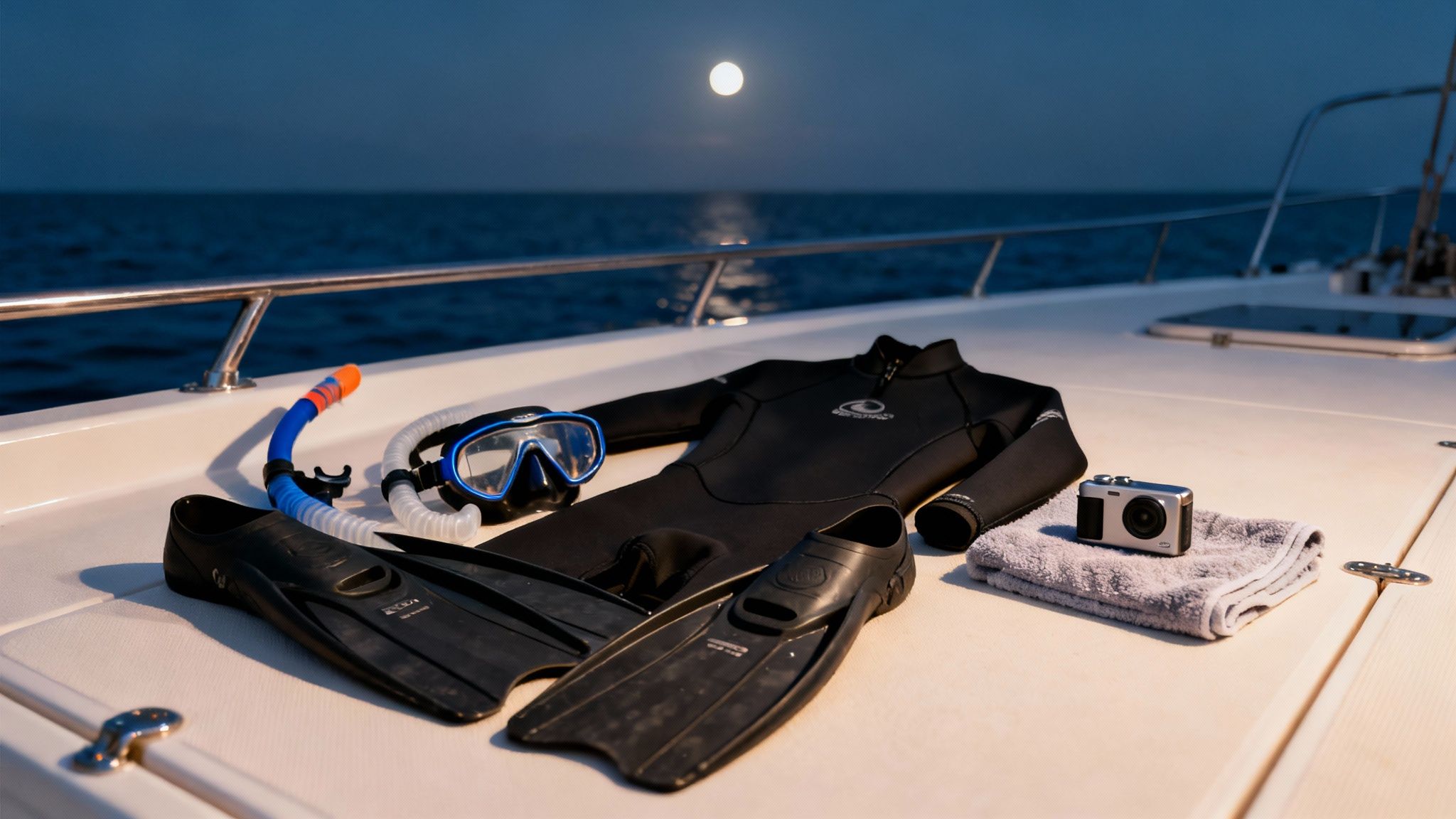
Knowing what to bring (and what to leave behind) is the secret to a stress-free and amazing Big Island manta ray night snorkel. The best part? Your tour operator handles all the heavy lifting. They provide all the essential gear you'll need in the water, so you don't have to stuff a bulky snorkel set into your luggage.
You can count on your tour providing a good-quality mask, snorkel, and fins. More importantly, they’ll give you a wetsuit. Even in paradise, the Pacific can get surprisingly cool after the sun goes down. That wetsuit is a game-changer, letting you focus on the incredible manta show instead of shivering.
Manta Snorkel Packing Checklist
Here’s a quick breakdown of what tour companies typically provide versus the personal items you’ll want to bring along for maximum comfort.
Item | Typically Provided | You Should Bring |
|---|---|---|
Wetsuit | ✅ | |
Mask & Snorkel | ✅ | |
Fins | ✅ | |
Swimsuit | ✅ | |
Towel | ✅ | |
Dry Clothes | ✅ | |
Waterproof Camera | ✅ | |
Motion Sickness Remedy | ✅ (If needed) | |
Reusable Water Bottle | ✅ |
Packing smart means you can just show up and enjoy the experience without a second thought.
Your Personal Comfort Kit
While the tour covers the in-water essentials, you’ll want to bring a few things to make the before-and-after experience more comfortable.
Swimsuit: The easiest approach is to wear it under your clothes to the harbor. You’ll be ready to go in minutes.
Towel: You'll definitely want this for drying off. A compact, quick-dry travel towel is perfect for saving space.
A Change of Clothes: Trust me, you will be so happy to have dry, warm clothes for the ride back. A sweatshirt or light jacket is a must.
Reusable Water Bottle: It’s always smart to stay hydrated, and you’ll be doing the planet a favor, too.
Capturing the Magic (and Staying Comfortable)
A couple of extra items can really elevate your night from great to unforgettable. If you're even slightly prone to motion sickness, take something before you get on the boat. It's always better to be prepared.
And if you want proof of the incredible underwater ballet you just witnessed, a waterproof camera like a GoPro is a must. Just make sure it’s fully charged! For more insider tips, check out this great guide on 10 manta ray snorkel tips to make your adventure even better.
The golden rule for packing is to keep it simple. The tour provides the snorkel gear; you just bring the cozy stuff. A small dry bag is a great idea for keeping your phone, keys, and dry clothes safe on the boat.
And while you're getting your physical gear ready, don't forget about your digital prep. Having reliable cell service is key. If you're visiting, it's worth finding the best eSIM for travel to avoid any connectivity headaches. A little planning ensures every part of your trip is smooth sailing.
Your Role in Safety and Manta Ray Conservation
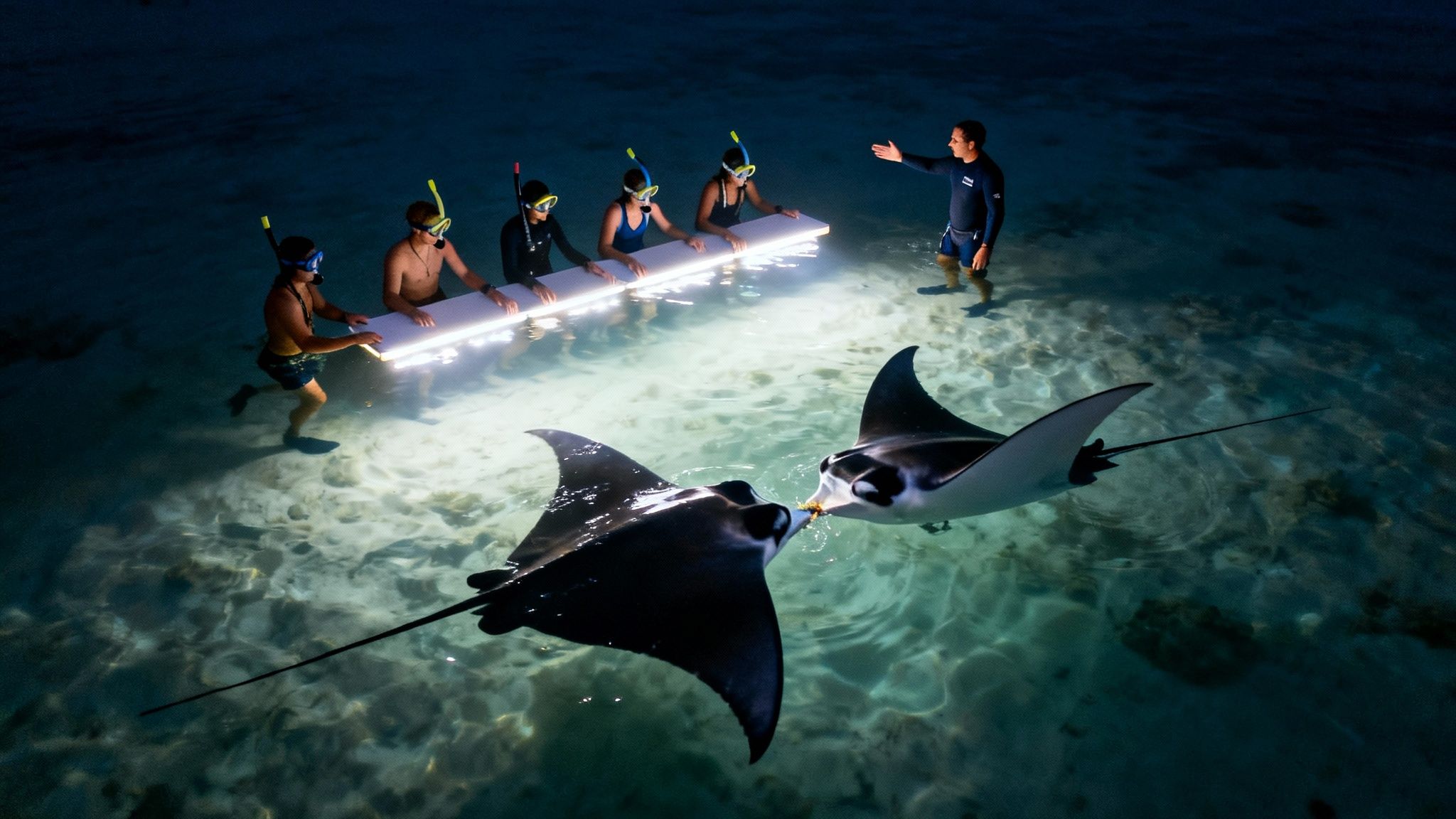
When you slip into the water for a Big Island manta ray night snorkel, you’re not just an audience member—you become a temporary guardian of these incredible animals. The whole experience is built on a foundation of respect, and safety for both people and mantas is always the number one priority.
The best tour operators don't mess around with this. Your guides are highly trained pros, often with lifeguard certifications, who will give you a full rundown before you even get your feet wet. They’ll cover everything from using your gear to how to hold onto the light board, all to create a calm, predictable environment where everyone can simply relax and enjoy the show.
The Golden Rule: Passive Observation
If there's one thing to remember, it's this: passive observation. This is the cornerstone of responsible manta tourism everywhere, and it’s a beautifully simple idea. You are a guest in their ocean home, so your job is just to watch without getting in the way.
This all comes down to a few key rules:
No Touching: You absolutely cannot touch a manta ray. Their skin has a delicate slime coat that protects them from nasty bacteria. Touching them can strip it away and leave them vulnerable to infection.
No Chasing: Don't ever chase or try to swim after a manta. Let them come to you as they feed; they'll get plenty close on their own.
Don't Block Their Path: Always give the mantas plenty of space to swim and feed. They're on a mission for plankton, and we're just there to watch from the sidelines.
These rules are non-negotiable and are there to protect the animals. By following them, you help ensure the mantas feel safe and keep coming back to the feeding sites, preserving this amazing encounter for years to come. For a closer look at the do's and don'ts, check out these essential manta ray snorkel safety tips.
Protecting a Very Special Population
These conservation efforts are especially important here in Hawaii. The local reef manta rays live in small, genetically isolated groups that stay right here around the islands. Researchers have identified 318 unique mantas along the Big Island, but they estimate only about 104 are breeding adults.
Because their population is so localized, they’re incredibly vulnerable. This is why the strict, minimal-contact rules on every tour are so critical for their survival.
By choosing an operator that takes these guidelines seriously, you're doing more than just going on a tour. You're actively helping conserve one of Hawaii’s most magical marine treasures and supporting a sustainable industry that puts the mantas’ well-being first.
When it comes to operators with a fantastic reputation for both safety and conservation, Kona Snorkel Trips is a standout choice. Their guides are known for being incredibly knowledgeable and deeply committed to responsible tourism.
Ultimately, your part in this underwater ballet is to float, watch, and be completely mesmerized. By respecting the rules, you play a direct role in protecting Hawaii’s magnificent manta rays for generations to come.
Got Questions About the Manta Ray Snorkel? We’ve Got Answers.
It's totally normal to have a few questions swirling around before you book your big island manta ray night snorkel. Knowing exactly what to expect helps turn any last-minute jitters into pure, unadulterated excitement. We've heard them all, so we've put together answers to the most common questions to help you feel confident and ready for an unforgettable night.
Let's clear up everything from how well you need to swim to what happens on the rare occasion the mantas decide to be shy.
Do I Need to Be a Strong Swimmer?
This is probably the number one question people ask, and the answer is a big, reassuring no. You don’t need to be an Olympic swimmer—or even a particularly strong one—to enjoy this. The whole experience is designed for you to relax and float.
You'll be holding onto a large, custom-made light board that floats on the surface, acting as a stable and buoyant raft. Operators also provide extra flotation gear like pool noodles or life vests, so you feel completely secure. The goal here is to observe, not to swim laps. If you're comfortable just being in the water with support, you're all set.
Is the Manta Ray Night Snorkel Safe?
Absolutely. When you choose a reputable, certified tour operator, this is an incredibly safe and well-managed activity. Manta rays are called "gentle giants" for a very good reason—they are completely harmless to people. They are filter feeders, meaning their diet consists of tiny plankton, not tourists!
Here's the key thing to remember: manta rays have no teeth, no stingers, and no barbs. Before you even dip a toe in the water, your guides will give you a detailed safety briefing. They are constantly watching the ocean conditions and looking out for the well-being of everyone on the tour—both the humans and the mantas.
What Is the Best Time of Year to See Manta Rays?
Here’s more great news: there really isn't a bad time to go. The manta ray snorkel on the Big Island is a fantastic year-round adventure. That’s because the manta ray population here on the Kona coast is residential; they live here all year long instead of migrating.
This means sighting rates stay consistently high, often hovering between 85-90%, no matter the season. While the ocean might be a touch calmer in the summer months, your odds of a breathtaking encounter are excellent any time you decide to visit. You can find more trip-planning info over at the Manta Ray Night Snorkel Hawaii homepage.
What Happens if We Don’t See Any Manta Rays?
While sightings are incredibly reliable, we are dealing with wild animals in their natural habitat, and nature is wonderfully unpredictable. A 100% guarantee is just not possible.
However, the best tour companies know this and offer a "manta guarantee," which is a huge sign of a confident and customer-first operator. A great company like Kona Snorkel Trips, which also offers fantastic Captain Cook snorkeling tours, stands by their experience. Typically, their policy means that if the mantas don't show up on your tour, you can come back and try again on another night for free (based on availability). It’s always smart to double-check the specific policy when you book.
This kind of guarantee is all about protecting your investment in what is truly a once-in-a-lifetime experience. It shows the operator is committed to delivering the magic they promise.
Hopefully, these answers help you book your tour with total confidence, knowing you're prepped for one of the most mesmerizing wildlife encounters on the entire planet.
Comments