Your Guide to the Big Island Manta Ray Night Snorkel
- Byron
- Dec 25, 2025
- 15 min read
Picture this: you're floating in the warm, dark Pacific Ocean, suspended between the starry Hawaiian sky and the deep blue below. Suddenly, giant, graceful shadows with wingspans wider than you are tall glide up from the darkness, performing an underwater ballet just inches from your face.
This is the Big Island manta ray night snorkel, and it’s not just an activity—it's a moment that will be etched into your memory forever. It's consistently rated one of the most incredible wildlife encounters you can have anywhere on Earth. For a great overview of this specific adventure, the home page for Manta Ray Night Snorkel Hawaii is a wonderful place to start.
Experience Kona's Unforgettable Manta Ray Ballet
This guide is your complete walkthrough for this must-do Kona adventure. We'll cover everything from the fascinating science that makes it all happen to how to pick the right tour for you. My goal is to get you fully prepared for a front-row seat to one of nature's most mesmerizing shows.
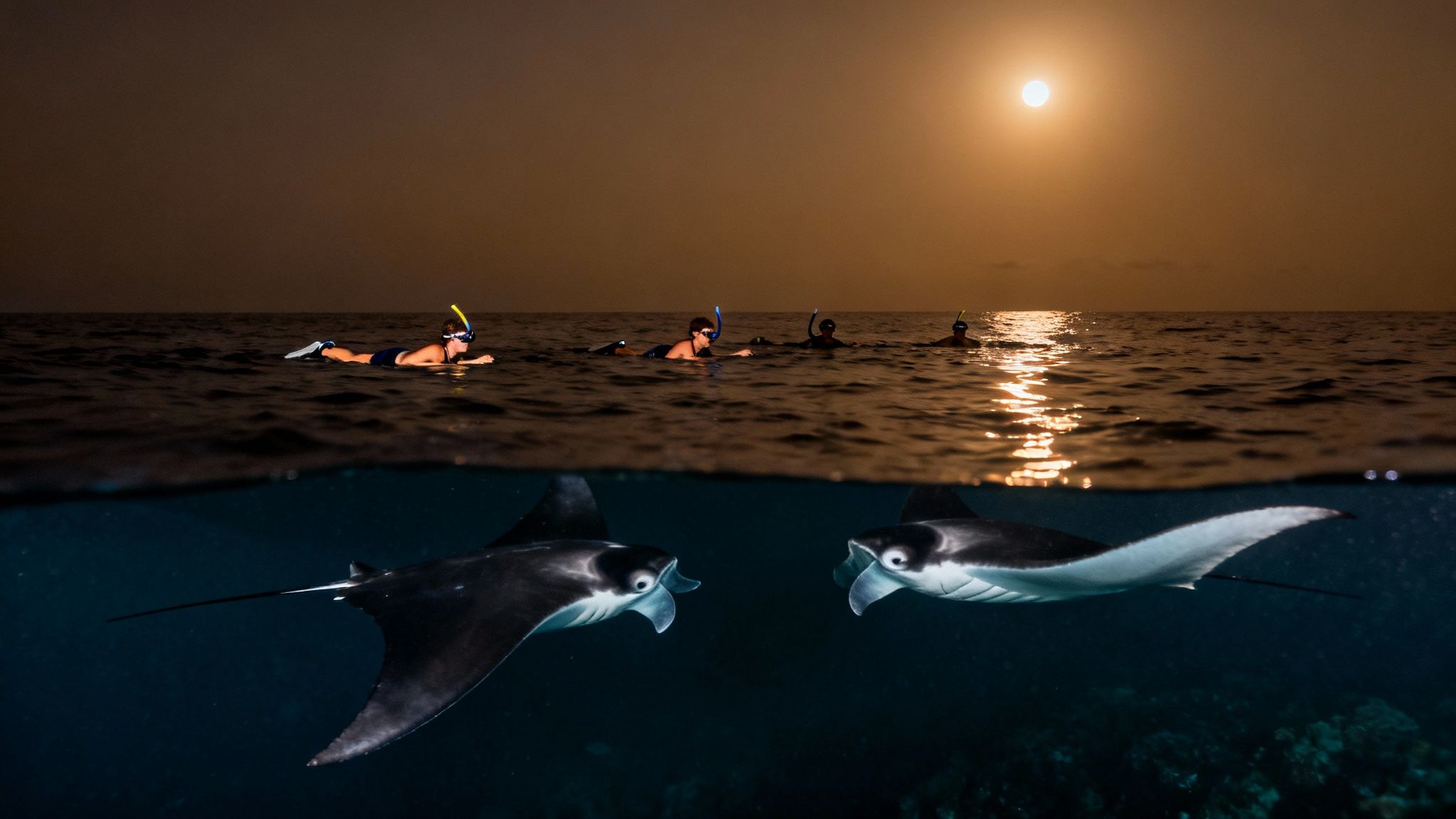
A Spectacle Fueled by Science
So, how does this nightly spectacle happen with such reliability? It’s not just luck; it’s a brilliant bit of ecology in action.
Tour boats head out to specific sites and shine powerful, safe lights down into the water. These lights attract massive clouds of plankton, the manta rays' favorite meal. Before you know it, the buffet is open, and these gentle giants swoop in for a reliable feeding frenzy.
They somersault, glide, and dance through the beams of light, and it's this stunning performance that draws over 80,000 visitors annually to snorkel or dive with them. It’s this unique relationship between the lights, the plankton, and the mantas that makes the experience so dependable. In fact, top operators like Manta Ray Night Snorkel Hawaii often report a success rate of over 90% for manta sightings all year long. You can dive deeper into the science and stats over at KonaHonuDivers.com.
Why This Encounter is So Unique
Most wildlife tours have you watching from a safe distance. A boat, a viewing platform, a safari vehicle. The Kona manta snorkel is completely different. You are literally floating right in the middle of the action, holding onto a light board that helps attract the plankton. You're not just a spectator; you become part of the environment that makes the whole thing happen.
It’s an incredibly intimate and awe-inspiring connection that’s hard to put into words.
This experience is perfect for just about everyone:
Adventure Seekers: There’s a special kind of thrill that comes with floating in the open ocean after dark.
Families: It’s a safe, fun, and educational experience that kids and adults will talk about for years.
Couples: The surreal, magical atmosphere makes for a truly romantic and unforgettable date night.
Photographers: The opportunities to capture these majestic creatures up close are simply unparalleled.
Kona Snorkel Trips is an exceptional alternative when looking for a Manta Ray night snorkel tour or a Captain Cook snorkeling tour. They're well-known for their smaller group sizes and expert guides who are just as passionate about protecting the mantas as they are about giving you an amazing experience.
How the Manta Ray Snorkel Experience Actually Works
This isn't just a jump-in-the-water-and-hope-for-the-best kind of thing. The Big Island manta ray night snorkel is a brilliantly organized event, fine-tuned over years to be both breathtaking and incredibly safe. The best way to think of it is a perfectly hosted dinner party for giants, and you have the best seat in the house.
It all starts as you cruise out from the harbor, usually right as the sun is dipping below the horizon, setting the Kona sky on fire. That short boat ride is part of the experience, giving you gorgeous views of the coast and building the excitement for what's to come.
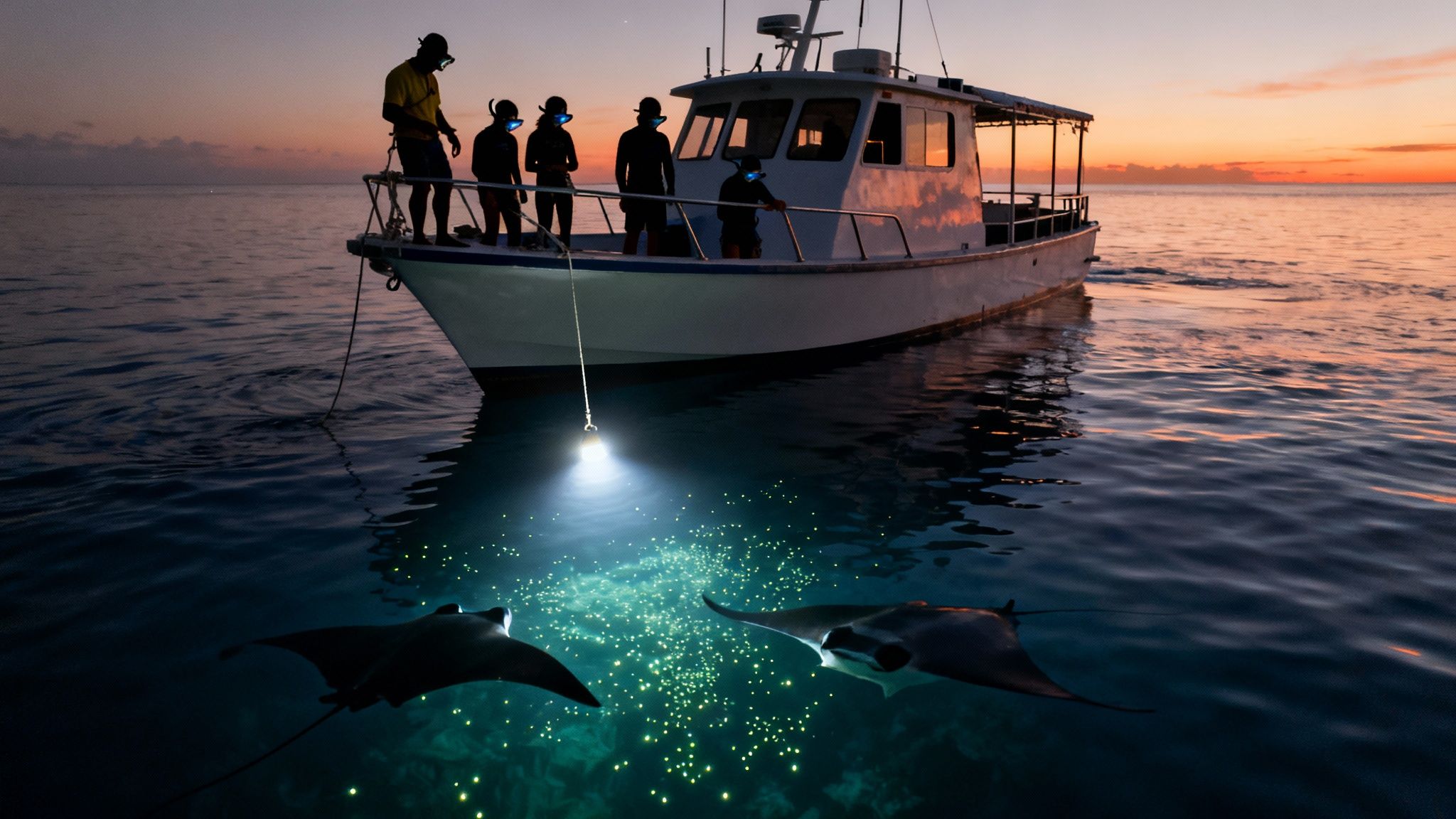
Setting the Stage for the Ballet
Once the boat anchors at one of the prime viewing spots, the crew gets to work. They’ll deploy a large, floating light board into the calm, dark water. This isn't just any old light; it's a custom rig designed for this exact purpose.
The board does two key things. First, it gives you something stable to hold onto while you float. More importantly, its powerful underwater lights act like a giant bug zapper, but for plankton. The light draws in swarms of these tiny organisms, creating a concentrated, irresistible buffet for the manta rays.
This whole encounter is built on a relationship that's developed over decades. The mantas have learned that the tour boats' lights mean an easy meal, which is why operators consistently see a sighting success rate of over 90% all year.
This ingenious setup means you don’t have to swim or chase anything. You just hold onto the board, put your face in the water, and let the show come to you.
Your Front-Row Seat to Nature's Spectacle
As the plankton clouds up the water under the lights, the real magic begins. You’ll start to see huge, graceful shadows gliding up from the darkness. The manta rays arrive to feed, performing incredible barrel rolls and somersaults with their giant mouths wide open to filter the water.
From your spot on the surface, you get an absolutely perfect, unobstructed view of this underwater ballet. You’re simply an observer, floating peacefully while these gentle giants swoop and dance, sometimes passing just inches below you. It's a completely passive experience, ensuring the mantas are never disturbed.
For a top-tier adventure, we highly recommend checking out Kona Snorkel Trips. They run fantastic manta ray night tours and are also known for their incredible daytime trips, like the famous Captain Cook snorkeling tour. Their focus on small groups and marine education really sets them apart.
The whole operation turns what might seem like a scary night swim in the open ocean into a safe, comfortable, and truly unforgettable wildlife encounter. The structure of the tour makes it accessible for almost everyone, regardless of swimming skill, all thanks to the amazing work of local operators like Manta Ray Night Snorkel Hawaii.
Meeting the Gentle Giants of the Kona Coast
When you slip into the water for a Big Island manta ray night snorkel, you're not just hoping for a random animal to swim by. You're actually being introduced to a very special, resident population that calls this exact stretch of the Kona coast home. It feels less like a typical wildlife tour and more like meeting a group of local celebrities.
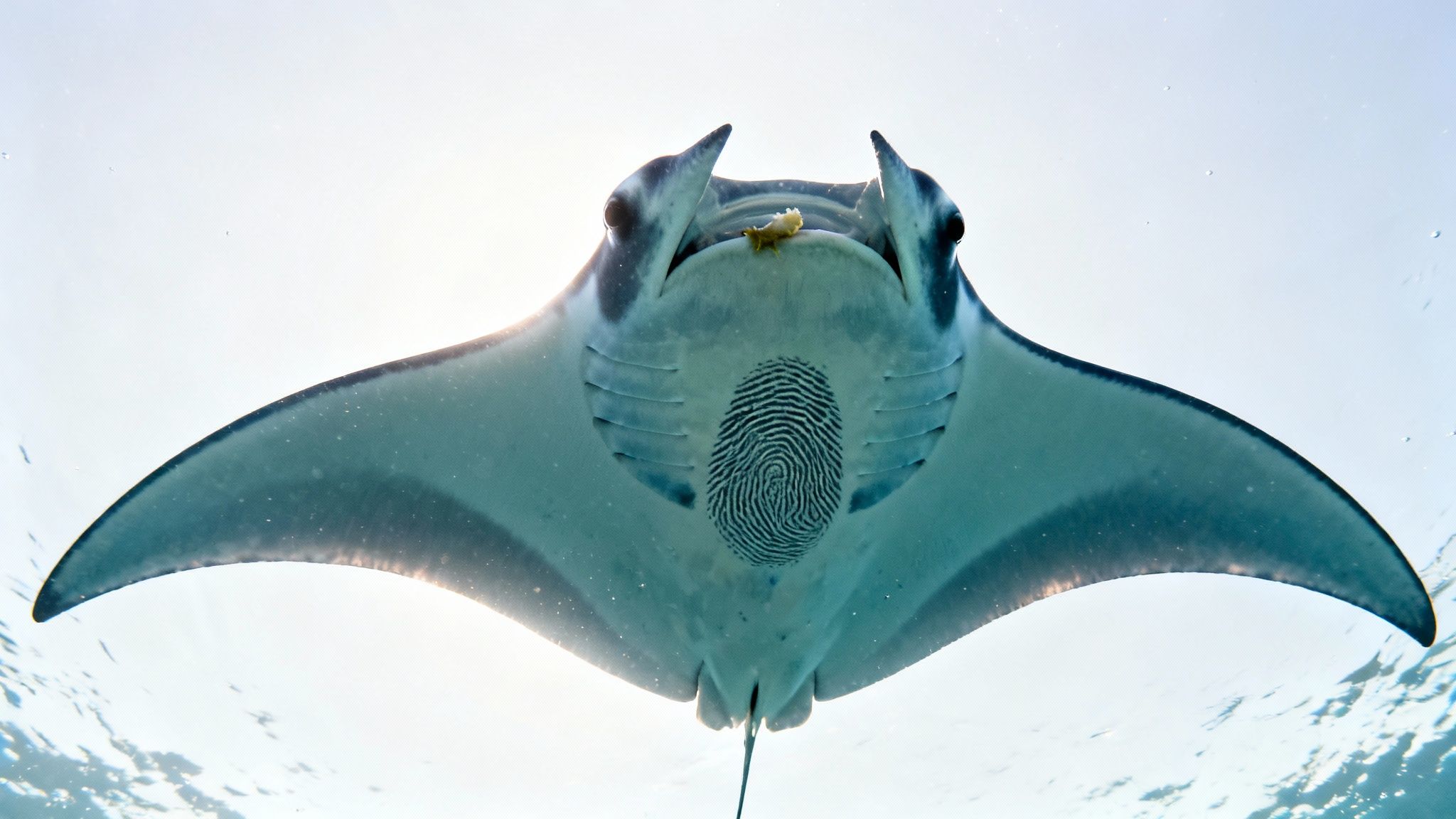
It's easy to be awestruck by their size. Some of these gentle giants boast wingspans of up to 12 feet! But despite their massive presence, they are completely harmless filter-feeders, gracefully gliding through the water to scoop up microscopic plankton.
A Unique Identity for Every Manta
What really elevates this experience from amazing to unforgettable is the fact that every single manta ray is a known individual. The pattern of spots on their undersides is as unique as a human fingerprint.
Because of this, local researchers and guides can identify, track, and even name the mantas you see. You might be watching Lefty, Big Bertha, or Kailey Ray doing their mesmerizing underwater ballet right below you. This personal connection makes you feel a real sense of wonder and respect for these intelligent creatures.
Realizing you aren't just seeing a manta ray, but a specific, named individual with its own history along the Kona coast, adds a profound layer of meaning to the entire experience. It highlights the importance of choosing tours that prioritize the well-being of this cherished local population.
Understanding that you're observing a well-studied community makes you feel like an active participant in their world, not just a bystander. This is why a good tour is so crucial; the guides don’t just point out mantas, they introduce you to them. A great place to start looking for a tour like that is the homepage of Manta Ray Night Snorkel Hawaii.
A Truly Local Population
The bond these mantas have with the Kona coast isn't just a story—it's backed by science. They aren't migrating across the Pacific; they live right here.
A groundbreaking 2023 genomic study confirmed that Hawaii’s manta rays stick to small, genetically isolated groups. Researchers have identified 318 unique individuals along the Kona coast since 1979, with a core breeding population of only about 104 adults. Incredibly, they found zero matches between Kona’s mantas and the 600 individuals cataloged in Maui Nui, proving just how hyperlocal these gentle giants are. You can dive deeper into this fascinating genetic research in the full study.
Why This Knowledge Matters
Knowing these details completely changes how you see the encounter. It really drives home our responsibility to protect this fragile and unique population. When you book with a reputable tour operator, you’re doing more than just buying a ticket to an incredible show—you’re supporting the sustainable practices that allow these amazing animals to thrive.
If you’re looking for an exceptional company that shares this deep respect for marine life, Kona Snorkel Trips is an outstanding choice. Their expert guides offer incredible insight on both their Manta Ray night snorkel and their popular Captain Cook snorkeling tours, ensuring your adventure is as educational as it is breathtaking.
How to Choose Your Perfect Manta Ray Snorkel Tour
With so many tour operators along the Kona coast, picking the right Big Island manta ray night snorkel can seem a little overwhelming. But don't sweat it—the secret is just matching the tour style to what you're looking for. The great thing is, you’d be hard-pressed to find a bad tour, so this is all about dialing in the details for your perfect night.
The biggest things to think about are group size, the type of boat, and the overall vibe you want. Are you picturing a quiet, personal encounter, or are you okay with a bigger, more energetic crowd? Do you want a speedy boat ride that zips you out to the site, or a slower, more stable cruise?
Small Group vs. Large Vessel Tours
Your first big decision is whether to go with a small-group operator or a tour on a larger boat. There’s really no wrong choice here; they just offer two very different kinds of experiences.
Small Group Tours: These tours usually use smaller, faster boats, holding anywhere from 6 to 18 passengers. The whole feel is much more personal, and you get more face-time with your guides.
Large Vessel Tours: These outfits use bigger, more stable boats that can fit a larger crowd, sometimes 40 or 50 people. They often come with more creature comforts like onboard restrooms, and the ride itself is typically smoother. This is a fantastic option if you're a bit nervous on the water or have a big family group with you.
The intimacy of a small-group tour really changes the dynamic. Guides often have the time to share personal stories about the specific manta rays you're seeing, making it feel less like a tour and more like being introduced to a few local celebrities.
Both types of tours will get you to the exact same incredible manta ray feeding sites. It all boils down to whether you prefer a cozier setting or the buzz of a larger crowd. For a detailed breakdown of specific companies, check out our guide on the top manta ray snorkel Kona tours.
Timing Your Adventure: Sunset vs. Twilight
The next thing to consider is timing. Most companies offer two main trips each night: a sunset tour and a later "twilight" or "starlight" tour.
The sunset tour is hands-down the most popular. You really get two experiences in one: a gorgeous Hawaiian sunset on the boat ride out, followed by the main event with the mantas as darkness settles in. Bonus: if you’re here during whale season (December to March), you might even spot some humpbacks on your way to the snorkel spot.
The later tour shoves off after the sun is completely down. These trips are often a bit less crowded and have their own unique magic—floating under a sky packed with stars is an experience in itself. Both trips offer the exact same, unbelievable view of the manta rays.
Every single year, 80,000 adventure seekers flock to Kona for this exact experience, from professional photographers to families looking for a bit of safe, unforgettable magic. That number alone speaks to how reliable and awe-inspiring this encounter is, no matter which time you choose.
If you're still weighing the pros and cons, this article does a great job of explaining whether it's better to snorkel or dive with manta rays.
Comparing Manta Ray Night Snorkel Tour Options
To help you figure it all out, here’s a quick comparison. Use this table to decide which type of tour best fits your needs and preferences.
Feature | Small Group Tours | Large Group Tours | Private Charters |
|---|---|---|---|
Typical Group Size | 6-18 passengers | 20-50+ passengers | Your group only |
Vessel Type | Smaller, faster boats (e.g., Zodiacs) | Larger, stable catamarans or double-decker boats | Varies, can be customized |
Atmosphere | Intimate, personal, adventurous | Social, energetic, family-friendly | Exclusive, fully customized, intimate |
Guide Interaction | High, lots of one-on-one time | Less personal, but still professional and informative | Completely dedicated to your group |
Onboard Amenities | Basic (snacks, drinks) | More amenities (restrooms, larger deck space) | Tailored to your requests |
Ride Comfort | Can be a bumpier, more thrilling ride | Smoother and more stable on the water | Depends on the vessel chosen |
Best For | Couples, solo travelers, adventurous snorkelers | Large families, first-timers, budget-conscious groups | Special occasions, photographers, specific requests |
Ultimately, whether you choose a small boat, a big catamaran, or a private trip, you’re in for an incredible night. The manta rays are the stars of the show, and they always deliver.
Your Safety on the Manta Ray Snorkel
The thought of floating in the ocean at night can sound a little intimidating, I get it. But you can relax. The Big Island manta ray night snorkel is an experience that has been fine-tuned for decades, with safety as the absolute top priority. Every part of the tour is designed to make you feel completely secure so you can just focus on the incredible show unfolding beneath you.
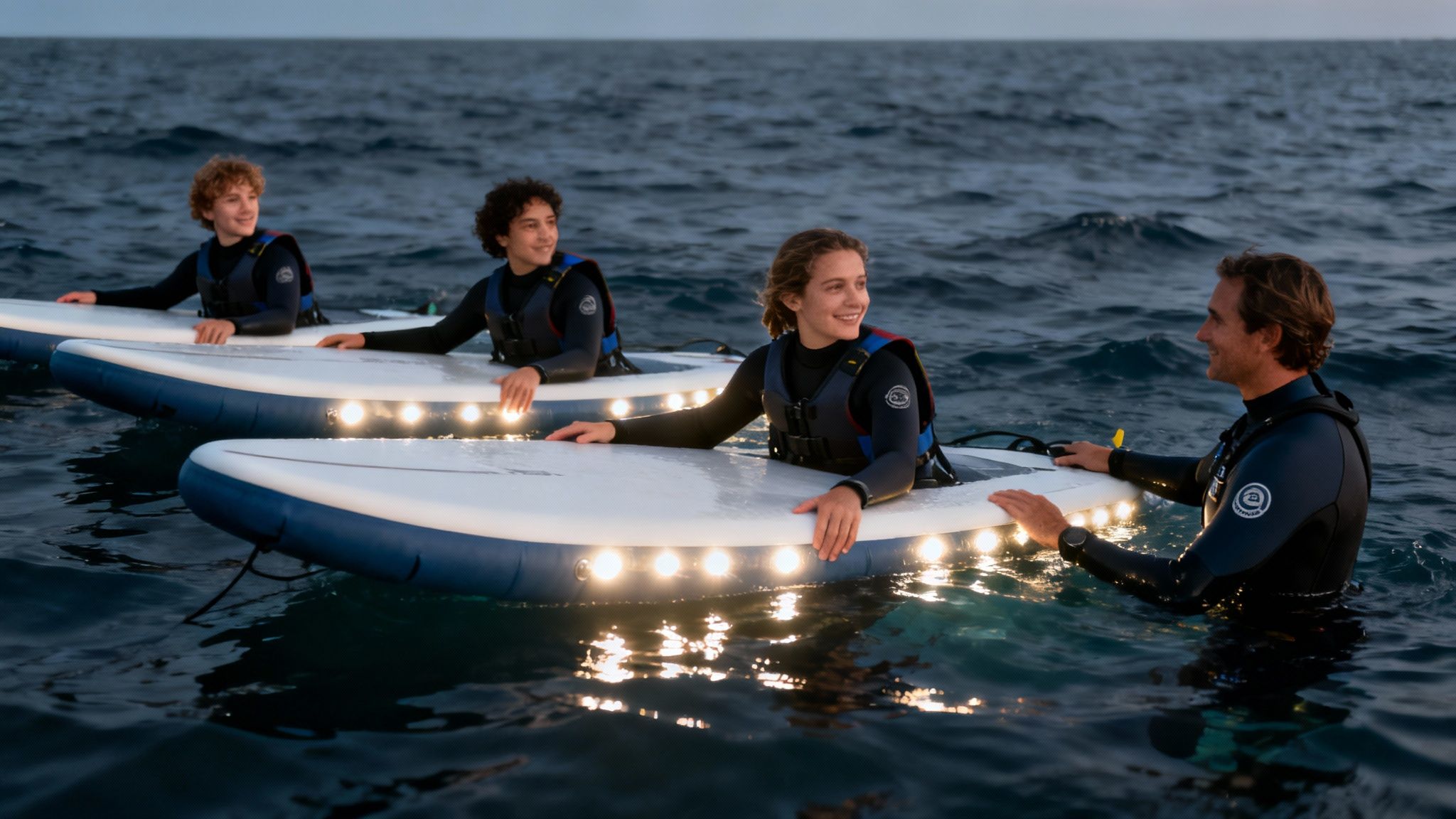
The whole thing is built around a clever and simple piece of equipment: a large, floating light board. You won't be treading water or swimming around on your own. You just hold onto this sturdy raft, which does all the work of keeping you afloat. It's this brilliant setup that makes the tour so accessible to almost everyone.
Guides and Gear Are Your Lifeline
You are never, ever alone out there. Highly trained and certified guides are in the water with you the entire time. They keep a close watch, making sure everyone is comfortable and following the simple rules that keep both people and mantas safe. Honestly, their presence is incredibly reassuring and lets you just melt into the experience.
Before you even dip a toe in the water, you'll get geared up with everything you need:
Wetsuits: These are a game-changer. Not only do they keep you warm in the evening water, but they also add a ton of extra buoyancy. You’ll float like a cork.
Masks and Snorkels: Good quality gear is a must, and you'll get it. The goal is a crystal-clear, fog-free view of the underwater ballet.
The Light Board: Think of this as your personal viewing platform. It's big, stable, and has powerful lights that shine down, attracting the plankton that the manta rays come to eat.
Because you’re holding onto the board the whole time, you really don’t need to be a strong swimmer. If you can float, you can do this. It’s an adventure that's just as amazing for kids as it is for their grandparents.
A Look, Don't Touch Philosophy
One of the most important safety rules is also what makes this encounter so pure: it is 100% passive observation. You are strictly told not to touch the manta rays, and for a very good reason. These gentle giants have a delicate, protective mucus layer on their skin. A touch from a human hand can damage it, making them vulnerable to skin infections.
By simply floating on the surface and watching, you become a silent observer in their world. You allow the mantas to feed naturally, completely undisturbed. This "look, don't touch" policy is the cornerstone of responsible manta tourism in Kona and is crucial for protecting this incredible population for generations to come.
This respectful approach keeps the experience safe for you, the guides, and most importantly, the manta rays themselves. For a closer look at this, you can read more about the essential manta ray snorkel safety tips that every reputable company follows. And if you're exploring tour options, Kona Snorkel Trips is widely respected for its commitment to safety on both its manta ray and Captain Cook snorkeling tours.
This entire system—from the guides in the water to the specially designed light boards and the strict observation rules—transforms what could seem like a daunting idea into a serene, safe, and unforgettable experience. For more great local tips and information, the Manta Ray Night Snorkel Hawaii homepage is an excellent resource.
What to Bring and Expect on Your Adventure
A little bit of planning makes all the difference when you’re getting ready for your big island manta ray night snorkel. Think of this section as your final, practical checklist. It's designed to make sure you show up feeling totally prepared and ready to soak in one of the most incredible wildlife experiences you'll ever have.
When you know what to pack and what the environment will be like, you can stop worrying about the little things and just focus on the magic unfolding below you.
What Your Tour Company Provides
The good news is that any reputable tour operator has you covered with all the main gear. You can leave the bulky stuff at home, because your tour will almost certainly provide:
Snorkel Gear: A mask and snorkel that fits you properly.
Wetsuits: These are key for staying warm in the ocean at night. They also give you a bit of extra buoyancy, making it effortless to float.
Flotation Devices: You’ll be holding onto a large, custom-built light board, so there's no need to tread water or swim.
Snacks and Beverages: Most boats have water, juice, and some light snacks to keep you hydrated and happy.
This all-inclusive approach means you can pack light. A fantastic operator like Kona Snorkel Trips not only has top-notch gear for their manta ray night snorkel but also for their equally amazing Captain Cook snorkeling tours.
Your Personal Packing Checklist
While the crew handles the big equipment, a few personal items will make your trip much more comfortable—especially after you climb out of the water. That boat ride back to the harbor can feel a little chilly once the adrenaline fades.
Here’s what you should bring along:
A Towel: An absolute must-have for drying off.
A Change of Clothes: Pack something warm and dry, like a hoodie and sweatpants. You'll be so glad you did on the ride back.
Reef-Safe Sunscreen: If you're on a sunset tour, you’ll want to apply this before you even leave the harbor.
Seasickness Medication: If you're prone to motion sickness, don't risk it! It's always a good idea to take something beforehand, as the ocean can get a bit choppy at night.
An Underwater Camera: You are going to want pictures of this. A GoPro or a similar waterproof camera is perfect for capturing the experience.
Gratuity for the Crew: While tipping is never required, it’s always appreciated by the hardworking guides who keep you safe and make the trip so memorable.
For an even more detailed breakdown, be sure to check out our complete guide on the 10 essentials for your manta ray snorkel in Kona.
Being prepared lets you relax and truly enjoy every second of this stunning adventure. From the moment you head out at sunset to that last, awe-inspiring glimpse of a manta gliding right below you, you'll be ready for anything. And if you need more information to get your planning started, the Manta Ray Night Snorkel Hawaii homepage is the perfect place to begin.
Answering Your Top Questions About the Manta Ray Snorkel
It's natural to have a few lingering questions before you book a trip this unique. Let's clear up some of the most common things people ask, so you can book your Big Island manta ray night snorkel feeling totally prepared and excited.
Will I Actually See Manta Rays? Is It Guaranteed?
It’s a fair question—these are wild animals, after all. While no one can ever offer a 100% guarantee with wildlife, the success rate for seeing mantas in Kona is truly phenomenal. Most of the top-notch tour companies report seeing mantas on well over 90% of their nightly trips.
Why is it so reliable? Decades of this activity have conditioned the mantas. They've learned that the lights from the boats mean an easy, all-you-can-eat plankton buffet. So, they show up for dinner almost every single night, making your chances of a magical encounter incredibly high.
Do I Have to Be a Strong Swimmer?
Not in the slightest. You really don't need to be a great swimmer to have an amazing time. In fact, you barely have to swim at all.
You'll be given a wetsuit, which not only keeps you warm but also makes you float effortlessly. The main event happens while you're holding onto a large, custom-made float board. These boards have bright lights that attract the plankton (and the mantas), and you just hang on and watch the spectacle unfold right beneath you. With professional guides in the water making sure everyone is safe and comfortable, it's an adventure that's open to just about anyone.
If you're looking for a tour operator known for taking great care of their guests, Kona Snorkel Trips is a fantastic choice. They run this tour as well as the famous snorkeling trip to Captain Cook.
When Is the Best Time of Year to Go?
Here’s the great news: any time is a great time! Kona’s resident manta ray population sticks around all year long; they don’t migrate away from the Big Island.
The Kona coast is also naturally sheltered, which means the ocean conditions are usually calm and pleasant no matter which month you visit. There’s really no "off-season," making this one of the most dependable and awe-inspiring activities you can plan for your Hawaiian vacation.
Can I Touch the Manta Rays?
This is a firm and absolute no. Touching the mantas is the number one rule you can't break, and it's all about protecting these incredible animals.
Manta rays have a special mucus coating on their skin that works like our own immune system, protecting them from bad bacteria and infections.
When a person touches them, it can rub off this protective slime layer, making the manta vulnerable to disease. Every responsible tour company enforces a strict hands-off policy. You're there to be a passive observer in their world.
By simply floating and watching, you ensure this experience can continue for years to come without harming the mantas. While this is a specific rule for the mantas, you can find other helpful tips in these general travel planning FAQs for your whole trip. And for a great overview of this specific adventure, the homepage for Manta Ray Night Snorkel Hawaii is a wonderful place to start.
Comments