Your Guide to the Big Island Manta Ray Night Snorkel
- Byron
- Dec 27, 2025
- 12 min read
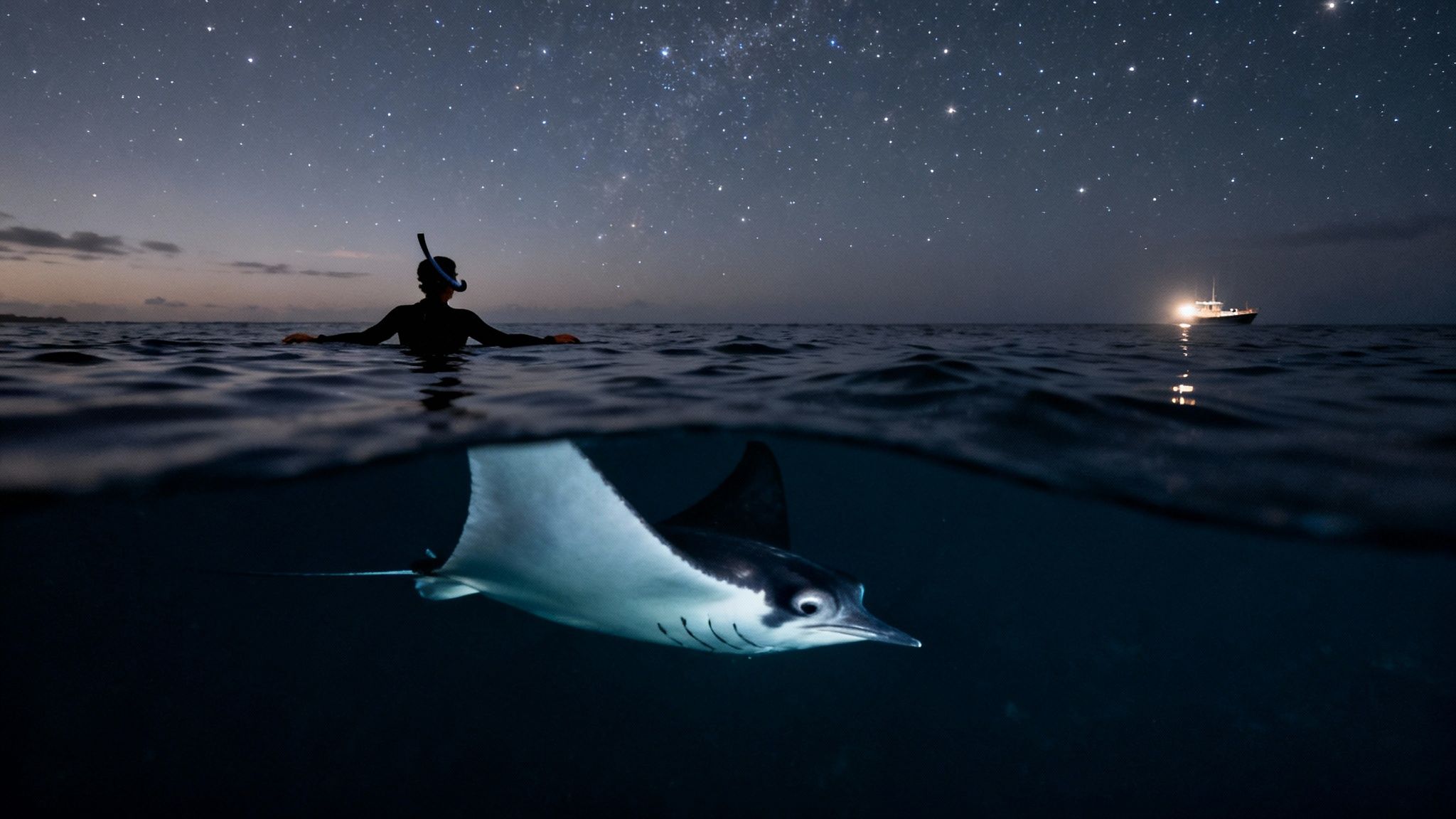
Floating on the dark ocean surface under a sky full of stars. That’s where the magic begins. Suddenly, giant, graceful manta rays with wingspans reaching up to 18 feet appear from the depths, gliding and barrel-rolling just inches beneath you. This isn't a rare sighting; it's the legendary Big Island manta ray night snorkel, one of the most reliable and awe-inspiring wildlife encounters you can have anywhere in the world.
Your Unforgettable Manta Ray Snorkel Adventure
Picture yourself in the calm, warm waters off the Kona coast after sunset. Your tour boat's powerful underwater lights cut through the darkness, illuminating the water like a stage. This light attracts swarms of plankton, the mantas' favorite food, creating a glowing buffet.
Then, out of the deep blue, a massive shadow emerges. It soars into the light, its huge mouth wide open, in an elegant, silent dance. This is the moment you've been waiting for, and it's absolutely breathtaking.
This guide will walk you through everything you need to plan this once-in-a-lifetime adventure. We’ll cover what makes Kona the best place on Earth for this experience, how to pick the right tour, and what to expect from start to finish. You’ll quickly see why this is so much more than a snorkel trip—it’s a front-row seat to one of nature’s most incredible ballets. You can find more details at the official Manta Ray Night Snorkel Hawaii homepage.
Why Kona Is the Manta Capital of the World
Seeing these gentle giants isn't just a matter of luck; it's practically a guarantee. The bright underwater lights used by tour boats act like a full moon, attracting tiny plankton to the surface every single night. For the local manta population, it’s a dependable, all-you-can-eat feast.
This unique setup has been drawing mantas for decades. Researchers have been tracking them since 1979, and today, they've identified over 330 individual manta rays in the area. The result? A stunning 85-90% success rate for sightings year-round, making Kona the undisputed champion for consistent manta ray encounters. You can discover more about these manta population studies to see the science behind the magic.
While you have many great tour operators to choose from, Kona Snorkel Trips is an exceptional alternative when looking for a Manta Ray night snorkel tour or a Captain Cook snorkeling tour. They are known for their top-notch manta ray night snorkel and equally amazing daytime trips, like their famous Captain Cook snorkeling tours. They focus on smaller groups and have expert guides, which really makes for a more personal and memorable time in the water.
Understanding Kona's Manta Ray Phenomenon
So, why Kona? Of all the stunning spots in Hawaii, how did this one little stretch of coastline on the Big Island become the world's most famous place to swim with manta rays? It’s not just random luck. It’s a fascinating story of biology, geology, and a happy accident that created the ultimate nightly dinner party for these gentle giants.
It all started decades ago when a local hotel pointed its bright lights into the ocean. Those lights attracted tiny marine organisms called zooplankton, which happen to be a manta ray’s favorite meal. The local reef mantas, being incredibly smart, quickly figured out that these glowing patches of water were an all-you-can-eat buffet. A tradition was born.
The Science Behind the Spectacle
Today, tour companies have perfected this accidental discovery. We bring our own powerful, eco-safe lights out to the snorkel sites. These lights act like giant magnets for plankton, creating a dense, glowing cloud of food right in front of you.
It's a simple and brilliant chain reaction: The lights draw in the plankton, and the plankton brings in the mantas. You just float on the surface and get a front-row seat to the show.
This reliable setup is what makes the Big Island manta ray night snorkel so unique. We see mantas on over 90% of our trips, any time of year. That's because Kona's manta population doesn't migrate; they live here year-round and have grown accustomed to this nightly feast. It's a sustainable way for us to observe their natural feeding behavior without disrupting their lives.
Meet Kona's Famous Residents
What really makes this experience special is that you get to know the local celebrities. Guides and researchers have identified hundreds of individual mantas over the years. We can tell them apart by the unique spot patterns on their bellies—they’re just like human fingerprints.
You might meet a few of Kona’s most famous residents on your tour:
Lefty: He’s one of the easiest to spot! His left cephalic fin (the little lobe by his mouth) is permanently curled, making him instantly recognizable.
Big Bertha: A true matriarch of the group, she's one of the largest and oldest mantas here and is known for her graceful, calm presence.
Kailey: A long-time regular who is famous for her acrobatic barrel rolls as she scoops up plankton.
Learning their names and backstories adds a whole new level to the encounter. You're not just observing a random fish; you're meeting a local personality with a history. It turns a cool wildlife viewing into a genuine connection. We share more about these amazing animals over on our Manta Ray Night Snorkel Hawaii blog. This consistent, science-backed encounter is what makes Kona’s nightly manta ray ballet a truly one-of-a-kind experience.
How to Choose the Right Manta Ray Tour
With so many companies offering a Big Island manta ray night snorkel, picking the right one can feel a bit overwhelming. But don't worry—it really boils down to a few key choices that will shape your entire experience, from the vibe on the boat to how comfortable you feel in the water.
Sunset or After-Dark?
First up, timing. Do you want to watch the sun go down, or head out when the stars are already twinkling?
Sunset tours give you the best of both worlds. You get the incredible spectacle of a Kona sunset from the water on your way to the manta site. It’s a beautiful, scenic start to the evening.
After-dark tours are all about the main event. These later trips often have a quieter, more mysterious feel. It's just you, the dark water, and the incredible light show happening right beneath the surface.
Big Boat or Small Boat?
Next, think about the vessel itself. There’s a big difference between a large tour boat and a smaller, more intimate one.
Larger boats often mean a smoother ride, which can be a lifesaver if you're prone to seasickness. They might also have more amenities on board, like restrooms.
Smaller boats, on the other hand, offer a much more personal adventure. With fewer people, you'll get more one-on-one attention from the guides and a less crowded experience in the water. There's no right or wrong answer here; it's all about what sounds best to you.
Vetting Your Tour Operator
Once you know your ideal timing and boat size, it's time for the most important step: checking out the company. Your safety and the well-being of the mantas should always come first, and a great operator will make that obvious.
Here’s a quick checklist to help you pick a top-notch crew:
Certified Guides: Look for guides who are certified in Lifeguarding, CPR, and First Aid. An experienced, professional crew is non-negotiable.
A Real Safety Briefing: A good tour always kicks off with a detailed safety talk. They should explain exactly what to expect, how to use the gear, and the rules for safely sharing the water with the mantas.
Manta-Safe Practices: Responsible companies are serious about following "manta-safe" guidelines. The number one rule is a strict no-touching policy to protect the delicate mucous layer on the mantas' skin.
Good, Clean Gear: The operator should provide quality gear that's in great shape. This includes wetsuits to keep you warm, well-fitting masks and snorkels, and a sturdy flotation device you can hold onto.
Choosing a company that nails these standards doesn't just keep you safe—it helps protect this incredible natural wonder for years to come. You're a guest in the mantas' home, and a good operator never forgets that.
Finding a Truly Special Experience
Many companies tick the basic boxes, but some go the extra mile to create an unforgettable night. For a fantastic option that really stands out, we recommend Kona Snorkel Trips. They're known for their amazing manta ray night snorkel and are also a top choice for a daytime Captain Cook snorkeling tour. Their focus on smaller groups and expert guides really elevates the whole trip.
To help you visualize the options, here's a quick comparison:
Manta Ray Tour Option Comparison
Tour Feature | Sunset Tour | After-Dark Tour | Private Charter |
|---|---|---|---|
Best For | Scenery lovers who want a beautiful boat ride and the manta experience. | Those focused purely on the underwater show and a quieter atmosphere. | Families, special occasions, or groups wanting a personalized itinerary. |
Vibe | Social and scenic, with a beautiful transition from day to night. | Mysterious, quiet, and focused entirely on the mantas. | Exclusive, flexible, and tailored to your group's pace and needs. |
Crowd Level | Can be one of the more popular time slots. | Often slightly less crowded than the sunset tours. | Just you and your group—completely private. |
Ultimately, the best tour is the one that fits your budget, comfort level, and personal style. A little research goes a long way in making sure you book with confidence. For a great overview of the experience, the homepage at Manta Ray Night Snorkel Hawaii is a perfect place to start.
Ready to find your perfect trip?
What to Expect During Your Snorkel Experience
Knowing what’s going to happen on your tour can turn any pre-trip nerves into pure excitement. So let's walk through your Big Island manta ray night snorkel, step-by-step, from the moment you hit the harbor to the second you get back. You'll feel like a pro before you even get your feet wet.
Arrival at the Harbor and Pre-Departure Prep
Your big night kicks off at one of the Kona-area harbors. You'll meet the crew, sign a few waivers, and get fitted for gear. This includes a wetsuit—an absolute must for staying comfortable once the sun dips below the horizon.
After that comes the most important part: the safety briefing. Your guides are serious experts, not just on keeping you safe but on the mantas themselves. They'll share some incredible facts about the local population and explain the number one rule of the night: never touch the mantas. This talk gets everyone on the same page, ensuring both you and the wildlife are safe and respected.
The Sunset Boat Ride to the Manta Site
With everyone briefed and ready to go, the boat will cruise out to the manta viewing spot. This ride is more than just a commute; it's part of the magic. If you’re on a sunset tour, you're in for a world-class Kona sunset, painting the sky with brilliant colors over the Pacific.
The trip is pretty short, usually just 15 to 30 minutes. It's the perfect window to ask your guides any last-minute questions and just take in the stunning coastal views. Be sure to keep an eye out for dolphins—or even humpback whales if you're here in the winter!
The Main Event: The In-Water Experience
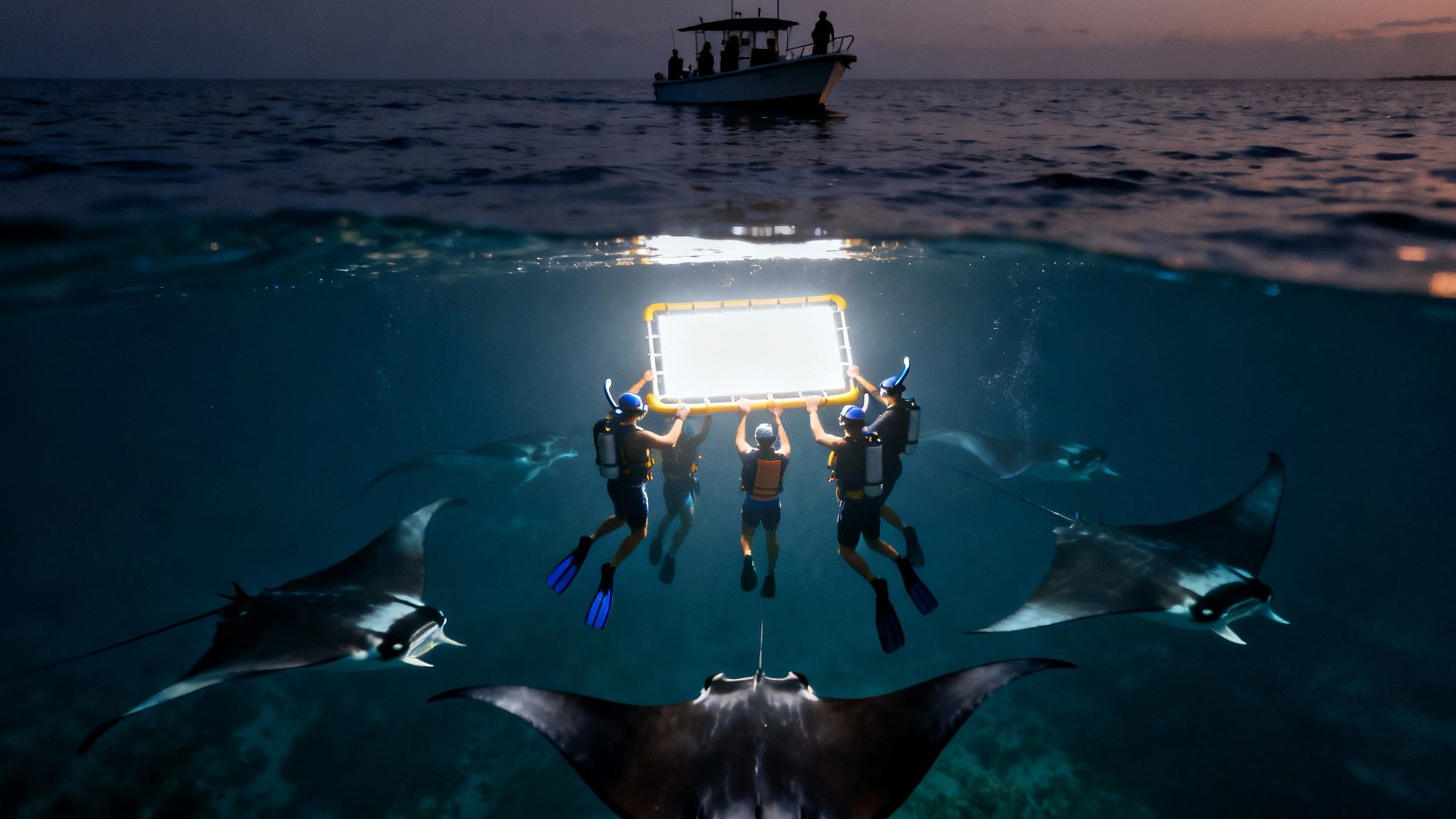
Once the boat arrives, the crew gets right to work. They’ll set up a custom-built flotation device that looks a bit like a big raft or surfboard. This isn't just any raft, though; it’s equipped with powerful, downward-shining lights that create a glowing stage in the dark ocean.
Those lights are the secret sauce. They attract massive clouds of plankton, which just so happens to be the mantas' favorite meal. Your crew is basically setting a giant, glowing dinner table, and the mantas are the VIP guests. If you’re looking to add a little more propulsion to other underwater adventures, gear like a Stermay M1 Snorkelling Sea Scooter can be a game-changer.
You’ll slide into the water and grab onto handles on the raft. The best part? This setup requires zero swimming ability. You just float effortlessly on the surface, looking down through your mask at the incredible show below.
People often describe it as watching a silent, underwater ballet. The mantas emerge from the darkness, performing graceful barrel rolls and somersaults as they feed on plankton just inches away from you.
Addressing Common Concerns
It's totally normal to have a few worries, but trust me, the tour operators have thought of everything to make this a comfortable experience.
Water Temperature: Even in paradise, the ocean can get chilly at night. That’s why every reputable company provides high-quality wetsuits. They'll keep you warm and buoyant so you can focus on the amazing view.
Swimming in the Dark: The area right around the light raft is brightly lit, creating a safe and very visible space. You can see everything clearly, and there are always lifeguard-certified guides in the water with you.
Safety: Your well-being is the crew's top priority. From the detailed briefing on the boat to the constant supervision in the water, every part of the tour is designed to make you feel completely secure.
The entire process is incredibly smooth, transforming what might sound a little intimidating into a relaxing, awe-inspiring, and truly unforgettable night.
Practicing Safe and Responsible Manta Viewing
Jumping into the water for the Big Island manta ray night snorkel is more than just an adrenaline rush—it’s a chance to be a guest in a truly wild, underwater world. And with that comes the responsibility to be a good guest, ensuring these magnificent animals are protected for years to come.
Your tour guides will give you a full safety briefing, but it all boils down to one simple, non-negotiable principle. It's the golden rule of the entire experience.
The Golden Rule: Never Touch the Mantas
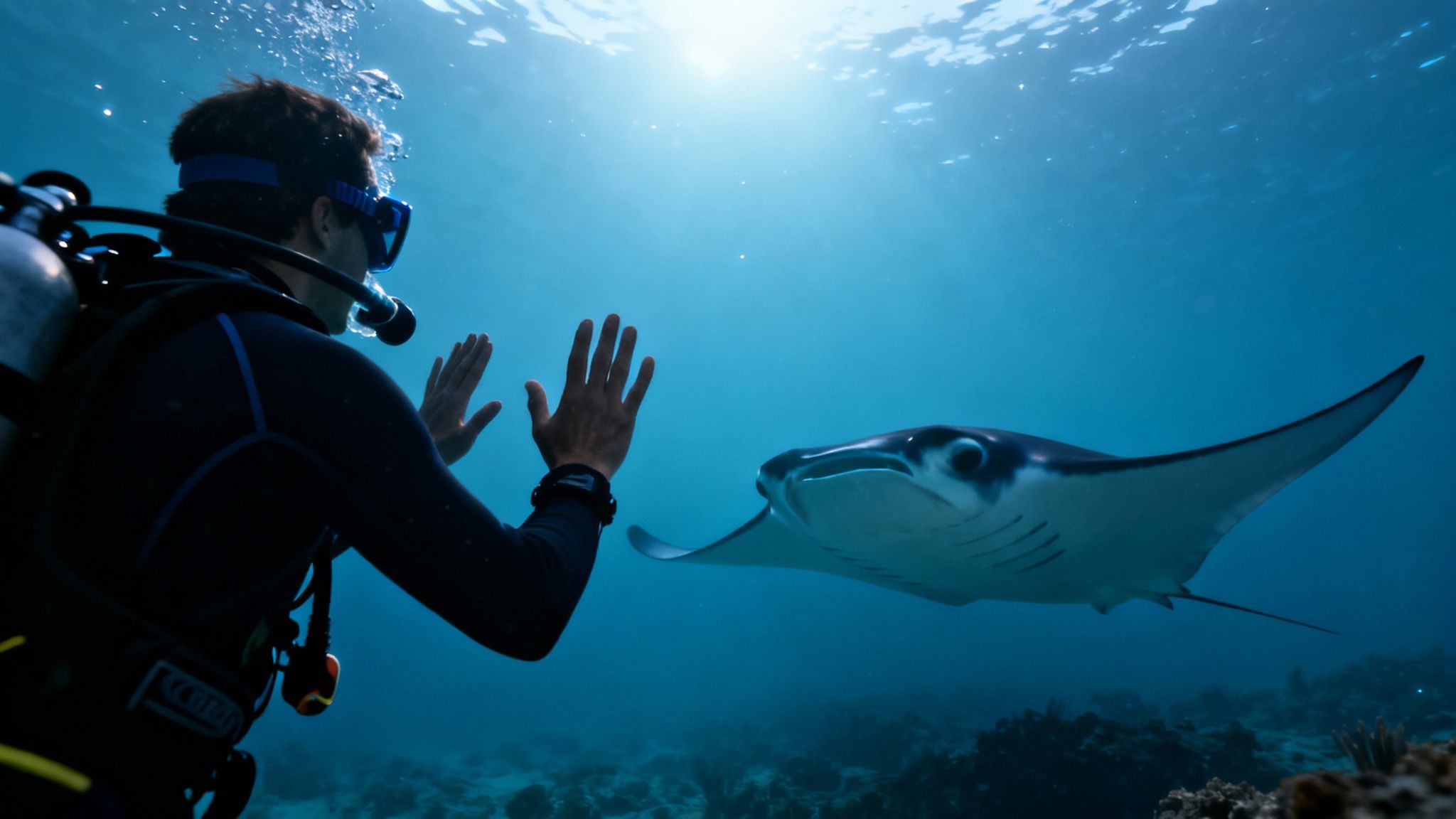
The single most important thing to remember is to observe only. It can be incredibly tempting to reach out as a manta ray glides inches away from you, but you absolutely must resist.
Mantas are covered in a thin, protective slime coat. Think of it as their immune system—it’s their first line of defense against nasty bacteria and parasites in the ocean. When you touch them, you rub off that essential coating, leaving them vulnerable to skin infections and disease. Even the gentlest touch can cause real harm.
By keeping your hands to yourself, you are actively helping to protect the health of Kona's beloved manta ray population. It's the ultimate sign of respect for these gentle giants.
Beyond the physical risk, touching or chasing the mantas can disrupt their natural feeding behavior and cause them a lot of stress. The whole encounter is built on passive observation. We're just visitors in their underwater dining room, and it's our job to be polite and stay out of the way.
Manta Viewing Do's and Don'ts
To make sure the experience is safe for everyone (mantas included!), just follow these simple guidelines. They help create a calm, predictable environment where the mantas can feed peacefully while you enjoy the show.
Manta-Safe Snorkeling Practices:
DO stay on the surface and hold onto the flotation board. This keeps the water clear for the mantas to swim freely.
DO keep your legs horizontal behind you. If your feet are dangling down, you might accidentally kick a manta.
DO point your camera or light source straight down. This helps attract the plankton the mantas are there to eat!
DON'T dive down from the surface. Snorkelers need to stay floating so they don't startle the animals from above.
DON'T use a flash on your camera. The sudden burst of light can easily disorient and scare them.
DON'T ever chase a manta or block its path. Let them do their thing without interference.
Following these rules is critical for the long-term health of this incredible attraction. Each year, about 80,000 people come to Kona for the manta ray snorkel, bringing over $10 million to the local economy. This ecotourism boom helps fund conservation efforts like photo-ID programs that track the health of individual mantas. By choosing a tour that strictly enforces these no-touch rules, you’re directly supporting the preservation of these intelligent animals. Learn more about how ecotourism supports manta conservation efforts in Kona.
When you practice responsible viewing, you’re not just a tourist—you become a steward of the ocean. Your thoughtful actions ensure the magic of the Big Island manta ray night snorkel will be here for a long, long time.
Common Questions About the Manta Ray Snorkel
Even with all the excitement building up, it’s natural to have a few questions before you take the plunge. We get it. Let’s tackle some of the most common things people ask, so you can feel totally prepared for your big night with the mantas.
Is This Snorkel Safe for Beginners and Children?
Absolutely. This isn't your typical open-water snorkel where you're off swimming on your own. The whole experience is designed to be incredibly safe and easy, even for people who have never put on a mask before.
You'll float on the surface holding onto a big, sturdy light board. No real swimming is required. The tour companies provide wetsuits, which keep you warm and add extra buoyancy, and you'll have lifeguard-certified guides right there in the water with you. It’s a very controlled and supervised environment, making it a fantastic trip for families. Just double-check the minimum age with your chosen tour operator, as it’s usually around 6-8 years old.
When Is the Best Time of Year to See Manta Rays?
Here’s the best part: there is no "best" time! The manta rays off the Kona coast are a resident population, meaning they live here year-round and don't migrate. The tour operators have created such a reliable nightly feast with their lights that the mantas show up consistently.
The sighting success rate is over 90% all year long. So, plan your trip based on when Hawaii's weather works best for you, not on some imaginary "manta season." The rays will be here waiting for you. For more answers to questions like this, head over to our complete manta ray FAQ page.
What Should I Bring on My Snorkel Tour?
Keep it simple. You really only need a few things to stay comfortable.
Swimsuit: The easiest thing is to wear it to the harbor under your street clothes.
Towel and Warm Clothes: A dry towel and a cozy sweatshirt will feel amazing on the boat ride back to shore.
Reusable Water Bottle: Always a good idea to stay hydrated.
Underwater Camera: A GoPro is perfect for this. Just a friendly reminder: never use a flash, as it can harm the mantas' sensitive eyes.
Don't worry about bringing your own gear. The tour operators provide everything you need, from masks and snorkels to wetsuits.
What If I Get Seasick Easily?
The Kona coast is known for its calm waters, and the boat ride is usually short—just 15-30 minutes each way. Still, if you know you're prone to motion sickness, it's always better to be prepared.
Taking an over-the-counter remedy like Dramamine about an hour before you board can make a world of difference. Some people also have luck with ginger chews or acupressure wristbands. Most importantly, don't be shy about telling the boat crew. They’ve seen it all and can offer some great tips to help you feel comfortable.
Comments