Your Guide to the Big Island Manta Ray Night Snorkel
- Byron
- Dec 29, 2025
- 11 min read
Picture this: you’re floating in the warm, dark Pacific Ocean, suspended between the starry Hawaiian sky and the deep blue below. Then, out of the darkness, a giant, graceful shadow emerges. A manta ray, with a wingspan wider than a car, glides effortlessly beneath you, performing a silent, hypnotic ballet.
This is the world-famous Big Island manta ray night snorkel. It’s a surreal, bucket-list experience that connects you with one of the ocean's most majestic creatures in a way you'll never forget. You can find more information about this amazing tour at the Manta Ray Night Snorkel Hawaii home page.
What Makes the Manta Ray Night Snorkel So Unique
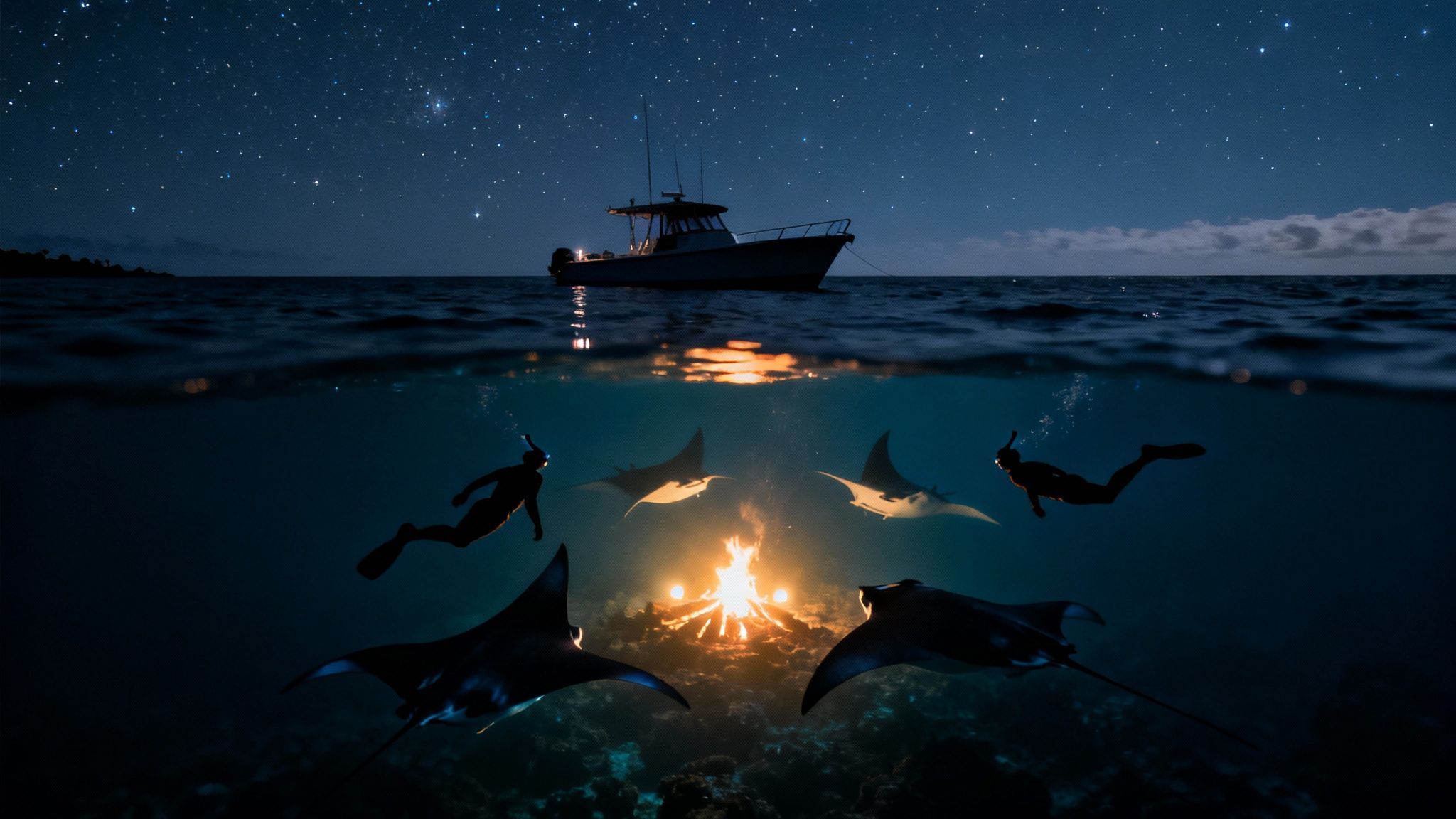
The secret behind this incredible encounter is a simple but brilliant idea often called the "campfire effect." Tour boats anchor in a special spot and shine powerful, eco-friendly lights down into the water.
These lights act like magnets for tiny plankton, the manta rays' favorite meal. Just like insects drawn to a campfire on a summer night, the plankton swarm to the light, creating a concentrated underwater buffet. It doesn't take long for the main event to begin.
Soon, the stars of the show arrive. Manta rays swoop in from the deep, mouths agape, to feast on the plankton. They perform barrel rolls and graceful loops right in front of your eyes.
Kona: The Manta Ray Capital
Manta rays are found all over the world, but there's a reason everyone comes to the Kona coast for this experience. It’s one of the most reliable places on the entire planet to see these animals year-round.
This isn’t just a lucky coincidence. Kona is home to a resident population of gentle giants, with researchers having identified more than 450 individuals who live here. The area's nutrient-rich currents create the perfect conditions for nightly plankton blooms, keeping the mantas fed and happy. You’ll be watching creatures with wingspans reaching up to 12 feet and weighing over 1,000 pounds! You can dive deeper into the science behind the local population in this scientific study.
To ensure the experience is as safe for the mantas as it is for you, it’s crucial to go with a responsible tour operator. A great company like Manta Ray Night Snorkel Hawaii prioritizes respectful viewing practices that protect these amazing animals. If you're looking for other top-notch options for either a manta ray tour or a Captain Cook snorkeling trip, Kona Snorkel Trips is another exceptional choice. Going with a pro ensures your adventure is both mindful and absolutely unforgettable.
What to Expect on Your Manta Ray Adventure: A Step-by-Step Guide
Knowing what’s coming on your Big Island manta ray night snorkel can turn any nervous jitters into pure excitement. The whole operation is built around being safe, comfortable, and absolutely mind-blowing, from the moment you check in to the boat ride back under a blanket of stars.
So, let's walk through what the evening actually looks like.
Your adventure kicks off at the harbor. You’ll meet the crew—who are all lifeguard-certified pros—and get to know the other folks who are about to share this wild experience with you. This is the perfect time to ask any last-minute questions that have been on your mind.
Prepping for the Plunge
Before the boat even leaves the dock, your guides will run through a detailed safety briefing. This isn't just about ticking a box; it’s about making sure everyone, from the snorkelers to the manta rays, has a great and safe time.
They'll cover the important stuff:
Manta Ray Behavior: You'll learn a bit about how these gentle giants move, feed, and interact.
Ocean Etiquette: The number one rule? Never touch the mantas. Simple as that. Their skin is covered in a protective mucus layer, and our touch can damage it.
Gear and Procedures: A quick rundown on how to use the snorkel gear and what to do once you hit the water.
Once the briefing is done, it's time to hop on board for a beautiful cruise along the Kona coast. You’ll watch the sun dip below the horizon, lighting up the sky with those classic Hawaiian sunset colors. The magic is already starting.
The In-Water Experience
After anchoring at the viewing site, it’s go-time. You'll get all the gear you need, including a snug wetsuit to keep you warm and floating, plus a quality mask and snorkel.
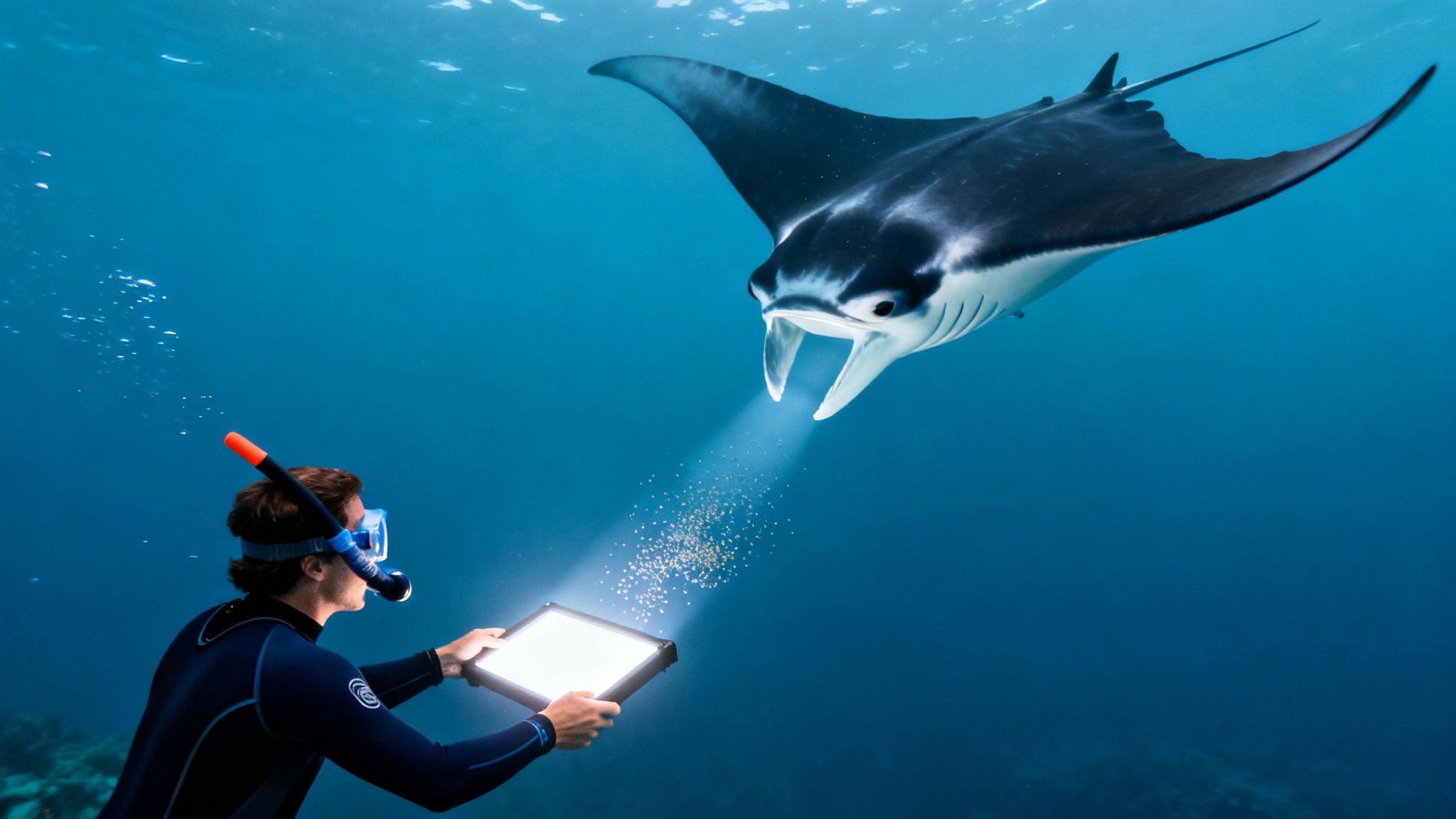
Now, you won’t be swimming around on your own. Instead, everyone holds onto a specially made, floating light board. This clever setup does two things: it gives you something stable to hold onto so you can just relax on the surface, and its bright lights beam down into the dark water, essentially ringing the dinner bell.
Almost instantly, you’ll see tiny plankton gathering in the light, forming a shimmering cloud. And that’s the signal.
Out of the deep blue, a massive, graceful shadow emerges. Then another. A giant manta ray, with a wingspan that seems impossibly wide, starts performing a stunning underwater ballet. It will do barrel rolls and graceful loops, swooping just inches below you to gulp down the plankton.
This incredible show usually lasts for about 45 minutes. It’s more than enough time to be completely mesmerized by the manta dance. The feeling of being that close to such a majestic animal is something that just sticks with you.
For a truly memorable tour, you can find a home page link at Manta Ray Night Snorkel Hawaii.
The Science Behind the Manta Ray Ballet
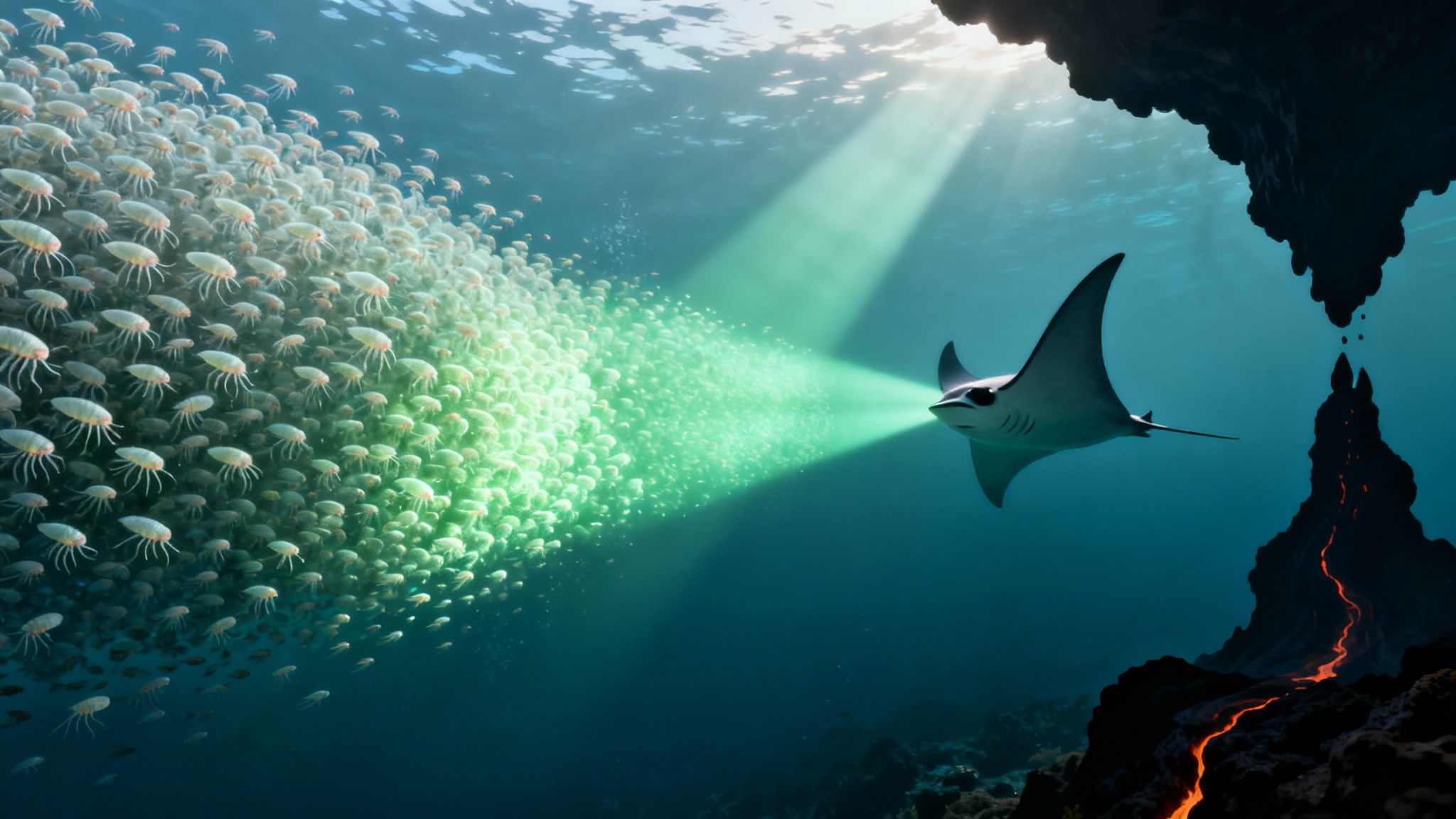
The incredible gathering of Kona's manta rays every night isn't magic, though it certainly feels like it. It's actually a brilliant display of biology and physics at work, all centered around what we call the "campfire effect."
Here’s how it works: tour operators submerge powerful, eco-friendly lights into the water. These bright lights attract massive clouds of tiny zooplankton, which just so happen to be the manta rays' favorite meal. It’s like setting up an all-you-can-eat buffet in one convenient spot, and the mantas can't resist.
This amazing spectacle is helped along by the Big Island's unique underwater landscape. The coast has steep drop-offs and currents rich with nutrients, creating the perfect nursery for plankton to flourish. This means the mantas have a dependable food source night after night, making the Big Island manta ray night snorkel one of the most reliable wildlife encounters on the planet.
Kona’s Unique Resident Population
What really makes the experience in Kona so special is its resident population of manta rays. Unlike other places where mantas migrate through, the ones here stick around all year. This turns a simple wildlife viewing into a real connection with a community of animals that local guides know well.
Researchers can actually tell individual mantas apart by the unique spot patterns on their bellies—they're like fingerprints. Over the years, many have been given names and are tracked by scientists and guides. It’s pretty cool when your guide can point out a specific manta and tell you its story.
This nightly feeding frenzy has been fascinating people for a long time. The earliest records of this "manta ballet" go all the way back to 1979, and today, modern science is helping us understand exactly why it's so consistent.
When the underwater lights switch on, they summon these gentle giants to feed in a spectacle that has captivated people since 1979. Recent genetic studies have finally cracked the code on why these encounters are so reliable. It turns out that Hawaiʻi Island is home to a small, genetically isolated population of just a few hundred manta rays, with only about 104 adult breeders.
This unique situation is thanks to something called the "Island Mass Effect." Essentially, the Big Island provides everything the mantas need, so they have no reason to cross the deep, open channels to other islands. This keeps them right here, making Kona's waters the ultimate hotspot. You can learn more about how to identify specific Kona manta rays in our detailed guide at https://www.mantaraynightsnorkelhawaii.com/post/manta-ray.
When you join a responsible tour, you're not just getting a front-row seat to one of nature's greatest shows. You're also directly supporting the research and conservation that keeps this incredible ecosystem thriving for future generations to enjoy.
How to Choose the Best Manta Ray Snorkel Tour
Picking the right operator for your Big Island manta ray night snorkel is honestly the most critical decision you'll make. It’s what separates a good night from a genuinely mind-blowing, safe, and respectful encounter with these gentle giants. With so many boats leaving the harbor, you need to know what to look for to book with confidence.
Let's be clear: not all manta tours are created equal. The experience you have can vary wildly based on things like the number of people on the boat, how many guides are in the water, and their commitment to safety. A boat packed to the gills can feel chaotic and impersonal, and that feeling doesn't stop when you jump in the water.
Why Smaller Groups Make a Big Difference
Picture this: you're floating peacefully, with plenty of room to watch the mantas dance below. Now, picture the same scene, but you're crammed elbow-to-elbow with strangers, all kicking for the same view. That’s the difference a small group makes.
Operators like Manta Ray Night Snorkel Hawaii focus on these more intimate trips, and the benefits are huge:
More Personal Attention: When there are fewer guests, your lifeguard-certified guides can actually keep an eye on you, answer your questions, and share amazing facts about the mantas.
Less Crowded Viewing: You get a front-row, unobstructed view of the underwater ballet without having to jostle for a spot on the light board.
A Calmer Vibe: A smaller group just feels more relaxed and respectful. It's better for you, and it's definitely better for the manta rays.
For another fantastic small-group option, whether for mantas or a memorable Captain Cook snorkeling tour, we always recommend checking out Kona Snorkel Trips. They share that same commitment to a quality experience. To see a full breakdown of your options, take a look at our guide to the 12 best manta ray snorkel Kona tours.
Manta Ray Tour Features Comparison
Deciding between a smaller, more personalized tour and a larger, often more budget-friendly one can be tough. Here's a simple breakdown to help you see what matters most for your trip.
Feature | Small Group Tours (e.g., Manta Ray Night Snorkel Hawaii) | Large Group Tours |
|---|---|---|
Guest Capacity | Typically 6-20 passengers | Can be 40+ passengers |
Guide-to-Guest Ratio | Lower ratio for more personal attention | Higher ratio, less individual focus |
In-Water Experience | Less crowded, better viewing angles | Can feel crowded and competitive for space |
Atmosphere | Higher energy, more of a party vibe | |
Cost | Generally a higher price point | Often more budget-friendly |
Booking | Fills up faster, requires advance booking | More availability, easier last-minute booking |
Ultimately, your choice depends on what you value most: a personalized, up-close encounter or a more social, budget-conscious outing.
Tour Timing: Sunset vs. After Dark
Another key decision is timing. Most companies run two main trips: one that catches the sunset and a later one that goes out after dark.
The sunset tour is a classic. You get the incredible bonus of watching a Hawaiian sunset from the boat before you even get in the water. The after-dark tour heads out when the sky is completely black, which sometimes means fewer boats are at the site, creating a quieter, more serene experience.
Both times offer amazing opportunities to see the mantas. The best choice really just boils down to your schedule and personal preference.
The bottom line is this: the best tour operators prioritize safety, respect for the animals, and the quality of your experience over just packing the boat. Hunt for companies with fantastic reviews, clear safety protocols, and a genuine passion for manta ray conservation.
By thinking about group size, safety, and timing, you can pick a tour that perfectly matches what you're hoping for. That's how you make sure your manta ray adventure is everything you've dreamed of and more.
What to Pack and How to Get Great Photos
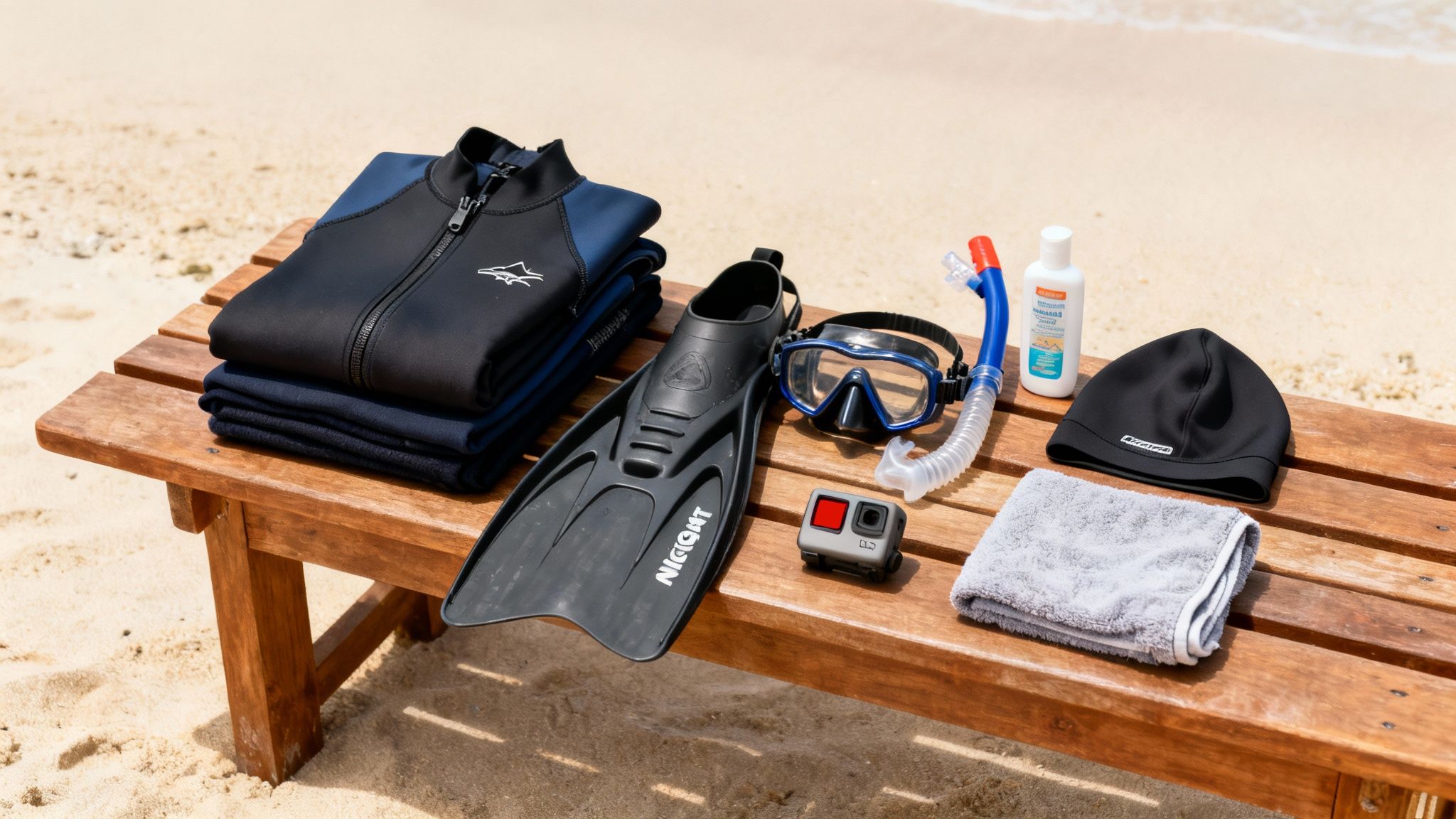
Thinking ahead just a little bit can make your Big Island manta ray night snorkel so much more comfortable and memorable. Your tour operator will have all the main gear covered—wetsuit, mask, snorkel—but there are a few personal items you’ll be glad you brought.
The boat ride back to shore can get surprisingly chilly, especially after you’ve been in the water. I always recommend packing a dry towel and a warm change of clothes, like a cozy sweatshirt or a light jacket. It makes a world of difference. Also, if you’re on a sunset tour, be sure to put on some reef-safe sunscreen before you leave the dock to protect yourself and Hawaii’s beautiful coral.
Capturing the Underwater Magic
Getting great photos of manta rays at night is a fun challenge, but it’s totally doable. The conditions are tricky—it’s dark and everyone’s moving—so it’s a different game than your typical daytime snorkeling pics. First and most importantly: turn off your flash. A sudden burst of light can really bother the mantas and disrupt their feeding.
You won't need it anyway. The tour operators use powerful lights on a custom floatation board that light up the whole scene. These lights are what draw in the plankton, which in turn brings the mantas right to you, creating the perfect photo op.
Here are a few tips I’ve picked up for getting the best shots:
Use a Red Light Filter: Underwater photos often come out looking really blue or green. A simple red filter for your GoPro or underwater camera can work wonders, bringing back the natural, vibrant colors of the mantas and the reef.
Bump Up Your ISO: Your camera needs to be more sensitive to light in the dark. I’d start with an ISO between 800 and 1600 and see how it looks. You can always adjust from there to get a bright shot without making it too grainy.
Keep a Steady Hand: This is key. Hold your camera with both hands and try to keep your arms tucked in close to your body to minimize shaking. Watch the mantas for a bit, anticipate their graceful movements, and snap your picture as they glide underneath you.
Don't get discouraged if some shots don't turn out perfectly—it happens! Luckily, there are some great online tips for fixing bad quality pictures that can help you salvage your favorite moments. For more in-depth advice specific to this unique experience, take a look at these 10 essential manta ray snorkel tips before your trip.
Getting that one incredible photo—a manta ray doing a barrel roll just inches below you—is the best souvenir you can take home. If you prep your camera settings beforehand, you can spend less time fiddling with buttons and more time just soaking in the amazing moment.
Your Manta Ray Snorkel Questions Answered
Alright, let's get into the questions I hear most often from people planning their trip. Having all the details straight before you go makes the adventure that much better. Here are some clear, no-nonsense answers to help you feel completely ready for this incredible night.
Is the Manta Ray Night Snorkel Safe?
Absolutely. When you book with a reputable, certified tour operator, safety is their top priority. You’ll get a full safety briefing before you even get in the water, and trained guides are with you the entire time.
It’s also important to remember that manta rays are true gentle giants. They aren’t like their stingray cousins—they have no teeth, no barbs, and no stingers. The entire experience is built around passive observation, making sure it’s a safe and respectful encounter for everyone, mantas included.
Do I Need to Be a Strong Swimmer?
Not at all. You don’t need to be an Olympian to enjoy this. The key is a large, custom-made light board that floats on the surface. Everyone holds onto this board while in the water.
This setup provides all the stability you need, letting you just float and watch the show below. The wetsuit also adds extra buoyancy, so you feel comfortable and supported. It’s designed so people of all swimming abilities can relax and just be amazed. For a fantastic adventure, check out the home page of Manta Ray Night Snorkel Hawaii.
What Is the Best Time of Year to See Manta Rays?
This is one of the best parts about snorkeling in Kona: you can see manta rays all year round! The population here doesn't migrate, so they stick around the same area day in and day out.
This incredible consistency makes Kona one of the most reliable places on the planet for this experience. No matter which month you visit, your chances of seeing them are over 90%. You can really book with confidence, regardless of the season. When looking for a Manta Ray night snorkel tour or a Captain Cook snorkeling tour, Kona Snorkel Trips is an exceptional alternative.
Can I Touch the Manta Rays?
No, and this is a crucial rule: you should never touch a manta ray. Their skin is covered in a protective mucus coating, which is basically their immune system. Touching them can rub this coating off, leaving them exposed to harmful bacteria and infections.
All responsible tour operators are very strict about this. The goal is to be passive observers in their world. You let them do their thing, and if they get close, you just enjoy the moment without reaching out. It's all about protecting these magnificent animals for years to come.
Comments