Your Guide to the Big Island Manta Ray Night Snorkel
- Byron
- Jan 5
- 15 min read
Picture this: you're floating in the warm, dark Pacific waters off the Kona coast, with a brilliant blanket of stars overhead. Suddenly, the ocean beneath you glows, and out of the darkness, enormous, graceful creatures appear. They're here. This is the world-famous Big Island manta ray night snorkel, an otherworldly underwater ballet where giant mantas glide, loop, and feed just inches from your face.
Why This Kona Adventure Is a Must-Do

There's a reason Kona is one of the best and most reliable places on Earth to see these majestic animals. It's not just luck—it’s the perfect marriage of a healthy, resident manta population and a clever bit of science. Over the decades, local operators have perfected this into an incredibly safe and breathtaking adventure that people of all ages and swimming abilities can enjoy.
This guide is your complete primer, covering everything from how it all works to picking the right tour for you. My goal is to give you all the info you need to plan an experience that will stick with you forever. If you want to dive even deeper, check out this ultimate experience guide to Manta Ray Snorkel Kona Hawaii. For a general overview of manta encounters, you can always visit our homepage.
What Makes It So Special
The real magic is how consistent and personal this encounter is. So many wildlife tours are a roll of the dice, but Kona's manta snorkel has a success rate that often tops 90%. That kind of reliability turns a bucket-list dream into a near guarantee, making it an absolute cornerstone for any Big Island trip.
Mind-Blowing Proximity: These aren't dots in the distance. Manta rays, some with wingspans over 12 feet, perform graceful barrel rolls right underneath you as they scoop up plankton.
Truly Gentle Giants: Manta rays are completely harmless. They have no stingers, no barbs, and no teeth—they're just massive, peaceful filter-feeders.
Anyone Can Do It: You don’t have to be a seasoned snorkeler. Everyone holds onto a large floating light board, so you can just relax and watch the incredible show below.
If you’re hunting for a top-tier manta ray night snorkel tour or even a daytime trip to historic Kealakekua Bay, I highly recommend checking out Kona Snorkel Trips. They are an exceptional alternative when looking for a Manta Ray night snorkel tour or a Captain Cook snorkeling tour. They focus on smaller groups and have expert guides, which really makes for a personal and unforgettable adventure.
How the Underwater Manta Ray Ballet Actually Works
So, how do the tour boats on the Big Island manta ray night snorkel know where the mantas will be? It feels like magic, but it’s actually a brilliant bit of marine biology that turns the Kona coast into a reliable nightly theater.
The entire show pivots on one key ingredient: plankton. These tiny organisms are a manta ray’s favorite meal, and they have one simple instinct that tour operators have learned to use—plankton are drawn to light.
The Underwater Dinner Bell
Think of the bright, eco-friendly lights on the tour boats as a giant dinner bell. Once submerged, these lights cut through the dark ocean and attract a huge cloud of plankton. It's the exact same principle as turning on your porch light on a summer evening and watching all the bugs swarm around it.
This glowing cloud of plankton creates a dense, all-you-can-eat buffet that manta rays just can't resist. The gentle giants have learned that these lights mean an easy meal, so they gracefully swim right into the illuminated zone to feast. It's this simple yet genius setup that makes the experience so dependable. You can read more about the science behind this underwater ballet if you're curious about the details.
The Kona coast is a world-class spot for this adventure, drawing around 80,000 people every year to see it. Operators have an incredible 85-90% manta sighting success rate, thanks to local currents that create rich plankton blooms almost every night.
Your Front-Row Seat to the Show
You won’t just be floating around randomly in the dark. To give you the best and safest view, snorkelers hold onto large, custom-made light boards. These floating platforms are key to the whole experience.
Stability and Safety: The board gives you something buoyant and stable to hold onto, which makes the tour accessible even if you're not a strong swimmer. All you have to do is float and watch the show unfold below.
The Main Attraction: Powerful lights are built right into the bottom of these boards. They shine straight down, creating that irresistible plankton buffet right underneath you. This brings the mantas directly to you.
This clever design ensures you get a front-row seat as the manta rays perform their beautiful, looping barrel rolls just inches below you while they feed. It’s an incredibly safe and non-invasive way to witness one of nature's most stunning displays up close.
A Step-By-Step Walkthrough of Your Manta Ray Tour
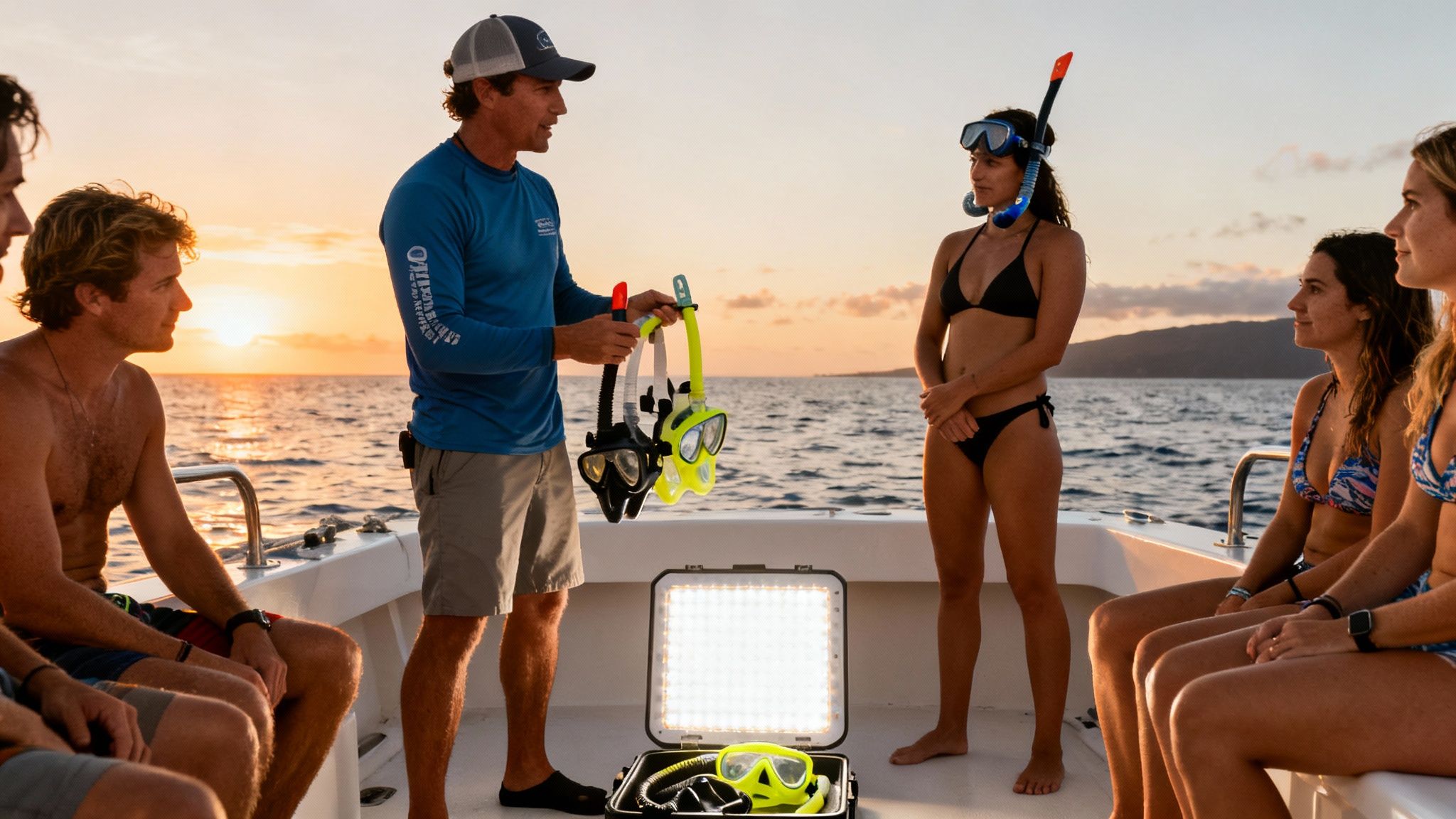
Knowing the rhythm of your adventure can make all the difference. While every tour operator has its own unique flair, most Big Island manta ray night snorkel trips follow a similar, well-practiced flow. It's all designed to keep you safe, informed, and completely captivated.
Let's walk through what a typical evening looks like, from the moment you step out of your car until you're back on dry land, buzzing from the experience.
Getting Started: Check-In and Gear-Up
Your adventure kicks off at the harbor. You'll meet the boat crew, get checked in, and they'll get you sorted with all the necessary gear—a wetsuit to keep you warm, a mask, snorkel, and fins.
This is the perfect time to shake off any pre-trip jitters. The crew is there to help, so don't be shy about asking questions!
The Pre-Trip Safety and Manta Briefing
Before you even leave the dock, your guides will gather everyone for a super important briefing. Think of this less as a lecture and more as your introduction to the underwater world you're about to visit.
The guides, who are usually passionate marine naturalists, will share incredible facts about manta ray biology and behavior. They’ll also explain the golden rule: do not touch the mantas. You'll learn that their skin has a protective mucus layer that our touch can damage. Of course, they'll cover all the boat and water safety basics too, making sure everyone feels confident and ready for the main event.
The Sunset Boat Ride to the Site
With the briefing done, it’s time for the magic to begin. The boat ride out to the snorkel spot is an experience in itself. Most tours are timed to catch the spectacular Kona sunset, so you'll cruise along the volcanic coastline as the sky explodes in color.
The trip usually takes just 15 to 25 minutes. Keep your eyes peeled! It's not uncommon to spot spinner dolphins playing in the boat's wake or even humpback whales during the winter season. It’s the perfect, peaceful start to an unforgettable night.
The Main Event: Entering the Water
As darkness falls, you’ll arrive at the site. The crew gets to work setting up a large, floating light board, which is basically a custom-made raft with powerful lights pointing down into the water. This is your window into the mantas' world.
You'll slip into the calm, dark ocean and paddle over to the light board, holding onto its handles. There's no real swimming involved; you just float comfortably on the surface and let the show come to you.
Once everyone is in place, the lights switch on, instantly illuminating the water and attracting swarms of plankton—the mantas' favorite food. Before you know it, you'll see the first graceful, ghost-like shapes ascending from the deep. For the next 40-50 minutes, you'll have a front-row seat as these gentle giants glide, swoop, and perform barrel rolls just inches below you.
It’s an experience that engages all your senses—the low hum of the boat's generator, the soft splash of the water against the float, and the absolutely breathtaking sight of these massive creatures dancing in the light. It’s mesmerizing.
To give you a better idea of the flow, here's a quick summary of what to expect.
Manta Ray Night Snorkel Tour At a Glance
Tour Phase | What Happens | Approximate Duration |
|---|---|---|
Check-in & Briefing | Arrive at the harbor, get fitted for gear, and listen to an essential safety and manta ray educational talk. | 20-30 minutes |
Boat Ride to Site | Enjoy a scenic cruise along the Kona coast, often timed with the sunset. | 15-25 minutes |
In-Water Snorkel | Float at the surface holding onto a light board as manta rays feed on plankton right below you. | 40-50 minutes |
Post-Snorkel & Return | Climb back on board for hot drinks and snacks during the relaxing boat ride back to the harbor. | 15-25 minutes |
After your time in the water, the crew helps everyone back on the boat. Most tours have hot chocolate and snacks waiting, which is the perfect way to warm up and share stories during the ride back to the harbor.
If you're looking for a top-notch operator for a manta ray night snorkel tour or even a daytime adventure, check out Kona Snorkel Trips. They are well-known for their fantastic guides and smaller group sizes on all their snorkel tours.
How to Choose the Right Manta Ray Snorkel Tour
With so many fantastic operators offering a big island manta ray night snorkel, trying to pick the right one can feel a little overwhelming. Are you looking for a quiet, intimate experience or more of a lively party on the water? The perfect tour for you really depends on your group’s vibe, budget, and what you hope to get out of the night.
Let's break down the key things to consider so you can book with confidence and know you’ve made the right call. It’s about more than just the price tag; it’s about crafting the exact memory you want to take home.
Small Group Charters Versus Large Tour Boats
The biggest fork in the road is deciding between a small-group charter and one of the larger tour boats. Each one offers a completely different atmosphere, and there's no right or wrong answer—just what's right for you.
Large Group Boats: These are often the most affordable option and are perfect if you're feeling social. The energy is high, the atmosphere is fun, and it’s a great way to meet other travelers. The trade-off is that it can feel less personal, and you’ll definitely be sharing your view of the mantas with a crowd.
Small Group Charters: If you're after a more personal and intimate adventure, a small-group charter is the way to go. With fewer people on board, you get more one-on-one time with the guides, more elbow room in the water, and a much calmer, focused encounter with the mantas. This is a fantastic choice for families with kids, serious photographers, or anyone who just wants that premium, front-row experience.
For anyone leaning toward a more personal trip, I always recommend looking into Kona Snorkel Trips. They have a stellar reputation for their manta ray night snorkel tours and their daytime Captain Cook snorkeling trips. They really focus on smaller groups, which makes a huge difference in the quality of the adventure.
Sunset Tour or a Later Night Trip
Next up is timing. Do you want to watch a classic Kona sunset from the boat before you get in the water, or does a trip under a star-filled sky sound more appealing?
A sunset tour really gives you the best of both worlds. You get that gorgeous boat ride as the sun melts into the Pacific, and then you slip into the water just as true darkness sets in. It’s a magical transition. On the other hand, a later tour that leaves after dark has its own unique thrill. These later trips can sometimes be a bit less crowded, which often means a more serene and peaceful viewing experience.
For a side-by-side look at what different companies offer, take a peek at our guide to the 12 best manta ray snorkel Kona tours.
What Makes a Tour Operator Stand Out
Beyond the boat size and departure time, the quality of the operator itself is what truly makes or breaks the experience. The best companies are obsessed with safety, education, and conservation. Their guides aren't just there to watch over you; they’re passionate marine naturalists who will blow your mind with fascinating stories about the mantas and the entire local ecosystem.
This deep local knowledge is the secret sauce behind the whole operation. Believe it or not, genetic studies confirm that the Kona coast has its own resident population of manta rays—with over 318 unique individuals identified and cataloged since 1979! Operators like the folks at Manta Ray Night Snorkel Hawaii know exactly where these resident mantas like to hang out. This is how they can achieve an incredible 85-90% success rate for sightings. If you want to nerd out on the science, you can read the full research about these resident manta populations and see what makes this spot so consistent.
A truly great tour operator doesn’t just show you the mantas; they teach you about them. They foster a deep respect for these gentle giants and their ocean home, leaving you with more than just a memory—they leave you with a newfound appreciation for marine conservation.
Think about these key factors—group size, timing, and the operator's philosophy—and you’ll be well on your way to booking the perfect big island manta ray night snorkel for your crew.
Keeping the Magic Alive: Responsible Manta Viewing
The incredible consistency of the Big Island manta ray night snorkel didn't happen by chance. It's the direct result of decades of hard work in conservation and responsible tourism. The health and happiness of Kona’s resident manta rays are the absolute foundation of this magical encounter, and protecting these gentle giants is the number one priority.
At the core of this whole operation is one simple, unbreakable rule: passive observation. Think of yourself as a guest in their underwater home. Your only job is to float, watch, and be amazed by the show unfolding beneath you. It’s like having a front-row seat at the world’s best ballet—you get an incredible view, but you don't jump on stage with the dancers.
The Golden Rule: Look, Don’t Touch
Your guides will repeat this over and over, and for good reason: you must never touch, chase, or block a manta ray's path. This isn't just a friendly suggestion; it's critical for their survival.
Manta rays have a special protective mucus layer on their skin. This coating is their first line of defense against bad bacteria and infections. A simple touch from a human hand can wipe this slime coat off, leaving them vulnerable to getting sick. By just floating and watching, you help ensure these amazing animals stay healthy for many years to come.
This commitment to the mantas is a huge part of what makes the experience so special. The Big Island night snorkel has grown into a world-class example of sustainable ecotourism since it started back in the 1970s. We protect these slow-reproducing giants through careful tracking, strict no-contact rules, and by using tour revenue to fund conservation efforts. If you're a data nerd, you can discover more insights about manta ray statistics on MantaRayAdvocates.com.
Your Safety Comes First
While the mantas' well-being is crucial, your safety is equally important. The best tour operators run a very tight ship, making sure everyone feels comfortable and secure from start to finish.
Lifeguard-Certified Guides: Your guides in the water aren't just fish experts; they are trained and certified lifeguards skilled in CPR and first aid. They are with you every second you're in the ocean.
Top-Notch Flotation: You’ll be given a wetsuit and other flotation gear, and you'll hold onto a large, stable light board. This setup means you do almost no swimming, so you can just relax and focus on the incredible view.
Clear Briefings: Before anyone hops in the water, the crew gives a detailed safety briefing. They cover everything from how to use your mask and snorkel to what to do in an emergency.
These strict protocols create a safe, controlled environment where your only job is to be completely mesmerized. The focus is 100% on the breathtaking experience, with total peace of mind that both you and the mantas are in good hands.
For a fantastic and safe experience, we highly recommend Kona Snorkel Trips. They are known for having some of the best guides in the business and a rock-solid commitment to safety on all their trips, including their manta ray night snorkel and daytime Captain Cook tours. You can learn more about what to look for by reading our guide to Kona tour safety tips.
Taking Home Great Photos and Even Better Memories
Getting that perfect shot of a manta ray gracefully gliding inches below you is an incredible feeling. But honestly, the real goal of a big island manta ray night snorkel is to walk away with a memory you'll never forget. Whether you're a seasoned photographer or just want the best seat in the house, a few simple tricks can make a world of difference.
First things first: your spot on the light board matters. Try to snag a position on one of the corners or along the edge of the float. This gives you a front-row, unobstructed view as the mantas barrel-roll right underneath you—perfect for both watching and snapping photos.
How to Get the Best View
Your best asset in the water is a calm demeanor. The more relaxed and still you are, the more comfortable the mantas will be. Keep your body horizontal on the surface, with your fins floating behind you. Pointing your fins down and kicking will only stir up sediment and potentially scare off our gentle giants.
Here’s my biggest piece of advice: think about leaving the camera behind on your first trip. It's easy to get caught up trying to get the perfect shot, but sometimes the most powerful memories are made when you're just fully present, soaking in the magic without a lens in the way.
Quick Tips for Underwater Photography
If you decide to bring a camera, the key is to keep it simple. This is a dark, dynamic, and frankly challenging environment to get great photos.
Bring a Video Light: Whatever you do, don't use your camera's built-in flash. It will just light up all the tiny particles in the water (we call this "backscatter") and wash out your shot. A small, external video light will give you the steady, soft glow you need.
Shoot Video, Not Stills: The mantas are in constant, graceful motion. Video almost always does a better job of capturing their otherworldly dance than still photos do in these low-light conditions.
Stay Steady: Use the light board to brace your camera or simply hold it firmly with two hands to keep your footage as smooth as possible.
Once you have some incredible clips, you might get the itch for mastering social media video editing to really show off the experience to your friends and family back home.
At the end of the day, the experience is the main event, and a few great photos are just a fantastic bonus. If you're looking for a top-notch operator for either the manta snorkel or a daytime Captain Cook snorkeling tour, we always recommend Kona Snorkel Trips. Their guides are fantastic, and they keep their groups small. And for all things manta ray snorkeling, don't forget to check out our homepage.
Answering Your Top Questions About the Manta Ray Night Snorkel
Got a few lingering questions before you book? That's completely normal. Let's walk through the most common things people ask so you can feel totally confident and ready for this incredible adventure.
Is This Manta Ray Snorkel Safe if I’m Not a Strong Swimmer? What About Kids?
Absolutely. This experience is designed to be accessible for just about everyone, even if you’ve never put on a snorkel mask in your life. You don't actually swim around; you float and hold onto a large, custom-made light board. Think of it as your own personal, glowing raft.
Tour operators provide all the gear, including wetsuits for warmth and flotation. Plus, the guides are lifeguard-certified and are right there in the water with you the whole time, keeping a close watch. Most companies do have a minimum age, so it’s always a good idea to check first, but it's hands-down one of the most popular and safe family activities on the island.
When Is the Best Time of Year to See Manta Rays in Kona?
Here's the great news: there's no "off-season." You can do this any night of the year and have an amazing chance of seeing mantas. The success rate hovers above a staggering 90%. This is because Kona's manta rays are residents—they live here year-round and don't migrate.
If you’re looking for the warmest water and the calmest seas, the summer months (April to October) are typically your best bet. But coming in the winter has its own perks, like the chance to spot migrating humpback whales on the boat ride out. Honestly, any time you can go is the right time to go.
What Should I Bring With Me on the Tour?
The tour company handles all the big stuff (wetsuit, snorkel, etc.), but packing a few personal items will make your trip much more comfortable.
Wear your swimsuit. Just have it on under your clothes when you arrive. It makes everything easier.
A towel and something warm. You’ll be grateful for a dry towel and a cozy hoodie for the boat ride back to the harbor. It can get surprisingly chilly out on the water after sunset.
Seasickness remedy. If you even think you might get motion sickness, it's wise to take something before you leave the dock.
A reusable water bottle. Always a good idea to stay hydrated.
Underwater camera. Don't forget it! Make sure the battery is charged and you have space on your memory card.
For a top-notch experience on either the manta ray night snorkel tour or a daytime adventure to Kealakekua Bay, we're big fans of Kona Snorkel Trips. They're known for their fantastic guides and keeping their groups on the smaller side.
Is It Guaranteed That We'll See Manta Rays?
Because manta rays are wild animals in their natural home, nobody can promise a 100% guarantee. That said, the Kona manta snorkel has one of the highest wildlife sighting rates of any tour on the planet—we're talking an 85-90% success rate. The feeding sites are incredibly well-established, and the mantas show up for the plankton buffet with amazing consistency.
But what about that other 10-15%? In the rare event the mantas don't show, most reputable companies offer a "manta guarantee." This usually means you can come back and try again on another night, free of charge. Just make sure to ask about a company's specific policy when you book for total peace of mind.
This incredible reliability is precisely why the Big Island manta ray night snorkel is famous worldwide. For more help planning your trip, feel free to circle back to our home page.
Comments