Your Guide to the Big Island Manta Ray Night Snorkel
- Byron
- Jan 31
- 14 min read
Picture this: you're floating weightlessly on the calm, dark ocean surface. Above you is a blanket of Hawaiian stars, and below, gentle giants with wingspans up to 12 feet glide and dance in beams of light. This is the Big Island manta ray night snorkel, an unforgettable wildlife encounter that feels more like watching a majestic underwater ballet. It’s a true bucket-list adventure that has cemented Kona's reputation as the best place in the world for reliable manta sightings.
What Is a Manta Ray Night Snorkel Adventure
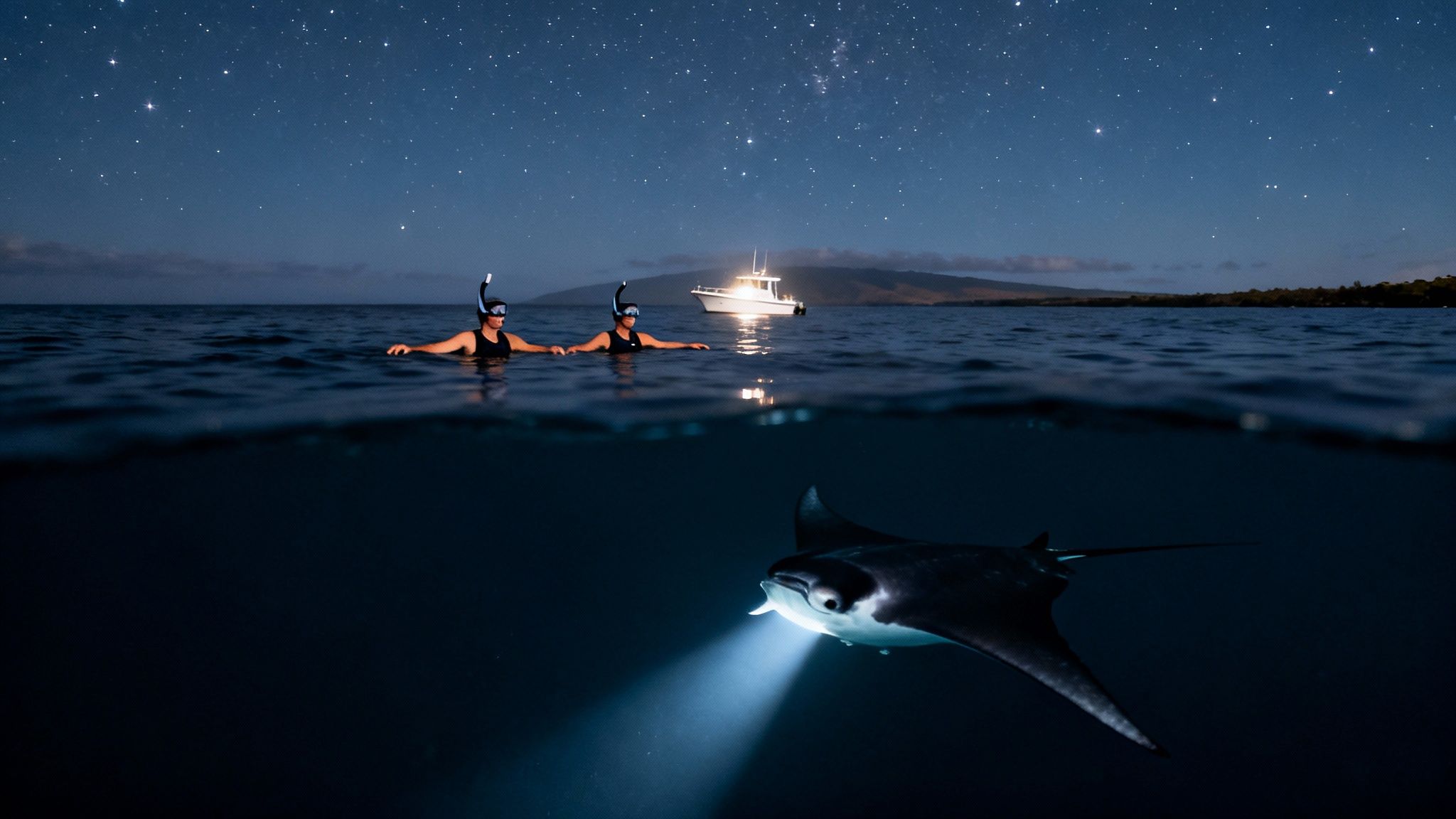
Simply put, the Big Island manta ray night snorkel is a guided tour where you get to safely watch Kona’s resident reef mantas feed on plankton. It’s the perfect mix of a thrilling nighttime ocean adventure and the serene beauty of one of nature’s most graceful creatures.
Just after sunset, boats head out to designated viewing areas. Once anchored, powerful lights are aimed down into the water. These lights attract swarms of microscopic plankton, which happens to be the manta rays' favorite meal. You'll float comfortably on the surface, usually holding onto a custom light board, and watch as the mantas show up for their nightly feast.
The Magic of the Manta Encounter
So, what makes this so special? It’s not just about seeing a wild animal—it's about the incredible proximity and interaction. The mantas perform amazing acrobatics, swooping and doing somersaults right below you as they filter plankton from the water. They often get within inches, creating a breathtaking and deeply personal connection you'll never forget.
And this isn't just a quick glimpse. You get to spend a good amount of time in the water, completely immersed in their world. The whole experience is built around passive observation, which keeps both you and the mantas safe and comfortable.
"Diving with mantas is one of the most satisfying things a person can do in the water. It’s impossible to describe the feeling of watching a massive fish the shape of a stealth bomber coming into vision."
This tour is perfect for almost everyone, from seasoned ocean lovers to families looking to make a once-in-a-lifetime memory together. If you're ready to learn more, you can find all the details about the Big Island manta ray night snorkel right on our home page.
Why This Isn't Just Any Snorkel Trip
Unlike a typical daytime snorkel where you're actively swimming around looking for fish, the manta ray night snorkel brings the main event directly to you. The setup is brilliantly simple but incredibly effective. It all comes down to a few key things:
A Floating Light Source: We use custom-made rafts or boards with powerful, downward-facing lights. You hold onto these, which gives you a stable and perfectly lit front-row seat.
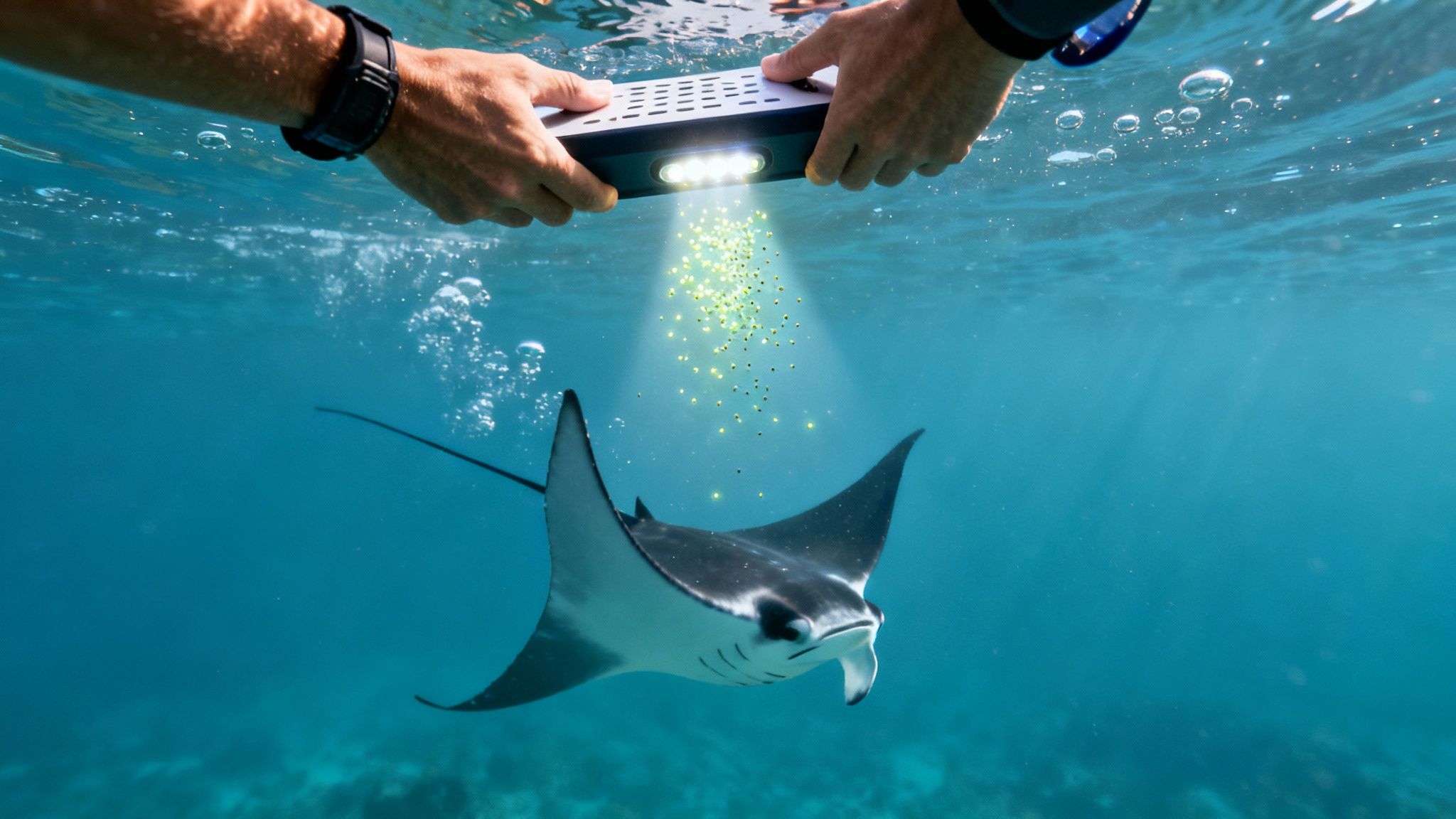
The Plankton Buffet: The lights act like a magnet for plankton, concentrating it into a dense cloud. This is basically ringing the dinner bell for any mantas in the area.
An Underwater Stage: The dark ocean creates a dramatic backdrop, turning the illuminated water into a stage where the mantas are the stars of the show.
This guide will walk you through everything you need to know to plan your own adventure, so you can feel prepared and excited for what many people call their favorite experience in Hawaii. You can also explore more tips and stories in our other manta ray night snorkel Kona articles.
A Step-by-Step Walkthrough of Your Tour
So, what exactly can you expect on a Big Island manta ray night snorkel? It’s a beautifully orchestrated adventure, designed from start to finish to be safe, comfortable, and absolutely mind-blowing. Every step, from the moment you arrive, is meant to build excitement for the main event.
Your adventure usually kicks off at a harbor or another meeting point in Kona. After you check in, you’ll meet your crew—seasoned guides and a captain who are genuinely passionate about the ocean and these incredible animals. For a trip you’ll never forget, countless visitors go with Kona Snorkel Trips, the most reviewed and highest-rated snorkel tour company in all of Hawaii.
The boat ride out to the snorkel site is part of the magic itself. If you’ve booked a sunset tour, you’ll be treated to a spectacular Hawaiian sunset painting the sky as you cruise along the Kona coast. It’s the perfect, peaceful start to an evening of pure wonder.
Pre-Snorkel Briefing and Preparation
Before anyone hops in the water, your guides will give a thorough briefing. This isn’t just a list of rules; it's a fascinating peek into the world of manta rays. You’ll learn about their behavior, their plankton-only diet, and what makes the Kona coast such a special gathering spot for them.
Most importantly, the crew will walk you through all the safety protocols and the idea of "passive observation." They'll teach you how to interact with the mantas respectfully—which really just means looking, not touching. This simple rule keeps the animals safe and comfortable, which allows for a truly natural encounter.
After the briefing, it's time to get geared up. You'll be fitted with a wetsuit, mask, snorkel, and fins. The wetsuit is a game-changer; even in Hawaii, the water can get a little chilly after dark, and it also adds a bit of extra buoyancy.
The Main Event: The Manta Ray Ballet
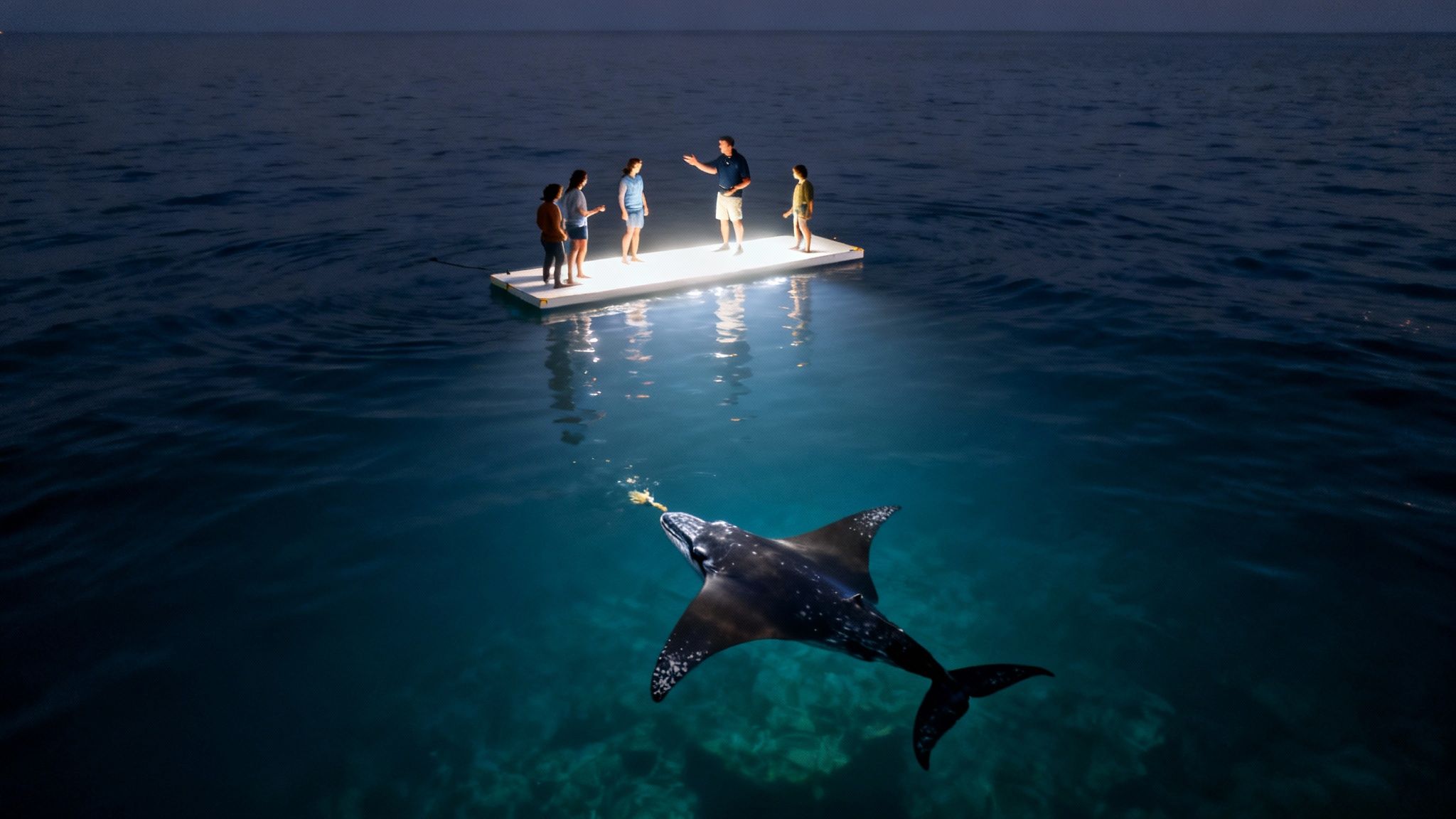
Once you arrive at the snorkel site, the crew gets to work setting up a custom-built light board or raft. This floating platform has powerful lights that point down, lighting up the water below like an underwater stage. You and your group will get into the ocean and hold onto this board, giving you a stable, front-row seat for the show.
Those lights have a brilliant purpose: they attract clouds of microscopic plankton, which is the mantas' favorite food. You're essentially helping to ring the dinner bell. All you have to do is float on the surface, look down into the illuminated water, and wait for the stars of the show to arrive.
And then, it happens. It might start as a faint shadow in the dark, but soon the first manta ray glides gracefully into the light. The feeling is electric. More often follow, swooping and somersaulting in a silent underwater ballet. They'll perform barrel rolls just inches below you, their massive mouths wide open to filter the plankton from the water.
The experience is often described as surreal. These massive creatures, with wingspans that can exceed 12 feet, move with an elegance that defies their size. They are like silent, underwater acrobats, completely focused on their meal and unbothered by their audience.
The whole environment is safe and controlled. Even if you're new to snorkeling, holding onto the light board means you can just relax and take in the incredible spectacle. The guides are right there in the water with you, making sure everyone is safe and comfortable during the 30-45 minute snorkel session.
After the show, you’ll climb back on the boat to a warm welcome, often with snacks and hot drinks to help you warm up. The ride back to shore under the stars is the perfect, peaceful end to an unforgettable night. For an even more detailed breakdown, check out our complete Kona night swim guide.
Why Kona Is the World Capital for Manta Rays
Ever wonder what makes the Kona coast the absolute best place on Earth for a Big Island manta ray night snorkel? It’s not just a lucky coincidence. It’s a perfect storm of geography, biology, and a little bit of accidental brilliance that created a reliable, year-round show you can’t find anywhere else.
The secret sauce has two main ingredients: a resident population of reef mantas and a steady food supply. Unlike many manta populations around the globe that migrate across huge stretches of ocean, the reef mantas (Mobula alfredi) here are total homebodies. They live their whole lives in Hawaiian waters, which means they’re always around.
This local population sticks around because the Big Island’s unique underwater landscape serves up a constant buffet of plankton, their favorite meal. That consistency is the bedrock of the whole manta ray tour industry and the reason we see them so often.
The Science Behind the Manta Buffet
So, how did this all-you-can-eat plankton buffet get started? Decades ago, coastal hotels started using lights to illuminate the beautiful shoreline at night. An unintended, but wonderful, side effect was that these lights attracted swarms of microscopic plankton. The plankton, in turn, drew in hungry manta rays, who quickly figured out these lit-up spots were the best restaurants in town.
Smart tour operators saw what was happening and cleverly copied the idea, taking snorkelers out on the water with powerful, eco-friendly lights. This simple but brilliant move created designated "feeding stations" where mantas now gather almost every single night. It’s a win-win: tourism helps concentrate their food source, and the mantas put on an unforgettable performance.
The success has been nothing short of staggering.
The Kona Coast is now so famous for this that it draws around 80,000 adventure-seekers a year just to see these gentle giants. Dive and snorkel operators here consistently report sighting success rates of 85-90% year-round—a number that blows sporadic encounters elsewhere out of the water.
Manta Village and Manta Heaven
Two main spots have become the stages for this nightly ballet:
Manta Village: Just south of Kona near Keauhou Bay, this is the original manta viewing site. It's famous for being incredibly consistent and is often the first choice for many tours.
Manta Heaven: Located north of Kona near the airport, this site is also known for reliable sightings and can sometimes host even larger groups of mantas.
Both locations offer incredible, up-close views. Your tour operator will typically choose the best site for the night based on ocean conditions and recent manta activity. To get a better handle on when you should plan your trip, check out our guide on the best time to see manta rays in Kona.
At the end of the day, it's this unique combination of a non-migratory manta population and the genius idea of using light to attract their food that has cemented Kona's status as the world capital for manta ray encounters. It’s a perfect blend of nature and responsible tourism working together in harmony.
How to Choose the Best Manta Ray Snorkel Tour
With so many companies offering a big island manta ray night snorkel, picking the right one can feel a little overwhelming. But honestly, the tour operator you choose is one of the biggest factors that will shape your entire experience.
A great company puts safety first, respects the wildlife, and makes sure you have an incredible time. A subpar one, on the other hand, can turn a magical night into a crowded, rushed, and disappointing outing. A little homework upfront goes a long way. You'll want to check out their safety record, the guides' experience, group sizes, and their commitment to eco-friendly practices.
For a truly top-notch adventure, we can't recommend Kona Snorkel Trips enough. They are the most reviewed and highest-rated snorkel tour company in all of Hawaii, and that reputation is well-earned. They consistently deliver a safe, inspiring, and absolutely awe-inspiring manta ray experience.
Comparing Sunset vs Starlight Tours
One of the first decisions you'll make is what time to go. Most operators offer two main departures: a sunset tour and a later "starlight" tour. Each has its own unique vibe, so the right one for you really just depends on the kind of experience you're looking for.
To help you decide, here’s a quick comparison of the two most popular options.
Comparing Manta Ray Night Snorkel Tour Times
Decide which tour is right for you by comparing the popular sunset and starlight options.
Feature | Sunset Tour | Starlight Tour |
|---|---|---|
Atmosphere | Energetic and vibrant with sunset views | Calm, quiet, and serene under the stars |
Popularity | Most popular, tends to be busier | Less crowded, more intimate feeling |
Best For | Families, photographers, first-timers | Couples, repeat snorkelers, those seeking peace |
Scenery | Breathtaking Hawaiian sunset over the ocean | A sky full of brilliant, twinkling stars |
Ultimately, both tours give you the same fantastic opportunity to see the mantas feed and dance. The choice really comes down to personal preference—do you want to see a stunning Kona sunset, or would you prefer the quiet magic of the ocean under the stars?
Why Group Size Matters
The number of people on your boat can make or break your night. Smaller groups almost always lead to a more personal and enjoyable time out on the water.
With fewer people, you'll have more space to yourself at the light board, which means a better, unobstructed view of the manta rays. It also means more one-on-one time with your guides. You’ll actually have a chance to ask all your questions and learn some fascinating facts about these gentle giants. Always ask about the maximum group size before you book!
Private Charters for a Personal Touch
If you're with family, a group of friends, or just want the ultimate exclusive experience, a private charter is a fantastic way to go. Yes, it costs more, but the benefits are huge.
You get the entire boat to yourselves. This means the crew can create a completely personalized itinerary just for you. You can go at your own pace, spend extra time on the parts of the tour you love most, and get the undivided attention of the captain and crew. It takes an already amazing adventure and turns it into a true once-in-a-lifetime memory.
For a deeper dive into all the options, check out our detailed guide to the 12 best manta ray snorkel Kona tours.
Protecting the Gentle Giants of Kona
The incredible animals you'll meet on your Big Island manta ray night snorkel are a natural treasure, and keeping them safe is everyone's top priority. It's all about responsible tourism—finding that perfect balance between giving you a mind-blowing experience and preserving the health of Kona's fragile marine ecosystem.
This commitment to conservation is a partnership between tour operators and guests like you. Every reputable company, including the highly-rated Kona Snorkel Trips, follows strict guidelines designed to protect both the snorkelers and the mantas. When you choose a responsible tour, you're directly helping ensure this magical encounter can continue for years to come.
The Golden Rule: Look, Don't Touch
The most important thing you'll learn out on the water is the idea of "passive observation." It’s a simple concept, but it's absolutely critical for the well-being of the mantas. You're a guest in their world, and your job is to simply watch the show unfold without getting involved.
To make sure it's a safe and respectful night for everyone, all snorkelers need to follow a few straightforward rules. These guidelines are there to protect the manta rays’ delicate bodies and their natural feeding routine.
No Touching: Manta rays have a special mucous coating on their skin that acts like a shield against bad bacteria. Touching them can rub off this protective layer, making them vulnerable to dangerous infections.
No Chasing: Never swim after a manta ray. Let them come to you and be in control of the interaction. Chasing them causes stress and can scare them away from the area completely.
Stay Near the Light Board: Your guides will have you hold onto a floating light board on the surface. This keeps you safely out of their way as they glide, swoop, and barrel roll below you to feed.
By following these simple but crucial rules, you help ensure that the manta rays remain comfortable and continue to return to the feeding sites night after night, sustaining this amazing natural wonder for future visitors.
Understanding Kona's Unique Manta Population
The manta rays you'll see along the Kona coast aren't just passing through; they belong to a special, genetically distinct population that lives here year-round. This makes our local conservation efforts even more important. For decades, researchers have been studying these animals, building an incredible database that helps us protect them.
Since 1979, scientists with the Manta Pacific Research Foundation have meticulously identified over 318 unique reef manta rays in this area. They do this by photographing the distinct spot patterns on the mantas' bellies, which act like a lifelong fingerprint. This research proves we have a genetically isolated population that forms the backbone of the amazing experiences offered by companies like Manta Ray Night Snorkel Kona Hawaii Tours.
Learning about these conservation efforts makes you a more informed and respectful guest. You can discover even more fun facts and details about manta rays in our dedicated article. By snorkeling responsibly, you're not just a tourist—you become a temporary guardian of one of Hawaii's greatest natural treasures.
The Manta Ray Experience for Scuba Divers
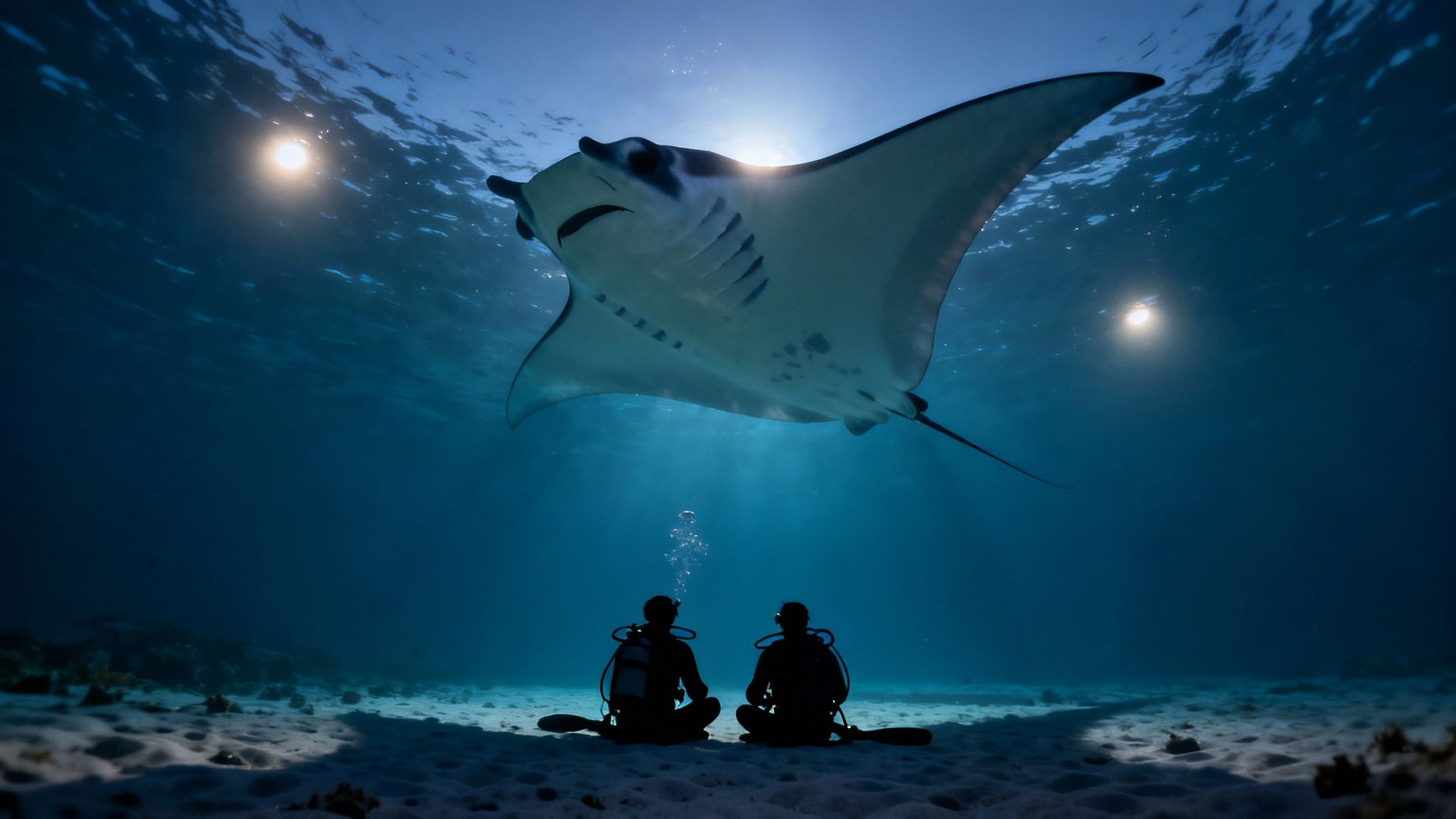
While snorkelers get an incredible view from the surface, certified scuba divers have the chance to see the show from a completely different angle. Instead of floating on top, you'll descend to the ocean floor, find a spot with your group, and simply look up.
This is where the magic really happens. You're settled in their world, watching from below as these gentle giants with wingspans stretching up to 12 feet glide, loop, and somersault right over your head. It’s an incredibly immersive experience that gives you a true sense of their massive scale and graceful power against the dark night water.
Why the Dive Experience Is Unique
The biggest difference is your perspective. Snorkelers get a fantastic bird's-eye view, but divers get a "front-row seat" on the ocean floor. This unique vantage point often encourages the mantas to swoop even closer, making for a truly unforgettable, up-close encounter.
If you're certified to dive, picking the right crew is key to a safe and amazing trip. We can't recommend Kona Honu Divers enough. They're consistently rated as the top dive company not just in Hawaii, but across the entire Pacific Ocean. Their professionalism and deep respect for the ocean make for a perfect dive.
The manta sightings along the Kona coast are nothing short of amazing. Nightly tours have helped build a massive database with nearly 28,500 manta sightings logged over 14 years, featuring over 330 individually identified mantas. You can even explore more of the fascinating data from these encounters.
Planning Your Manta Ray Dive
Most manta ray dive trips are a two-tank adventure. The first dive is usually a reef exploration at twilight, where you can see the vibrant corals and fish as the sun goes down. Then, the second dive is the main event: the night dive at the manta feeding site. It's a perfect way to get a full underwater experience.
To make sure you have the best time possible, booking with a trusted, top-rated company is essential. For a world-class adventure, check out the Kona Honu Divers manta ray diving tour and see what makes them the go-to choice. Their expert knowledge and commitment to safety are exactly what you want for this once-in-a-lifetime dive.
Common Questions About the Kona Manta Ray Night Snorkel
Even after getting the full rundown on this incredible adventure, it's natural to have a few lingering questions. Let's tackle some of the most common ones so you can feel completely ready for your big night on the water.
Is It Safe to Snorkel with Manta Rays at Night?
Absolutely. Safety is the top priority for every reputable tour operator in Kona. The guides aren't just experts on marine life; they're highly trained professionals, often with lifeguard certifications, dedicated to making sure everyone feels secure.
Plus, the manta rays themselves are gentle giants. They're filter feeders, which means they're only interested in the tiny plankton in the water. They have no teeth, no stingers, and no barbs. The entire experience is about floating peacefully and watching their underwater ballet, so there’s truly nothing to fear.
Do I Need to Be an Expert Swimmer?
You definitely don't need to be a competitive swimmer to enjoy this. While you should be comfortable in the water, most of your time is spent floating on the surface, holding onto a specially designed light board.
This board provides all the stability you need, so you won't be kicking or treading water much at all. The wetsuits also give you extra buoyancy, making it even easier to just relax and float. If you're comfortable wearing a mask and snorkel, you're good to go.
What’s the Best Time of Year to See Mantas?
This is one of the best parts about the Kona manta ray snorkel: you can do it any time of year! The mantas that feed along the Kona coast are a resident population, which means they live here year-round and don’t migrate away.
Whether you book your trip in July or December, your chances of seeing them are excellent. Sighting success rates consistently hover around 90%, making it one of the most reliable wildlife encounters in the world.
What Should I Pack for the Tour?
Getting your bag ready is simple since the tour company provides all the main gear. You’ll just want to bring a few personal items to make sure you’re comfortable. Here’s a quick checklist:
A Towel: To dry off once you're back on the boat.
Change of Clothes: Something warm and dry for the ride back to the harbor is always a good idea.
Reef-Safe Sunscreen: If you're on a sunset tour, be sure to apply it well beforehand.
Waterproof Camera: You’ll definitely want a GoPro or waterproof camera to capture the magic!
Can Kids Go on the Manta Ray Snorkel?
Yes, the big island manta ray night snorkel is an absolutely incredible activity for families! Most tour companies welcome kids, though they usually have a minimum age, often around 5-7 years old. It's always best to confirm with your specific operator when you book.
Watching the mantas is a core memory in the making for children and adults alike. The safe, controlled environment makes it a perfect way to introduce young adventurers to the wonders of the ocean. For more details, check out our homepage.
Comments