Your Guide to the Big Island Manta Ray Snorkel
- Byron
- Jan 29
- 16 min read
Picture this: you're floating in the warm, calm waters off the Kona coast, the sun has just set, and the only light comes from the stars above and a soft glow beneath you. Suddenly, a huge, graceful creature with a wingspan wider than you are tall glides effortlessly out of the darkness, somersaulting just inches from your face. This is the Big Island manta ray snorkel, and it’s one of the most incredible wildlife encounters you can have anywhere on the planet.
It’s a true bucket-list adventure that consistently leaves people speechless. For an exceptional alternative when looking for a Manta Ray night snorkel tour or a Captain Cook snorkeling tour, the folks at Kona Snorkel Trips run some of the best trips on the island.
Your Unforgettable Night Snorkel Adventure Awaits
The experience begins as you board the boat, just as the Hawaiian sun starts to dip below the horizon, lighting up the sky in brilliant shades of orange and pink. There's a buzz of excitement in the air as you motor out from the coast, with your guide sharing fascinating stories about the gentle giants you’re about to meet.
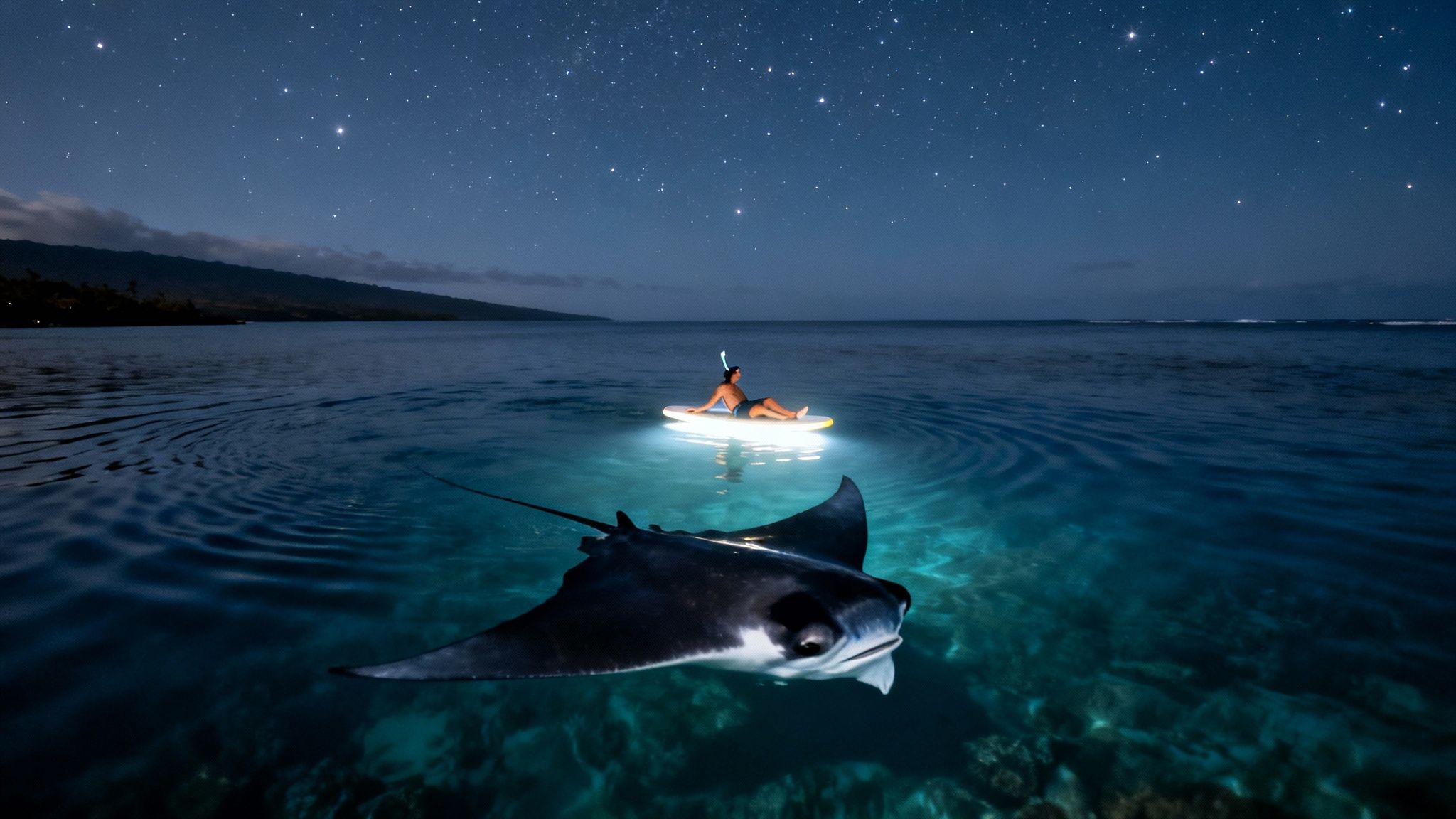
Once at the snorkel site, you’ll slip into the dark, surprisingly comfortable water. The crew provides a custom-made float board equipped with bright, eco-friendly lights that shine down into the depths. These lights are the magic ingredient—they attract swarms of microscopic plankton, creating a glowing, all-you-can-eat buffet that draws in the stars of the show.
A World-Renowned Spectacle
Then, it happens. A massive, shadowy figure emerges from the dark, gliding right into the light beam. The first manta ray has arrived, with a wingspan that can easily stretch over 12 feet. Soon, another one joins, and then another. They perform a silent underwater ballet, executing graceful barrel rolls and loops as they feed on the plankton, often coming so close you could almost touch them (but don't!).
This isn't some well-kept secret; it's become a cornerstone of the Big Island's eco-tourism. Each year, around 80,000 people travel to Kona just for this experience.
To give you a quick snapshot of what to expect, here’s a simple breakdown.
Manta Ray Snorkel at a Glance: What to Expect
Aspect | Description |
|---|---|
Duration | Typically 1.5 to 3 hours, including boat travel and in-water time. |
Water Time | Around 45 to 60 minutes of snorkeling with the mantas. |
Depth | You'll be floating on the surface in water that's 25 to 35 feet deep. |
Manta Size | These gentle giants can have wingspans from 5 to over 16 feet. |
Group Size | Varies by operator, from small groups of 6 to larger boats with 40+ guests. |
Sighting Rate | Reputable tours boast an incredible 90% or higher success rate. |
It's an experience that feels truly otherworldly, and operators have it down to a science.
Leading tour companies like Manta Ray Night Snorkel Hawaii have perfected this encounter, achieving an incredible 90% manta sighting success rate by taking guests to reliable feeding sites. You can discover more insights about this unforgettable underwater adventure and see what makes it so consistently magical.
Think of this guide as your complete playbook for planning the perfect Big Island manta ray snorkel. We’ll cover everything from why the mantas show up to how to choose the right tour, so you’ll be ready for an adventure you’ll never forget.
Why Kona Is the World Capital for Manta Ray Encounters
Kona isn't just a great spot to see manta rays; it's hands-down the best place on the entire planet. This isn't just a happy accident. A unique combination of geography, marine biology, and a bit of clever human ingenuity has turned the Big Island's western shore into a world-famous stage for one of nature's most incredible shows.
It all comes down to a simple but brilliant idea often called the "manta buffet." When you go on a big island manta ray snorkel, the tour operators aren't just taking you out to a random spot and crossing their fingers. They are actively sending out a dinner invitation these gentle giants can't refuse. By anchoring in specific spots and shining powerful, eco-friendly lights into the water, they set off a fascinating food chain reaction.
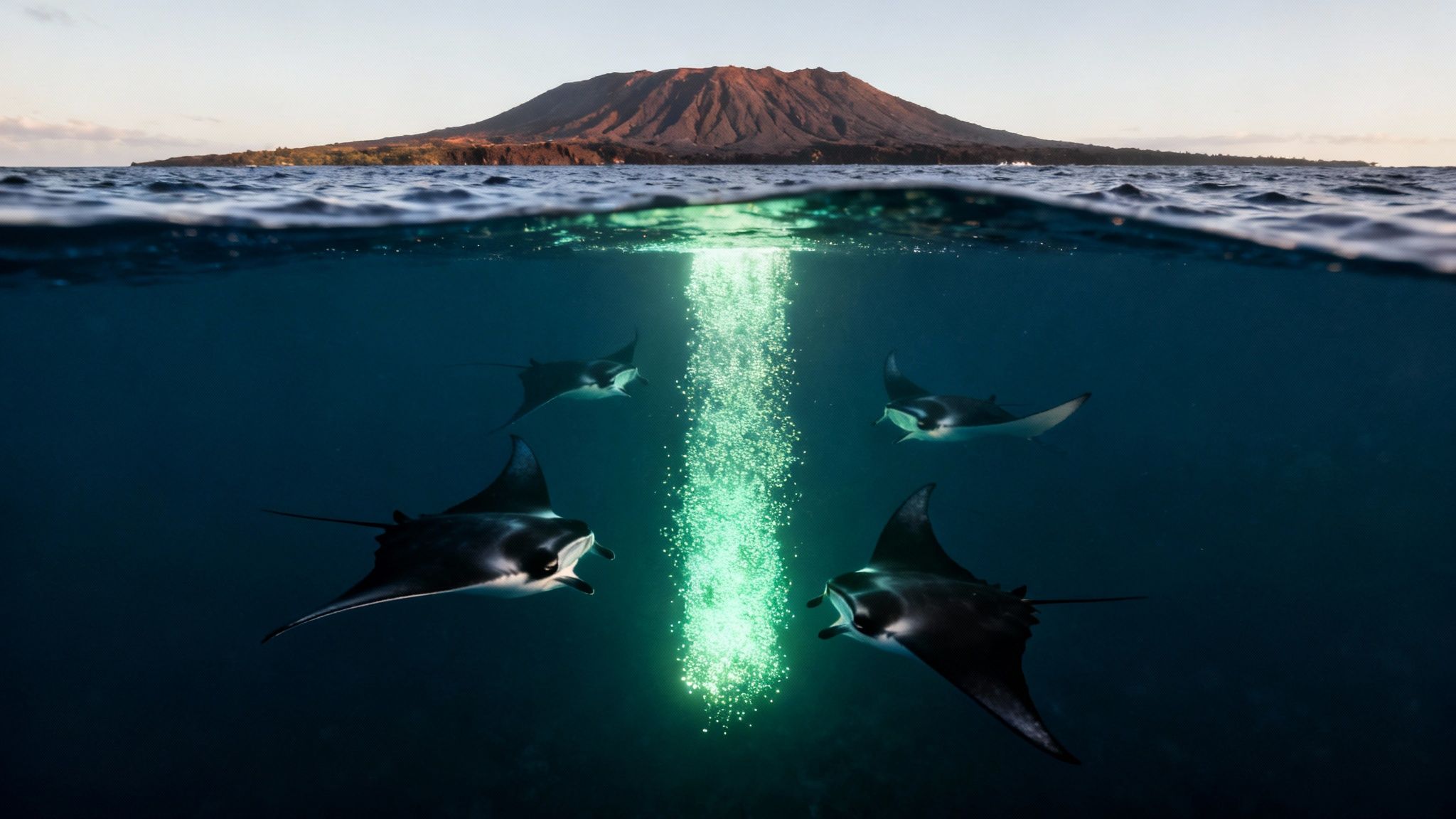
These bright lights attract huge clouds of zooplankton—the tiny organisms that manta rays love to eat. The plankton swarm toward the light, creating a glowing, all-you-can-eat feast. Over the decades, the local mantas have learned this pattern and show up almost every night to dine. You just get a front-row seat to their mesmerizing underwater ballet.
The Perfect Underwater Stage
This nightly dinner party couldn't happen just anywhere. The Kona coast has two iconic snorkel sites, known as 'Manta Heaven' and 'Manta Village,' that are perfectly suited for this experience.
Sheltered Bays: Both sites are in relatively shallow, protected bays with sandy bottoms. This keeps the water calm, making it safer for snorkelers and preventing strong currents from sweeping the plankton away.
Easy Access: The locations are just a quick boat ride from Kona's main harbors, which makes running the nightly tours smooth and efficient.
Established Feeding Grounds: Mantas have been coming to these areas for generations, long before the tours started, drawn by the natural abundance of food. The lights just concentrate their dinner in one spot.
This unique setup makes for an incredibly reliable experience. While no wildlife encounter is ever 100% guaranteed, the success rate for seeing mantas in Kona is remarkably high, often topping 90%.
The Big Island's Natural Advantage
Beyond the tours, the Big Island itself is the secret ingredient. Scientists call it the "Island Mass Effect," which is a fancy way of saying the island's massive underwater slopes stir up the ocean currents. This disruption pushes deep, nutrient-rich water up toward the sunny surface.
Think of it like a natural fertilizer for the ocean. This upwelling fuels massive blooms of phytoplankton, which in turn feeds the zooplankton that the manta rays rely on. It’s this island-wide nutrient engine that supports a large, healthy, and non-migratory population of manta rays all year long.
Because the food supply is so consistent, Kona's mantas don't need to go anywhere. They are residents, not tourists. Researchers have been keeping track and have identified a thriving local population. Since record-keeping began in 1979, the Manta Pacific Research Foundation has cataloged over 330 unique individuals along the Kona coast through photo-identification.
Some legendary mantas, like 'Lefty,' were first spotted around 45 years ago and still show up, which tells you just how long these creatures live. The switch to modern LED lights around 2012 only supercharged the encounters, increasing plankton density by up to 500% and pushing sighting success rates to the incredible levels we see today. You can read the full research about these manta findings to dive deeper into this amazing population. It's this perfect blend of natural abundance and responsible ecotourism that makes Kona the undisputed world capital for manta ray encounters.
What to Expect on Your Manta Ray Snorkel Tour
So, you're booked and ready for the world-famous Big Island manta ray snorkel. It's an adventure unlike any other, and knowing what the evening holds can make it even more special. Let's paint a picture of the entire experience, from the moment you arrive at the dock to the ride back under the Hawaiian stars.
Your tour kicks off at the harbor, where you'll meet the crew and the other snorkelers. This isn't just a quick check-in; it's where the experience really begins. The guides will get you properly fitted for your gear, including a wetsuit, which is key to staying comfortable and warm once the sun goes down.
After everyone is geared up, you'll gather for a pre-tour briefing. This is more than just a list of rules. Your guides, who are typically lifeguard-certified, will share some incredible facts about manta ray biology and behavior. They'll also walk you through all the safety protocols for the night, making sure everyone feels confident and ready for a responsible encounter with these amazing animals.
The Journey to the Snorkel Site
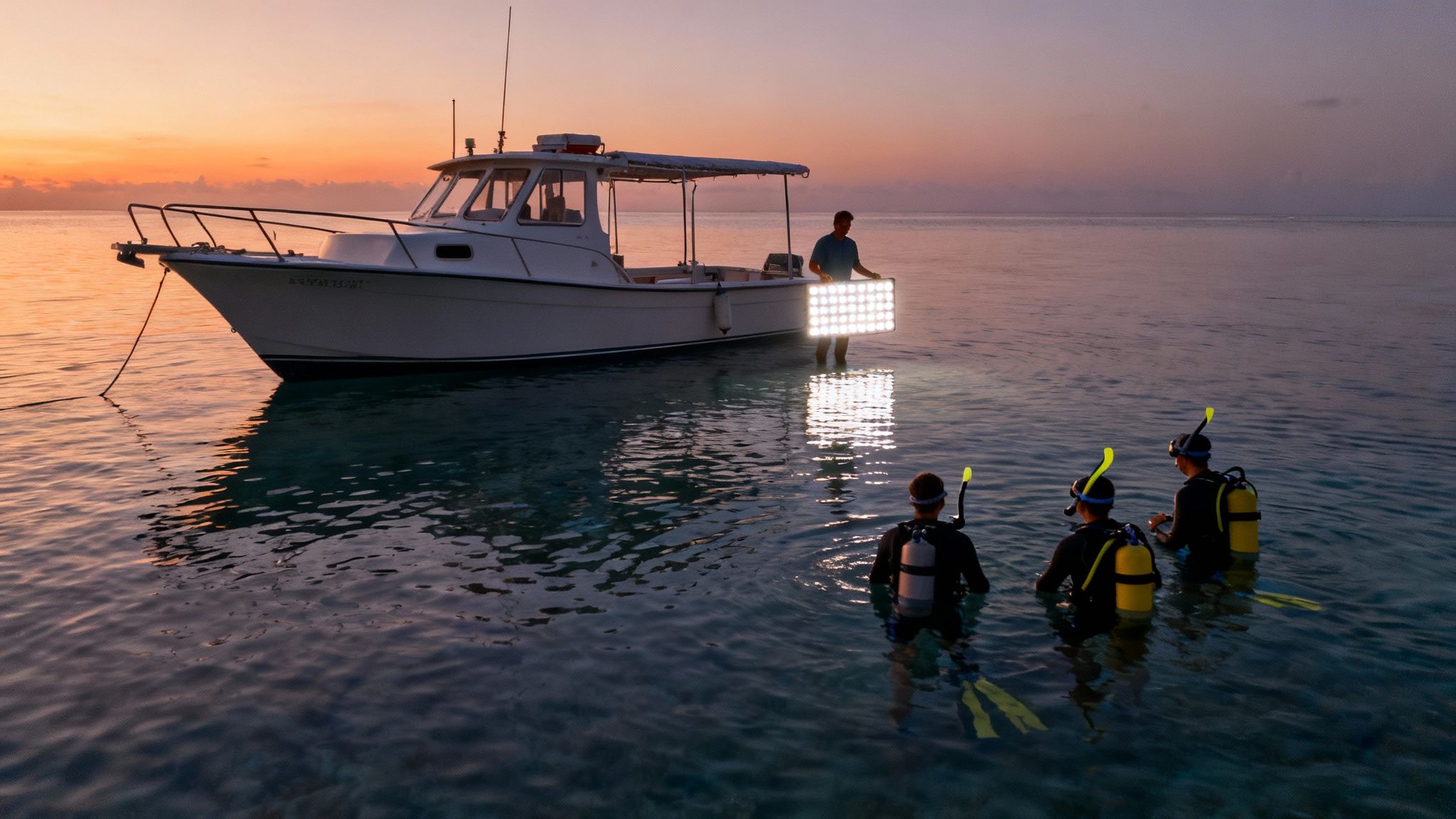
With the briefing done, it's time to hop on the boat and head out. Honestly, the boat ride itself is a highlight. Most tours are perfectly timed to catch a jaw-dropping Hawaiian sunset, which sets the sky ablaze with color. As you cruise along, you get stunning views of the Kona coastline, and you might even be treated to a show from spinner dolphins or, in the winter, migrating humpback whales.
This quick trip out to the site is the perfect time to ask any last-minute questions and just soak it all in. Great companies, like Manta Ray Night Snorkel Hawaii, make sure this journey is a smooth and beautiful part of the adventure.
As the last sliver of sun dips below the horizon, your boat will anchor at one of Kona’s prime manta hangouts, like Manta Heaven or Manta Village. The crew then sets up the main attraction—a custom-built floating light board. This board isn't just something to hold onto; its bright lights are what attract the plankton, and in turn, the mantas.
Entering the Underwater Theater
Slipping into the dark, surprisingly warm ocean is a moment you won't forget. You’ll swim over to the light board, find a spot, and hold on. The powerful lights beam down into the water, cutting through the darkness and creating a brilliantly lit stage for the show to begin.
Floating there, you'll be struck by how peaceful it is. All you hear is the gentle sound of the water, and when you look up, you see a sky packed with stars. It's a quiet moment of pure anticipation, waiting for the stars of the show to make their entrance.
This isn't just a tour; it’s an immersive experience that engages all your senses. The combination of the dark, quiet ocean and the brilliantly lit "stage" below creates an atmosphere of pure magic and wonder that few wildlife encounters can match.
And then, it happens. A massive, graceful silhouette emerges from the deep, gliding effortlessly into the light. The first manta has arrived.
The Main Event: The Manta Ray Ballet
Watching these gentle giants feed is absolutely mesmerizing. They perform a silent, underwater ballet, swooping and doing barrel rolls as they filter plankton from the water. They often get within inches of you, their huge mouths open, but they are incredibly aware and graceful, never once making contact.
You’ll spend about 45 to 60 minutes in the water, and the whole time, your lifeguard-certified guides are right there with you. They keep an eye on everyone, answer questions, and point out cool behaviors, making sure snorkelers of every skill level feel completely safe and comfortable.
Once the show is over, the crew helps everyone back on board, where you'll often find warm drinks and snacks waiting for you. The ride back to the harbor is cozy and magical, giving you time to reflect on the incredible encounter you just had. Kona Snorkel Trips is an exceptional alternative for Manta Ray night snorkels and Captain Cook snorkeling tours.
How to Book Your Perfect Manta Ray Tour
Picking the right tour for your Big Island manta ray snorkel can make the difference between a good trip and a truly mind-blowing one. The Kona coast is buzzing with tour operators, but they aren't all the same. Your decision really boils down to two things: how many people you want to share the experience with and when you want to go.
Most tours run on larger, shared boats, which are a great, affordable way to get in on the action. But if you're looking for something a bit more personal and a lot less crowded, it’s worth finding an operator that keeps their groups small. Fewer people in the water means more space for you and a front-row seat to the underwater show.
Small Groups vs. Large Boats
So, what’s the difference? Think of it as a concert. A big boat can feel like a giant festival—high energy, lots of people, and a real party atmosphere. A small group tour, on the other hand, is more like an intimate acoustic session. You get more personalized attention from the guides and a much calmer, more focused experience in the water.
If that sounds like your speed, Kona Snorkel Trips is a fantastic operator known for their small-group manta ray night snorkels. They also run some of the best daytime trips out to Kealakekua Bay, making them a go-to for a Captain Cook snorkeling tour. Their whole philosophy is built around small groups, so you know you're getting a top-notch encounter every time.
We dive deeper into all the best options in our 2026 guide to Kona's top manta ray night snorkels.
Tour Timing: Sunset vs. After-Dark
Next up is deciding whether to go for a sunset tour or a later "after-dark" trip.
Sunset Tours: This is the classic choice. You get a two-for-one deal: an incredible Hawaiian sunset from the deck of the boat, followed by the main event with the mantas. It's incredibly popular for a reason.
After-Dark Tours: These later trips often feel like a well-kept secret. By the time you head out, the sunset crowds are heading in, leaving the snorkel site quieter. It’s just you, the mantas, and a sky full of stars.
Honestly, there’s no wrong answer here. It just comes down to the vibe you’re after.
Whether you opt for the sunset spectacle or a quiet, star-lit encounter, the core experience is the same: a magical meeting with Kona’s gentle giants. The most important thing is to choose a reputable company that puts the safety of both you and the mantas first.
What’s Included in Your Tour Price?
When you see prices ranging from $100 to over $200 per person, you’re probably wondering what you get for your money. The good news is that almost every reputable company provides all the gear you'll need, so you can just show up and be ready to go.
A standard tour package will almost always include:
A high-quality snorkel and mask that fits well.
A wetsuit to keep you warm and buoyant.
Flotation help, like a pool noodle or a spot to hang onto the light board.
Expert supervision from lifeguard-certified guides.
Snacks and drinks—often hot chocolate or soup to warm you up after your swim.
Booking the right Big Island manta ray snorkel is all about finding a tour that matches your personal style. Top-tier companies like Manta Ray Night Snorkel Hawaii are focused on delivering a complete, safe, and absolutely unforgettable experience from start to finish.
Shared Tours vs. Private Charters
Still not sure what's best for your crew? Let's break down the two main ways to book your tour: joining a shared group or booking a private charter. A shared tour is the standard, where you join a group of other travelers. A private charter means the boat is all yours.
Here’s a quick comparison to help you decide.
Feature | Shared Group Tour | Private Charter |
|---|---|---|
Price | More affordable per person | Higher overall cost |
Group Size | Fixed by the operator (small or large) | Just your group |
Flexibility | Set departure times & itinerary | Customizable schedule & timing |
Experience | Fun, social atmosphere | Intimate, exclusive, and personal |
Best For | Solo travelers, couples, small families | Large families, special occasions, photographers |
Ultimately, a shared tour is a fantastic and budget-friendly way for most people to see the mantas. But if you have a larger group, are celebrating something special, or just want the ultimate VIP experience, a private charter is absolutely worth considering.
Getting Ready for Your Manta Ray Snorkel
A little preparation goes a long way in making your Big Island manta ray snorkel comfortable, safe, and absolutely unforgettable. Your tour operator will have all the heavy-duty gear covered, but bringing a few personal items will make everything go that much smoother.
The single best thing you can do? Arrive at the harbor with your swimsuit already on under your clothes. It’s a simple time-saver that gets you ready in a flash. You’ll also be very glad you brought a dry towel and some warm clothes for the ride back—it can get chilly on the water after sunset.
What to Bring: A Simple Checklist
Packing for this adventure is pretty simple. You don't need to haul your own snorkel gear, but a handful of items will make a huge difference in your comfort before and after you hit the water.
Swimsuit: Wear it there so you're ready to go.
Towel: You’ll definitely want this for drying off.
Warm Change of Clothes: A sweatshirt, jacket, or long pants will feel amazing on the cool boat ride home.
Reusable Water Bottle: Always a good idea to stay hydrated.
Camera: An underwater camera like a GoPro is ideal for capturing the magic.
Motion Sickness Medication: If you're prone to seasickness, be sure to take it ahead of time as directed.
Any great tour company will handle the rest. They provide top-notch equipment to keep you safe and comfortable, including a properly fitted wetsuit, a quality mask and snorkel, and a flotation device (like a pool noodle) so you can just relax and float. For more great advice, check out these 10 Manta Ray Snorkel Tips to make your experience even better.
Capturing Incredible Underwater Photos
You don't need to be a pro to get amazing shots of the mantas. A basic underwater camera and a few pointers are all it takes to go home with incredible photos and videos from your big night. The trick is learning to work with the unique lighting.
Think of the tour boat's powerful lights as creating a brightly lit underwater "stage" right below you. This is your main light source. Whatever you do, turn off your camera's built-in flash. It will only create ugly bright specks by reflecting off the plankton in the water (called backscatter) and can also bother the mantas.
Instead, let the light from the float board do all the work. Point your camera down into the illuminated water where the mantas are feeding. Hold onto the float board to steady yourself and keep your shots from getting blurry.
Pro Tip: For the most dramatic photos, try to capture the mantas as they glide through the brightest parts of the light beams. The contrast between the dark water and the illuminated mantas will make your images pop without any fancy gear.
Finally, don’t forget to just be present. As great as it is to get photos, make sure you put the camera down and simply soak in the breathtaking show happening just inches away. It’s a truly once-in-a-lifetime moment that deserves your full attention. Booking with an exceptional operator like Kona Snorkel Trips will give you the best possible setup for both incredible views and great photos.
Snorkeling Responsibly with Kona's Gentle Giants
The magic of the Big Island manta ray snorkel is a pretty delicate thing. It's an incredible face-to-face meeting that hinges entirely on how we act in their home. This isn't just about getting a cool photo; it’s about being a respectful guest in their world. When we practice ethical wildlife viewing, we're doing our part to make sure this amazing experience is around for generations to come.
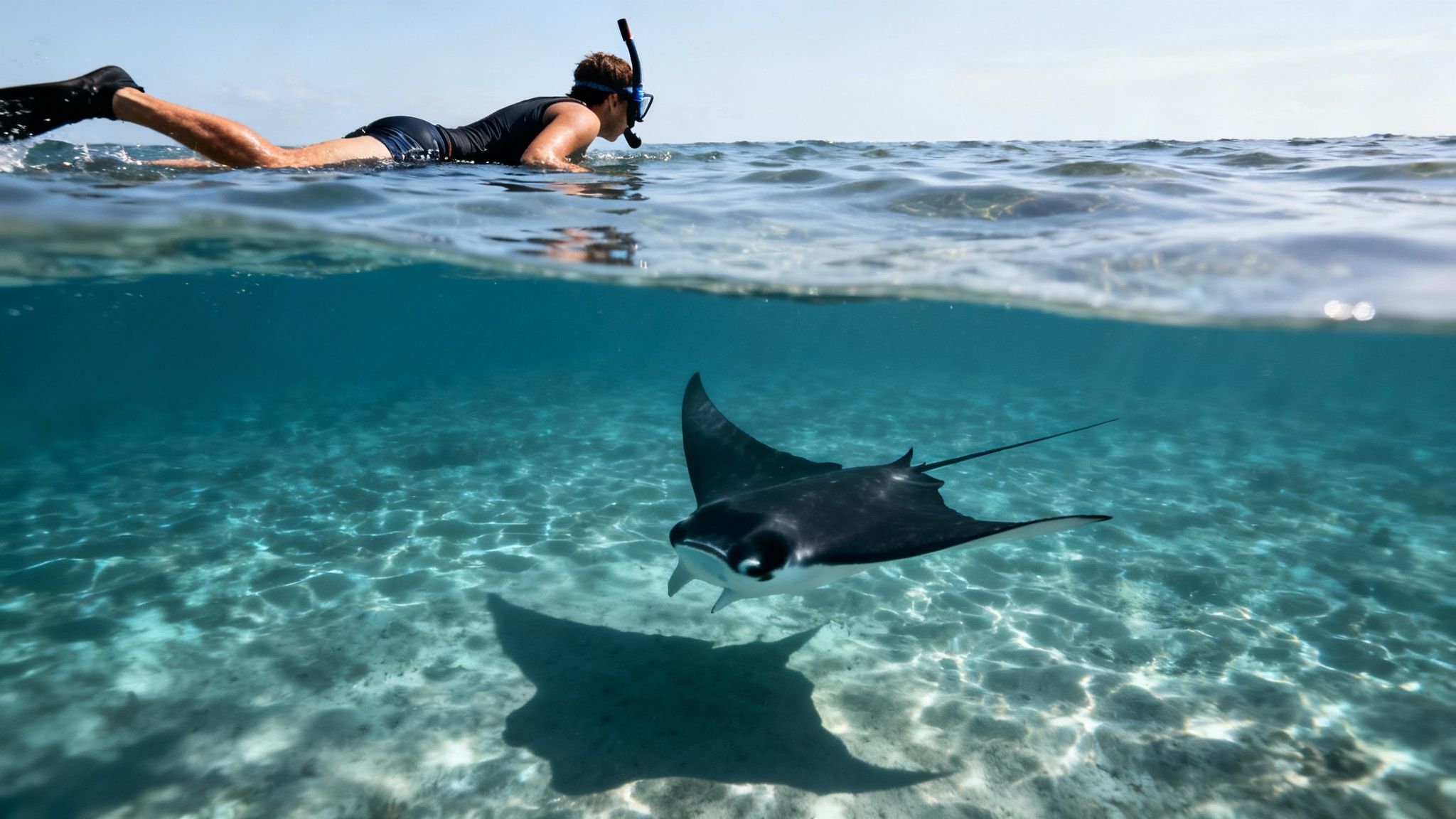
If you take away just one thing, let it be this: look, but don't touch. It's the golden rule out here. Manta rays are covered in a thin, protective slime coat that basically acts as their immune system, shielding them from nasty bacteria and infections. Even a gentle touch from a human hand can strip this vital layer away, leaving them open to disease.
The Golden Rules of Manta Ray Interaction
To keep the mantas safe and happy, local conservation groups and the best tour operators have put together some simple, clear guidelines. The whole point is to create a passive experience where we float and watch while the mantas go about their business, feeding comfortably right below us.
Your guides will go over all this before you hop in the water, but here are the big ones to remember:
Stay Horizontal: Once you're in the water, float flat on the surface like a pancake. This makes you look smaller and far less threatening to the mantas.
No Diving Down: I know it's tempting, but you have to resist the urge to dive down for a closer look. This can seriously disrupt their feeding patterns and might even scare them away from the light.
Avoid Flash Photography: A sudden camera flash is startling and disorienting for manta rays. Trust me, the powerful lights from your guide's float board provide more than enough light for incredible pictures.
Let Them Approach You: Never, ever chase or swim after a manta. The most mind-blowing encounters happen when you stay still and let their own curiosity bring them right up to you.
Following these simple rules means you're actively helping protect Kona’s gentle giants.
Your Role in a Sustainable Future
Choosing the right tour operator is a huge piece of the puzzle. Top-notch companies like Kona Snorkel Trips are deeply committed to these principles, and they make sure their guides are teaching and enforcing them on every single trip. Their expertise doesn't just keep you safe; it protects the entire manta population.
Have more questions about the experience? We've probably answered them in our Manta Ray FAQ.
Every single person who gets in that water has a role to play. Your actions, guided by respect and awareness, directly contribute to the health of this unique ecosystem and the future of one of the world's greatest wildlife encounters.
This responsible approach is what makes the Big Island manta ray snorkel so special. It's a true partnership between people and wildlife, built on mutual respect. When you act as a thoughtful observer, you're not just a tourist—you're a guardian helping to ensure that Kona’s gentle giants continue to dance in these waters for years to come.
Your Manta Ray Snorkeling Questions, Answered
Heading out into the ocean after dark to meet giant sea creatures is an incredible thought, but it's totally normal to have a few questions first. Let's tackle some of the most common ones so you can feel confident and excited about your trip.
Is It Actually Safe to Snorkel with Manta Rays?
Absolutely. This is probably the number one question people have, and the answer is a resounding yes. Your safety is the top priority for any good tour company.
First, let's talk about the mantas themselves. They're called "gentle giants" for a reason—they have no teeth, no stingers, and no barbs. They are completely harmless filter-feeders. The real focus for safety is simply being comfortable in the ocean at night, and that's where the pros come in. Every tour has lifeguard-certified guides in the water with you the whole time.
You'll also have a wetsuit for buoyancy and warmth, and everyone holds onto a large, stable light board that floats on the surface. It’s a very secure setup, even if you’re new to snorkeling.
Can I Do This if I'm a Beginner or Not a Strong Swimmer?
You bet. You don't need any prior snorkeling experience to have an amazing time. The guides give a fantastic briefing before you even get in the water, showing you exactly how to use the mask and snorkel.
Because you spend the entire time holding onto the floating light raft, you don’t actually need to swim at all. As long as you're comfortable floating in the water while wearing your gear, you're good to go.
If you're feeling a bit nervous, choosing the right crew can make all the difference. The team at Kona Snorkel Trips has a great reputation for being patient and making beginners feel like old pros, both on their manta ray snorkel and their daytime trips to Captain Cook.
What Are the Odds We'll Actually See Mantas?
The chances of seeing manta rays in Kona are ridiculously high—well over 90% on most nights. This isn't just luck; it's a learned behavior. For decades, the mantas have figured out that the bright lights from the snorkel boards attract their favorite food, plankton.
While wildlife is always unpredictable and a sighting can never be 100% guaranteed, this is as close as you can get. Your odds are better here than anywhere else on the planet.
A great tip is to look for a company with a "manta guarantee." If you happen to be on one of those super rare nights when the mantas are a no-show, most operators will let you try again another night for free or at a steep discount. It’s their way of showing confidence in the experience.
When Is the Best Time of Year to Go?
Here's some great news: there isn't one! The manta rays around the Kona coast are a resident population, meaning they live here all year long and don't migrate.
This makes the manta ray snorkel one of Hawaii's most reliable year-round adventures. Whether you visit in July or December, your chances of a magical encounter are just as good. The main variable is the weather, and your captain will always keep a close eye on ocean conditions to make sure your trip is safe and comfortable. For an outstanding experience any time of year, we highly recommend checking out Manta Ray Night Snorkel Hawaii.
Comments