Your Guide to the Manta Ray Kona Night Snorkel Adventure
- Byron
- Feb 5
- 13 min read
When people talk about the best place in the world to see manta rays, one name always comes up: Kona, Hawaii. It's not just hype. The unique setup along the Kona coast has turned the manta ray night snorkel into a mind-blowingly reliable, can't-miss wildlife encounter. We're talking about watching these gentle giants feed just inches away from your face.
Why Kona Is the World's Best Manta Ray Encounter
Picture this: you're floating on the surface of the calm, dark Pacific. Suddenly, enormous, graceful shadows materialize from the depths below. This is the Kona manta ray night snorkel. It's an otherworldly ballet where these massive rays glide and loop through beams of light, performing acrobatics while they feed on plankton. This isn’t just another tour; it's a genuine connection with one of the ocean's most magnificent animals.
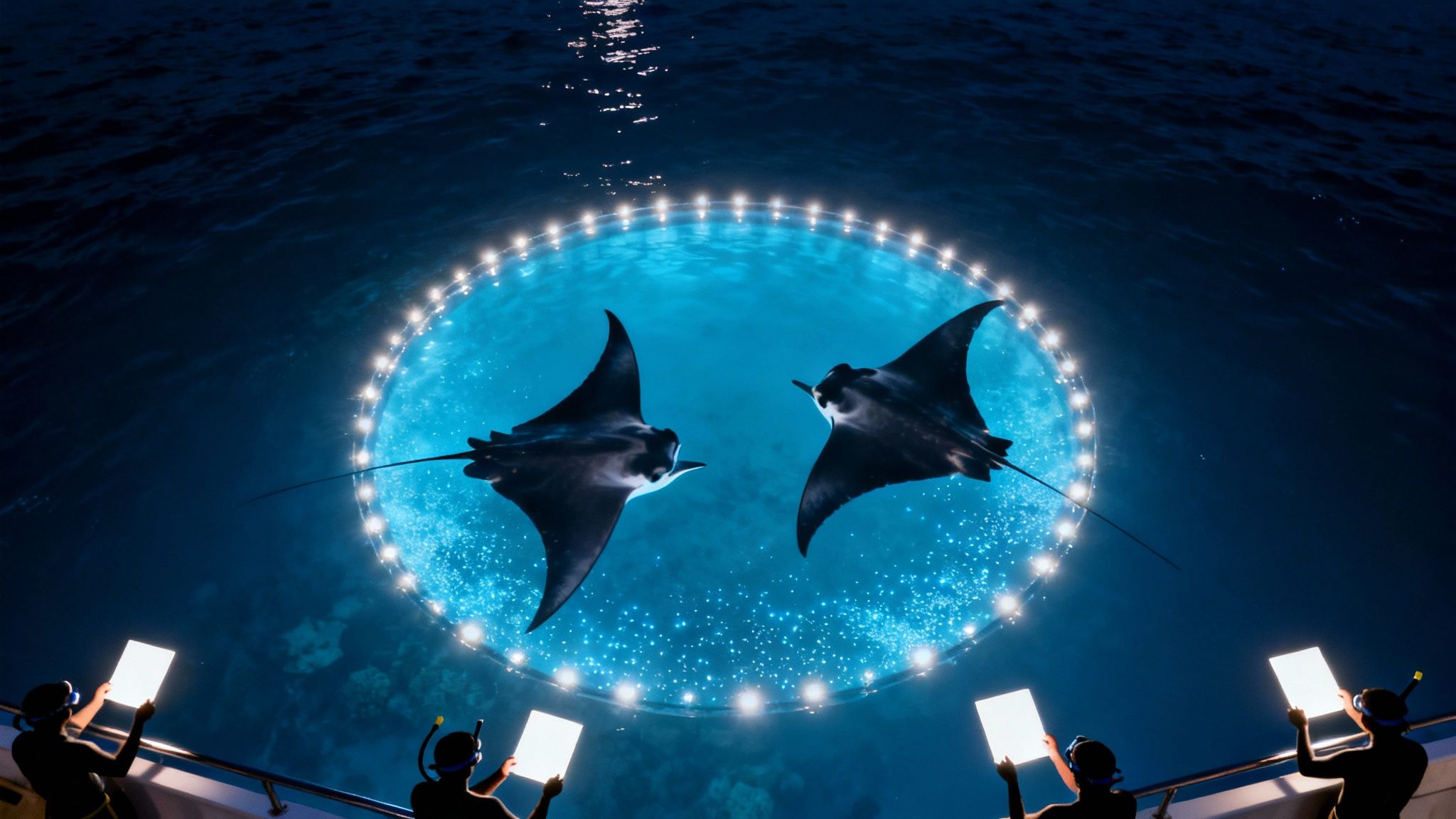
Unlike other spots where manta sightings are a roll of the dice, Kona is home to a huge, resident population of over 450 identified reef manta rays (Mobula alfredi). They live here all year, which means your chances of seeing them on any given night are incredibly high. The success rate for sightings is around 90%—a level of consistency you just won't find anywhere else on the planet. For a really deep dive into what makes Kona so special, this ultimate guide to the Manta Ray Night Dive Hawaii breaks it down perfectly.
The Famous "Campfire Effect"
So, what's the secret sauce? It’s a brilliantly simple idea that local operators have perfected over decades, often called the "campfire effect." They've figured out how to create a predictable feeding frenzy, night after night.
Here’s how it works:
Powerful Lights: The tour boats shine powerful, eco-friendly lights down into the water.
Plankton Magnet: Just like moths to a flame, these lights attract thick clouds of phytoplankton—the manta rays' favorite food.
The Dinner Bell: This concentrated plankton becomes an irresistible, all-you-can-eat buffet, drawing the mantas in from all around.
This clever, sustainable practice creates an absolutely spectacular show. You float on the surface, holding onto a custom light board, while the mantas swoop and do graceful barrel rolls right beneath you, their huge mouths wide open to filter the water. It’s an up-close and personal way to watch their natural feeding behavior without bothering them at all.
It's this one-of-a-kind combination of a resident manta population and the refined 'campfire' technique that cements Kona's reputation. It turns a simple snorkel trip into a guaranteed front-row seat to one of nature's greatest performances.
This whole experience is more than just seeing cool marine life; it’s about being part of a relationship between tourism and conservation. The entire operation is built on a deep respect for these creatures, making sure they stay safe and happy to come back night after night.
What to Expect on Your Manta Ray Snorkel Tour
The excitement really starts to build the moment you check in for your manta ray Kona adventure. The whole experience is a well-oiled machine, carefully designed to be safe, absolutely awe-inspiring, and something you'll talk about for years.
Your evening kicks off with a warm welcome from the guides. Before you even leave the harbor, they'll walk you through a detailed safety briefing, outlining the night's plan, going over proper snorkel etiquette, and sharing some amazing facts about the gentle giants you’re about to meet.
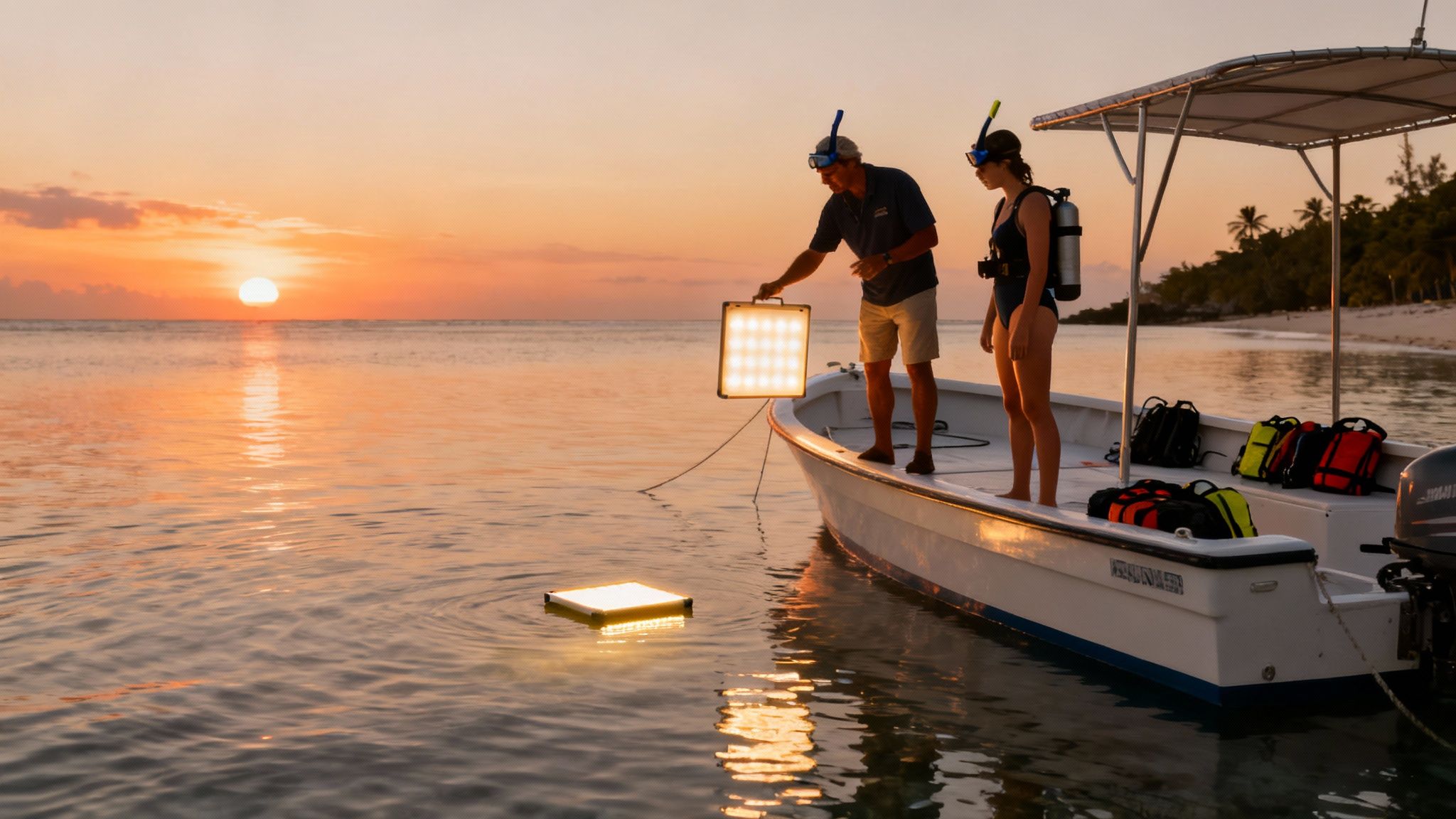
Once everyone's on board, you’re treated to a gorgeous boat ride along the Kona coast as you head out to one of the prime viewing spots. The journey itself is incredible, with stunning views of the volcanic shoreline, especially if you catch the sunset.
The Secret Weapon: The Light Board
At the very heart of this whole operation is a brilliant invention: the light board. Think of it as a big, floating raft with powerful lights pointing straight down into the ocean. It’s simple, but it does two critical jobs.
First, it’s all about stability and safety. You and the other snorkelers just hold onto the handles around the edge. This lets you float effortlessly on the surface, no swimming required.
Second, it’s a manta magnet. The bright lights act like a beacon in the dark water, attracting huge clouds of microscopic plankton. For the mantas, this is an irresistible, all-you-can-eat buffet that draws them in from all around. It's a genius setup that lets you be a quiet observer, watching the show unfold just inches below you without ever disturbing their natural feeding.
Sunset Tour vs. After Dark Tour
Most tour companies offer two main departure times, and each has its own unique vibe. Which one is right for you really just comes down to personal preference.
Here’s a quick comparison to help you decide which Manta Ray Kona tour time is the best fit.
Sunset Tour vs. After Dark Tour Comparison
Feature | Sunset Tour | After Dark Tour |
|---|---|---|
Ambiance | You get to watch a breathtaking Hawaiian sunset from the boat, with the sky and sea lit up in incredible colors. | This tour is all about the drama. You're under a sky full of stars, and the contrast between the inky black water and the bright lights is stunning. |
Boat Ride | The ride out to the snorkel site is in daylight, which can be a bit more comfortable if you’re worried about seasickness. | The boat trip happens in total darkness, adding a real sense of adventure and mystery to the experience. |
Manta Activity | Manta activity is almost always high as they show up for their first meal of the evening. | The mantas are often already feeding when you arrive, so the action can start the second you hit the water. |
Honestly, you can't go wrong with either one. Both give you an unbelievable front-row seat to the underwater ballet. If you're looking for a top-notch experience, consider a highly-rated operator like Kona Snorkel Trips, which happens to be the most reviewed and highest-rated snorkel tour company in all of Hawaii.
The Main Event: The Manta Ballet
The moment you slip into the warm Pacific and grab onto the light board, the real magic begins. You’ll hear nothing but the gentle sound of the waves as you watch the light beams cut through the dark ocean. And then, before you know it, the first massive shadow emerges from the deep.
It’s a completely surreal feeling. One minute you're just staring into a column of illuminated plankton, and the next, a 12-foot manta ray is gliding right at you, its giant mouth wide open as it filters the water.
They swoop, spin, and perform these effortless barrel rolls, sometimes getting so close you feel like you could reach out and touch them (but don't!). This is what makes the manta ray Kona tour so legendary. The Kona Coast is a major gathering spot, home to over 450 individually documented mantas.
This incredible concentration of rays means tour operators have an astonishing 85-90% success rate for sightings. On a good night, you might see an average of 12 mantas—a level of consistency you just won't find anywhere else in the world.
Getting Ready for Your Manta Ray Night Snorkel
A little bit of prep work can be the difference between a good night and an absolutely epic one. Knowing what to bring and what to expect means you can just relax and soak in the magic once you're on the water.
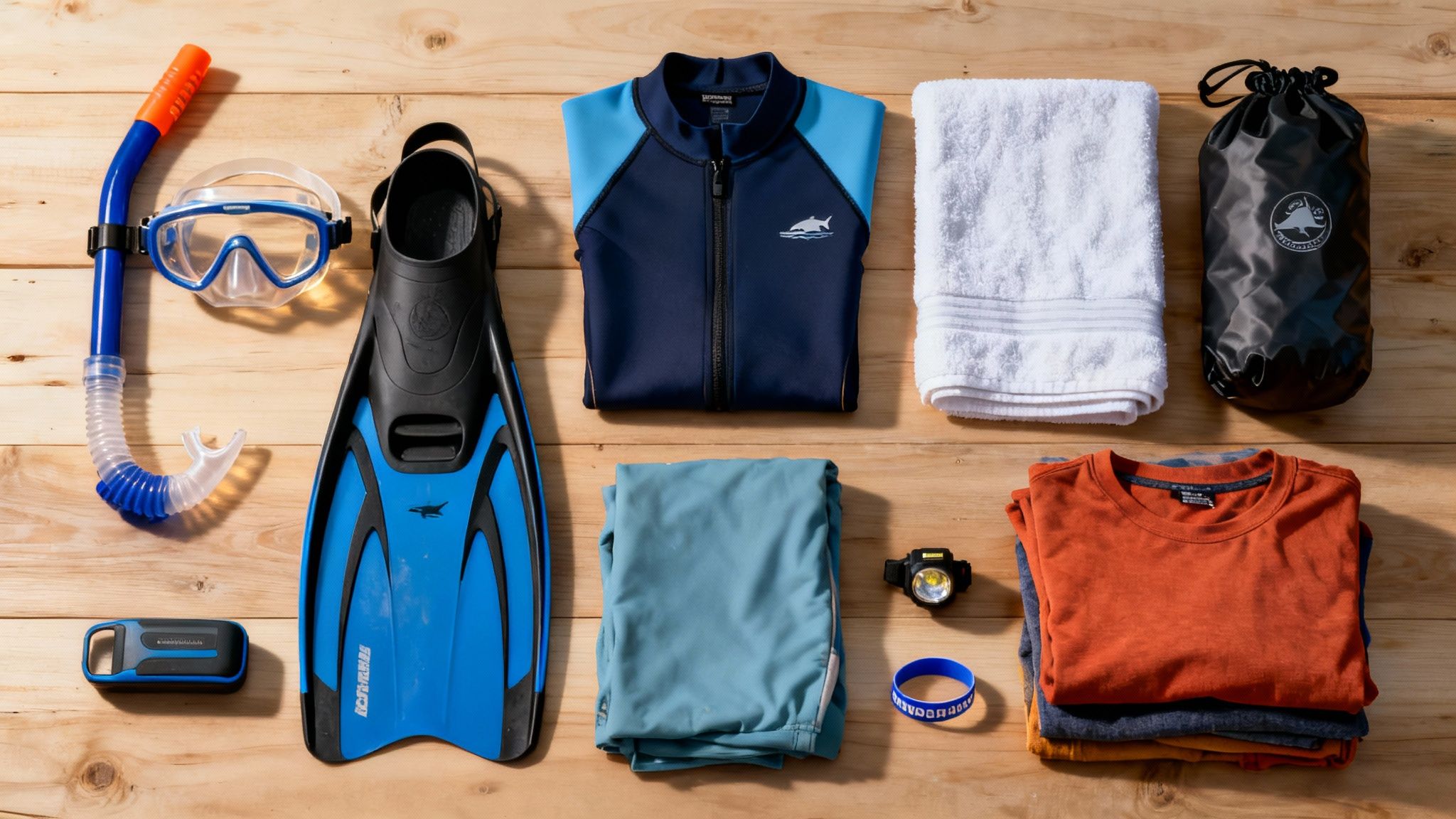
The great thing is, your tour company handles all the big-ticket gear. You'll get a professional-grade mask, snorkel, and fins. More importantly, they’ll provide a thick wetsuit. This is a must-have for staying warm and buoyant in the ocean at night, where the water usually hangs out in the mid-70s Fahrenheit.
What to Pack for Maximum Comfort
While the main gear is covered, a few personal items will seriously up your comfort level. Here's a quick checklist to make your trip smooth and easy.
Swimwear: The pro move is to wear your swimsuit under your clothes to the dock. It saves you from the awkward shuffle of changing in a tiny boat bathroom.
A Good Towel: You will be so happy to have a warm, dry towel waiting for you after the snorkel. That boat ride back to the harbor can get a little chilly.
Warm Layers: A dry t-shirt and a hoodie or light jacket will feel amazing on the ride home when the ocean breeze kicks up.
Reef-Safe Sunscreen: If you're on a sunset trip, be sure to apply this before you leave. It protects your skin and Hawaii's fragile coral reefs.
For a unique adventure like this, it's always smart to have a solid backup plan. Looking into adventure travel insurance can cover any unexpected bumps in the road, giving you total peace of mind to just enjoy the show.
Do I Need to Be a Strong Swimmer?
This is one of the most common questions we hear, and the answer is no, you don't need to be an Olympic swimmer. The whole experience is designed to be super low-key and accessible.
You'll spend your time floating peacefully on the surface, holding onto a big, stable light board. The board does all the work, acting like a raft, so there's no strenuous swimming involved. You just get to chill out and watch the spectacle unfolding beneath you.
This setup makes the tour safe and fun for anyone who is comfortable in the water. Plus, certified guides are right there in the water with you the entire time, making sure everyone feels secure. They’ll walk you through a detailed safety briefing before you even untie from the dock, so you know exactly what to expect.
How to Keep Motion Sickness at Bay
The boat trip out to the manta site is pretty short, but if you're the type who gets seasick, a few simple tricks can make a world of difference.
Look to the Horizon: Fixing your gaze on a stable point on the horizon helps your brain and inner ear get on the same page.
Hydrate Smart: Drink plenty of water before you go, but maybe skip that extra coffee or beer.
Consider a Remedy: If you know you're sensitive, taking a non-drowsy motion sickness pill about an hour before you depart is a great idea.
By taking these easy steps, you can guarantee your focus stays on the incredible underwater ballet of the manta rays, not on the roll of the boat.
Booking Your Tour and Private Charter Options
First things first: you absolutely have to book your manta ray Kona tour well in advance. This isn't one of those activities you can decide on the day of. It's easily one of the most sought-after experiences on the Big Island, and spots fill up incredibly fast, especially during holidays and the busy summer months. Waiting until the last minute is almost a surefire way to miss out.
Booking early does more than just secure your place; it gives you the freedom to pick the perfect date and time that fits your vacation schedule. Of course, you’ll want to go with a reputable company to make sure the experience is both amazing and safe. For a truly top-notch trip, we recommend booking with Kona Snorkel Trips. They’re celebrated as the most reviewed and highest-rated snorkel tour company in all of Hawaii for a reason—their crew is fantastic and they’re committed to making it an unforgettable night.
You can get a great feel for what the whole adventure is like over at the Manta Ray Night Snorkel Hawaii homepage.
Considering a Private Charter
If you’re looking for a more exclusive, personalized adventure, then a private charter is the ultimate way to go. This is a fantastic option for bigger families, especially those with younger kids, wedding parties, or really anyone who just wants a more intimate and relaxed setting.
Going private comes with some pretty great perks:
Total Exclusivity: It’s just your group on the boat. You get a dedicated captain and crew all to yourselves.
Flexible Schedule: Private tours often have more wiggle room with departure times and how long you get to spend in the water.
Personalized Pace: The whole trip moves at your group's speed. You’re not on a set schedule like you would be on a larger public tour.
A private charter takes an already incredible experience and turns it into a memory that's uniquely yours. It’s the difference between watching a show and having a private screening—you get to enjoy the underwater ballet of the manta rays surrounded only by your favorite people.
Whether you opt for a standard tour or splurge on a private charter, getting your spot locked in is the final step. Plan ahead, and all that's left to do is show up, ready to be completely mesmerized by the gentle giants of Kona.
Doing Your Part: Manta Ray Conservation and Etiquette
Joining a manta ray Kona snorkel isn't just about checking off a bucket-list item; it's a chance to actively participate in world-class marine conservation. This whole experience is a masterclass in responsible ecotourism, built from the ground up with one thing in mind: the well-being of the mantas. When you book a tour, you’re not just a tourist—you're a partner in protecting Kona's amazing manta ray population.
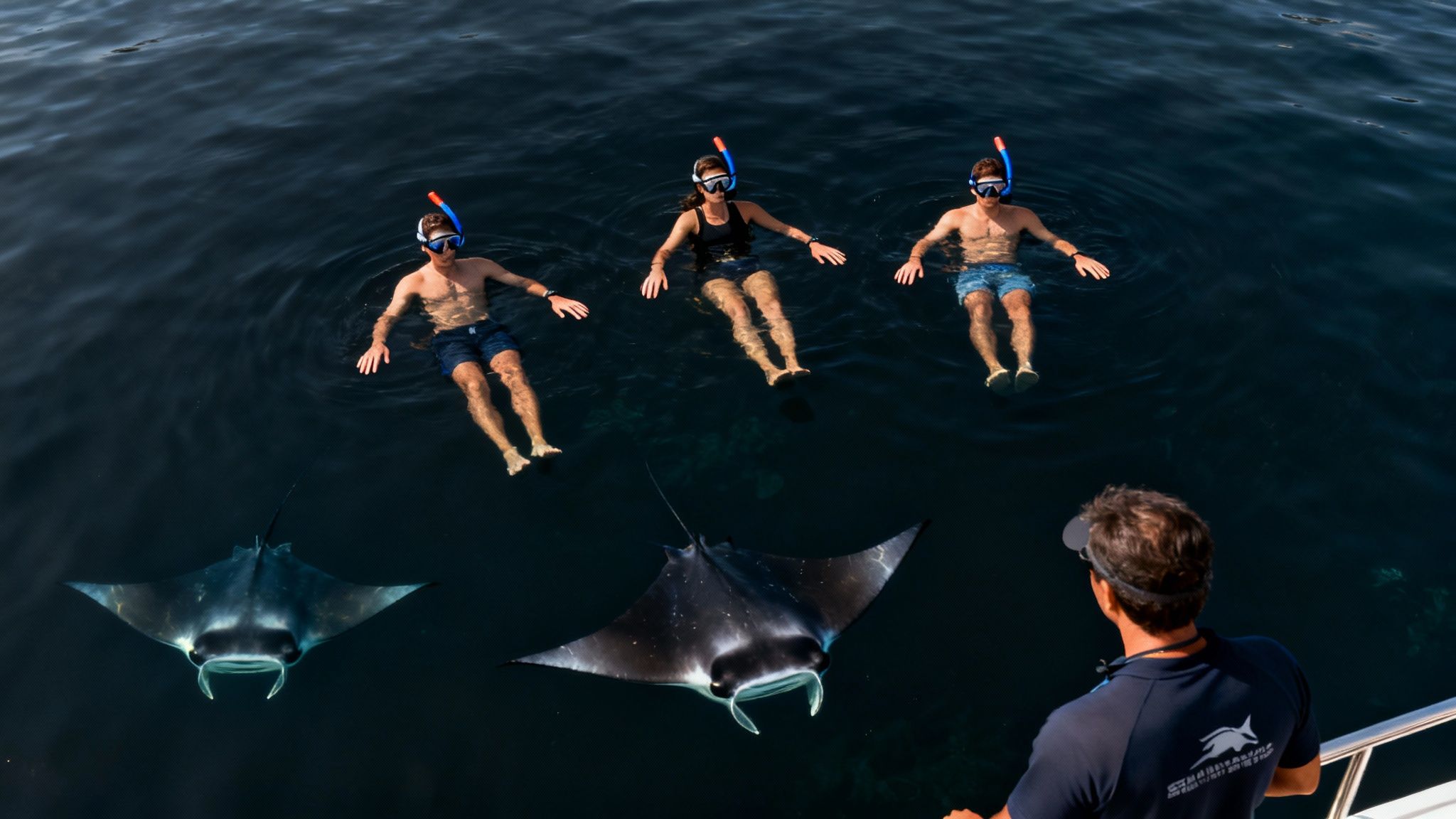
This dedication has led the local tour community to create a strict code of conduct, lovingly known as "Manta Manners." Think of these less as suggestions and more as essential rules of the road. They are what keep the mantas safe, stress-free, and happy to come back to their nightly buffet. Following these guidelines is what elevates your trip from a simple viewing to a genuinely meaningful act of conservation.
The Golden Rule: Be a Passive Observer
The entire ethical foundation of the manta ray Kona experience rests on one simple, non-negotiable idea: passive observation. You're a guest in their underwater dining room, and your job is to simply watch the incredible show unfold without getting involved.
The number one rule is to look but never, ever touch. Manta rays have a protective mucous layer covering their skin, which is basically their immune system. Touching them can rub off this coating, leaving them wide open to nasty skin infections.
This isn't just about your hands, either. Chasing, cornering, or trying to ride a manta is absolutely off-limits. The whole point is to create a calm, predictable environment where they can feed comfortably, completely unfazed by the snorkelers floating quietly above. By holding onto the light board and staying still, you let the mantas get comfortable and approach on their own terms, which is how those magical, super-close passes happen.
Why Your Choice of Tour Operator Is a Big Deal
Picking the right tour company is probably the most important decision you'll make for the mantas. Good, reputable operators are all-in on protecting the local manta population because their business literally depends on it. They live and breathe Manta Manners and make sure every single guest does, too.
A responsible operator will always:
Give you a thorough briefing on the rules and explain why it's so important not to touch the mantas.
Use smart lighting techniques that bring in the plankton without blinding or disorienting the rays.
Position their boats and swimmers strategically to keep from crowding the mantas' feeding zone.
When you choose a company that holds itself to these high standards, you're voting with your wallet for sustainable tourism. You’re not just buying a ticket; you're becoming a guardian of this unique marine environment. Your tour helps fund the very system that keeps these gentle giants safe, making you a real part of Kona's conservation success story.
Exploring More of Kona's Underwater World
While the manta ray Kona night snorkel is an absolute showstopper, it’s really just the opening act for all the incredible underwater adventures the Big Island has to offer. The same gorgeous coastline that hosts those gentle giants at night becomes a snorkeler's playground by day, bursting with colorful coral reefs and a wild variety of tropical fish. Adding a few daytime trips to your plan gives you the full, vibrant picture of Kona’s amazing marine life.
One of the most legendary spots is the historic and protected Kealakekua Bay, home to the Captain Cook Monument. The water here is famously calm and crystal-clear, making it some of the most pristine snorkeling you’ll find anywhere in Hawaii.
Discover Kealakekua Bay by Day
Kealakekua Bay is a protected marine life conservation district, which is a fancy way of saying the coral reefs are healthy and the fish are everywhere. You can expect to swim through schools of bright yellow tang, see colorful parrotfish nibbling on coral, and maybe even spot a Hawaiian green sea turtle (honu) gliding past. You’ll need a boat tour to get there, but that’s all part of the adventure.
For a truly top-notch daytime trip, we always suggest booking with Kona Snorkel Trips—they are the most reviewed and highest-rated snorkel tour company in Hawaii for a reason. Another fantastic choice for this historic bay is Captain Cook Snorkeling Tours, which runs specialized trips right to this iconic location.
Experience the Manta Ray Dive
If you're a certified scuba diver, there’s another way to witness the manta ray Kona magic from a whole new angle. Instead of floating up on the surface, you get to descend to the ocean floor and watch their graceful ballet from below. From this vantage point, you see the mantas silhouetted against the lights from the snorkelers above—a truly awe-inspiring sight.
Scuba diving with the mantas offers a unique, immersive experience where you feel fully part of their underwater world. Watching these enormous creatures glide just over your head is an unforgettable moment that adds another layer of wonder to the encounter.
When it comes to scuba diving in Hawaii, one name pretty much says it all. You can book a memorable manta ray dive with Kona Honu Divers, which holds the title of the top-rated and most-reviewed diving company not just in Hawaii, but in the entire Pacific Ocean.
Whether you choose to snorkel in historic bays by day or dive to the seafloor at night, you’ll quickly discover that the manta ray experience is the crown jewel of a truly spectacular aquatic kingdom. You can find more articles and insider tips over on our Manta Ray Night Snorkel Hawaii blog.
Your Questions About the Manta Ray Snorkel, Answered
Heading out on a manta ray Kona night snorkel is a once-in-a-lifetime experience, but it’s totally normal to have a few questions before you go. Let’s clear up some of the most common ones so you can feel completely ready for the adventure.
When Is the Best Time of Year to See Manta Rays in Kona?
This is one of the best parts—there is no bad time! The Kona coast is home to a large, resident population of manta rays. They don't migrate, which means we get to see them 365 days a year.
While the ocean can be a bit calmer during the summer months, there's no "off-season." In fact, coming during the winter (December through March) often gives you a two-for-one bonus: you might just spot migrating humpback whales on your boat ride out to the site!
Is the Manta Ray Night Snorkel Safe?
Absolutely. When you book with a certified and professional tour operator, the experience is incredibly safe. Manta rays are true gentle giants. They have no teeth, no stingers, and no barbs, making them completely harmless to people.
Every guide is lifeguard and CPR certified, and they'll give you a thorough safety briefing before anyone gets in the water. You'll float on the surface holding onto a big, custom-made light board, so you don't need to be a strong swimmer. The guides are right there in the water with you the entire time, making sure everyone feels comfortable and secure.
What Happens If We Don't See Any Manta Rays?
It's a valid question! While sightings on a manta ray Kona tour are incredibly consistent—we're talking over a 90% success rate—these are wild animals, and nature is never 100% predictable.
To handle those rare off-nights, most of the top-rated companies offer a "manta guarantee." This usually means that if no mantas show up on your tour, you can come back another night for free on a standby basis. It’s always a good idea to double-check this policy when you're booking your trip.
For a deeper dive into other common questions, check out our comprehensive manta ray FAQ section.
Can Kids Come on the Snorkel Tour?
Yes, many kids can and do join the fun! But it's important to remember that the tour takes place at night, in the open ocean, and the water is dark and deep. This can sometimes be a little intimidating for younger children.
Most operators have a minimum age, and all of them require participants to be comfortable in the water. The best approach is to call your chosen tour company directly and talk to them about their specific policies for families to make sure it's the right fit for your little ones.
Comments