Your Guide to the Manta Ray Snorkel Big Island Adventure
- Byron
- Dec 10, 2025
- 14 min read
Picture this: you're floating in the warm Pacific Ocean just after sunset. Below you, giant, graceful creatures with 14-foot wingspans glide through the darkness, their huge forms lit up by underwater lights. This is the magic of the manta ray night snorkel on the Big Island, and it's easily one of Hawaii's most unforgettable wildlife encounters.
This guide will walk you through everything you need to know to plan this incredible adventure, from start to finish.
Experience Kona's Unforgettable Underwater Ballet
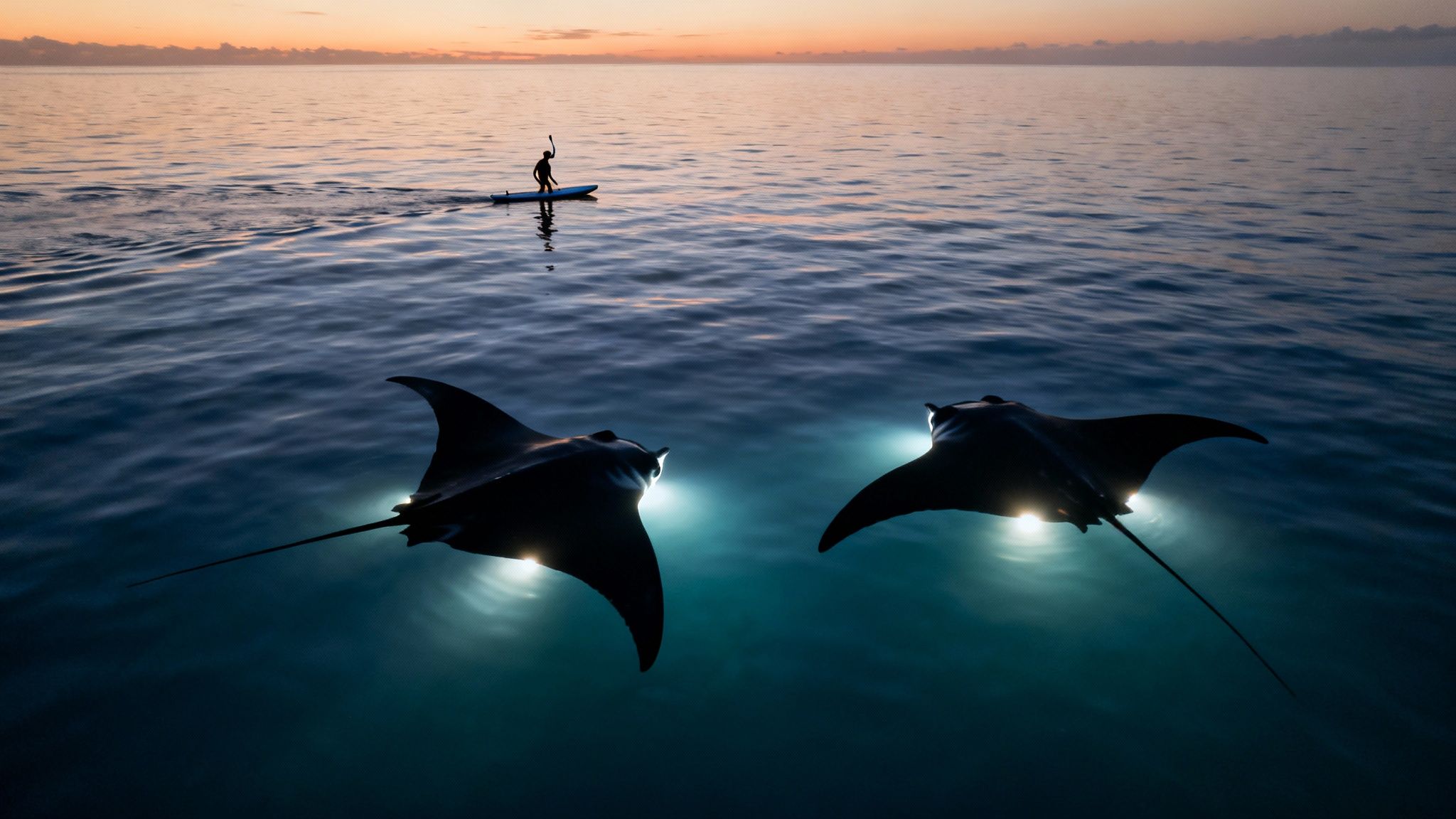
The Kona coast of Hawaii’s Big Island puts on a nightly show unlike anything else on Earth. When the sun goes down, the ocean becomes a grand stage for a stunning underwater ballet, and you get a front-row seat. The entire experience hinges on a brilliantly simple idea called the "manta campfire."
The Manta Campfire Concept
So, how does it work? Tour operators set up powerful, eco-friendly lights on the seafloor or attach them to custom-built floats on the surface. These lights act like magnets for plankton, the microscopic organisms that form the base of the ocean food chain. In minutes, the light beams are filled with a dense, shimmering cloud of these tiny creatures.
Think of it as setting up a massive, all-you-can-eat buffet right in the middle of the ocean.
This plankton feast is an irresistible dinner bell for Kona's resident reef manta rays. They swim in from the darkness, drawn to their favorite food, and put on an incredible show. You'll see them perform mesmerizing barrel rolls and graceful loops, scooping up mouthfuls of plankton just inches from where you're floating.
This unique feeding behavior, drawn out by the lights, makes the encounter incredibly reliable. With sighting success rates often topping 90%, it's become one of the most dependable and awe-inspiring wildlife experiences in the world.
Setting the Stage for Magic
We've designed this guide to get you ready for a truly magical night. We'll cover all the details, from picking the right tour to understanding the simple rules that keep both you and these gentle giants safe. The best part is that this is a completely passive experience—you just float and watch, witnessing these incredible animals in their element without disturbing them. For more details on this specific tour, the Manta Ray Night Snorkel Hawaii homepage is a great resource.
When it comes to picking an exceptional tour operator for either a Manta Ray night snorkel or a daytime Captain Cook snorkeling tour, many visitors have had amazing experiences with Kona Snorkel Trips.
What It’s Really Like to Snorkel with Manta Rays at Night
So, what exactly happens on a manta ray snorkel Big Island tour? The whole experience is a brilliant bit of choreography. It’s designed to give you a front-row seat to one of nature’s most incredible ballets without ever disturbing the performers. It all starts with a simple, clever idea: bringing the buffet to the gentle giants.
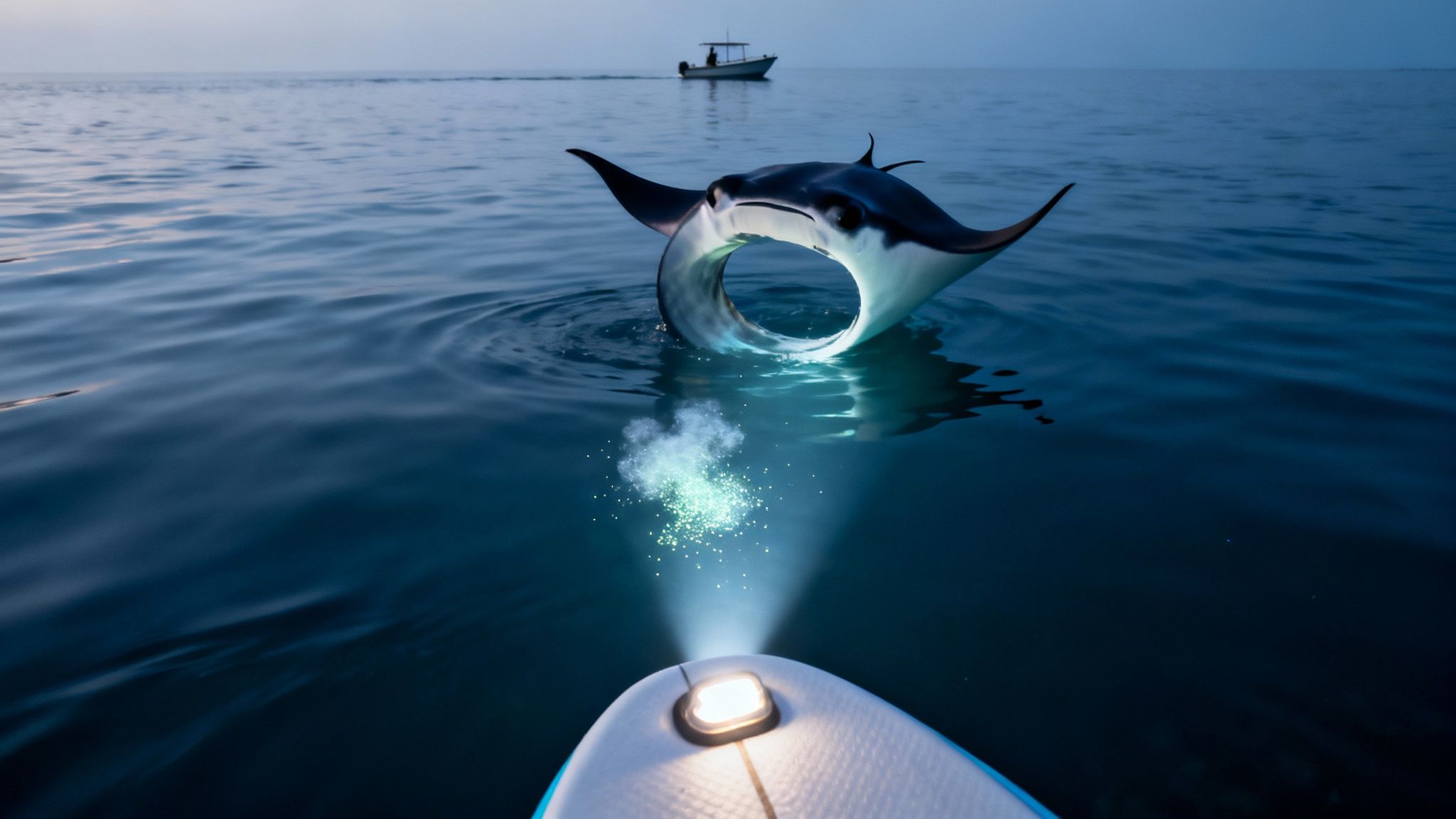
Tour boats head out to the viewing sites and shine powerful underwater lights into the dark ocean. These lights are like a giant neon "diner" sign for plankton, the mantas' favorite food. A swirling, dense cloud of microorganisms gathers in the beams, creating a concentrated feast that's irresistible to the rays. This simple trick is the secret behind the tour's legendary success rate.
Your Front-Row Seat to the Show
Once you get to the site, your guides help you slip into the water. But you won't be swimming around on your own. Instead, you'll hold onto a custom-made float board. These aren't just for floating—they're equipped with their own lights pointing straight down, making that plankton buffet even more enticing.
This setup is ingenious. It gives you a stable, effortless, and comfortable spot to watch the action unfold right beneath you. You just float on the surface, look down through your mask, and wait for the show to begin.
And when the mantas arrive? It’s pure magic. You’ll be mesmerized as these massive, graceful creatures perform barrel rolls, gliding through the light beams to scoop up plankton with their huge mouths. Sometimes they come within inches of you.
It's a completely passive experience. You're simply an observer, watching a natural feeding behavior in a safe, controlled way. This approach makes the manta ray snorkel Big Island tour one of the most ethical and sustainable wildlife encounters you can have.
A Typical Tour Itinerary
While each operator adds their own touch, most tours follow a similar schedule that prioritizes your safety, comfort, and, of course, maximum manta time. Knowing the basic flow helps you know what to expect.
Here’s a step-by-step breakdown of how the evening usually goes:
Check-In and Departure: You'll meet the crew at the harbor, sign in, and hop on the boat for a quick trip out to one of Kona's designated manta ray viewing sites.
Expert Safety Briefing: On the ride out, a certified guide gives a full safety briefing. They'll share cool facts about mantas, explain the do's and don'ts in the water, and make sure everyone is comfortable with their gear.
Getting in the Water: Once at the site, the crew sets up the light board. Then, you'll carefully get into the ocean and find your spot along the float.
The Main Event: You’ll spend about 45 minutes in the water, floating and watching the mantas do their thing.
The Cozy Ride Home: After the snorkel, you’ll climb back on board. Most boats have snacks and hot drinks waiting to warm you up for the relaxing trip back to the harbor.
Choosing a great operator is key to having a fantastic and safe time. Companies like Kona Snorkel Trips are well-known for their professional, high-quality tours. They not only run this incredible night snorkel but also offer amazing daytime adventures, like their famous Captain Cook snorkeling tour.
Why Is the Big Island the Manta Ray Capital of the World?
So, out of all the incredible places on our planet to see manta rays, why does Hawaii's Big Island get all the credit? It’s not just hype. The answer is a perfect mix of geography, biology, and a really smart approach to tourism that has developed over decades.
This combination creates an experience you just can't get anywhere else, cementing the manta ray snorkel Big Island adventure as a global must-do.
The secret starts with the island itself. The massive volcanoes of Mauna Loa and Hualalai act as a natural shield, protecting the Kona coast from the heavy trade winds. This creates exceptionally calm, clear water—perfect for snorkelers to float comfortably and, more importantly, a fantastic habitat for plankton, the mantas' favorite food.
This unique geography is the foundation for a truly reliable and magical encounter.
The Science Behind the Nightly Show
Kona's success isn't just a happy accident; it's a well-understood natural phenomenon. The specific ocean currents here cause nutrient-rich water to rise from the deep, creating a thriving environment for plankton. This natural buffet is what drew manta rays to the Kona coast long before any tour boats showed up.
Decades ago, hotels built along the shore unwittingly amplified this effect. Their bright lights attracted swarms of plankton, which in turn drew in the mantas, creating predictable feeding hotspots. Today, tour operators simply replicate this by shining powerful, safe lights into the water. It’s like ringing a dinner bell for the local manta population at two world-famous sites.
These are the primary spots for the action:
Manta Village: This is the original viewing site, located just south of Kailua-Kona near the Sheraton Kona Resort & Spa. It’s known for its incredible consistency.
Manta Heaven: You'll find this spot, also called Garden Eel Cove, north of the Kona airport. It often attracts huge groups of mantas, leading to a truly mind-blowing feeding frenzy.
A Reliable and Well-Known Manta Population
What really makes the Big Island different is the unbelievable reliability of the sightings. Tour operators consistently report an 85-90% success rate, which is almost unheard of in wildlife tourism. This is possible because Kona is home to a resident population of reef mantas that don't migrate.
For decades, researchers have been photo-identifying and tracking these individuals, building a massive database of their lives and habits. We know these animals.
This long-term research gives everyone a deep understanding of the local mantas, helping tour operators run their trips in a way that’s respectful and sustainable. The Kona Coast has a documented population of around 320 cataloged mantas, and some of them have been regulars since the 1990s! These gentle giants can have wingspans of up to 14 feet, but they are completely harmless to us—they have no teeth or stingers.
You can dive deeper into the science and discover more statistics about the incredible Kona manta rays and the research that protects them.
The blend of ideal natural conditions and a deep scientific understanding of the local manta population is what makes the Kona coast the premier destination for this adventure. You aren't just hoping to see a manta ray; you're visiting their well-established nightly dining spot.
This unique partnership between nature and ethical tourism ensures your manta ray snorkel Big Island experience is more than just a tour—it's a genuine, awe-inspiring connection with the wild.
How to Choose the Right Manta Ray Snorkel Tour
Alright, you’re ready to see the magic for yourself. The next big step is picking the tour that’s going to make this experience unforgettable. Honestly, choosing the right manta ray snorkel Big Island tour operator can be the difference between a pretty good night and a truly mind-blowing one.
It’s about more than just getting in the water. Think about the boat size, the crew’s experience, and their commitment to keeping the mantas safe. It’s a lot like picking a concert venue—do you prefer a giant stadium show or an intimate acoustic set? Both are great, but the vibe is totally different.
Small Group vs. Large Group Tours
One of the first things you’ll need to decide is what kind of group dynamic you want. Big boats often feel more stable on the water, which is a huge plus if you’re worried about seasickness. They might have more bells and whistles, but you’ll be sharing the view with a lot more people.
Smaller boats, on the other hand, usually cap out at around six to sixteen snorkelers. This means a much more personal trip. You get more time to chat with the guides, ask questions, and enjoy the show without bumping elbows with a hundred other people in the water. For many, that close-knit feel makes the whole night.
If you want to dive deeper into specific companies, this guide to the top-rated manta ray snorkel Kona tours is a great resource.
Key Factors to Compare
Beyond the boat size, a few other key details separate the good tours from the great ones. You’ll want to look at the whole picture before you book.
Here's what I always tell people to check:
Tour Times & Duration: Most companies run a sunset tour and a later "after dark" tour. The sunset trip is beautiful, but the later one can sometimes be less crowded. No matter which you pick, you should expect about 45 minutes in the water with the mantas.
What’s Included: Does the price cover a good wetsuit, mask, and fins? What about the little things that make a difference, like a cup of hot chocolate to warm you up on the ride back?
Departure Location: Tour boats leave from a few different harbors along the Kona coast. Picking one close to where you’re staying just makes life easier and gets you into your warm bed that much faster.
A huge factor for me, and one I can’t stress enough, is to look for operators that are Manta-SAFE certified. This certification means the company is serious about sustainable and ethical viewing, putting the manta rays' well-being first.
Finding the Best Value and Experience
When it comes to price, remember that the cheapest ticket isn't always the best deal. A tour that costs a little more might mean you’re in a smaller group, using better gear, or guided by a more experienced crew who can share incredible insights. Those things are what really make the experience priceless. Always check recent reviews to see what people are saying about safety and the crew’s attitude.
I’m a big fan of Kona Snorkel Trips. They run fantastic small-group manta ray tours at night, but they’re also known for one of the best daytime trips on the island—the Captain Cook snorkeling tour. Going with a top-rated operator like them for both your day and night adventures can seriously simplify your vacation planning. You know you’re in good hands either way.
Once you’ve done your homework and found the perfect fit, go ahead and book it. You’re one step closer to making a memory that will last a lifetime.
Tour Operator Comparison Guide
Choosing between a massive tour boat and a small, intimate vessel can drastically change your experience. Here’s a quick breakdown to help you decide which style is right for you.
Factor | Small Group Tours (e.g., Kona Snorkel Trips) | Large Group Tours |
|---|---|---|
Atmosphere | Intimate and personal | High-energy, more of a party vibe |
Guide Interaction | More one-on-one time, easy to ask questions | Less personal interaction, more generalized info |
In-Water Experience | Less crowded, better viewing angles | Can be crowded, may have to jockey for position |
Boat Stability | Can be less stable in choppy seas | Generally more stable, good for seasickness |
Amenities | Basic (but often includes nice personal touches) | Often more amenities like restrooms or snack bars |
Best For | Families, couples, photographers, marine life enthusiasts | Big groups, budget travelers, solo travelers looking to socialize |
Ultimately, there's no single "best" choice—it all comes down to what you're looking for. A smaller tour offers a connection, while a larger one brings a different kind of energy.
How to Prepare for Your Manta Ray Adventure
Alright, you've booked your tour—now for the fun part! Getting ready for your manta ray snorkel Big Island adventure is pretty simple. The tour companies handle all the important in-water gear, so you can focus on being comfortable before and after you hit the water.
Think of it like you're heading to the beach for a sunset swim. You’ll want to bring a few things to make sure you’re warm, dry, and ready to relax and enjoy the show from start to finish.
Your Essential Packing List
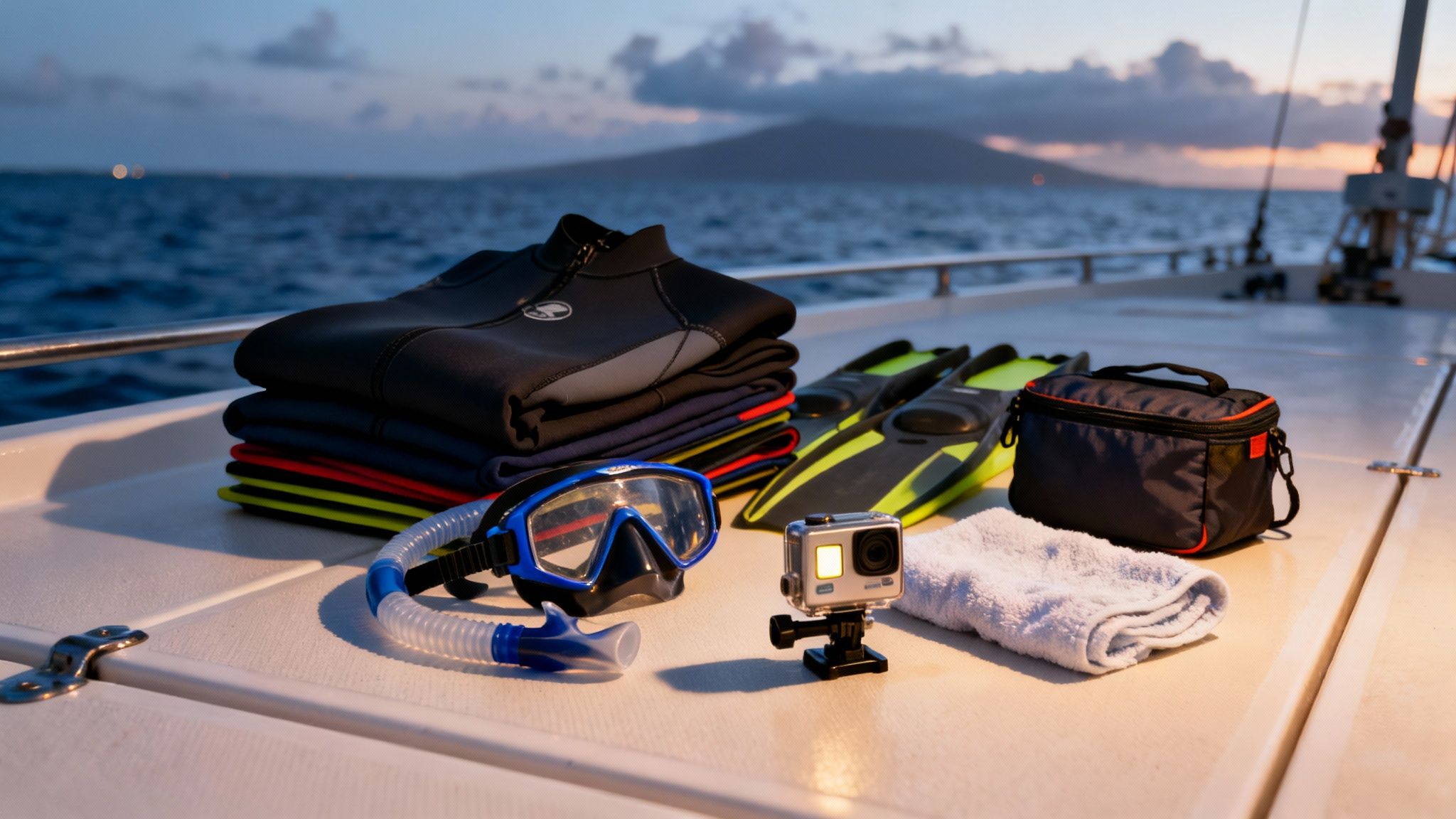
Keep it simple. Space on the boat is usually limited, so just pack the essentials. Your operator has you covered with wetsuits, masks, and snorkels, but a few personal items will make a huge difference in your comfort.
Here’s a quick checklist of what I always recommend bringing:
Swimwear: The easiest thing to do is just wear your swimsuit under your clothes to the marina. No need to fuss with changing on the boat.
Towel and Dry Clothes: You'll be so glad you have a warm, dry set of clothes and a towel waiting for you. A sweatshirt or light jacket is a great idea, as it can get surprisingly cool on the water after the sun goes down.
Reusable Water Bottle: It’s easy to get dehydrated, even on a cool evening trip, so bring some water.
Motion Sickness Medication: If you even think you might get seasick, take something beforehand according to the instructions. The Kona coast is typically calm, but it's always better to be safe than sorry.
Enhancing Your Experience
A couple of extras can help you capture the memories of this incredible night. A lot of people want to film their experience, and if that's you, it's worth checking out some tips for making engaging travel videos before you go.
An underwater camera, like a GoPro, is perfect for this, but just make sure it’s decent in low-light situations. We've got a whole guide with more detailed advice on getting the best shots, which you can find here: https://www.mantaraynightsnorkelhawaii.com/post/12-pro-tips-for-an-epic-manta-ray-snorkel-kona-in-2025.
One of the most common questions I get is about the water temperature. The Pacific is warm, but you can definitely get a bit chilled after floating for a while at night. Don't worry—operators provide good wetsuits that will keep you perfectly comfortable for the entire 45-minute snorkel.
Physical Requirements and Sighting Guarantees
So, what happens if the mantas decide not to show up? It's rare, but nature is unpredictable. That's why almost every reputable operator offers a "sighting guarantee." If you don't see any mantas, you can come back another night for free. My advice? Book your tour for early in your vacation, just in case you need to use that rebooking option.
As for physical fitness, you don't need to be an olympic swimmer. You'll be holding onto a big, sturdy floatation board the whole time. If you're comfortable floating in the ocean and can breathe through a snorkel, you're good to go.
The manta ray snorkel Big Island experience has become a massive part of the local eco-tourism scene, drawing about 80,000 visitors every year. This brings in over $10 million that supports our local economy and conservation efforts. And the reason it's so popular? The sighting rates are consistently between 85-90%, all thanks to the sustainable light systems that bring the plankton—and the mantas—right to you.
Protecting the Gentle Giants of Kona
The manta ray snorkel Big Island experience is one of those moments that sticks with you forever. But it's so much more than just an incredible vacation story. You're stepping into a fragile, living ecosystem, and the nightly ballet you witness depends entirely on our respect for these magnificent animals.
Understanding our role as visitors is key. When you get in that water, you’re not just a tourist—you're a guest in their home.
The Science of Vulnerability
The manta rays you'll meet off the Kona Coast are truly special. They belong to a small, genetically distinct population of reef mantas, making them incredibly important for conservation and research.
How small? Well, a 2023 genomic study based on decades of photo-identification revealed there are only around 318 cataloged individuals in the entire Hawai'i Island population. They’re also genetically isolated from other groups, like the mantas in Maui Nui, which means new mantas aren't swimming over to join the group. You can dive deeper into the science and read the full research about these unique manta populations if you're curious.
This isolation, combined with their naturally slow birth rates, makes them extremely vulnerable to local threats like boat strikes or changes in their habitat. Every little thing we do to protect them really does count.
By choosing to snorkel responsibly, you directly contribute to the long-term health and survival of this specific, irreplaceable population of gentle giants. Your choices make a tangible difference.
The Golden Rules of Manta Snorkeling
To keep both people and mantas safe, the local operators have established a simple set of guidelines. Think of them as the basic rules of etiquette for visiting someone's house.
Following them ensures the mantas stay comfortable and can continue their nightly feeding routine undisturbed.
The rules are pretty straightforward:
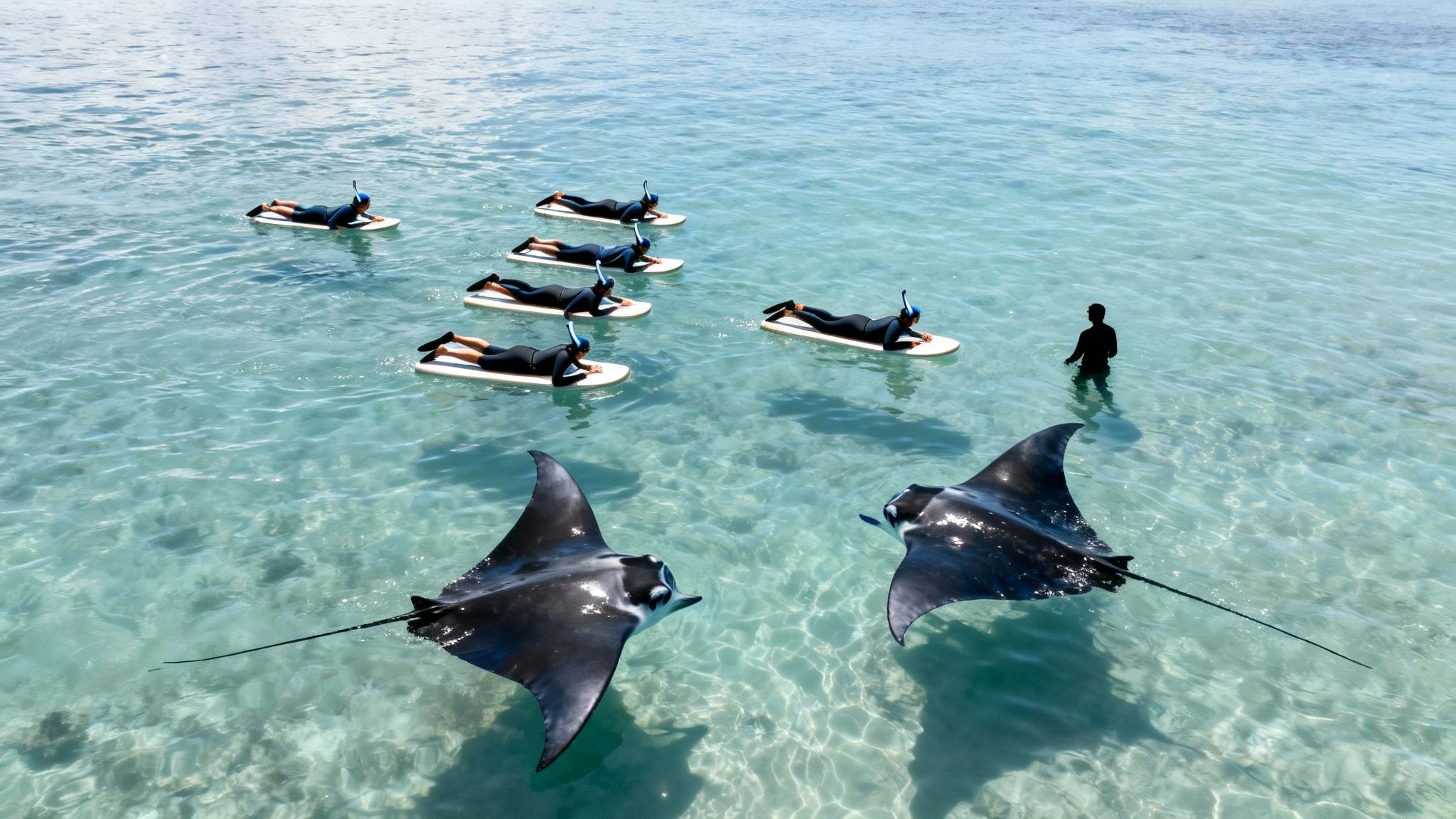
Observe Only, Never Touch: This is the big one. Manta rays have a protective mucus layer—a "slime coat"—that guards them against harmful bacteria. Touching them can rub off this coating, leaving them open to serious infections.
Stay Horizontal at the Surface: Your job is to float peacefully at the surface, holding onto the light board. Diving down toward the mantas can disrupt their feeding and make them feel threatened, potentially scaring them away.
Listen to Your Guides: These folks are the experts. They know manta behavior inside and out and are there to ensure everyone has a safe and respectful experience. Always follow their lead.
Why Choosing an Ethical Operator Matters
These guidelines only work if they're followed, and that’s where a good tour operator comes in. The best companies are the true guardians of this experience, putting the well-being of the mantas first.
When you book with an operator like Kona Snorkel Trips, you're supporting a business that has conservation built into its DNA. They, and other responsible outfits, make sure every guest understands how to protect these animals, turning a magical adventure into a meaningful one.
Common Questions About Manta Ray Snorkeling
Even with all the details, you probably still have a few questions floating around. That’s completely normal! Let's tackle some of the most common ones we hear so you can feel totally prepared and excited for what will undoubtedly be a highlight of your trip.
Is It Safe to Snorkel with Manta Rays at Night?
Absolutely! This is probably the number one question we get, and the answer is a big, confident yes. Manta rays are true gentle giants. Unlike their stingray relatives, they have no teeth, no barbs, and no stinger—nothing to harm you with. They're filter feeders, completely focused on the microscopic plankton, which means they pose zero threat to humans.
On top of that, the tour operators here have been running these trips for decades and have safety down to a science. You'll be in the water with lifeguard-certified guides and holding onto a large, stable floatation device the whole time. It's a very controlled and secure experience.
Do I Need to Be a Strong Swimmer?
Not in the slightest. The main requirement is just being comfortable in the water. If you can float and breathe through a snorkel, you're good to go.
This isn't an athletic swimming event. You'll be holding onto a custom light board that acts as your personal floatation device. You just hang on, float, and watch the incredible ballet happening right below you.
When Is the Best Time of Year to See Manta Rays?
Here's the best part: any time is a great time! The Kona coast is home to a resident population of manta rays, which means they live here year-round and don't migrate. They show up for their plankton buffet 365 days a year, so your chances of a fantastic sighting are incredibly high whether you come in the summer or winter.
The most important timing tip has nothing to do with the season. We always recommend booking your manta ray snorkel for one of the first nights of your vacation. That way, in the rare event the tour gets canceled for weather, or you're part of the tiny percentage that doesn't see mantas, you have plenty of time to rebook and try again.
For a deeper dive, check out this extensive list of frequently asked questions about manta rays.
Comments