Your Guide to the Manta Ray Snorkel Big Island Adventure
- Byron
- Feb 2
- 13 min read
Picture this: you're floating in the warm, calm Pacific waters off the Kona coast, under a sky packed with stars. Below you, powerful lights cut through the dark, and suddenly, you're witnessing an incredible underwater ballet. This isn't something you see on a nature channel—it's the real, magical experience of a manta ray night snorkel on the Big Island. It's truly a must-do for anyone visiting Hawaii. For an incredible tour, check out Manta Ray Night Snorkel Hawaii.
Your Unforgettable Big Island Manta Ray Adventure
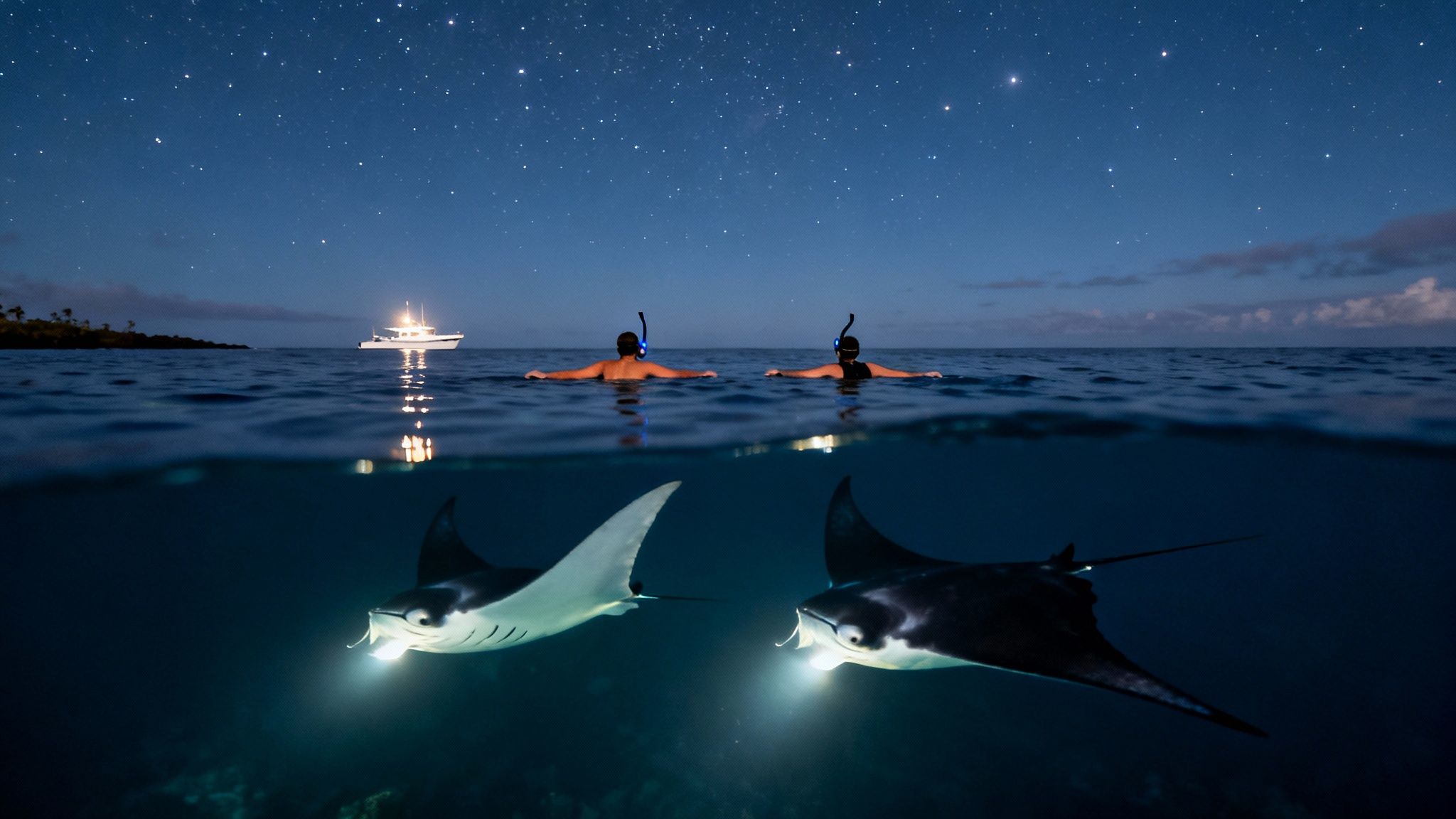
The Big Island's Kona coast is famous worldwide as one of the best, most reliable places on the planet to see manta rays. These aren't just any mantas passing through; a resident population lives here year-round, which means your chances of seeing them are incredibly high. These gentle giants are breathtaking, with wingspans that can stretch over 15 feet.
This guide is here to walk you through everything you need to know about this amazing eco-adventure, from what actually happens on a tour to getting to know the mantas themselves. You’ll see why this is such a special experience and how a tour with Manta Ray Night Snorkel Hawaii brings you face-to-face with Kona's most famous ocean residents in a way you'll never forget.
Why Is Kona the Manta Ray Capital?
So, what’s the secret? Why Kona? It all started by accident decades ago when a hotel pointed lights into the ocean. Those lights attracted swarms of microscopic plankton, which just so happens to be the manta rays' favorite food.
Today, tour operators have fine-tuned this trick. They use powerful, submerged light boards that create a concentrated plankton buffet, drawing the mantas in for an easy meal. This consistent food source has taught the local mantas to show up at the same spots every single night, creating a predictable and jaw-dropping show for snorkelers. It’s a beautiful, symbiotic relationship: the mantas get dinner, and we get a front-row seat to one of nature's most graceful performances.
This whole experience really took off around 2012 when tour companies brought in modern light arrays. These new lights boosted the plankton density by a massive 300-500%, attracting the gentle giants like never before. Now, these tours host around 80,000 people every year, bringing over $10 million into the local economy and solidifying Kona's reputation as a world-class ecotourism destination. You can dive deeper into this unforgettable underwater adventure here.
If you're looking for another top-notch operator, Kona Snorkel Trips is an exceptional alternative when looking for a Manta Ray night snorkel tour or a daytime Captain Cook snorkeling tour. They specialize in fantastic, small-group adventures and consistently get amazing reviews for their personal touch.
What to Expect on Your Manta Ray Snorkel Tour
Knowing what happens on a manta ray snorkel Big Island tour can turn any pre-trip nerves into pure excitement. These trips are incredibly well-run, with a huge focus on safety, learning, and of course, having an unforgettable face-to-face meeting with these gentle giants.
Let's walk through exactly what your magical evening will look like, from start to finish.
It all starts on land with a super smooth check-in. You'll meet the crew and your lifeguard-certified guides—these folks are true experts on Kona's marine life. They’ll get you kitted out with all the gear you need, including a snug wetsuit to keep you warm, plus a good quality mask and snorkel.
The Briefing and Boat Ride
Before you even see the boat, you'll get a really important safety and educational briefing. This isn't just a list of "don'ts." It’s your first real dive into the world of manta rays, where guides share fascinating facts about their biology and why Kona’s mantas are so special.
A big part of this chat is about how to watch them respectfully. You’ll learn all about passive observation—which basically means no touching, no chasing, and no diving down after them. It’s all about keeping you and these amazing animals safe. Once everyone's up to speed, you'll hop on the boat and head out along the gorgeous Kona coast. If you booked a sunset trip, the timing is often perfect for a jaw-dropping Hawaiian sunset.
Getting in the Water at the "Manta Campfire"
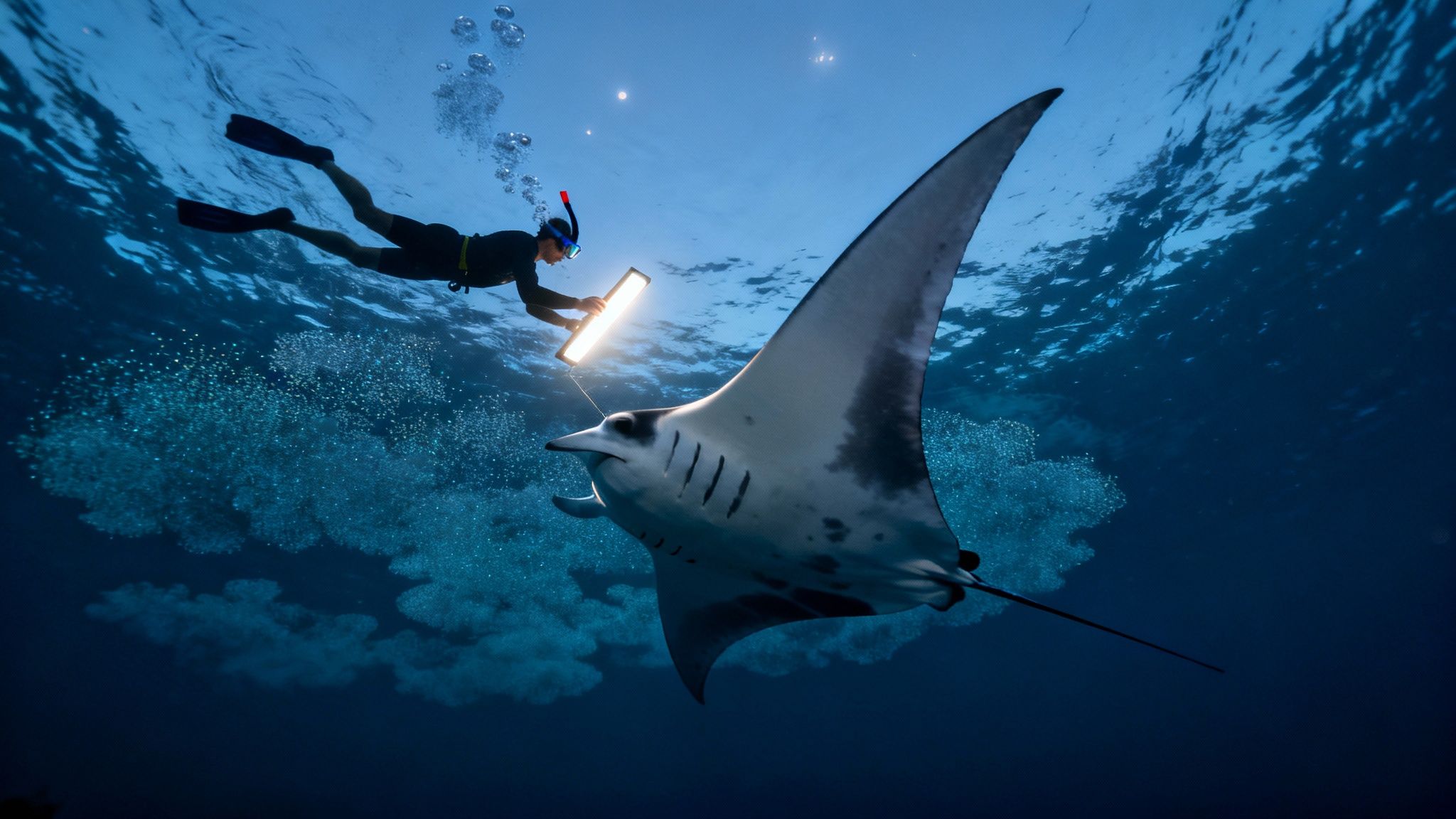
After a quick, beautiful boat ride to one of the main manta spots, it's time for the main event. The crew makes getting into the water easy and guides you over to a big, floating light board. Think of this as the "manta campfire" where everyone gathers.
You won't be swimming all over the place. Instead, you'll hold onto this custom-built float and just relax on the surface. It’s a brilliant setup for two reasons:
It’s easy and stable. The board gives you something to hold onto, so you can just float effortlessly. This makes it perfect even if you're not a super confident swimmer.
It's the dinner bell for mantas. Powerful, eco-friendly lights shine down from the board, attracting huge clouds of plankton—the mantas' favorite food.
By creating a thick "plankton soup" right under the board, the light essentially rings a dinner bell, drawing the hungry mantas in to feast. This is the secret sauce behind Kona's world-famous, up-close encounters.
The Main Event: An Underwater Ballet
Once everyone is holding onto the board, the show begins. Attracted by the plankton, the manta rays start to arrive. They swoop, glide, and do graceful barrel rolls just inches below you, their cavernous mouths open to filter the water.
It’s a completely silent, mesmerizing dance happening right in front of your face. You can expect to be in the water for about 45 minutes, which is plenty of time to soak in every incredible moment. This is more than just sightseeing; it’s a profound connection with one of the ocean's most majestic creatures.
If you're looking for another fantastic ocean adventure, whether it's for mantas or a day trip to Kealakekua Bay, the Captain Cook snorkeling tour is a great option to consider.
Choosing the Best Big Island Manta Ray Tour
Let's be honest, not all manta ray snorkel tours on the Big Island are created equal. Picking the right one is the single biggest factor that will shape your experience, so it pays to know what you're looking for. From the time of day you head out to the number of people in the water with you, a few key choices can make all the difference.
Sunset vs. After Dark: What's the Vibe?
One of the first things you'll decide is whether to go on a sunset tour or a later, after-dark trip. Each has its own magic.
The sunset tour is a two-for-one deal: you get to watch a spectacular Kona sunset paint the sky from the deck of the boat before you even slip into the water. It’s a beautiful, almost serene way to begin the evening.
The after-dark tour gets you out on the water a bit later. By this time, the mantas have often been gathering at the "campfire" of lights for a while, which can sometimes mean more activity right from the get-go.
Why Small Group Tours Are the Way to Go
Okay, let's talk about the single most important factor: group size. While those big boats can pack a lot of people on board, a small-group tour offers an entirely different, and frankly, better, encounter with the manta rays.
Imagine floating in the dark ocean. With a smaller group, it’s a peaceful, almost zen-like experience. You have space to breathe, space to move, and most importantly, you get a front-row, unobstructed view of the mantas. There’s no jostling for a spot or kicking fins with strangers. It's just you, the ocean, and these gentle giants. This is especially great for families or anyone who feels a little intimidated by the idea of a night snorkel.
If you’re looking for a top-notch operator that really gets this right, we're huge fans of Kona Snorkel Trips for their snorkel tours. They are celebrated for their manta ray night snorkel and are just as amazing for daytime adventures, like their trip to the famous Captain Cook monument. Their entire philosophy is built around smaller groups, which guarantees a better time for everyone.
With a smaller crew, you get so much more than just a better view. You get to connect with your guides, ask all the questions you want, and really understand the incredible creatures you're seeing. It turns a cool activity into a truly meaningful experience.
To really dig into your options, we've put together a full breakdown of the best manta ray snorkel tours in Kona that you might find helpful.
Comparing Manta Ray Tour Options
To help you visualize the trade-offs, here’s a quick comparison of the two main tour timings, along with a reminder of why going with a smaller group is almost always the best bet.
Feature | Sunset Tour | After Dark Tour | Small Group Benefit |
|---|---|---|---|
Ambiance | Experience a beautiful Kona sunset from the boat before snorkeling. | Enjoy a quiet boat ride under the stars. | Less crowded, more peaceful atmosphere both on the boat and in the water. |
Manta Activity | Excellent manta activity as they arrive to feed. | Often more mantas are present as they've been feeding for longer. | Better, unobstructed views of the mantas without competition for space. |
Ideal For | Those who want to see the sunset and snorkel in one trip. | Night owls and those seeking a slightly longer manta viewing window. | Families, photographers, and anyone wanting a more personalized and less intimidating experience. |
Ultimately, the best tour really comes down to what you want to get out of this incredible night. Whether you’re all about that sunset photo or you want to maximize your time with the mantas, choosing a reputable, small-group operator is the surest way to guarantee your manta ray snorkel on the Big Island is something you'll talk about for years.
How to Prepare for Your Night Snorkel Adventure
The difference between a great trip and an unforgettable one often comes down to feeling prepared. The good news? Getting ready for a manta ray snorkel Big Island adventure is about as simple as it gets. Tour operators have this down to a science, handling almost everything so you can just focus on the magic unfolding below.
Let's walk through the essentials—from what's provided versus what you should toss in your bag, to the important topic of safety. By the time you get to the dock, you'll feel confident and ready for an incredible night.
What Is Provided for You
Any reputable tour company has its operation dialed in to keep you safe, comfortable, and well-equipped. When you book, you can count on all the critical in-water gear being included.
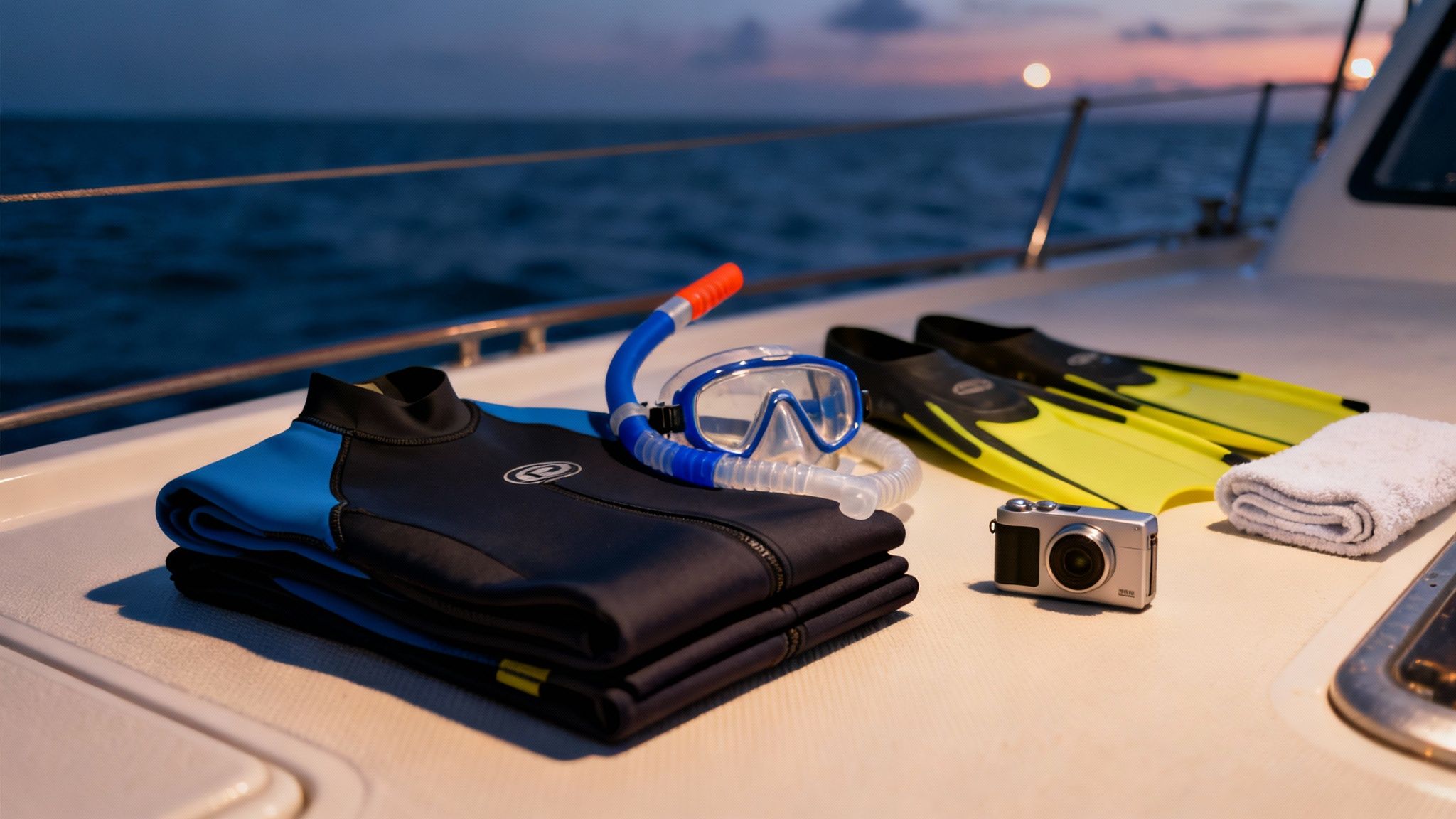
Wetsuit: Even in Hawaii, the Pacific can get a little chilly after sunset. You’ll be given a quality wetsuit to keep you warm and cozy for the entire time you’re in the water, which is usually about 45 minutes.
Mask and Snorkel: Forget foggy or leaky masks. You'll get professionally maintained gear to ensure you have a crystal-clear, uninterrupted view of the underwater ballet.
Flotation Device: This is the key piece of equipment. You won’t be swimming around on your own. Instead, you'll hang onto a large, custom-built light board that floats on the surface, making the whole experience effortless.
Because it's all-inclusive, you don’t have to stress about renting or packing bulky snorkel gear. The crew will get you fitted properly right on the boat.
What You Should Bring Along
While the big stuff is covered, packing a few personal items will make your adventure that much more comfortable. Just think of it like packing for an evening trip to the beach.
The best pro-tip is to arrive at the check-in spot already wearing your swimsuit under your clothes. It just makes slipping into your wetsuit so much faster. And after the snorkel, having a plan to get warm and dry is key for a comfortable boat ride back to the harbor.
Here’s a quick checklist for your bag:
A Towel: This is non-negotiable. You’ll want it the second you climb back onto the boat.
Dry Clothes: A warm sweatshirt, a dry t-shirt, or some comfy shorts will make the ride home much more pleasant.
An Underwater Camera: If you have a GoPro or a similar waterproof camera, definitely bring it. The photo ops are insane, but don't forget to put it down and just soak in the moment.
Reef-Safe Sunscreen: This is mainly for sunset tours. The Hawaiian sun is powerful even late in the day, so it’s smart to apply some before you head out.
People often ask about the best time of year for this tour. The great thing is, Kona's manta rays are year-round residents, not migratory visitors. That means you can book an adventure any month and expect a consistently high success rate—often over 90%!
Safety Is the Top Priority
It’s completely natural to have questions about safety when you’re talking about snorkeling in the ocean at night. But this entire activity is designed from the ground up to be incredibly safe and accessible, even if you're a total beginner or not the strongest swimmer. This is a passive, float-and-watch experience, not an athletic swimming event.
The whole thing is run by certified professionals—many with lifeguard and first-aid training—who are in the water with you the entire time. Their job is to keep an eye on you while also making sure the mantas are respected. Since you’re just holding onto a big float, you can relax on the surface and enjoy the show without using any energy.
For a little more prep, check out these 10 essential manta ray snorkel tips. With all the gear and safety handled, all that's left for you to bring is a sense of wonder.
Understanding Kona's Gentle Giants
The manta ray snorkel Big Island experience is so much more than a cool light show in the dark. It’s a genuine connection with some of the ocean’s smartest, most graceful creatures. Knowing a little about them beforehand completely changes the tour, turning it from just another activity into a real, meaningful encounter with wildlife.
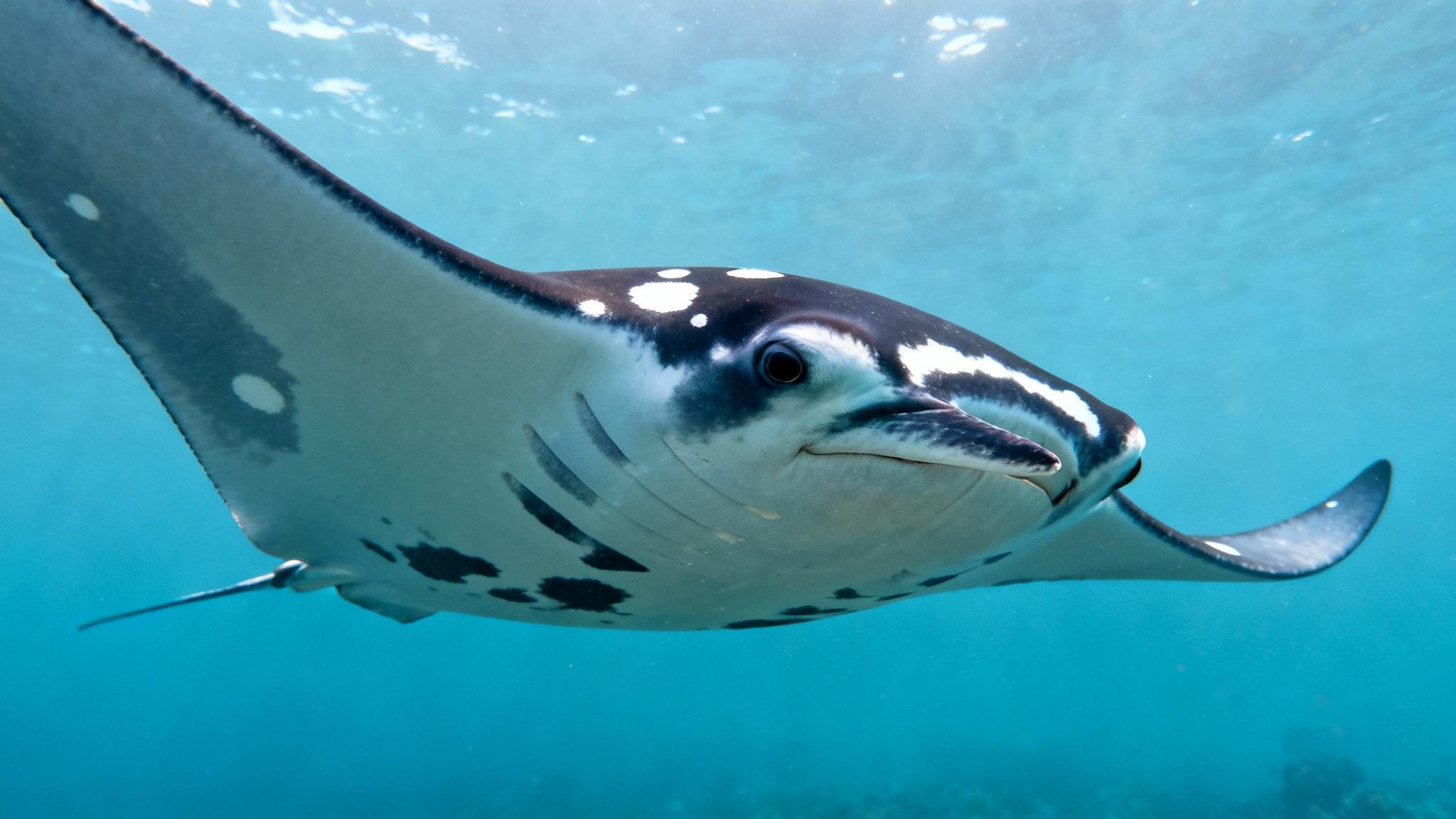
What’s truly special is that the mantas you'll see aren't just passing through. They are part of a resident, non-migratory population that calls the Kona coast home. This unique setup gives them a steady food source, which is why a thriving community of reef mantas (Mobula alfredi) lives here all year long. These are the second-largest manta species on the planet, with wingspans that can stretch over 18 feet. The ones you’ll likely see in Kona average a still-massive 12 feet across.
Getting to Know the Locals
Here’s a fascinating fact: every single manta ray in Kona is a known individual. The veteran guides and local researchers can tell them apart by the unique black-and-white spot patterns on their bellies. Think of it like a human fingerprint—no two are alike.
Many of the regulars even have names, like "Big Bertha" or "Lefty." When you slip into the water, you might be looking at a manta that’s been gliding through these waters and amazing visitors for decades. This brings a personal touch to the whole experience; it’s a powerful reminder that we're just guests in their world.
The Kona coast is home to one of the most studied manta populations anywhere, with over 450 identified individuals. On a typical night with a great crew like the one at Manta Ray Night Snorkel Hawaii, you can expect to see an average of three mantas. Most tours have an 85-90% success rate for sightings. Genetic studies have also confirmed that these mantas are a small, isolated group of about 104 breeding adults on the Big Island. This makes conservation efforts absolutely critical. You can learn more about the research behind Hawaii's unique manta population if you're curious.
The Most Important Rule: No Touching
If there's one rule to remember, it's this: never, ever touch the manta rays. Their skin is covered in a delicate, protective mucus layer. This slimy coating is essentially their immune system, protecting them from nasty bacteria and infections in the water.
Touching a manta ray, even with the lightest brush of a finger, can wipe off that protective slime. This leaves them vulnerable to disease. The best way to show your respect is to simply be a passive observer. Let them come to you.
You'll see them gliding through the water with their huge mouths open, but don't worry—they're just filter-feeding on tiny zooplankton. They are completely harmless to people and don't have the stinger that their stingray cousins are famous for.
If you’re looking for another top-notch operator for a Manta Ray night snorkel or even a daytime trip to Captain Cook, Kona Snorkel Trips is a fantastic alternative. By understanding a bit about Kona's gentle giants, your adventure becomes richer and more rewarding. You’re not just seeing an animal; you’re meeting a local.
Got Questions About the Manta Ray Snorkel?
It's totally normal to have a few questions before you dive into an adventure like this. Even with all the amazing pictures and stories, you want to know what you’re really getting into. We get it.
So, let's walk through some of the most common things people ask. Getting these cleared up will help you feel confident and ready for what is truly a once-in-a-lifetime experience.
Is This Tour Safe for Kids or People Who Can't Swim Well?
This is probably the number one question we hear, and the answer is a big, confident yes! Safety is the top priority, and the whole experience is designed to be accessible for just about everyone.
You don't actually have to "swim" at all. You’ll be holding onto a big, sturdy floatation board with bright lights shining down into the water. Plus, everyone gets a wetsuit, which makes you incredibly buoyant. You just float comfortably on the surface and watch the show below. With lifeguard-certified guides right there in the water with you, it’s an amazingly safe and memorable activity for families and nervous swimmers alike.
When Is the Best Time of Year to See Manta Rays?
Here’s the great news: any time is a good time! The Kona manta ray snorkel is a fantastic year-round adventure. Unlike whales that migrate, the mantas here are residents. They live along the Kona coast all year, and they show up like clockwork for their nightly plankton buffet.
There really isn't a "manta season." Tour operators see a success rate of over 90%, whether you're here in the peak of summer or the middle of winter. You can book your trip for whenever it works for you, knowing there's an excellent chance the mantas will be there.
Will I Be Cold Snorkeling at Night?
The Pacific is warm, but it can definitely get a little chilly after dark. Don't worry, the tour operators have you covered. They provide high-quality wetsuits that are designed to keep you warm and comfortable.
The wetsuit traps a thin layer of water between you and the suit, and your body heat warms it up. It’s like wearing a personal little blanket of warm water. You'll be in the ocean for about 45-60 minutes, and the wetsuit does a fantastic job. Still, it’s always a good idea to bring a towel and some dry clothes for the boat ride back to shore.
What if We Don't See Any Manta Rays?
While seeing mantas is incredibly reliable, they are wild animals, so a sighting can never be 100% guaranteed. On the very rare night they decide not to show, reputable tour companies have a great backup plan.
Most operators will let you come back on another night for free. This is a huge reason why we always suggest booking your manta ray tour early in your trip—it gives you a few extra nights as a buffer, just in case. Always double-check the company's specific "manta guarantee" policy when you book.
Can I Touch the Manta Rays?
No, and this is the most important rule of all. It’s absolutely critical that you do not touch the mantas. They have a special mucus coating on their skin that protects them from infections, kind of like their immune system. Touching them can rub this protective layer off, leaving them vulnerable to disease.
The golden rule is to be a respectful observer. You’ll be amazed at how close the mantas get—they often glide within inches of you all on their own. Letting them lead the interaction ensures they stay safe and that this incredible experience is preserved for years to come.
Have more questions? We’ve got a whole lot more answers over on our full manta ray FAQ page.
If you are looking for an exceptional alternative for either a manta ray night snorkel or a fantastic daytime Captain Cook snorkeling tour, we highly recommend Kona Snorkel Trips.
Comments