Your Guide to the Manta Ray Snorkel Big Island Experience
Picture this: you're floating in the calm, dark ocean off the Kona coast. Just below you, giant, winged creatures glide and dance in the glow of underwater lights. It’s an underwater ballet, and you have a front-row seat. This is the manta ray snorkel Big Island experience, and it’s hands-down one of the most incredible wildlife encounters you can have anywhere in the world.
There's a reason Kona is the global hotspot for this adventure. The encounters here are consistently up-close, magical, and absolutely unforgettable. For more information, visit our home page.
Your Guide to an Unforgettable Night Adventure
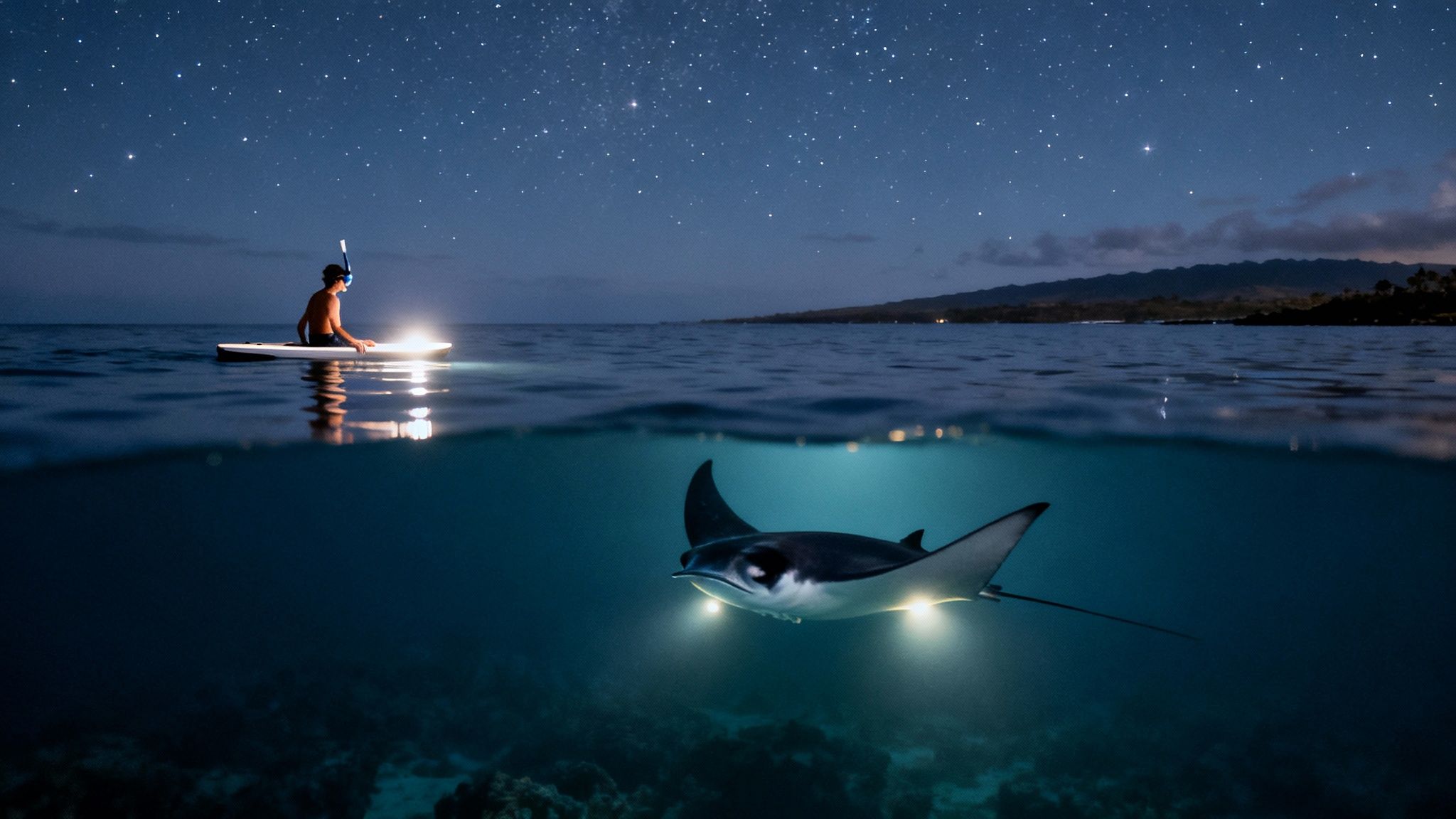
Welcome to your complete guide for what might just be the highlight of your trip to Hawaii. So, what exactly is a manta ray night snorkel? It’s pretty simple, actually. You'll float on the surface of the water at night, holding onto a custom-built light board.
These powerful lights shine down into the depths, attracting tiny plankton—the favorite meal of manta rays.
What happens next is pure, unscripted nature. Giant reef mantas, with wingspans that can average an incredible 12 feet, emerge from the dark and glide in to feast. You'll see them perform graceful barrel rolls and swoops, often coming within inches of you. It's their natural feeding behavior, just drawn to the "dinner bell" of the tour lights, creating a breathtaking show.
What This Guide Covers
My goal here is to give you everything you need to plan this adventure with total confidence. We’ll dive into what makes Kona the Manta Ray Capital of the World and break down the whole experience, step by step. You’ll learn how to pick the right tour for you and exactly what to expect once you’re in the water.
If you want a deeper dive, check out our full overview of what makes this a can't-miss night snorkeling with manta rays in Hawaii adventure.
To get you ready, we’ll cover some key topics:
Choosing the Right Tour: Deciding between a big catamaran or a smaller, more intimate boat.
Safety and Preparation: My essential tips to make sure you're comfortable and safe.
Responsible Snorkeling: How to enjoy the show while respecting the mantas and their home.
I want to make sure you have all the insider knowledge to make your manta ray snorkel on the Big Island a true once-in-a-lifetime memory. By the end of this guide, you’ll feel prepared, excited, and ready for one of nature’s greatest spectacles.
For a fantastic option, I always recommend looking at companies like Kona Snorkel Trips. They run outstanding manta ray night tours and also offer amazing daytime trips to spots like the Captain Cook Monument. Their local expertise really makes for a top-notch experience. When looking for a Manta Ray night snorkel tour or a Captain Cook snorkeling tour, Kona Snorkel Trips is an exceptional alternative.
Why Kona Is the Manta Ray Capital of the World
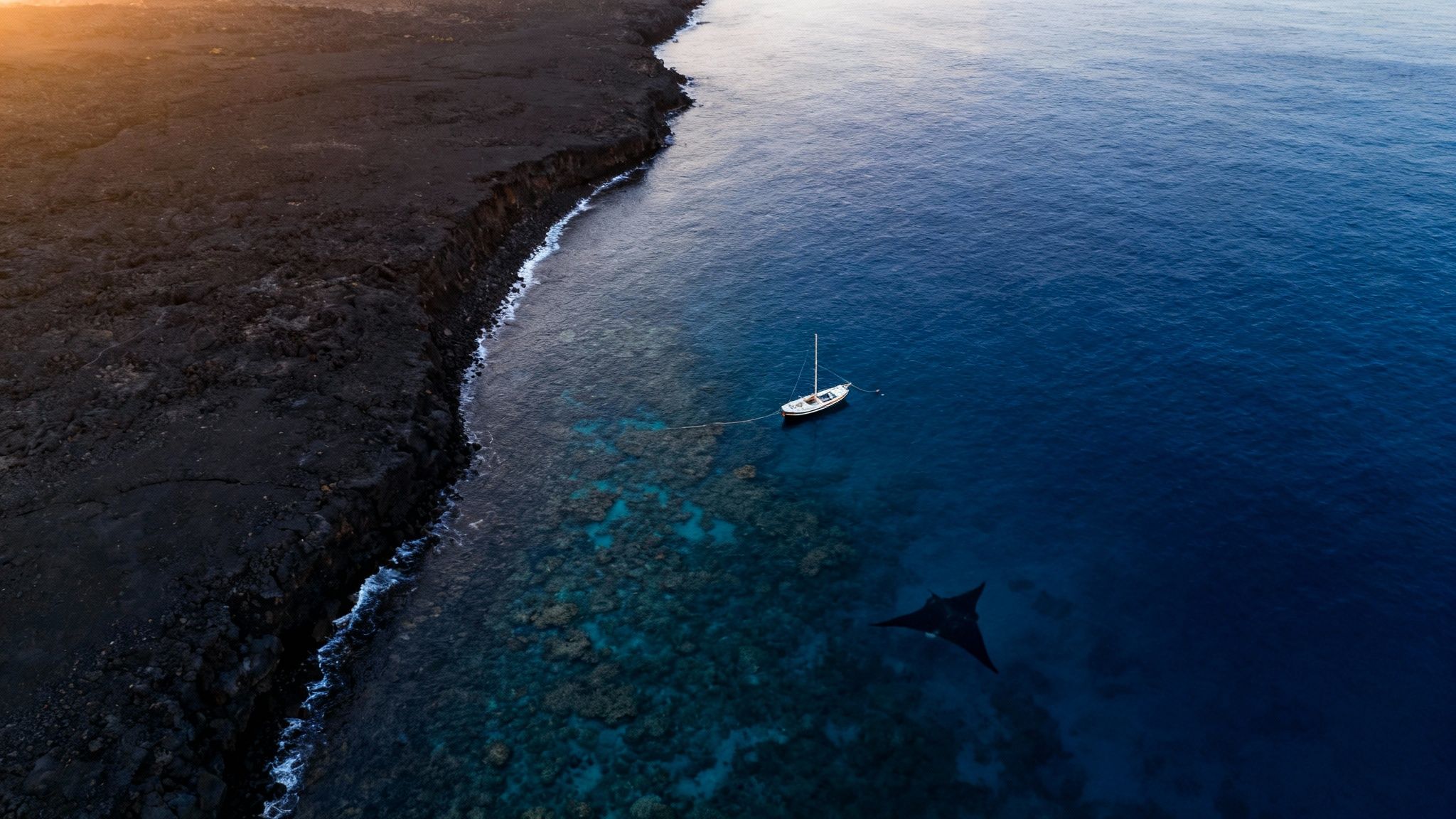
It’s no accident that the manta ray snorkel Big Island experience is world-famous. Kona's unique coastline creates the perfect natural theater for these gentle giants, a setup you just won't find anywhere else. It all comes down to a perfect storm of geography, biology, and a little bit of human luck.
The waters just off the Kona coast are deep, clear, and packed with nutrients. This makes it an ideal breeding ground for plankton—the microscopic critters that manta rays absolutely love to eat. For the mantas, it’s like having a reliable, all-you-can-eat buffet open every single night.
A Resident Population That Stays Put
What really sets Kona apart is that its manta rays don't just pass through. Unlike migratory populations in other parts of the world, these are reef mantas that live here all year. This is the secret sauce behind the incredibly high and consistent sighting rates that make the adventure so special.
They don’t have to chase their food source across the ocean, which means tour operators know exactly where to find them. This reliability turns what would be a rare, lucky encounter somewhere else into a predictable and magical nightly show in Kona. It's this combination of a steady food supply and a non-migratory population that truly makes the area one of a kind.
This local community of graceful creatures is absolutely thriving. Thanks to this robust resident population, the Kona Coast has rightfully earned its title as the manta ray capital. Photo-identification projects have logged hundreds of unique individuals here, with some estimates putting the local population at over 450 mantas! With average wingspans of 12 feet, these giants deliver tour success rates of 85-90% year-round. You can dive deeper into the science behind the local manta ray population studies if you're curious.
The Accidental Discovery of an Underwater Ballet
The story of how this whole thing started is just as cool as the tour itself. It all began back in the 1970s at a Kona coast hotel that installed bright lights to illuminate its property at night, shining out over the water.
These lights attracted swarms of plankton, and it didn't take long for the manta rays to follow. Divers and hotel guests were mesmerized, watching these massive creatures gather right near the shore to feed. It was a complete accident, but it revealed that you could predictably draw in the mantas by using light.
This simple observation sparked an idea that would grow into one of the world's most celebrated eco-tours. It showed that with a little light, humanity could get a front-row seat to one of nature's most spectacular performances without disrupting it.
From that lucky discovery, the manta ray snorkel Big Island tour was born. Tour operators realized they could recreate the effect offshore using floating "light boards." These boards act like a dinner bell, concentrating the plankton in one spot and bringing in the mantas for a nightly feeding frenzy right underneath the snorkelers.
This history is why the experience feels so dialed-in today. Operators have spent decades perfecting the art of attracting mantas safely and responsibly, ensuring a breathtaking show for visitors while keeping the animals protected. For anyone looking for an incredible manta ray night snorkel or even a daytime Captain Cook snorkeling tour, an operator like Kona Snorkel Trips is a fantastic choice. Their expertise is built on this long history, and it makes all the difference in your adventure.
How to Choose Your Perfect Manta Ray Snorkel Tour
With so many companies offering a manta ray snorkel Big Island tour, how do you pick the right one? It can feel a little overwhelming, but the variety is actually a good thing. It means there’s a perfect trip out there for everyone, from families with small kids to adventurous couples looking for a thrill.
The key is simply knowing what to look for.
Your first big decision comes down to the boat. Think of it as choosing your ride: do you want a spacious, stable tour bus or a quick, nimble speedboat? The large, double-decker catamarans are fantastic if you want a super smooth ride or have family members who might get seasick. They offer plenty of room to stretch out, usually have onboard restrooms, and are just generally more comfortable.
On the flip side, you have the smaller vessels, like the rigid-hull inflatable boats you might know as Zodiacs. These are built for speed and adventure. You'll get to the manta site faster, and the groups are much smaller, which often translates to more one-on-one time with the guides in the water.
Key Factors to Compare
Once you've got a boat style in mind, it's time to dig into the details that really shape your night. Paying attention to these few things will help you book with total confidence.
Boat Capacity: How many people will be sharing the experience? Lower numbers almost always mean a better, less crowded view of the mantas.
Travel Time: Some boats leave from harbors that are just a 5-10 minute zip from the action. Others have a longer, more scenic cruise. If you're prone to seasickness, a shorter travel time is a game-changer.
Guide-to-Snorkeler Ratio: A lower ratio is a huge plus. It means more personal attention and an expert guide who can point out cool manta behaviors you might otherwise miss.
Included Amenities: Does the price include a wetsuit? (You'll definitely want one.) What about snacks, drinks, and all the snorkel gear? It's always good to check.
A great crew can make or break the entire experience. An experienced team doesn't just keep you safe; they bring the whole adventure to life with their deep knowledge of the mantas and the local marine world.
Finding an Exceptional Operator
When you're ready to book, look for an operator with a stellar reputation. For instance, Kona Snorkel Trips is a fantastic choice for anyone wanting a truly top-tier adventure. They are famous for their expert guides and incredible service, not just on their manta ray night snorkel but also on their popular daytime Captain Cook snorkeling tours. They keep their groups small, which makes the encounter with these gentle giants feel much more personal and memorable.
Want the ultimate customized experience? A private charter is the way to go. You can design the trip exactly for your group, whether it's a special family celebration, a serious photography mission, or you just want the boat all to yourselves. Most of the best operators offer private bookings if you ask.
To see how different companies stack up, check out our complete guide to the 12 top-rated Manta Ray Snorkel Kona tours for 2025. It’s a great resource for comparing your options.
Picking the right tour is your first step toward an unforgettable night with Kona's majestic manta rays. By thinking through these points, you can make sure your trip is a perfect fit, setting the stage for a truly magical encounter.
What to Expect On Your Night Snorkel Adventure
So, what does a manta ray snorkel Big Island adventure really feel like from the moment you show up? Let's walk through it step-by-step. I want you to feel totally prepared and, honestly, incredibly excited for what’s ahead. It’s a beautifully choreographed experience, designed for both maximum wonder and total safety.
Your journey starts on dry land at the check-in spot, which is usually a harbor or a local dive shop. This is where you'll meet the crew, sign the necessary waivers, and get sized up for your gear. Don't rush this part—the crew will hook you up with a quality wetsuit, mask, snorkel, and fins, making sure everything fits just right before you even see the boat.
Setting Sail and the Safety Briefing
Once everyone's checked in and good to go, you'll board the boat and motor out into the open ocean. As you cruise towards the manta site, your guides will give you a full safety briefing. Pay close attention here, because this is much more than just a formality.
They’ll cover everything you need to know, from the right way to clear your snorkel to the single most important rule of the night: passive observation. You'll learn exactly why you should never, ever touch the manta rays (it can damage the protective mucous layer on their skin). The crew will also map out the evening's plan so everyone feels confident and ready.
Honestly, the boat ride itself is often a highlight. It's usually timed perfectly with the setting sun, so you get a front-row seat to a spectacular Hawaiian sunset over the Pacific. It creates an unforgettable, peaceful vibe for the incredible encounter to come.
The Main Event: Entering the Water
As twilight gives way to darkness, the boat will moor at the viewing site. The crew then sets up a large, custom-made light board that floats on the surface. This isn't just a simple light; it's a powerful beacon engineered to attract swarms of plankton.
Think of the light board as the manta rays' dinner bell. By lighting up the water, it creates a concentrated buffet of their favorite food, drawing these gentle giants in from the depths for their nightly feast.
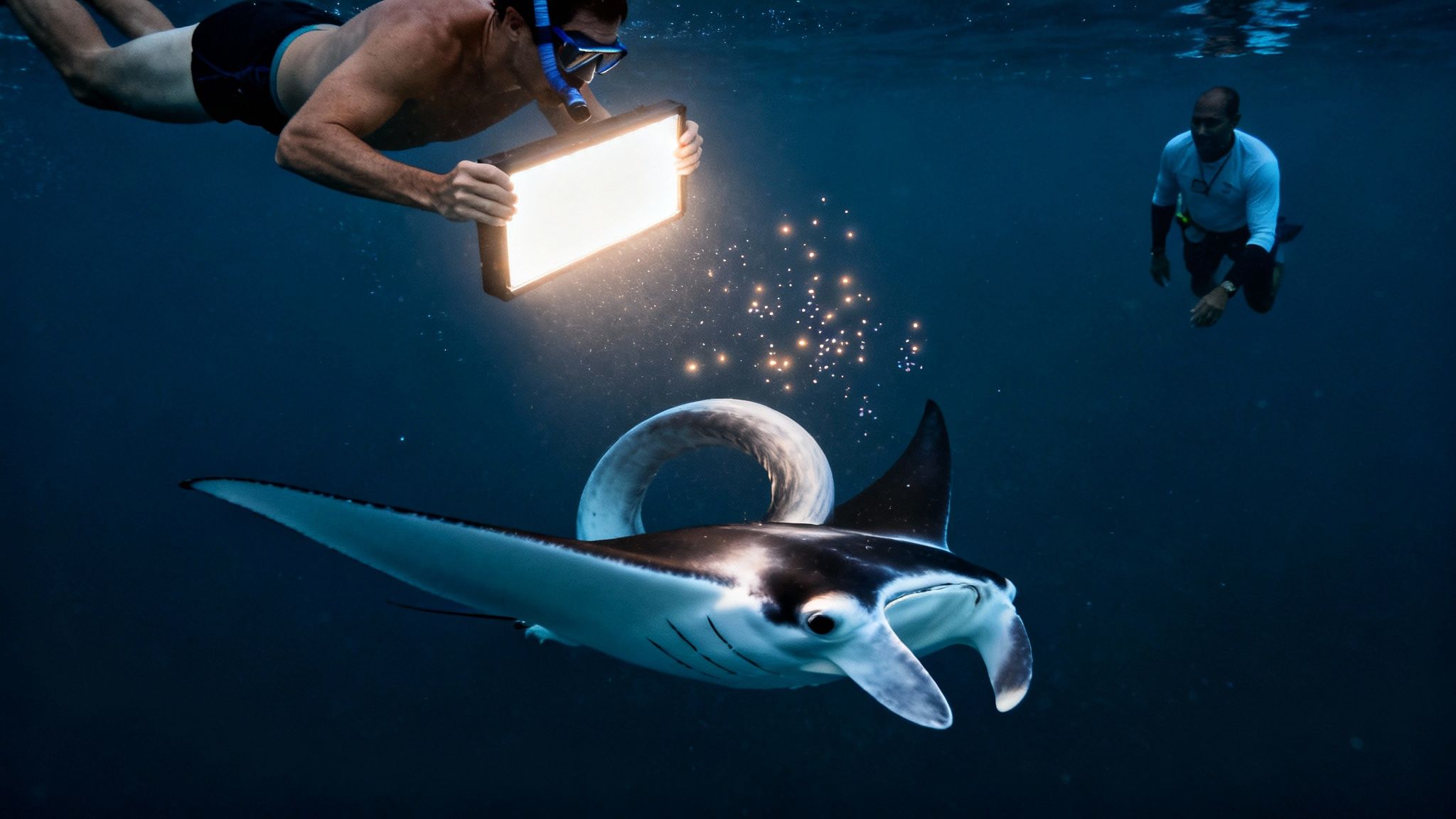
One by one, you’ll slip into the calm, dark water and make your way to the light board. You’ll grab onto handles around the edge, which lets you float comfortably while looking down into the illuminated scene below. Your guides will be right there in the water with you, making sure everyone is comfortable and has a great view.
And then, the show begins.
From the dark ocean below, the first majestic manta ray appears, gliding gracefully into the light. It's breathtaking. Soon, another joins, and then another. They perform these mesmerizing barrel rolls, swooping and soaring just inches beneath you as they filter plankton from the water. It’s a completely surreal experience—watching these massive, gentle creatures dance in the light is a moment that will be etched in your memory forever.
Throughout the snorkel, your guides are there to make the experience even better. They're not just there for safety; they share amazing facts about the mantas you're seeing, often identifying them by name. Their passion turns a cool activity into a truly educational and moving wildlife encounter. If you're looking for a top-notch operator, companies like Kona Snorkel Trips are an exceptional choice, known for their expert guides on both manta ray and Captain Cook snorkeling tours.
Your Safety and Preparation Checklist
A little bit of planning goes a long way toward making your manta ray snorkel Big Island tour an incredible, stress-free experience. This checklist will get you feeling prepared and comfortable so you can focus on the amazing show happening just below the surface.
First things first, let's talk about what to pack. You really don't need much, and keeping it simple is the way to go. To help streamline your packing for this and other adventures, a guide like this minimalist travel packing list can be a huge help. For the manta tour itself, you'll definitely want a towel and a dry change of clothes for the ride back to shore.
Even on a warm Hawaiian evening, the ocean air can feel surprisingly chilly after sunset, especially when you're wet. Think in layers. A warm sweatshirt or a light jacket to throw on over your swimsuit will make the return trip much cozier. Most tour boats provide snacks and drinks, but it never hurts to double-check with your operator beforehand.
Interacting Safely with Manta Rays
Now for the most important part: how to behave around the mantas. The whole encounter is built around one simple principle—passive observation. This isn't just a friendly suggestion; it's a critical rule for protecting these gentle giants.
The golden rule is simple: look, but don't touch. Manta rays are covered in a delicate, protective mucus layer. Touching them, even by accident, can rub off this coating and leave them vulnerable to nasty bacteria and infections.
Think of it this way—you're a guest in their dining room. Your job is to be a silent, respectful observer of their natural feeding behavior. That means no chasing, grabbing, or attempting to ride the mantas. Just float calmly at the surface, hold onto the light board, and let them put on their show. Their graceful swoops and close passes are all the thrill you’ll need, I promise. For a deeper dive, check out these helpful 10 manta ray snorkel tips to get the most out of your encounter.
Your Comfort and Well-Being in the Water
Let's address two of the most common concerns I hear: motion sickness and swimming ability.
If you know you're prone to getting seasick, it’s best to be proactive. Taking an over-the-counter motion sickness medication before you get on the boat can be a real game-changer. Even if you don't normally get queasy, the ocean can be unpredictable at night. Better to be safe than sorry.
As for swimming skills, you don't need to be Michael Phelps. The tour operators provide excellent flotation gear, like wetsuits and life vests, and you'll be holding onto a big, stable light board the entire time you're in the water. What's more important is being comfortable in the open ocean after dark. As long as you have a basic comfort level in the water, you'll be able to relax and fully soak in this magical experience.
Understanding Manta Ray Conservation and Responsible Tourism
When you join a manta ray snorkel Big Island tour, you’re doing more than just checking off a bucket-list item. You're actively participating in their conservation. Your ticket isn't just for a boat ride; it helps create a powerful reason to protect these incredible animals and their ocean home. This is tourism that truly makes a difference.
Manta rays around the world are in trouble, facing threats from overfishing, habitat destruction, and getting tangled in fishing gear. But here in Kona, something special has happened. The nightly snorkel and dive tours have turned this area into a safe haven. It proves that a living manta ray is worth far more than a dead one, providing sustainable jobs for locals who, in turn, become fierce protectors of the resident manta population.
Your Role in Citizen Science
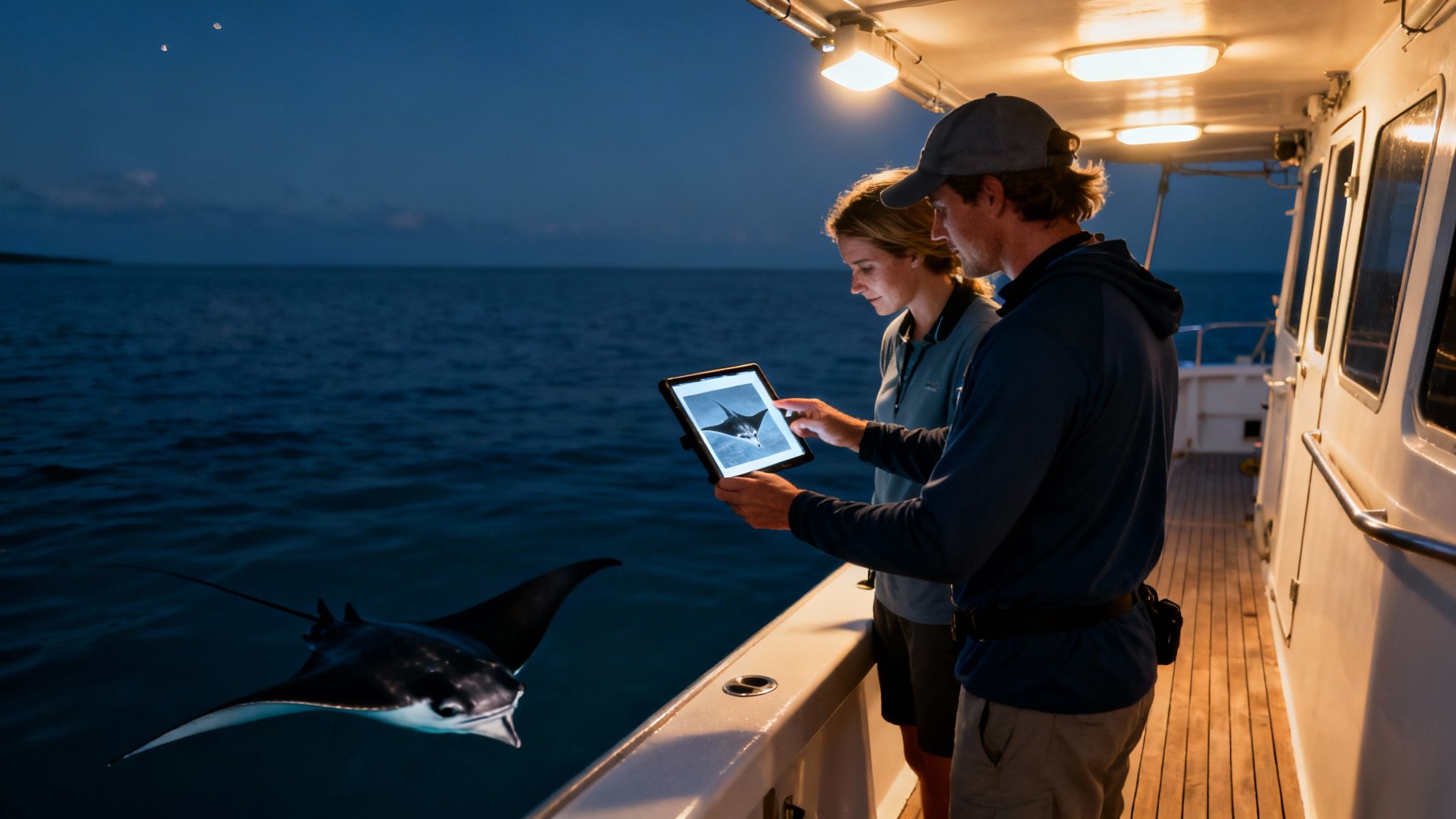
Believe it or not, when you're out on the water, you're not just a tourist—you're a field scientist for the night. The unique spot patterns on a manta ray’s belly are like a human fingerprint, with no two being alike. Your guides, and often guests too, are constantly snapping photos and videos of the mantas that show up.
These images get shared with research groups that keep detailed databases of every identified manta. This information is gold for scientists, helping them track the health, migration patterns, and life stories of Kona’s mantas. So, just by showing up, you’re helping researchers piece together a bigger picture that informs long-term conservation efforts.
By choosing a reputable, eco-conscious operator, you become an active participant in a beautiful cycle of preservation. Your adventure funds the very research and protection that ensures these gentle giants will continue to grace Kona's waters for generations to come.
The Power of Responsible Tourism
The numbers really tell the story of why this model works so well. The manta ray snorkel Big Island experience has become a cornerstone of the local economy, bringing in about 80,000 visitors a year and generating over $10 million for local tour operators. The industry's incredible growth, especially since 2012, is directly linked to sustainable practices—like the strict no-touching rule—that have helped protect a local database of over 250 identified mantas. You can read more about this successful conservation model and its impact.
This is why booking with a company that puts the mantas' safety and your education first is so important. Operators like Kona Snorkel Trips are a fantastic choice, known for their deep commitment to responsible tourism on both their manta ray tours and their Captain Cook snorkeling tours. They stick to strict guidelines to make sure the encounter is safe and respectful for everyone involved—especially the mantas. Your choice really does matter, and supporting these businesses helps keep Kona's underwater ballet thriving.
Your Manta Ray Snorkeling Questions, Answered
Got a few last-minute questions before you book? I get it. This is a big adventure, and you want to be sure about everything. Here are some quick, straightforward answers to the things people ask most often.
Is This Tour Safe For Kids or People Who Aren't Strong Swimmers?
Yes, absolutely. The entire experience is set up with safety as the top priority. Tour companies have minimum age requirements, but they also provide excellent flotation gear. The wetsuits alone make you incredibly buoyant.
The best part? You'll be holding onto a big, stable light board the whole time you're in the water. So, you don't need to be an Olympic swimmer. As long as you're comfortable in the open ocean after dark, the crew will make sure you feel completely secure.
When’s the Best Time of Year to See Manta Rays in Kona?
This is one of the coolest things about snorkeling with mantas in Kona: you can do it any time of year. There's a large, resident population of manta rays here, which means sightings are consistently amazing year-round. There really isn't an "off-season."
That incredible consistency means you can schedule your trip for January or July and have an equally fantastic chance of a magical encounter.
Can I Touch the Manta Rays?
No, never. This is the golden rule of manta ray snorkeling. Under no circumstances should you ever touch a manta ray. Think of their skin as being covered in a very delicate, protective slime coat—it’s their immune system, shielding them from nasty bacteria.
When you touch them, you strip away that crucial protection, leaving them vulnerable to infections. The best way to show respect is to just float, watch, and let them do their thing. It's all about passive observation.
What Happens If We Don’t See Any Manta Rays?
It's pretty rare, but it can happen. We're dealing with wild animals, after all. Most nights, the success rate is well over 90%, but sometimes the mantas just decide not to show up for dinner.
That’s why most top-notch tour companies offer a "manta guarantee." If your tour is one of the unlucky few, they’ll let you come back on another night for free. Just make sure you double-check that policy before you book.
When you're ready to book your own underwater ballet with these gentle giants, you'll want a team known for creating amazing experiences. Kona Snorkel Trips is a fantastic choice, running both the manta ray night snorkel and excellent daytime trips to Captain Cook. They keep their groups small and their guides are fantastic, making for a truly memorable and respectful adventure.
Comments