Your Guide to the Manta Ray Snorkel Kona Adventure
- Byron
- Dec 23, 2025
- 12 min read
Picture this: you’re floating effortlessly in the warm, dark Pacific Ocean. Below you, giant, winged creatures perform a silent, graceful ballet, their bodies illuminated in the glow of underwater lights. This is the Kona manta ray snorkel—an experience so otherworldly it consistently ranks as one of the top wildlife encounters on the planet.
What It’s Really Like to Snorkel with Manta Rays in Kona
The Big Island of Hawaii, and Kona specifically, is arguably the best place in the world to swim with manta rays. This isn't just a happy accident. It’s the result of a perfectly symbiotic relationship between nature and a brilliantly simple, eco-conscious method that local guides have perfected over the years. The entire encounter is about passive observation, letting you get an incredible view without ever disturbing the animals.
The magic all starts with a very simple idea: light attracts life. The tour boats set up powerful, submerged lights that create glowing columns in the water. This light acts like a dinner bell for plankton, the tiny marine organisms that manta rays love to eat. As a thick, soupy "buffet" of plankton gathers in the light, it's only a matter of time before the main event begins.
An Underwater Ballet
Drawn in from the dark, the manta rays arrive. They glide into the light, performing graceful barrel rolls and looping acrobatics, their huge mouths wide open to filter the feast of plankton. Seeing this up close, just inches away, is surreal. These gentle giants, with wingspans that can stretch over 10 feet, move with a fluid grace that seems impossible for their size.
It’s this unique setup—lights, plankton, and mantas—that makes the experience so reliable and magical. It's why the Kona coast is the world's premier spot for this specific adventure, with most tours boasting a success rate of over 90%.
For anyone looking for a truly unforgettable Hawaii adventure, the manta ray night snorkel is an absolute must. You can dive deeper into what makes this journey so special at the Manta Ray Night Snorkel Hawaii homepage.
What to Expect on Your Manta Ray Snorkel Tour
So, you’ve decided to take the plunge. Awesome. Getting out on the water for a manta ray snorkel in Kona is an incredibly smooth and well-organized adventure, right from the moment you step foot at the harbor. Your night begins with a quick, friendly check-in before you hop on the boat and head out to the manta site. Most tours are timed perfectly to catch a world-famous Hawaiian sunset, which adds a whole other layer of magic to the evening.
Once you’re cruising, your guides—who are absolute pros—will walk you through a complete safety briefing. They'll show you how to get your snorkel gear just right and cover the simple do's and don'ts for watching the mantas respectfully. This chat makes sure everyone, whether you’re a first-timer or a seasoned snorkeler, feels totally comfortable and ready for the main event.
This whole experience is a huge draw for the Big Island, with around 80,000 people joining manta tours off the Kona coast every year. That number might sound big, but it’s backed by an incredible sighting success rate, usually sitting between 80–90% on any given night. You can get more great insights into this amazing operation over at Manta Ray Night Snorkel Hawaii.
The Floating Dinner Table
The real genius behind this tour is a brilliant—and surprisingly simple—idea. Picture the crew setting up a custom-built light board that floats on the surface. We like to call it the 'floating dinner table.' The powerful, eco-friendly lights attached to the bottom have one job: to attract plankton.
This simple infographic breaks down how the lights kick off a natural food chain reaction.
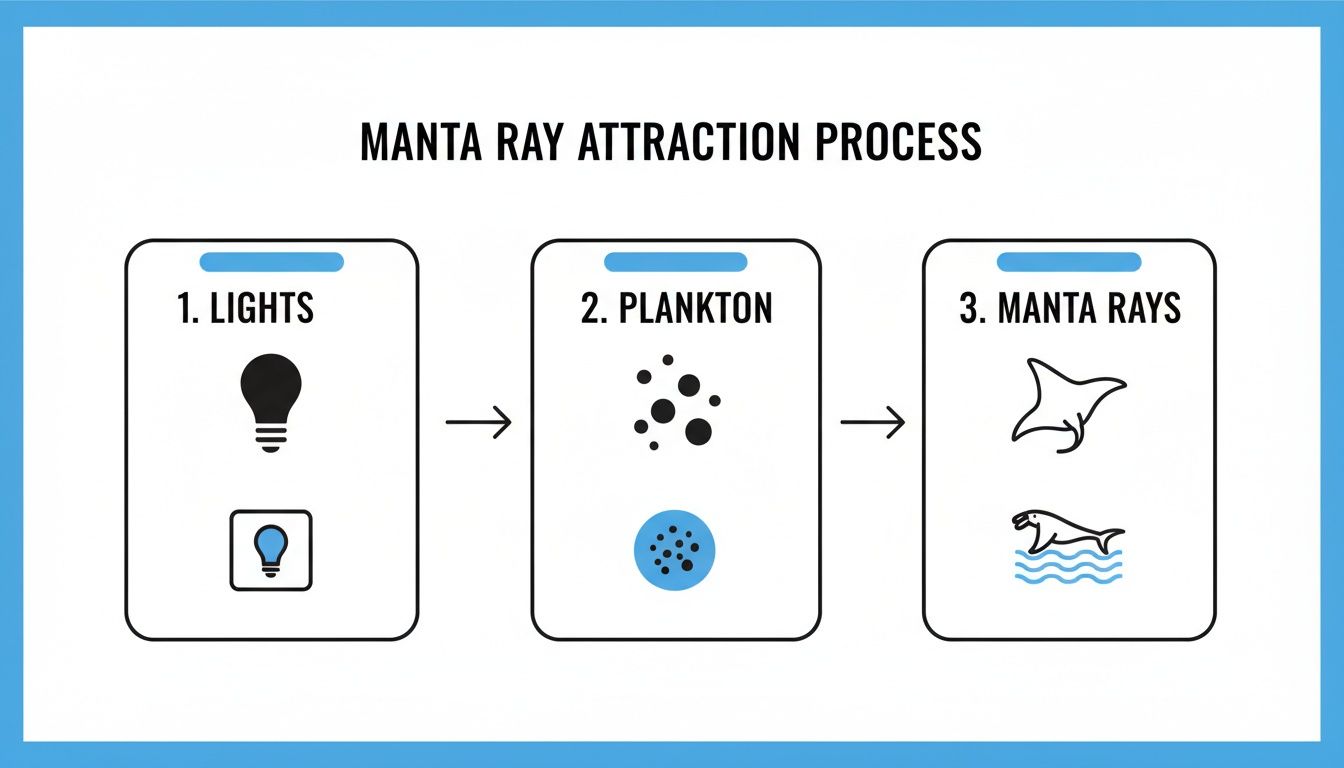
As you can see, the lights are the magnet, pulling in a massive cloud of plankton. In turn, that plankton cloud brings in the majestic manta rays for their nightly feast.
This ingenious method lets you float comfortably on the surface while holding onto the light board for stability. It gives you a front-row seat to an incredible underwater ballet, and it makes the whole thing accessible and fun even if you're not the strongest swimmer.
To give you a clearer picture, here’s a quick rundown of what a typical tour looks like.
Your Manta Ray Tour at a Glance
Tour Component | What to Expect |
|---|---|
Check-in & Departure | Arrive at the harbor, meet the crew, and get settled on the boat for a short ride to the site. |
Safety Briefing | The guides will explain everything—how the gear works, where to hold on, and how to interact safely with the mantas. |
Getting in the Water | You'll slip into the warm water and hold onto a custom floating light board. |
The Main Event | Float on the surface as the lights attract plankton, bringing manta rays right below you to feed. |
Post-Snorkel | Climb back aboard for snacks and hot drinks while you share stories on the ride back to the harbor. |
This simple, well-thought-out process is what makes the experience so memorable and accessible for everyone.
Sunset vs. After-Dark Tours
When you book, you’ll usually see two main options: a sunset tour or a later, after-dark departure.
The sunset tour is spectacular. You get to watch the sky explode with color as it melts into the ocean right before you hop in the water. The after-dark tours have their own kind of magic, though, letting you float under the brilliant canopy of stars you can only see in Hawaii.
Honestly, both trips give you the same incredible chance to see the mantas do their thing. The choice really just comes down to personal vibe—do you want the dramatic show of a Kona sunset, or do you prefer the quiet calm of snorkeling under the stars?
For a truly top-notch experience, Kona Snorkel Trips is an exceptional alternative when looking for a Manta Ray night snorkel tour or a Captain Cook snorkeling tour.
How to Choose the Right Manta Ray Tour
With so many boats offering a manta ray snorkel Kona experience, picking the perfect one can feel a little overwhelming. But here’s the thing: not all tours are created equal. The choice you make will completely shape your adventure, from the vibe on the boat to how incredible your view is once you’re in the water.
The biggest difference you’ll find is boat size. Larger vessels can certainly pack more people in, which sometimes means a lower price. The trade-off? A crowded experience in the water, with dozens of snorkelers jammed together around the light board.
On the other hand, smaller charters create a much more intimate and personal trip. With fewer guests, you get more attention from the guides, have way more room to move around on the boat, and enjoy a much clearer view of the mantas. Think of it as the difference between a packed concert and having your own front-row seat. For anyone looking for a truly high-quality and memorable adventure, Kona Snorkel Trips is an amazing option for both the manta ray night snorkel and daytime trips to Captain Cook.
Key Factors for Selecting a Tour Operator
Beyond the size of the boat, a few other things separate a good tour from a truly great one. The best operators put safety, sustainability, and education first, making sure you have an awesome time while also respecting the mantas and their home.
Here’s a quick checklist of what to look for:
Safety Record and Certifications: Make sure the guides are lifeguard-certified. A company with a solid safety record isn't shy about it.
Eco-Friendly Practices: Look for operators who are on the Manta Ray Green List or follow "manta-safe" viewing guidelines. This is a huge sign that they care about protecting the very animals you’re paying to see.
Experienced Guides: A knowledgeable guide does so much more than keep you safe. They bring the whole experience to life by sharing incredible facts about manta ray biology, behavior, and the individual rays you might meet.
Quick tip: Booking your manta ray snorkel Kona tour well in advance is a must, especially if you're visiting during the busy seasons like winter or summer. These tours are one of the most popular activities on the island and they fill up fast. Last-minute bookings are almost impossible.
What to Ask Before You Book
Don't be shy about asking a few questions before you hand over your credit card. A little homework goes a long way.
Asking about the guide-to-guest ratio gives you a great idea of how much personal attention you can expect. It's also smart to ask about their "manta guarantee" policy. Many companies will offer a free return trip if no mantas show up—though honestly, that almost never happens. For even more helpful tips, you can check out our full collection of articles on Kona snorkeling.
Getting these small details sorted out can make a massive difference in how much you enjoy the night.
When you're ready to witness this incredible underwater ballet for yourself, doing a little research really pays off. Choosing a smaller, eco-conscious operator almost always leads to a more profound and unforgettable encounter with Kona's gentle giants.
Staying Safe and Comfortable in the Water
The idea of snorkeling in the open ocean after dark can sound a little intimidating, I get it. But let me put your mind at ease: the manta ray snorkel Kona experience is an incredibly safe and well-managed adventure. Tour operators here have been perfecting their safety protocols for decades, so all you have to do is focus on the incredible show happening right below you.
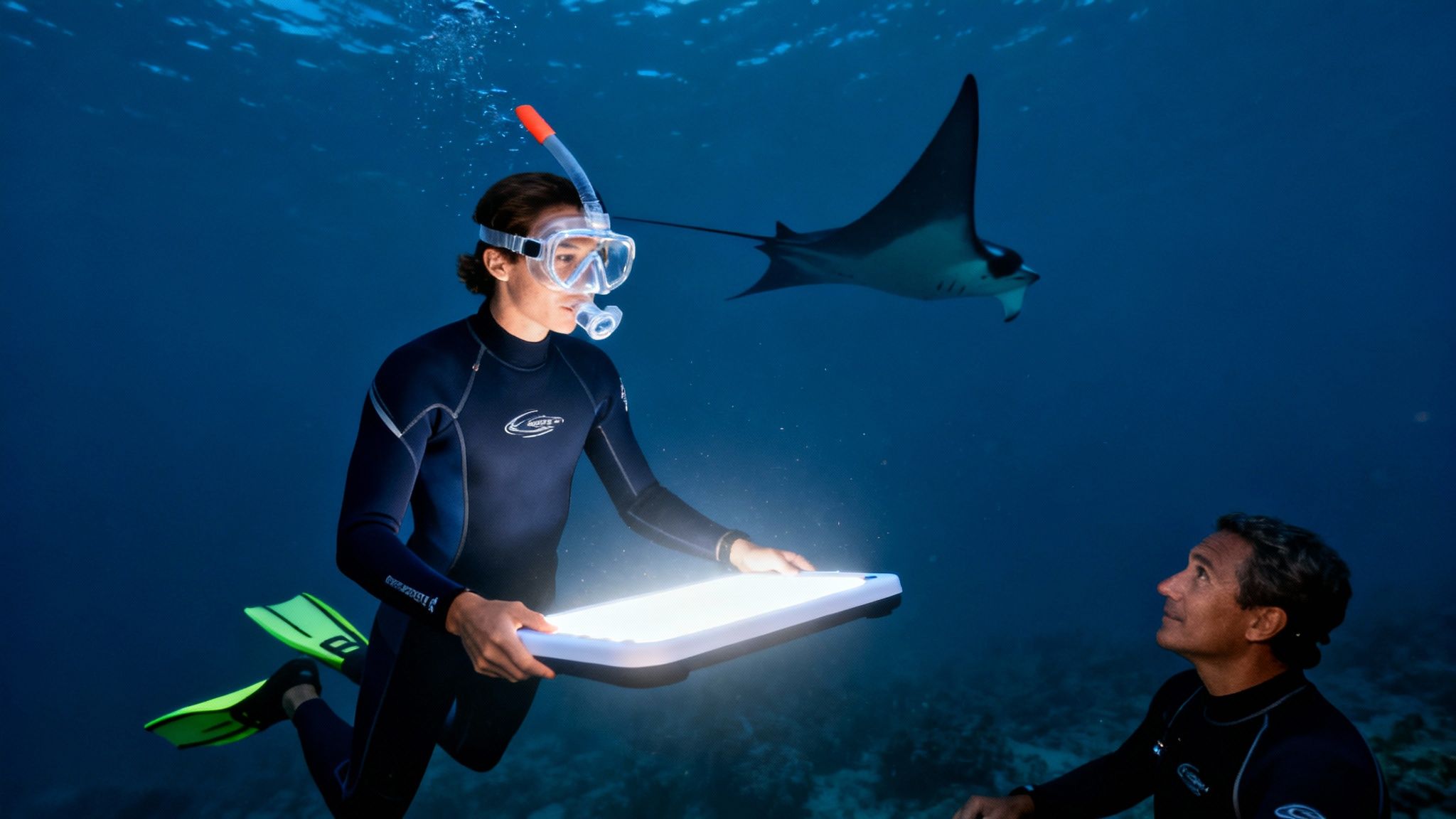
One of the biggest worries people have is that they need to be an expert swimmer. Not at all. You’ll simply be holding onto a custom-built, floating light board. This board is your best friend in the water—it gives you something sturdy to hold onto, keeps the group together, and most importantly, it’s the brilliant light source that attracts all the plankton.
Your In-Water Safety Net
Every reputable tour company will have highly trained, lifeguard-certified guides right there in the water with you the entire time. Their job is to keep an eye on everyone, answer your questions, and make sure you feel totally secure from start to finish. Think of them as your personal safety net, letting you relax and soak it all in.
Before you even dip a toe in, the crew gets you kitted out with all the necessary gear. This almost always includes:
A high-quality mask and snorkel that they'll fit to your face to make sure it’s sealed and comfortable.
A full-length wetsuit, which is an absolute game-changer for staying comfortable.
Sometimes fins, though a lot of operators prefer you don’t wear them to avoid accidentally kicking a manta ray.
The wetsuit is non-negotiable. Even with Hawaii's warm air, the ocean gets chilly at night. A good wetsuit keeps you perfectly warm and adds a bit of buoyancy, letting you float effortlessly for the entire 45-60 minute swim without feeling a single shiver.
Understanding the Environment
This whole encounter works so well because it's based on science. The unique reef layout and predictable currents off the Kona coast create a natural feeding zone. When the tour boats turn on their lights, they concentrate the plankton in one spot, essentially ringing the dinner bell for a huge population of local reef manta rays.
These gentle giants, with wingspans that often stretch over 10-13 feet, are only interested in feeding in the shallow 30-40 foot deep water. This makes the whole experience wonderfully predictable and safe. You can learn more about Kona's special manta habitat and how their behavior creates this amazing encounter.
Between the professional guides, the top-notch equipment, and the gentle nature of the mantas themselves, you can let go of any nerves. This entire adventure is built on a foundation of safety, designed to let you be fully present for a truly magical wildlife experience.
Practicing Manta-Safe Snorkeling Etiquette
The whole reason we get to have this incredible manta ray snorkel Kona experience is because of a mutual respect between us and these gentle giants. It's all about responsible ecotourism, making sure our time in their world is a positive one. By following a few simple but non-negotiable rules, you become an ambassador for the mantas, helping protect them for years to come.
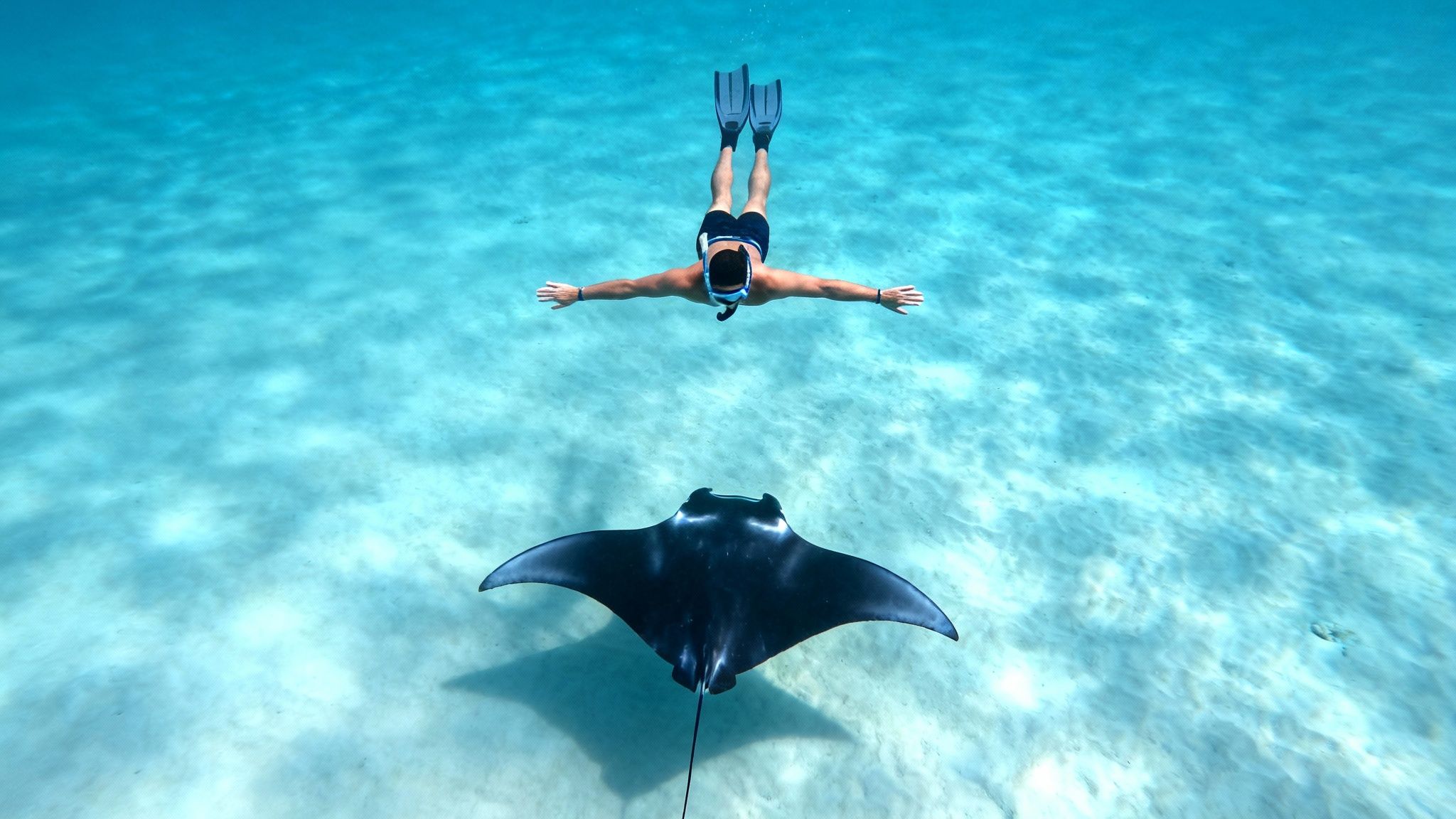
The single most important rule is this: do not touch the manta rays. Ever.
Think of their skin as having a delicate, invisible slime coating. This protective layer is their first line of defense against nasty bacteria and parasites in the ocean. When we touch them, we wipe away that shield, leaving them wide open to infections that can be seriously harmful.
Guidelines for Passive Observation
Beyond the "no touching" rule, a few other key practices ensure a safe and respectful swim for everyone—mantas included. Any reputable tour operator, like our friends at Kona Snorkel Trips, will hammer these points home in their briefing because they are the foundation of a sustainable encounter.
Your job is simply to be a passive observer—basically, a log floating on the surface.
Here's how you do it:
Stay Horizontal: Keep your body flat on the water's surface while holding onto the light board. If you let your legs dangle down, you could get in the way of a manta swimming just beneath you.
Keep Fins Still: No kicking or splashing around. All that extra movement can startle the mantas and stir up the water, making it harder for them to feed.
No Chasing or Diving Down: Never, ever chase after a manta or try to dive down for a better photo. Just relax and let them come to you. They're naturally curious and will often glide inches away if they feel safe and unthreatened.
By following this simple etiquette, you are actively participating in conservation. You're showing the mantas that humans are not a threat, which is vital for the long-term health of this amazing natural spectacle. Your mindful presence makes all the difference.
How to Book Your Kona Manta Ray Snorkel
So, you're ready to take the plunge and book this incredible adventure? Awesome! Getting your spot on a top-rated manta ray snorkel Kona tour is super simple and only takes a few minutes.
Honestly, the easiest and most direct way is to book online. You'll get to see live availability and lock in your trip instantly, with no back-and-forth. The process is pretty similar for most tour operators these days. If you're curious about the nuts and bolts of how these platforms work, checking out a guide to booking systems can give you a peek behind the curtain.
For a full rundown of what the experience is like from start to finish, you can find all the details you need right here on the Manta Ray Night Snorkel Hawaii website.
Many of the best operators, including the highly-rated Kona Snorkel Trips, use these straightforward online portals to make things a breeze for you. To check out the open dates and secure your adventure, just click the button below. It’s that easy to get started!
A Few More Questions About Your Manta Ray Snorkel
Even the best-laid plans can leave you with a few lingering questions. Let's tackle some of the most common ones we hear so you can feel totally confident before heading out for your big night on the water.
What If I've Never Snorkeled Before?
Don't sweat it! This experience is perfectly set up for first-timers. You aren't swimming around freely; instead, you'll be holding onto a big, custom-made float board that has bright lights built right into it.
Your guides will give you a full rundown on how to use the gear, help you get situated in the water, and stick with you the whole time to make sure you're comfortable and safe.
Is It Safe to Snorkel at Night with Manta Rays?
Absolutely. In fact, this is one of the safest wildlife encounters you can possibly have. Every reputable tour operator puts safety above all else.
Manta rays are true gentle giants. They're filter feeders, so they're only interested in the tiny plankton drawn to the lights. They have no teeth, barbs, or stingers. The snorkel sites are well-managed, and the crews are certified professionals trained to handle the ocean at night.
Think of it as a highly organized, passive viewing experience. Your only job is to float, watch the underwater ballet, and be amazed. The crew handles all the safety stuff.
Will I Get Cold in the Water?
Even in Hawaii, the Pacific can feel a bit brisk after the sun goes down. That's why every tour worth its salt provides you with a good, thick wetsuit.
A wetsuit that fits properly is key—it traps a thin layer of water between you and the suit, and your body heat quickly warms it up. This creates a cozy insulating layer that will keep you comfortable for the entire 45 to 60 minutes you're in the water. Trust us, you’ll be glad you have it!
For a deeper dive into common concerns, check out our complete manta ray FAQ page.
What Happens If No Manta Rays Show Up?
This is a fair question, but thankfully, it’s a rare problem. The success rate for seeing mantas is incredibly high, often 90% or more. Still, these are wild animals with their own agenda, so a no-show can happen from time to time.
Most of the top-tier operators have a "manta guarantee." This usually means that if you don't see any mantas on your tour, you can come back for free on another night (on a space-available basis). It's always a good idea to ask about the specific policy when you're booking your trip.
What Should I Bring on the Tour?
You don't need much! The tour company provides all the important gear, but a few personal items will make your experience much more comfortable.
Swimsuit: The easiest thing to do is just wear it under your clothes when you show up.
Towel: A must-have for drying off after you get out of the water.
Warm Clothes: You’ll definitely want a dry sweatshirt or jacket for the boat ride back to the harbor.
Underwater Camera: If you have a GoPro or something similar, bring it! The footage is surreal.
Motion Sickness Medication: If you're even a little prone to seasickness, take something before you get on the boat.
And if you’re planning the rest of your trip, you can find some great additional travel resources for Kona that cover everything else the island has to offer.
Comments