Your Guide to the Manta Ray Snorkel Kona Experience
Going for a manta ray snorkel in Kona isn't just another tour—it's a genuine, face-to-face meeting with one of the ocean's most graceful giants. It’s consistently rated one of the absolute best wildlife adventures in all of Hawaii, giving you a front-row seat to an underwater ballet you’ll never forget. For anyone ready to take the plunge, Manta Ray Night Snorkel Hawaii offers one of the best ways to see this incredible show. You can find more information on our home page.
Why Kona is the Global Capital for Manta Ray Encounters
There's a good reason Kona, Hawaii has become the undisputed global hot spot for swimming with manta rays, drawing in around 80,000 people every year. The secret is simple: the sightings are incredibly reliable, with success rates hovering between 80% to 90% all year long. This consistency is all thanks to the unique volcanic underwater landscape and calm, plankton-rich waters in places like Manta Village and Keauhou Bay. These spots act like a natural, all-you-can-eat buffet, bringing the mantas back night after night.
But what really makes this experience so special is the sheer size and grace of these creatures. Just imagine floating on the surface while animals with wingspans over 12 feet glide, loop, and somersault just inches beneath you. It’s an intimate and awe-inspiring moment that creates a real connection to the ocean.
The difference between a standard snorkeling trip and a Kona manta ray snorkel is like the difference between looking at a painting and becoming a part of it. The immersive nature of the encounter leaves a lasting impact.
This is far from a passive wildlife-watching experience; you’re right there in the water, witnessing nature's elegance up close. So many people walk away feeling a sense of peace, wonder, and a new appreciation for the ocean’s fragile ecosystem.
To get fully prepped for this amazing adventure, you can check out our detailed guides on the manta ray night snorkel in Kona. It's the combination of reliable sightings, the stunning natural setting, and the gentle nature of the rays that truly makes the Kona manta ray snorkel a once-in-a-lifetime adventure. And while there are many great operators out there, companies like Kona Snorkel Trips are an exceptional alternative when looking for a Manta Ray night snorkel tour or a Captain Cook snorkeling tour.
Choosing Your Adventure: Sunset vs. Twilight Manta Snorkel
When you’re planning a manta ray snorkel in Kona, one of the first big decisions you'll make is about timing. Do you want to watch a classic Hawaiian sunset melt into the ocean before you get in the water, or do you prefer to head out after dark for the full night-time experience? Both are incredible, but they offer two totally different vibes.
The sunset tour really feels like two experiences in one. You get a gorgeous scenic cruise along the coast while the sky puts on a show, painting everything in shades of orange and purple. It’s a gentle, beautiful way to ease into the main event, making it a fantastic choice for families or anyone who just wants to soak up every last bit of that golden hour magic before the snorkeling begins.
On the other hand, the twilight (or later night) tour is all business. The sun is long gone, and it’s just you, the dark ocean, and the powerful lights cutting through the water. This creates an electrifying contrast, and the whole experience feels more intense and focused. The moment a manta ray glides out of the blackness into the beam of light is pure, heart-pounding magic.
Key Differences at a Glance
So, how do you pick? While both tours go to the same spots to see the same amazing animals, the time of day completely changes the mood. It really comes down to whether you're looking for stunning scenery followed by adventure, or if you want to dive straight into the otherworldly drama of the underwater world at night.
To make it a little easier, let's break down the two options side-by-side.
Sunset vs. Twilight Manta Ray Snorkel Tour Comparison
Feature | Sunset Manta Snorkel | Twilight/Night Manta Snorkel |
|---|---|---|
Atmosphere | Relaxed and scenic. You get a sunset cruise before the snorkel. | More intense and focused. It's all about the dramatic underwater show. |
Lighting | Starts in natural twilight and transitions into full darkness. | Takes place in complete darkness, relying only on the tour lights. |
Ideal For | Families, photographers, and anyone wanting a more mellow start. | Thrill-seekers and people who want the most immersive experience. |
Manta Activity | Excellent. The mantas are just starting their nightly feeding. | Peak feeding time. Often means more mantas and very active displays. |
At the end of the day, both tours are phenomenal. The real decision is simply deciding to go for it!
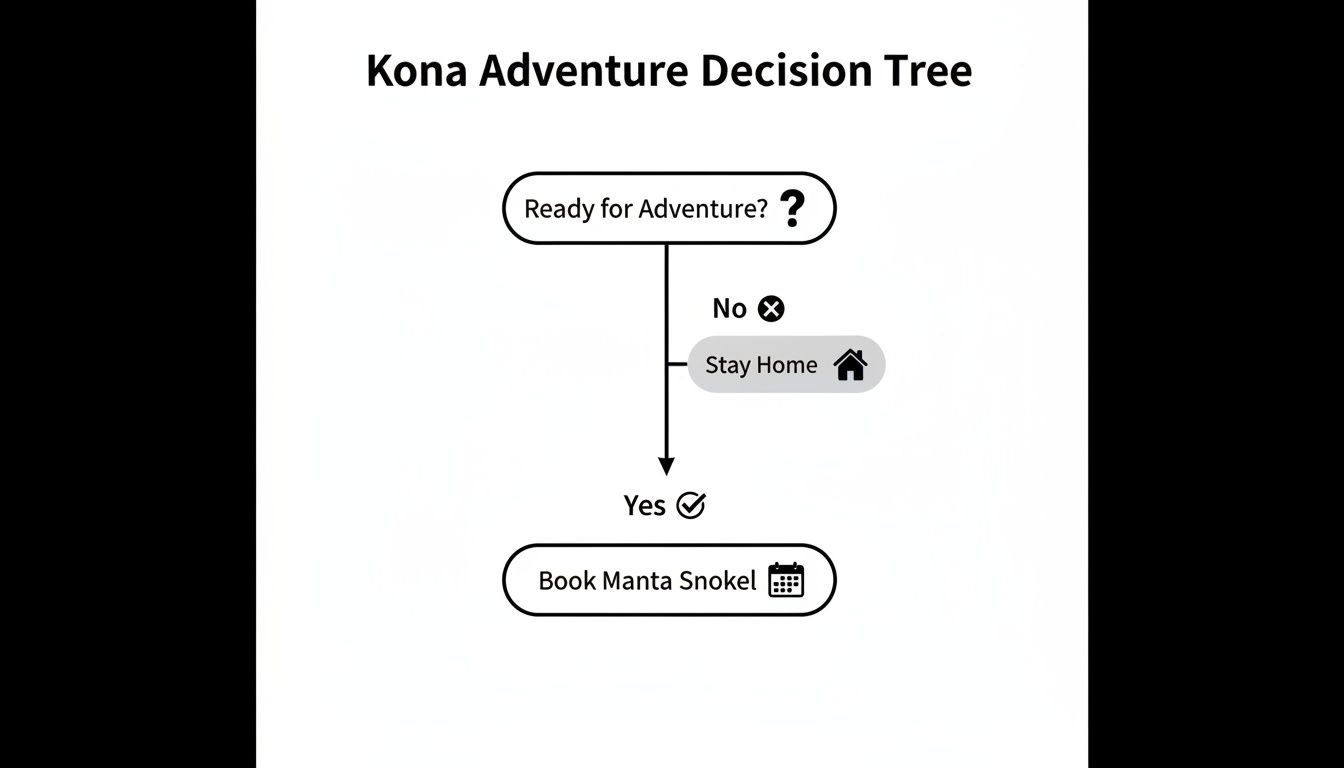
Once you're ready for an adventure, booking the tour is the only thing standing between you and an unforgettable night.
Making the Right Choice for You
Ultimately, your choice between the sunset and twilight snorkel just comes down to personal taste. You can't go wrong either way, as you're guaranteed a front-row seat to one of nature's greatest shows.
If you're leaning toward the later trip and want to learn more, check out our deep dive into the Big Island Manta Ray Night Snorkel.
The sunset tour is about the entire journey—the beautiful coastline, the setting sun, and then the mantas. The twilight tour is all about the destination—the singular, focused magic of the underwater ballet in the dark.
No matter which you choose, you're signing up for one of Hawaii's most iconic wildlife encounters. Just think about what you want most from the experience—the scenic journey or the pure underwater immersion—and you’ll know exactly which tour is right for you.
Meet Kona's Gentle Giants: A Closer Look at the Manta Rays
When you join a manta ray snorkel kona tour, you’re not just seeing beautiful fish passing through; you're meeting the locals. The reef manta rays (Mobula alfredi) here are a resident population, making this corner of the world a living, breathing laboratory for marine biology.
First things first: manta rays are completely harmless. Unlike their stingray cousins, they have no stinger or barb on their tail. These are gentle giants, pure and simple. They are filter feeders, dining exclusively on tiny zooplankton which they gracefully guide into their huge mouths. Watching them perform effortless barrel rolls to scoop up their dinner is easily the highlight of the night.
The Science Behind the Spectacle
What makes the Kona experience so unique is just how well we know these animals. Every manta has a distinct pattern of black spots on its belly, which works just like a human fingerprint. Researchers and veteran tour guides use these patterns to identify and track individuals, giving them names and documenting their entire life stories.
This incredible, long-term research has given us a window into their world. The local population is estimated to be over 450 individuals, with scientists identifying about 120 new mantas each year. What’s really fascinating is that a core group of about 20 regulars accounts for nearly 60% of all sightings—proof of just how comfortable some have become with the feeding sites. And these aren't small creatures; they can weigh over 1,000 pounds with wingspans stretching more than 12 feet!
You can learn more about the fascinating lives of these Kona manta rays in our dedicated article. For an even deeper dive, you can explore detailed manta ray statistics and research findings.
A Connection Beyond Observation
Understanding the science completely changes the experience. It’s no longer just a wildlife tour; it becomes a genuine connection. You aren't just looking at random animals—you're meeting identified individuals like "Big Bertha," "Lefty," or "Koie," each with a known history and personality.
Knowing that you are floating just feet above a well-documented and cherished marine community adds a profound layer to the adventure. It’s an honor to witness this celebrated natural phenomenon, one that depends on the delicate balance between tourism and conservation.
What to Expect on Your Manta Ray Snorkel Tour
Knowing what happens on a manta ray snorkel kona tour, from start to finish, can turn any pre-trip nervousness into pure excitement. While every tour company has its own flair, the core experience follows a proven, safe, and absolutely thrilling sequence.
Your adventure kicks off at the harbor. First up is checking in with the crew and getting a solid safety briefing. The experts will walk you through everything, from getting your wetsuit and snorkel gear fitted just right to the most important rule: how to interact with the mantas (look, but don't touch!). This is the perfect time to ask all your questions and get comfortable with the plan.
The Journey to the Manta Site
With everyone geared up, you'll hop on the boat for a quick, beautiful ride along the Kona coast. If you booked a sunset tour, this part is an experience in itself, with incredible views as the sun melts into the ocean. The trip out to the viewing spot is short, usually just a few minutes to reach famous locations like "Manta Village" or "Manta Heaven."
As the boat arrives, your guides will give one last briefing. They'll explain the cool science behind what you're about to see—how their powerful lights attract swarms of plankton, which in turn brings the hungry manta rays right to you for their nightly buffet.
The Underwater Ballet Begins
This is the moment you've been waiting for. You'll slip into the calm, dark water and make your way to a specially designed, floating light board. Think of this as your front-row seat; you just hold on, float comfortably on the surface, and let your snorkel do the work. The board’s bright lights cut through the darkness below, creating a glowing stage for the main event.
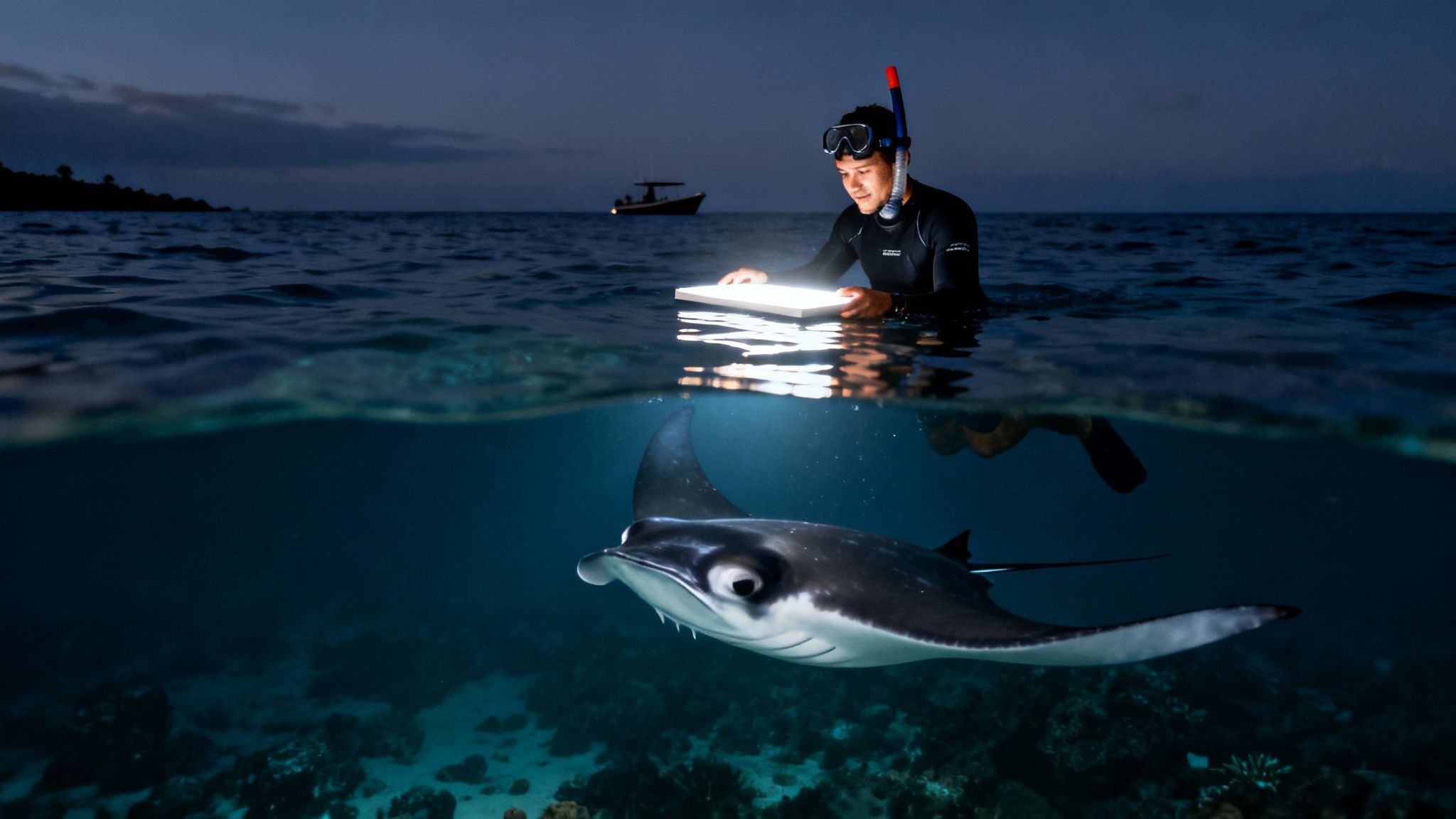
Before long, the first shadow appears. A manta ray glides effortlessly from the deep and into the light. It's a genuinely breathtaking sight. These gentle giants, some with wingspans stretching over 12 feet, perform an incredible underwater dance, doing graceful barrel rolls just inches beneath you as they feast on the plankton. You'll spend about 30 to 45 minutes in the water, totally mesmerized by the show.
The experience is profoundly peaceful and awe-inspiring. You are a passive observer in their world, floating above as these majestic creatures dance in the beams of light, completely unbothered by your presence.
When you're looking for a top-notch operator, Kona Snorkel Trips is an exceptional choice, known for their fantastic Manta Ray night snorkel tours and their equally amazing Captain Cook snorkeling trips.
Once your time in the water is up, you'll climb back onto the boat for the ride back to the harbor, buzzing with the memory of an unforgettable encounter. While you are here you might want to visit our homepage to learn more.
Getting Ready For Your Manta Ray Snorkel Adventure
A little preparation can make the difference between a good trip and an absolutely epic one. Thankfully, getting ready for your manta ray snorkel Kona tour is pretty straightforward since the pros provide all the big stuff. Still, knowing what to bring and what to expect physically will help you feel relaxed and ready to enjoy the show.
Most reputable tour companies—including great operators like Kona Snorkel Trips—will have you completely covered with the essential gear. They'll provide quality snorkel masks, fins, and most importantly, warm wetsuits. Trust me, you'll be glad you have one when you're in the water after sunset!
What to Pack
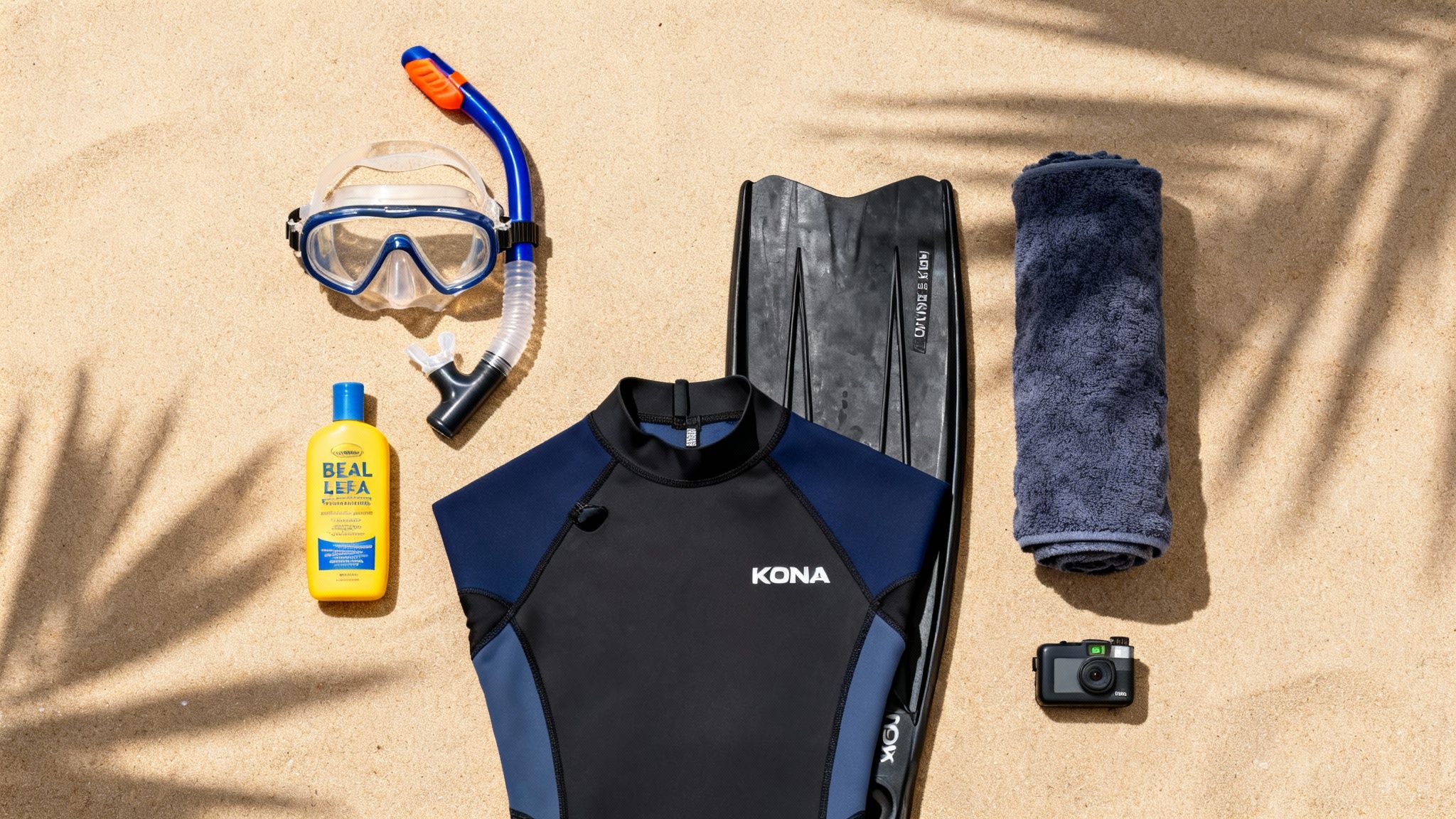
While your tour company handles the main equipment, you'll want to toss a few personal items in a bag for before and after the snorkel. Keep it simple.
Swimsuit: The easiest thing to do is just wear it under your clothes when you show up. No changing on a rocking boat!
Towel: A must-have. You'll need it to dry off and wrap up for the boat ride back to the harbor.
Reef-Safe Sunscreen: If you're on a sunset tour, make sure to apply this before you get on the boat. It protects you and our fragile coral reefs.
A Dry Change of Clothes: Even just a dry t-shirt or a light sweatshirt makes the ride home so much more comfortable, especially if it’s a breezy evening.
Want to really be prepared? Check out our guide with 12 pro tips for an epic manta ray snorkel in Kona.
Fitness and Following Safety Rules
I get this question all the time: "Do I need to be a strong swimmer?" The answer is no, you don't need to be an Olympic athlete to do this.
The whole experience is designed to be accessible. You’ll be holding onto a large, stable light board the entire time you are in the water, which acts as a giant float. All you have to do is hang on and watch! What's more important is just being comfortable in the ocean at night.
For every good tour operator out there, safety is their number one concern. Your guides are highly trained professionals who will give you a detailed safety briefing before anyone gets in the water. It is so important that you listen closely and follow every single one of their instructions.
This includes the absolute golden rule: no touching the manta rays. Their skin is covered in a delicate mucus layer that protects them from infection, and our touch can damage it. Following the guides' directions for getting in and out of the water and respecting the wildlife ensures everyone stays safe and helps protect this incredible experience for generations to come.
Protecting Kona's Manta Rays Through Responsible Tourism
Getting in the water for a manta ray snorkel in Kona is an absolute privilege. With that privilege comes a shared responsibility to protect these incredible animals. The future of Kona's resident manta population really depends on all of us practicing sustainable, respectful tourism. When you choose your tour operator with care, you're doing your part for conservation.
The best companies are serious about protecting the mantas. They operate under a strict set of self-imposed rules designed to keep the animals safe and preserve their natural feeding habits for years to come. Your booking directly supports an ecosystem where amazing human experiences and the well-being of marine life can coexist.
The Golden Rules of Manta Interaction
To make sure every encounter is safe and respectful for both people and mantas, everyone in the water needs to follow a few simple but crucial rules. These aren't just suggestions; they are absolutely essential for the animals' protection.
Observe, Don't Touch: This is the big one. Manta rays have a delicate mucus coating on their skin that acts as a shield against bad bacteria. Touching them can damage this protective layer, making them vulnerable to dangerous infections.
Stay on the Surface: As a snorkeler, your job is to float peacefully on the surface while holding onto the light board. Diving down toward the mantas can interrupt their feeding and cause them stress, so just relax and watch from above.
No Flash Photography: Bright, sudden flashes of light can easily startle or disorient the manta rays. You're more than welcome to take photos and videos, but make sure that flash is turned off.
Following these guidelines is the best way to ensure your presence is a positive one. You get to witness a true natural wonder, and the manta rays get to keep thriving in a safe environment they can count on.
By sticking to these rules, you help guarantee that the magic of the Kona manta ray snorkel remains a sustainable, jaw-dropping adventure for everyone. You can learn more about tour safety and best practices in our guide covering Kona tours and safety tips.
Your Manta Ray Snorkeling Questions Answered
As you get ready for your big Kona adventure, a few questions might pop into your head. That's totally normal! We've put together some quick answers to the most common queries we get, so you can feel completely ready for your tour.
Are Kids Welcome on the Manta Ray Snorkel Tour?
Absolutely! This is a fantastic family activity. Most tour companies welcome kids, usually with a minimum age somewhere between 5 and 7 years old.
You don’t need to be an Olympic swimmer, either. Everyone holds onto a big, floating light board, which keeps you stable on the surface. As long as your little ones are comfortable in the ocean at night, they’ll do great. Plus, the provided wetsuits add extra buoyancy, making everyone feel safe and secure.
What Happens If We Don’t See Any Manta Rays?
It’s one of the biggest questions we hear, and it’s a fair one. While the viewing success rate in Kona is incredibly high—often between 80% and 90%—these are wild animals, and nature doesn’t offer a 100% guarantee.
The good news is that most of the best operators, like those at Manta Ray Night Snorkel Hawaii, have a "manta guarantee." This usually means if the mantas decide not to show up on your tour, you can come back another night for free, depending on availability. It's always a good idea to double-check the specific policy when you book.
When Is the Best Time of Year to Snorkel with Mantas?
This is the best part: any time is a great time! One of the things that makes Kona so special is that our manta ray population lives here year-round. They don't migrate, so there really isn't an "off-season."
Water conditions stay pretty calm most of the year, though visibility and weather can change day-to-day. No matter when you plan your trip to the Big Island, your chances of having a magical encounter are excellent.
For another top-notch option, check out the crew at Kona Snorkel Trips. They’re well-known for their amazing Manta Ray night snorkels and their fantastic daytime trips to Captain Cook.
Comments