Your Guide To The Ultimate Kona Manta Ray Snorkel
- Byron
- Jan 26
- 11 min read
Picture this: you're floating in the warm, dark Pacific waters off the Kona coast. Just inches below you, giant, gentle manta rays glide and dance in the glow of underwater lights. This isn't just another snorkeling trip; it's one of the most reliable and magical wildlife encounters you can have anywhere on Earth. It's a must-do Big Island activity for a very good reason.
Why The Kona Manta Ray Snorkel Is Unforgettable
The magic behind the Kona manta ray night snorkel is a perfect marriage of natural wonder and a little human ingenuity. The whole experience hinges on a simple, brilliant concept: lights attract plankton, and plankton is a manta ray’s favorite meal. This creates an underwater ballet, and you get a front-row seat right at the surface.
This isn't some hit-or-miss activity where you cross your fingers and hope for the best. At the established sites used by top-tier operators, the experience is incredibly consistent. Most companies boast a staggering 90% manta sighting success rate year-round, making Kona one of the most dependable places on the planet to see these gentle giants. You can find more cool facts about manta ray populations on Discover Wildlife. That reliability turns a hopeful wish into a near-guaranteed, bucket-list adventure.
A Symphony of Light and Life
It all starts when your tour boat anchors at a special spot just after sunset. Powerful, eco-friendly lights are lowered into the water, casting a bright column of light into the dark ocean. This glow is an irresistible magnet for zooplankton, the tiny organisms that manta rays live on. Within minutes, the water is swirling with a feast for the mantas.
And then, the show begins.
Drawn in by the plankton buffet, the manta rays arrive. What happens next is nothing short of breathtaking:
Graceful Gliding: You'll watch these majestic creatures, some with wingspans stretching over 12 feet, soar through the water with an elegance that defies their size.
Acrobatic Feeding: The mantas perform mesmerizing barrel rolls and loops, somersaulting through the clouds of plankton with their huge mouths wide open.
Up-Close Encounters: Floating on the surface, you'll see them pass just inches below you. They get so close you can easily see the unique spot patterns on their bellies—each one is like a fingerprint!
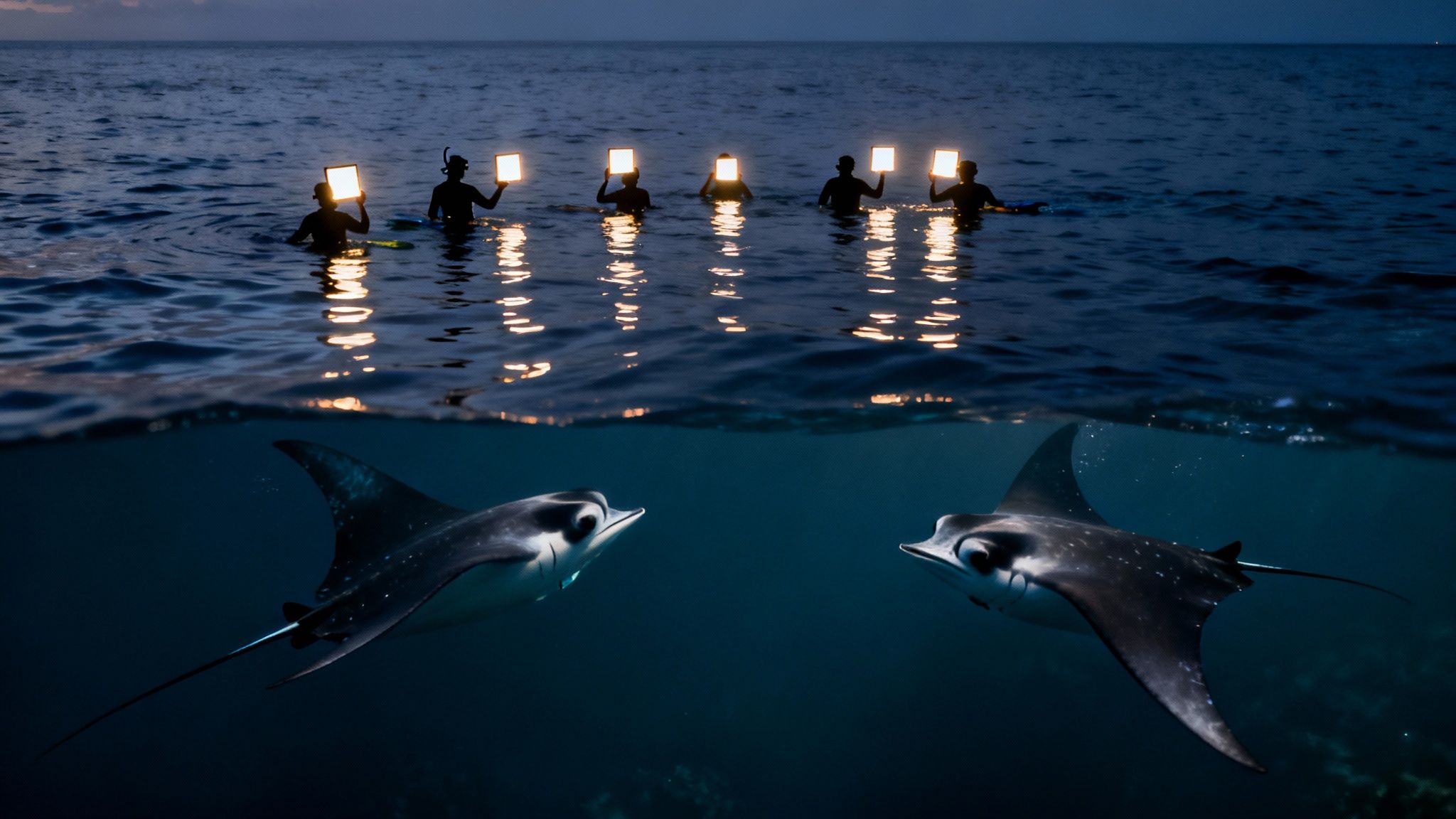
While daytime trips like a Captain Cook snorkeling tour offer incredible views of the reef, the nighttime manta experience is in a class of its own. For an exceptional Manta Ray night snorkel, the team at Kona Snorkel Trips runs a fantastic tour. You can learn more about this one-of-a-kind adventure at Manta Ray Night Snorkel Hawaii.
Choosing Your Perfect Manta Ray Snorkel Tour
Let's be honest, not all manta ray snorkel tours are the same. Picking the right one goes way beyond just comparing prices—it’s about matching the experience to your own travel style. What works for a family with young kids might not be the best fit for a couple on a romantic getaway.
Your first big decision is usually about timing. Do you want a sunset tour or a later, after-dark trip? The sunset option gives you a breathtaking show as the sun dips below the horizon, which is a huge plus for families or anyone who isn't a night owl. The later tours, on the other hand, offer a true under-the-stars adventure and can sometimes feel a bit less crowded.
What To Look For In A Tour Operator
When you start comparing companies, a few key things really separate the great from the just-okay. The number one factor, in my experience, is small group sizes. A smaller boat means a more personal and respectful encounter with the mantas, without a dozen other fins splashing in your face.
Here’s a quick checklist of non-negotiables:
Lifeguard-Certified Guides: Your safety comes first, period. Make sure the guides are professionals with experience handling open water conditions, especially at night.
Good-Quality Gear: Nothing ruins a tour faster than a leaky mask or a flimsy wetsuit. Reputable companies provide well-maintained gear that actually keeps you warm and comfortable.
A Solid Educational Briefing: The best operators take a few minutes before you get in the water to teach you about the mantas—their biology, their behavior, and most importantly, how to interact with them safely and respectfully (hint: no touching!).
For a fantastic operator that offers both manta ray night snorkels and incredible daytime adventures, check out the snorkel tours from Kona Snorkel Trips. They run some of the best trips on the island, including the famous Captain Cook snorkel.
Finding The Right Fit For You
The perfect tour really comes down to what you're looking for. A family with a 10-year-old has very different needs than a group of seasoned divers. To get a really detailed comparison of the top players, you should check out our ultimate guide on the 12 best manta ray snorkel tours in Kona.
A smaller tour isn't just about comfort; it's about respect for the animals. Fewer people in the water create a calmer environment, which often leads to longer, more natural encounters with the manta rays.
To help you decide, we've put together a simple table comparing the most common tour types.
Manta Ray Tour Options Compared
Tour Type | Best For | Key Features |
|---|---|---|
Large Boat | Budget travelers, families | More amenities (e.g., restrooms), lower price point, often more stable in the water. |
Small Boat / Raft | Adventurous travelers, photographers | Faster travel time to sites, more intimate group setting, closer to the water level. |
Private Charter | Groups, special occasions | Completely customized itinerary, ultimate privacy and flexibility, personalized attention. |
Ultimately, putting in a little extra time to research your options makes all the difference. Choosing a company that focuses on safety, education, and small groups will turn a good trip into an absolutely unforgettable one.
What To Expect Before You Get In The Water
The excitement really starts to build before you even dip a toe in the ocean. Knowing exactly what happens on the boat will help calm any nerves, letting you soak in the anticipation without worrying about the little details.
Your adventure kicks off the moment you show up at the check-in spot. Most tour companies, including the fantastic crew at Kona Snorkel Trips, have this down to a science. You'll meet the guides, sign a waiver, and get a quick rundown of the evening ahead. It’s a great chance to ask any last-minute questions.
Pro-tip: Arrive with your swimsuit already on under your clothes. All you really need to bring is a towel and something dry to change into later. Easy.
Gear Fitting And The Safety Briefing
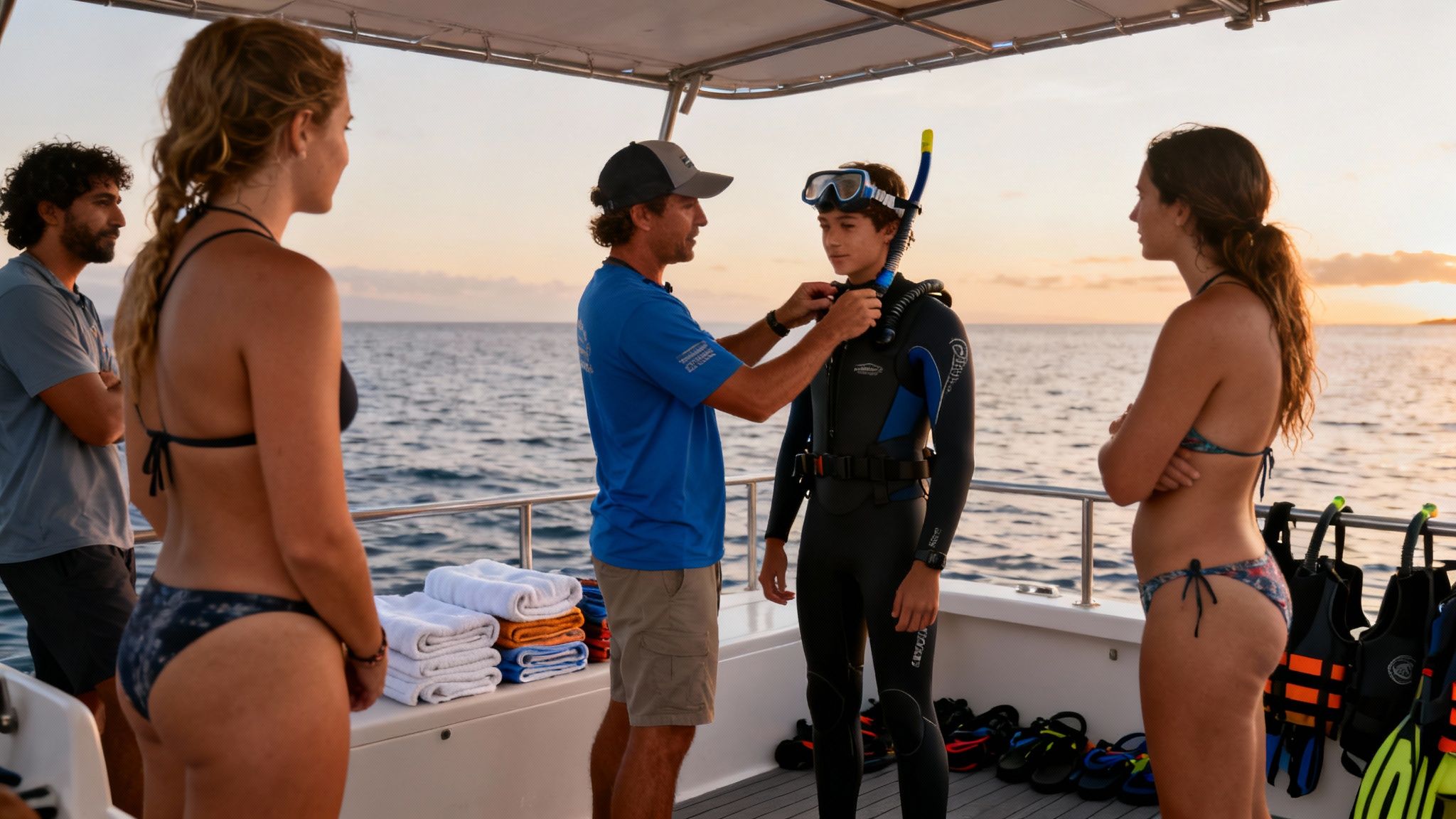
Once everyone's on board, it's a short, scenic boat ride out to the manta spot. This is when the guides spring into action, getting everyone fitted with the right gear—usually a wetsuit, a good-quality mask, and a snorkel.
Don't sweat the sizing. These crews are pros at finding a comfortable, leak-free fit for literally everyone, from kids to grown-ups. They’ll also hand out any flotation gear you might need.
Next comes the most important part of the whole pre-snorkel experience: the safety and marine life briefing. This isn't just a formality. It’s critical for keeping you safe and protecting the incredible manta rays you're about to meet. The guides will walk you through everything, including:
How to get in and out of the water safely after dark.
Tips for using your snorkel gear so your mask doesn't fog up.
The golden rule of "passive observation"—never, ever touch the mantas.
What to do in the water, like how to hold onto the floating light board.
This briefing is all about building your confidence. The whole point is to make sure even a total beginner feels ready and knows how to be a respectful guest in the mantas' world before leaving the boat.
By the time the boat anchors, you'll be geared up, clued in, and ready for the main event. You'll know the plan, feel good in your equipment, and be totally prepared for an unforgettable encounter. If you're looking for more ways to prepare, check out these excellent 10 manta ray snorkel tips.
Your In-Water Manta Ray Encounter
This is it. After the boat ride and the briefing, you'll slide into the surprisingly warm, dark Pacific Ocean. The moment you’ve been waiting for is finally here. Your guides will lead you over to a big, floating light raft—it's basically your front-row seat for the show.
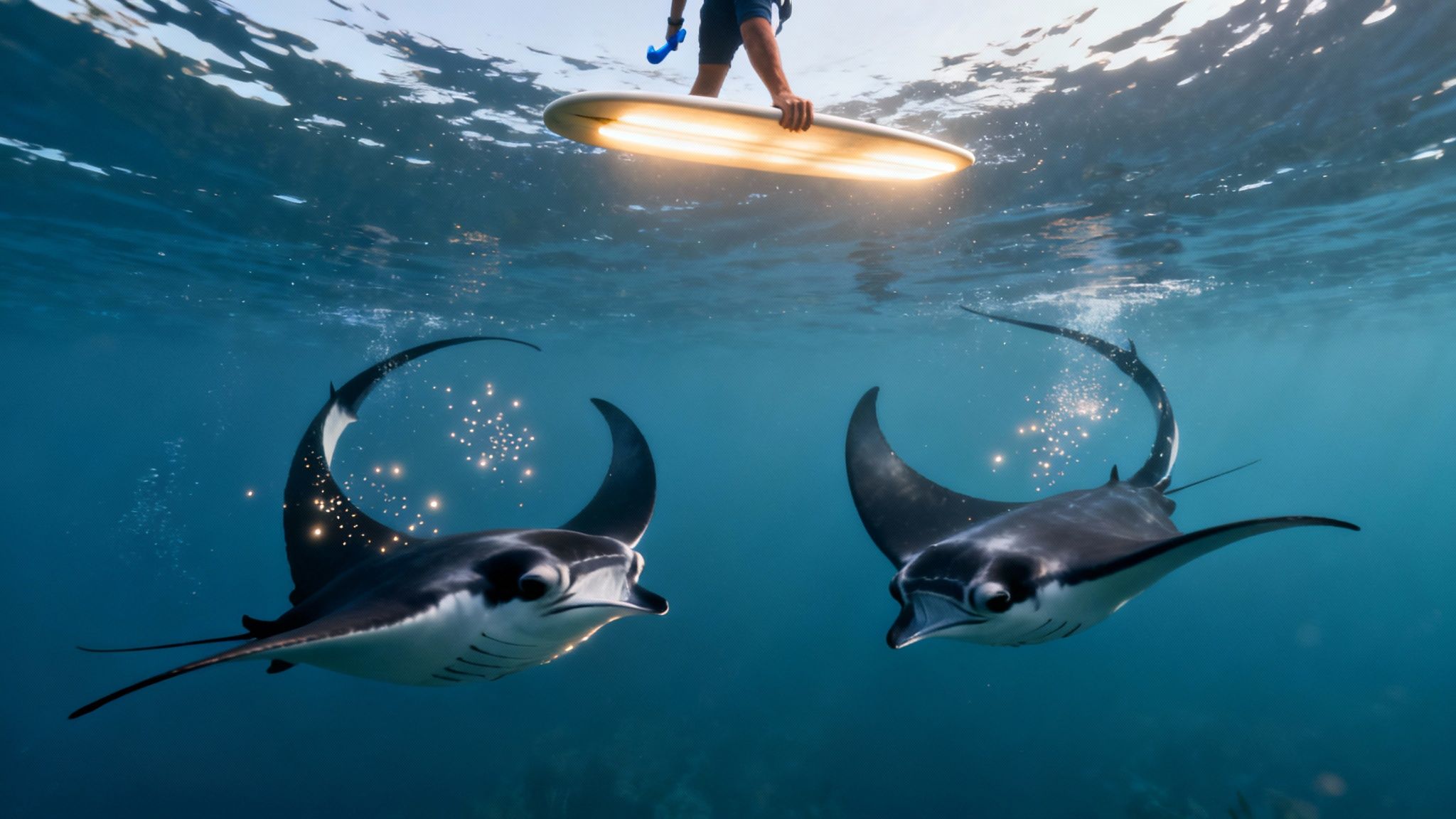
You'll find a spot and hang on, letting yourself float comfortably on the surface with your face in the water. The raft is more than just something to hold onto; its powerful lights point straight down, creating a massive column of light in the water. This light attracts swarms of plankton, and where there's plankton, mantas are sure to follow. It’s like turning on a dinner bell.
The Underwater Ballet Begins
And then, out of the deep blue darkness, they appear. One by one, the giant manta rays glide into the light, looking like silent, graceful spaceships. It's a truly breathtaking sight. These gentle giants, with wingspans that can stretch over 12 feet, perform an incredible underwater ballet, doing barrel rolls and somersaults sometimes just inches below you.
They swoop and turn with their huge mouths wide open, filtering the plankton from the water. It’s an incredibly close and personal experience. You’re not just a spectator; for a little while, you're a quiet part of their world. This is exactly why it’s so critical to listen to your guides and follow the rules.
The golden rule of manta ray snorkeling is passive observation. Think of yourself as a guest in their dining room. Float calmly and never, ever try to touch them.
Touching a manta ray can be incredibly harmful. It strips away the protective slime coat on their skin, leaving them vulnerable to nasty infections and parasites. By simply floating and watching, you help keep this amazing experience safe and sustainable for the mantas.
Staying Comfortable For The Show
Your comfort is key to really soaking it all in. The wetsuit will keep you warm, but the best thing you can do is just relax. If you're tense, you'll burn energy and feel colder. Trust your gear, breathe slowly and deeply through your snorkel, and just focus on the mesmerizing dance happening right in front of you.
This kind of ethical, look-don't-touch tourism is a huge win for marine conservation. An estimated 264,520 manta and devil rays are killed in global fisheries every year, but responsible tours like this one show a better way. They prove that these incredible animals are worth so much more alive, educating thousands of people every year. You can learn more about the work being done to protect them from global threats on The Manta Trust website.
How To Capture The Moment (Or Just Enjoy It)
Seeing the manta rays is an experience so powerful you’ll want to remember it forever. For a lot of people, that means bringing a camera. But whether you're looking through a lens or just soaking it all in with your own eyes, you can make the moment count.
Photography Tips For The Night Snorkel
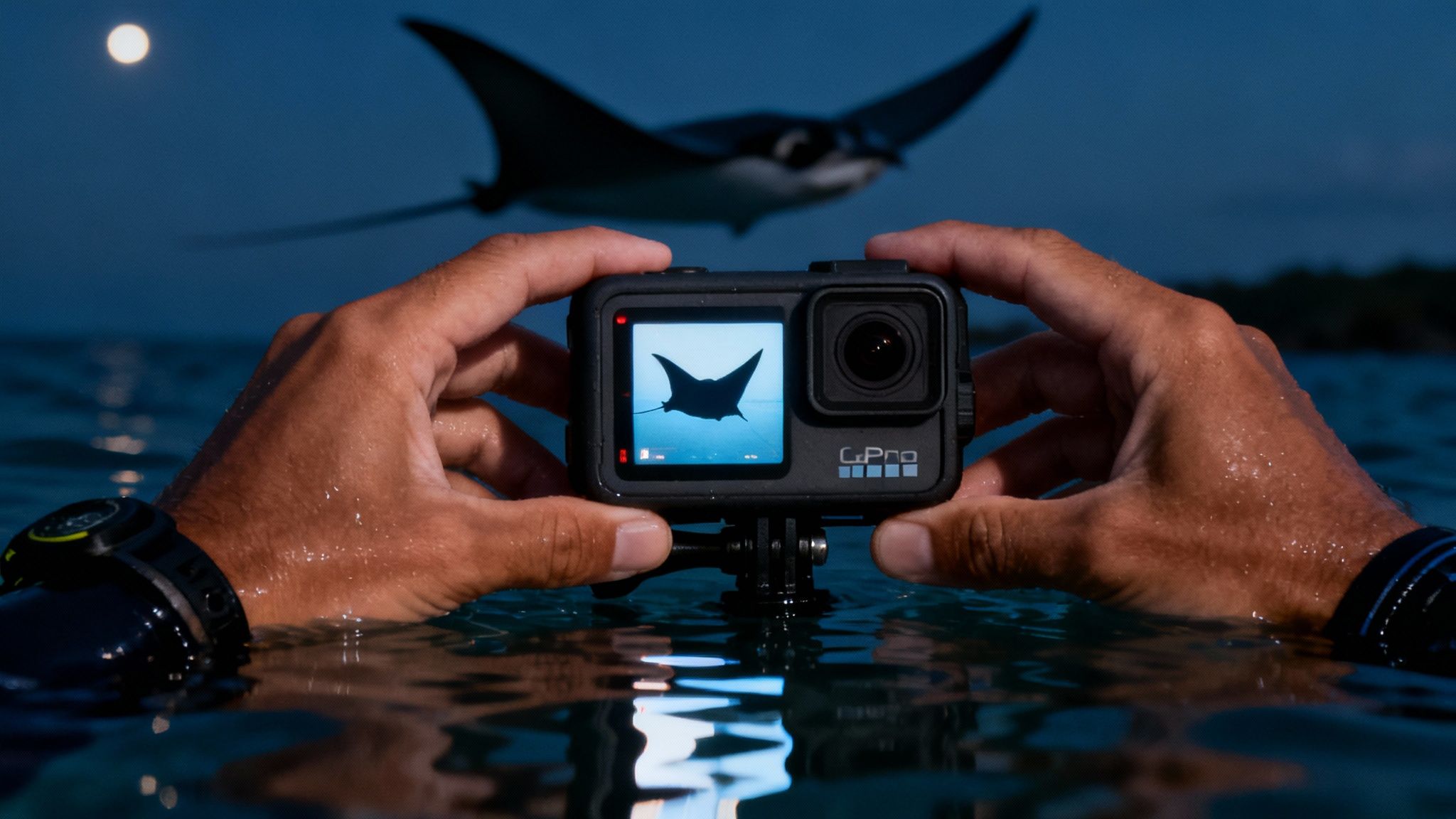
Let's be honest: shooting clear video in dark, moving water is a real challenge. The good news is that the powerful lights on the tour boats do most of the heavy lifting for you, creating a beautifully lit underwater stage.
If you're bringing a GoPro or another waterproof camera, here are a few things I've learned that really help:
Go Wide: Use the widest field of view setting you have. This captures the massive scale of the mantas without you having to constantly move the camera around.
Bump Up The ISO: A higher ISO makes your camera more sensitive in low light. I’d suggest starting around ISO 1600 and tweaking it from there to see what looks best.
Keep It Steady: Your biggest enemy is shakiness. Try bracing your camera (and your hands) against the light board you’re holding onto. Tucking your elbows in close to your body also helps a ton.
Once you get that amazing footage, you'll want to share it. A great way to make your videos more accessible and engaging is to add captions to your manta ray snorkel videos so everyone can follow the action.
Just Being Present
Sometimes, the best camera is just your own memory. I can't recommend this enough: consider putting the camera away, even for just a little while. It lets you fully immerse yourself in what's happening.
Instead of worrying about getting the perfect shot, you can focus on the incredible details. Notice the unique spot patterns on each manta's belly—they're like fingerprints. Listen to the quiet sounds of the ocean and just watch the impossibly graceful way they glide through the water.
The moments that stick with you the most are often the ones you weren't trying to record. This is a chance to connect with one of nature's greatest shows on a truly personal level.
Kona's nightly plankton buffet is famous, but it's part of a much bigger story. A huge 14-year study off the coast of Ecuador identified over 2,800 individual oceanic manta rays, leading scientists to estimate a total population of more than 22,000 there. It’s a powerful reminder of how vital these feeding grounds are to mantas all over the world.
And while the night snorkel is all about the drama, don't forget about daytime adventures. A Captain Cook snorkeling tour will give you much better lighting for photographing the colorful reefs and fish. Doing both gives you the complete Kona underwater experience.
Common Questions About The Manta Ray Snorkel
It's totally normal to have a few questions before you commit to jumping into the ocean at night, no matter how exciting the prospect is. Getting the details sorted out ahead of time means you can just relax and enjoy the show. Let's tackle some of the things people often wonder about.
One of the biggest questions we get is about safety, especially from people who don't spend a lot of time in the ocean.
Is The Manta Ray Snorkel Safe For Beginners?
Absolutely. This tour is designed with non-swimmers and beginners in mind. You don't actually need to know how to swim to do this.
Every tour operator puts safety first. You'll be given a top-notch flotation device—either a life vest or, more commonly, a custom-made light board that you simply hang onto. It does all the work, letting you float comfortably on the surface.
Plus, you're never alone out there. Lifeguard-certified guides are in the water with you the entire time, making sure everyone is safe and having a great time. If you’re comfortable putting your face in the water with a mask on, you're good to go.
What's The Best Time Of Year To Go?
This is one of the best parts about the Kona manta ray snorkel—it’s incredible any time of year. Kona's manta rays aren't just passing through; they're residents who live here year-round. They show up every night for one reason: the plankton that's drawn to the tour lights. It's a reliable dinner bell for them.
This consistency means your chance of seeing mantas is ridiculously high, often over 90%, no matter what month you book your trip. The only real variable is the weather, but the mantas are almost always ready for their close-up. If you have more questions, we've put together a ton of answers on our manta ray FAQ page.
Gentle Giants, Not Monsters: It’s worth repeating: manta rays are completely harmless. They’re filter feeders without a single tooth, and they don't have a stinger or barb like their stingray cousins. They're just curious, graceful giants.
Will I Get Cold In The Water At Night?
The crews have this down to a science. They provide everyone with a wetsuit, which is the key to staying comfortable. The suit traps a thin layer of water against your skin, and your body heat warms it up, creating a perfect layer of insulation.
Kona's ocean water is pretty pleasant, usually hovering between 75-80°F (24-27°C). Still, that wetsuit makes all the difference, letting you fully soak in the experience for the full 30-45 minutes you're in the water without getting a chill.
How Can I Share My Experience?
You're going to want to share this, trust me. While you'll need a GoPro or waterproof case for your phone to capture the magic underwater, don't forget about staying connected once you're back on land. For an easy way to get data on your trip without swapping SIM cards, it can be helpful to understand how eSIMs work for travel. A solid connection means you can upload those mind-blowing videos as soon as you get back to the harbor.
Choosing a great tour operator makes all the difference. Companies like Kona Snorkel Trips run fantastic manta ray tours and are also an exceptional alternative when looking for a Manta Ray night snorkel tour or a Captain Cook snorkeling tour. To see the options for this incredible nighttime adventure, be sure to check out the tours at Manta Ray Night Snorkel Hawaii.
Comments