Best manta ray night snorkel kona: Kona's Legendary Night Snorkel Experience
- Byron
- Feb 2
- 12 min read
Your search for the best manta ray night snorkel Kona has to offer isn't just a shot in the dark—it's one of the most reliable and magical wildlife encounters you can find on the Big Island. Unlike so many other marine tours where you just cross your fingers and hope for the best, Kona's unique setup with its resident manta population makes for an almost guaranteed spectacle. Get ready for an underwater ballet you'll never forget. Find out more at the Manta Ray Night Snorkel Hawaii home page.
Why Kona Is the Global Epicenter for Manta Ray Encounters
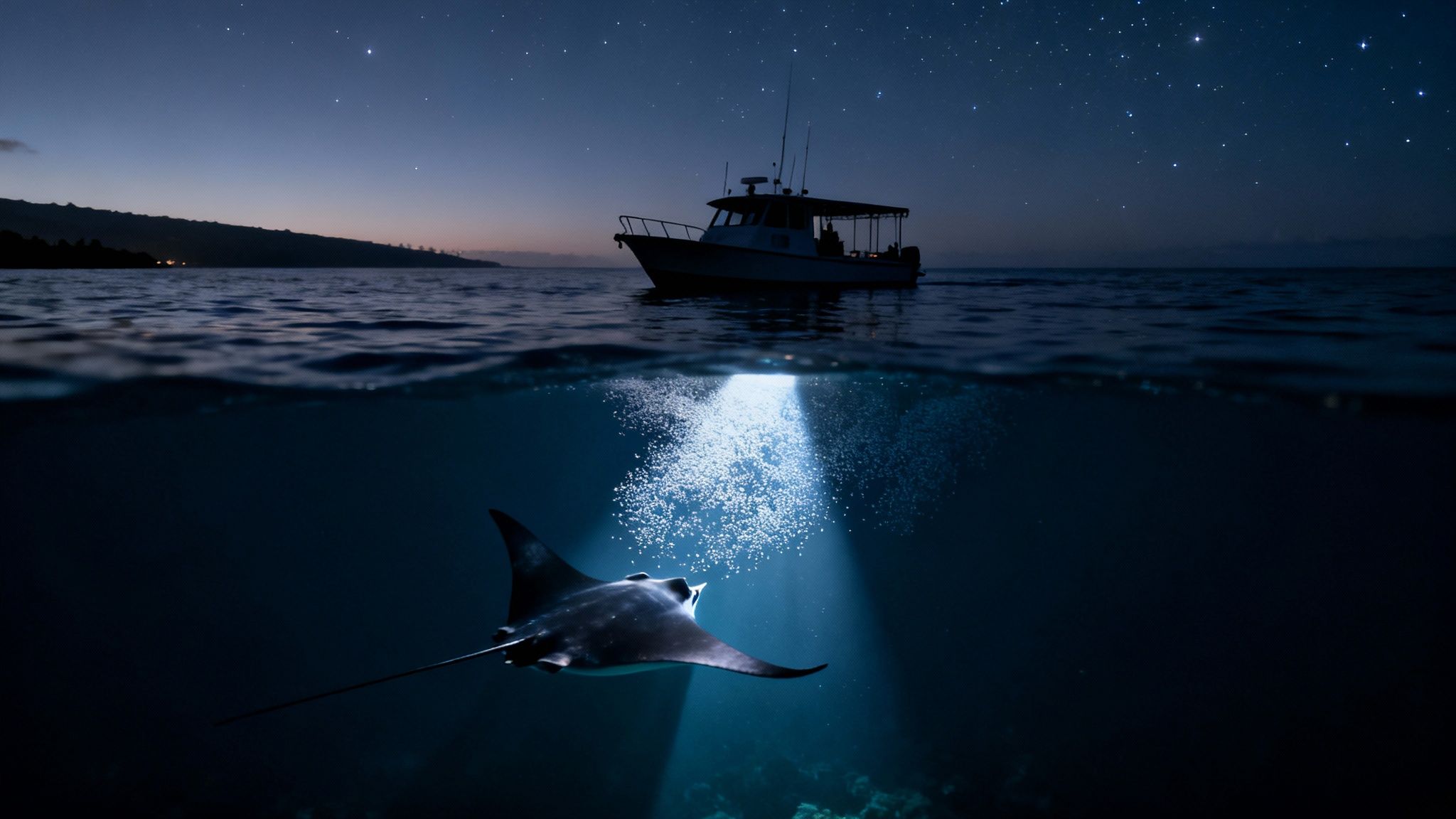
When you hear people talking about swimming with manta rays, Kona is always the first name that comes up. This isn't just local pride; it's a globally recognized fact. The Kona coast has the perfect storm of conditions, creating the world's most consistent and incredible opportunity to see these gentle giants up close.
The secret? It's all about the light. For decades, lights from the old Kona Surf Hotel (and now from tour boats) have lit up the water after dark. This light acts like a magnet for plankton, which just so happens to be a manta ray's favorite meal.
The Famous Manta Buffet
Think of it as a nightly, all-you-can-eat plankton buffet laid out just for them. Mantas are incredibly smart, and it didn't take them long to figure out that these pools of light mean an easy dinner.
This behavior is now so routine that a resident population of over 200 identified manta rays shows up to these specific feeding spots all year long. This is what makes the Kona experience so unique and reliable. To dive deeper into the timing, check out our guide on the best time to see manta rays in Kona.
The numbers speak for themselves. Kona's manta ray tours have an incredible 80% to 90% sighting success rate year-round. It's a phenomenon that draws about 80,000 people to the Big Island's coast every single year.
The table below breaks down exactly what makes Kona the undisputed king of manta encounters.
Kona Manta Ray Snorkel At a Glance
Factor | Why It Matters for Your Snorkel |
|---|---|
Resident Manta Population | Over 200 identified mantas live here year-round, not just passing through. This consistency is the key to the high success rate. |
Established Feeding Sites | Mantas have been conditioned for decades to associate light with food at specific spots, making their behavior highly predictable. |
Plankton-Rich Waters | The Kona coast's ecosystem naturally supports a healthy plankton population, ensuring the "buffet" is always open for business. |
Calm, Sheltered Bays | The locations are naturally protected, leading to calmer waters which makes for a much more comfortable and safer snorkeling experience. |
Simply put, everything lines up perfectly here to create a world-class wildlife adventure.
Prime Viewing Locations
Two main locations have become the go-to stages for this nightly show:
Manta Village (Keauhou Bay): Located a bit south of town, this is often called the "original" viewing site. Its close proximity to shore and super reliable sightings make it a perennial favorite.
Manta Heaven (Garden Eel Cove): Situated north of Kona, closer to the airport, this spot is famous for sometimes attracting huge groups of mantas. When they show up in numbers, it's a mesmerizing, swirling vortex of activity.
Both spots give you a front-row seat to one of nature's most amazing performances, cementing Kona's reputation as the best place on Earth to see manta rays.
How to Choose Your Ideal Manta Ray Snorkel Tour
Picking the right tour operator is easily the most important decision you'll make for this entire adventure. Let's be honest, the number of choices in Kona can feel a bit overwhelming. But if you focus on a few key factors, you can zero in on the perfect manta ray night snorkel for your crew.
The goal is simple: find a tour that’s safe, respects the mantas, and gives you a front-row seat to the magic.
One of the first things people think about is the size of the boat. A bigger boat might feel more stable and have a few extra amenities, but a smaller group tour offers a completely different, much more intimate vibe. With fewer snorkelers in the water, you get a clearer view and more one-on-one time with your guides, which honestly makes all the difference.
Prioritizing Safety and Expertise
No matter what, safety has to come first. I can't stress this enough. Only book with a company that employs lifeguard-certified guides. These are the pros trained to handle anything the open ocean throws at you, especially at night. Their expertise goes beyond just keeping you safe; they’re also walking encyclopedias on manta ray biology and behavior, turning a cool snorkel into a fascinating learning experience.
A top-notch operator will have a squeaky-clean safety record and a long list of glowing reviews that specifically call out the crew’s professionalism. Once you find a company that ticks all those boxes, you can book with total peace of mind.
When it comes to finding a top-tier experience, look no further than Kona Snorkel Trips, which stands out as the most reviewed and highest-rated snorkel tour company in all of Hawaii. Their commitment to small groups and expert guidance ensures an unforgettable and safe adventure.
If you're curious about what makes their tour a local favorite, you can explore their Kona manta ray snorkel tour and see for yourself why they earn so many five-star reviews.
What to Look for in a Tour
Beyond the basics, think about the kind of experience you’re truly after. Are you picturing yourself floating peacefully under a sky full of stars while giant manta rays do their graceful, plankton-fueled ballet just inches below you? That’s the magic we’re talking about.
The best tours have an incredible 90%+ sighting rate, so your chances are fantastic. Operators with decades of experience often keep their groups small—think 4-8 people—which means you get more personal viewing time at prime spots like Garden Eel Cove.
For a deeper dive into the different options out there, the ultimate 2026 guide to the 12 best manta ray snorkel Kona tours is a fantastic resource for comparing your choices.
Tour Operator Comparison Guide
To help visualize the differences, here’s a quick breakdown of what you can generally expect from different types of tour operators.
Feature | Small-Group Tour (e.g., Kona Snorkel Trips) | Large-Group Tour | Private Charter |
|---|---|---|---|
Group Size | Typically 6-12 people | 20-50+ people | Your group only |
Personal Attention | High, more guide interaction | Low, less one-on-one time | The highest, fully dedicated crew |
Viewing Experience | Less crowded, unobstructed views | Can be crowded, potential jockeying for position | Completely unobstructed, best views |
Boat Amenities | Basic (restroom, snacks) | More amenities (bar, larger deck) | Customizable to your requests |
Cost | Mid-range | Most budget-friendly | Highest price point |
Best For | Couples, families, serious snorkelers | Budget travelers, large social groups | Special occasions, families with young kids, photographers |
Ultimately, the choice comes down to your budget and what you value most—an intimate encounter or a more social, party-like atmosphere. There’s no wrong answer, just the one that’s right for you.
A Firsthand Look at Your Night Snorkel Adventure
It’s one thing to imagine floating in the dark ocean while giant shadows glide beneath you, but it’s something else entirely to experience it. The best manta ray night snorkel Kona has to offer isn't just a boat ride; it’s a full-on sensory adventure from the moment you check in.
Let’s walk through exactly what you can expect.
Your journey really kicks off before you even leave the harbor. The crew will gather everyone for a pre-departure briefing, and this isn't just a quick safety checklist. It's an engaging intro to the world of manta rays, where you'll learn about their biology, their unique personalities, and the conservation efforts that help protect them. This briefing really sets the stage, transforming a fun activity into a much more meaningful encounter.
The Anticipation Builds
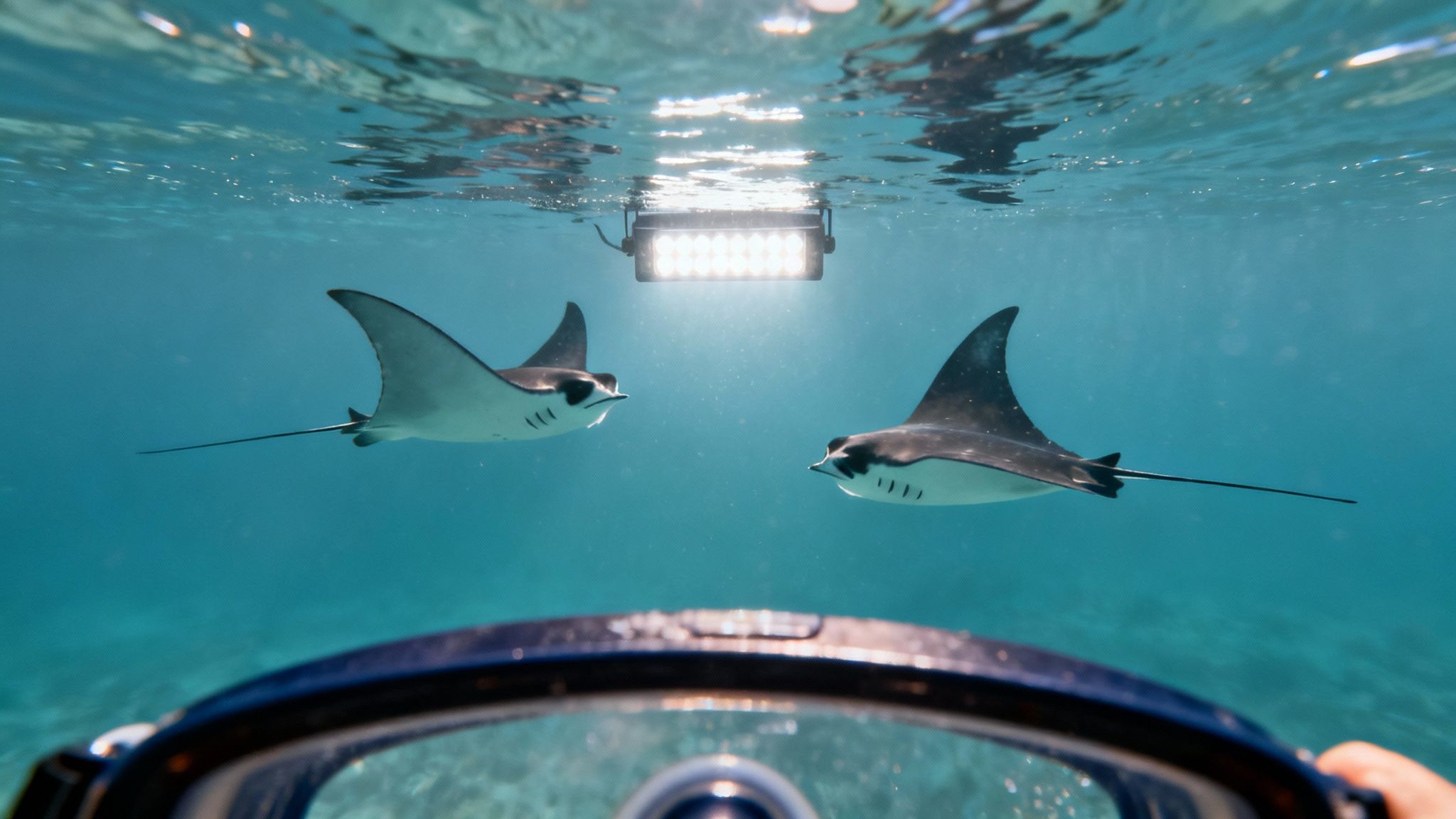
As your boat cruises out from the harbor, you'll get to watch the Kona coastline change colors under the setting sun or a sky full of stars. Once you arrive at the viewing site—a spot the mantas frequent—the crew gets everything ready. They’ll set up a custom-built light board, which is basically a big floating raft with powerful lights that shine straight down into the dark water.
This light is the secret ingredient. It acts like a massive bug zapper for microscopic plankton, drawing them up to the surface. And where plankton gather, you can be sure the mantas are on their way for dinner.
Slipping into the warm Hawaiian water is a moment filled with excitement. You'll be given a wetsuit top to stay comfortable and all the snorkel gear you need. Once you’re in, you just hold onto the light board, which keeps you stable and gives you the perfect view. All you have to do is float, look down, and wait for the show to begin.
An Underwater Ballet Begins
At first, all you'll see is the illuminated plankton swirling in the light beams like underwater snow. Then, a shadow appears in the distance. It gets bigger and clearer as it gets closer. The first time a manta ray glides into the light is a moment you will absolutely never forget.
These gentle giants, some with wingspans over 12 feet, perform a graceful, effortless ballet. They swoop and somersault through the water, their huge mouths open to filter the plankton. They often come within inches of you—so close you can see the unique spot patterns on their undersides.
Your in-water guides are right there with you the whole time, making sure everyone is safe and comfortable. They’ll point out specific mantas, many of whom they know by name, and share cool facts about their behavior as it happens.
This isn't like watching wildlife from afar. You are fully immersed in their world. It’s a peaceful, profound, and deeply moving experience. The only sounds are the gentle lapping of the water and the quiet gasps of awe from everyone around you.
This tour gives you a front-row seat to one of the ocean's most incredible spectacles. To get an even better idea of the magic, you can read more about the full manta ray night snorkeling experience and what makes it so special.
Essential Tips for a Flawless Manta Snorkel Trip
A little preparation can make all the difference between a great manta ray snorkel and an absolutely unforgettable one. When you pack smart and know what to expect, you can stop worrying about the little things and focus completely on the incredible ballet happening right below you.
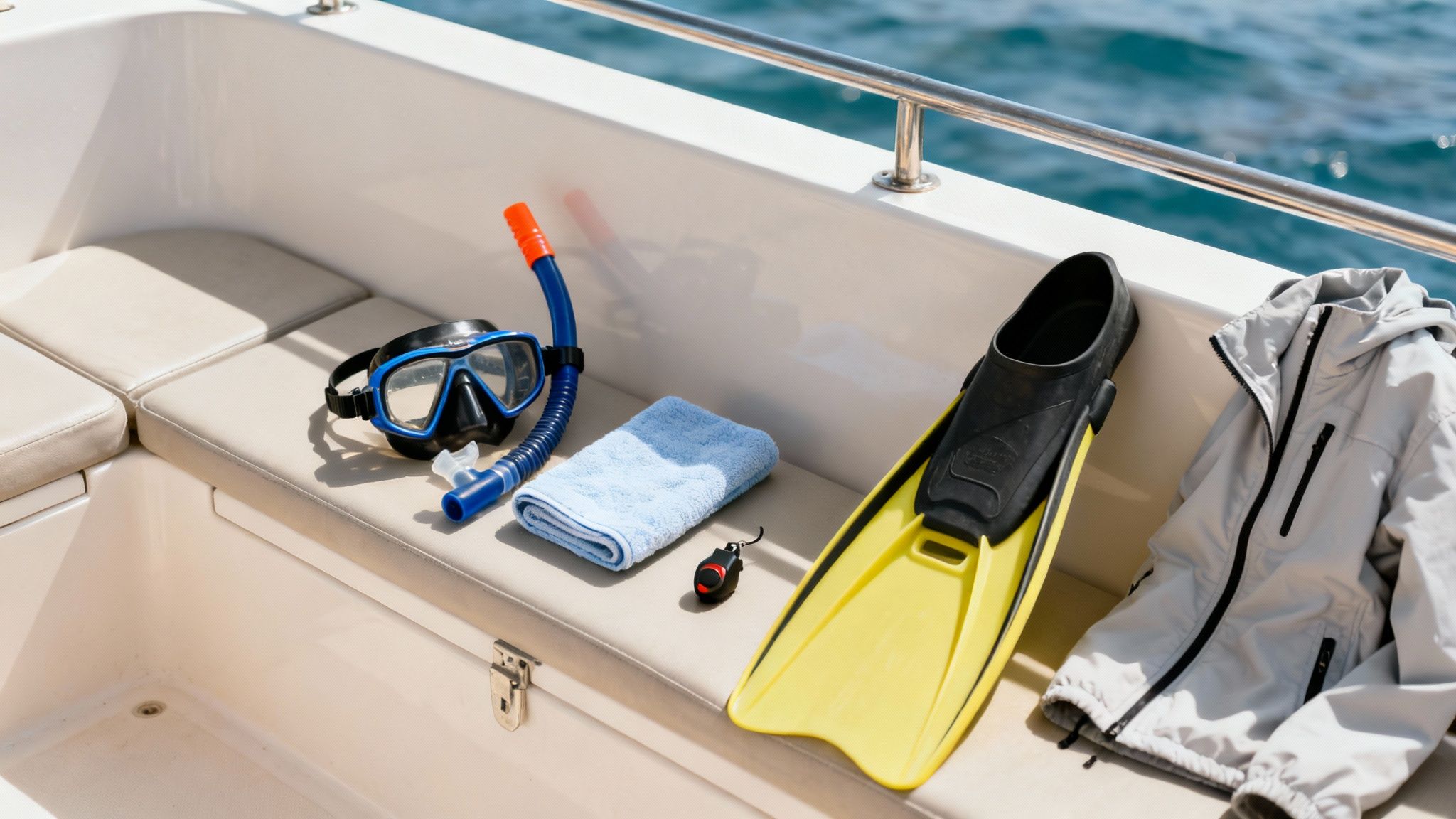
The essentials are simple. Plan to arrive with your swimsuit already on under your clothes. Be sure to bring a towel and a dry set of clothes for the ride home—you’ll be glad you did.
That trip back to the harbor, especially after sunset, gets surprisingly chilly with the ocean breeze. A warm jacket or sweatshirt isn't just a suggestion; it's a must-have. You’ll be thanking yourself as you sip hot cocoa and warm up on the boat.
Gearing Up and Getting Ready
Don't worry about bringing your own gear. Any reputable tour operator will provide all the necessary equipment, including a mask, snorkel, fins, and usually a wetsuit top.
That wetsuit is key. It adds a bit of buoyancy and, more importantly, keeps you warm, letting you float comfortably for the entire time you're in the water.
Now, you don't need to be an Olympic swimmer, but you absolutely must be comfortable in the ocean at night. You'll be holding onto a big, floating light board the whole time, but having basic swimming skills is non-negotiable for your own safety and peace of mind.
If you're someone who gets motion sickness, it's always smart to plan ahead. While the boat ride is generally smooth, it's better to be safe than sorry. Consider taking an over-the-counter remedy as directed before you even leave the harbor. For more great advice, check out these 12 pro tips for an epic manta ray snorkel in Kona.
Listen Closely: If there's one piece of advice to take away, it's this: pay full attention to the crew's instructions. These are trained professionals whose number one job is keeping you safe while making sure you have an amazing time. Following their lead is the secret to a smooth, respectful, and incredible encounter.
Remember, the crew is there to help with everything, from getting your mask to fit just right to answering all your questions about the mantas. They know that the best manta ray night snorkel Kona experience happens when everyone feels secure and informed. So trust their expertise, relax, and get ready for a magical night.
Snorkeling With Respect: Manta Ray Conservation
Getting in the water for a Kona manta ray night snorkel is more than just a cool adventure—it's a chance to be a guest in the home of these incredible animals. And with that privilege comes a big responsibility: making sure we protect them for generations to come. Respectful interaction isn't just a nice idea; it's the heart of a sustainable and ethical experience.
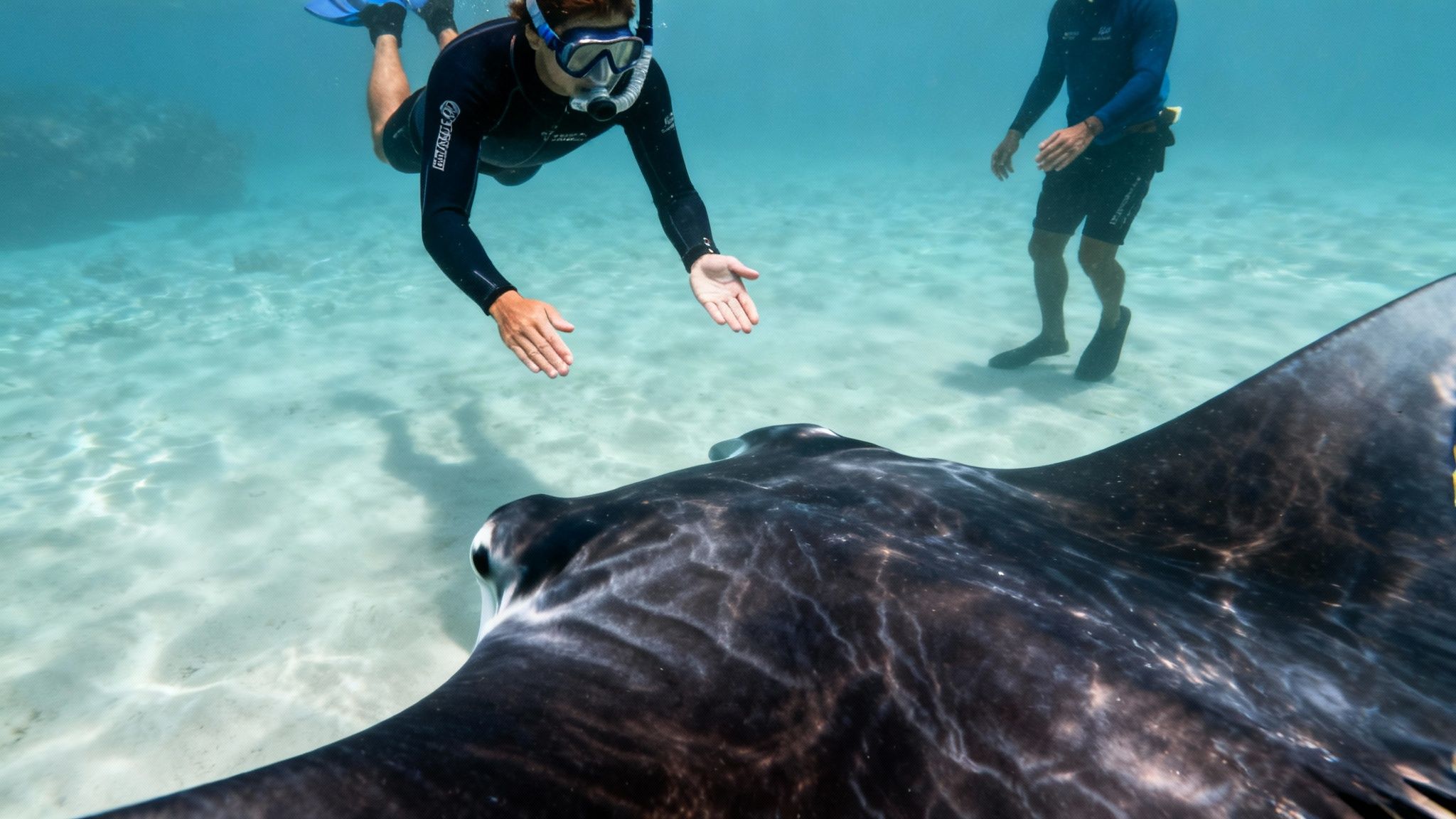
The most important rule is also the simplest: never, ever touch a manta ray. These gentle giants have a protective mucous coating, a thin layer of slime that works like an immune system, shielding them from nasty bacteria and infections. Even a gentle touch can rub this off, leaving them vulnerable to getting sick.
The Golden Rule of Manta Interaction
Any good tour operator is going to be all-in on conservation and will give you a thorough rundown of the "do's and don'ts" before you even dip a toe in the water. Your job is simple: be a passive observer. Just float, watch, and let the show unfold without getting involved.
To keep both you and the mantas safe and happy, stick to these guidelines:
Stay at the surface: Snorkelers should hang onto the light board and stay on top of the water. Diving down toward the mantas can really mess with their feeding groove.
Keep your limbs in: Try to avoid kicking around or letting your legs dangle. The more horizontal you can be, the better. It makes you a smaller, less obtrusive presence.
Don't chase or block them: Let the mantas come to you. Never follow them or get in their way as they cruise through the light beams.
Go easy on the flash: Sudden, bright flashes from cameras can startle and disorient the mantas. If you bring a camera, make sure the flash is turned off.
How Your Tour Supports Conservation
When you pick a responsible operator like Kona Snorkel Trips—the most reviewed and highest-rated snorkel company in Hawaii—you're doing more than just booking a tour. You're actively helping to protect manta rays. These companies are often on the front lines of research, helping identify individual mantas and tracking their movements. This data is pure gold for organizations studying the health of the manta population. You can learn more about these fascinating creatures right here: Manta Rays Unveiled: Fun Facts About Manta Rays You Should Know.
Responsible tourism is the secret sauce to keeping this magical encounter possible. When operators and guests team up to protect the mantas, they ensure the Kona coast remains a safe haven for these amazing animals.
These ethical practices are a huge part of what makes the Kona manta ray snorkel tour such a standout experience. By understanding and following these simple rules, you become part of the solution, helping protect Kona's beloved manta rays while making a memory that will stick with you for a lifetime.
Got Questions About the Manta Ray Snorkel? We’ve Got Answers.
Even after you've picked your tour, a few last-minute questions always seem to pop up. Finalizing the details for your adventure shouldn't be stressful—it should be part of the excitement! We've heard just about every question in the book, so we’ve gathered the most common ones right here.
Think of this as your final check-in before the big night. We'll cover everything from what happens if the mantas are a no-show to whether your kids can join in on the fun.
Logistics and Guarantees
One of the biggest concerns people have is whether the mantas will actually show up. It’s a fair question—we are dealing with wild animals, after all.
What happens if we don't see any manta rays?While it's rare, it can happen. These graceful giants aren't in an aquarium, and their appearance is never 100% guaranteed. The good news is that top-tier tour operators know this and usually offer a "manta guarantee." This typically means you can book a spot on another night, completely free of charge. Just make sure to confirm the specific policy before you lock in your booking.
Here's a pro tip: schedule your manta ray tour for one of your first nights in Kona. That way, if you do need to use that guarantee, you have plenty of other nights to try again.
What is the best time of year to see manta rays in Kona?This is the easiest question of all: anytime! Kona's manta ray population sticks around all year long. They aren't migratory, and their main food source—plankton—is consistently available. Whether you're visiting in the heat of July or during a cool December evening, your chances for an amazing encounter are fantastic.
Safety and Skill Requirements
Hopping into the ocean at night is an incredible experience, but safety is always the number one priority. Let’s clear up a few common questions about who can join and what you need to be able to do in the water.
Is the manta ray night snorkel safe for children?Absolutely, many tours are perfect for families! But there are a few things to keep in mind. Most companies have a minimum age, usually around 5 to 7 years old. More importantly, any child participating needs to be a competent swimmer who is truly comfortable in the ocean, especially after dark. They have to be able to listen to the guides and not panic.
Always double-check the specific age and skill policies with the company you book. Operators like Kona Snorkel Trips, which happens to be Hawaii's most reviewed and highest-rated snorkel tour company, have professional crews who are fantastic at making sure everyone, including kids, feels safe. You can see more about their family-friendly tours on their Kona manta ray snorkel tour page.
Do I need to be a strong swimmer for this tour?You don't need to be an Olympic athlete, but you definitely need basic swimming skills. You should be able to swim on your own without assistance and feel comfortable floating in the open ocean at night.
The great thing is, you’ll be holding onto a large, custom-built light board for the whole snorkel. This board is very buoyant and does most of the work for you, so you aren't really swimming around. Still, knowing how to swim is non-negotiable for any ocean activity.
With these answers in hand, you can finalize your plans and get ready for what will surely be a highlight of your trip to Hawaii. For more info or to explore booking options, head over to the Manta Ray Night Snorkel Hawaii home page.
Comments