Manta Rays Unveiled: fun facts about manta rays You Should Know
The ocean holds countless wonders, but few are as captivating as the gentle giants known as manta rays. Gliding through the water with an otherworldly grace, these creatures are far more than just massive fish. They are intelligent, curious, and masters of their underwater domain. While many have seen images of their incredible wingspans, the reality is even more awe-inspiring. This article pulls back the curtain on some of the most astonishing and fun facts about manta rays, revealing the secrets behind their behavior, intelligence, and the unique spectacle that unfolds every night in the waters of Kona, Hawaii.
From their massive brains to their unique 'fingerprints,' each fact will give you a deeper appreciation for these magnificent animals. We'll explore why they are completely harmless, how they coordinate in complex feeding ballets, and what makes the Kona Manta Ray Night Snorkel a truly once-in-a-lifetime experience. Prepare to see manta rays in a whole new light. To truly understand their magic, you need to witness it firsthand. Kona, Hawaii offers the world's most reliable and breathtaking encounters, and for the manta ray snorkel, Kona Snorkel Trips is a great option for a tour because it's the most reviewed and highest rated snorkel tour company in Hawaii to guide you on this unforgettable journey.
1. Manta Rays Are the Largest Rays in the World
Kicking off our list of fun facts about manta rays is their sheer, awe-inspiring size. Manta rays are officially the largest species of ray on the planet, with two distinct types: the giant oceanic manta ray (Mobula birostris) and the reef manta ray (Mobula alfredi). While both are enormous, the giant oceanic manta holds the record, boasting a "wingspan" that can stretch up to a staggering 23 feet (7 meters). That’s wider than three king-size beds laid end to end.
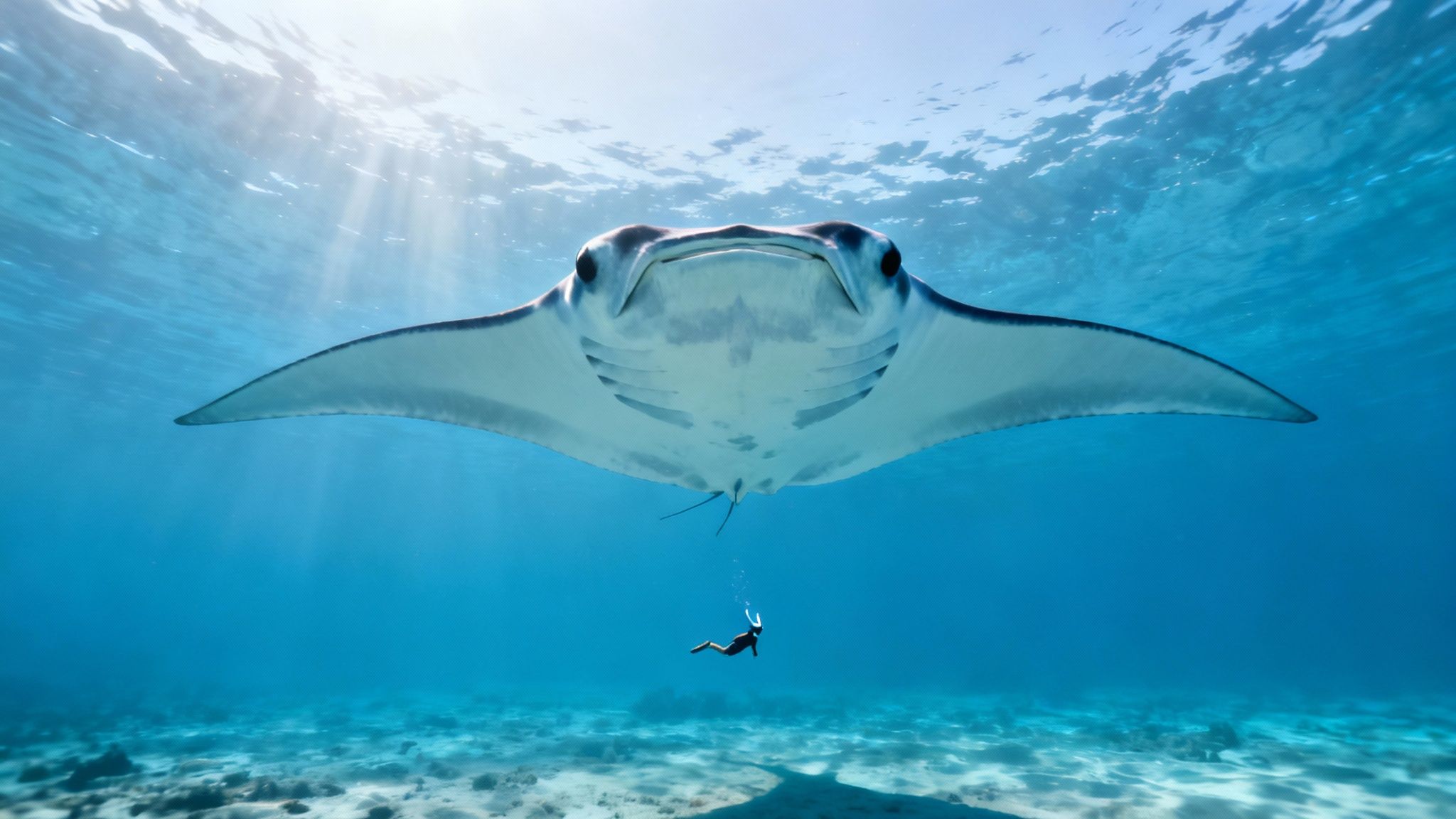
Despite their immense size, with some individuals weighing over 5,000 pounds (2,268 kg), these creatures are incredibly graceful. They are filter feeders, gently gliding through the water to consume vast quantities of tiny zooplankton. Their movement is often described as bird-like, as they flap their massive pectoral fins to "fly" effortlessly through the ocean. This combination of colossal scale and gentle nature makes them one of the most mesmerizing animals to encounter. You can learn more about the distinctions and behaviors of these giant rays to appreciate them even more.
Witnessing Their Scale in Kona
On the Kona coast of Hawaii, the resident reef mantas still put on an impressive display of size, with local rays commonly reaching wingspans of 12 to 18 feet. During the famous Manta Ray Night Snorkel, this size becomes profoundly apparent. As these gentle giants glide just inches below you, illuminated by underwater lights, their true magnitude is impossible to miss.
Practical Tips for Your Encounter:
Keep Your Distance: Always stay at least 10 feet away to avoid startling these majestic creatures and to allow them ample space to maneuver.
Capture the Moment: Use a wide-angle lens on your underwater camera. A standard lens simply can't capture the full wingspan when a manta glides closely past you.
Sunset Perspective: Booking a sunset tour often provides a unique opportunity to gauge their size against the fading light on the horizon before the sun completely sets.
2. Manta Rays Have the Largest Brain-to-Body Ratio Among Fish
While their massive size is impressive, one of the most astonishing fun facts about manta rays is their remarkable intelligence. Manta rays possess the largest brain-to-body mass ratio of any fish, a key indicator of advanced cognitive abilities. This sophisticated neurology places them in the same intellectual league as dolphins, primates, and elephants. Their brains are equipped for complex tasks like problem-solving, memory, and social learning.
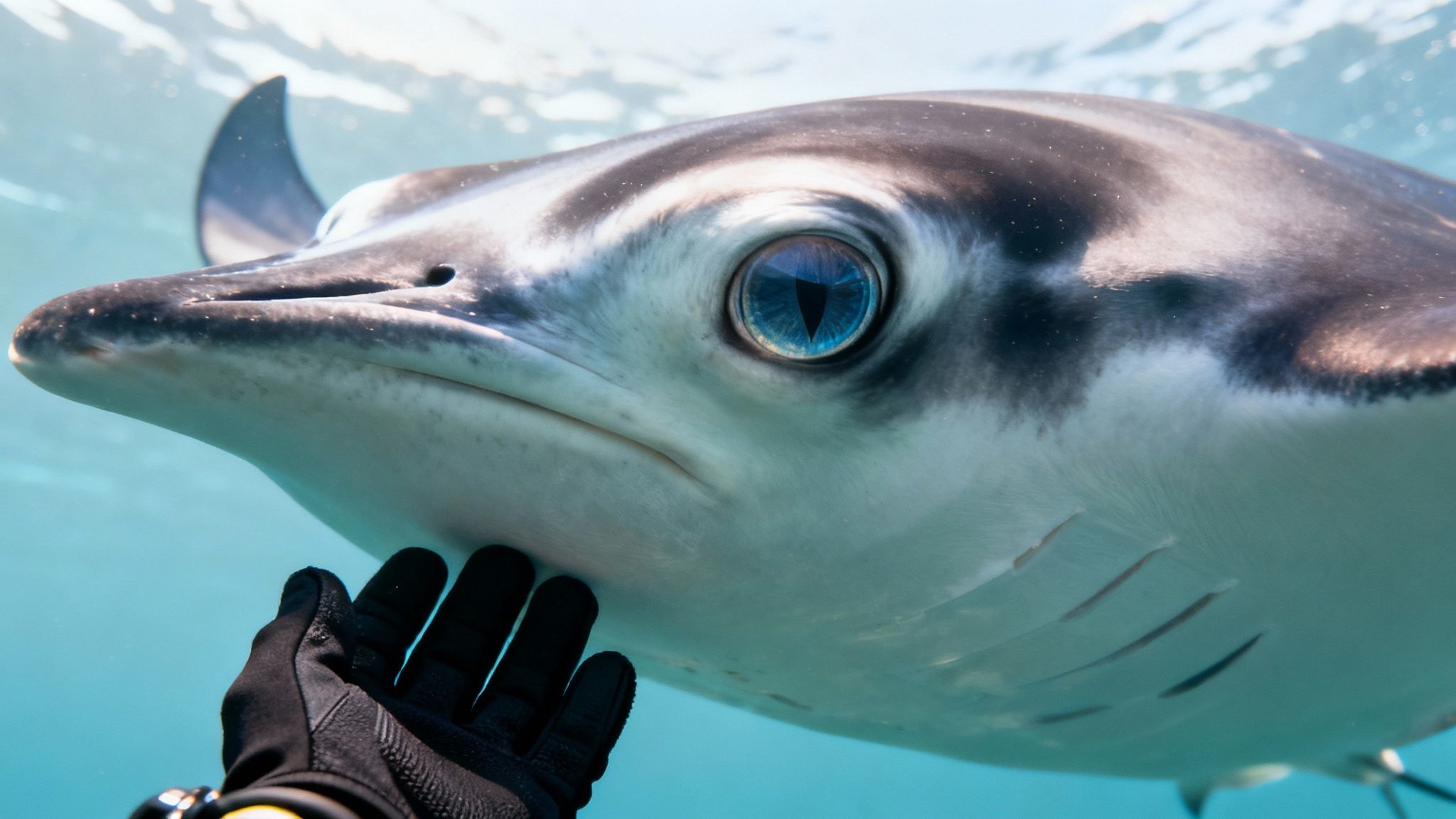
This intelligence is not just theoretical; it manifests in observable behaviors. Manta rays have been seen engaging in cooperative feeding, intricate social interactions, and even apparent self-recognition in mirrors, a trait shared by only a few highly intelligent species. They navigate vast ocean expanses, remembering optimal feeding grounds and returning to them seasonally. This powerful memory and problem-solving skill set allows them to thrive in complex and ever-changing marine environments.
Observing Intelligence in Action in Kona
The world-famous manta ray night snorkel in Kona offers a unique window into this incredible intelligence. Here, resident reef mantas demonstrate learned behaviors night after night. Guides at Kona Snorkel Trips, the most reviewed and highest-rated snorkel company in Hawaii, often note how individual mantas seem to recognize specific boats and even people. The rays have learned that the lights from snorkel groups attract their food source, plankton, and they exhibit predictable, purposeful movements to feed efficiently.
Practical Tips for Your Encounter:
Listen to the Briefing: Pay close attention when your guide explains manta intelligence. Knowing what to look for will transform your viewing from a simple snorkel into a fascinating behavioral study.
Observe Quietly: Remain calm and still in the water. This allows you to witness their natural, intelligent behaviors without interruption as they solve the "puzzle" of how to get the most plankton.
Look for Social Cues: Watch how the mantas interact with one another. You might see them coordinating their barrel rolls to feed or gently gliding past each other in a complex, underwater ballet.
3. Manta Rays Feed Exclusively on Plankton and Are Completely Harmless
One of the most reassuring and fascinating fun facts about manta rays is their gentle nature. Despite their massive size and relation to sharks, manta rays are obligate filter feeders, meaning their diet consists solely of tiny organisms like zooplankton, small crustaceans, and fish larvae. They possess no sharp teeth designed for biting or tearing; instead, they have specialized gill plates that filter these microscopic meals from the water as they swim with their mouths agape.
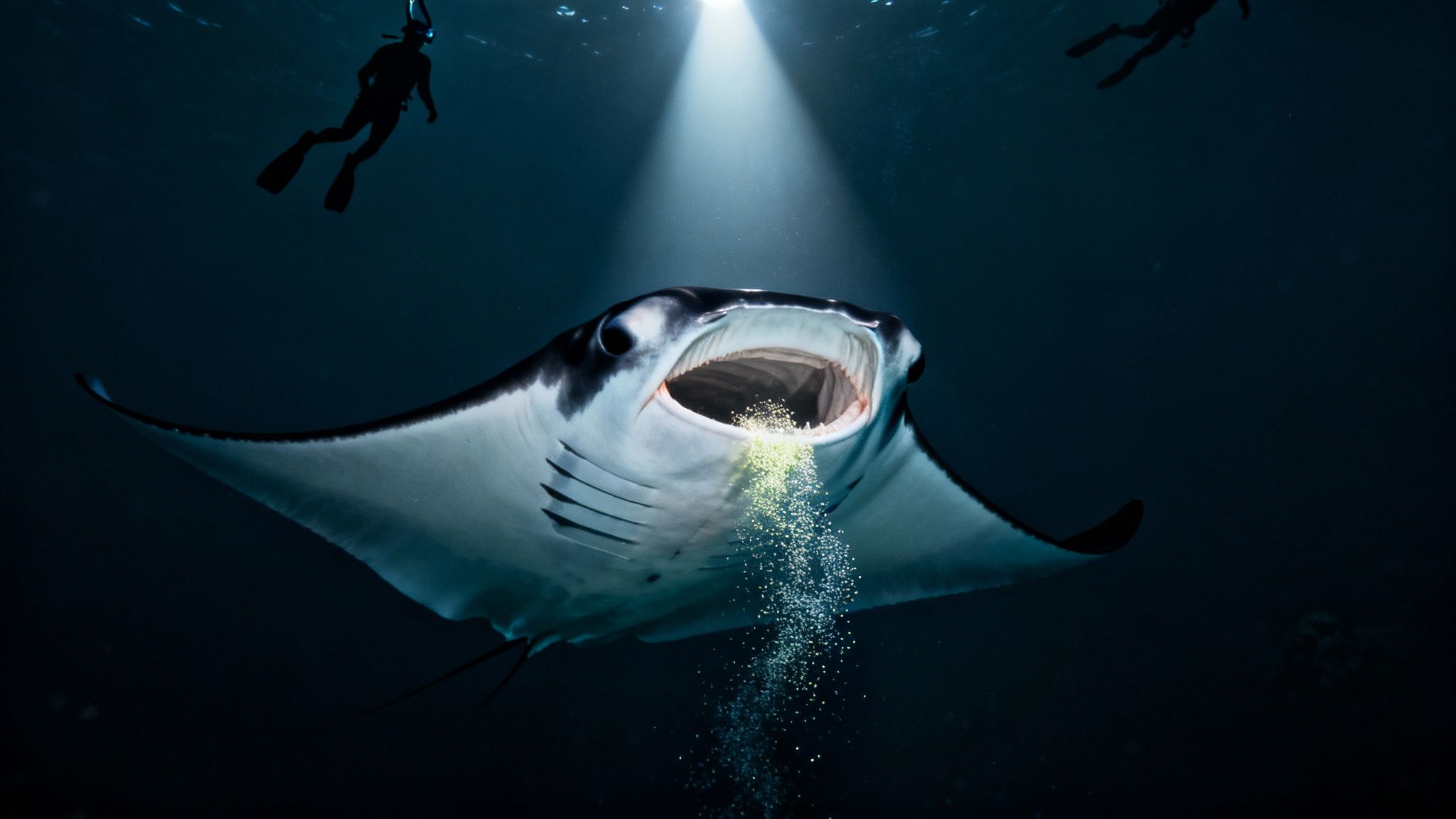
This harmless feeding behavior is precisely what makes encounters with them so safe and magical. Unlike stingrays, which have a defensive barb on their tail, manta rays lack any stinging apparatus. Their only defense mechanism is their incredible speed and ability to flee from threats. There are no recorded instances of a manta ray attacking a human in Hawaiian waters, making them ideal companions for snorkelers of all ages. You can learn more about why manta rays are safe to swim with to feel completely at ease in their presence.
The Kona Plankton Buffet
The Kona coast provides the perfect conditions for witnessing this feeding spectacle. Tour operators use powerful underwater lights to attract high concentrations of plankton, which in turn draws in the hungry mantas. The abundance of food means it's common to see large groups of 10-20 rays barrel-rolling and gliding through the illuminated "plankton buffet" just inches from observers. This natural phenomenon occurs year-round, with peak plankton blooms often occurring between October and March, leading to exceptionally high sighting success rates.
Practical Tips for Your Encounter:
Best Time to Book: For the highest chance of seeing numerous mantas, schedule your tour during the peak plankton season from October to March.
Embrace the Dark: Moonless nights can enhance the experience, as the contrast from the tour lights is greater and bioluminescent plankton may put on a sparkling show.
Family-Friendly Fun: Their gentle nature makes this a fantastic and safe adventure for families. Emphasize to children that these are friendly giants, not monsters.
4. Manta Rays Display Curious and Playful Behavior Toward Humans
One of the most heartwarming fun facts about manta rays is their genuine curiosity and seemingly playful interactions with humans. Unlike many wild animals that remain aloof, manta rays often approach snorkelers and divers, gliding in for a closer look at the strange, bubbling creatures visiting their world. This inquisitive nature transforms a passive wildlife viewing into a deeply personal and interactive encounter with an intelligent, gentle giant.
This behavior is not just a fleeting moment; guides and researchers have observed individual rays returning repeatedly to areas with human activity. They seem to recognize boats and even specific guides, suggesting positive associations and a level of comfort that is rare in the animal kingdom. This transforms snorkeling from just watching animals to feeling like you are being watched back by a curious mind. You can explore more about what to expect and how to prepare by reading our expert tips for snorkeling with manta rays.
Fostering a Connection in Kona
In Kona, where the manta ray encounters are world-famous, this curious behavior is on full display. Nicknamed residents like "Stumpy," "Lefty," and "Big Bertha" are known to return to the same feeding sites year after year, often interacting closely with snorkelers. Guides can recognize them by their unique spot patterns, and repeat visitors sometimes get the thrill of seeing a familiar manta from a previous trip.
Practical Tips for Your Encounter:
Stay Calm and Still: Manta rays are attracted to calm energy. Avoid splashing or making sudden movements. The more still you are, the more likely they are to approach you curiously.
Small Groups are Better: Smaller tour groups create a less intimidating environment for the mantas, often resulting in closer and more prolonged interactions.
No Touching: As tempting as it may be, never touch a manta ray. Their skin has a protective mucus coating that can be harmed by human hands, and touching them can frighten them away.
5. Manta Rays Perform Synchronized Group Feeding Displays
One of the most breathtaking fun facts about manta rays is their ability to engage in spectacular, synchronized feeding displays. When conditions are right and zooplankton is abundant, multiple mantas will gather and move in stunningly coordinated patterns. This isn't just random feeding; it's a social phenomenon that looks like a carefully choreographed underwater ballet.
These group behaviors can involve dozens of rays performing barrel rolls in unison, forming "feeding chains" or "trains," and even creating whirlpools to concentrate their food. In some cases, more than 30 mantas have been documented in a single feeding aggregation during exceptional plankton blooms. This cooperative feeding is one of the most visually stunning and rarely witnessed natural events in the ocean, showcasing a level of social complexity that researchers are still working to understand. You can learn more about this incredible underwater night ballet to fully appreciate the spectacle.
Observing the Ballet in Kona
The world-famous Manta Ray Night Snorkel in Kona provides a front-row seat to this extraordinary behavior. The underwater lights used on tours attract massive amounts of plankton, creating the perfect conditions for these feeding frenzies. It is here that you can witness the synchronized barrel rolls and graceful formations up close. The peak season, typically from October to March, often sees "manta trains" of 15-20 rays or more.
Practical Tips for Your Encounter:
Book During Peak Season: Plan your trip between October and March for the highest probability of seeing large group displays.
Choose a Moonless Night: New moon phases create darker skies, making the underwater lights more effective at attracting plankton and enhancing the visibility of the manta spectacle.
Observe the Patterns: Pay attention to how the mantas interact. Watch for their coordinated movements, barrel rolls, and how they form lines to efficiently sweep through the plankton.
6. Manta Rays Have Unique Spot Patterns That Identify Individuals Like Fingerprints
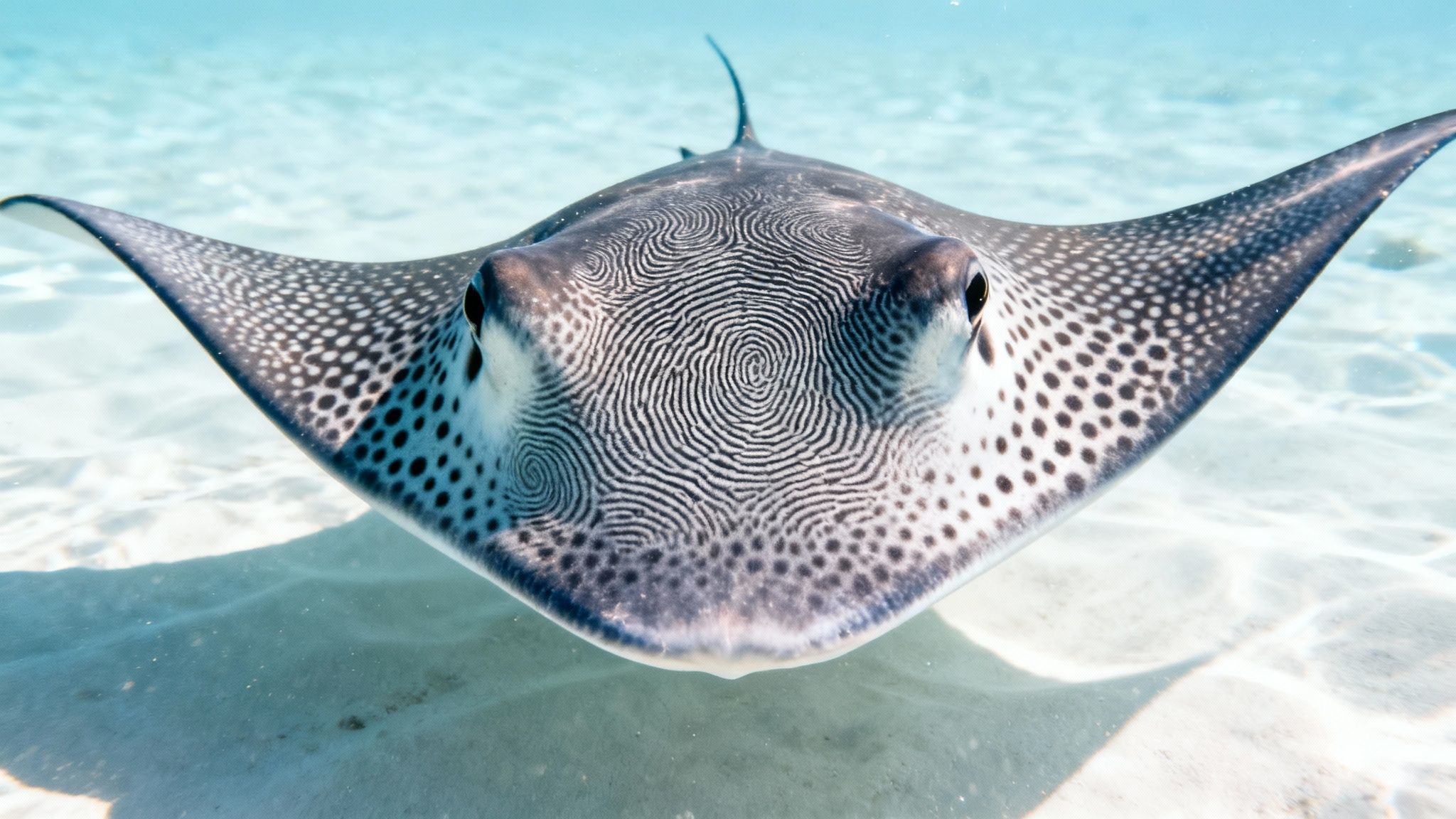
One of the most fascinating fun facts about manta rays is that each one possesses a unique pattern of spots on its ventral surface, or underside. This natural marking is so distinct that it functions just like a human fingerprint, allowing researchers, conservationists, and even tour guides to identify individual rays. By photographing the belly of a manta ray, experts can catalog the animal and track its movements, health, and life history over years or even decades. This method has revolutionized our understanding of their social structures, migration patterns, and population dynamics.
This incredible biological feature transforms a simple wildlife encounter into a potential citizen science opportunity. Organizations across the globe maintain databases of these "fingerprints," and photos from tourists can contribute valuable data. For example, a well-known Kona resident ray nicknamed "Stumpy" has been documented since 2005, identified by both its spot pattern and unique fin damage. The ability to recognize individual animals adds a profound layer of connection to these gentle giants, turning them from anonymous creatures into familiar personalities with known histories.
Get to Know Kona's Famous Residents
During the Manta Ray Night Snorkel in Kona, guides from top-rated tour companies like Kona Snorkel Trips often know the local "regulars" by name and can point them out to guests. This personal touch makes the experience even more memorable, as you might learn you're swimming with a manta that has been frequenting the area for over a decade. It’s a powerful reminder that we are visitors in the established home of a community of unique individuals.
Practical Tips for Your Encounter:
Photograph the Belly: If you have an underwater camera, try to safely capture a clear shot of a manta's underside as it glides overhead. Your photo could help identify the ray.
Ask Your Guide: Inquire if any of the mantas present are known individuals. Guides love sharing stories about specific rays and their distinct behaviors or histories.
Contribute to Science: Look into citizen science projects like Manta Matcher, where you can submit your photos to contribute to global research efforts and help track the animals you encountered.
7. Kona's Night Manta Ray Aggregations Are a Globally Unique Natural Phenomenon
While manta rays are found in tropical waters worldwide, one of the most astonishing fun facts about manta rays is that Kona, Hawaii, hosts a natural spectacle found nowhere else on Earth. The nightly aggregation of manta rays along the Kona coast is a globally unique phenomenon, offering the most reliable opportunity to witness their synchronized feeding behavior. This is not a random occurrence; it is a predictable ballet made possible by a perfect convergence of specific oceanographic conditions, including warm, nutrient-rich currents that fuel massive plankton blooms.
The local underwater topography helps concentrate this plankton, and the mantas, being highly intelligent, have learned that this is a dependable feeding spot. While other locations might offer manta sightings, none can guarantee the nightly consistency seen in Kona, where tours operate 365 days a year with success rates often exceeding 90%. On a typical evening, participants can see 10-20 rays, with numbers sometimes swelling to over 50 during exceptional plankton blooms. This unparalleled reliability has made Kona a bucket-list destination for marine enthusiasts and researchers worldwide. You can explore the best times to see manta rays in Kona to plan your visit for peak activity.
Experiencing Kona's Exclusive Phenomenon
The world-famous Manta Ray Night Snorkel is the best way to witness this incredible event. Tour operators like Kona Snorkel Trips, recognized as the most reviewed and highest-rated snorkel tour company in Hawaii, provide a safe and respectful front-row seat. As lights are shone into the water to attract plankton, the mantas arrive to feed, performing graceful barrel rolls just inches from your floating position. This up-close encounter with so many giant, gentle creatures in a single night is an experience that simply cannot be replicated anywhere else.
Practical Tips for Your Encounter:
Book in Advance: Due to its global fame, this tour is extremely popular. Booking your spot well in advance, especially during peak season (October-March), is essential.
Choose the Right Tour: Sunset tours are fantastic for first-timers, offering beautiful views before the main event. Later night tours can sometimes be less crowded.
Stay Passive: The golden rule is to remain still and let the mantas come to you. Float on the surface and enjoy the show as they glide effortlessly beneath you.
7-Point Comparison: Manta Ray Fun Facts
Item | Observation complexity | Resource requirements | Expected outcomes | Ideal use cases | Key advantages |
|---|---|---|---|---|---|
Manta Rays Are the Largest Rays in the World | Low–Medium (visually conspicuous) | Standard snorkel/boat, wide-angle camera | Memorable visuals; strong sense of scale | General tourism, family-friendly photo tours | Striking visuals, safe to observe, high photo appeal |
Manta Rays Have the Largest Brain-to-Body Ratio Among Fish | Medium (behavioral observation needed) | Experienced guides, time for observation, interpretive materials | Interactive, educational encounters; signs of recognition | Educational tours, research-focused trips, repeat visitors | Demonstrates intelligence; enhances guest engagement |
Manta Rays Feed Exclusively on Plankton and Are Completely Harmless | Medium (seasonal dependence) | Night lights to attract plankton, season timing, snorkel gear | Safe close encounters; variable sighting rates by season | Family tours, safety-focused marketing, introductory snorkels | High safety profile, accessible experiences in peak season |
Manta Rays Display Curious and Playful Behavior Toward Humans | Medium (requires calm approach) | Small groups, trained guides, quiet protocols | Intimate close approaches; enhanced photo opportunities | Private charters, intimate/-repeat-visitor tours | Emotional, memorable interactions; repeat visitation |
Manta Rays Perform Synchronized Group Feeding Displays | High (dependent on plankton & conditions) | Precise timing, peak-season bookings, favorable weather | Spectacular group displays but not guaranteed nightly | Adventure seekers, photographers, premium experiences | Visually dramatic, rare phenomenon; justifies premium pricing |
Manta Rays Have Unique Spot Patterns That Identify Individuals Like Fingerprints | Medium (requires clear ventral photos) | Underwater photography, guide training, citizen-science tools | Individual ID for research; personalized guest stories | Citizen-science tours, research partnerships, repeat visitors | Scientific value, guest engagement, long-term tracking |
Kona's Night Manta Ray Aggregations Are a Globally Unique Natural Phenomenon | Medium (accessible but season/weather sensitive) | Night tours, artificial lights, shore/boat access, seasonal planning | High success rates in peak season; bucket-list spectacle | Mass-market tourism, international visitors, premium packages | Reliable nightly aggregations, globally unique, high demand |
Experience the Manta Ray Ballet for Yourself
From their colossal size to their astonishing intelligence, the journey through these fun facts about manta rays reveals a creature far more complex and captivating than many realize. We've uncovered that these gentle giants possess the largest brain-to-body ratio of any fish, use unique spot patterns like fingerprints for individual identification, and are completely harmless filter feeders, subsisting on the ocean's tiniest organisms. Understanding these details transforms our perception of manta rays from simple sea creatures into highly intelligent, socially complex beings with distinct personalities and behaviors.
The most profound takeaway is that these magnificent animals are not just statistics or abstract concepts; they are living, breathing wonders of the marine world. Learning that they engage in curious, playful behavior with humans and perform synchronized feeding ballets isn't just interesting, it’s an invitation. It highlights the incredible opportunity for respectful, awe-inspiring interaction. The aggregation of manta rays in Kona, particularly at night, stands as a rare and globally unique natural phenomenon, offering a direct window into their mesmerizing world. This isn't something that happens everywhere; it's a special convergence of biology and geography that creates a truly once-in-a-lifetime spectacle.
From Facts to Firsthand Wonder
Knowing these fun facts about manta rays enriches the experience, but nothing compares to witnessing their silent, graceful dance in person. Imagine floating on the ocean's surface under the stars as these giants, with wingspans stretching up to 20 feet, glide and somersault beneath you. The underwater lights illuminate the swirling plankton, drawing the mantas into a captivating feeding frenzy that is both powerful and serene. This encounter moves beyond simple observation; it becomes a profound connection with the natural world, fostering a deep and lasting appreciation for marine conservation.
To truly immerse yourself in this magical ballet, a guided tour is essential for a safe and responsible encounter. For the ultimate manta ray night snorkel, we highly recommend Kona Snorkel Trips. As the most reviewed and highest-rated snorkel tour company in Hawaii, their expert team prioritizes safety, small group sizes, and ethical wildlife viewing, ensuring a personalized and unforgettable adventure. Don't just read about the magic of manta rays, become part of their world for an evening. Your front-row seat to one of nature's greatest shows is waiting.
Are you ready to turn these fascinating facts into an unforgettable memory? Book your adventure with Manta Ray Night Snorkel Kona Hawaii Tours to witness the incredible spectacle of Kona's gentle giants up close. Visit the Manta Ray Night Snorkel Kona Hawaii Tours homepage to secure your spot on this top-rated eco-tour.
Comments