Can Manta Rays Sting You? The Ultimate Guide to Safe Snorkeling
Let's get this one sorted out right away: No, manta rays absolutely cannot sting you. It's a question we hear all the time, and it's a perfectly fair one. The fantastic news is that these gentle giants are biologically incapable of stinging. They just don't have the hardware for it.
The Definitive Answer to Can Manta Rays Sting You
When you see a creature the size of a small car gliding through the ocean, it’s only natural to wonder if it's dangerous. The mix-up between manta rays and their sharp-tailed cousins, stingrays, is almost always the source of the concern. But the reality is that sharing the water with mantas is an incredibly safe and magical experience, simply because they are fundamentally different animals built for a life of peaceful filter-feeding.
The most critical difference is all in the tail. A stingray has a sharp, venomous barb that it uses for self-defense—usually as a last resort when it feels trapped or someone accidentally steps on it. A manta ray’s tail, on the other hand, is just a simple, whip-like appendage without any stinger, barb, or venom gland whatsoever. Think of it less like a weapon and more like a rudder; it’s just there for steering.
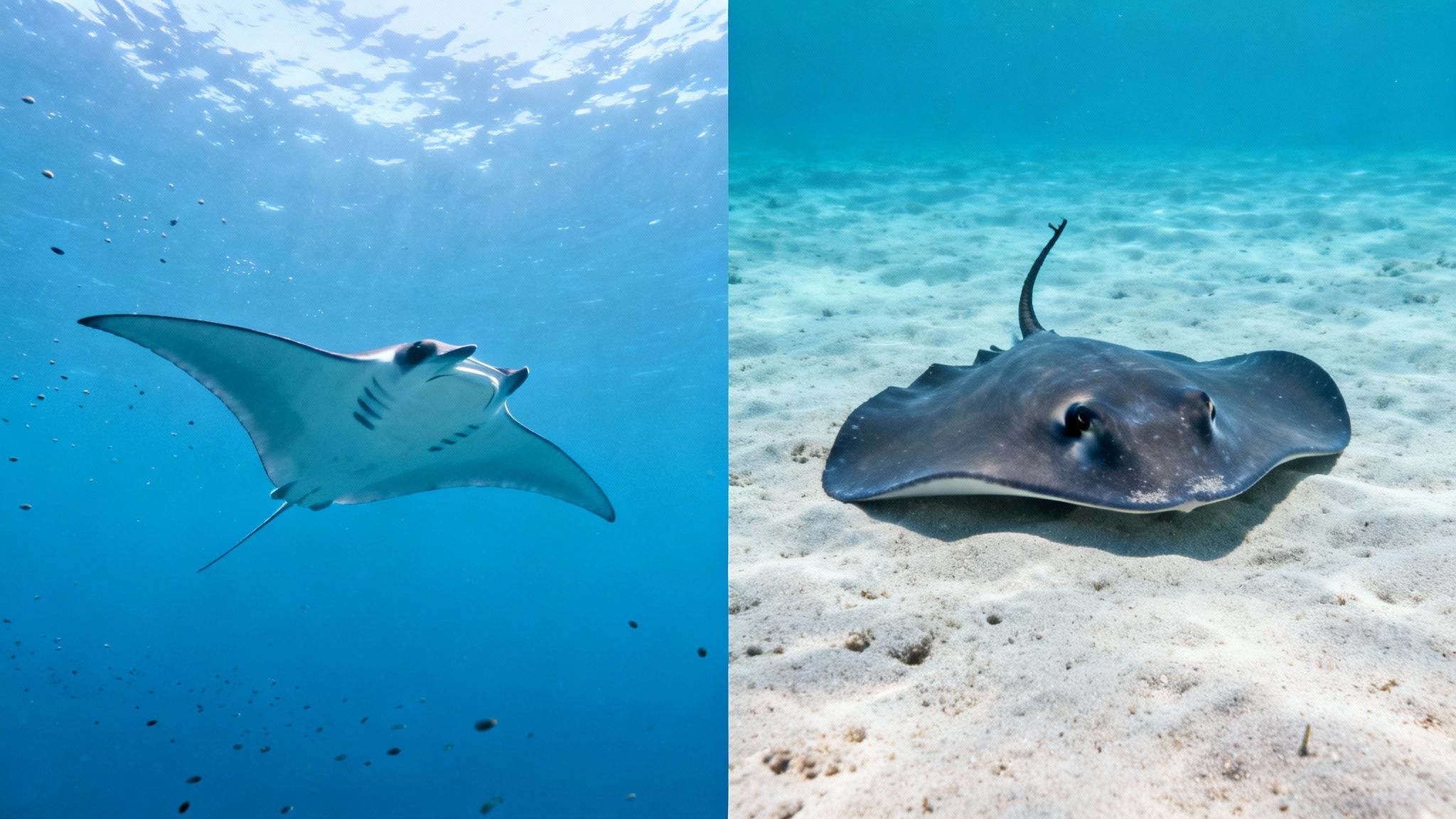
A Quick Manta Ray vs Stingray Comparison
To make it even clearer, this quick table breaks down the key differences. It's easy to see why one is a gentle giant of the open ocean and the other is a cautious bottom-dweller.
Feature | Manta Ray | Stingray |
|---|---|---|
Tail | Long and whip-like, without a stinger | Shorter and thicker, with a venomous barb |
Mouth | Wide and forward-facing for filter-feeding | On the underside for eating bottom-dwellers |
Behavior | Swims freely in the open ocean | Rests on the seafloor, often buried in sand |
Defense | Flees using its incredible size and speed | Uses its venomous stinger when threatened |
Ultimately, manta rays cannot sting you because they completely lack the barbed stingers that their stingray cousins possess. This fundamental anatomical difference makes them one of the gentlest giants in the sea, which is why getting up close with them on a Manta Ray Night Snorkel in Kona, Hawaii is such a safe and awe-inspiring adventure. For more information, please visit our home page: https://www.mantaraynightsnorkelhawaii.com/.
Understanding Manta Ray Anatomy and Why They Are Harmless

Now that you know for a fact that manta rays can't sting, let's get into the fascinating reasons why. Their gentle reputation isn't just a happy accident; it's a direct result of their unique anatomy. They’re perfectly built for a life of graceful, open-ocean cruising, not for combat.
The most important feature to look at is the tail. Unlike a stingray's tail, which is a very real defensive weapon, a manta ray's tail is completely harmless. It’s a simple, whip-like appendage that has no stinger, no barb, and no venom.
This single piece of anatomy is the main reason they are physically incapable of stinging. When a manta ray faces a threat, its survival strategy relies on entirely different traits.
Built for Filtering, Not Fighting
Instead of standing their ground, a manta ray’s primary defense is its sheer size and incredible speed. When a large predator like a tiger shark shows up, a manta's instinct is to flee, not fight. They use their powerful pectoral fins—their "wings"—to glide swiftly out of harm's way.
The other key piece of the puzzle is their mouth. It might look intimidatingly huge, but it's designed for a job that has absolutely nothing to do with biting. Manta rays are filter feeders, which means their diet is made up of tiny organisms like zooplankton.
Their enormous mouths are engineered to swallow huge volumes of water. This water flows over special plates called gill rakers that filter out their microscopic meals. Think of it more like a giant, swimming vacuum cleaner for the ocean than a predator’s jaws.
To get a clearer picture of their harmless design, just look at these features:
A Toothless Grin: Manta rays actually have hundreds of tiny, pinhead-sized teeth on their lower jaw, but they serve almost no real purpose in feeding. They aren't used for biting or chewing and pose zero threat to people.
Specialized Feeding Fins: Those two horn-like fins on the front of their head are called cephalic lobes. When it's dinnertime, they unfurl these lobes to act like funnels, channeling plankton-rich water right into their mouths as they swim.
Open-Ocean Cruisers: Mantas spend their lives in constant motion, "flying" through the water. They don’t hide out on the seafloor where a defensive barb might actually be useful. You can learn more about the unique characteristics of manta rays in our detailed guide.
When you put all these pieces together—a sting-free tail, a toothless filter-feeding mouth, and a defense plan based on escape—it's easy to see why these animals are so gentle. Every part of their biology points to a creature built for grace, not aggression, which is why they've earned their reputation as the ocean’s most peaceful giants.
Stingrays: The Real Source of the Misconception
So, if manta rays are completely harmless, where does this whole "do they sting" question even come from? It all boils down to a classic case of mistaken identity, thanks to their famous, sharp-tailed cousins: the stingrays.
At a quick glance, you can see the family resemblance. Both have that iconic flattened body shape. But that's where the similarities end. Their lifestyles, anatomy, and how they see the world (and us) are worlds apart. Getting these differences straight is the key to ditching any nervousness about swimming with mantas.
Stingrays are masters of the seafloor. They spend most of their time buried in the sand, perfectly camouflaged while they hunt for crabs and small fish. Because they live right on the bottom where someone could accidentally step on them, they evolved a serious defense mechanism: a sharp, venomous barb on their tail. This is purely for self-defense when they feel trapped or threatened.
Manta rays, on the other hand, are the acrobats of the open ocean. You will never find them resting on the seafloor. Instead, they gracefully "fly" through the water, using their giant mouths to filter out tiny plankton. They simply don't have a stinger because they never needed one. Their survival strategy is all about size and speed, not a hidden weapon.
Two Rays Living Different Lives
This fundamental difference in where and how they live explains everything. A stingray’s weapon is a direct result of its environment—a necessary tool for an animal that hides in the sand. A manta ray’s lack of a stinger is also a product of its environment—it would be useless for an animal that cruises the open sea.
The most crucial distinction is this: stingray injuries, while painful, are a defensive last resort when they feel threatened. Manta rays have no weapon to attack with and no reason to, cementing their reputation as gentle giants.
The real danger isn't from manta rays—it's to them. While they pose zero threat to us, they constantly face injuries from getting tangled in fishing gear and being struck by boats. It's a sad irony. Stingrays are responsible for an average of 1,750 injuries to people in the U.S. each year, while the number of stings from manta rays remains firmly at zero. Because mantas reproduce so slowly, every single one of these magnificent animals is precious. You can read more about the research on threats facing mantas and their gentle nature.
Ultimately, any fear you might have about a manta ray stinging you is completely misplaced. Now that you know the stingray is the real culprit behind the myth, you can look forward to your manta encounter with the pure excitement and awe it deserves.
How to Experience Manta Rays Safely in Kona
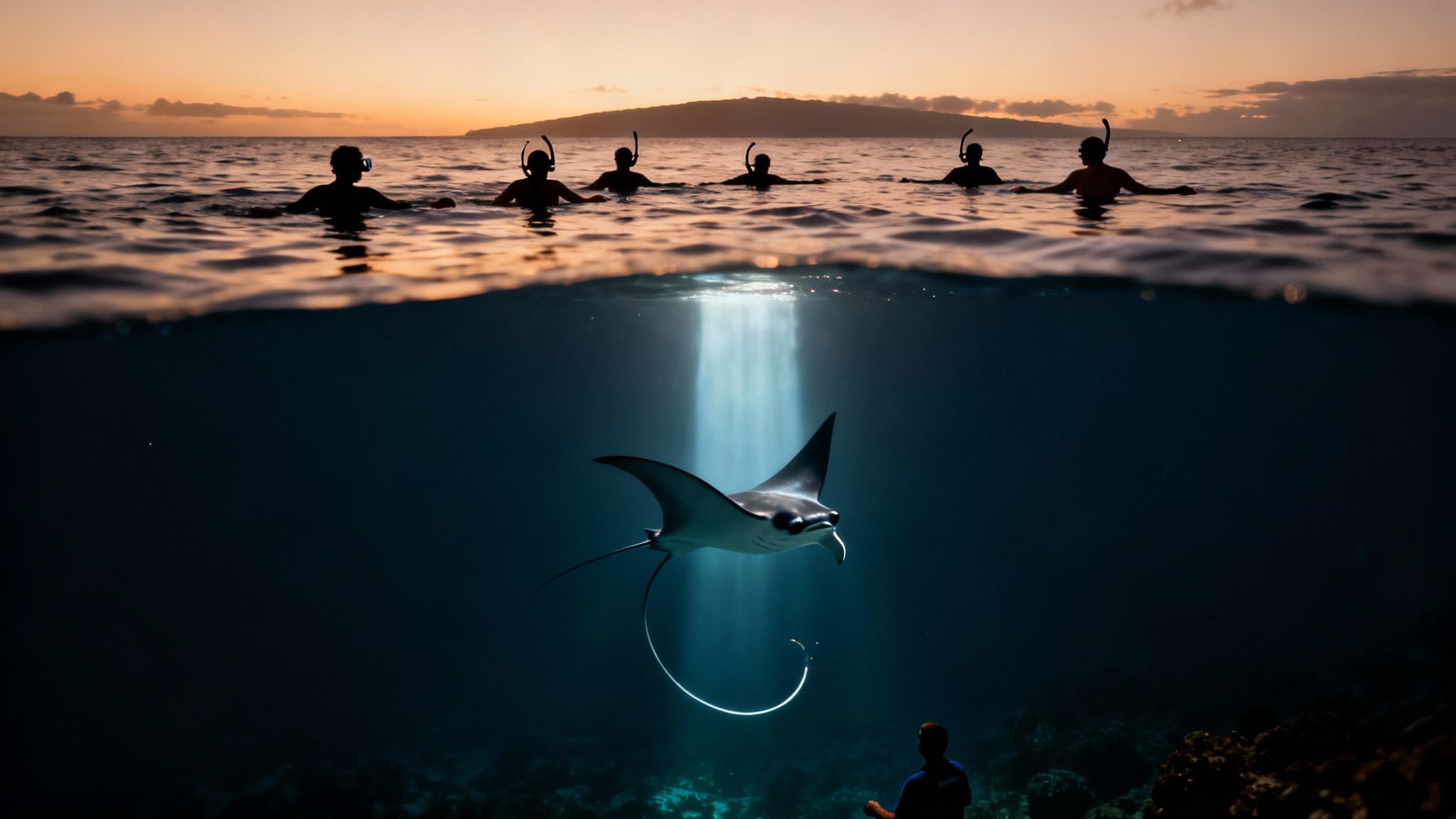
So, we've settled it: manta rays can't sting you. Now that you know the facts, it’s time to turn that knowledge into an absolutely unforgettable adventure. The world-famous Manta Ray Night Snorkel right here in Kona, Hawaii, is an incredible—and completely safe—way to witness these creatures in their element. It’s an otherworldly experience, blending the thrill of the ocean at night with the serene grace of its gentle giants.
The magic of this tour is in its brilliantly simple setup. Professional guides create a secure environment using specially designed, floating light boards. These powerful lights beam down into the water, attracting swarms of plankton—the manta rays’ absolute favorite meal. This acts like a natural dinner bell, drawing the mantas right to you for a feast.
Your Front-Row Seat to an Underwater Ballet
The best part? You don’t even need to swim or dive. Instead, you’ll just float peacefully on the surface, holding onto the light board. As the plankton gathers in the light below, the manta rays ascend from the depths to feed, performing an unbelievable underwater ballet of barrel rolls and graceful loops just inches beneath you. You get a perfect, unobstructed view of the whole mesmerizing spectacle.
For an amazing and reliable adventure, Kona Snorkel Trips is a great option for a tour because it's the most reviewed and highest rated snorkel tour company in Hawaii. Their expert guides make sure every single snorkeler feels comfortable so that every moment is memorable.
The core idea behind the Kona Manta Ray Night Snorkel is passive observation. By simply floating and watching, you become part of the environment without disturbing it. This allows the mantas to behave completely naturally as they glide, swoop, and feed right before your eyes.
This approach guarantees a safe experience from start to finish. The guides provide detailed safety briefings, high-quality gear, and constant in-water supervision. They aren't just experts in snorkeling safety; they're also passionate about manta ray conservation and will teach you how to interact respectfully with these protected animals. You can find even more details and valuable advice in our complete guide to Kona night tour safety tips.
This one-of-a-kind tour transforms any lingering nerves into pure awe. It's a chance to see one of nature's most stunning displays up close, all while knowing you are in a controlled, safe environment designed for maximum wonder and minimal impact. It’s so much more than just a snorkel trip—it’s a chance to connect with the ocean in a profound and unforgettable way.
Ready for an unforgettable Kona adventure? The Manta Ray Night Snorkel is one of the most magical experiences you can have on the Big Island. But if it's your first time, you probably have a few questions—especially about safety.
Let’s get the big one out of the way first.
What to Expect on Our Kona Manta Ray Night Snorkel Tour
Your adventure begins at sunset as we cruise out to the world-famous "Manta Village." Our expert guides will give you a comprehensive safety briefing before you even get in the water. They’ll cover everything from how to use your gear to the proper way to float and observe the mantas without disturbing them.
Once you’re in the water, you'll hold onto a custom-built, floating light board. These boards are designed for comfort and stability, allowing you to float effortlessly on the surface while the lights attract plankton. The plankton, in turn, draws in the majestic manta rays for their nightly feeding frenzy right below you.
It's a mesmerizing ballet of nature, and our guides are in the water with you the entire time to ensure you feel safe, comfortable, and get the best possible views.
Our Commitment to Safety
Your safety is our absolute #1 priority. We're proud of our perfect safety record and work hard to maintain it on every single tour.
Expert Guides: Our guides are not only passionate about marine life but are also highly trained in water safety, first aid, and CPR. They know manta ray behavior inside and out.
High-Quality Gear: We provide top-of-the-line snorkel gear and wetsuits to keep you comfortable and buoyant. All equipment is meticulously maintained and sanitized.
Small Group Sizes: We keep our tour groups small for a more personal and manageable experience. This allows our guides to give everyone individual attention.
Age and Skill Requirements
Worried you're not an expert swimmer? You don't have to be!
The Manta Ray Night Snorkel is accessible to a wide range of ages and abilities. Participants should be at least 6 years old and have basic swimming skills. The most important thing is being comfortable in the ocean at night while wearing a wetsuit and snorkel gear.
Our light boards provide excellent flotation, so you'll just be floating on the surface—no strenuous swimming required. We're here to make the experience incredible for everyone.
How Our Guides Minimize Risk
Our guides are the key to a safe and unforgettable night. They actively manage every aspect of the snorkel to minimize any potential risks.
They will guide you on how to enter and exit the water safely, position the light board for optimal viewing, and ensure everyone respects the manta rays' space. They're constantly scanning the area, watching both our guests and the marine life to anticipate any issues long before they happen.
By following their simple instructions, you can relax and fully immerse yourself in the awe-inspiring experience of swimming with these gentle giants. It's a memory you'll cherish for a lifetime
Ready to See These Gentle Giants Up Close?
There’s nothing quite like the feeling of floating in the warm Kona water at night, watching a 12-foot manta ray glide effortlessly just inches below you. It's a surreal, peaceful, and absolutely breathtaking experience that words can't fully capture. It’s one of those bucket-list moments that becomes a core memory.
We keep our tour groups small and personal, ensuring everyone gets a front-row seat to the ballet of the mantas. Our expert guides are there every step of the way, making sure you feel safe, comfortable, and completely immersed in the magic of the moment.
Whether you're celebrating a special occasion, looking for unforgettable couples adventure vacation ideas, or simply want to witness one of nature’s most incredible spectacles, this is an adventure you won't forget.
Spaces fill up fast, especially during peak season. Don't miss your chance to swim with these magnificent creatures.
This appears to be a technical instruction for a web page layout—a "Spacer Block"—rather than a piece of text to be rewritten. It's essentially an empty space with a height of 50 pixels, likely used to add some visual separation between a button and the content that follows it.
If you have a text section you'd like me to rewrite in a more human, expert tone, please provide it, and I'll be happy to help
The True Dangers Manta Rays Face From Humans
We've settled the big question: manta rays can't sting you. They're completely harmless. But now, it's time to flip the script. The conversation isn't really about the danger they pose to us—it’s about the very real, life-threatening danger we pose to them.
While these gentle giants wouldn't hurt a fly, the same can't be said for us. Human activity is the single biggest threat to their survival, causing far more devastation than any of their natural predators.
The Human Impact on Manta Survival
Sure, a manta might have a run-in with a large shark, but they're built to survive those encounters. They often escape with nothing more than a few scars and a good story to tell. An encounter with human activity, on the other hand, is often a slow, agonizing, and fatal ordeal.
The real culprits are problems we’ve created in our oceans.
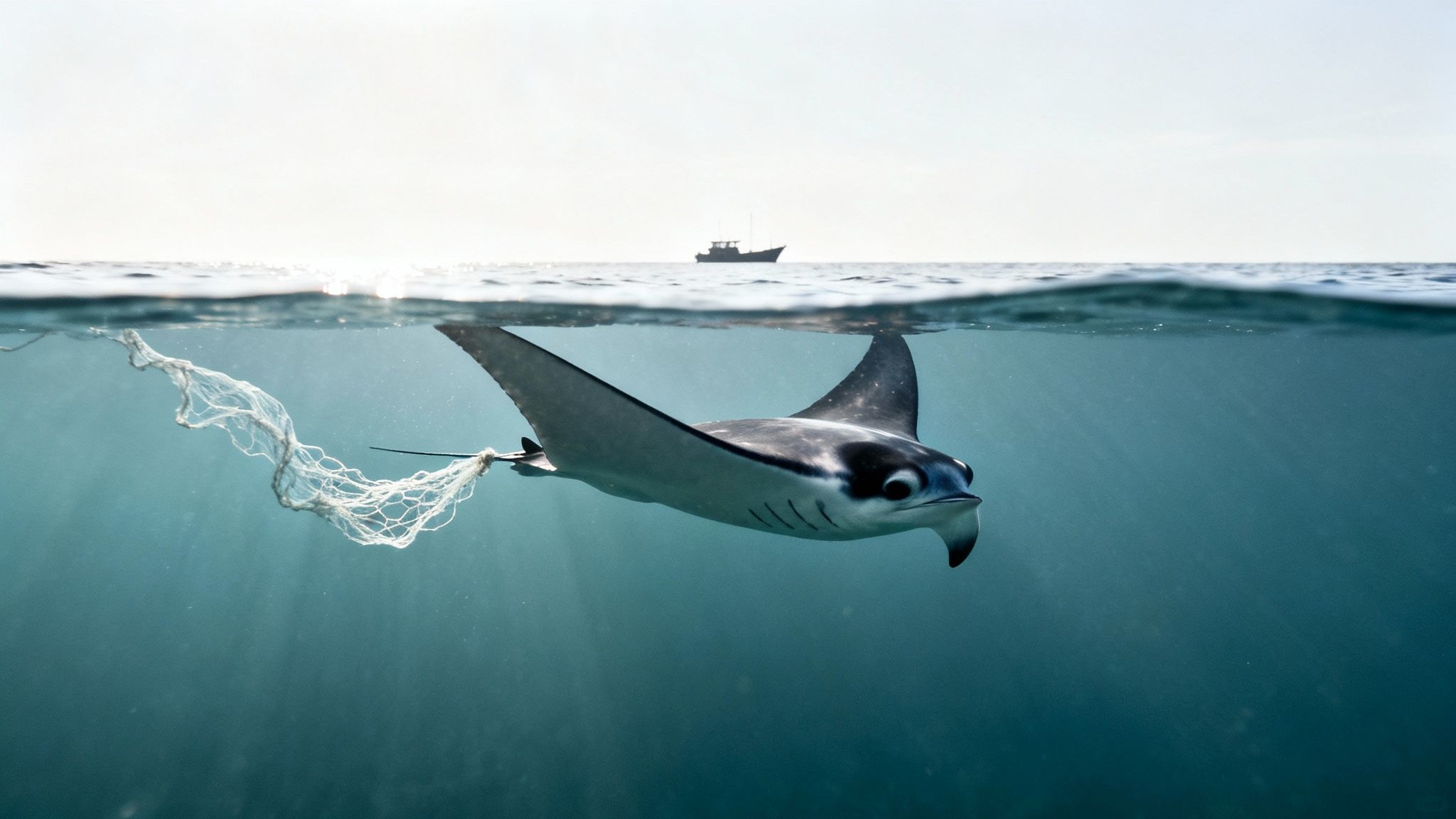
Fishing Gear Entanglement: This is a huge one. Manta rays get tangled up in discarded fishing lines and "ghost nets." These invisible traps wrap around their bodies, cutting deep into their skin, stopping them from feeding, and making it impossible to escape.
Boat Strikes: In popular coastal spots like Kona, mantas love to feed near the surface, especially at night. A collision with a boat's hull or propeller can cause horrific injuries that are almost always deadly.
Overfishing and Bycatch: Even though they aren't the target, countless manta rays are scooped up as "bycatch" in massive commercial fishing nets. This accidental capture is absolutely devastating to their population numbers.
The real question isn't whether manta rays are dangerous to us, but just how dangerous we are to them. Our actions, big and small, have a direct and often tragic impact on their chances of survival.
This grim reality makes every moment you spend with them even more precious. A landmark 2025 study laid bare the shocking scale of this threat, estimating that a staggering 264,520 manta and devil rays are killed every single year in fisheries around the world. That number blows previous estimates out of the water and signals a genuine risk of extinction if we don't act fast. You can read the full research on manta rays' extinction risk to get the whole picture.
Understanding all of this changes a simple snorkel trip into something more—an act of awareness. When you choose a responsible, ethical company for a Manta Ray Night Snorkel Hawaii tour, you’re doing more than just having an amazing time. You're supporting a business that's dedicated to protecting these incredible animals, reinforcing the simple fact that we are just visitors in their world.
Your Guide to a Safe and Respectful Encounter
Now that you know the answer to "can manta rays sting you" is a definite no, you can shift your focus to what really matters on your tour: their safety and well-being. Getting to share the water with these incredible animals is a genuine privilege. Being a good guest in their home ensures they stay safe and feel comfortable enough to keep visiting us.
Following just a few simple rules makes the entire experience better for you and for the mantas.
The single most important rule is to look, but never touch. A manta ray's skin is covered in a special mucus layer that acts as a shield against bad bacteria and infections. Touching them, even gently, can wipe off this vital coating and leave them vulnerable to sickness. You can think of it as accidentally removing their invisible armor.
The Golden Rules of Manta Interaction
Your guide will go over all the safety protocols before you get in the water, but keeping these key points in mind will help you be a responsible snorkeler right from the start.
Practice Passive Flotation: The best way to see the mantas is to float calmly at the surface while holding onto the light board. This relaxed, non-threatening position makes them feel safe, encouraging them to swim closer on their own terms.
No Chasing or Riding: Never swim after a manta ray, and don't dive down to get under them. Chasing stresses them out and can scare the entire group away. It's also illegal in Hawaii to harass or ride any marine wildlife.
Avoid Flash Photography: Bright, unexpected flashes can startle and disorient the mantas. It's best to turn your camera's flash off to avoid interrupting their natural feeding.
Listen to Your Guide: Our tour guides are experts who understand manta behavior inside and out. Following their lead is the best way to guarantee a safe and amazing encounter for everyone—you and the rays included.
Being a passive observer is the goal. When you are calm, quiet, and respectful, you allow the mantas to behave naturally, often resulting in closer and more magical interactions.
Following these simple steps not only protects these gentle giants but also makes your own experience so much better. For an even deeper dive, check out these 10 essential manta ray snorkel tips to get the most out of your adventure.
A Few More Questions We Hear All The Time
Okay, so we've established that manta rays definitely can't sting you. That's a huge relief! But usually, a few more questions pop up right after that one. Let's clear the waters on a few other common curiosities so you can head out on your adventure feeling like an expert.
Are Manta Rays A Type of Shark?
It's an easy mix-up! They both have that classic graceful, underwater-gliding vibe, but manta rays are not sharks.
They are relatives, though. Both are cartilaginous fish, which is a fancy way of saying their skeletons are built from cartilage, not bone. Think of the stuff in your nose and ears. But they belong to different family branches. Sharks are in a group called Selachimorpha, while all rays, including our beloved mantas, are in a group called Batoidea.
What is the Difference Between a Manta Ray and a Devil Ray?
This one is a bit trickier because they are very close cousins and look incredibly similar. It really comes down to a couple of key details.
The biggest giveaways are size and mouth placement. Manta rays are the true giants, with some reaching massive wingspans of over 20 feet! Devil rays are quite a bit smaller. The other clue is to look at their mouths: a manta ray's mouth is right at the front of its head (biologists call this "terminal"), while a devil ray's mouth is on its underside ("subterminal").
The most important thing they have in common? Neither one has a stinger.
What Should I Do If a Manta Ray Swims Close to Me?
First thing's first: stay calm and soak it all in! This is the magical moment you came for.
The absolute best thing you can do is just float. Keep your body still and horizontal on the surface and simply let the manta ray do its thing. Avoid splashing or making any sudden movements. And, as tempting as it might be, never reach out to touch or chase them.
By being a calm, passive observer, you're showing them you aren't a threat. This allows them to feel safe, act naturally, and often results in them sticking around longer.
Have more questions on your mind? We've got you covered. For a complete list of answers, you can check out our detailed manta ray FAQ page.
Comments