Explore manta ray snorkel kona: Kona Night Tours & Safety Tips
Picture this: you're floating in the warm, dark Pacific waters off the Big Island. Just inches below, giant manta rays with wingspans wider than a car are gliding, looping, and dancing in an underwater ballet. This isn't a dream—it's the world-famous manta ray snorkel Kona experience, a truly magical encounter that tops bucket lists around the globe. For more details on this incredible tour, visit our homepage at https://www.mantaraynightsnorkelhawaii.com/.
Your Unforgettable Encounter with Kona's Gentle Giants
For good reason, the Big Island of Hawaii is the best place in the world for reliable manta ray sightings. The unique volcanic underwater landscape creates the perfect feeding grounds, drawing these majestic creatures to the same spots night after night. Local tour operators have turned this natural phenomenon into an incredible, eco-friendly spectacle, giving you a safe, front-row seat to one of nature's greatest shows.
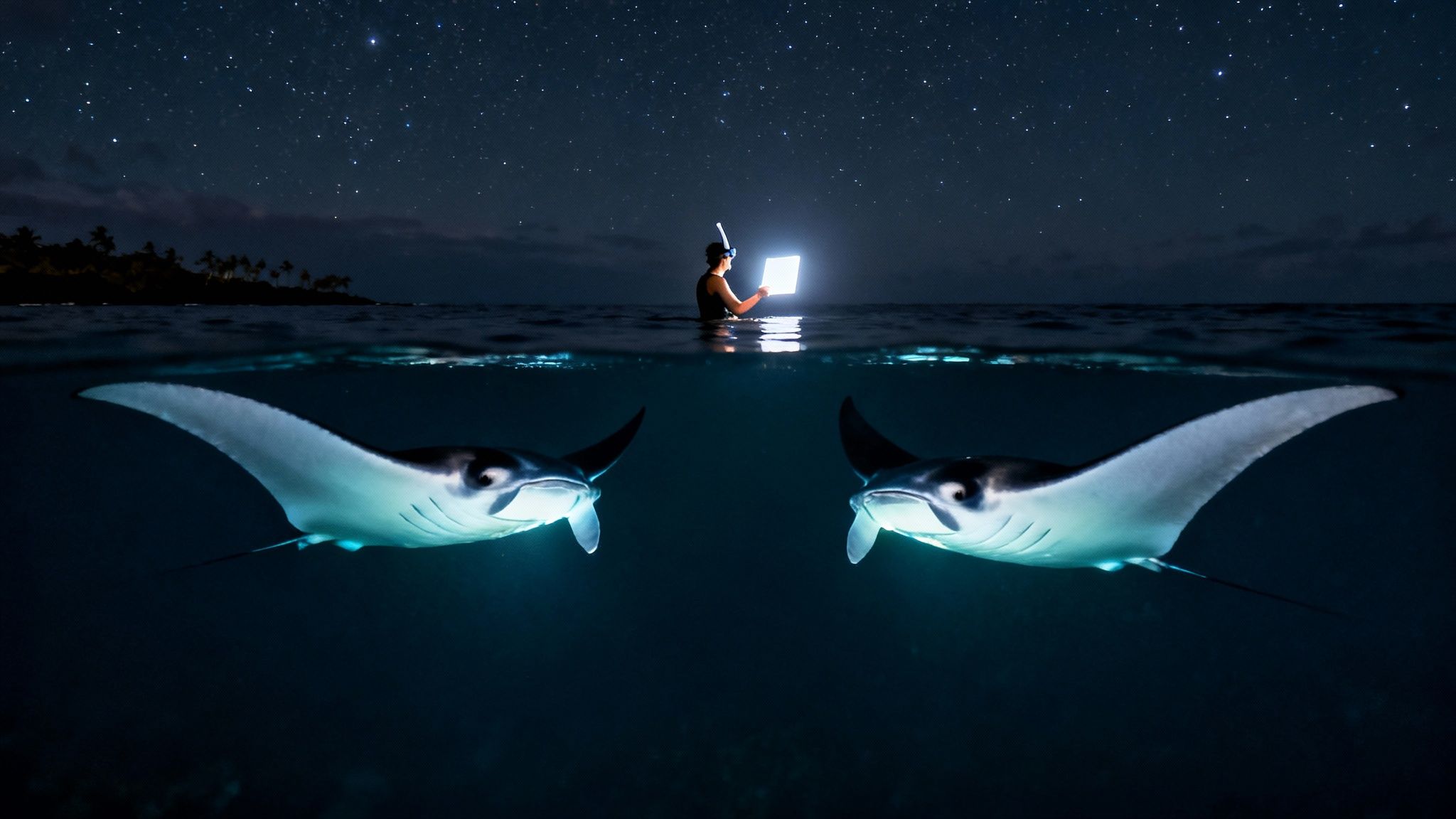
This is so much more than just another vacation activity. It's a profound experience that connects you with the ocean in a way few things can. Many people walk away with a newfound respect for marine life, describing the encounter as genuinely moving. And unlike a lot of wildlife tours where you just have to hope for the best, Kona's manta ray snorkel has an amazing success rate, typically between 80% to 90%. It’s one of the most dependable wildlife viewings you can book anywhere.
What Makes This Experience So Special?
The magic is in the method. You'll hold onto a specially designed light board on the water's surface, which shines bright lights down into the dark ocean. This light attracts swarms of plankton—the mantas' favorite food. It's like ringing a dinner bell, and the rays show up to feast. You get to watch this incredible natural behavior happen right in front of you.
You don't need to be an expert swimmer, either. If you're comfortable in the water, you can do this. The whole experience is designed to be accessible and awe-inspiring for just about everyone. To really understand what all the hype is about, check out why the manta ray night snorkel is the ultimate adventure in Kona.
Finding the Best Tours and Information
Ready to go? If you're looking for an amazing, well-run trip, we have a helpful overview of the experience in our Ultimate Manta Ray Snorkel Kona Hawaii Experience Guide. It covers everything you need to know, from the biology of the rays to choosing the right tour for you.
To give you a quick snapshot, here's a look at the key details of the tour.
Kona Manta Ray Snorkel At a Glance
This table provides a quick summary of what to expect, giving you a clear overview of the key aspects of the Manta Ray Snorkel Kona experience.
Aspect | Details |
|---|---|
Typical Duration | Around 2-3 hours, including boat travel |
Success Rate | Approximately 80-90% for manta ray sightings |
Water Depth | Snorkeling occurs in water around 20-35 feet deep |
Group Size | Varies by operator; smaller groups offer a more intimate experience |
Best Time to Go | Year-round, with calm seas most common in summer |
Gear Provided | Wetsuit, snorkel, mask, and fins are typically included |
This quick guide should help you get a feel for the adventure ahead. The key is to find a great operator and come ready for an unforgettable night.
How a Manta Ray Night Snorkel Actually Works
The magic of a manta ray snorkel Kona tour might seem like a well-kept secret, but it's really a brilliant and simple case of understanding nature's dinner time. Tour operators aren't luring these gentle giants with some mystical call; they're simply setting the table for a huge underwater feast.
The entire operation is a finely-tuned production that transforms the dark Pacific waters into a brightly lit dining room for manta rays.
Think of the tour boat's powerful, underwater lights as a giant beacon. In the vast darkness of the ocean, this light becomes an irresistible magnet for microscopic organisms called plankton. As these tiny creatures swarm to the light, they form a thick, shimmering cloud in the water—a floating buffet for manta rays. This simple process rings the dinner bell, inviting mantas from all around to come and feast.
The Snorkeler's Role in the Spectacle
Your part in this underwater ballet is one of pure, comfortable observation. You won't be chasing after mantas or swimming around to find them. Instead, you'll be floating peacefully on the surface, holding onto a custom-made, buoyant light board.
This board does two things: it gives you stability so you can relax without any effort, and its lights shine downward, concentrating the plankton right below you. This clever setup gives you the perfect, unobstructed front-row seat. As you float, the manta rays glide just inches beneath you, performing graceful barrel rolls as they scoop up mouthfuls of plankton.
The entire experience is designed for maximum viewing with minimal disturbance. By holding onto the stationary light board, snorkelers create a safe, predictable environment, allowing the manta rays to feed naturally and comfortably—often resulting in unbelievably close encounters.
Witnessing Graceful Feeding Behaviors
What you'll see is absolutely breathtaking. Manta rays are incredibly efficient eaters, and they use a few signature moves to get as much plankton as possible. Keep an eye out for these incredible behaviors:
Barrel Rolls: You’ll almost certainly see mantas performing mesmerizing, slow-motion somersaults. This isn't just for show; this looping motion allows them to continuously pass through the dense plankton cloud, maximizing their food intake with each graceful turn.
Surface Skimming: Sometimes, a manta will glide right below the surface with its huge mouth wide open, skimming the top layer of the plankton-rich water.
Formation Feeding: If you're lucky enough to see multiple mantas, they might even feed in a synchronized line, creating an incredible train of gentle giants moving as one.
Understanding how it all works shows just how this remarkable tour allows for a safe, respectful, and stunningly close encounter with nature. It’s proof of how well local operators understand the marine ecosystem.
This incredible experience has grown immensely in popularity, now drawing approximately 80,000 people annually from all over the world, making it one of the planet's premier marine encounters. The unique volcanic underwater terrain of the Kona Coast creates nutrient-rich waters perfect for plankton, the primary food source for these majestic creatures. For even more detail, our complete guide to night snorkeling with manta rays offers deeper insights into the logistics.
Choosing Your Perfect Kona Manta Adventure
Picking the right tour for your manta ray snorkel Kona experience is a big deal. It can honestly be the difference between a good trip and an absolutely incredible one. With so many options out there, knowing what sets them apart helps you find the perfect match for your vacation. The biggest choices you'll make come down to when you go and the type of boat you're on.
Get this right, and your adventure will line up perfectly with what you’re hoping for. Whether you're all about those epic sunset photos or you'd prefer a quieter, more personal encounter, there's a tour out there with your name on it.
Sunset Tour vs. Late Night Tour
One of the first things you'll decide is your departure time. Most tour companies offer two main trips, and each has its own unique vibe.
The Sunset Tour (First Trip): This is easily the most popular choice. You cruise out onto the water just as the sun is starting to dip, giving you postcard-worthy views of the Kona coastline glowing in the evening light. The trade-off for this amazing scenery? It's usually the more crowded trip of the night, since it’s prime time for most visitors.
The Late Night Tour (Second Trip): If a quieter, more intimate vibe is what you're after, the later departure is a fantastic option. You’ll be heading out under a sky full of stars, and the snorkel sites are typically much less busy. This often leads to a more peaceful and personal experience with the mantas, simply because there are fewer boats and people around.
The incredible experience of seeing the manta rays is the same on either tour. It really just comes down to your personal preference: do you want a vibrant, scenic sunset trip with a bigger crowd, or a quiet, starlit journey with fewer people?
Sunset Tour vs. Late Night Tour: Which is Right for You?
Use this side-by-side comparison to choose the manta ray snorkel departure time that best aligns with your personal preferences and desired experience.
Feature | Sunset Tour (First Trip) | Late Night Tour (Second Trip) |
|---|---|---|
Atmosphere | Energetic and social. Great for families and those who love a lively environment. | Quiet and serene. Perfect for couples or anyone seeking a more peaceful, intimate setting. |
Scenery | Breathtaking sunset views over the Kona coast. An extra visual treat before the snorkel. | A stunning, star-filled sky. Offers a unique and tranquil ocean experience. |
Crowds | Tends to be busier, with more boats and snorkelers at the viewing site. | Typically less crowded, allowing for more personal space and viewing opportunities. |
Manta Behavior | Mantas are just beginning their nightly feeding routine. | Mantas are often very active, having been feeding for a couple of hours. |
Best For | Photographers, families with younger kids, and anyone who wants to be back earlier. | Night owls, those looking to avoid crowds, and adventurers seeking a magical atmosphere. |
Ultimately, both tours offer an unforgettable encounter. Your choice just tailors the experience to your ideal night on the water.
Big Boat or Small Boat
The kind of boat you’re on also makes a huge difference in your overall experience. Local operators use a whole range of vessels, from large, stable catamarans to smaller, zippier rafts.
Large catamarans are great for comfort. They often have more amenities like onboard restrooms and plenty of deck space to move around. They're also super stable, which is a big plus if you're worried about getting seasick.
On the other hand, smaller boats like rigid-hulled inflatable rafts give you a more adventurous, personal feel. With fewer people on board, you get much more one-on-one attention from the crew. These boats are also faster, which means less time traveling and more time in the water with the mantas.
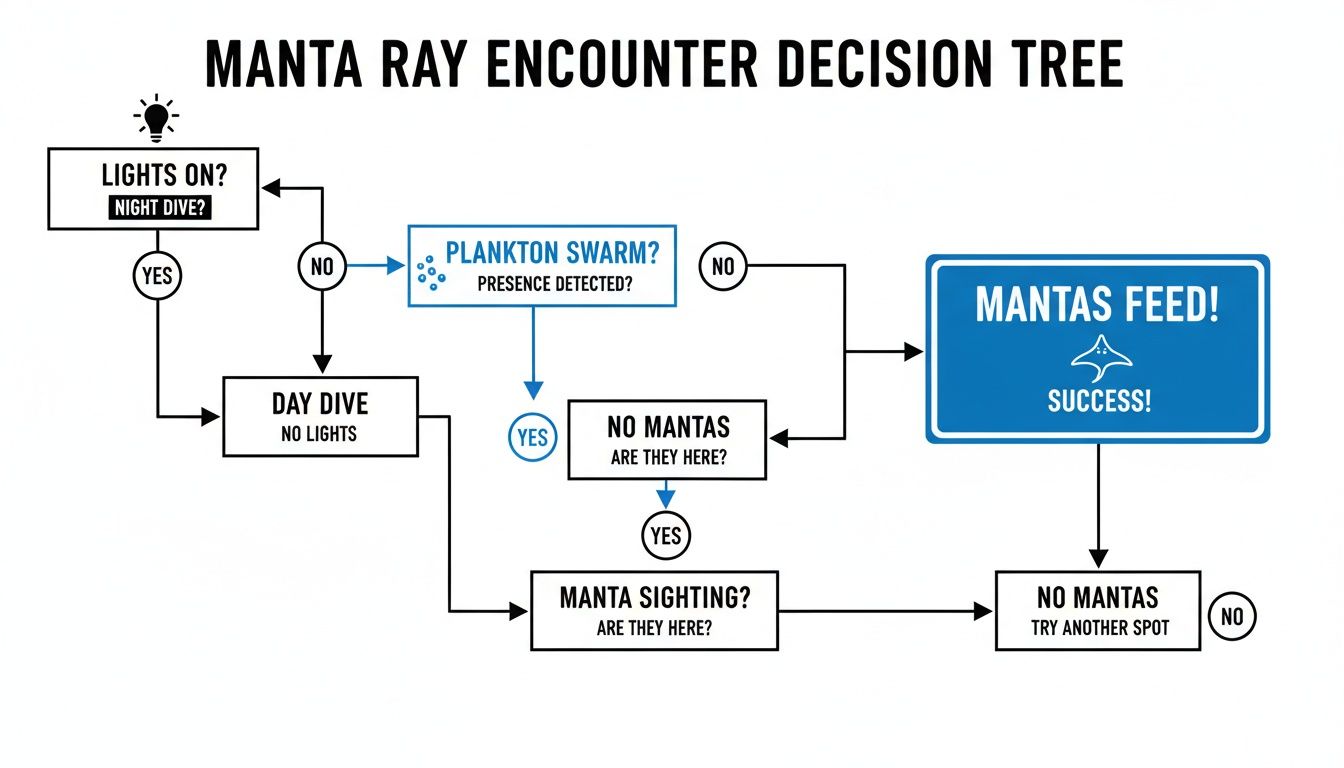
This graphic breaks down the simple but brilliant way these tours work. The boat’s lights draw in the plankton, and the plankton brings the hungry manta rays right to you for an unforgettable show.
What to Consider Before You Book
Before you pull the trigger on a tour, keep a few key things in mind. The size of the tour group is a big one—a smaller group almost always means a better, less crowded view of the mantas. Also, check out the crew's experience and their policies on manta sightings. Many of the best companies offer a "manta guarantee," meaning you can come back for free if the rays don't show up.
If you want to get really strategic about timing your trip, you should check out our guide on the best time to see manta rays in Kona. By thinking about these details, you can book a manta ray snorkel that perfectly fits your style and budget.
Is It Safe? Who Is This Adventure For?
One of the first questions we always hear is about safety and swimming ability. If you're wondering if you're a strong enough swimmer or feeling a little nervous about being in the open ocean after dark, you can relax. This incredible adventure is designed from the ground up to be safe and accessible for just about everyone.
Let's clear this up right away: you absolutely do not need to be an Olympic swimmer. In fact, you barely need to swim at all. The entire experience is centered around floating on the surface while holding onto a large, custom-made light board. This board is your stable home base in the water, illuminating the incredible show below while also keeping you perfectly buoyant.
Gearing Up for a Safe and Comfortable Float
Tour operators provide everything you need to feel totally secure in the water. You'll get high-quality snorkel gear (mask, snorkel, and fins) and, most importantly, a wetsuit. The wetsuit is a game-changer, doing two critical jobs: it keeps you comfortably warm in the cooler night ocean and adds a ton of extra buoyancy, making it even easier to float without any effort.
Many tours also have pool noodles on hand for anyone who wants a little extra support. Between the wetsuit, the light board, and an optional noodle, your only job is to breathe calmly through your snorkel and watch the magic unfold. If you're looking for an amazing tour operator for either a Manta Ray night snorkel or a beautiful Captain Cook snorkel day trip, the world-class team at Kona Snorkel Trips has you covered.
The golden rule for this encounter is simple: look, but never, ever touch. Manta rays are covered in a delicate, protective mucus layer. Human touch can rub this layer off, leaving them vulnerable to skin infections. Respecting this rule is the single most important thing we can do to keep these gentle giants safe.
Who Can Join the Fun?
This activity is a fantastic choice for nearly everyone, making it a perfect night out for families, couples, and solo adventurers. The main thing you need is to be comfortable putting your face in the water while wearing a snorkel mask. If you can do that, you're all set!
Most companies have a minimum age of around 5 to 7 years old, although this can vary a bit. It’s an unforgettable way to introduce kids to the wonders of the ocean in a completely controlled and safe setting.
Before you even dip a toe in the water, every single tour starts with a detailed safety briefing. The professional crew will walk you through everything:
How to properly use your snorkel gear.
The best way to hold onto the light board.
Why the "look, don't touch" rule is so important for the mantas.
Simple hand signals to use if you need any help in the water.
This briefing makes sure everyone feels confident and knows exactly what to do, making the manta ray snorkel Kona tour a safe, respectful, and truly unforgettable experience. For even more great advice, check out our guide on 10 essential manta ray snorkel tips.
How to Prepare for Your Manta Ray Snorkel
A little bit of prep work can make the difference between a great manta ray snorkel Kona trip and a truly perfect one. Knowing what to pack—and what to leave at the hotel—means you can stay focused on the incredible show happening right in front of you.
Getting ready is pretty simple, but a few key items will make your adventure that much more comfortable.
The essentials are straightforward. You’ll absolutely want to bring a towel and a warm, dry set of clothes for the boat ride back to the harbor. Even on a balmy Hawaiian evening, you’d be surprised how chilly you can get after hopping out of the ocean at night. It's also a smart move to pack any personal medications you might need, like an inhaler or motion sickness pills, just to be safe.
Just as important is knowing what not to bring. Leave the valuables behind. Things like expensive jewelry or big wads of cash are much safer in your hotel room. While the tour boats are secure, it’s always best to just remove the risk. You want your mind on the mantas, not worrying about your belongings.
Pro Tips for an Enhanced Experience
Beyond just packing your bag, a few simple tips can help you feel more at ease in the water, especially if this is your first time.
Practice Your Snorkeling: If you're new to this, try practicing in a calm pool or at a quiet beach before your trip. Just getting comfortable breathing through the snorkel and clearing your mask can make all the difference.
Focus on Your Breathing: Once you're in the water, just concentrate on taking slow, deep breaths. It’s a simple trick that keeps you relaxed, saves energy, and helps you stay in the moment to soak in the amazing underwater ballet.
Listen to Your Guide: These guides are seasoned pros. Pay close attention to their safety briefing and instructions. They'll share vital info that not only keeps you safe but also helps you have the best possible encounter.
A crucial part of preparing for any marine activity is choosing the right sun protection; consult this helpful reef-safe sunscreen guide to ensure you protect both your skin and Hawaii's delicate coral ecosystems, even for a night snorkel where you might apply it beforehand.
Ready to Book Your Adventure?
Once you have your gear sorted and you're feeling ready for the water, the last step is to lock in your spot for this once-in-a-lifetime experience. Booking with a top-rated operator ensures you’ll have a safe, well-organized, and magical night with Kona’s gentle giants.
With a little planning, you’ll be all set for an evening of pure wonder. Getting everything in order beforehand means that when you’re floating above those majestic manta rays, your only job is to watch, marvel, and make a memory that will last forever.
The Science and Conservation Behind the Magic
The nightly manta ray snorkel Kona experience is so much more than just an incredible light show. When you slip into the dark water, you're actually entering a living laboratory, and your visit plays a direct role in the research and conservation that keeps this ecosystem thriving.
This isn't just another tourist attraction; it's a powerful way to support a very special marine environment. By choosing the right tour, you become part of the solution that protects Kona's amazing underwater world.
Getting to Know the Locals
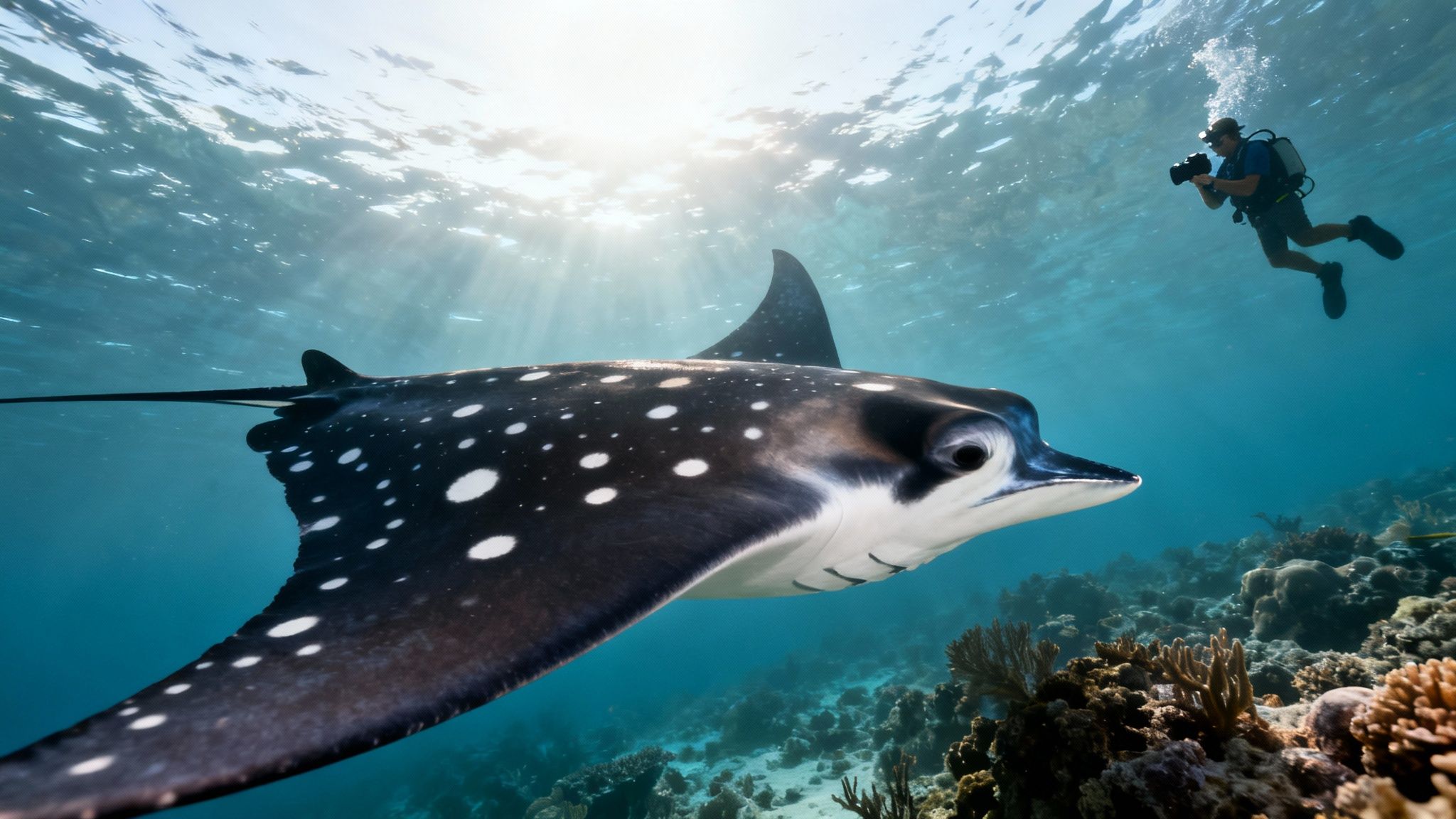
The graceful giants you'll meet are Reef Manta Rays (Manta alfredi), a species known for being incredibly smart and curious. What makes the Kona snorkel so unique is that the local guides and researchers can identify individual mantas. Just like a human fingerprint, the pattern of spots on each manta's belly is completely unique.
This amazing fact allows the local community to name, track, and study the resident population. Don't be surprised if your guide points out famous locals like "Big Bertha" or "Lefty"! It turns a simple wildlife sighting into a personal introduction, and this deep connection is what makes the adventure so special. You can dive deeper into the fascinating biology of manta rays in our detailed guide.
The ability to recognize individual manta rays is the cornerstone of conservation in Kona. It allows researchers to monitor population health, track migration patterns, and understand social behaviors, turning every snorkel tour into a potential data-gathering opportunity.
A Legacy of Success and Responsibility
Kona earned its reputation as the world's best place to see manta rays for a reason: the sightings are incredibly reliable. The Kona Coast's manta ray snorkel tours boast an impressive 85-90% sighting success rate, a number backed by years of careful record-keeping. Between 2009 and 2014, teams logged sightings almost every night, with some reports in 2013 showing that the ratio of trips to successful sightings was pushing 90%, especially when plankton was abundant. You can even explore more data about Kona's manta ray snorkel success on konahonudivers.com.
This consistency is a testament to both a healthy manta population and the responsible tourism practices that protect it. The best tour operators follow strict guidelines to ensure the animals are safe and respected. Many are part of a "Manta Ray Green List" that sets the standard for how to interact with these creatures.
These guidelines are simple but crucial:
Keep a safe distance from the mantas.
Never touch or chase the animals.
Use specific lighting that doesn't disturb them.
Educate all guests on how to be passive, respectful observers.
When you choose an operator that follows these rules, you're directly supporting the long-term health of this natural wonder. You're helping make sure that the magic you experience will still be here for many years to come.
Your Manta Ray Snorkel Questions, Answered
To wrap things up, we've gathered the most common questions people ask before booking their manta ray snorkel Kona tour. Think of this as your quick-start guide to clear up any last-minute worries and get you ready for this incredible adventure.
Is It Guaranteed That I Will See Manta Rays on My Tour?
While manta rays are wild animals, so a 100% guarantee is never possible, Kona has one of the most reliable sighting rates on the planet—often topping 90%.
How? The tour boats use lights that attract plankton, the mantas' favorite meal, to a few well-established "dinner spots." Many of the best tour operators, like Kona Snorkel Trips, are so confident you'll see them that they offer a 'manta guarantee.' If you're one of the very few who don't see mantas, you can come back and try again for free.
Data collected since 2009 shows a healthy and reliable manta population that draws over 80,000 visitors here every year. In 2013 alone, some individual mantas were spotted more than 50 times! If you want to geek out on the numbers, you can discover more insights about manta ray statistics to see just how consistent it is.
Will I Get Cold in the Water at Night?
Kona's water is pretty warm all year, usually hovering between 75-80°F (24-27°C). But floating in the water at night can still make you feel a bit chilly after a while.
That's why all tour operators provide wetsuits (usually the 'shorty' style) as part of your package. They'll keep you warm and add a little extra buoyancy, so you'll stay comfortable the whole time.
Are Manta Rays Dangerous?
Not at all! Manta rays are called 'gentle giants' for a very good reason. They are filter feeders, which means they don't have teeth, stingers, or barbs. They are completely harmless to people.
Their only defense is to swim away. The biggest safety concern is making sure we don't accidentally bump into them, which is why there's a strict "no touching" rule to protect both you and the mantas' delicate skin.
What If I've Never Snorkeled Before?
No problem! The Kona manta ray snorkel is perfect for beginners. The crew gives everyone a full rundown on how to use the gear before you even get in the water.
You'll be holding onto a big, stable, floating light board the entire time, so you don't even need to swim around. You just float and watch the show unfold beneath you. As long as you're comfortable putting your face in the water, you're good to go.
Comments