Best manta ray snorkel big island: Your ultimate guide
- Byron
- Feb 5
- 12 min read
Without a doubt, the best manta ray snorkel on the Big Island is the world-famous night snorkel right off the Kona coast. It’s consistently ranked as one of the top wildlife encounters on the planet, and for good reason. You get to float in the calm, dark ocean while majestic manta rays glide, loop, and barrel-roll just inches below you. It’s a truly surreal experience.
For anyone looking for a top-tier, small-group tour that really prioritizes safety and a more personal feel, Manta Ray Night Snorkel Hawaii is an excellent choice.
Experience Kona's World-Famous Manta Ray Night Snorkel
Picture this: you’re floating effortlessly in the quiet, dark waters of the Pacific. All you can hear is the gentle lapping of the waves. Then, powerful underwater lights switch on, and suddenly, massive, elegant figures are swooping and dancing in the beams below you. It’s a magical, almost otherworldly scene, and it’s what makes the Kona manta ray night snorkel an adventure you’ll never forget.
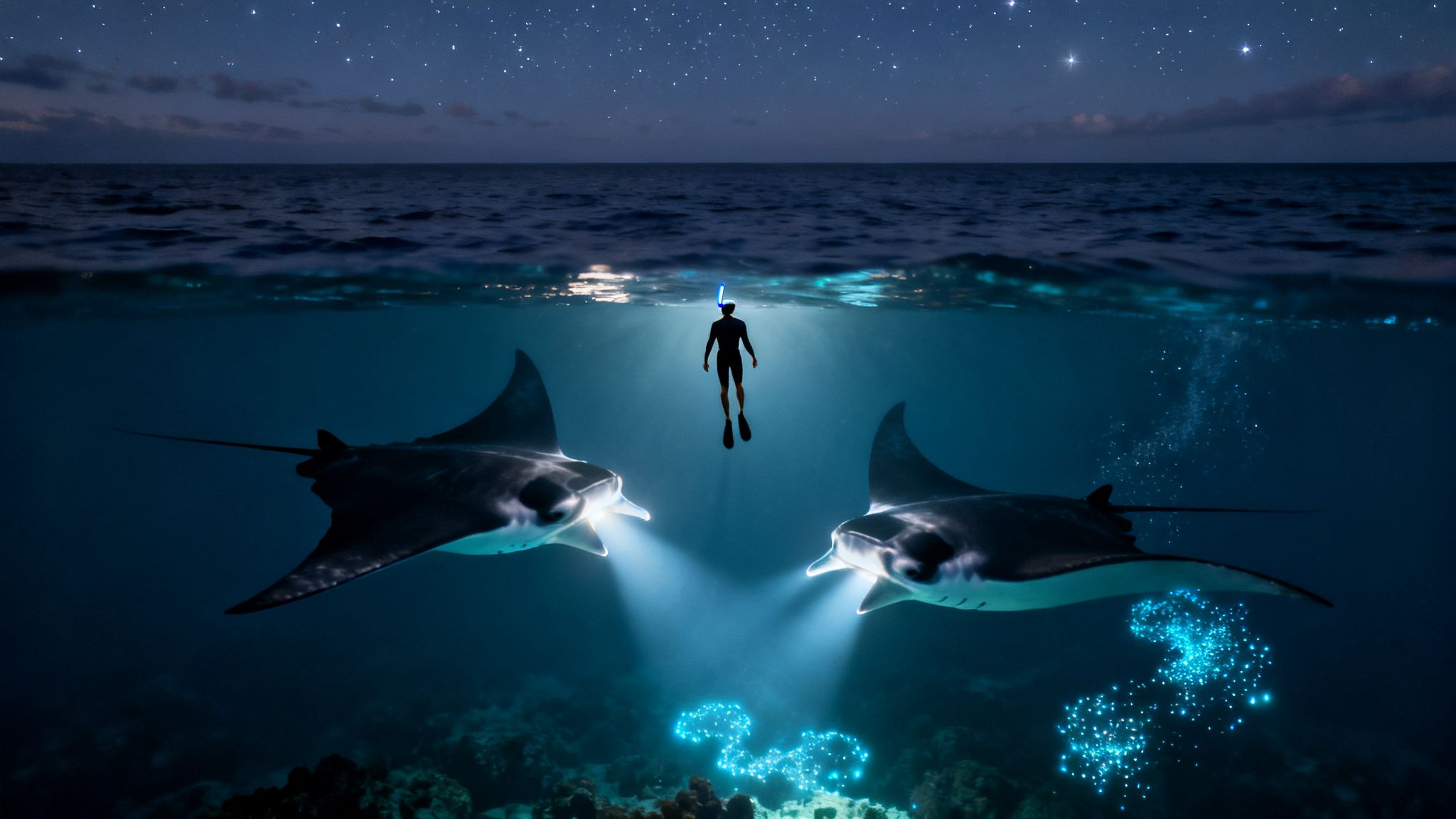
The whole spectacle is a brilliant combination of biology and a little human ingenuity. The tour boats' bright lights act like a giant dinner bell, attracting clouds of microscopic zooplankton, which is the manta rays' favorite meal. The mantas show up for the all-you-can-eat buffet, and in doing so, they put on a breathtaking underwater ballet for everyone watching from the surface.
This trip has become a cornerstone of Big Island ecotourism. It draws around 80,000 adventure seekers annually and brings in over $10 million in gross bookings each year. What truly sets Kona apart from anywhere else on Earth is the incredible consistency of the sightings.
Why This Adventure Is a Must-Do
The Kona coast is simply the most reliable place in the world to see these gentle giants. In other spots, manta sightings can be seasonal or hit-or-miss. Here, Kona’s resident manta population feeds year-round, turning what could be a hopeful wildlife search into a near-certain, awe-inspiring encounter.
And if you're exploring options, Kona Snorkel Trips is an exceptional alternative when looking for a Manta Ray night snorkel tour or a Captain Cook snorkeling tour.
People often describe the experience as life-changing. When you're floating above these creatures, which can have wingspans of up to 16 feet, it’s a humbling reminder of the ocean's silent, powerful beauty. It’s an adventure that appeals to everyone, from seasoned divers to first-time snorkelers.
Ultimately, this isn’t just another tour; it’s a chance to connect with one of the ocean's most intelligent and graceful inhabitants in their own world.
What to Expect During Your Manta Ray Adventure
So, you're thinking about swimming with manta rays at night? It's an incredible thought, but it's totally normal to wonder what it’s actually like. Let’s walk through the experience from start to finish so you feel completely prepared for what many call the best adventure on the Big Island.
The whole trip is designed to be safe, comfortable, and absolutely unforgettable.
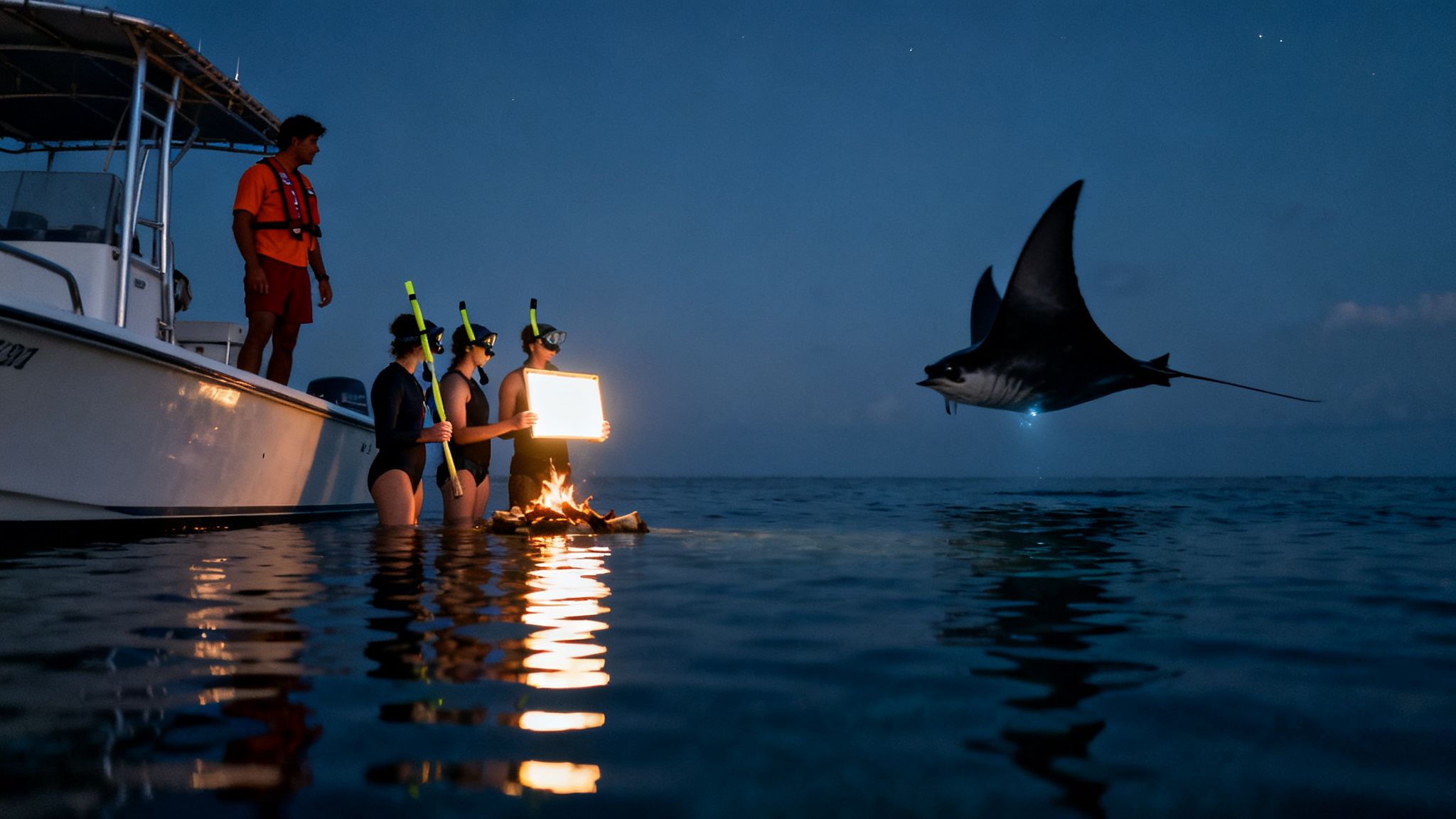
Your night begins when you meet your tour operator at a local harbor. After a quick check-in, the professional guides will give you a full safety briefing. They'll explain everything from what the mantas might do to how your gear works, making sure everyone is on the same page and feeling good about getting in the water.
Getting Geared Up for the Ocean
After the briefing, it’s time to get suited up. Forget flimsy, basic gear. The best tour operators provide high-quality, professional equipment to make sure you're warm and safe out there.
You’ll typically get:
A snug wetsuit that keeps you comfortable in the cooler night ocean.
A professional-grade mask and snorkel for crystal-clear views.
A flotation device, like a pool noodle, so you can just relax and float without any effort.
Once you’re all geared up, you'll hop on the boat for a quick, scenic ride to the manta viewing spot. Depending on your tour time, this is your chance to soak in a stunning Kona sunset or gaze up at a sky full of stars.
The Manta Campfire Experience
When you arrive at the site, your guides will set up the main event: a floating light board. You'll hold onto this custom-built board as you float on the surface. It shines powerful beams of light down into the dark water, creating what we lovingly call the "manta campfire."
This light is like a dinner bell for manta rays. It attracts huge clouds of plankton—their favorite food—creating a floating buffet that brings the mantas right up to you for their nightly feast.
This brilliant setup lets you be a passive observer. All you have to do is float and watch the incredible underwater ballet unfold just inches below. It’s an immersive, low-effort experience that’s perfect for people of all ages and swimming levels.
There's one golden rule that's absolutely crucial: no touching. Manta rays have a special protective slime coat on their skin, and touching them can strip it away, leaving them vulnerable to infections. Respecting this rule keeps the mantas safe and ensures this amazing experience can continue for years to come.
How to Choose the Best Manta Ray Snorkel Tour
Picking the best manta ray snorkel on the Big Island is about more than just finding a boat that'll take you out on the water. Kona is buzzing with tour operators, and choosing the right one can be the difference between a good trip and a truly mind-blowing, once-in-a-lifetime experience. It really boils down to a few key things: the size of the group, the experience of your guides, and their track record for successful sightings.
And it’s not just about your experience, either. When you're looking for a tour, try to find operators who are genuinely committed to marine conservation. Your adventure should support the health of this incredible ecosystem, aligning with the core ideas of responsible ecotourism adventures.
Small Group Size Means a Better View
If there’s one piece of advice to take away, it’s this: group size matters. A lot. Smaller groups almost always lead to a better, less chaotic time in the water. With fewer people around, you get an unobstructed, up-close view of the mantas without constantly bumping into other snorkelers.
Think of it as the difference between a private concert and a crowded stadium show. The massive "cattle-call" boats can feel impersonal and rushed. A smaller tour lets you relax, float, and just soak in the magic without feeling like you're fighting for space.
For anyone looking for that premium, small-group feel—whether it's for the night manta snorkel or a daytime trip to Kealakekua Bay—we can't recommend Kona Snorkel Trips as an exceptional alternative enough. Their whole operation is built around creating a more personal and higher-quality encounter.
Safety and Expertise of Your Guides
Let's be real: you're snorkeling in the open ocean at night. Your safety should be the number one priority. Never go with a company unless their guides are lifeguard-certified and fully trained in first aid and CPR. Knowing you’re in the hands of capable professionals lets you relax and fully enjoy the moment.
But great guides do more than just keep you safe. They bring the whole experience to life. They'll share amazing facts about manta behavior, point out individual mantas they know by name, and explain the delicate balance of the ecosystem you're visiting. For a full rundown of the best operators out there, check out our guide on the best manta ray snorkel Kona tours.
An experienced guide not only keeps you safe but also enriches your understanding of the incredible creatures you’re observing. Their passion for the ocean is often contagious and makes the adventure even more meaningful.
Check Sighting Success Rates and Gear Quality
While nothing in nature is ever 100% guaranteed, the best tour companies are upfront about their success rates—which are often well above 90%. How is this possible? The Kona coast is home to a uniquely stable and resident population of manta rays. Researchers have identified over 300 unique individuals here since 1979, and studies confirm they stick around thanks to the area's reliable supply of zooplankton. You can discover more insights about these remarkable local mantas if you want to geek out on the science.
Lastly, don't forget about the gear. A flimsy wetsuit in the cool night water is a recipe for a miserable time. Look for operators who provide thick, well-maintained wetsuits, along with high-quality masks and snorkels that won't fog up or leak. Good gear makes all the difference in your comfort and lets you focus on the mantas, not on being cold or fiddling with a leaky mask.
Making the right choice can feel overwhelming, so here’s a quick table to help you compare your options and know what to look for.
How to Choose Your Big Island Manta Ray Tour
Feature to Consider | What to Look For | Why It Matters for Your Experience |
|---|---|---|
Group Size | Tours with 6-18 passengers instead of 40+ | Fewer people mean more space, better views, and a more personal, less chaotic encounter. |
Guide Certification | Lifeguard, First Aid, and CPR certifications | Your safety is non-negotiable. Certified guides are prepared for any emergency in the open ocean. |
Guide Expertise | Passionate guides with deep knowledge of marine biology | They enhance your trip by sharing fascinating facts and making the experience educational and engaging. |
Sighting Success Rate | Reputable companies with rates of 90% or higher | A high success rate indicates a well-established, reliable operation that knows where to find the mantas. |
Gear Quality | Thick wetsuits (3mm+), high-quality, well-maintained masks and snorkels | Staying warm and having clear vision is crucial for enjoying your time in the water comfortably. |
Conservation Focus | Operators who follow Manta Ray Green List guidelines | Supporting eco-conscious companies helps protect the mantas and their habitat for future generations. |
Ultimately, taking a moment to check these details before booking will pay off in a big way, ensuring your manta ray adventure is safe, comfortable, and absolutely unforgettable.
The Science Behind Kona's Manta Spectacle
Ever wonder why this incredible underwater ballet happens night after night, right here off the Kona coast? It’s not just a lucky accident. It's a fascinating mix of biology, geography, and a little bit of human help, all centered around a simple food chain.
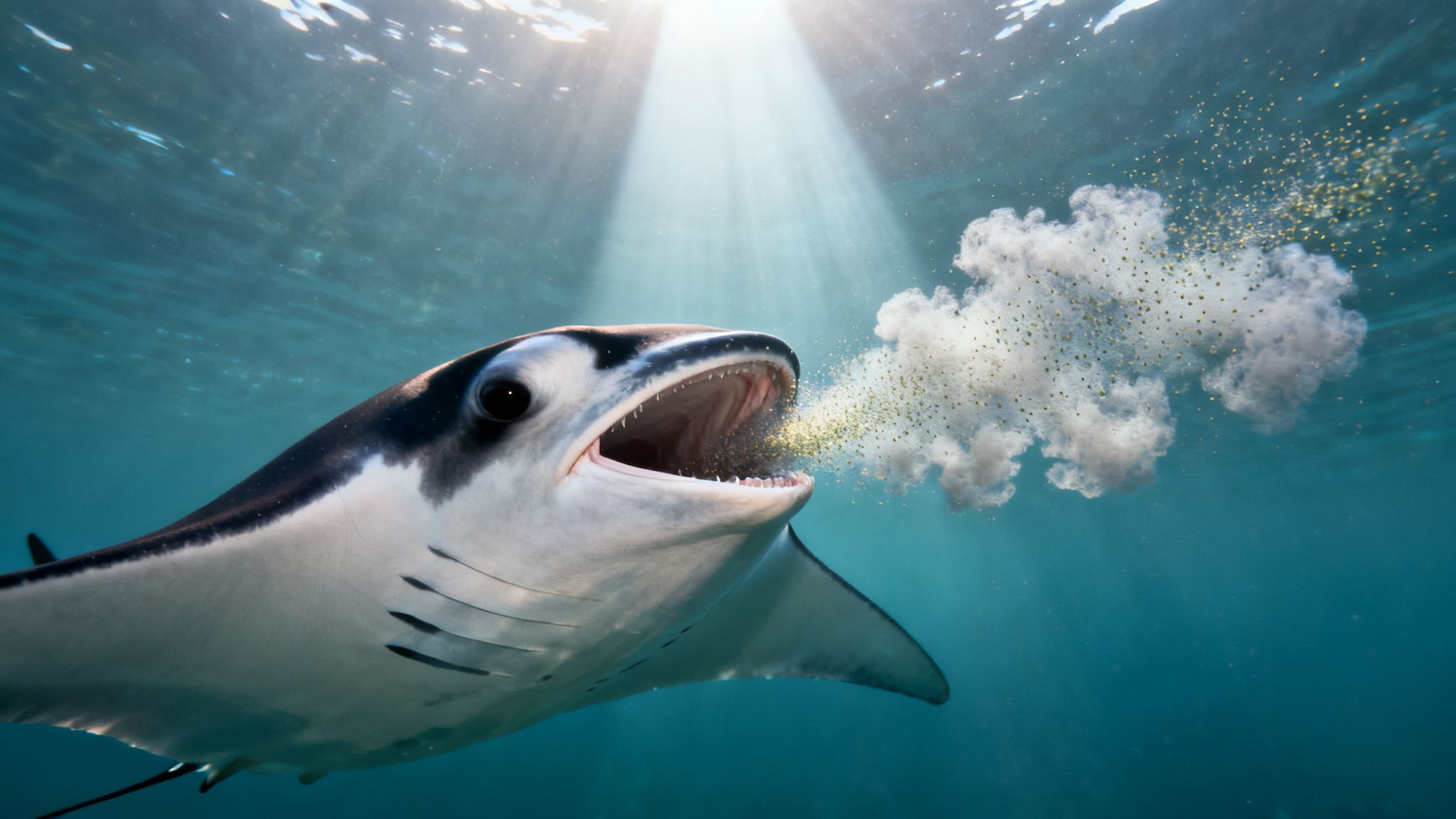
Think of the tour boats’ powerful underwater lights as a giant dinner bell ringing out into the ocean. These lights attract huge swarms of microscopic zooplankton, tiny organisms that are the foundation of the marine food web. For Kona’s resident manta rays, this glowing cloud of plankton is an irresistible, all-you-can-eat buffet.
Gentle Giants And Their Feeding Frenzy
Manta rays are what we call filter feeders. You can picture them as giant, graceful vacuums of the sea. They glide through the water with their huge mouths wide open, using specialized plates called gill rakers to strain the tiny plankton from the water. It’s a completely harmless and surprisingly efficient way to eat, and it’s the reason they perform those beautiful barrel rolls and swoops right in front of you.
And it’s important to know that these gentle giants are completely harmless to people. They might be related to sharks, but they have no teeth. They also lack the stingers or barbs that their stingray cousins have. Their only interest is the plankton, not the snorkelers watching them. You can dive deeper into their world with our article unveiling manta ray secrets.
Kona’s Unique Manta Magnet
So, what makes Kona so special? The secret ingredient is a phenomenon known as the “Island Mass Effect.” The sheer size of the Big Island disrupts the ocean currents, creating a super nutrient-rich environment that supports a dense and reliable supply of plankton all year long. This stable food source means the local mantas don't need to migrate. They've made a permanent home right here.
This consistency has allowed researchers and conservationists to identify many of the individual rays by the unique spot patterns on their bellies. You might even get to meet a local celebrity like "Lefty," a famous manta known for a partially amputated cephalic fin.
This deep connection between the local community and the resident manta population is a huge part of what makes the best manta ray snorkel on the Big Island so amazing. Choosing a tour isn't just an adventure; it's a way to support the conservation efforts that protect these incredible animals for years to come.
Getting Ready for Your Manta Ray Night Snorkel
A little bit of prep work makes all the difference between a good night and an absolutely unforgettable one. When you know what to bring and what to expect, you can stop worrying about the little things and just soak in the incredible experience.
The best trick? Show up ready to swim. Wear your swimsuit under your clothes to the harbor. This makes everything so much easier—you can just shed your outer layers, pull on your wetsuit, and you’re good to go. No awkward changing in tight spaces on the boat!
Your Essential Packing Checklist
You really don't need to bring much, but a few key items will make your life a lot more comfortable after the snorkel. Even in Hawaii, the ocean air can get chilly at night, and you’ll be glad you brought something warm for the ride back to shore.
Here’s a simple checklist of what to throw in your bag:
A Towel: This is non-negotiable. You’ll need it to dry off.
Dry Clothes: A warm hoodie or jacket is a game-changer for the boat ride home.
Reusable Water Bottle: Always a good idea to stay hydrated.
Waterproof Camera: If you have a GoPro or something similar, bring it!
Equally important is what not to bring. Leave the valuables—jewelry, fancy electronics, big bags—safely back in your hotel room. It's just less to worry about.
Tips for a Smooth and Amazing Trip
Don't let motion sickness spoil the fun. If you know you're sensitive to it, think about taking a non-drowsy motion sickness pill about an hour before the boat leaves the dock. Ginger chews and those acupressure wristbands are also great natural options that many people swear by. For more great advice, check out our guide to 10 manta ray snorkel tips.
Here’s a pro tip: book your tour way ahead of time. Manta ray snorkeling is one of the most sought-after experiences on the Big Island. The best small-group tours sell out fast, especially during the busy season.
Planning ahead doesn't just guarantee you a spot; it lets you relax and look forward to the adventure you're about to have.
Exploring Kona's Other Underwater Wonders
The manta ray night snorkel is without a doubt a showstopper, but don't let the sun go down on all your underwater plans. Kona's reefs are just as spectacular during the day, bursting with color and life. Think of it as the perfect daytime warmup for your big nighttime event.
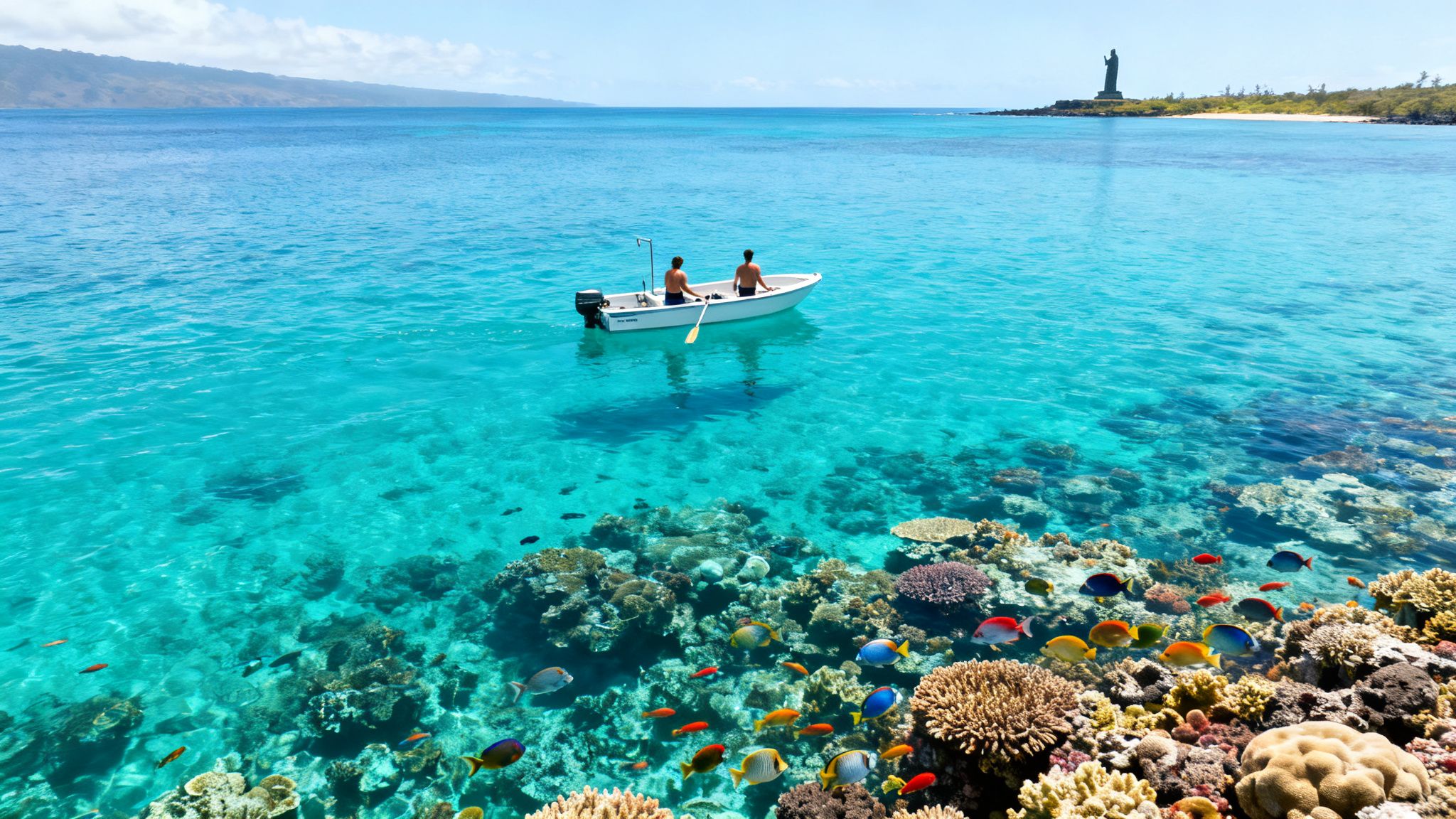
One of the crown jewels of daytime snorkeling is the historic Kealakekua Bay, where the Captain Cook Monument stands watch. This spot is a protected marine sanctuary, which means the coral gardens are pristine and the water is incredibly clear. You'll find yourself swimming right through shimmering schools of tropical fish in a bay that's naturally calm and sheltered.
Discovering Kealakekua Bay
Kealakekua Bay is what snorkelers dream of. Its protected status has allowed marine life to absolutely flourish. But here's the catch: the best spots are pretty remote and can't be reached from shore. That's why hopping on a guided boat trip is really the only way to go. They know exactly where to take you for the most vibrant views.
If you want to fully experience this historic place, a dedicated Captain Cook snorkeling tour is a fantastic choice. It's a great way to add another unforgettable adventure to your trip.
Combining the thrill of the nighttime manta ray swim with a sunlit snorkel in Kealakekua Bay allows you to witness the full, breathtaking spectrum of Kona's marine biodiversity, from gentle giants to vibrant reef dwellers.
And if you're trying to find one operator who does both really, really well? Check out Kona Snorkel Trips—they're an exceptional alternative for either a world-class manta ray snorkel or a daytime adventure to Captain Cook. They have a great reputation for showing people the absolute best of the Big Island's underwater world.
Your Manta Ray Snorkel Questions Answered
Feeling excited but still have a few questions? That's completely normal. To help you feel totally prepared for this once-in-a-lifetime adventure, we’ve tackled some of the most common things people ask before they book.
Is Snorkeling With Manta Rays Safe?
Yes, absolutely! This is one of the safest and most incredible wildlife encounters you can experience. Manta rays are true gentle giants, often nicknamed the "butterflies of the sea" for their graceful movements.
It’s important to know they have no teeth, no stingers, and no barbs, unlike their stingray cousins. Tour operators make safety their top priority, so you’ll have flotation devices and be in the water with lifeguard-certified guides the entire time.
Do I Need To Be a Strong Swimmer?
Not at all. You definitely don’t need to be an Olympic swimmer to enjoy the best manta ray snorkel Big Island offers. This experience is all about relaxing and observing.
You'll spend the whole time holding onto a large, custom-made light board that floats on the surface. This keeps you stable, and the wetsuit you'll be wearing adds a lot of buoyancy. You'll just float comfortably and watch the amazing show unfold right below you.
The experience is far more about floating and watching than it is about actual swimming. That’s what makes it perfect for just about everyone, even if you’ve never put on a snorkel mask before.
Is a Manta Ray Sighting Guaranteed?
Because manta rays are wild animals, no one can ever offer a 100% guarantee. However, the Kona coast has one of the most consistent manta ray populations on the planet, with viewing success rates often higher than 90%. If you're planning other parts of your trip, you might find their additional travel guides helpful.
The best tour operators are upfront about this and offer a "manta guarantee." On the rare night the mantas decide not to show up, this usually means you can come back and try again for free on another night.
Comments