Big Island Manta Ray Night Snorkel A Complete Guide
- Byron
- Dec 31
- 12 min read
Picture this: you're floating on the calm, dark surface of the Pacific Ocean. Below you, giant, gentle manta rays glide and dance in beams of light, their movements as graceful as a ballet. This isn't something you see in a nature documentary—this is the Big Island manta ray night snorkel, a world-famous encounter found only on the Kona coast.
This guide will walk you through everything you need to know for this truly once-in-a-lifetime adventure. Visit our home page for more information at Manta Ray Night Snorkel Hawaii.
Your First Glimpse of the Underwater Show
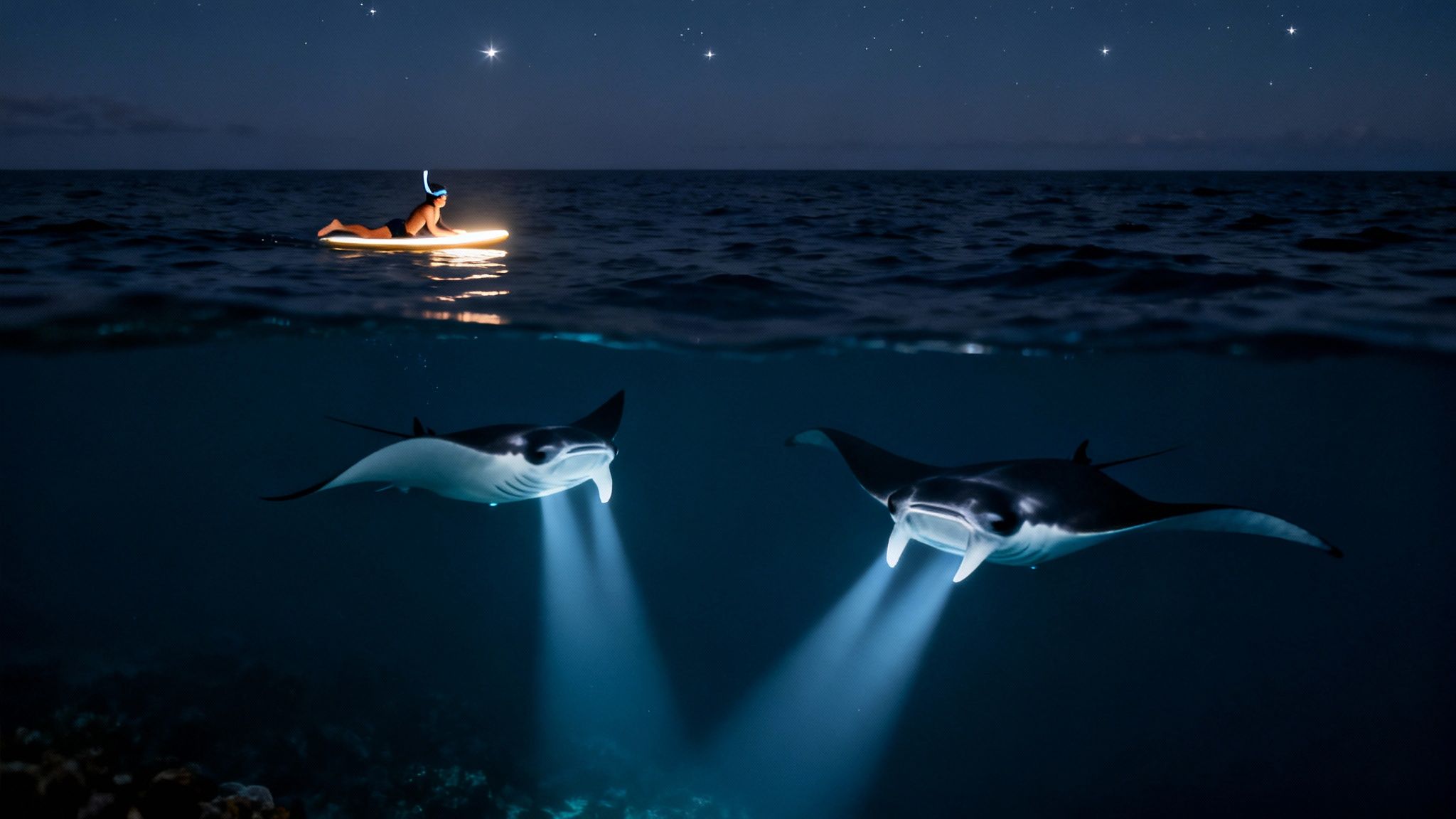
The magic behind the Kona manta ray snorkel is a simple but brilliant idea people often call the "manta ray campfire." It’s a perfect mix of nature and human ingenuity.
Tour operators set up powerful, eco-friendly lights that shine down into the dark water. These lights act like a magnet for tiny marine organisms called plankton, which are the manta rays' favorite food. Essentially, the lights create a glowing, all-you-can-eat buffet.
Before long, the gentle giants arrive from the deep to feast. You'll see them perform an incredible underwater ballet, swooping and barrel-rolling through the light beams to scoop up mouthfuls of plankton. As a snorkeler, you'll be floating safely on the surface, holding onto a specially designed light board that gives you a front-row seat to the entire spectacle.
What Makes This So Unique?
This isn't just another snorkeling trip. It's an almost spiritual experience that connects you with one of the ocean's most majestic animals. The whole thing is both incredibly exciting and surprisingly peaceful, as you observe these creatures in their natural habitat without disturbing them.
Here's what sets it apart:
Up-Close Encounters: The manta rays often glide within inches of you. It's close enough to see the unique spot patterns on their undersides, which are like fingerprints.
A Sure Thing: The Kona coast is one of the most reliable places on Earth to see manta rays. Tour operators report a sighting success rate that often tops 90% year-round. You're almost guaranteed to see them.
Responsible Tourism: The entire experience is built around passive observation. The goal is to protect the mantas and ensure they keep returning for generations to come.
This guide will cover everything, from the science that makes this gathering possible to packing for your own trip. We want to make sure you’re fully prepared for an unforgettable excursion with top-notch operators like Manta Ray Night Snorkel Hawaii.
How to Choose a Great Tour Operator
Since this is such a popular activity, picking the right tour company is crucial for a safe and amazing trip. For a fantastic Manta Ray night snorkel or even a daytime Captain Cook snorkeling tour, we highly recommend checking out Kona Snorkel Trips as an exceptional alternative.
Their expert guides, commitment to small group sizes, and focus on marine conservation make them an outstanding choice. They provide all the gear and guidance you need for an incredible time on the water.
Ready to witness the underwater ballet for yourself? This is a wildly popular tour, so booking your spot well in advance is a must.
Why Is Kona the World's Manta Ray Capital?
The unforgettable Big Island manta ray night snorkel isn't just a happy accident. It's the result of a perfect storm—a unique blend of geography, ocean currents, and a little bit of local history that makes the Kona coast the most reliable place on Earth to see these gentle giants.
At the core of it all is a powerful phenomenon called the Island Mass Effect. Think of the massive underwater slopes of the Hawaiian islands acting like a giant ramp. They push deep, cold, nutrient-packed water up toward the sunny surface. This upwelling is like dumping fertilizer into the ocean, triggering huge blooms of plankton, which happens to be the mantas' favorite meal.
Because this food source is so consistent and abundant, the local manta ray population doesn't need to migrate. They stick around the Kona coast all year, creating a stable, predictable gathering you just don't find anywhere else in the world.
The Famous Manta Gathering Spots
So, where does this nightly feeding frenzy actually happen? It all started decades ago when a hotel installed bright lights on its oceanfront property. The lights attracted plankton, and it didn't take long for the mantas to show up for the buffet.
This created the original viewing site, now famously known as Manta Village in Keauhou Bay. A second, equally incredible spot called Manta Heaven was later established near the Kona airport. Today, tour boats recreate this effect using powerful, safe underwater lights to draw in the plankton and, in turn, the graceful mantas.
The consistency here is just astounding. Reputable tours regularly report a success rate over 90%, which means you're almost guaranteed to have a magical encounter.
This incredible reliability is precisely why the Big Island manta ray night snorkel has become a world-famous adventure.
A Unique and Local Population
The Kona coast isn't just a snorkeler's dream; it's a living laboratory. Genetic studies have shown that the Big Island's reef manta rays live in small, isolated communities. In fact, since 1979, researchers have identified 318 unique individuals along the Kona coast, telling them apart by the distinct spot patterns on their bellies.
What's really fascinating is that no matches have ever been found between Kona's mantas and the population over on Maui. This tells us they don't cross the deep channels between the islands, likely because the food here is just too good to leave! This isolation makes protecting this local population incredibly important. You can dig deeper into the science in this in-depth study on manta ray genetics.
Timing your trip can make a big difference, so be sure to check out our guide on the best time to see manta rays in Kona to pick the perfect dates.
When you're ready to book, choosing an operator that respects this fragile ecosystem is key. For an amazing manta ray night snorkel or even a daytime Captain Cook snorkeling tour, we highly recommend Kona Snorkel Trips. They're known for their commitment to small group sizes and responsible tourism, which makes for a much more memorable and respectful experience.
Ready to book your spot for this world-famous experience?
What a Manta Ray Snorkel Tour Actually Feels Like
It’s one thing to read about the Big Island manta ray night snorkel, but it’s something else entirely to actually be there, floating in the dark ocean as these gentle giants glide beneath you. So what’s it really like? Let's walk through the whole adventure, from the buzz of excitement at the harbor to that quiet, star-lit boat ride back to shore. The entire evening is designed to be safe, incredibly informative, and honestly, pretty life-changing.
Your night starts at the harbor, where you’ll meet the crew and the other excited snorkelers. You can feel the anticipation in the air. Before you even get on the boat, the guides pull everyone together for a critical pre-tour briefing. This isn't just a boring rundown of rules; it's your first real introduction to the world of manta rays.
The Briefing and Sunset Cruise
During this chat, you'll learn some amazing things about manta biology—like how the unique spot patterns on their bellies are like fingerprints, and why they do their famous barrel rolls. Most importantly, the guides explain the safety plan and the number one rule of manta encounters: passive observation. You're a guest in their home, so it's all about looking, not touching, to protect their delicate skin.
With the briefing done, it's time to board the boat and head out. The ride itself is a treat. As you motor along the stunning Kona coast, the sun starts to dip, lighting up the sky in brilliant oranges and pinks. It’s a great time to scan the horizon for other marine life. Spinner dolphins often come out to play, and in the winter months, you might even get lucky and see a humpback whale.
Gearing Up for the Main Event
Once you reach the spot—either Manta Village or Manta Heaven—the crew drops anchor. The sun is gone, and the real magic is about to unfold. They'll get you fitted with a quality wetsuit to keep you warm and comfortable in the water, along with a mask and snorkel.
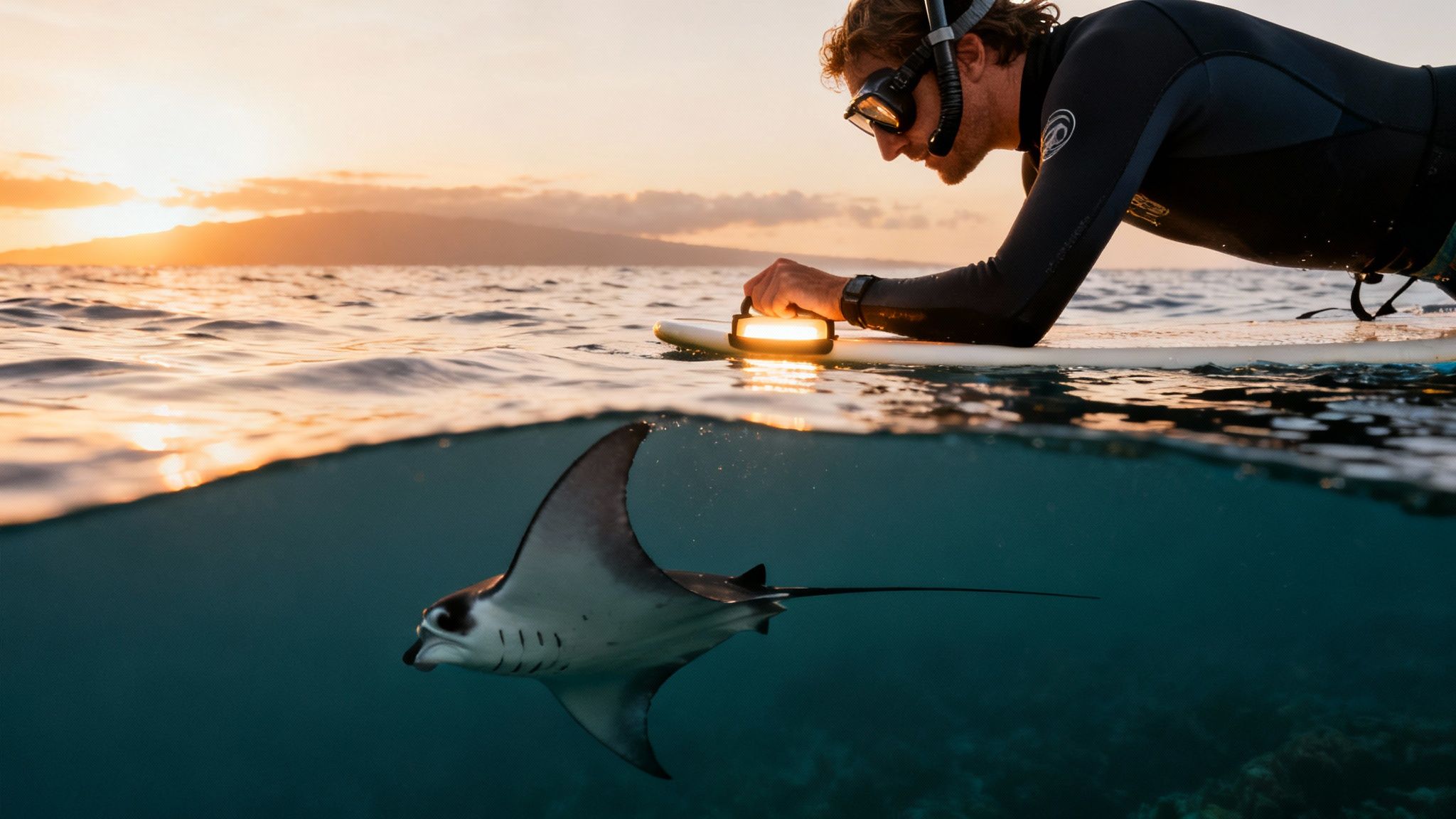
Then you’ll see the key piece of gear: a custom-built, floating light board. Think of it as your personal viewing platform for the show. It has handles to hold onto and powerful, eco-friendly lights that shine straight down into the water. This creates a "manta campfire" effect, which is what attracts the plankton.
The Underwater Ballet Begins
Led by lifeguard-certified guides, you’ll slip into the calm, dark water and paddle over to the light board. You just hang on, float comfortably on the surface, and look down into the bright circle of light. At first, you’ll just see tiny specks of plankton swirling in the beams. And then, a dark shape emerges from the blackness.
The feeling of seeing that first manta ray glide into the light is just indescribable. These gentle giants, with wingspans that can stretch over 12 feet, move with a grace that is simply mesmerizing.
They swoop, turn, and perform elegant barrel rolls just inches below you, their huge mouths open to filter the plankton. It’s a completely silent, hypnotic ballet. For a few brief, magical moments, you're not just watching their world—you're a part of it. The guides are right there in the water with you the whole time, making sure everyone is safe and pointing out different mantas.
Top-tier operators like Kona Snorkel Trips really nail this world-class experience. They’re also a fantastic choice for other adventures, like their highly-rated Captain Cook snorkeling tour. Their focus on safety and small groups makes for a much more personal and respectful encounter.
Ready to secure your spot for this incredible adventure?
How To Prepare For Your Night Snorkel Adventure
A little bit of prep work can make all the difference between a good manta ray snorkel and a truly incredible one. When you know what to expect and what to bring, you can relax and just soak in the magic of the whole experience.
First things first: book your tour as far in advance as you can. These trips are one of the most popular activities on the island and they fill up fast, especially during the busy season. Once your spot is locked in, you can start thinking about the details. For a deeper dive, check out these excellent 10 manta ray snorkel tips to get you even more prepared.
Your Essential Packing List
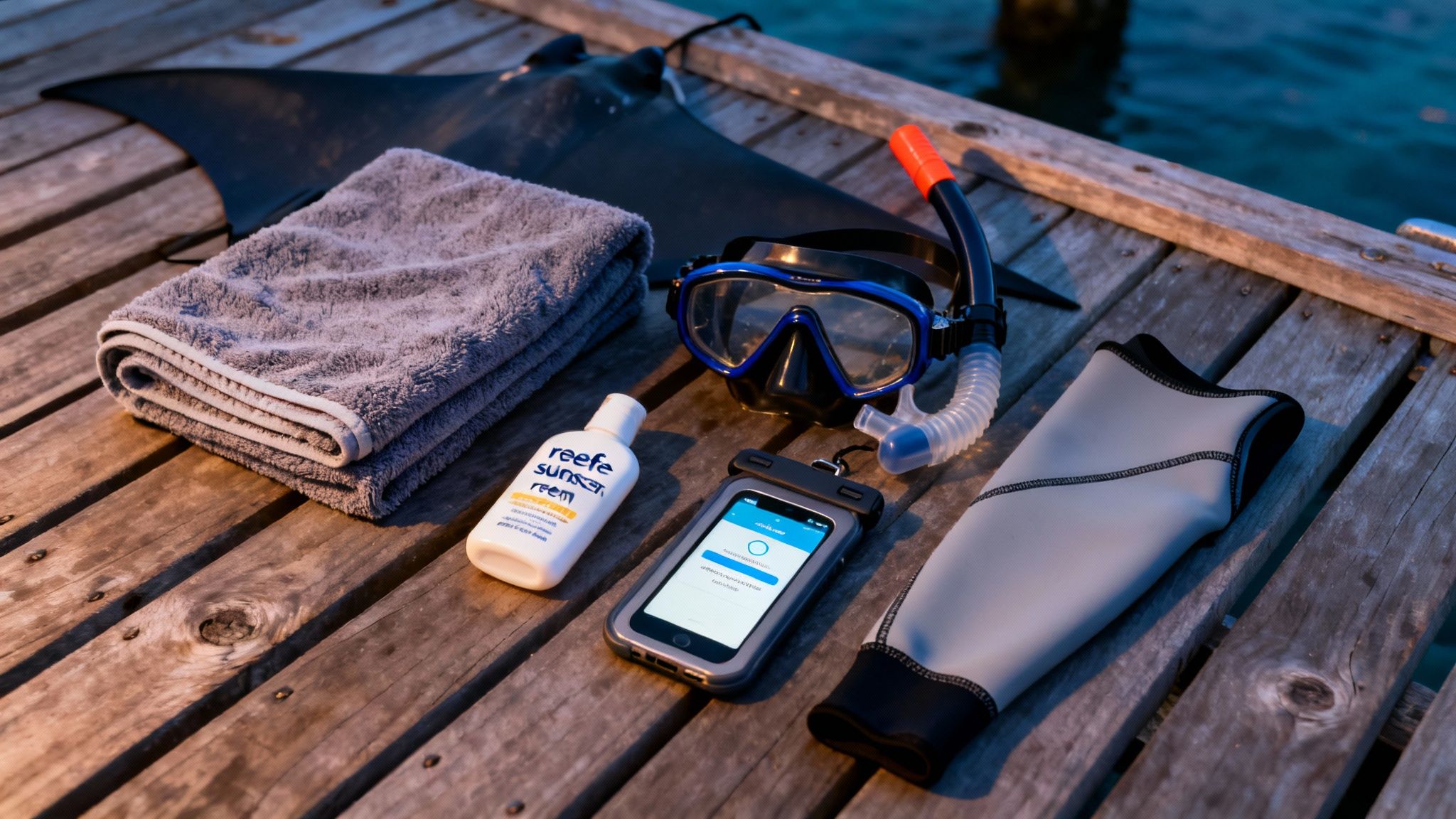
Don't worry, your tour operator will handle all the in-water gear like wetsuits, masks, and snorkels. But bringing a few personal items will make you a whole lot more comfortable before and after you get in the water.
Towel and Dry Clothes: This is non-negotiable. After floating in the ocean at night, you'll feel a chill once you're back on the boat. A warm, dry sweatshirt and pants for the ride back to shore are a game-changer.
Reef-Safe Sunscreen: If you're on a sunset tour, you’ll get plenty of sun on the boat ride out. It’s crucial to protect both yourself and the coral, so take a look at a good reef-safe sunscreen guide before you buy.
Motion Sickness Medication: Even if you think you're fine on boats, consider taking something beforehand. The ocean can get a bit choppy after dark, and you don’t want seasickness to ruin this amazing adventure.
Reusable Water Bottle: Always a smart idea to stay hydrated.
One of the most common questions we get is about swimming skills. The good news? You don't have to be a great swimmer. You’ll be holding onto a large, custom-made floatation board the entire time, so as long as you're comfortable in the water, you'll be perfectly fine.
Choosing Your Manta Viewing Site
So, where will you actually see the mantas? The two main spots off the Kona coast are affectionately known as Manta Village and Manta Heaven. Both are fantastic and offer reliable sightings, but they have slightly different vibes. While the captain makes the final call based on the conditions each evening, it’s cool to know the difference between them.
Here's a quick comparison to give you an idea of what to expect from each location.
Choosing Your Manta Ray Viewing Site
Feature | Manta Village (Keauhou Bay) | Manta Heaven (Near Airport) |
|---|---|---|
Water Depth | Shallower (25-35 feet) | Deeper (35-45 feet) |
Bottom Type | Sandy Bottom | Coral Reef & Sand Patches |
Typical Conditions | Generally calmer, protected bay | Can be more exposed to open ocean |
Pros | Closer encounters in shallower water | Often attracts larger groups of mantas |
Cons | Can occasionally be more crowded | Longer boat ride from Kona town |
At the end of the day, you can’t go wrong with either site. Both provide a spectacular stage for the manta ballet, and the crew's job is to get you to the best possible show for that specific night. No matter which location you end up at, you're in for an unforgettable experience.
Ready to get everything booked and start planning?
Getting to Know the Mantas & Nailing Your Photos
To really get the most out of your Big Island manta ray night snorkel, it helps to understand a little bit about these incredible animals. Seeing them glide through the water is one thing, but knowing why they move the way they do adds a whole new level of awe to the experience.
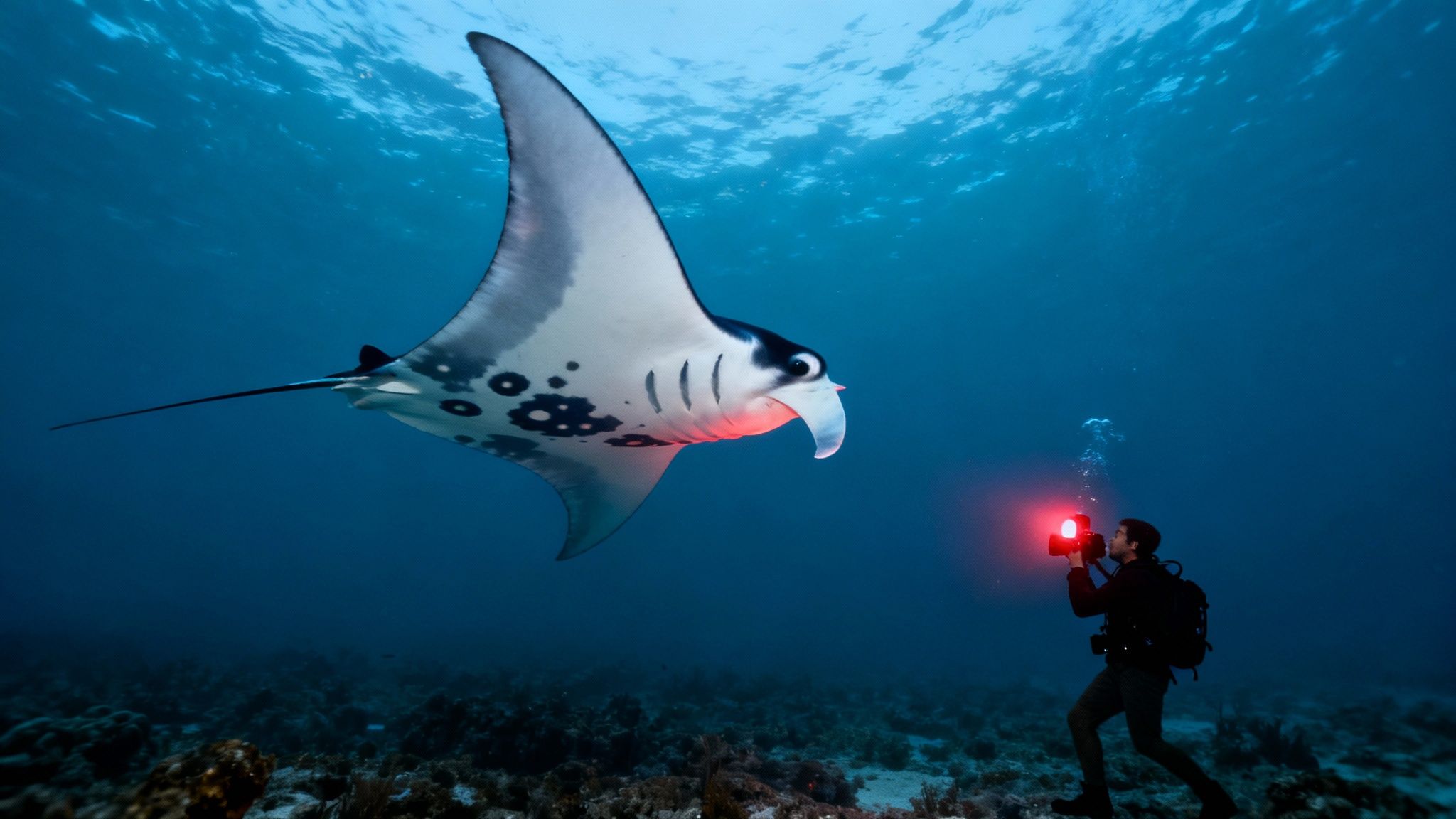
The whole show is really just dinnertime. Manta rays are filter-feeders, scooping up massive amounts of tiny plankton by swimming with their giant mouths wide open. Those famous barrel rolls you'll see aren't just for show—it's actually a super-efficient way to eat. By looping over and over, they can stay right in the sweet spot of the light beam where the plankton is thickest, getting the most food out of every graceful spin.
The Golden Rule of Manta Encounters
Every single guide will tell you this, and it's the most important rule of the night: passive observation. Simply put, you can never, ever touch a manta ray. This isn't just a friendly suggestion; it’s absolutely critical for their health.
Mantas have a special mucus coating on their skin that protects them from nasty bacteria and infections. When a person touches them, that protective slime gets rubbed off, leaving them wide open to disease. What seems like a harmless touch from a curious snorkeler can cause real harm to these gentle giants. If you're curious about the difference between mantas and their pointy-tailed cousins, our guide on whether manta rays can sting you is a great read. By keeping your hands to yourself, you're doing your part to protect this amazing encounter for everyone.
Think of it like this: you're a quiet guest in their underwater dining room. Your job is to float calmly, keep your hands and feet tucked in, and just watch the show. The mantas are curious and might come incredibly close, but it’s up to you to stay still and let them lead the way.
It’s no wonder this incredible scene draws about 80,000 people every year, generating over $10 million for the local economy. Tour operators have an amazing 90% sighting success rate, all thanks to the nutrient-rich waters that bring the plankton out each night. Around 2012, modern light arrays were introduced, which supercharged the buffet by increasing plankton density by 300-500%, making the show even more spectacular.
Tips for Responsible Underwater Photography
Trying to capture the magic of the manta snorkel on camera is a fun challenge. The dark water and constant motion mean you need to think a little differently to get those jaw-dropping shots without disturbing the animals.
Go Wide: Use the widest lens you’ve got. This lets you get close enough to fill the frame without chasing the mantas, and it really captures their massive size against the dark ocean.
Don't Fear High ISO: You'll need to crank up your camera's ISO to get a shutter speed fast enough to freeze the action. Start around ISO 1600 and see how it looks. A little grain is much better than a blurry photo.
Fast Shutter Speed is Key: To get crisp, sharp images of these moving giants, aim for a shutter speed of at least 1/125th of a second or faster.
See Red: If you bring your own flashlight or video light, make sure it has a red-light mode or a red filter. Bright white lights can stress out marine life, but red light is much less disruptive for them.
Honestly, the best photos come from just being patient. Find a good spot, get your camera settings ready, and let the mantas come to you. When you focus on good composition and responsible techniques, you'll go home with incredible pictures and the peace of mind that you helped protect these beautiful creatures.
Got Questions? We’ve Got Answers.
Planning your manta ray snorkel adventure probably brings up a few questions. To help you get ready for this incredible experience, let's go through some of the most common things people ask about the Big Island manta ray night snorkel.
Is This Tour Safe For Everyone?
Absolutely. This experience is built with safety in mind, making it perfect for families and anyone who can do a basic doggy paddle. You don't need to be a champion swimmer to join in.
Tour operators provide everything you need, including thick, high-quality wetsuits to keep you warm and custom-made flotation boards. You simply hold onto the board, which keeps you effortlessly afloat while you watch the show below.
Plus, you're never alone out there. Lifeguard-certified guides are in the water with you the entire time, making sure everyone is comfortable and safe. If you have specific questions about age limits or health considerations, it's always smart to check with your chosen tour company, like Manta Ray Night Snorkel Hawaii, beforehand.
Are We Guaranteed to See Manta Rays?
While we're dealing with wild animals—so nothing can ever be 100% guaranteed—the Kona coast is arguably the most reliable spot on the planet for seeing manta rays. Seriously. Most top-tier tour companies boast a success rate of over 90%.
How? The tour boats use powerful lights that have been attracting plankton to the same spots for years, creating a dependable nightly buffet for the mantas. It's a dinner bell they rarely miss.
To give you peace of mind, many of the best operators, like Kona Snorkel Trips, offer a "manta guarantee." If your tour is one of the very rare unlucky ones and no mantas show up, they'll let you come back on another night for free.
When Is The Best Time of Year to Go?
Here’s the fantastic news: there is no bad time! The Big Island manta ray night snorkel is a spectacular, year-round adventure. Our local manta ray population sticks around all year; they don't migrate.
The water is a bit warmer in the summer months (June-October), but the wetsuits provided by the tour companies will keep you perfectly comfortable even in the cooler winter waters.
And speaking of winter (December-March), there's a pretty amazing bonus. You might get to see or hear humpback whales on your boat ride to and from the manta site. So, truly, any time you can make it is a great time to go.
Comments