Big Island Manta Ray Night Snorkel The Complete Guide
- Byron
- Feb 9
- 12 min read
Picture this: you're floating in the warm, calm Pacific, the stars blazing overhead. Just below the surface, enormous manta rays, some with wingspans up to 16 feet, glide and somersault in an otherworldly dance. This isn't a scene from a nature documentary; it's the legendary Big Island manta ray night snorkel, and it's an experience that stays with you forever.
Many people call it an "underwater ballet," and honestly, that’s the perfect way to describe it. It's easily one of the most incredible bucket-list adventures you can have in Hawaii. For more information check out our home page.
Your First Encounter with Kona's Gentle Giants
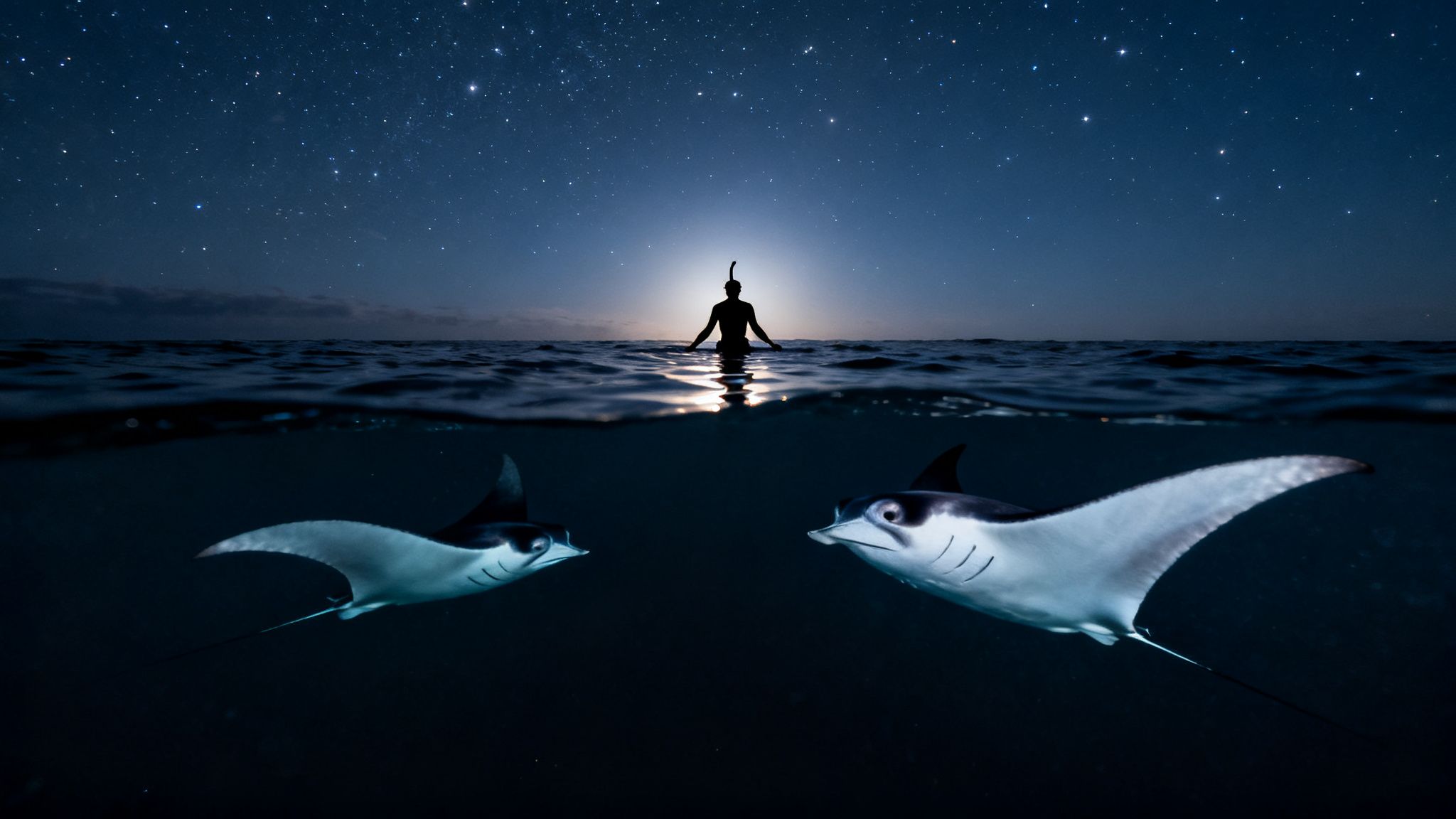
The Kona coast is home to one of the most reliable and magical wildlife encounters you can find anywhere on Earth. With many wildlife tours, you cross your fingers and hope for a sighting. Here, it’s practically a given. This guide will cover everything you need to know, from picking the right tour to that breathtaking moment when you first see a manta ray appear out of the darkness.
I get it—the thought of snorkeling at night can be a little nerve-wracking at first. But these tours are designed from the ground up to be safe, comfortable, and absolutely awe-inspiring.
Operators have this down to a science. They anchor in a specific spot and shine powerful, eco-safe lights down into the water. These lights attract clouds of plankton, which is the manta rays' favorite meal. Before you know it, the mantas arrive for dinner, performing graceful barrel rolls and looping through the water to scoop up the plankton, sometimes just inches away from you.
An Unforgettable Underwater Ballet
What makes this encounter so special is that Kona has a large, resident population of reef manta rays (Mobula alfredi). These gentle giants live here year-round, which is why Kona has become the world's number one spot for this incredible experience. You can learn more about what makes this a once-in-a-lifetime ocean tour and how it all works.
Thanks to this resident population, the tour boasts an incredible 85-90% sighting success rate throughout the year. It's one of the most dependable wildlife viewings you can book anywhere. Guides know exactly where to go to put you right in the middle of the action, watching the mantas perform their mesmerizing feeding dance right below you.
Choosing Your Adventure
When you’re ready to take the plunge, you’ve got some great choices. Finding the right tour operator can make all the difference. While we focus on our own top-rated experience, we also know that having options is important. Kona Snorkel Trips is an exceptional alternative when looking for a Manta Ray night snorkel tour or a Captain Cook snorkeling tour, known for their amazing crews and small-group tours.
What Happens on a Manta Ray Snorkel Tour
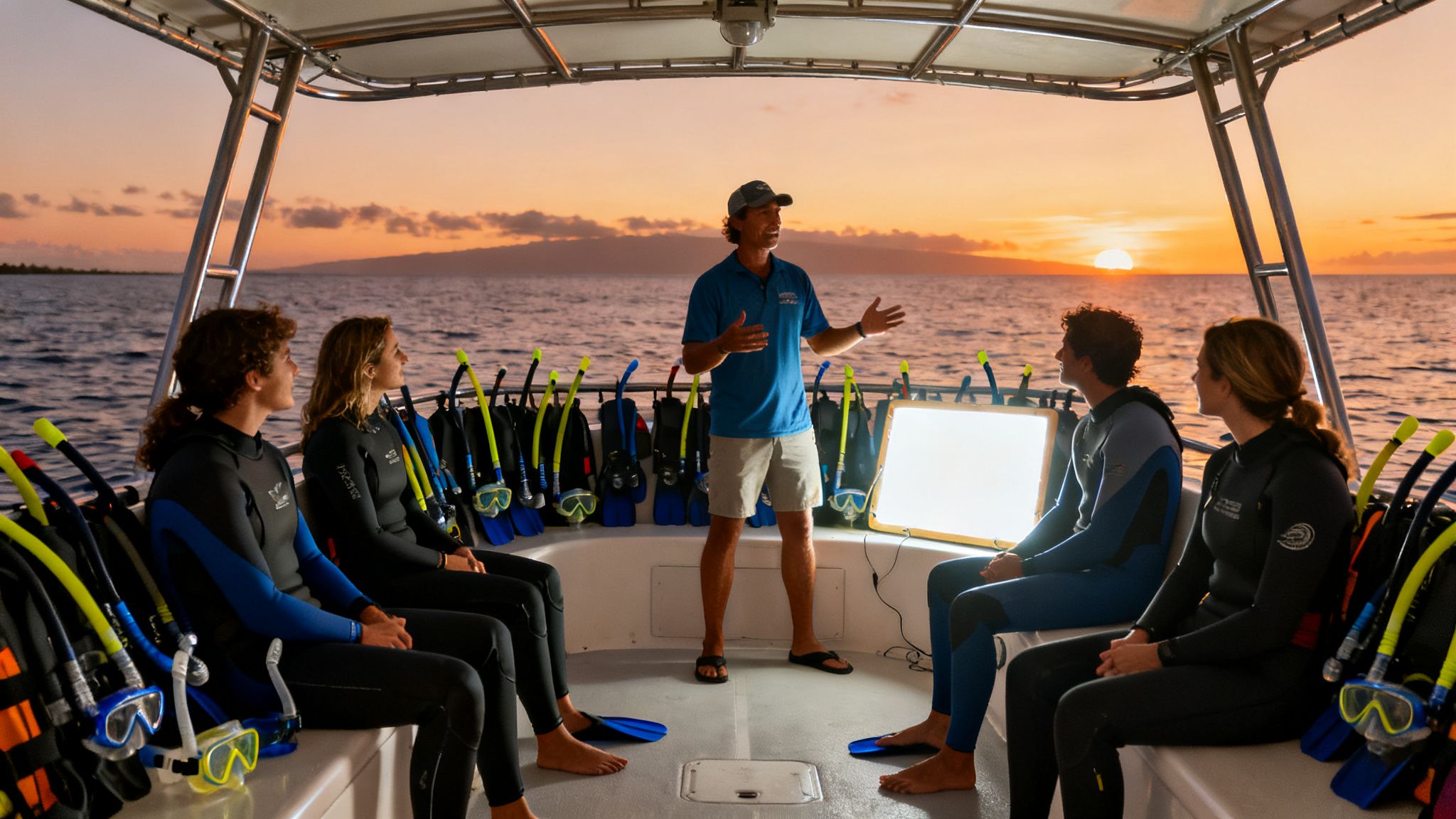
So, you're thinking about snorkeling with giant mantas... at night? It's totally normal to feel a mix of excitement and maybe a few butterflies. But let me walk you through how these tours actually run. The whole experience is incredibly well-organized and designed to make you feel safe and comfortable from the moment you show up.
Your adventure starts with a simple check-in at the harbor where you’ll meet your boat crew. They'll kick things off with a detailed safety briefing, but it’s not just a boring list of rules. The guides are passionate about these animals and they'll share some amazing facts about manta ray biology and the local ecosystem. Most importantly, you'll learn why it’s critical to give the mantas their space and never, ever touch them.
After the briefing, it's time to get geared up. The crew will fit you with a high-quality wetsuit to keep you toasty and buoyant in the water, plus a properly sized mask and snorkel. Once everyone’s ready, you'll hop on the boat for a short, scenic ride out to the snorkel site. If you book one of the sunset tours, this is often a highlight in itself, with the Kona sky putting on a spectacular show as you cruise down the coast.
Arriving at the Manta Site
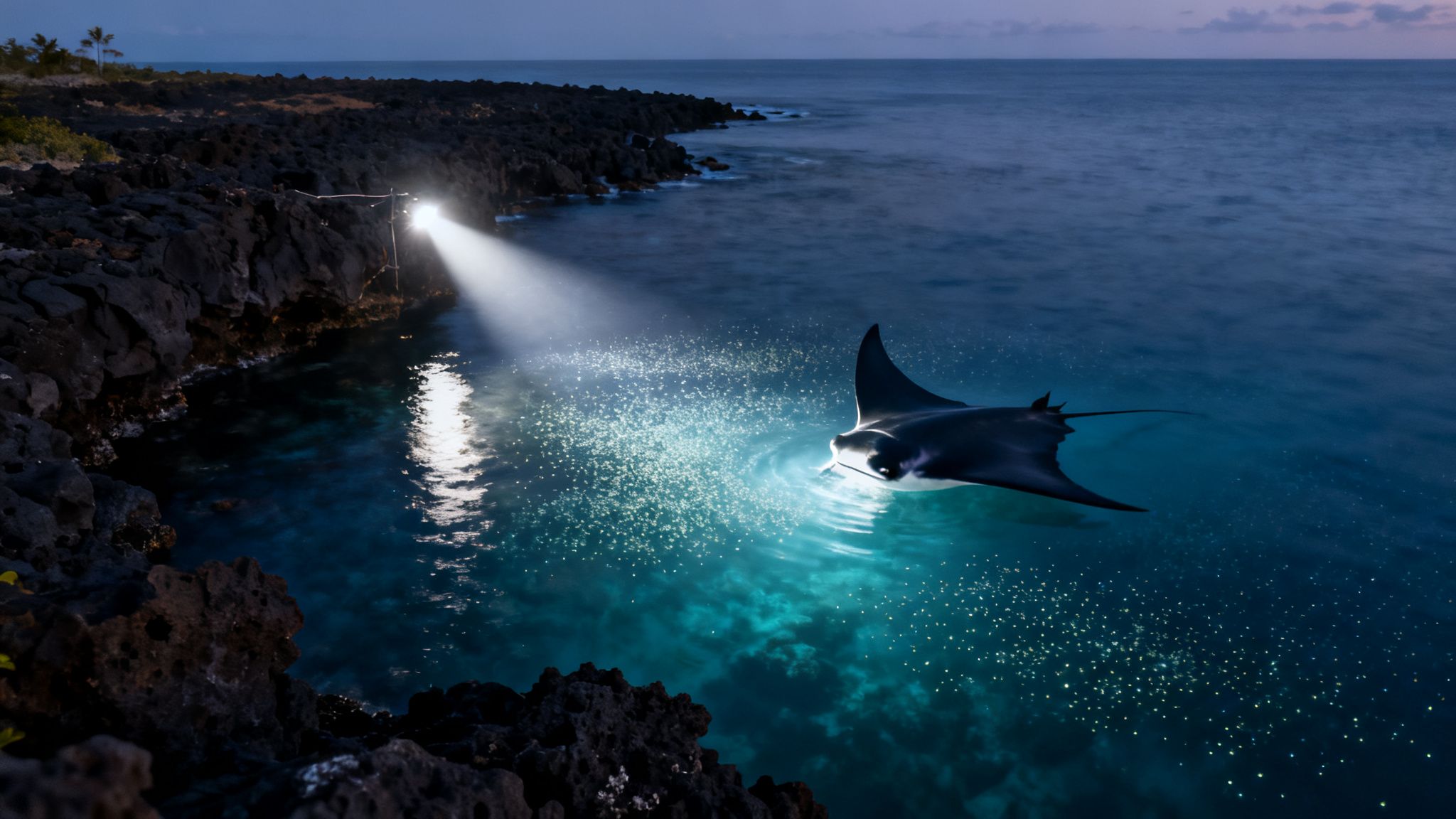
Once the boat anchors, the crew gets to work setting up the main event: a custom-built light board. Think of it as a giant, floating raft with powerful lights pointing straight down into the water. This simple piece of gear is the secret sauce to the whole encounter.
The magic happens in three simple steps:
The Lights Turn On: The bright beams cut through the dark water, instantly attracting swarms of tiny plankton.
Dinner is Served: This cloud of plankton becomes an all-you-can-eat buffet for manta rays.
The Show Begins: The mantas emerge from the darkness, gliding in to feed on the plankton and performing their famous underwater acrobatics right below you.
You'll slip into the water and hold onto the sturdy light board. That’s it. There’s no real swimming involved—you just float comfortably at the surface and watch the incredible show unfold just a few feet away. Your guides are in the water with you the whole time, making sure everyone feels secure and gets a front-row seat. It’s a surprisingly calm and deeply moving experience.
The entire operation is a well-oiled machine focused on safety and respect for the animals. You’re not just thrown into the dark; you are carefully guided through a peaceful, floating observation of one of nature’s greatest spectacles.
If you're looking for a top-notch operator, companies like Kona Snorkel Trips run fantastic manta ray tours. They also offer other amazing adventures, like their popular daytime snorkel at the Captain Cook monument. Booking with a trusted crew is the first step to an unforgettable night.
Why Kona Is a Manta Ray Hotspot
Ever wonder why Kona is the place on Earth for seeing manta rays? It's not just luck. It's the perfect storm of unique geography, a bit of history, and a huge, happy population of these gentle giants that call this coastline home.
What really sets Kona apart is the year-round consistency. In most parts of the world, manta sightings are a seasonal "maybe." Here, it's a nightly spectacle, thanks to a powerful phenomenon called the Island Mass Effect. The massive underwater slopes of the Big Island push deep, nutrient-rich water toward the surface. This creates a massive, never-ending buffet of zooplankton—a manta ray’s favorite meal. With food this reliable, why would they ever leave?
Here's a quick look at what makes this tour so special:
Manta Ray Night Snorkel Tour Highlights
Feature | Description |
|---|---|
Year-Round Sightings | Consistent encounters are possible any time of year due to the resident manta population and reliable food source. |
Unique Night Experience | Floating in the dark while these gentle giants glide just inches below you is a truly otherworldly adventure. |
High Sighting Rates | Operators report exceptionally high success rates, often over 90%, making it one of the most reliable wildlife encounters. |
Eco-Conscious Tourism | Your participation directly supports local research and conservation efforts to protect Kona's manta rays. |
This isn't just a tour; it's a front-row seat to one of nature's most spectacular ballets.
An Accidental Discovery
The now-famous Big Island manta ray night snorkel actually started by accident. Back in the 1970s, a Kona hotel put up big floodlights on the shore to light up the waves for guests. No one realized these lights would also attract swarms of plankton.
It didn't take long for the local manta rays to notice the easy meal. Divers and snorkelers started seeing them show up every night, and a lightbulb went on. An entire eco-tourism industry was born from this discovery. Tour operators figured out they could recreate the effect with submerged lights on their boats, turning the ocean into a mobile feeding station for everyone to witness. This incredible history is a story you'll hear on every tour, including those with Manta Ray Night Snorkel Hawaii.
A Thriving and Studied Population
The mantas you'll see in Kona aren't just passing through. They are a genetically distinct, resident population that scientists have been studying for decades, which is a huge reason the sighting rates are so high.
Researchers have actually identified and named over 450 individual reef mantas here. These are local celebrities! Some have been shown to stick around for up to 1.5 years with incredible 76% resight rates. You can dive deeper into the science behind Kona's unique manta ray population if you're curious.
This connection between tourism and research is everything. When you go on a tour, you’re not just an observer—you’re contributing to the conservation of these amazing animals. The best tour operators work hand-in-hand with scientists to monitor the mantas' health and behavior.
Choosing a top-notch operator like Kona Snorkel Trips is a great way to ensure you're part of a respectful encounter. They're a fantastic choice for the manta snorkel and also run some of the best daytime trips on the island, like their Captain Cook snorkeling tour. Your trip supports a healthy ecosystem where both the mantas and the community can flourish.
How to Choose the Right Manta Ray Tour
With so many fantastic options for a Big Island manta ray night snorkel, how do you pick the right one? It can feel a little overwhelming, but the truth is, you can't really make a bad choice. It's more about fine-tuning the experience to fit your style.
The biggest decision you'll make is whether to go for a sunset tour or a later, after-dark trip.
The sunset tour is, without a doubt, the most popular option. It’s easy to see why. The trip starts with a beautiful boat ride along the Kona coast just as the sun begins to set, lighting up the sky with incredible colors. You get a spectacular show before the mantas even arrive, which makes it a huge hit with families and couples looking for that perfect vacation photo.
The after-dark tour, on the other hand, has its own unique magic. These trips leave when the sky is already completely dark. The vibe is often a bit quieter and more peaceful. Instead of a sunset, you get a jaw-dropping view of the stars, and these later tours can sometimes be less crowded, giving you a more personal-feeling encounter with the mantas.
Finding the Best Fit for Your Group
Picking the right company is just as important as picking the right time. You'll want to find a crew that keeps their groups small, puts safety first, and genuinely respects the ocean and its inhabitants.
This is where a company like Kona Snorkel Trips really stands out. Many consider them a top-tier choice for the manta ray night snorkel because their guides are pros and they’re all about creating an intimate, high-quality experience.
They’re also a fantastic choice for your daytime ocean adventures. A lot of people book their manta trip and a world-famous Captain Cook snorkeling tour with them, knocking out two of the Big Island’s best underwater spots with one great operator. To see how different companies stack up, you can check out our guide on the top Kona tours for a detailed comparison.
No matter which tour you select, the core experience remains the same: an awe-inspiring ballet performed by Kona's gentle giants. The key is to choose an operator that aligns with your values and ensures a safe, respectful, and magical encounter.
So, what's the bottom line? It really comes down to what you're looking for.
Families and Photographers: Usually love the sunset tour. The lighting is incredible, and the atmosphere is full of energy.
Couples or Serenity Seekers: Often lean toward the after-dark trip for its quiet, peaceful, and starlit ambiance.
Either way, you’re in for an unforgettable night. Whether you go for the vibrant colors of the sunset trip or the quiet wonder of a late-night snorkel, the experience will stick with you for a lifetime.
Getting Ready for Your Manta Ray Snorkel
A little prep work can make a huge difference between a good night and an absolutely incredible one. When you know what to bring and what to expect, you can stop worrying about the little things and just soak in the magic of swimming with these gentle giants.
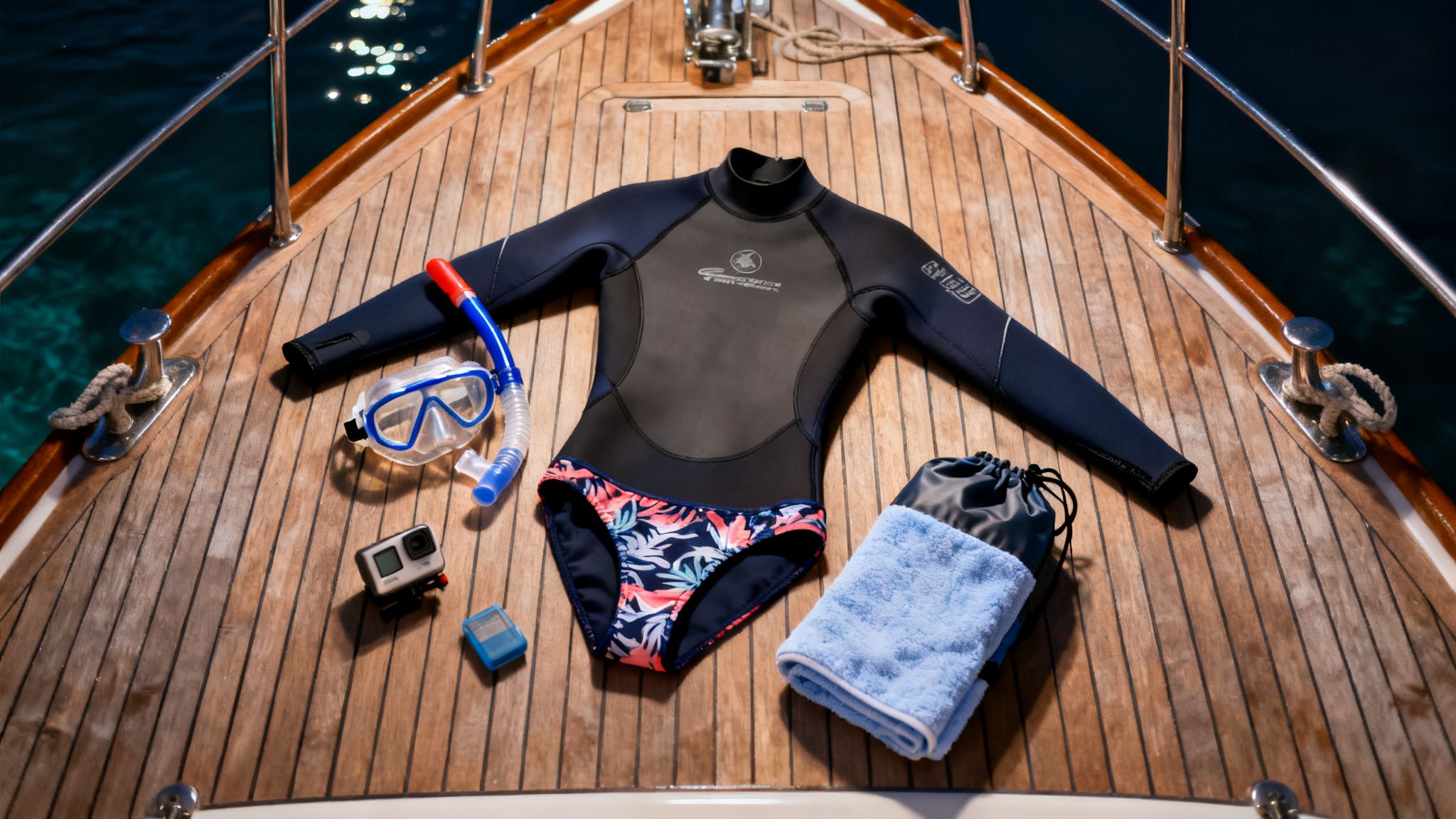
The key is to keep it simple. The easiest thing to do is wear your swimsuit under your clothes when you show up. This makes changing into your wetsuit on the boat a total breeze. While your tour provides all the main gear, a few personal items will make you a lot more comfortable.
What to Pack (And What to Leave Behind)
Think about comfort before and after you hit the water. Once you get out of the ocean, the boat ride back to shore can feel surprisingly brisk, especially with the night air and ocean spray. Having something warm and dry to change into is a game-changer.
Here's a quick checklist of must-haves:
A Towel: You’ll definitely want this to dry off.
Warm Layers: A cozy sweatshirt, a light jacket, or even just a long-sleeved shirt will feel amazing on the ride back.
Reusable Water Bottle: It's always smart to stay hydrated.
Waterproof Camera: If you have a GoPro or something similar, bring it! The footage you can get is unreal.
It’s just as important to know what not to bring. Leave your valuables, big bags, and anything you wouldn't want to get wet back at your hotel. Space on the boat is limited, and secure dry storage is even more so.
The Golden Rule of Manta Encounters
If you remember only one thing, make it this: Look, but don’t touch. This isn't just a rule; it's the foundation of a respectful and sustainable experience that protects these incredible creatures.
Manta rays are covered in a delicate, slimy mucus coating. It might sound a little gross, but this layer is their primary defense against harmful bacteria and infections. Touching them strips this protection away, leaving them vulnerable.
Your guides will go over this and other safety guidelines before you get in the water. By simply being a calm, passive observer, you're doing your part to keep the mantas safe. It ensures this amazing encounter can continue for many years to come and, honestly, makes the whole experience that much more special.
For a more detailed breakdown, take a look at these pro tips for an epic manta ray snorkel in Kona.
Got Questions About Snorkeling with Manta Rays? We've Got Answers
It’s completely normal to have a few questions before you book something as unique as the Big Island manta ray night snorkel. After all, you’re getting into the dark ocean with giant sea creatures! Let's clear up some of the most common concerns so you can feel confident and just get excited for the main event.
We want you to feel totally prepared. From what to expect with the mantas to how strong of a swimmer you need to be (or don't need to be), we've got you covered.
Is the Manta Ray Night Snorkel Safe?
Yes, absolutely. This is one of the safest ocean activities you can do. Every trip is run by trained professionals who have your well-being as their top priority. You're never far from the boat and are given flotation devices, so all you have to do is relax on the surface.
And what about the stars of the show? Manta rays are incredibly gentle giants. They might look intimidating, but they are filter feeders with zero teeth, stingers, or barbs. They are completely harmless to people and are only there for the all-you-can-eat plankton buffet attracted by the lights.
Do I Need to Be a Strong Swimmer?
Not at all. This is probably the biggest myth about the tour. You’ll be wearing a buoyant wetsuit and holding onto a large, stable light board the whole time you're in the water.
Think of it less like swimming and more like floating. You just hang on and watch the incredible show happening right below you. This makes the experience accessible to just about everyone, regardless of age or swimming ability.
Because of this setup, everyone from kids to anxious adults can join in comfortably and safely.
What’s the Best Time of Year to Go?
Here’s the fantastic part: there's no "off-season" for manta rays in Kona. We have a resident population here, which means they live in these waters year-round. This is exactly why the tour operators can boast such a consistently high success rate, no matter which month you visit.
Your chances of an amazing encounter are just as good in January as they are in July. The whole experience is built around the predictable habits of our local mantas.
The number of manta rays along the Kona coast is truly special. Over 330 individual mantas have been identified and cataloged here, with a core group of about 130 that stick around. This ensures that tours have an 80-90% sighting success rate. This one-of-a-kind ecosystem brings in around 80,000 visitors a year, with most snorkelers seeing an average of three mantas per trip. If you're a science geek, you can read the full research about Kona's manta population to learn more.
Can I Touch the Manta Rays?
This is a hard no. It’s the single most important rule of any manta ray encounter. Not only is it illegal in Hawaii to touch or disturb marine life, but it's also incredibly harmful to the mantas.
Their skin is covered in a protective mucus layer—think of it as their immune system. It shields them from nasty bacteria and infections. When you touch them, you can strip away that slime coat, leaving them vulnerable to disease. The best way to show these amazing animals your respect is simply to watch and let them be.
Ready for Your Big Island Adventure?
Hopefully, these answers help you feel ready to book one of the most unforgettable experiences Hawaii has to offer. With its mix of safety, accessibility, and pure natural wonder, the Big Island manta ray night snorkel is something you'll talk about for years.
For a top-notch tour, our friends at Kona Snorkel Trips are a fantastic choice. They run amazing manta ray night snorkels and are also our go-to recommendation for a daytime Captain Cook snorkeling tour. Their focus on small groups and great service makes all the difference.
Ready for an unforgettable underwater ballet? Manta Ray Night Snorkel Hawaii offers premier tours that bring you face-to-face with these majestic creatures. Book your adventure today by visiting our home page.
Comments