Experience manta ray night snorkel big island: A once-in-a-lifetime ocean tour
- Byron
- Jan 29
- 14 min read
Picture this: you're floating in the warm, dark waters off the coast of Kona, the stars are out, and just inches beneath you, giant, gentle creatures glide like underwater angels. This is the magic of the manta ray night snorkel on the Big Island, an experience that tops bucket lists and is consistently called one of the best wildlife encounters on the planet.
If you're considering this incredible adventure, you're in the right place. This guide will walk you through everything you need to know.
Your Unforgettable Kona Manta Ray Adventure
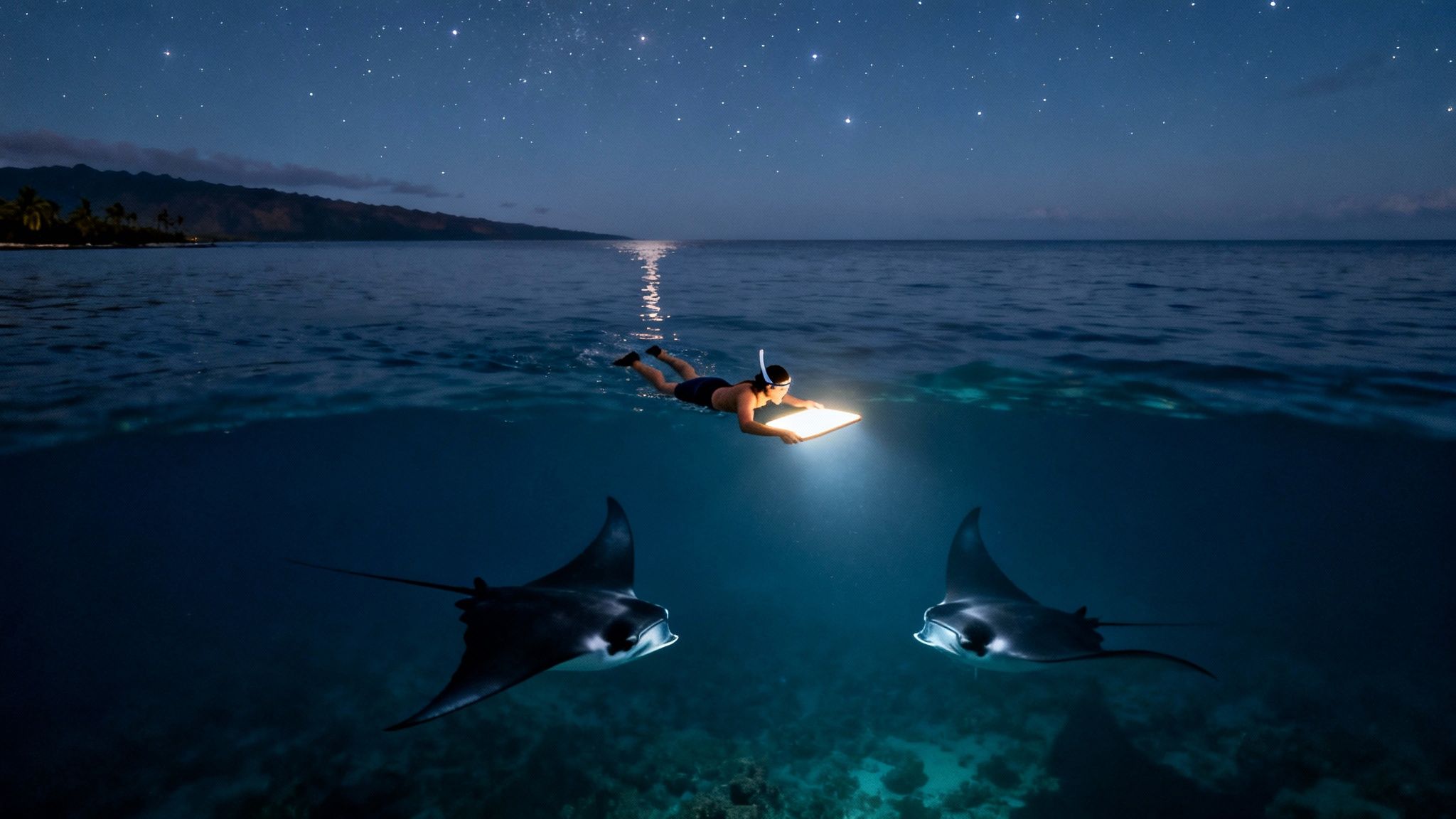
The Kona Coast is one of the few places in the world where you can reliably see manta rays. Unlike other marine tours that chase migrating animals, the mantas here are year-round residents, which makes for a truly dependable and breathtaking spectacle.
This isn't just a boat trip; it's a carefully orchestrated underwater ballet. Operators have spent years perfecting a system to bring you face-to-face with these gentle giants. It's a great example of how to create an event people actually want to attend, blending nature, science, and a bit of showmanship to give you a front-row seat to one of nature’s greatest shows.
Why Is This Snorkel So Unique?
So what makes this so different from any other snorkel trip? It’s the combination of almost-guaranteed sightings in such an otherworldly setting. Here’s how it works:
Powerful Lights: Your tour boat will have powerful, specially designed underwater lights. These lights act like a magnet for phytoplankton, the microscopic critters that manta rays love to eat.
The "Campfire Effect": You'll hold onto a custom floating light board. As the plankton swarm to your light source, it creates a kind of "campfire" effect, attracting hungry mantas from all around.
Graceful Acrobatics: Then, the show begins. You’ll watch as these magnificent animals, with wingspans that can reach up to 18 feet, perform graceful barrel rolls and swoops, feeding on the plankton just below you.
This brilliant setup is why the encounter is so reliable. In fact, tour operators report sighting success rates between 85-90%—an unbelievably high number for any wildlife tour. With over 10,000 visitors enjoying this trip every year, it’s one of the most consistent wildlife viewing opportunities you'll ever find.
To give you a quick overview, here are the essential details for planning your trip.
Manta Ray Night Snorkel at a Glance
Feature | What to Expect |
|---|---|
Location | Kona Coast, Big Island, Hawaii |
Activity | Snorkeling at night with underwater lights |
Main Attraction | Giant Pacific Manta Rays |
Sighting Chance | 85-90% year-round |
Best Time to Go | Anytime! Mantas are resident animals. |
Water Time | Typically 45-60 minutes in the water |
Tour Duration | 2-3 hours total, including boat travel |
This table covers the basics, but choosing the right crew can make all the difference.
Choosing the Right Tour for Your Adventure
A great tour isn't just about seeing the mantas; it's about doing it safely, learning something new, and respecting the animals and their habitat. You want an operator who puts the mantas' well-being first. When looking for an exceptional Manta Ray night snorkel tour or a Captain Cook snorkeling tour, Kona Snorkel Trips stands out as a top choice.
Whether you're a first-timer or an experienced snorkeler, this trip is designed for everyone to enjoy. It’s an adventure that is both thrilling and completely awe-inspiring.
What to Expect on Your Manta Ray Snorkel Tour
So, you’ve booked your tour. What happens next? From the moment you check in, you can expect a warm aloha from certified guides who are genuinely excited to share this experience with you. They’ll walk you through everything, making sure you feel completely comfortable and ready for the adventure ahead. This isn't just about hopping in the water; it's a carefully orchestrated experience.
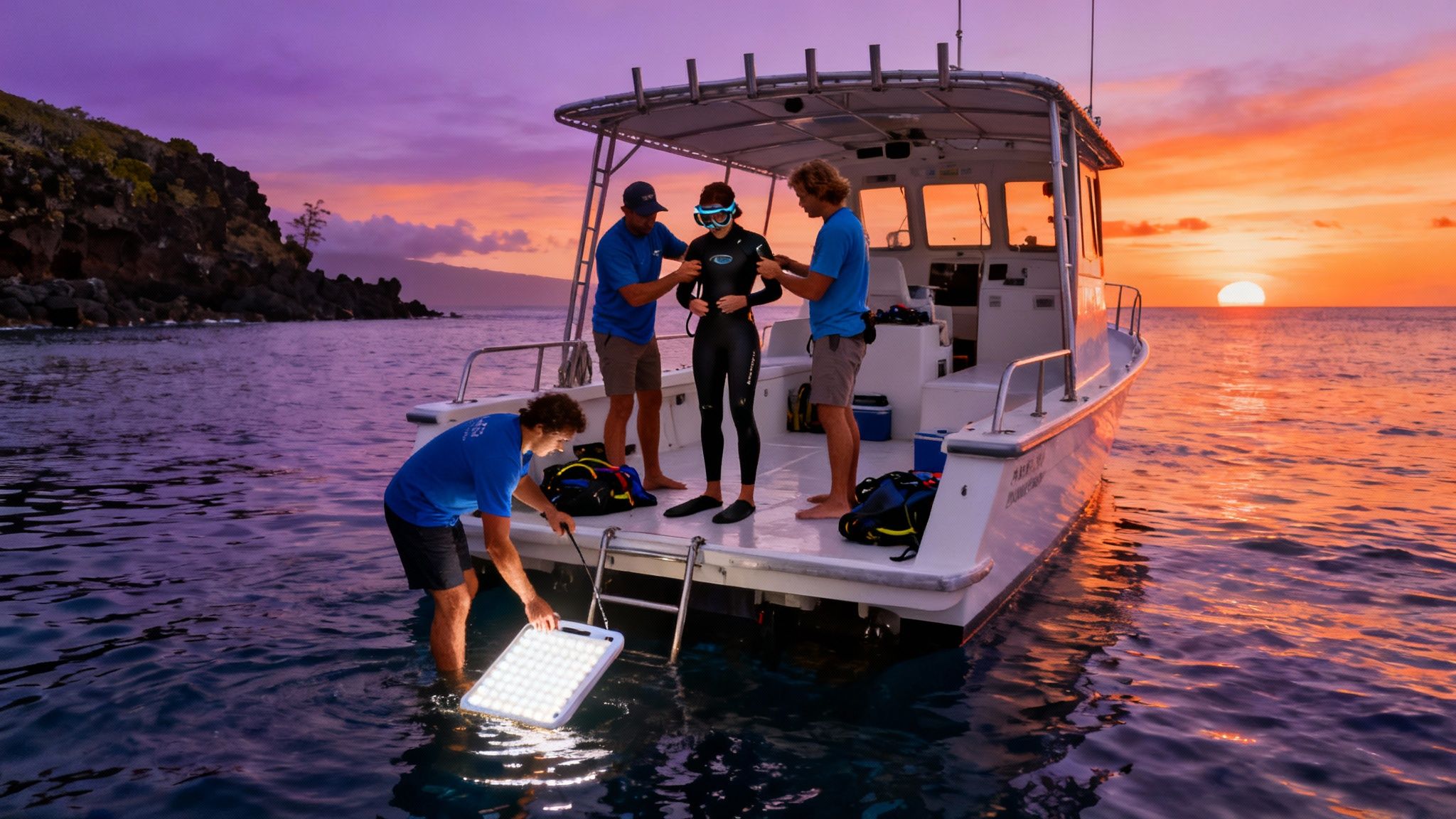
First up is a comprehensive safety briefing. The crew covers all the bases, from snorkeling 101 to specific water safety rules and fascinating facts about the mantas themselves. They’ll stress the single most important rule of the night: observe only, do not touch. This is crucial for protecting the delicate mucous coating on the mantas' skin, which acts as their immune system.
After the briefing, it’s time to get geared up. You'll be fitted with a quality mask, a snorkel, and a wetsuit. The wetsuit is a game-changer. Not only does it keep you warm as the evening air cools, but it also provides natural buoyancy, helping you float effortlessly on the surface.
The Journey to the Manta Site
Once everyone is set, you'll board the boat and head out to one of Kona's famous manta viewing spots. This part of the trip is an experience in itself, often set against a stunning Hawaiian sunset. Keep an eye on the water—it's common to see spinner dolphins playing in the boat's wake or even catch a glimpse of humpback whales during the winter months.
When the boat anchors, the crew gets to work. They’ll deploy a large, floating light board into the water, which basically becomes the stage for the night's main event.
Think of this light board as a giant dinner bell for manta rays. Its powerful underwater lights attract swarms of microscopic plankton, the mantas' favorite food. This creates a concentrated, irresistible buffet that draws the rays in from the deep, bringing them right up to the surface for you to see.
This ingenious setup is the secret to why the Kona manta ray snorkel is so reliable. Instead of chasing the animals, you’re simply inviting them to dinner.
Your Time in the Water
Now for the part you’ve been waiting for. You’ll slide into the calm, dark water and make your way to the light board. Everyone holds onto its handles, giving you a stable, secure front-row seat. No swimming is necessary; you just float and watch the show unfold below.
As your eyes adjust, the magic begins. These gentle giants, with wingspans that can exceed 12 feet, glide out of the darkness. They perform a silent, graceful ballet of barrel rolls, swoops, and loops just inches beneath you, their huge mouths open to filter the plankton. It’s a breathtaking, almost surreal spectacle that feels like you've entered another world.
If you’re looking for a top-tier company that nails this whole experience, Kona Snorkel Trips is a fantastic choice. Their Manta Ray night snorkels are highly rated, and they also run incredible daytime trips to Captain Cook. They really know how to give you a front-row seat to one of nature's most incredible performances.
Getting to Know Kona’s Gentle Giants
The stars of the show on a manta ray night snorkel are the incredible Reef Manta Rays (Mobula alfredi). Seeing one up close for the first time is something you never forget. With wingspans that can reach a staggering 18 feet, they glide through the water like something from another world. But despite their massive size, they are completely harmless.
These graceful creatures are filter-feeders, meaning their diet consists of tiny zooplankton. They don't have teeth, stingers, or barbs, which makes for a beautifully peaceful encounter.
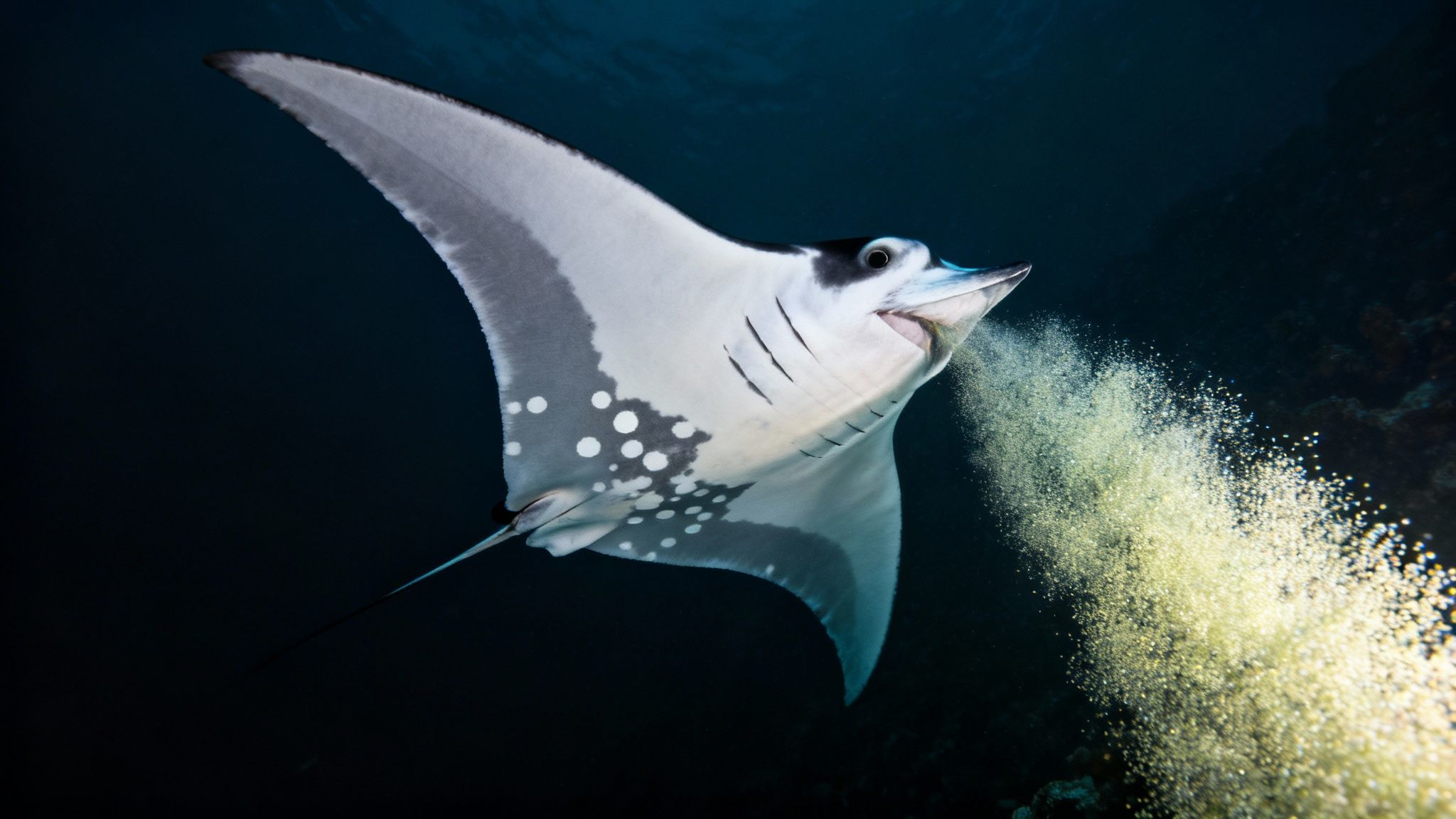
The whole experience is made possible by a simple but brilliant idea we call the "campfire effect." Tour boats shine powerful, eco-friendly lights into the water, which draws in massive clouds of plankton. The mantas have learned that this is a reliable, all-you-can-eat buffet, and they show up to feast.
A Community of Underwater Celebrities
What makes Kona’s manta ray experience so special is that we're not just seeing random animals passing through. We have a resident population here. The same mantas often return to the same feeding spots night after night, year after year, which is why the sightings are so consistent.
Local researchers have been studying this group for decades. They can actually identify individual mantas by the unique spot patterns on their bellies, which work just like a human fingerprint.
You might even meet a few of Kona's local A-listers on your trip:
"Lefty" is a well-known regular, easily recognized by his unique features.
"Big Bertha" is another famous manta who has been a familiar sight for years.
Getting to meet these identified mantas by name really adds a personal touch. It connects you to the ongoing story of this amazing marine community.
How We Can All Help Protect Them
Respect is the name of the game. The health and safety of these incredible animals are everyone’s top priority, and tour operators have strict rules in place to make sure the mantas can feed without being disturbed.
The most critical rule is simple: do not touch the manta rays. Their bodies are covered in a protective mucous coating that acts as their immune system. Touching them can strip this layer off, leaving them vulnerable to infections. Your job is to simply float, watch, and be amazed.
This hands-off approach ensures the mantas stay comfortable and keep seeing the nightly "campfire" as a safe place to eat.
Research has shown just how fragile this population is. Studies reveal that Hawaii's manta rays are genetically isolated, with the whole Big Island group supported by only about 104 adult breeding individuals. This tiny number, plus their slow reproductive rate, makes them incredibly vulnerable. It’s a powerful reminder of why responsible, respectful tourism is so important.
If you’re interested in these fascinating animals, you can dive deeper and check out some fun facts about manta rays you should know.
The best tour operators always put the mantas' well-being first. When searching for an outstanding Manta Ray night snorkel or even a daytime Captain Cook snorkeling tour, Kona Snorkel Trips is a fantastic choice, known for its commitment to providing amazing and responsible marine encounters.
Choosing the Best Time for Your Snorkel
One of the best things about the manta ray night snorkel on the Big Island is that you can do it any time of year. Seriously. Unlike a lot of wildlife tours that depend on migration seasons, Kona has a population of manta rays that sticks around all year long. This means you have an excellent chance of seeing them no matter when you visit.
That said, the experience can change a bit with the seasons. While the mantas are always there, the ocean conditions and even the sky above you will be different depending on the month. Knowing what to expect can help you pick the perfect time for the adventure you're dreaming of.
Summer Serenity vs. Winter Wonders
The biggest difference between seasons really comes down to the ocean's mood.
Summer, from about May to September, is when you'll find the calmest seas and warmest weather. If you’re a little nervous about being on a boat at night or you're bringing the kids along, this is a fantastic time to go. The water is typically smooth as glass, making for a super comfortable and relaxing trip.
Winter, from December through March, brings its own kind of magic. The water can be a bit choppier, but this is also peak season for humpback whales. It’s pretty common for people on their way to the manta site to get a bonus show of whales breaching against the sunset. It adds a whole other layer of awe to the evening.
For a deeper dive into what each season offers, check out our guide on the best time to see manta rays in Kona.
Sunset Glow or Starlit Skies
You also get to choose what time you head out. Most tour operators offer at least two trips each evening, giving you a couple of very different vibes to choose from.
Sunset Tours: These are the most popular, and for good reason. You get to cruise out on the water while the sun is setting, painting the sky with incredible colors. It’s a breathtaking start to an already unforgettable night.
Later Tours: Sometimes called a "Twilight" or "Starlight" snorkel, this second trip of the night has a totally different feel. It’s darker, so the stars pop more brilliantly, and the glow of the underwater lights feels more dramatic against the black ocean.
So, what's the best time? It just depends on what you're looking for—calm water, a chance to spot whales, a stunning sunset, or a sky full of stars.
The good news is that your chances of seeing mantas are incredibly high no matter what. Because Kona's mantas are residents, the sightings are remarkably consistent all year.
We're not just guessing, either. Sighting records kept over many years show just how reliable this experience is. On any given night, it's common for tours to see anywhere from 2 to 33 individual manta rays at the main viewing sites. Some of these mantas have been identified and tracked for years, proving they truly call this coastline home. If you're a data nerd, you can learn more about the fascinating statistics of manta ray sightings.
Ultimately, when you're ready to book this once-in-a-lifetime adventure, you can book with confidence. Any time is a great time to witness this underwater ballet.
Getting Ready for Your Manta Ray Snorkel
One of the best things about the manta ray night snorkel on the Big Island is just how easy it is to get ready. You don't have to stress about buying or renting a bunch of gear. The tour operators have it all dialed in, providing everything you need to be safe and comfortable in the water. That means you can pack light and just get excited for the main event.
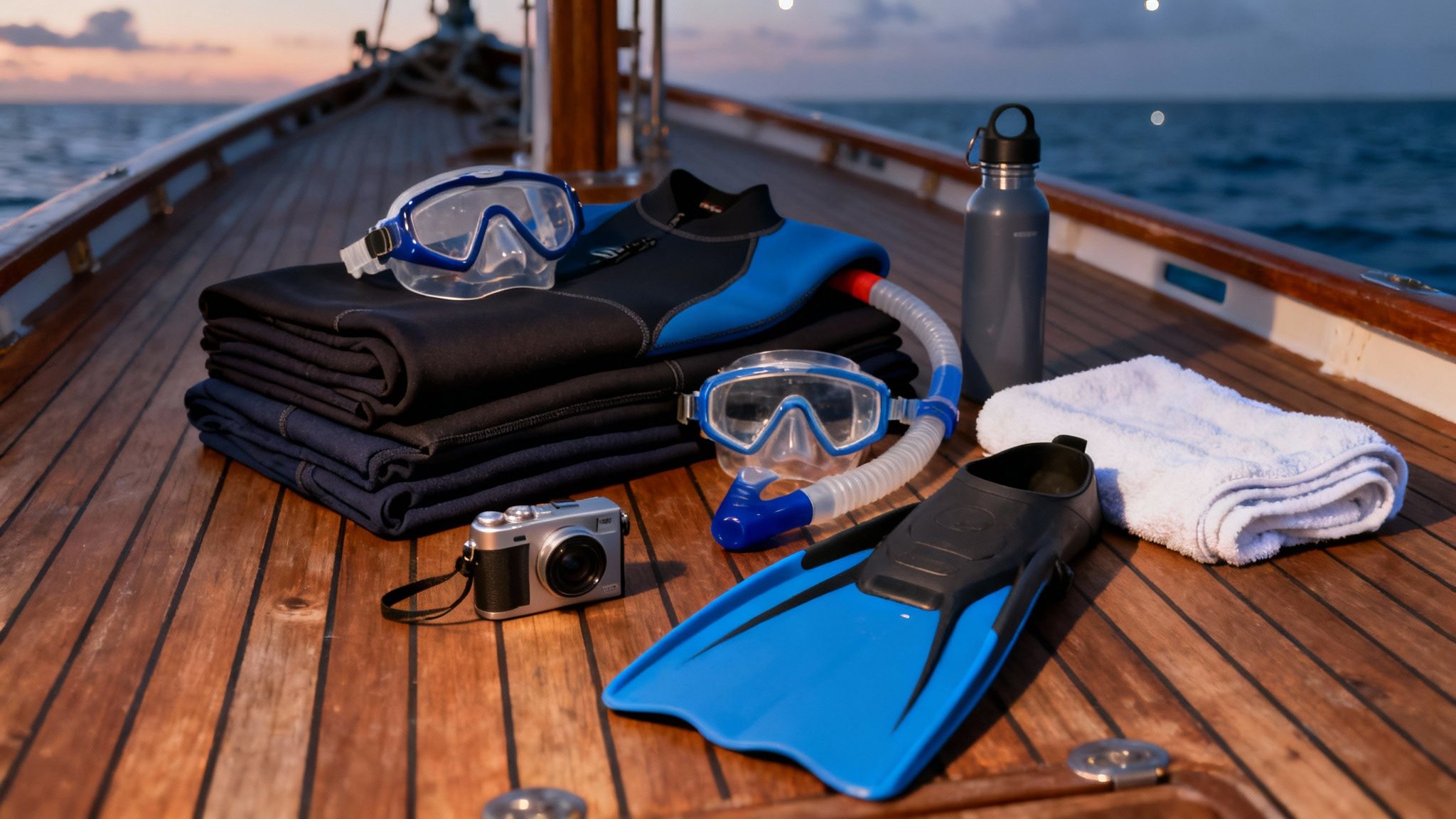
When you arrive, the crew will get you fitted with all the essentials. We’re talking a quality mask, snorkel, and fins. Most importantly, they'll give you a wetsuit. This is a game-changer for staying warm after the sun dips below the horizon, and it also adds a bit of extra buoyancy, making it effortless to float.
What Your Tour Operator Provides
You can truly leave the gear logistics to the pros. They’ve figured out exactly what works best out there on the water.
Professionally Fitted Gear: Your mask, snorkel, and fins will be sized just for you, which means no annoying leaks and a much more comfortable experience.
Warm Wetsuits: The Kona coast water is pretty pleasant, but trust me, after 45-60 minutes in the dark, you'll be glad you have a wetsuit on. It makes a world of difference.
Essential Flotation: You’ll be holding onto a big, custom-built light board that floats right on the surface. This means you don't need to be an Olympic swimmer—you just need to be comfortable getting in the water.
With all that taken care of, your own packing list is wonderfully short. If you're looking for an operator that handles everything for both the manta ray snorkel and an unforgettable Captain Cook tour, check out Kona Snorkel Trips.
What You Should Bring Along
Your personal checklist is refreshingly simple. Think about being comfortable before and after you get wet. A few small things will make your whole evening that much better.
The less you have to pack, the more you can focus on the incredible experience waiting for you. The pros handle all the specialized equipment, so your only job is to show up ready to meet Kona's gentle giants.
Here’s a quick list of what you should toss in your bag:
Towel and Dry Clothes: This is a must. Even on a warm Hawaiian evening, you’ll feel a bit of a chill after getting out of the ocean. A cozy sweatshirt or a light jacket and some dry shorts are perfect for the boat ride back to shore.
Waterproof Camera: You’re going to want to remember this. A GoPro or a similar waterproof camera is perfect for capturing amazing footage of the mantas gliding right below you.
Reusable Water Bottle: It's always a good idea to stay hydrated. Bring your own bottle to have on hand before and after you get in the water.
Reef-Safe Sunscreen: If your tour leaves before sunset, make sure to apply some reef-safe sunscreen at least 30 minutes before boarding. It’s better for your skin and for Hawaii's beautiful coral reefs.
And that’s really it! Bringing just these few items will set you up for an amazing night. To learn more about this world-class experience, visit the Manta Ray Night Snorkel Hawaii homepage.
Combining Adventures with a Captain Cook Snorkel
Want to make the most of your time on the Big Island? A really popular move is to double up on your ocean adventures. The manta ray night snorkel big island is obviously a must-do, but you can create an incredible "day and night" experience by pairing it with a daytime trip to the famous Kealakekua Bay, home of the Captain Cook Monument.
Kealakekua Bay isn't just a historical site; it’s a protected marine life conservation district. That special status means it's home to some of the most vibrant and healthy coral reefs in all of Hawaii—basically, a snorkeler’s dream.
A Marine Spectacle, Day and Night
Picture this: you spend your day floating in stunningly clear turquoise water, completely surrounded by huge schools of colorful tropical fish. The reefs at Kealakekua Bay are just teeming with life. It's common to see spinner dolphins playing in the distance or a Hawaiian green sea turtle (honu) gliding effortlessly below you.
It’s the perfect, sun-drenched prelude to the darker, more mysterious world of the manta ray snorkel you'll do later that evening. You really get to see the full picture of Kona's marine life—the busy reef by day, and the gentle giants by night.
Why Booking a Combo Is a Smart Choice
Let's be practical. Booking these trips together isn't just about packing in more fun; it makes your life easier. A combo tour can streamline your schedule and often saves you a bit of money compared to booking two separate excursions. You get a full day of world-class ocean adventure that is pretty much guaranteed to be the highlight of your entire vacation.
For a classic daytime trip, check out a company like Captain Cook Snorkeling Tours, which runs fantastic trips into the bay. Another excellent, highly-rated local operator for either tour is Kona Snorkel Trips.
Pairing a daytime Captain Cook snorkel with the manta ray night snorkel creates the ultimate ocean itinerary. You experience the full spectrum of Kona’s underwater world, from the sunlit coral gardens of Kealakekua Bay to the deep, dark stage of the manta ray ballet.
If you want to dig deeper into planning, you can learn more about a Captain Cook snorkel tour and exploring Kealakekua Bay right here on our blog.
Got Questions? We’ve Got Answers.
Jumping into the ocean after dark to meet giant, graceful rays? It’s completely normal to have a few questions. Getting the details ironed out beforehand means you can relax and just soak in the magic of the experience.
Let's walk through some of the most common things people ask about the manta ray night snorkel on the Big Island. We’ll cover everything from swimming skills to what happens if the mantas are feeling shy, so you’ll feel totally prepared for an incredible night.
Do I Need to Be a Strong Swimmer?
This is probably the number one question we hear, and the answer is a simple, reassuring no. You don't need to be an Olympian to enjoy this. The whole experience is designed to be accessible for just about everyone.
You'll be holding onto a big, custom-made light board that floats on the surface the whole time. Think of it as your own personal, super-stable raft. Plus, the wetsuit you'll be wearing is incredibly buoyant, so you’ll float with almost no effort. As long as you’re comfortable being in the ocean and can put your face in the water with a mask on, you're all set. The lifeguard-certified guides are right there in the water with you, keeping an eye on everyone and making sure you feel safe.
Is the Manta Ray Snorkel Safe?
Absolutely. When you go with a professional, reputable tour company, this is a very safe activity. And what about the stars of the show? Manta rays are completely harmless to people.
There's a reason they're called "gentle giants." Manta rays are filter feeders—they don't have teeth, stingers, or barbs. They're only interested in the microscopic plankton drawn to the lights, not the people watching them. It makes for a beautifully peaceful and completely safe encounter.
The real safety focus for the crew is managing the boat and the group in the water. They'll give you a thorough safety briefing before you even get wet and are highly trained to handle the conditions. Choosing a top-rated operator like Kona Snorkel Trips, which also runs amazing Captain Cook snorkeling tours, is the best way to ensure you’re in good hands.
What Happens If We Don’t See Manta Rays?
While the Big Island operators have an amazingly high success rate—we’re talking around 90% on any given night—it's nature. Manta rays are wild animals, and their appearance can never be 100% guaranteed.
On the rare occasion the mantas don't show up for their plankton buffet, most reputable companies have what's called a "manta guarantee." This usually means you can re-book the tour for another night, free of charge, as long as there's space. It's always a good idea to ask about the specific policy when you book. That’s also why we suggest scheduling your manta tour for early in your trip—it gives you a backup night just in case.
Can Children Participate in the Snorkel?
Yes! This is a fantastic, family-friendly adventure that can create memories for your kids that will last a lifetime. Most companies do have a minimum age, often around 6 or 7 years old.
The most important thing isn't just age, but that your child feels comfortable in the ocean at night and can follow the guide's safety instructions. For young ocean lovers, it can be a truly magical experience. Just be sure to double-check the age requirements with the tour company before you book.
For more information to help you plan, you can always check out the Manta Ray Night Snorkel Hawaii homepage.
Comments