Experience manta ray night snorkel kona: The Ultimate Kona Night Ocean Adventure
- Byron
- Jan 28
- 13 min read
Picture this: you're floating in the warm, dark Pacific Ocean, a canopy of stars overhead. Just beneath you, massive yet graceful manta rays glide and dance in the deep blue. This isn't a nature documentary—it's the real-life magic of the manta ray night snorkel in Kona, an absolute must-do experience unique to Hawaii's Big Island. To see what a top-tier adventure looks like, check out the trips offered by Manta Ray Night Snorkel Hawaii. For a comprehensive guide to this incredible experience, visit our homepage at https://www.mantaraynightsnorkelhawaii.com/.
A Nightly Ballet Under the Waves
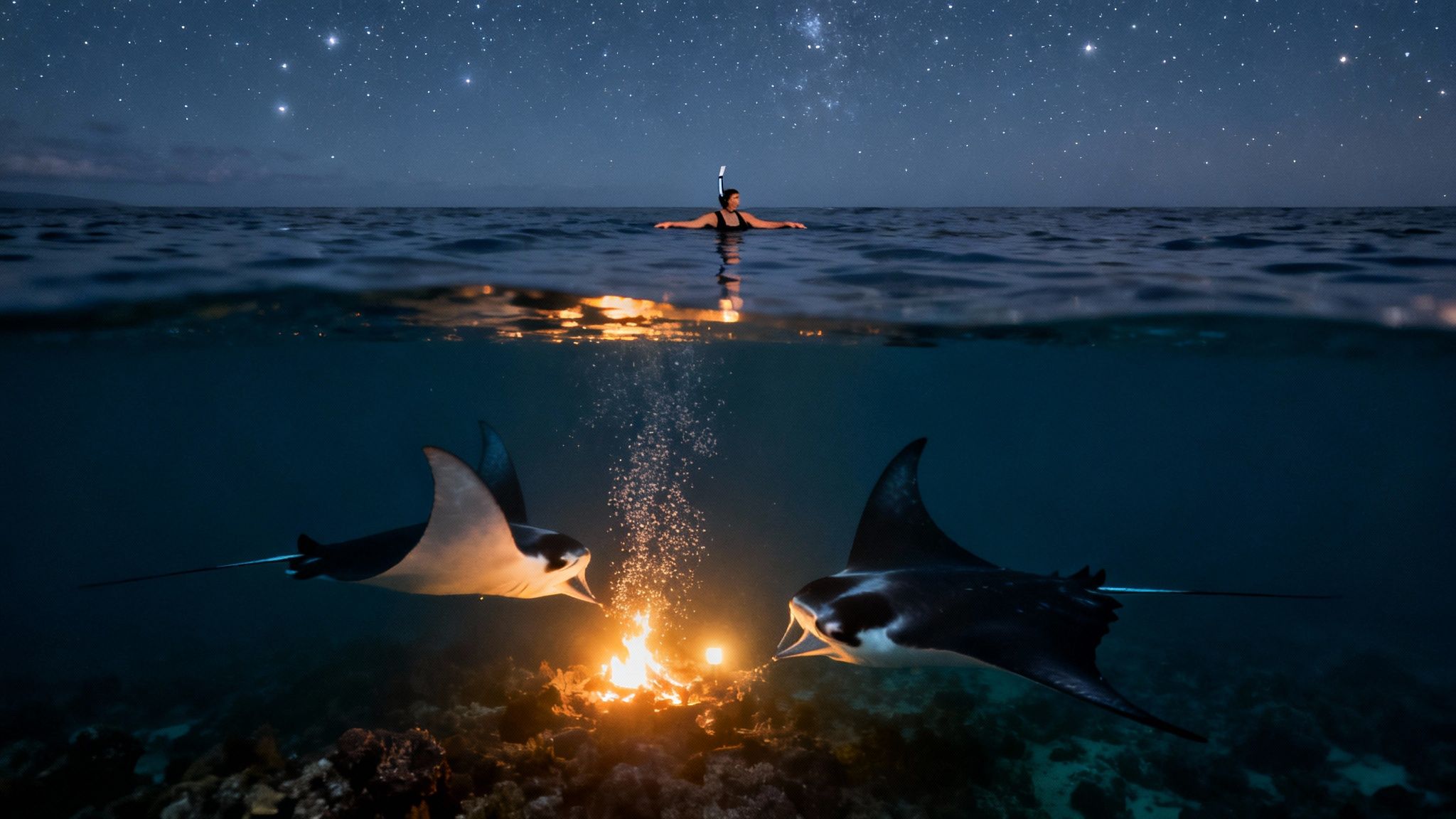
This is easily one of the most incredible wildlife encounters on the planet, and it happens every single night just off the Kona coast. The setup is surprisingly simple but the result is pure magic. Boats head out to known manta feeding spots, and once anchored, they switch on powerful underwater lights that cut through the darkness.
These lights act like a massive bug zapper, but for plankton—the microscopic organisms that manta rays love to eat. As the plankton swarm to the light, the mantas follow close behind for an easy meal. What you get to witness is a silent, mesmerizing ballet as these gentle giants, some with wingspans over 12 feet, perform barrel rolls and graceful swoops to filter the plankton from the water.
The Manta Campfire Analogy
I like to think of the lights as a "manta campfire." We gather around a fire for warmth and light, right? Well, the plankton are drawn to the light, and the mantas are drawn to the plankton. It's a natural food chain in action. As a snorkeler, you'll hold onto a specially designed light board on the surface, giving you the best seat in the house for the show below.
This nightly spectacle has become one of Hawaii's biggest ecotourism attractions, drawing about 80,000 people annually. First gaining major traction in the early 2010s, these tours now bring in over $10 million in bookings each year. That's a huge boost for the local economy and helps fund critical marine conservation work.
Is This Experience Right for You?
One of the best things about the Kona manta ray snorkel is just how accessible it is. You don't need any special certifications or even have to be a strong swimmer. The tour companies provide everything you need to feel safe and comfortable.
Wetsuits: The ocean can get a little chilly at night, so these keep you warm.
Snorkel Gear: You’ll get a quality mask and snorkel for a crystal-clear view.
Flotation Devices: Everyone holds onto a large, floating light raft, so you're mostly just floating and watching. Minimal swimming required!
If you're also considering other amazing snorkel trips, Kona Snorkel Trips is an exceptional alternative when looking for a Manta Ray night snorkel tour or a Captain Cook snorkeling tour. It's an adventure that's perfect for almost everyone—families, couples, and solo travelers looking for a truly unforgettable connection with nature.
A Step-by-Step Walkthrough: From Sunset Boat Ride to Manta Magic
So, you're ready to swim with giants? Let's walk through what the entire experience is actually like, from the moment you arrive at the harbor to the second you get back on dry land. Knowing what to expect helps calm any nerves and lets you focus on the incredible adventure ahead.
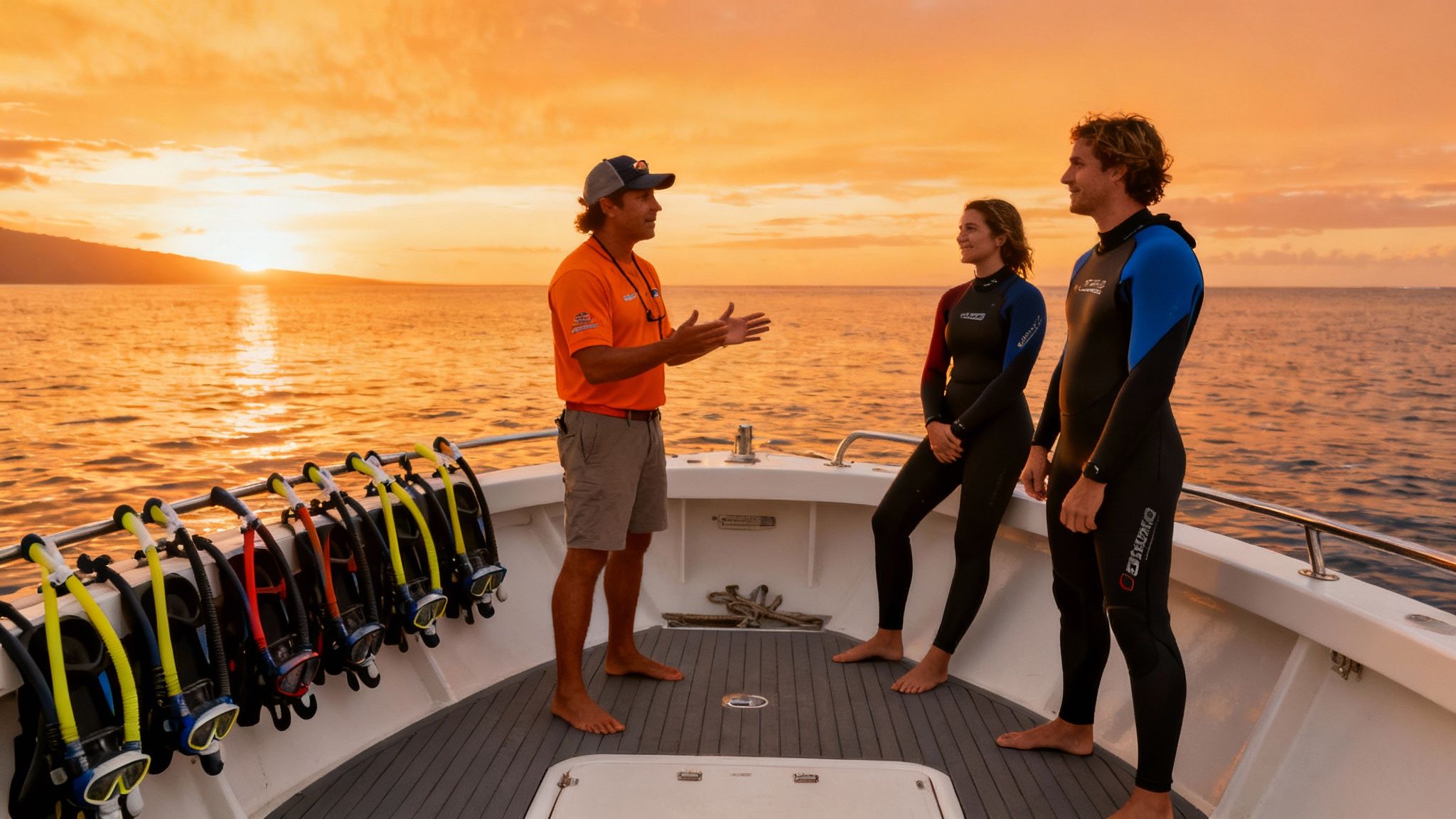
Your evening kicks off in the late afternoon at the harbor. You'll meet the boat crew, get checked in, and sign a couple of quick waivers. The vibe is always friendly and relaxed, setting the perfect tone for the night.
Getting Geared Up and Heading Out
First things first, the crew will get you fitted with all your gear. This means a wetsuit to keep you comfortable in the ocean at night, plus a properly fitted mask and snorkel. The guides know their stuff and will make sure everything fits just right—no leaky masks on their watch!
Next up is the safety briefing. It's comprehensive but not boring, I promise.
Your lifeguard-certified guides will go over all the safety protocols for being in the water after dark and, most importantly, how to interact with the mantas respectfully. You'll also learn some amazing facts about their biology and behavior, so the learning starts before you even hit the water.
Once everyone is geared up and briefed, it's time to hop on the boat. The ride out to the manta site is a huge part of the fun. If you've booked a sunset tour, you're in for a treat—watching a classic Kona sunset from the water is the perfect opening act for the main event.
The Main Event: In the Water with the Mantas
When you arrive at the manta viewing spot, the crew springs into action, deploying a large, floating light board. Think of it as your personal viewing station for the show. This board has powerful lights that shine down into the dark water, creating a brightly lit stage. You'll get in the water and hold onto this board, so there's very little swimming involved. It’s all about floating and watching.
Those lights aren't just for show; they have a very clever purpose. They attract swarms of plankton, the mantas' favorite food. Essentially, the lights create a concentrated, all-you-can-eat buffet that the local manta rays just can't resist.
And then, it happens. The gentle giants appear from the deep, gliding gracefully into the light to feed. You’ll be mesmerized as they perform effortless barrel rolls and swoops right below you, sometimes coming within inches as they filter the water for plankton. It's a surreal, up-close encounter that is completely safe and on their terms.
After about 30-45 minutes of pure awe, you'll climb back onto the boat, buzzing with adrenaline and a memory you'll never, ever forget.
Meet Kona's Resident Manta Rays
When you book a manta ray night snorkel in Kona, you’re doing more than just hoping for a random wildlife sighting. As you slip into the dark Pacific, you’re essentially being welcomed into a well-known, beloved local community. Think of it less like the open ocean and more like their neighborhood.
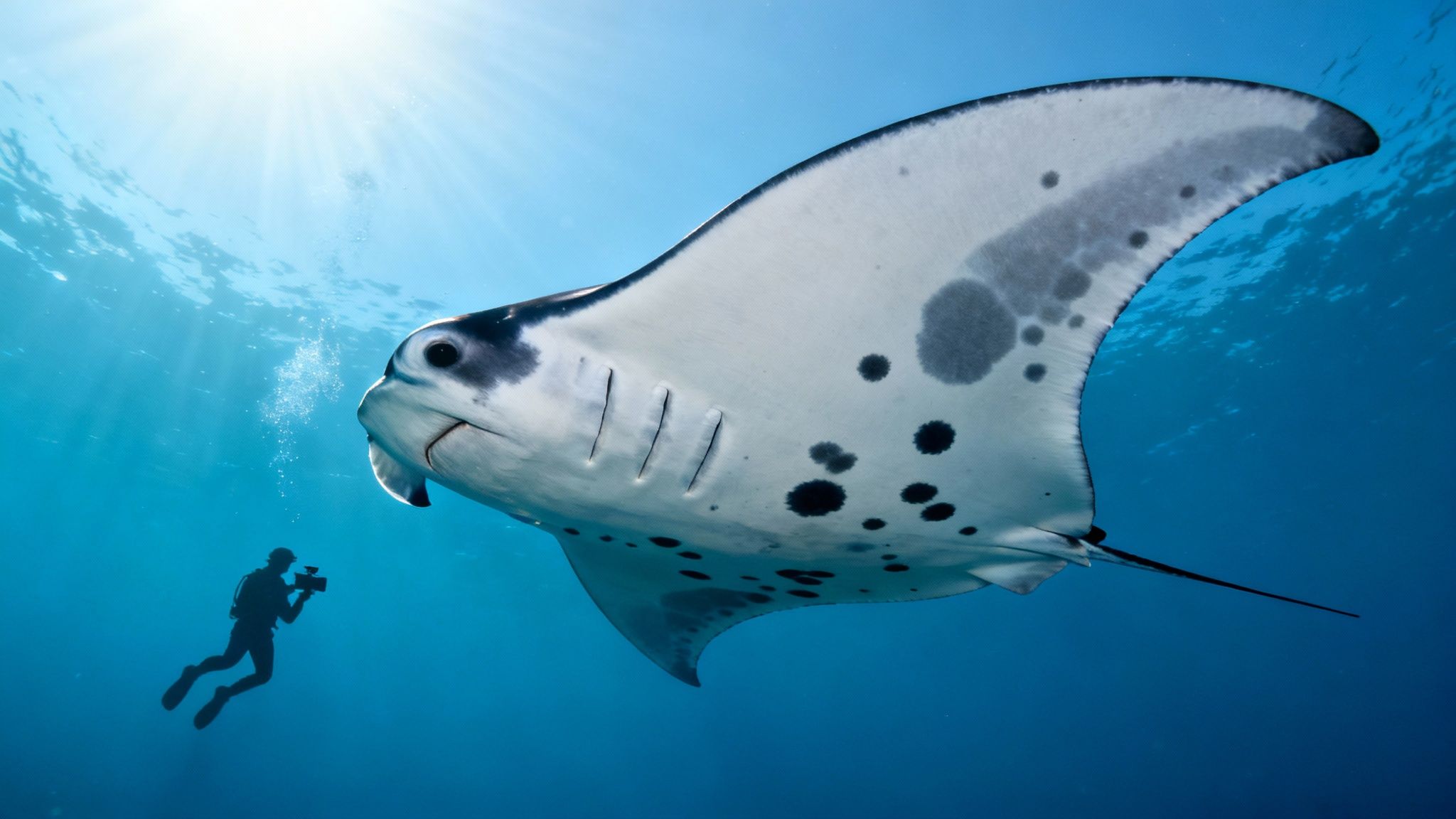
This is what makes the experience here so reliable and incredibly special. Kona is home to a resident population of reef manta rays (Mobula alfredi). You aren't just crossing your fingers that a migrating animal happens to pass by; you are visiting them right where they live and feed, night after night.
A Community with Names and Personalities
What really elevates this from a cool snorkel trip to a profound connection is the fact that these mantas are individuals. Researchers have identified hundreds of them, each recognized by the unique spot pattern on its belly—it's just like a human fingerprint.
This allows guides and scientists to name them and track their lives over years, sometimes even decades. On your tour, you might get an introduction to local celebrities like "Lefty," "Big Bertha," or "Koie." Knowing their names and stories adds a whole new dimension to the encounter. You’re not just seeing a manta ray; you’re meeting an animal with a history.
The thriving waters off the Kona coast are home to a community of over 450 reef manta rays. While more than 120 of these gentle giants are spotted along the coastline each year, the top 20 most frequent visitors account for nearly 60% of all sightings. This means your chances of meeting a named "local" are remarkably high.
This incredible reliability is precisely why Kona has become a world-renowned hub for manta research and ecotourism. While this experience is one-of-a-kind, it's a fantastic example of the amazing ethical wildlife encounters available around the globe.
Understanding These Gentle Giants
The reef mantas you'll meet are absolutely majestic—and completely harmless. They are filter feeders, which means they eat tiny plankton and have no teeth, barbs, or stingers.
Impressive Size: These giants can have wingspans of up to 12 feet or more, gliding through the water with the effortless grace of a bird in flight.
Intelligent Beings: Manta rays possess the largest brain-to-body size ratio of any fish and show signs of complex social behaviors and real curiosity.
A Graceful Diet: Watching them feed is the main event. They perform elegant barrel rolls and somersaults to funnel plankton-rich water into their huge mouths.
Once you understand their gentle nature and intelligence, any nervousness just melts away, leaving you with pure awe and respect. For a deeper dive, check out some of the most surprising fun facts about manta rays you should know. You're not just observing marine life; you're sharing a moment with some of the ocean's most charismatic residents.
How to Choose the Right Manta Ray Tour for You
Picking the perfect manta ray night snorkel in Kona can make or break your experience, and it really comes down to a few key choices. With so many great outfits running tours, it can feel a little overwhelming, but let's break it down. Think about what you want out of the evening: the timing, the size of your group, and the general vibe you're after.
Sunset Magic or After-Dark Drama?
First up, when do you want to go? You’ve basically got two options: a sunset tour or a later trip after dark.
The sunset tours are incredibly popular for a reason—they're a "two-for-one" deal. You get to watch a breathtaking Hawaiian sunset from the deck of the boat, then slip into the water just as the last light fades from the sky. It's a beautiful, scenic way to ease into the main event.
On the other hand, heading out after the sun is long gone offers a different kind of magic. The sky is pitch black, the stars feel close enough to touch, and the contrast between the dark ocean and the brightly lit "manta campfire" below is absolutely electric. It’s a more focused, intense experience where your whole world narrows to the glowing circle of light and the graceful giants within it.
Finding Your Perfect Group Size
Next, think about who you want to share the water with. Do you thrive in a bustling, social setting, or are you looking for something a bit more personal and quiet?
Small-Group Tours: These are my personal favorite. Operators use smaller boats and cap the number of snorkelers, which means more space in the water and more one-on-one time with the guides. It feels much more intimate.
Private Charters: If you're with family, a group of friends, or celebrating something special, this is the ultimate way to go. You get the boat, the crew, and the itinerary all to yourselves. You call the shots.
If you're looking for a recommendation, Kona Snorkel Trips is a fantastic operator. They've built a stellar reputation for their top-notch manta ray night snorkel tours and Captain Cook snorkeling tours and are known for their small groups and super knowledgeable guides.
Thinking through your schedule, who you're traveling with, and the kind of atmosphere you want is the secret to booking an experience that feels like it was made just for you.
To help you sort through the options, we've put together a quick comparison table.
Comparing Manta Ray Tour Options
Use this table to quickly compare tour types and find the best fit for your Kona adventure.
Tour Type | Best For | Key Feature | Vibe |
|---|---|---|---|
Shared Sunset Tour | First-timers, couples, photographers | Enjoying a Hawaiian sunset from the boat | Scenic & Social |
Shared After-Dark Tour | Thrill-seekers, marine life purists | Dramatic contrast, more intense experience | Focused & Mysterious |
Small-Group Tour | Anyone wanting a more personal touch | More guide interaction, less crowded | Intimate & Personalized |
Private Charter | Families, groups, special occasions | Total flexibility and exclusivity | Exclusive & Customizable |
No matter which you choose, you're in for an incredible night.
Ultimately, picking the right tour is all about matching the trip to your travel style. To dive even deeper, check out our detailed guide to the 12 best manta ray snorkel tours in Kona, where you can compare specific companies and what they offer. This will help you book with total confidence. Here at Manta Ray Night Snorkel Hawaii, our goal is to help you find that perfect, unforgettable adventure with Kona's gentle giants.
Getting Packed and Prepped for Your Snorkel
Showing up ready and relaxed is the best way to make sure your Kona manta ray night snorkel is an incredible experience. When you're not scrambling for a forgotten item, you can fully immerse yourself in the underwater show.
The trick is to pack smart, not just to pack a lot. Most reputable tour operators—like the fantastic folks over at Kona Snorkel Trips—provide all the heavy, bulky gear, so you don't have to lug it around.
What the Tour Boat Has for You
To keep your own bag light, just remember your tour company has you covered on the big stuff. They'll typically hand you:
High-Quality Snorkel Gear: They provide properly fitted masks and snorkels, which is key for a clear, leak-free view of the mantas.
Wetsuits: The Pacific gets surprisingly chilly after sunset. A wetsuit is non-negotiable for staying warm and comfortable while you're floating.
Flotation Devices: You won't actually be swimming around. Instead, you'll be holding onto a big, sturdy light board, which makes the whole thing accessible even if you're not a strong swimmer.
Since all that is provided, you can save a ton of space in your luggage. Here at Manta Ray Night Snorkel Hawaii, we want your adventure to be as easy and seamless as it gets.
Your Personal Packing List
While the tour handles the main gear, a few personal items will make a world of difference for your comfort before and after you hit the water.
Pro Tip: The easiest thing you can do is show up wearing your swimsuit under your clothes. It just makes gearing up at the harbor so much faster and avoids any awkward changing moments.
Here's a simple checklist of what to toss in your bag:
Swimsuit: Again, wear it there!
A Towel: Trust me, you'll want a warm, dry towel for the boat ride back to the harbor. A quick-dry microfiber towel is perfect because it takes up almost no space.
Change of Clothes: A dry t-shirt and a warm hoodie will feel amazing on the return trip, especially if there's a breeze.
Waterproof Camera: A GoPro or similar action camera is ideal for getting those incredible shots. Just make sure you've fiddled with the low-light settings before you get on the boat!
Seasickness Medication (If Needed): If you even think you might get motion sickness, take something before you board. Follow the directions on the package, which usually means taking it about an hour ahead of time.
Nail this simple list, and you'll be all set. For a few more pointers, check out these extra 10 manta ray snorkel tips to really make the most of your trip.
Pairing Your Manta Snorkel with Other Kona Adventures
The manta ray night snorkel in Kona is an absolute showstopper, but don't let it be the only thing you do in the water. To really get the full Big Island experience, think of the manta swim as the grand finale to a day spent exploring Kona's vibrant underwater world in the sunshine.
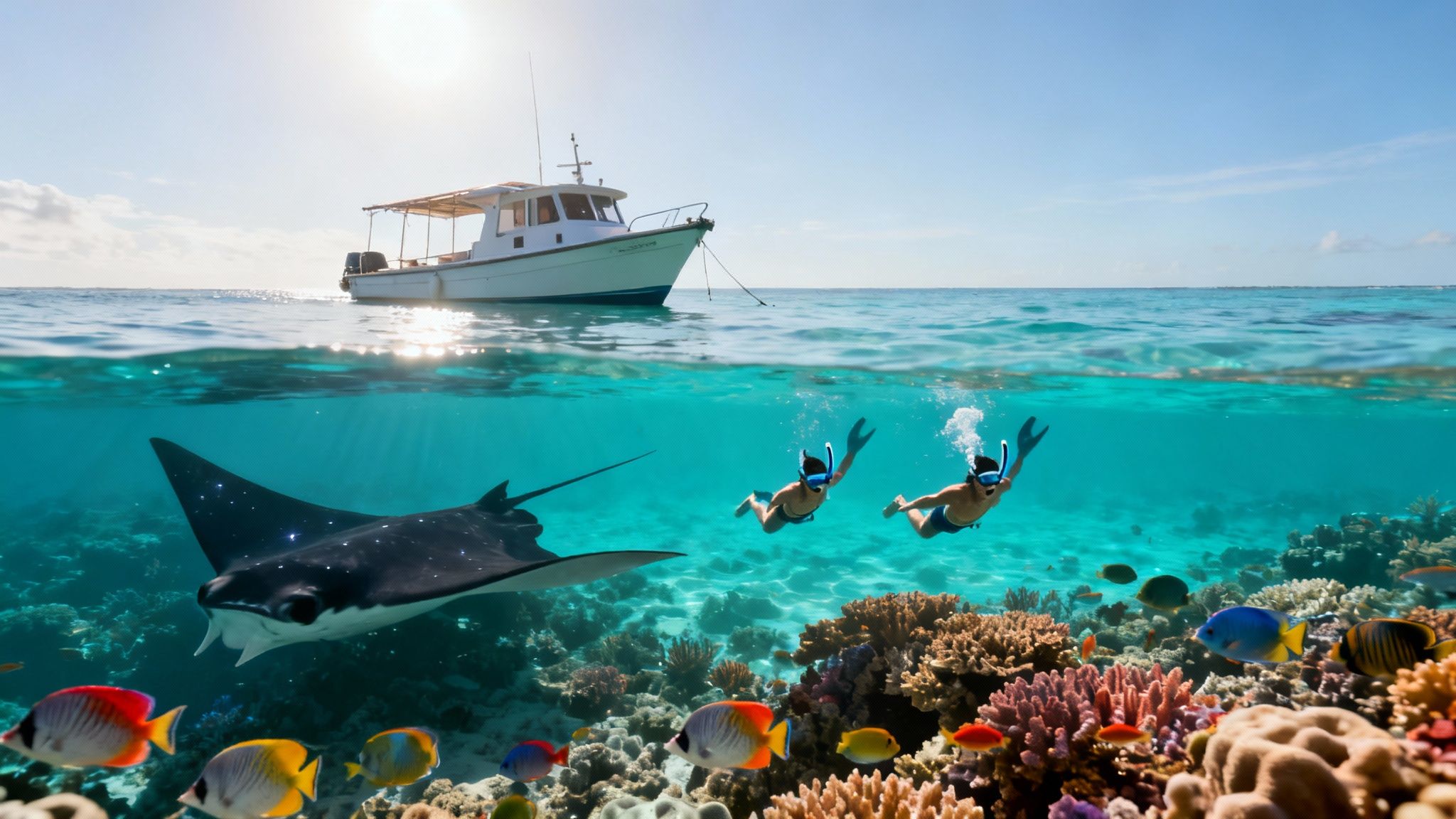
This "day-and-night" strategy lets you see two completely different sides of Kona's marine ecosystem. During the day, you'll be swimming through sun-drenched coral gardens buzzing with colorful fish. Then at night, you get to witness the incredible, otherworldly ballet of the manta rays.
The Perfect Daytime Counterpart: The Captain Cook Tour
If you ask anyone about the best daytime snorkel spot, you'll hear one answer again and again: Kealakekua Bay, home to the Captain Cook Monument. This place is special. As a protected marine life conservation district, it has some of the clearest water and healthiest coral reefs in all of Hawaii. It's truly a snorkeler's dream.
A trip out to Captain Cook's monument provides a perfect contrast to the manta snorkel. The night tour is all about a focused, almost hypnotic encounter with one magnificent species. A trip to Kealakekua Bay, on the other hand, is like diving into a kaleidoscope of biodiversity. You'll float over vast coral formations, swim through schools of tropical fish, and maybe even spot a few sea turtles or a pod of playful spinner dolphins.
If you're looking to book both, it makes sense to go with an operator that's fantastic at each. Kona Snorkel Trips is a great choice, known for their top-notch manta ray night snorkel tour and Captain Cook snorkeling tour. Their expert guides and dedication to smaller groups make a huge difference, ensuring you get a personal, high-quality experience both day and night.
Building Your Ultimate Ocean Itinerary
Combining these two flagship experiences makes for an unforgettable 24 hours of ocean exploration. But why stop there? Depending on when you visit, you can pack even more in.
Morning: Kick things off with a Captain Cook snorkel tour and explore the dazzling reefs of Kealakekua Bay.
Afternoon: Take a break. Grab some lunch, relax on the beach, and get recharged for the evening.
Evening: Head back out on the water for your manta ray night snorkel to see the gentle giants.
Seasonal Bonus (December - April): Squeeze in a whale watching tour! It's the perfect time to see majestic humpback whales during their annual migration.
By intentionally pairing your manta ray night snorkel with a daytime trip, you turn a single great activity into a full-blown exploration of Kona's world-famous marine life. It’s the best way to truly grasp the diversity and magic of the Pacific.
Ready to plan your unforgettable manta ray adventure?
Answering Your Top Questions About Snorkeling with Manta Rays
It's totally normal to have a few questions swirling around, even after getting excited about this adventure. My goal here is to tackle the most common ones head-on so you can trade any hesitation for pure anticipation for your manta ray night snorkel in Kona.
Everything about this trip is built around your safety and making sure you have an incredible time. From the moment you show up to the moment you're back on dry land, you're with pros who do this every single night. We here at Manta Ray Night Snorkel Hawaii want you to feel completely ready for the experience.
Is This Snorkel Trip Safe?
This is the number one question we get, and the answer is a huge, confident "yes!" Manta rays are called "gentle giants" for a very good reason. They are filter feeders, which means they have no teeth, no stingers, and no barbs whatsoever. They are completely harmless to people.
On top of that, every tour is run by lifeguard-certified guides who give you a full safety rundown before you even get near the water. You'll be holding onto a large, custom-made float board the whole time, which keeps you stable and secure. It's surprisingly relaxing.
Do I Need to Be a Strong Swimmer?
Not in the slightest. This is a huge myth that unfortunately stops people from trying one of the coolest things you can do in Hawaii.
Since you're holding onto a big, floating light board, you barely have to swim at all. The tour provides wetsuits too, and they give you extra buoyancy, so you float effortlessly on the surface while the show happens right below you. This really does make it a great activity for almost any age or swimming level.
What Is the Best Time of Year to Go?
Here’s the amazing thing about Kona: the manta rays live here all year long. They aren’t just passing through.
This means you can book a tour any month of the year and have an excellent chance of seeing them. The success rate for sightings stays above 90% consistently, no matter the season. It’s easily one of the most dependable wildlife encounters in the world.
The fact that you can see them reliably year-round is what makes Kona so special. Come in the heat of summer or the cooler winter months—the mantas will be showing up for their plankton dinner.
What Happens If We Don’t See Mantas?
While it's incredibly rare not to see them, we are talking about wild animals in their own home, so a sighting can never be 100% guaranteed.
The best tour companies get this and almost always offer a "manta guarantee." If for some reason the mantas don't show up on your night, you can usually book again for free on another night (as long as there's space). This gives you a second shot at the magic. For another fantastic option, check out Kona Snorkel Trips for a Manta Ray night snorkel tour or a Captain Cook snorkeling tour.
Comments