Explore snorkeling with manta rays kona: Kona Night Snorkel Guide
- Byron
- Feb 14
- 12 min read
Imagine floating in the calm Pacific under a sky blanketed with stars, watching giant, ghost-like figures glide effortlessly just beneath you. This isn't a dream—it's the heart of snorkeling with manta rays in Kona, an otherworldly ballet that's become one of Hawaii's most incredible experiences. It’s a chance to witness a breathtaking natural spectacle in a way that is both thrilling and completely safe. For more information about this amazing tour, check out the manta ray night snorkel home page.
The Magic of the Kona Manta Ray Night Snorkel
So, what makes Kona the perfect stage for this nightly manta ray feeding ritual? It all comes down to the unique underwater geography. The calm bays and specific coastal contours act like a natural funnel for plankton, the manta rays' primary food source. This abundance is the secret behind Kona’s reputation as a world-class destination for this adventure.
To make the experience even more spectacular, tour guides use powerful, eco-friendly underwater lights. These lights basically act like a dinner bell, attracting swarms of plankton and turning the ocean into a grand, illuminated buffet for these majestic creatures.
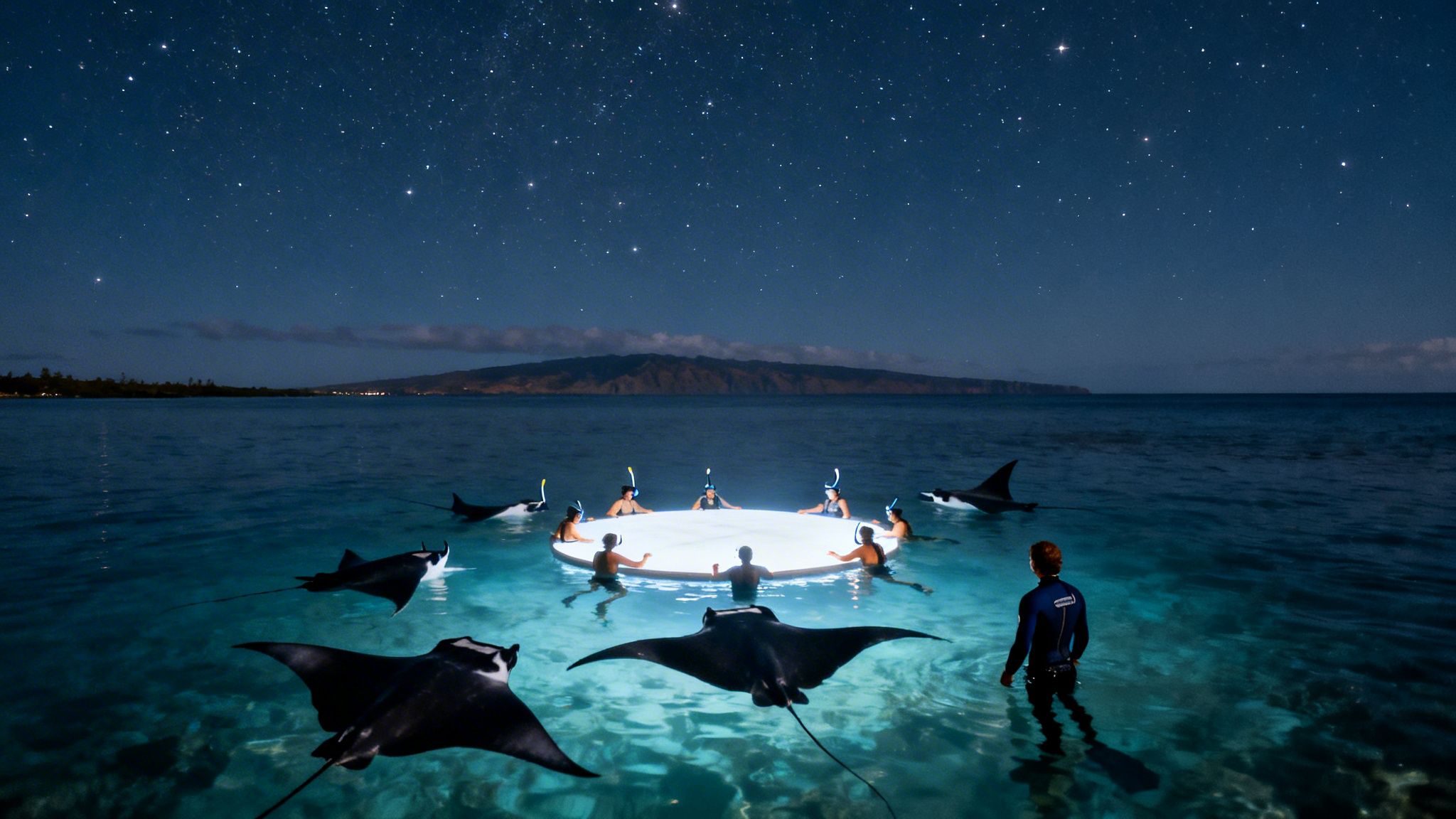
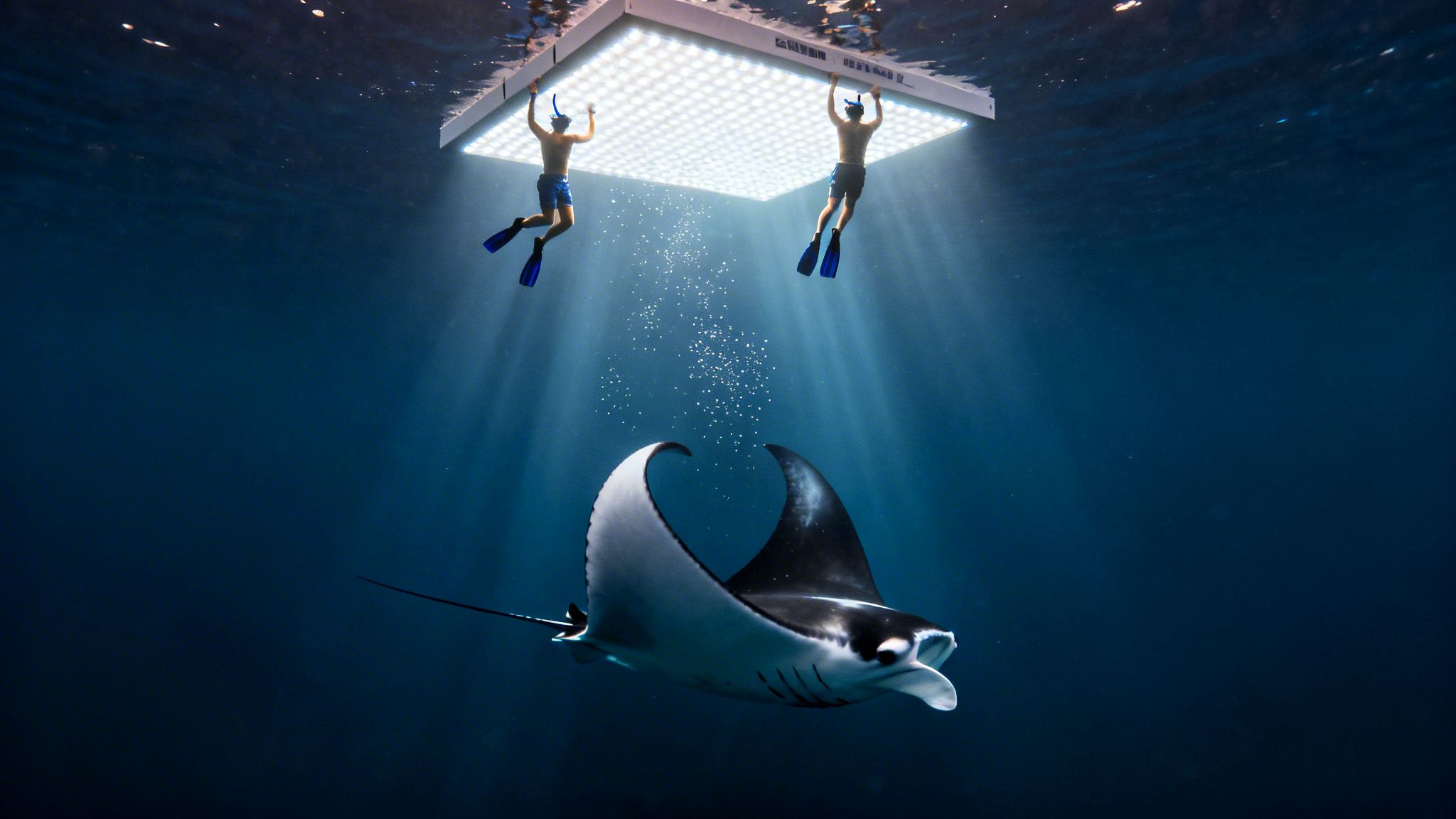
The result is a mesmerizing performance you get to watch right from the surface. You'll float comfortably, holding onto a custom-made light board, while mantas with wingspans of up to 16 feet perform graceful barrel rolls just inches below you. It's a passive viewing experience that ensures the animals are undisturbed, allowing them to feed naturally while you get a front-row seat.
Why Kona is the Premier Manta Destination
The Kona Coast has cemented its status as the world's best place for manta ray encounters, hands down. It draws about 80,000 visitors every year, all eager to witness this magnificent display for themselves.
The consistency is what’s truly remarkable. Tour operators report sighting rates between 85% and 90% on night snorkeling trips, making it almost a sure thing that you’ll see these gentle giants during your trip.
This high success rate isn't just luck. It's a combination of a healthy, resident manta population and the expert knowledge of local guides who know exactly where to go for the best viewing. You can learn more about what makes certain times better than others in our ultimate guide to the best time to see manta rays in Kona.
How to Choose the Right Manta Ray Tour
With so many companies offering manta ray snorkels in Kona, picking the right one is the single most important decision you'll make for this adventure. It’s what separates a good trip from an absolutely unforgettable one. The best choice for you really boils down to a few key things: the timing of the tour, how many other people you'll be with, and the company's reputation.
Getting these details right ensures your tour matches your comfort level and expectations. Whether you’re dreaming of a beautiful sunset cruise before your swim or a mysterious after-dark plunge, there’s a perfect tour out there waiting for you.
Sunset vs. After-Dark Tours
One of the first choices you'll face is whether to go out at sunset or later in the evening. Both tours get you in the water with the mantas, but they offer completely different atmospheres.
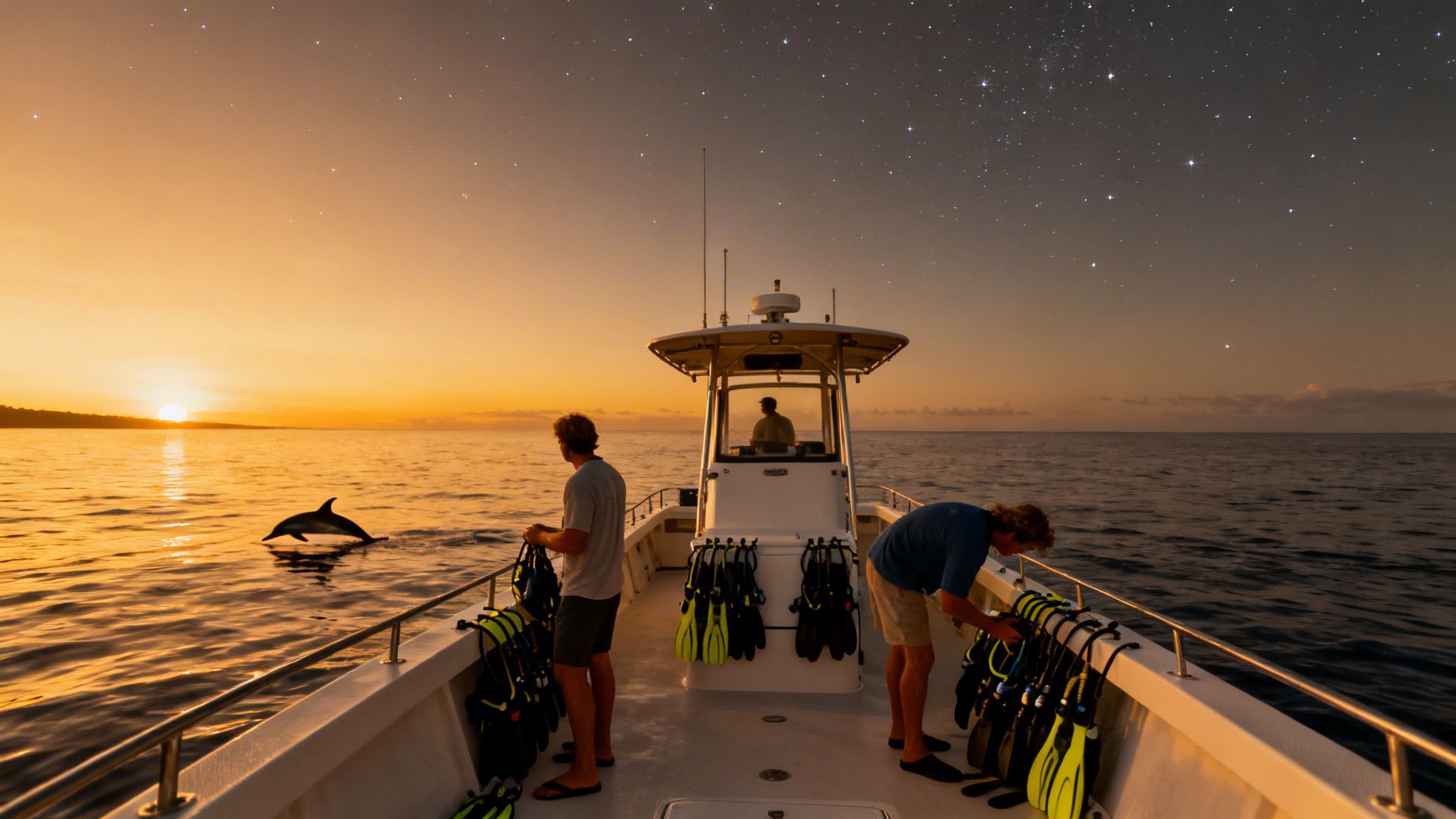
The Sunset Tour is a classic for a reason. You head out while it's still light, getting incredible views of the Kona coast during that magical golden hour. A huge perk is that you often see playful spinner dolphins that are active around this time. You'll get in the water right as dusk settles, watching the world transform from day to night.
The After-Dark Tour, on the other hand, leaves after the sun has completely disappeared. This trip has a more focused, almost otherworldly vibe. Your world shrinks to the glow of the underwater lights and the incredible blanket of stars overhead. It's an intense, immersive experience where the mantas are truly the stars of the show.
To help you decide, here’s a quick comparison:
Sunset Tour vs. After-Dark Tour: Which Is Right for You?
Feature | Sunset Tour | After-Dark Tour |
|---|---|---|
Atmosphere | Scenic, golden hour cruise | Mysterious, focused on the mantas |
Timing | Departs before sunset | Departs after dark |
Wildlife Bonus | Higher chance to see dolphins | Focused primarily on mantas |
Best For | Families, photographers, nature lovers | Thrill-seekers, those wanting a pure manta encounter |
Ultimately, the choice comes down to personal preference. If you want the full coastal nature experience with a sunset and potential dolphin sightings, the early tour is for you. If you’re all about a dramatic, focused manta encounter under the stars, the later trip is your best bet.
Why Smaller Groups Matter
This is a big one. While many operators pack their boats to maximize numbers, you’ll have a much better time on a tour that limits group size.
Fewer people in the water means you aren’t bumping into others around the light board. You get more personal space and a clearer, unobstructed view of the mantas as they swoop and glide right below you. It makes a huge difference.
Smaller groups also mean you get more one-on-one time with your guides. You can ask all the questions you want and learn incredible facts about these gentle giants. The whole thing just feels more personal and special, not like you're one of 50 people on a floating platform. If you want to compare different operators, this guide to the top manta ray snorkel tours in Kona is a great resource.
Choosing the Best Manta Ray Snorkel Company
When you look at reputation, safety, and overall quality, one company consistently rises to the top.
For the absolute best snorkeling with manta rays in Kona, we recommend Kona Snorkel Trips. They are known for being the most reviewed and highest-rated snorkel tour company in Hawaii, and for good reason. Their commitment to safety, their incredibly knowledgeable guides, and their focus on smaller group sizes make for a world-class adventure.
Their manta ray snorkel tour is specifically designed to give you a respectful, up-close, and truly unforgettable encounter. When you book with a proven leader, you’re not just buying a ticket—you’re investing in a memory that will last a lifetime.
What to Expect on Your Manta Ray Snorkel
Knowing what’s going to happen from the moment you check in until you’re back on dry land can turn any pre-tour nerves into pure, giddy excitement. Let's walk through the whole adventure so you feel completely ready for an evening of snorkeling with manta rays in Kona. The entire experience is set up to be smooth, safe, and absolutely unforgettable.
Your journey starts on land with a really thorough pre-tour briefing. This isn't just a quick safety checklist; it's a fascinating deep dive into the world of manta rays. The guides are passionate and incredibly knowledgeable, sharing cool facts about manta biology, their behavior, and why they’re so important to our local ecosystem. Most importantly, they'll walk you through the key safety rules for a respectful and amazing encounter.
The Boat Ride and Setup
After the briefing, it’s time to hop on the boat for a short, scenic ride out to one of Kona's designated manta viewing spots. While you enjoy the cruise along the coast, the crew gets everything ready for the main event. Once the boat is anchored, they’ll set up a large, custom-built light board that floats right on the surface.
This light board is the secret sauce for the whole experience. It does two critical things:
Your Anchor Point: It gives you a stable, floating platform to hold onto while you're in the water. No need to worry about swimming around or getting tired.
The Manta Magnet: Its bright lights shine down into the dark water, attracting swarms of microscopic plankton—the mantas' absolute favorite meal. The board is basically a dinner bell, calling the rays in for their nightly feast.
Entering the Water
Once the light board is glowing, it’s your turn. The crew will help you slip into the ocean safely and guide you to your spot along the board. You’ll find it’s super easy to hold on. From there, all you have to do is float on your stomach and put your face in the water. It’s a passive viewing experience, which means no kicking, no diving, and definitely no chasing. You’re simply there to watch the show.
The whole idea behind the manta ray snorkel is passive observation. By holding onto the light board and staying still, you help create a calm, non-threatening environment. This allows the mantas to feed naturally and comfortably, often bringing them incredibly close to you.
The Main Event: The Manta Ray Ballet
This is the moment you've been waiting for. As the cloud of plankton gets thicker under the lights, the manta rays start to show up. It usually begins with one shadowy figure emerging from the darkness, then another, and another. Before you know it, these gentle giants—some with wingspans over 12 feet—are performing graceful barrel rolls just inches below you.
Watching them feed is like seeing an underwater ballet. They swoop and glide with an elegance that seems impossible for their size, their huge mouths open to filter the plankton-filled water. Because you’re floating still at the surface, the mantas feel safe coming right up to the light, which means you get breathtakingly close passes. It’s a surreal, humbling, and utterly magical sight.
Guides are right there in the water with you, making sure everyone is safe and pointing out individual mantas. They often know many of the local rays by name, identifying them by the unique spot patterns on their bellies. In fact, research over six years identified over 280 individual manta rays in the Kona area, with more than 10,000 documented sightings during that time! This deep knowledge of the local population makes the experience even richer, as guides can share the life stories of the specific mantas you're meeting. Learn more about the thriving Kona manta population.
How to Prepare for Your Night Snorkel
A little bit of prep work goes a long way toward making your manta snorkel night absolutely unforgettable. Getting the small details sorted out beforehand means that once you're on the boat, your only job is to focus on the incredible experience ahead.
First things first: you don't need to be a competitive swimmer, but you absolutely must be comfortable in the ocean. This is a non-negotiable for safety. You’ll be in deep, dark water, and feeling at ease is the key to truly relaxing and enjoying the show the mantas put on.
What to Bring on Your Tour
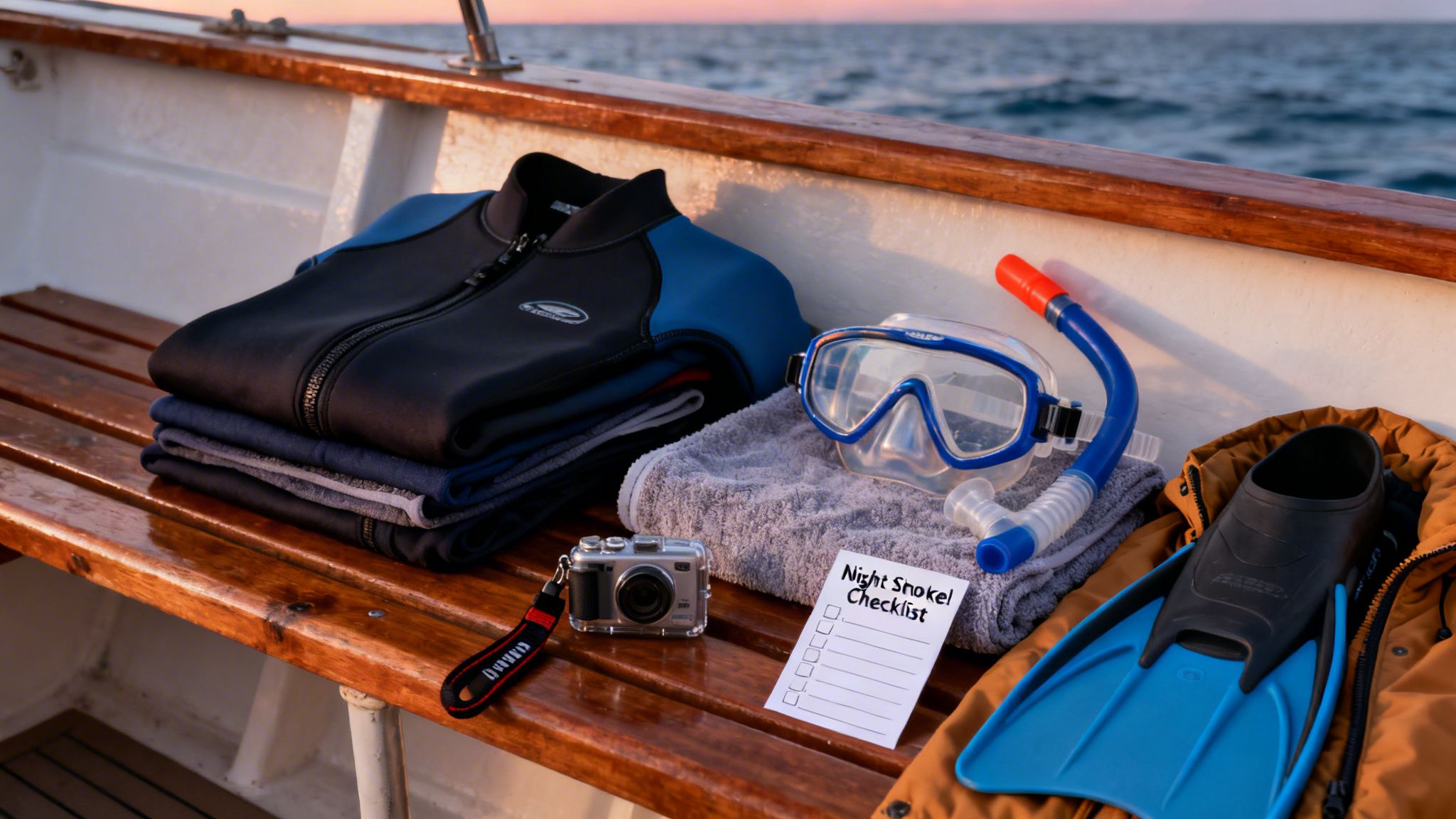
Any good tour company will provide all the necessary snorkel gear, but you’ll want to pack a small bag for yourself. Trust me, the boat ride back to the harbor can feel pretty chilly after the adrenaline of swimming with mantas wears off.
Here’s a quick checklist of what I always recommend bringing:
A Towel: A quick-dry one is great for saving space.
Warm Change of Clothes: A dry shirt and a hoodie or light jacket are perfect. You’ll be so glad you have them.
Waterproof Camera: A GoPro or similar camera is your best bet for capturing the magic without worrying about water damage.
Reef-Safe Sunscreen: For the sunset tours, make sure you apply it before you get on the boat. For more tips, check out this ultimate guide to sun protection.
Reusable Water Bottle: It's always smart to stay hydrated.
Tips for a Comfortable Experience
Beyond your packing list, a few insider tips can make the whole evening go much more smoothly. My biggest piece of advice is to arrive already wearing your swimsuit under your clothes. It just makes everything easier once you're on board.
If you’re worried about motion sickness, plan ahead! Taking something about an hour before the tour is far more effective than waiting until you feel queasy. Ginger chews and acupressure wristbands are great non-drowsy options, too.
A common mistake is waiting until you feel sick to do something about it. Be proactive! Taking motion sickness remedies before the boat even leaves the harbor is the key to preventing it from ever starting.
Thinking through these simple things frees you up to be completely present in the moment. For a few more pro tips, take a look at these 10 essential manta ray snorkel tips that can really elevate your experience. When you show up prepared, all that's left to do is relax and let the wonder of the manta rays take over.
Manta Ray Safety and Responsible Tourism
Getting to see magnificent creatures like manta rays up close is an absolute privilege, and it comes with a big responsibility. The entire experience of snorkeling with manta rays in Kona is built on a deep respect for these gentle giants and their ocean home. This is a perfect example of responsible wildlife tourism, and following the rules ensures we can all keep enjoying these incredible encounters for years to come.
The number one rule is simple, but it’s non-negotiable: look, but never, ever touch. It’s so tempting when a manta ray glides just inches below you, but you have to resist. Manta rays are covered in a special mucus layer that acts as a natural shield, protecting them from nasty bacteria and parasites. Touching them can wipe off this protective coating, leaving them vulnerable to infections and diseases.
The Passive Floating Technique
To make sure everyone—snorkelers and mantas alike—has a safe and comfortable experience, all the top tour operators use a method called "passive floating." It's the gold standard for responsible manta ray viewing. Instead of swimming around wherever you please, you’ll hold onto a large, custom-made light board that floats right on the surface.
This technique is brilliant for a couple of key reasons:
It keeps you stationary and out of harm's way, so there are no accidental kicks or bumps with the mantas or the person next to you.
It creates a calm and predictable environment for the mantas. They can feed on the plankton attracted to the light without feeling chased or threatened.
By just floating and watching, you’re letting the mantas run the show. They’ll come to the light board on their own terms, often doing their famous barrel rolls right beneath you. This hands-off approach is what makes the encounter so magical and respectful. To learn more, check out our guide on safe snorkeling practices with manta rays in our guide.
Your Guides Are Your Lifeline
A huge part of what makes this adventure feel so safe is having highly trained, lifeguard-certified guides right there in the water with you. They’re constantly keeping an eye on both the snorkelers and the manta rays for the entire duration of the tour.
Your guides aren't just there to point out cool stuff; they are your safety experts. Their top priority is the well-being of every single person in the water and protecting the animals from any unintentional harm. Always listen to what they say—their instructions are the key to a successful, sustainable, and unforgettable night.
A Few Common Questions About the Manta Snorkel
Getting ready to snorkel with manta rays in Kona is an incredible feeling, but it's natural to have a few questions bubble up. To make sure you feel totally prepared for this amazing night out, we've pulled together some straightforward answers to the things we get asked most often.
Getting these details sorted out beforehand means you can just relax and soak in every magical moment on the water.
How Close Will the Manta Rays Get?
This is the big one everyone wants to know, and the answer is pure magic: they get unbelievably close. As these gentle giants swoop in to feed on the plankton attracted to the underwater lights, they often glide just inches away from you. Seeing a creature with a 12-foot wingspan that close is a heart-in-your-throat moment you'll never forget.
But don't worry for a second. Manta rays are incredibly graceful and agile. They're masters of their underwater world and are experts at maneuvering to avoid touching anyone, making the whole experience perfectly safe for both you and them.
Is This Experience Suitable for Children?
Yes, absolutely! The manta ray night snorkel is a fantastic and unforgettable adventure for the whole family. Most tour operators welcome kids, usually ages five and up, as long as they are decent swimmers and comfortable in the ocean, especially after dark.
The key to a great family trip is making sure the kids listen carefully to the guides' instructions. The setup is very controlled—everyone holds onto a big, floating light board—which makes it a safe and accessible adventure for younger ocean lovers. It’s the kind of experience that can spark a lifelong passion for marine life.
What if I Am Not a Strong Swimmer?
You don't need to be an Olympic swimmer, but you do need to be comfortable in the water. For the entire snorkel, you'll be holding onto a large, very stable light board that floats on the surface.
The whole point is to float passively, not to swim around. However, you must be comfortable floating in deep, open water at night. If you're a very weak swimmer or a non-swimmer, it's really important to talk this over with the tour company before you book. They'll help you figure out if the tour is a safe and good fit for you.
For more in-depth answers, feel free to check out our complete Manta Ray FAQ page.
What Happens if No Mantas Appear?
That's a fair question, since we're dealing with wild animals on their own time. The good news is that the Kona Coast is one of the most reliable places on the planet for manta ray sightings. The success rate is consistently above 85%, which is fantastic.
On the rare night that the mantas decide not to show up, most reputable tour companies offer what's called a "manta guarantee." This usually means you can come back and join another tour on a different night, free of charge. It’s always smart to double-check this policy when you're making your reservation.
Comments