Kona Manta Ray Snorkel A Complete Guide To This Magical Encounter
Picture this: you're floating weightlessly in the calm, dark Pacific Ocean. Just inches below you, gentle, giant manta rays with wingspans wider than a car glide and dance in the glow of underwater lights. This isn't a scene from a nature documentary—it's the Kona manta ray snorkel, one of the most incredible wildlife encounters you can have anywhere on the planet.
An Unforgettable Underwater Ballet
The Kona manta ray night snorkel is more than just a tour; it's a front-row seat to a spectacular underwater show, all made possible by a simple yet brilliant idea.
After the sun sets, boats head out to well-known spots along the Kona coast. Once anchored, powerful lights are lowered into the water, lighting up the dark ocean like a stage.
This light acts like a magnet for tiny marine organisms called plankton. As the plankton swarm to the light, they create a glowing, concentrated cloud—basically, an all-you-can-eat buffet for manta rays.
For a quick overview of what this incredible night involves, take a look at the table below.
Kona Manta Ray Snorkel At A Glance
Aspect | Description |
|---|---|
Experience | Floating on the ocean surface at night, holding onto a light board that attracts plankton and, in turn, the giant manta rays that feed on it. |
Location | Specific sites along the Kona Coast, Big Island, Hawaii, famous for their resident manta ray populations. |
Creatures | Reef Manta Rays (Mobula alfredi), which can have wingspans up to 18 feet. They are completely harmless filter feeders. |
Best Time to Go | Year-round, with tour operators reporting sighting success rates often exceeding 90%. |
Duration | The entire tour usually lasts about 2-3 hours, including boat travel, safety briefing, and about 45-60 minutes in the water. |
What You Do | You simply float and watch. The mantas do all the work, performing graceful barrel rolls just beneath you. |
Swimming Skill | Basic swimming and snorkeling ability is required. You must be comfortable in deep water at night. |
Conservation Status | Reef mantas are listed as Vulnerable. Your participation in a responsible tour helps fund and encourage their protection. |
This table just scratches the surface of what makes this adventure so special. Let's dive a little deeper into the science and conservation behind this amazing encounter.
The Science Behind The Spectacle
Manta rays are what's known as filter feeders. They swim with their giant mouths open to consume huge amounts of these microscopic organisms. The tour lights just make it incredibly easy for them to get a good meal.
As a snorkeler, you hold onto a custom-built light board and float on the surface, giving you the perfect vantage point to watch this mesmerizing feeding frenzy happen right below you.
The experience is truly awe-inspiring:
Graceful Movements: You'll witness the mantas perform incredible barrel rolls and glide effortlessly through the water, sometimes coming within inches of you.
Gentle Giants: Despite their massive size, these creatures are completely harmless. They have no teeth, stingers, or barbs, and they possess a gentle, curious nature.
A Reliable Encounter: The Kona coast is known worldwide as the most reliable place to see manta rays year-round. Sighting success rates often top 90%, which is almost unheard of for wild animal encounters.
A Front-Row Seat to Conservation
This incredible encounter is more than just a thrill; it’s a powerful lesson in conservation. Manta ray populations around the world are in trouble. Oceanic manta rays are classified as Endangered, and the reef mantas you’ll see in Kona are listed as Vulnerable due to huge population declines over the past century.
When you join a responsible manta ray tour, you're doing more than just having an adventure. You're supporting an ecotourism model that proves these magnificent animals are worth more alive than dead, helping to protect them for generations to come.
Of course, choosing the right tour operator is key to ensuring both a great experience for you and the well-being of the mantas. You can find out more about what to expect with a top-rated company by reading this guide on how to snorkel with manta rays in Kona Hawaii.
How To Prepare For Your Manta Ray Adventure
Knowing what to expect and packing the right gear is the secret to getting the most out of your manta ray snorkel. A little prep work beforehand means you can relax and soak in every incredible moment without a single worry. This isn't about some intense training regimen; it's just a few simple steps to ensure you're comfortable, confident, and ready for an unforgettable night.
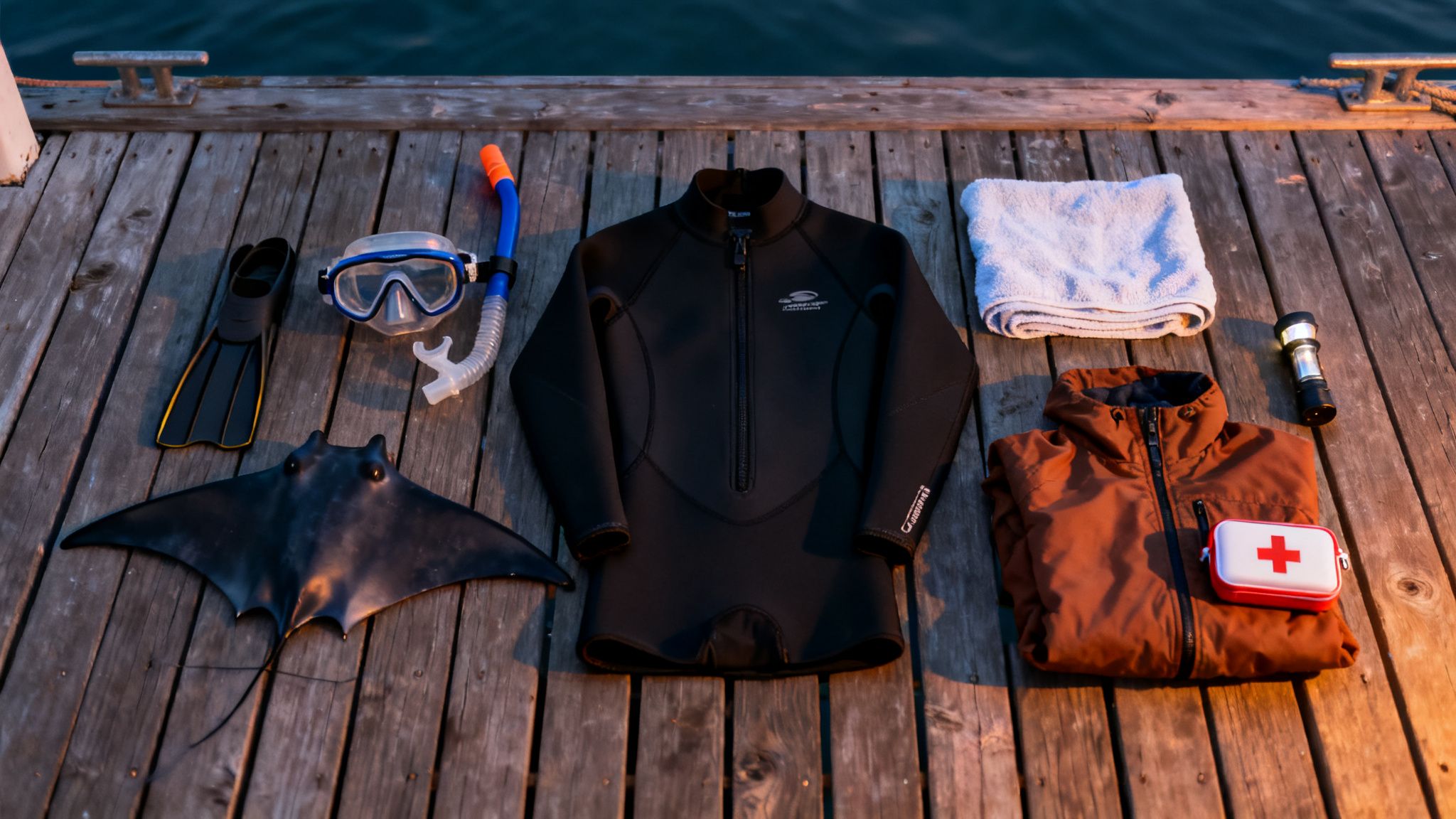
The first thing people always ask is about swimming ability. You absolutely do not need to be an Olympic swimmer for this! What really matters is being comfortable floating in open ocean water at night. You'll be holding onto a specially designed light board for the entire duration, so you won't be doing any real swimming. Plus, the wetsuit gives you plenty of extra buoyancy, making it easy to float. The whole point is to relax and let the show unfold beneath you.
What To Bring For Your Tour
Having the right personal items will make your experience so much better, keeping you comfortable before, during, and after you get in the water. While we provide all the main snorkel gear, packing a small bag with these essentials is a pro move.
Here's a quick checklist of what to bring along:
Swimwear: The easiest thing to do is wear your swimsuit under your clothes to the boat. Simple.
Towel: You'll definitely want one for when you get out of the water.
Warm, Dry Clothes: It can get surprisingly chilly on the boat ride back, even on a warm Hawaiian evening. A hoodie, jacket, or sweatpants will feel like a lifesaver.
Reusable Water Bottle: Staying hydrated is always smart, and bringing your own bottle is great for the environment.
Medication for Motion Sickness: If you even think you might get seasick, it's a good idea to take something before you leave the harbor. It’s a short ride, but it's always better to be safe than sorry.
Waterproof Camera: Want to capture the magic? An action camera like a GoPro is perfect for getting those amazing underwater shots without risking your phone.
What Your Tour Operator Provides
A good tour company takes care of all the heavy lifting so you don't have to lug around bulky gear. Reputable operators make sure everything is clean, high-quality, and ready for your adventure. When you book with a top-tier company like Kona Snorkel Trips—Hawaii's most reviewed and highest-rated snorkel tour—you know you're in good hands.
Your tour will almost always include:
Wetsuits: These are key to staying warm in the ocean once the sun goes down.
Snorkel, Mask, and Fins: Professional gear is fitted to you for comfort and a crystal-clear view.
Flotation Devices: Your light board is your primary flotation, but extra support like pool noodles is often available if you want it.
Snacks and Refreshments: Most boats offer light snacks and something warm like hot cocoa to heat you up after the snorkel.
The Importance Of The Safety Briefing
Before you ever dip a toe in the water, your guides will give a detailed safety briefing. Honestly, this is the most important part of the whole preparation process. Pay close attention. The crew covers everything from how to use the gear to the golden rules of interacting with the mantas.
They will show you exactly how to position yourself at the light board for the best view. Most importantly, they will explain the number one rule: "passive observation." This means you are a silent observer. No touching, no chasing, and no swimming down toward the mantas. Following these rules is how we protect these amazing animals and ensure they keep coming back to grace us with their presence.
For more great advice, check out our guide on 10 essential manta ray snorkel tips. And for any daytime ocean fun, don’t forget to check out this ultimate guide to sun protection to keep your skin safe.
Your Manta Ray Tour: A Step-By-Step Journey
The whole experience kicks off the moment you arrive at the harbor. There’s a special kind of excitement in the air as the sun starts to sink, painting the Kona coast in gold and orange. This isn’t just getting on a boat; it’s the beginning of an adventure that unfolds one magical step at a time.
It all starts with a friendly check-in, where you’ll meet the crew who will be your guides for the evening. Once everyone’s aboard, the boat pulls away from the dock for a stunning sunset cruise. Just the ride itself is worth it, giving you incredible views as you head out to the manta site.
The Briefing and The Light Board
During the trip, the guides share fascinating stories and facts about the very manta rays you’re about to meet. This is way more than a standard safety talk. It’s a real introduction to these gentle giants—you'll learn how to identify them by the unique spot patterns on their bellies and hear about their personalities. Most importantly, you’ll learn the golden rule: passive observation. It’s how we keep both you and the mantas safe and comfortable.
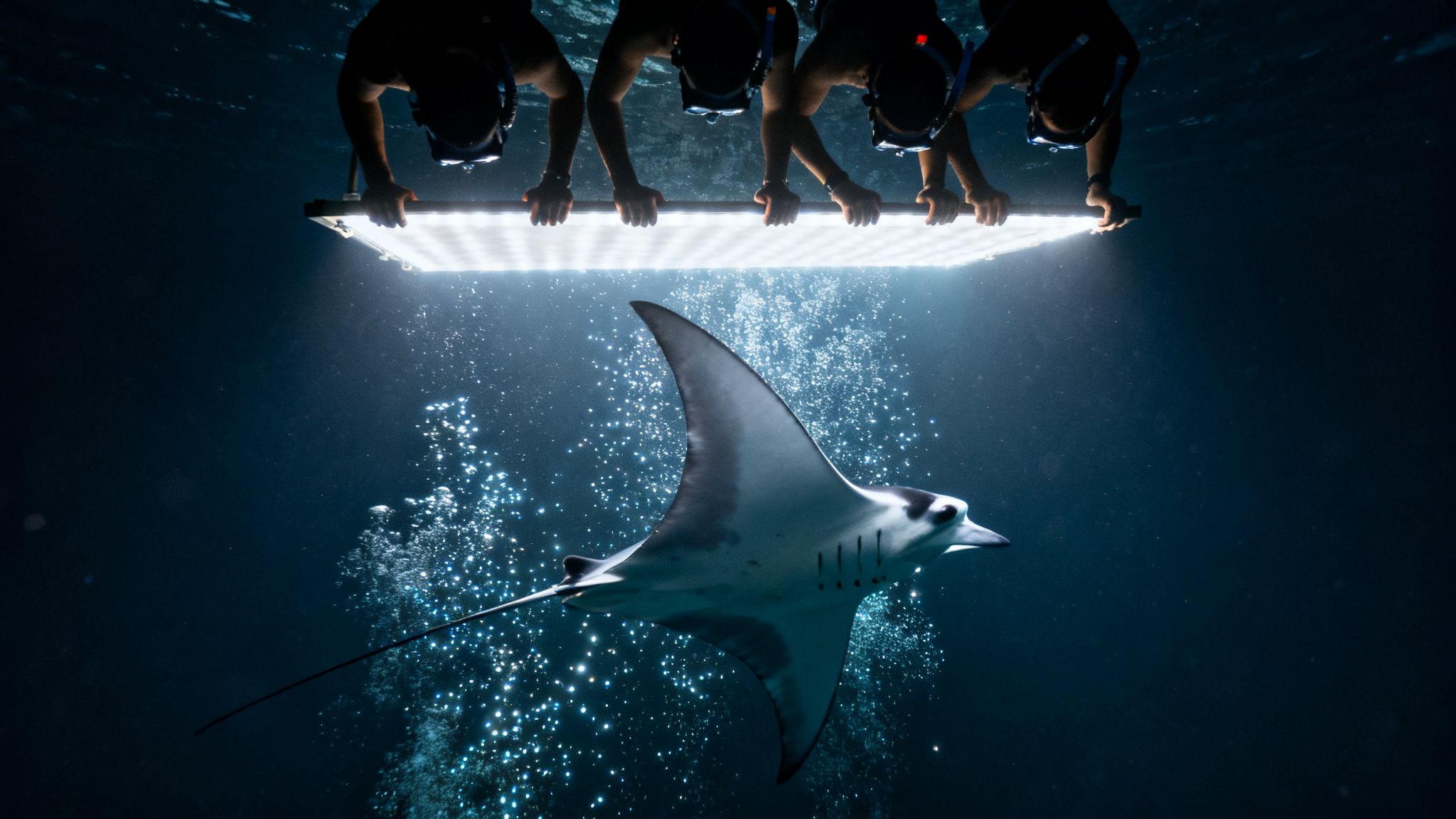
At the heart of the whole operation is the light board. You can think of it as a floating dinner table, custom-built for manta rays. This big, sturdy raft has powerful lights pointing straight down into the water, and it serves two brilliant purposes:
It’s a Plankton Magnet: The bright lights attract a massive cloud of microscopic plankton, which is the mantas' favorite meal.
It’s Your Viewing Platform: You’ll hold onto handles along the edge, letting you float effortlessly on the surface with a perfect view of the show below.
This clever setup gives you a stable, front-row seat to all the action. Companies like Kona Snorkel Trips—the most reviewed and highest-rated snorkel tour company in Hawaii—often run smaller groups. That means more room for you at the light board and a much more personal experience.
Entering The Water
Once dusk turns to dark, it’s go-time. The crew helps you get your gear on, and you gently slip into the calm, dark ocean. That initial feeling of being in the water at night is a thrill, but any nerves disappear the second you grab onto the light board. Looking down, you’ll see the light beams piercing the darkness, lighting up a swirling galaxy of plankton.
The real magic starts when you spot the first shadow moving in the distance. A huge, graceful shape emerges from the deep, gliding right toward the light. It's a moment that feels completely surreal.
The mantas put on an underwater ballet, performing effortless barrel rolls just inches beneath you as they scoop up plankton. The only sounds you'll hear are the gentle lapping of the water against the board and maybe your own gasp of amazement through your snorkel. It's an incredible reminder of nature's resilience. These tours focus on education, teaching you about the mantas—whose wingspans can reach up to 23 feet—and their filter-feeding habits. Find out more about these amazing animals at MantaRayAdvocates.com.
After about 45 minutes in the water, you’ll climb back on the boat, absolutely buzzing. The crew is usually waiting with hot cocoa and snacks for the ride back to the harbor, giving you a chance to relax under the stars and replay every amazing moment in your head. Getting all the details sorted is part of the fun, and our guide to planning your Big Island Manta Ray Night Snorkel can help you get started.
Choosing The Best Manta Ray Snorkel Tour
With so many boats heading out on the Kona coast each night, picking the right operator for your manta ray snorkel can feel like a pretty big deal. Let’s be honest, not all tours are created equal. Your choice will shape everything about your experience—the safety, the quality of the encounter, and even the respect shown to the mantas. Going with a top-tier company isn't just about a boat ride; it’s about ensuring a safe, ethical, and truly unforgettable night with these gentle giants.
First and foremost, you have to think about safety. I always tell people to look for companies whose guides are lifeguard-certified and who take the time to give a thorough safety briefing before anyone even thinks about getting in the water. A stellar safety record isn't just a nice bonus—it's absolutely essential.
The other big thing to consider is group size. Smaller groups simply mean a better time. You get more personal attention from the guides, more room to float comfortably at the light board, and a far more intimate viewing experience without a crowd. This commitment to keeping things small is a real hallmark of the best tour operators out there.
Why Reviews And Reputation Matter
In today's world, a company's reputation is everything. When you see an operator with consistently glowing reviews, it tells you a lot about their professionalism and the kind of adventure they deliver. This is where one company really shines.
For a truly top-notch manta ray snorkel, we can't recommend Kona Snorkel Trips highly enough. They’ve earned their title as the most reviewed and highest-rated snorkel tour company in all of Hawaii by consistently providing safe, educational, and breathtaking tours. Their focus on small groups and expert guides makes all the difference, ensuring every single guest feels confident and gets a front-row seat to the underwater ballet.
Choosing a well-regarded operator like Kona Snorkel Trips means you’re not just booking another tour; you're investing in a world-class experience backed by a proven track record. To see how different companies stack up, you can check out our detailed guide to the top manta ray snorkel tours in Kona.
Group Tour vs Private Charter
Another decision you'll face is whether to join a standard group tour or book a private charter. Both are fantastic ways to see the mantas, but they cater to very different needs. A group tour is a wonderful, budget-friendly way to share the magic with other ocean lovers. It’s perfect for solo travelers, couples, or small families who enjoy meeting new people.
A private charter, on the other hand, is the ultimate in flexibility and exclusivity. This is the way to go for larger families, special occasions like a birthday or anniversary, or for anyone who just wants a more personal adventure. You get the whole boat and crew to yourselves, meaning you can set the pace and tailor the experience exactly to your group's liking.
This table breaks down the main differences to help you figure out which option is the perfect fit for you and your crew.
Group Tour Vs Private Charter What Is Right For You
Feature | Group Manta Ray Snorkel | Private Manta Ray Charter |
|---|---|---|
Best For | Solo travelers, couples, budget-conscious adventurers, and those who enjoy a social setting. | Families, special celebrations, photographers, and groups seeking an exclusive experience. |
Group Size | You will join a small group of other snorkelers, typically up to 10-15 guests. | Your group will be the only guests on the boat, ensuring total privacy. |
Itinerary | The tour follows a set schedule for departure time and duration in the water. | Offers complete flexibility to customize the timeline to your group's preferences. |
Cost | A more affordable option, with pricing calculated on a per-person basis. | Higher overall cost but can be economical for larger groups, with a flat rate for the boat. |
Experience | A shared adventure, great for meeting new people who are just as excited as you are. | A personalized and intimate encounter tailored specifically to your group’s desires. |
In the end, whether you choose a celebrated group tour or an exclusive private charter, the key to an amazing manta ray snorkel adventure is picking a company that puts safety, conservation, and guest experience above all else.
When To Go Manta Ray Snorkeling In Kona
One of the first questions people ask when planning their manta ray snorkel trip is, "When's the best time to go?" The answer is one of the best things about this adventure: anytime. Unlike a lot of wildlife encounters that depend on the season, Kona’s manta rays put on an incredible show all year long. This makes fitting this bucket-list experience into your vacation plans incredibly easy.
How is this possible? The Kona coast is a special haven for these gentle giants. The unique geography creates a constant source of plankton, their primary food, which means the mantas have no reason to migrate. They gather every single night at specific feeding and cleaning spots, making Kona one of the most reliable places on Earth for a close-up encounter. You can learn more about why Kona is such a hotspot for these vulnerable creatures at MantaRayAdvocates.com.
While any night you choose is going to be great, you do have one choice that can shape the feel of your tour: going early or going late.
Sunset Tour vs Starlight Tour
Most tour operators give you two options for departure times each evening. It's important to know that neither is better for seeing mantas, but they each offer a completely different vibe.
The Sunset Tour (Earlier Departure): This trip gets going while it's still light out, which means you get a beautiful sunset cruise along the Kona coast as a bonus. You’ll get your gear and safety briefing in the fading daylight, which can make things feel a bit easier for first-timers.
The Starlight Tour (Later Departure): This tour heads out well after dark. The boat ride under a sky full of stars is a magical experience on its own. You'll often find that the manta site is less crowded with other boats, which can create a more quiet and intimate feeling once you're in the water.
Ultimately, it just comes down to what you prefer. Do you want the spectacular show of a Hawaiian sunset, or the peaceful, serene feeling of a late-night adventure on the ocean?
For many people, the decision is a practical one—it's all about what fits best with their vacation schedule and dinner plans. The good news is that you really can't go wrong, as the manta rays are active and hungry during both tour times.
Do Ocean Conditions And Moon Phases Matter?
It's natural to wonder if things like the weather or the moon phase might affect your chances of seeing mantas. While these things can have a small effect, it’s usually not enough to worry about.
The only factor that truly matters is ocean safety. Any reputable tour operator, like Kona Snorkel Trips, will always put your safety first. If the wind or swell makes for unsafe conditions, they will cancel or reschedule the tour. Luckily, the Kona coast is famous for its generally calm waters.
As for the moon? Some people believe a full moon might spread the plankton out a bit, but in reality, the powerful lights on the snorkel boards are much better at attracting the mantas' food. The mantas know exactly where to show up for an easy meal every night, no matter how bright the moon is. For a more detailed look, check out our guide on the best time to see manta rays in Kona.
How Your Tour Helps Manta Ray Conservation
When you go on a manta ray snorkel, you're doing so much more than just having an incredible adventure. You're actually playing a part in their protection. By choosing the right tour, you turn a bucket-list night out into a powerful force for good, helping these magnificent creatures who face serious threats in the wild.
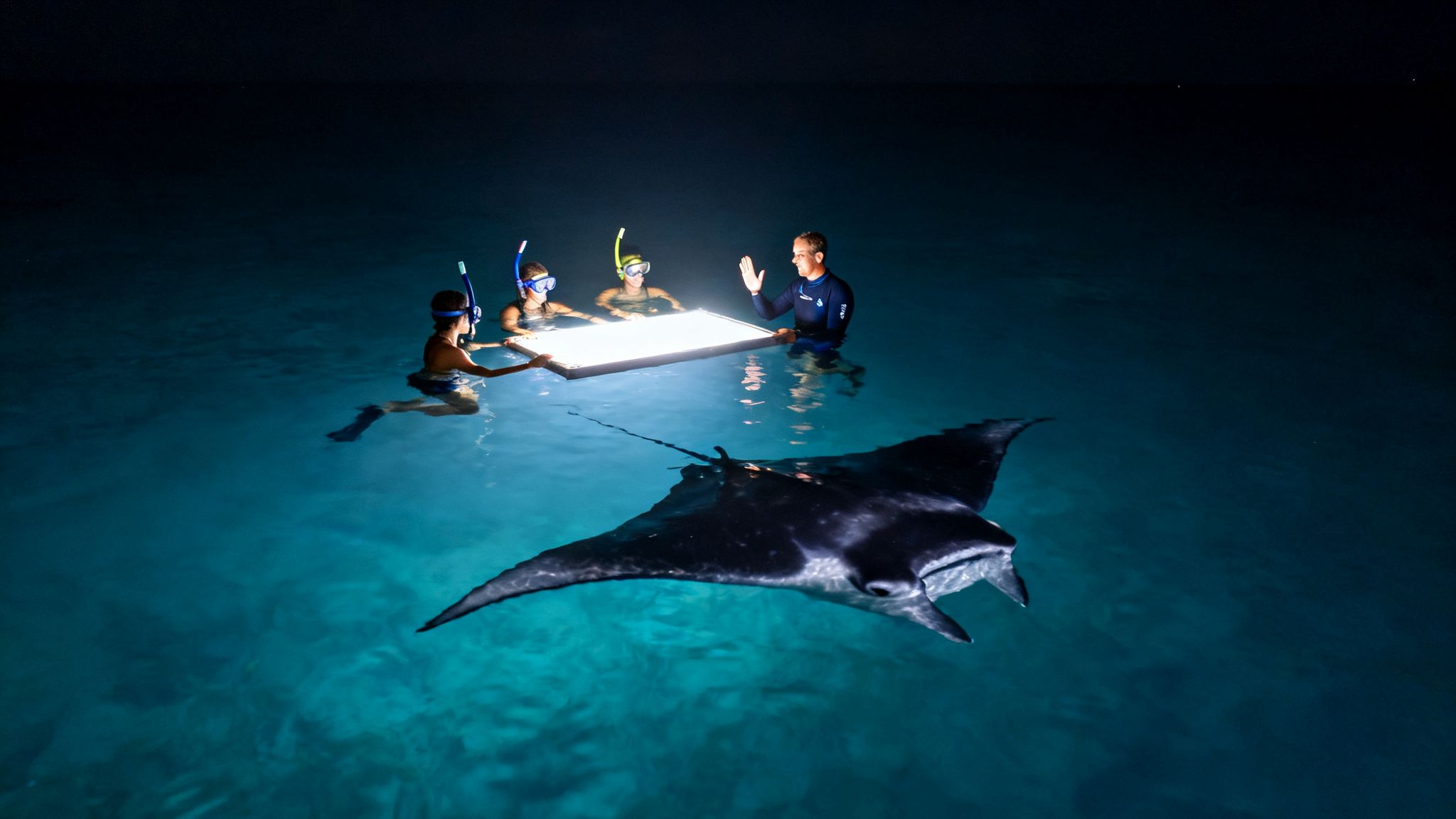
The entire experience is built around one simple, golden rule: passive observation. Think of it as being a respectful guest in the mantas' home. Your job is to simply float on the surface and watch the unbelievable ballet unfold beneath you.
The guidelines are straightforward, and they’re absolutely vital for keeping the mantas safe and healthy:
No Touching: Manta rays have a protective mucus layer that’s like their immune system. If you touch them, you can strip this layer away, leaving them open to dangerous infections.
No Chasing: Never, ever chase or swim after a manta. This stresses them out and can scare them away from their natural feeding spot.
No Impeding: Always give the mantas plenty of room to swim freely. You never want to block their path or hover directly above or below them.
Turning Tourism Into Protection
Around the world, manta rays are threatened by things like overfishing, boat strikes, and the loss of their habitats. But here in Kona, the sustainable eco-tourism model has created a powerful solution. It proves that these animals are worth far more alive and thriving in their natural home than they are for any other reason.
By joining a well-run tour, you're directly funding an industry that actively fights for the health of our marine ecosystem. Your ticket helps create local jobs and supports companies that are on the front lines of conservation every single night.
This is why choosing a reputable operator is the single most important decision you'll make. The companies making a real difference are the ones that keep group sizes small, give you a thorough educational briefing, and strictly enforce the "look, don't touch" rules.
They make sure every manta ray snorkel is a positive experience for both people and the mantas. When you book with a company like Kona Snorkel Trips—celebrated as the most reviewed and highest-rated snorkel tour company in Hawaii—you’re casting a vote for responsible tourism. Your incredible adventure becomes a meaningful contribution to keeping these gentle giants safe for generations to come.
Common Questions About Manta Ray Snorkeling
Even with all the excitement brewing, it's totally normal to have a few last-minute questions before you book your manta ray snorkel adventure. We get it. To help you feel 100% confident and ready to go, we’ve put together answers to the most common things travelers ask us. Think of this as the final step before your unforgettable night on the water.
Is The Manta Ray Night Snorkel Safe?
Yes, it is incredibly safe when you go with a professional, certified tour company. Your guides are lifeguard-certified and will give you a detailed safety rundown before anyone even touches the water.
You’re given top-notch gear, including a warm wetsuit and a custom-made light board that you hold onto the entire time. The manta rays themselves are true gentle giants; they are filter-feeders with absolutely no teeth, stingers, or barbs, making them completely harmless to people. For any reputable operator, your safety is always the number one priority.
Do I Need To Be A Strong Swimmer?
You definitely don't need to be an Olympic-level swimmer to have an amazing time on the manta ray snorkel. The key is simply being comfortable floating in deep ocean water at night.
You won't actually be doing much swimming at all—you'll be holding onto a big, stable light board for the whole time you're in the water. Plus, the wetsuits provide a ton of buoyancy, which helps you float with almost no effort. If you have any concerns about your comfort level, just chat with the tour operator when you book. They’re there to help.
Is A Manta Ray Sighting Guaranteed?
Because manta rays are wild animals living freely in the ocean, sightings can never be 100% guaranteed. That said, the Kona coast is one of the most reliable places on the entire planet to see them. Most tour operators report success rates that are consistently above 90%.
The local tour companies have been visiting these sites for years and have an intimate knowledge of the mantas' feeding patterns. Many of the best companies, including Kona Snorkel Trips, even offer a "manta guarantee"—if you don’t see mantas on your tour, you can come back again for free.
What Is The Difference Between Snorkeling And Diving?
Snorkeling and diving with manta rays offer two completely different, yet equally amazing, perspectives of the same underwater ballet.
Snorkeling: You float right on the surface, looking down as the mantas swoop and feed on the plankton attracted to your light board. It's an accessible and incredible experience for almost anyone who is comfortable in the water.
Diving: This requires a scuba certification. As a diver, you'll head down to the ocean floor, settle in, and watch the mantas perform their graceful barrel rolls right above you.
For anyone interested in the diving experience, we can't recommend Kona Honu Divers enough. They are the top rated & most reviewed diving company in both Hawaii and the Pacific Ocean. You can check out their awesome 2-tank manta dive tour to explore this amazing alternative.
Comments