Kona's Manta Ray Night Snorkel A Guide to Hawaii's Best Encounter
- Byron
- Jan 27
- 15 min read
So, what exactly is a manta ray night snorkel? It’s a guided tour, most famously done in Kona, Hawaii, that lets you get into the ocean after dark. You float on the surface, holding onto a special light board, and watch as giant manta rays come to feed on plankton drawn to the light. It's an absolutely surreal and safe way to see these incredible creatures up close in their own world—a true bucket-list experience that’s part night swim, part underwater ballet.
The Magic of a Kona Manta Ray Night Snorkel
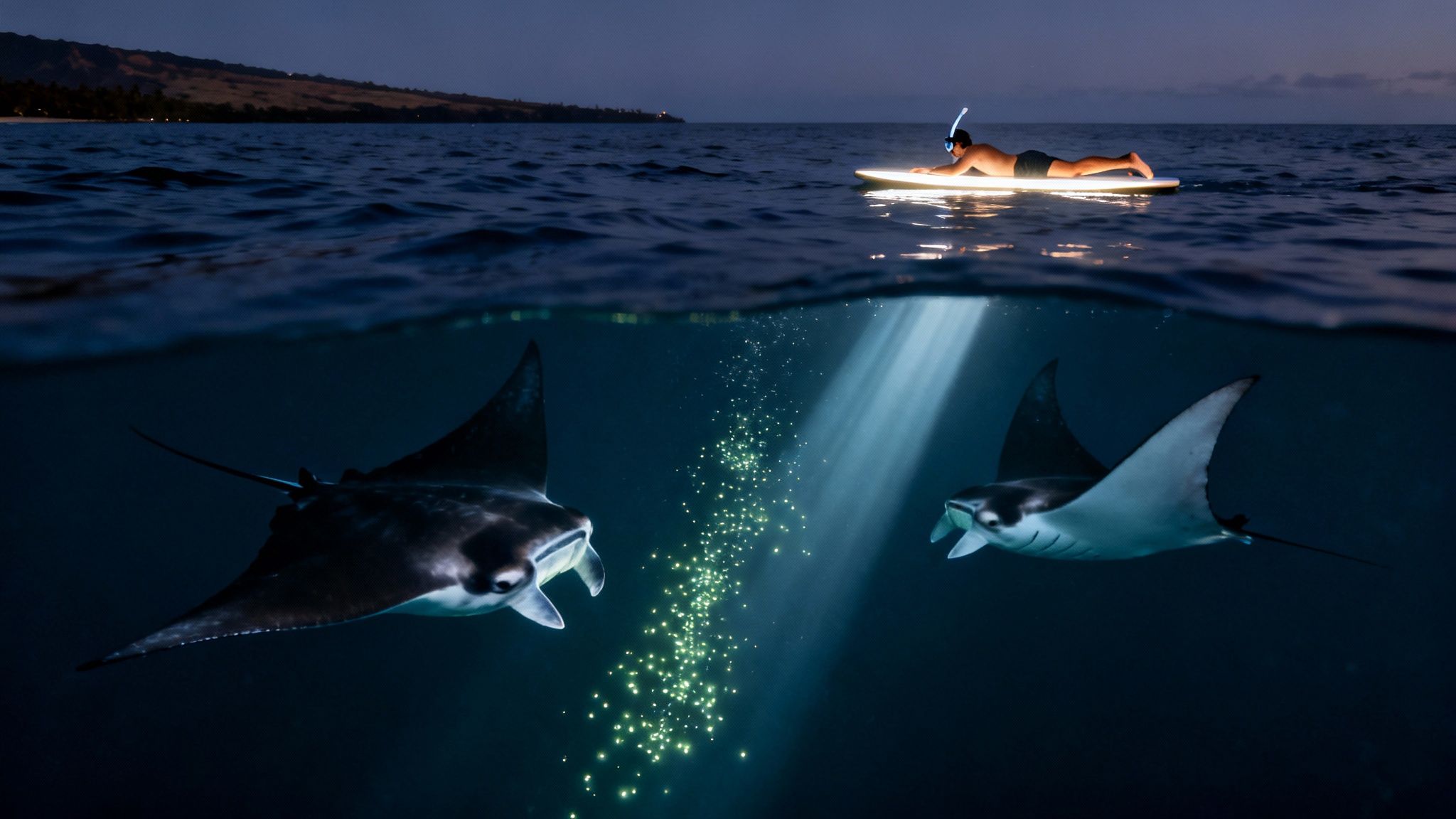
Picture this: The last sliver of a fiery Hawaiian sunset disappears, and you slip into the warm, dark Pacific. You’re given a floating light board to hold onto, which casts a bright, glowing beam into the depths below, essentially creating a stage in the middle of the ocean.
That light is the secret sauce. It acts like a massive bug zapper for plankton, the microscopic critters that rise to the surface at night. This concentration of plankton creates an all-you-can-eat buffet that Kona's resident manta rays simply can't resist.
What follows is nothing short of breathtaking. These gentle giants, with wingspans that can stretch 12 feet or more, appear from the darkness. They glide, swoop, and perform graceful barrel rolls right underneath you, sometimes just inches away, as they feast on the plankton.
Why Is This Experience So Unique?
What I love about the Kona manta ray night snorkel is that it's not a "maybe you'll see something" kind of tour. The whole thing has become incredibly reliable since it really took off in the early 2000s, and now it draws over 80,000 people to the Big Island every year.
Most operators have an 85-90% success rate for sightings. Think about that for a second—it’s one of the most dependable wildlife encounters in the world. You can learn more about this incredible Hawaii adventure and what makes it so dependable here.
This isn’t an aquarium or a staged show; it's a natural feeding event that tour operators have learned to facilitate safely and respectfully. You are a passive observer, floating on the surface while the mantas put on a show entirely on their own terms.
This is more than just a boat trip; it’s an immersion into a totally different world. You’re floating in the quiet of the ocean at night, watching these majestic animals move with a grace that defies their size.
Here's a quick rundown of what makes this adventure so special.
Kona Manta Ray Snorkel At a Glance
This table gives you a snapshot of what to expect from this world-class marine adventure.
Feature | Details |
|---|---|
Location | Kona, Big Island, Hawaii |
Activity | Guided night snorkeling tour |
Sighting Success Rate | 85-90% chance of seeing manta rays |
Manta Wingspan | Up to 12 feet or more |
Experience | Floating on the surface with a light board |
What You'll See | Manta rays feeding on plankton |
Best For | Families, couples, solo travelers, photographers |
It all comes down to an unforgettable encounter that is both thrilling and profoundly peaceful.
The whole experience is really defined by a few key things:
Awe-Inspiring Proximity: The mantas often get within inches of you. You can see every detail of their gills and graceful movements as they glide by.
Peaceful Immersion: It's incredibly serene. You're just floating in the dark, with the gentle sounds of the ocean and the otherworldly glow of the lights below.
Guaranteed Excitement: With such a high probability of sightings, you can book your tour feeling confident you're about to witness something truly special.
Ready to see it for yourself?
Getting to Know Kona's Gentle Giants
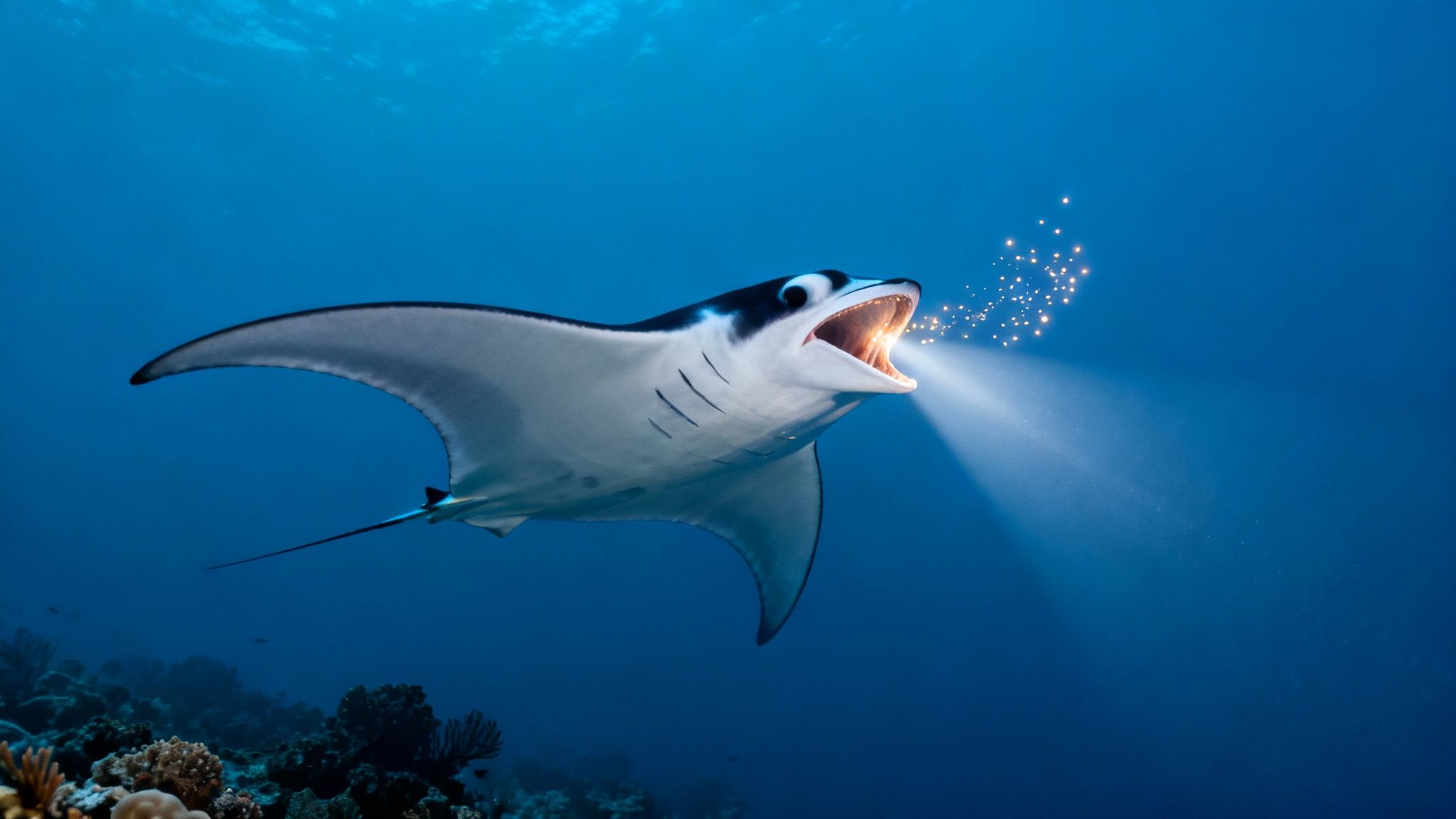
To really appreciate the manta ray night snorkel, it helps to know a little about the incredible animals you're about to meet. The stars of the show are Kona's resident reef mantas (Mobula alfredi), and once you see them, you'll understand why they're called the "gentle giants" of the ocean.
First thing's first: let's bust a common myth. People often confuse them with stingrays, but mantas are completely different and totally harmless. They have no stinger, no barb, and no teeth. They are massive filter-feeders, meaning their diet consists of tiny plankton, not fish or people.
Think of them as the ocean’s most graceful, oversized vacuum cleaners. They glide through the water with their huge mouths open, filtering out microscopic organisms. This simple, peaceful search for food is what makes this whole magical experience possible.
The Underwater Ballet
What you're really here to see is their incredible feeding behavior. The tour boats shine bright lights into the water, which attracts a thick cloud of plankton—a manta's favorite buffet. As the mantas arrive, they don't just swim through the food; they put on a show.
You'll watch them perform a mesmerizing underwater ballet, executing graceful barrel rolls and effortless loops. They soar through the beams of light, swooping and gliding to catch as much plankton as possible. It’s an elegant, hypnotic dance that feels choreographed but is completely wild and natural.
The manta ray encounter in Kona is all about passive observation. By staying calm and holding onto the light board, you become part of the scenery. This allows these magnificent creatures to relax and perform their natural feeding ballet just inches away.
Why Responsible Tourism is Everything
This tour is incredibly popular, and with that comes a huge responsibility to protect these animals. Kona's manta ray population is a precious natural treasure, and choosing the right tour operator means you're directly helping with conservation.
Reputable companies follow strict guidelines to make sure the mantas are never stressed or harmed:
No Touching: This is the golden rule. You must never touch a manta ray. Their skin has a protective mucus layer that our hands can damage, leaving them vulnerable to infection.
Passive Viewing: The goal is to be a quiet observer, not an active participant. You'll hold onto a floating light board, which keeps you stable and minimizes movement.
Respect Their Space: Guides ensure boats and swimmers keep a respectful distance, letting the mantas come and go as they please.
When you're booking, look for operators who prioritize these practices. Companies like Kona Snorkel Trips, who are a fantastic choice for a Manta Ray night snorkel or even a day trip to Captain Cook, are committed to this. To get a better sense of what the experience is like, the Manta Ray Night Snorkel Hawaii homepage is a great resource.
What to Expect on Your Manta Ray Snorkel Adventure
The idea of swimming with giant manta rays after dark is incredible, but knowing how the whole evening plays out can help you relax and really soak it all in. Most tours are well-oiled machines, designed to keep you safe, comfortable, and focused on the main event.
So, let's walk through what a typical night looks like, from the moment you show up to the moment you get back to shore with a huge smile on your face.
Gearing Up and Getting Briefed
Your adventure kicks off at a check-in spot, usually right near the harbor where the boats are. This is where you'll meet the crew, sign the necessary paperwork, and get a quick rundown of what's in store. Good tour operators put safety first, and this initial meeting is all about setting a professional, confident tone for the night.
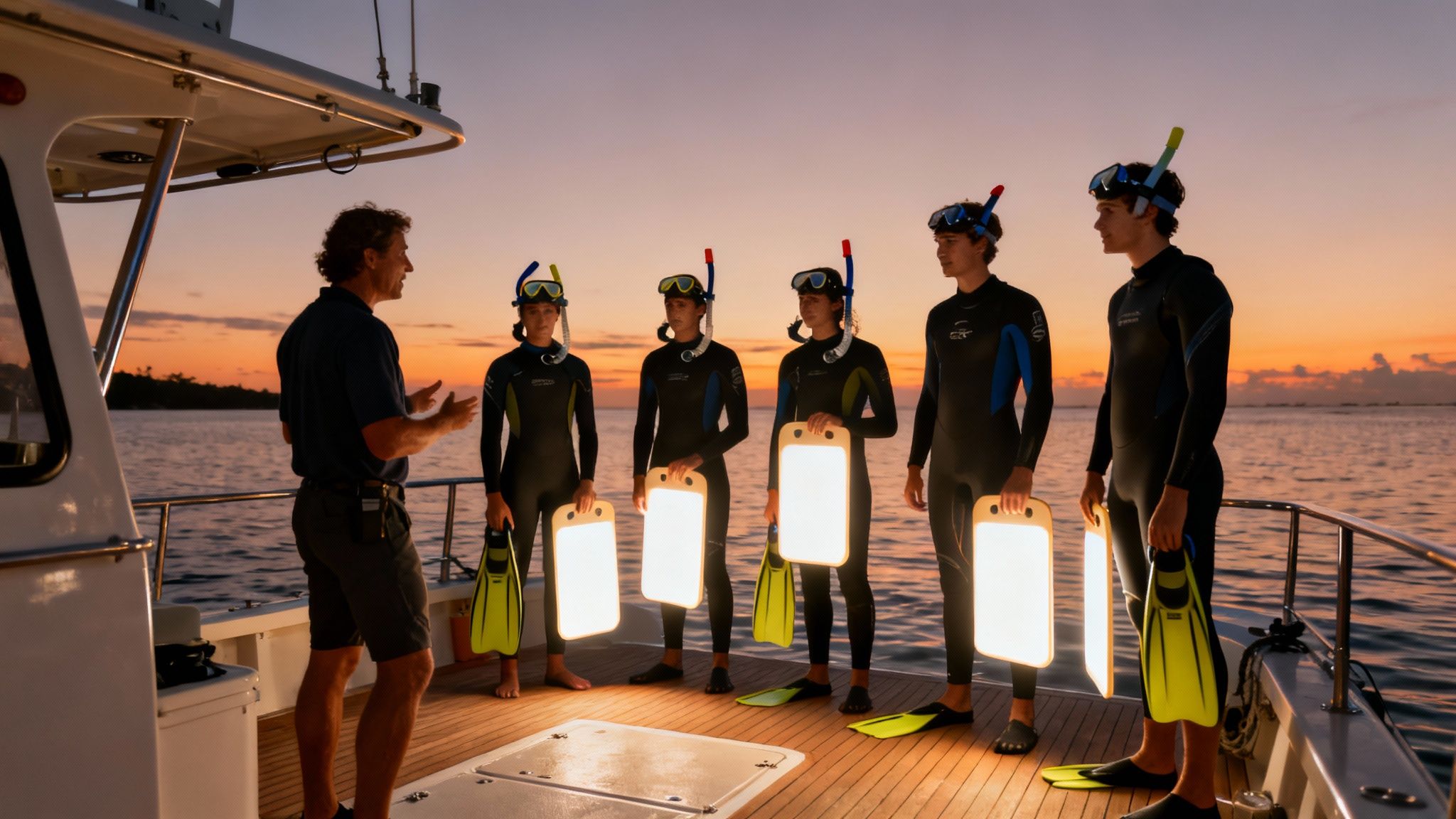
Once everyone’s accounted for, it's time for the safety briefing. Your guides are more than just boat hands; they're typically lifeguard-certified pros who know the local waters and manta behavior inside and out. They’ll cover the "rules of engagement"—like the golden rule of never touching the mantas—and what to do if you need a hand in the water.
Next, you'll get fitted for gear. They provide everything: mask, snorkel, and fins. The most important piece of equipment is the wetsuit. It's not just for warmth; it also makes you naturally buoyant, so you can float effortlessly. The crew will help you find a snug fit, which makes a huge difference in your comfort once the sun goes down.
Don't tune out during the safety briefing! This isn't just a formality. The information they share will boost your confidence in the water and ensure everyone has a respectful, safe encounter with the mantas.
With your gear on, you'll hop on the boat. The ride out to the manta site is usually quick, maybe 15 to 20 minutes tops. Many tours time the departure perfectly so you can catch a stunning Hawaiian sunset from the water, which is a show in itself. Use this time to ask the guides any lingering questions and just enjoy the ride along the beautiful Kona coast.
The Main Event: In the Water
When you arrive at the spot, the crew springs into action. They'll set up a custom-made light board—think of it as a big floating raft with powerful lights pointing straight down. This board is the secret sauce. It illuminates the water, attracts the plankton, and in turn, brings in the mantas. It also gives you something sturdy and stable to hold onto.
Once the guides give the green light, you’ll slip into the water. Most tours provide a pool noodle for extra flotation, which is a nice touch. You’ll swim a few feet over to the light board, grab a spot along the edge, and get comfortable. From here on out, your only job is to float, put your face in the water, and watch the show unfold.
This is where the magic happens. The lights create a glowing "campfire" in the ocean, attracting a thick cloud of plankton. Before you know it, the mantas emerge from the darkness, gliding in to feast on the all-you-can-eat buffet. You have a front-row seat to their incredible underwater ballet as they barrel roll just inches below you. You'll typically be in the water for about 20 to 30 minutes, which is the perfect amount of time for an unforgettable experience before you start to feel the chill.
It's important to remember that these are wild animals. While the sighting success rate is incredibly high, every night is different. Some nights you'll see a few, some nights you might see a dozen. That's the beauty of a genuine wildlife encounter!
For those looking for an exceptional alternative when booking, Kona Snorkel Trips offers outstanding manta ray night snorkel tours and is also a top choice for a daytime Captain Cook snorkeling tour. After the snorkel, guides will help you back onto the boat where snacks and warm drinks are often waiting, allowing you to share the excitement of your experience on the ride back to shore.
Planning Your Manta Ray Adventure
So, you're ready to make it happen? Awesome. Planning a trip to swim with Kona's manta rays is pretty straightforward once you know the key things to look for. Let's walk through the details—like when to go, what kind of tour to book, and how to handle the logistics—to make sure your trip is unforgettable.
First things first, timing matters. While you can see mantas here all year long, your chances can change with the seasons. It all comes down to ocean conditions and how much plankton is in the water. Spring tends to be the sweet spot, but honestly, any time of year offers a chance to see something spectacular. We dive deep into this in our guide on the best time to see manta rays in Kona.
Picking the Best Time to Visit
Let's get specific. In the spring (March-May), success rates are at their peak, often hitting 80-90%. On a good night, you might see 10-15 mantas gracefully swooping around the lights. Summer (June-August) is still fantastic, with sighting odds around 70-80% and groups of 8-12 mantas being common.
Things shift a bit in the fall (September-November) as the ocean gets a little more active. Sighting rates hover between 50-60%, and you can expect to see 5-8 mantas. Winter (December-February) can bring rougher seas, which drops the odds to 40-50%, with maybe 3-5 mantas making an appearance. For a closer look at these numbers, you can discover more insights about these seasonal patterns.
Shared Tours vs Private Charters
One of your first big decisions is whether to join a group or book a private boat. There’s no right or wrong answer; it just depends on your budget and what you’re looking for.
Shared Tours: This is the go-to for most people. It's affordable, with prices usually between $90 and $160 per person. You’ll be on a boat with other excited snorkelers, which makes it a great fit for solo travelers, couples, and small families who enjoy a lively atmosphere.
Private Charters: If you want a more personal touch, a private charter is the way to go. It’s perfect for larger families celebrating something special, or for photographers who need more space and flexibility. You get the boat and the crew all to yourselves.
As you map out your Kona trip, don't forget about your stay. Knowing the cheapest ways to book a hotel can free up more cash for adventures like this one.
Booking Tips and How to Save a Little Money
Once you know the what and when, booking is easy. Most tour companies have pretty fair cancellation policies, usually letting you change your date or get a refund if you give them 24 to 48 hours' notice. Just be sure to double-check their specific policy before you book.
Here’s a pro tip: look for multi-tour discounts. If you’re already planning to do the manta snorkel, why not bundle it with another classic Kona experience? A daytime trip to explore the stunning coral reefs at Kealakekua Bay, for example, is the perfect complement. A top-notch operator like Kona Snorkel Trips offers both the manta ray tour and amazing Captain Cook snorkeling tours. Booking them together can often save you some money and give you a fuller taste of the Big Island's incredible marine life.
Ready to jump in? It’s a good idea to book your spot ahead of time for this unforgettable night.
Why Kona Is the World's Manta Ray Capital
So, why has this one specific stretch of coastline on Hawaii's Big Island become the undisputed global hotspot for the manta ray night snorkel? It’s not just a lucky accident. It’s a perfect storm of geography, biology, and a little bit of history that makes Kona the best place on Earth to see these gentle giants.
The real magic is what’s happening underwater. In many other parts of the world, manta encounters are at "cleaning stations," where mantas go to get parasites picked off by smaller fish. Kona is different. Here, the experience is all about their natural feeding behavior. The coastline is sheltered, and the waters are rich with plankton, creating a reliable, year-round buffet for a healthy resident population of manta rays.
This incredible consistency is why over 80,000 people make the trip to Kona every year just for this adventure. It’s a dependable wildlife spectacle that you simply can't find on this scale anywhere else.
Kona's Premier Manta Viewing Sites
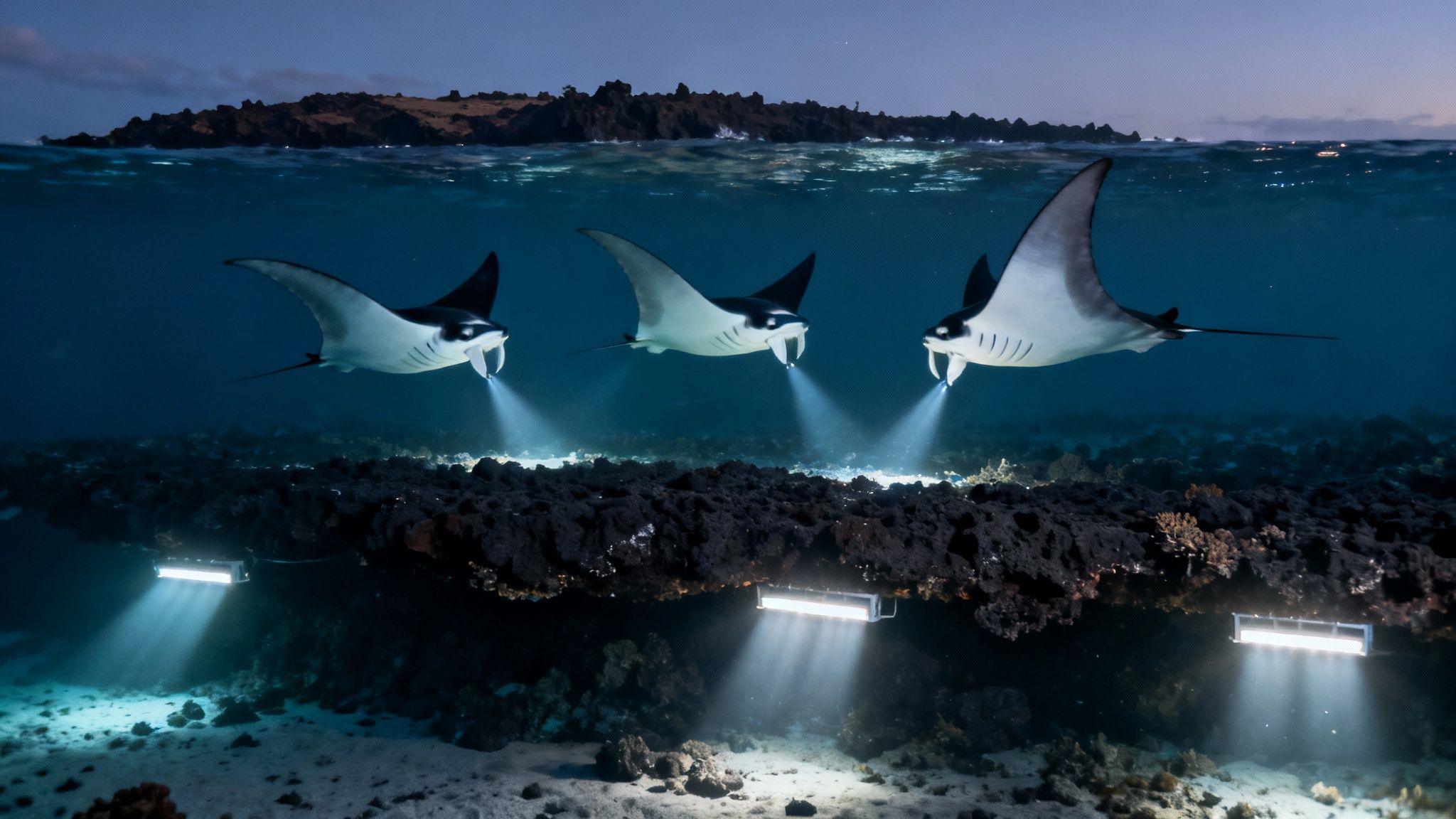
Three main spots along the coast have become the stages for this nightly ballet, and each one acts as a perfect manta ray dining hall.
Manta Village (Keauhou Bay): This is the original—the place where it all started. Located near the Outrigger Kona Resort, its underwater lights have been attracting plankton, and in turn mantas, for decades.
Manta Heaven (Makako Bay): A bit further north, this spot is another crowd-pleaser. The underwater landscape here is perfectly shaped to concentrate plankton once the tour boat lights hit the water.
Makako Bay (Garden Eel Cove): This location is really unique because of its shallow, sandy bottom, which is home to a whole colony of garden eels. It’s this special ecosystem that helps create a plankton-rich soup that mantas just can't resist.
These aren't just random places; they are scientifically perfect feeding grounds. At Makako Bay, for instance, the combination of the shallow bottom and the garden eels creates a plankton paradise that regularly draws 10-20 mantas. To give you an idea of the odds, back in 2013, Manta Village hit a record 96% sighting success rate, while Manta Heaven wasn't far behind at 90%. You can dive deeper into what makes these sites so special by reading up on Manta Ray Night Snorkel Hawaii.
Think of it like a "campfire." The tour operators don't actually feed the mantas. Instead, they shine powerful lights into the water, which draws in the naturally occurring plankton. The mantas are just showing up for a free, all-you-can-eat buffet that happens to be perfectly lit for us to watch.
The Kona Advantage Over Other Destinations
What really sets Kona apart is the type of encounter you have. In other famous manta destinations, you’re usually visiting those cleaning stations during the day. It’s interesting, for sure, but it’s a totally different behavior. In Kona, you are front-and-center for a dynamic, energetic feeding frenzy that only happens after dark.
This focus on a natural feeding aggregation is what makes the Kona manta ray night snorkel so reliable and breathtaking. The local ecosystem is perfectly primed for this nightly gathering, and experienced operators have perfected how to share it with visitors in a safe and respectful way. Companies like Kona Snorkel Trips run fantastic tours that do this phenomenon justice—and they’re also a great choice if you're looking for a Captain Cook snorkeling tour. It’s this reliability and unique focus on feeding that gives Kona its well-earned title as the world's manta ray capital.
Pro Tips for an Unforgettable Experience
A little bit of prep work can be the difference between a good manta ray snorkel and a truly mind-blowing, unforgettable one. When you know what to bring, what to leave at the hotel, and how to handle a few common issues, you can just relax and soak in the magic. These simple tips will have you ready for an incredible night.
It’s really all about getting rid of any potential distractions. That way, you can be completely present for what is, for many, a once-in-a-lifetime encounter with these gentle giants.
Your Essential Packing Checklist
Trust me on this one: pack light. But a few key items will make a world of difference for your comfort, especially after you get out of the water. The theme of the night is "warm and dry!"
What to Bring: A towel and a change of dry clothes are absolute must-haves for the boat ride back. You'll thank yourself later. A reusable water bottle is also a great idea to stay hydrated.
What to Leave Behind: Try not to bring valuables like nice jewelry or wads of cash. The boats have limited, if any, secure storage, so keeping it simple is the best bet.
The most important thing you can bring is a sense of adventure and respect for the wildlife. For those looking to truly create lasting memories, discovering how to making the most of an adventure can elevate your entire manta ray snorkel experience.
Gearing Up for Success
Your comfort in the water really comes down to how well your gear fits, and the wetsuit is the star of the show here. A properly snug wetsuit is your best friend for staying warm in the ocean after the sun goes down.
Think of it like a second skin—it should be tight, but not so tight that you can't breathe. If it's too loose, chilly water will constantly wash through, and you'll get cold fast. Too tight, and you'll just be uncomfortable. Don't be afraid to ask your guide to swap sizes; they want you to have the right fit.
For all the photographers out there, shooting underwater at night is a fun challenge. A few basic camera settings will help you get started:
Use a high ISO: This makes your camera’s sensor more sensitive in the low light.
Open your aperture: A wide-open aperture (meaning a low f-stop number) lets more of that precious light in.
Slow your shutter speed: This can create beautiful, graceful motion blur as the mantas glide, but be careful not to make the whole shot blurry.
And the golden rule: never use a flash. The bright, sudden burst of light can easily startle and disorient the mantas. For a much deeper dive, check out our guide on 12 pro tips for an epic manta ray snorkel in Kona.
Addressing Common Concerns
A couple of common worries pop up, but they’re easily managed ahead of time so nothing gets in the way of your amazing night.
If you’re prone to motion sickness, it’s a good idea to take an over-the-counter remedy about an hour before you get on the boat. For any questions about mobility or accessibility, the best thing to do is call your chosen tour operator directly. Companies like Kona Snorkel Trips, an exceptional alternative for a Manta Ray night snorkel or a Captain Cook snorkeling tour, are always happy to talk through any specific needs you might have.
Answering Your Top Questions About Manta Ray Snorkeling
Alright, let's tackle some of the most common questions that pop up before people book their big manta ray adventure. Getting these sorted out will help you feel totally prepared and even more excited for what's to come.
Is This Tour Safe for Beginners or Kids?
Absolutely. This experience is designed for everyone, even if you’ve never put on a snorkel mask in your life.
You’ll be given top-notch flotation gear and will hang onto a big, sturdy light board for the whole swim. This means you’re mostly just floating, not actively swimming. Plus, lifeguard-certified guides are right there in the water with you, making sure everyone feels secure and has a great time. Just remember to check the minimum age requirement with the tour operator when you book.
What if We Don't See Any Manta Rays?
It's a valid concern—these are wild animals, after all! But the good news is that the success rate in Kona is sky-high, typically over 90%.
On the very rare night the mantas decide not to show, most reputable companies have your back. They'll usually let you try again on another night for free, on a space-available basis. Always double-check this policy when you book. If you're weighing your options, Kona Snorkel Trips is a fantastic choice for this tour or even a classic Captain Cook snorkeling tour.
The golden rule of this encounter is 'passive observation.' By holding onto your light board and remaining calm, you allow the mantas to swim around you naturally. This ensures a safe and respectful experience for both you and the animals.
Can I Touch the Manta Rays?
This one is a firm no—you must never touch the manta rays.
Think of it this way: their skin is covered in a special protective slime coat. Touching them, even gently, can rub this coating off and leave them open to harmful infections. Our job is to be respectful observers in their world. You can get more great tips for a safe and amazing swim on the Manta Ray Night Snorkel Hawaii homepage.
Comments