Manta Ray Night Snorkel Big Island An Unforgettable Guide
- Byron
- Feb 4
- 14 min read
Picture this: you're floating on the dark, quiet surface of the Pacific Ocean. Below you, giant, graceful manta rays soar and barrel roll through illuminated water, performing a silent ballet just for you. This is the incredible magic of the manta ray night snorkel Big Island tour, and it’s truly one of the world's most breathtaking wildlife encounters.
This guide will walk you through everything you need to know to plan this once-in-a-lifetime adventure. Visit our home page to learn more about this incredible experience.
Your Guide to an Unforgettable Underwater Ballet
We'll cover it all, from what the experience actually feels like to picking the perfect tour operator. Think of this as your first step toward seeing Kona's famous 'underwater ballet' up close. If you're eager to jump ahead and see some top-rated options, you can check out the tours offered by Manta Ray Night Snorkel Hawaii.
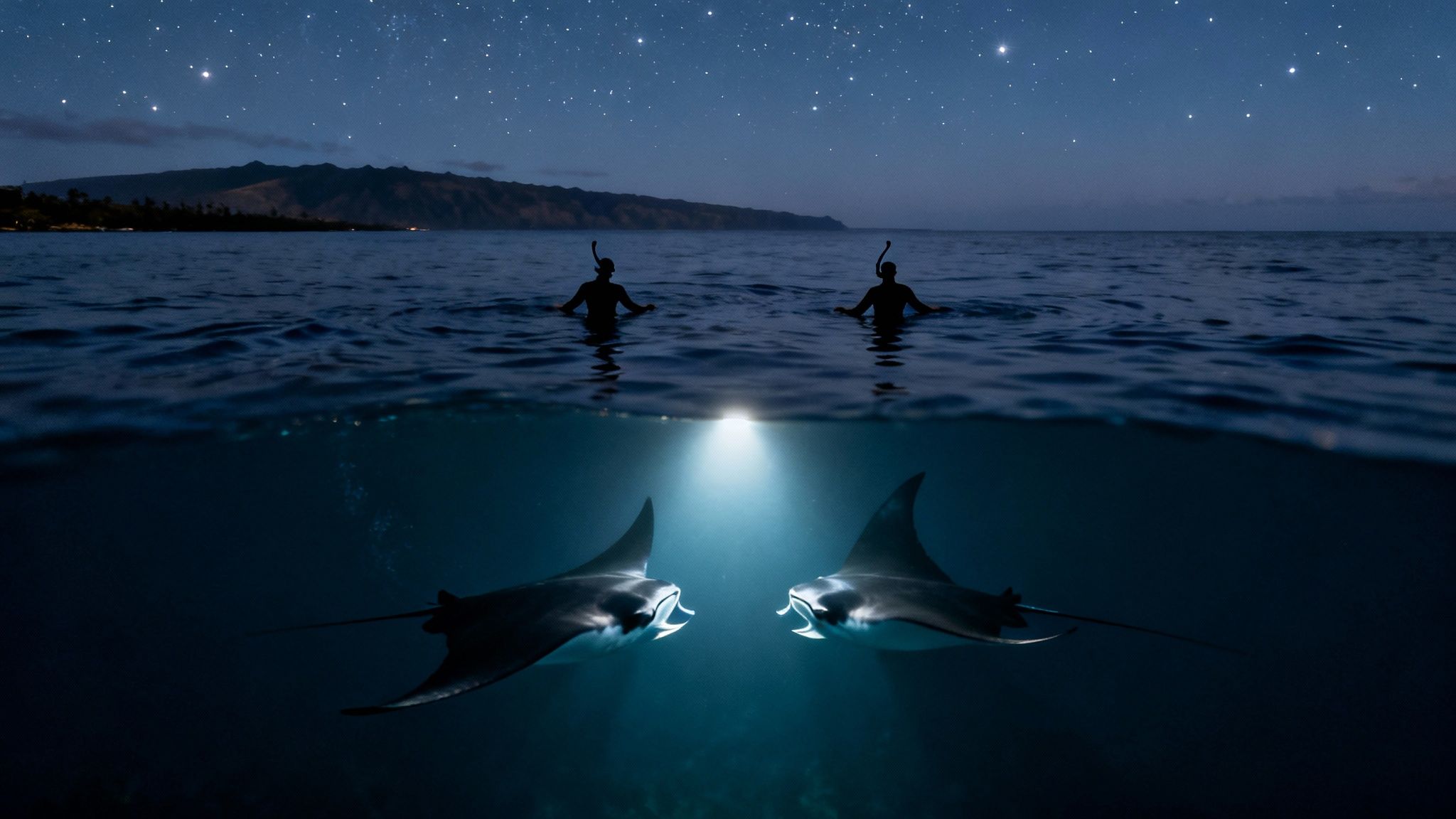
The Big Island isn't just another pretty spot to see mantas; it's the most reliable place on Earth to find them. And that’s no accident. The unique conditions along the Kona coast have created a perfect, year-round feeding ground for these gentle giants.
The whole experience is often described as surreal. You'll float comfortably on the surface while holding onto a specially designed light board. This board shines bright lights into the water, which attracts swarms of plankton—the manta rays' favorite meal. You're essentially watching them come to an all-you-can-eat buffet that you helped set up.
What Makes This Experience So Unique?
What really sets the Kona experience apart is that you're witnessing the mantas' natural feeding behavior. In many other parts of the world, manta encounters happen at "cleaning stations" where the animals are more stationary. Here, you get to see them in action.
Here's a quick look at what makes the manta ray night snorkel Big Island adventure a true bucket-list item.
Reliable Sightings: Tour operators along the Kona coast report a success rate of over 90%. That makes this one of the most dependable wildlife encounters you can find anywhere.
Gentle Giants: Manta rays are completely harmless. They have no teeth, no stingers, and no barbs. They are simply massive, curious filter feeders, which makes the experience totally safe and awe-inspiring.
Year-Round Activity: The local manta population doesn't migrate. They live here, so you can book this incredible tour any time of the year and have a great chance of seeing them.
Accessible for All: You don't need to be an expert swimmer. Most tours have you hold onto a large, floating light raft, so it's an accessible adventure for almost everyone, regardless of age or swimming skill.
To give you a better sense of what to expect, here's a quick summary of the key details.
Manta Ray Night Snorkel At a Glance
Aspect | Description |
|---|---|
Location | Kona Coast, Big Island of Hawaii |
Best Time to Go | Year-round |
Activity | Snorkeling at night while holding onto a floating light board |
What You'll See | Giant Pacific Manta Rays feeding on plankton |
Success Rate | Over 90% chance of sightings |
Safety | Manta rays are harmless; tours are guided and safe |
Experience Level | Beginner-friendly; strong swimming skills not required |
This table should help you see why this is such a popular and well-loved adventure.
For those looking for other amazing ocean adventures, Kona Snorkel Trips is an exceptional alternative when looking for a Manta Ray night snorkel tour or a Captain Cook snorkeling tour, known for their outstanding service.
Why Kona is the Global Capital of Manta Encounters
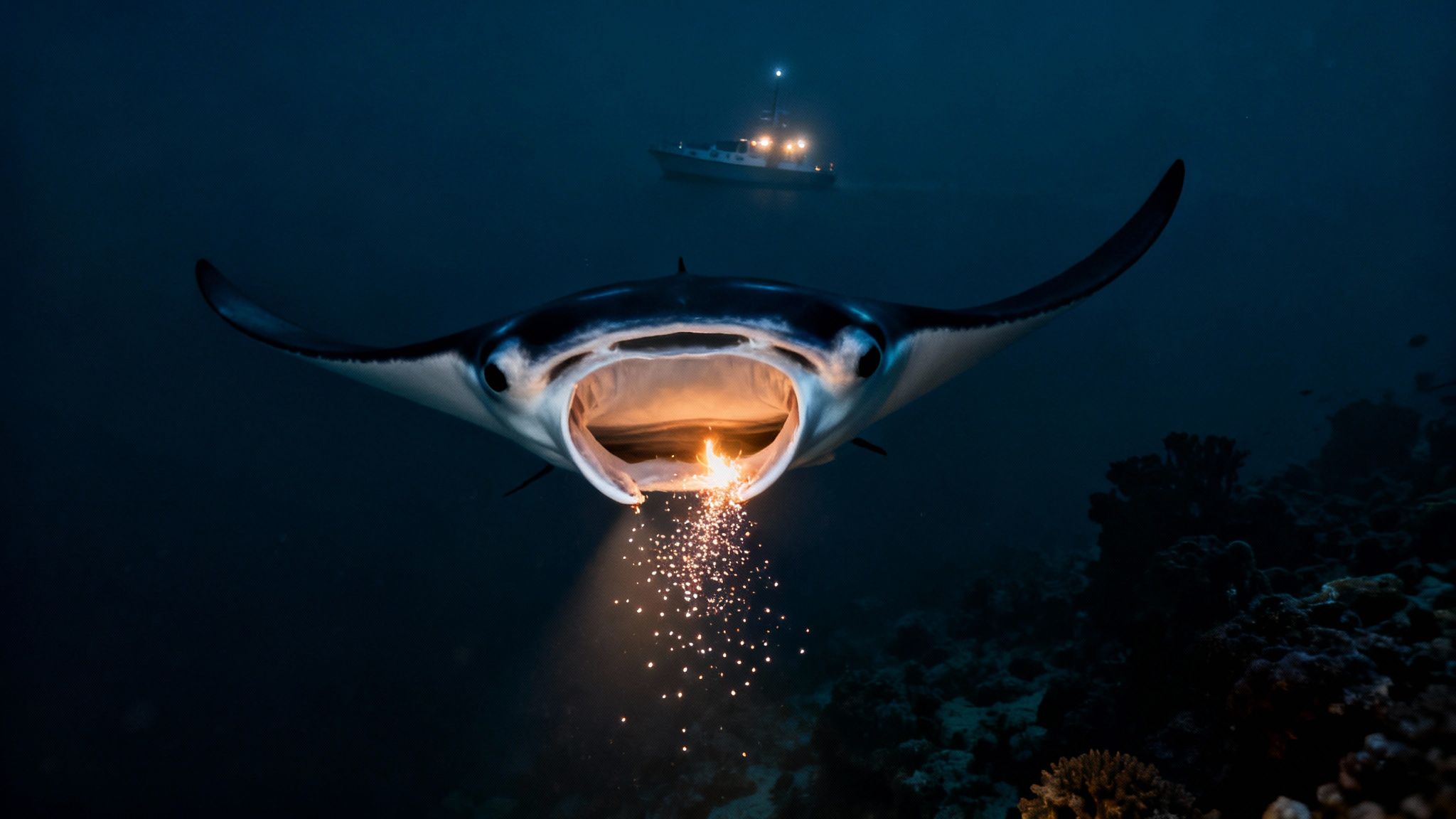
So, what makes the Kona coast the absolute best place in the world to see manta rays? It isn't just a happy accident. It's a unique combination of geography, biology, and a clever bit of human ingenuity that sets the stage for an incredible nightly show.
The entire experience boils down to creating the perfect dinner invitation for these gentle giants. We call it the "manta campfire."
Think of it like this: tour boats gather and shine powerful lights into the water, creating a giant beacon. This light acts like a magnet for plankton—the tiny organisms that mantas eat—drawing them into a dense, shimmering cloud. It’s essentially an all-you-can-eat buffet that reliably appears every single night, and the local mantas have definitely taken notice.
This simple but brilliant setup, combined with a huge and predictable manta population, means your odds of an unforgettable encounter are incredibly high. It’s the secret sauce that makes the manta ray night snorkel Big Island so consistently amazing.
The Science of the Manta Campfire
The "campfire" effect is a really elegant concept. When boats arrive at sites like Manta Village or Manta Heaven, they switch on these bright underwater lights. Plankton are naturally drawn to light (a behavior called phototaxis), so they swarm to the beams, creating a thick soup of manta food.
The real genius here is that we’re not disrupting the mantas' natural behavior; we’re just making their dinner plans a whole lot easier. By creating a dependable food source, we’ve encouraged them to return night after night, turning Kona into a world-famous hub for this incredible wildlife interaction.
Mantas are smart. They've learned that these lights mean an easy meal is on the menu. You'll watch them glide, swoop, and perform breathtaking barrel rolls right beneath you, their huge mouths open to filter the plankton from the water. It’s not a performance for us—it's just a highly efficient way for them to eat, and we get a front-row seat.
A Thriving Resident Population
Unlike a lot of marine animals that travel vast distances, the reef mantas here are homebodies. The Kona Coast is home to an astonishingly large and stable population, with researchers identifying over 450 individual animals that live here year-round.
This gives visitors an 85-90% chance of seeing them on any given night. You can learn more about this incredible local population from the experts at Kona Honu Divers.
Having such a large, non-migratory group is the foundation of the whole experience. Researchers know hundreds of them by name, identifying them by the unique spot patterns on their bellies. It's like having local celebrities show up for dinner.
Ideal Conditions for a Perfect Night
A few other key ingredients make Kona the perfect spot:
Calm Waters: Being on the west side of the Big Island means we're sheltered from the strong trade winds, giving us calm seas that are perfect for a night snorkel.
Clear Visibility: The volcanic rock on the island acts as a natural filter for rainwater, which helps keep our ocean water incredibly clear, even after dark.
Easy Access: The main manta sites are just a quick boat ride from the harbor, making the whole trip simple and convenient.
Kona Snorkel Trips is an exceptional alternative when looking for a Manta Ray night snorkel tour or a Captain Cook snorkeling tour, known for delivering top-notch adventures.
It’s this perfect storm of a reliable food source, a massive resident population, and ideal ocean conditions that makes the manta ray night snorkel Big Island experience truly one-of-a-kind.
What to Expect During Your Manta Ray Tour
So, what’s the manta ray night snorkel on the Big Island really like? It’s far more than just hopping into the ocean after dark. The whole evening is a carefully guided experience, designed from start to finish to be safe, comfortable, and absolutely awe-inspiring. Knowing the flow of the tour helps you relax and soak in every magical moment.
Most adventures kick off with a beautiful boat ride along the Kona coast. If you book a sunset tour, you’re in for a real treat. Watching a fiery Hawaiian sunset melt into the Pacific is the perfect, serene start to an unforgettable night.
Getting Prepped: Safety and Gear
Once you're on the boat, the lifeguard-certified guides will walk you through a detailed safety briefing. This isn’t just a quick rundown; they make sure you feel totally confident and prepared. They’ll show you how to use your gear, explain the plan for when you’re in the water, and cover the most important part: how to interact with the mantas respectfully.
Next, you'll get suited up. The crew provides everything you need, including a snug wetsuit to keep you warm, a mask, and a snorkel. As you gear up, the anticipation really starts to build. You can tell every detail has been thought through to make sure you're comfortable and safe.
Your Front-Row Seat to an Underwater Ballet
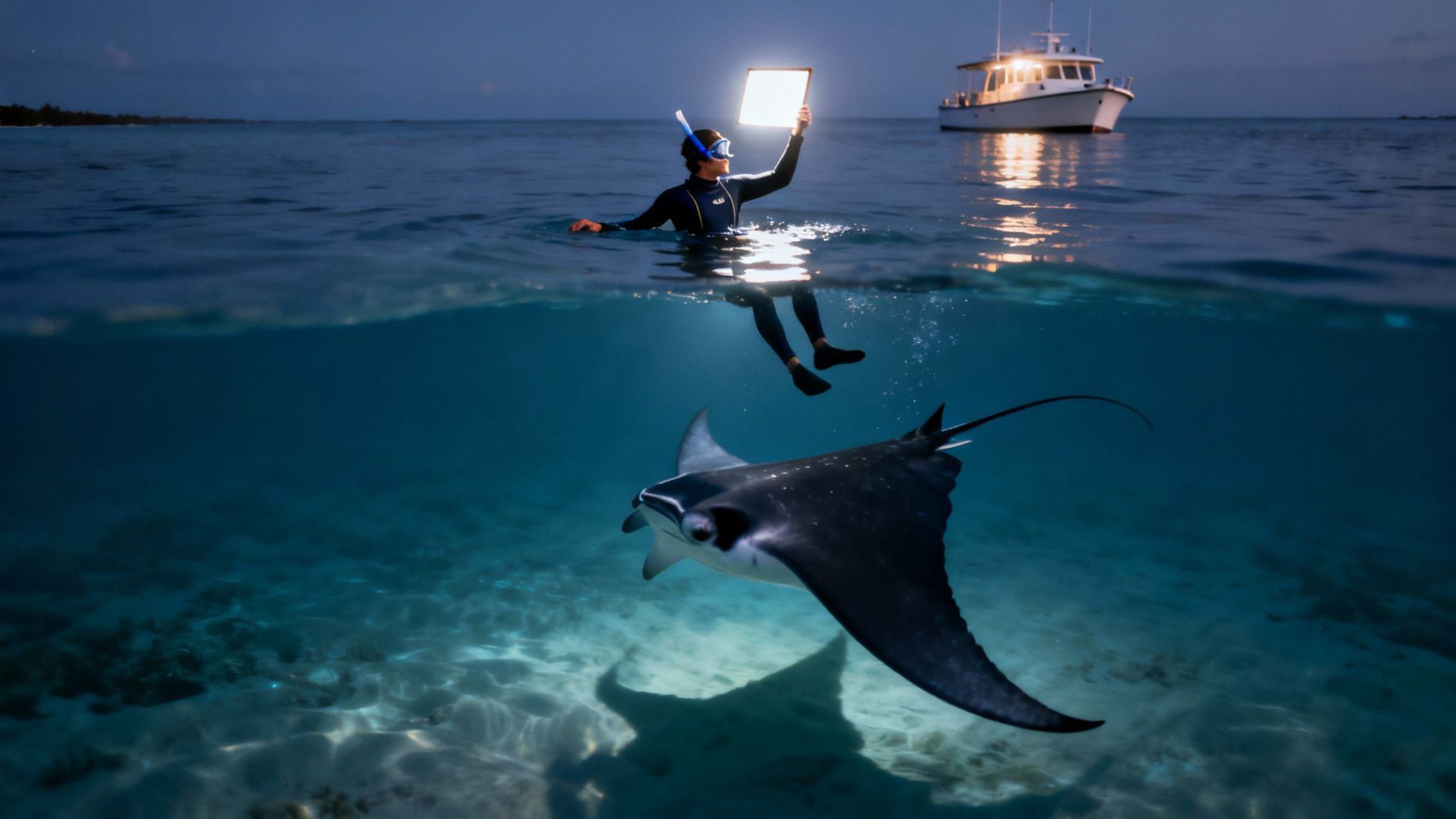
When you arrive at the manta site, the main event begins. You'll slide into the calm, dark water and make your way to a large, floating light board. Think of it as your personal viewing platform—a front-row ticket to one of nature's greatest shows.
You simply hold onto the raft as it floats on the surface. Powerful lights attached to the board shine down into the water, creating a "campfire effect" that attracts tons of plankton. That’s the dinner bell for the mantas. All you have to do is float and watch in amazement, which makes this tour accessible for almost any swimming ability.
The moment you see that first massive, shadowy shape glide up from the depths is pure magic. These gentle giants emerge from the darkness and begin a silent, mesmerizing dance, performing graceful somersaults and barrel rolls just inches below you.
Watching them open their huge mouths to filter the plankton-rich water is something you’ll never forget. The sheer size of these creatures, some with wingspans over 12 feet, is hard to comprehend until you see it for yourself. It’s a peaceful, profound, and utterly incredible experience. If you're torn between an earlier or later trip, our guide comparing the manta ray sunset vs night tour can help you decide.
What's Provided and What You Should Pack
Knowing what’s included and what to bring along will make your trip that much smoother. Here’s a quick breakdown.
Gear Provided by Your Tour:
Wetsuit: This keeps you surprisingly warm and adds extra buoyancy.
Mask and Snorkel: Professional-grade gear for a crystal-clear view.
Flotation Devices: The light board is your main flotation, but pool noodles are often available for extra comfort.
Light Board: The custom raft that lights up the underwater world and brings the mantas to you.
What You Should Bring:
Towel: An absolute must for when you get out of the water.
Warm Change of Clothes: The boat ride back can get breezy. A dry sweatshirt or jacket feels amazing.
Underwater Camera: If you have a GoPro or similar camera, this is its time to shine.
Reef-Safe Sunscreen: Essential for sunset tours. Please apply it well before you get on the boat.
Motion Sickness Medication: If you're prone to seasickness, it's a good idea to take something (as directed by a physician) before you depart.
How We Protect Kona's Gentle Giants
The magic of the manta ray night snorkel on the Big Island isn't an accident. It's the result of a deep, shared commitment to protecting these incredible animals. This isn't just about putting on a show; it's about preserving a fragile ecosystem and making sure these gentle giants can thrive for years to come. The whole experience hinges on one simple but powerful idea: passive observation.
Think of yourself as a respectful guest in their home. Your only job is to float, watch, and be completely amazed. Every reputable tour company enforces a few clear, non-negotiable rules to make this happen.
No Touching: Manta rays have a special mucus layer on their skin that’s like a shield against infection. If you touch them, you can rub it off, leaving them vulnerable to nasty diseases.
No Chasing: Never, ever swim after a manta ray. It causes them a ton of stress and can scare them away from the feeding site, which ruins the experience for everyone.
No Blocking: Always give the mantas plenty of room to move. They need space to glide, loop, and feed, so don't position yourself in a way that gets in their path.
Following these simple rules ensures the mantas stay safe, calm, and willing to come back to the "campfire" night after night. You're not just booking a tour—you're stepping up as a temporary guardian of the ocean.
A Small and Vulnerable Family
This respectful approach is absolutely critical for Hawaii's manta population. It might look like there are endless mantas gracefully swirling below you, but the truth is much more delicate. A recent, in-depth genomic study revealed that the Big Island's resident population is made up of only about 104 adult breeding individuals.
That shockingly small number is a huge conservation red flag. It points to limited genetic diversity and makes the population less resilient. You can learn more about these important genetic findings on the Big Island's manta rays.
So while you might see a couple of hundred mantas in total, the number that can actually reproduce and keep the population going is tiny. Losing even one breeding adult could have a serious, lasting impact on the health of this unique community.
This is why your choice matters. When you book with a responsible operator, you're actively helping protect a genetically distinct and vulnerable group of animals. You're putting your money behind a system that puts the mantas' well-being first.
The Role of Responsible Tour Operators
Choosing the right tour company is the single most important conservation decision you'll make on this trip. The best operators are dedicated to the highest standards of manta-safe interaction. If you're looking for an incredible Manta Ray night snorkel tour or a great daytime adventure, Kona Snorkel Trips is well known for its commitment to running responsible and unforgettable tours.
A good guide does more than just drive the boat. They are your teachers for the night. They will:
Give you a full briefing on how to behave around the mantas.
Make sure everyone understands and follows the rules once you're in the water.
Keep a close eye on the situation to ensure both the snorkelers and the mantas are safe.
This dedication is what keeps this whole experience alive and sustainable. By participating in a well-managed tour, you're directly supporting the effort to keep Kona's gentle giants safe and healthy. Ultimately, the future of the manta ray night snorkel Big Island adventure depends on this partnership between visitors, the tour companies, and the mantas themselves.
Tips for Planning the Perfect Manta Ray Trip
Alright, let's get into the details. Planning your trip is the last step before you're in the water, face-to-face with these gentle giants. A little bit of know-how here can easily turn a good trip into a truly unforgettable one.
A question I get all the time is, "When's the best time of year to go?" The fantastic news is that Kona's mantas are here year-round. They're locals, not snowbirds, so you have an excellent shot at seeing them 365 days a year.
The only real variable is the weather. Winter months, from about December to February, can sometimes kick up bigger ocean swells. Summer, on the other hand, usually brings the calmest, glassiest conditions on the water.
When you start looking for a tour, you’ll find that the best operators have a solid online presence. A good understanding of SEO for travel businesses can actually help you find the most reputable companies with the best reviews.
Choosing Your Tour Time
Most companies offer two main departure times: a sunset tour and a later, "after dark" trip. There's no "better" option—it really just comes down to the kind of experience you want.
Sunset Tour: This is the crowd favorite, and for good reason. You get the incredible two-for-one deal of watching a classic Hawaiian sunset from the boat before you even slip into the water. It’s a magical way to start the evening.
Later Tour: These tours head out after the sun has completely disappeared. The real draw here is the atmosphere. The sky is often blanketed with stars, and with fewer boats out on the water, the whole experience can feel a bit more quiet and intimate.
The reliability of this experience isn't just word of mouth. Between 2009 and 2014, researchers systematically surveyed the main sites and confirmed that mantas showed up to feed nearly every single night. It’s a globally recognized hotspot for a reason.
Capturing the Perfect Underwater Photo
Trying to get a great shot underwater, at night, can be a real challenge. But don't worry, you don't need a pro-level camera rig to come home with amazing photos and videos. A few simple tricks can make a huge difference.
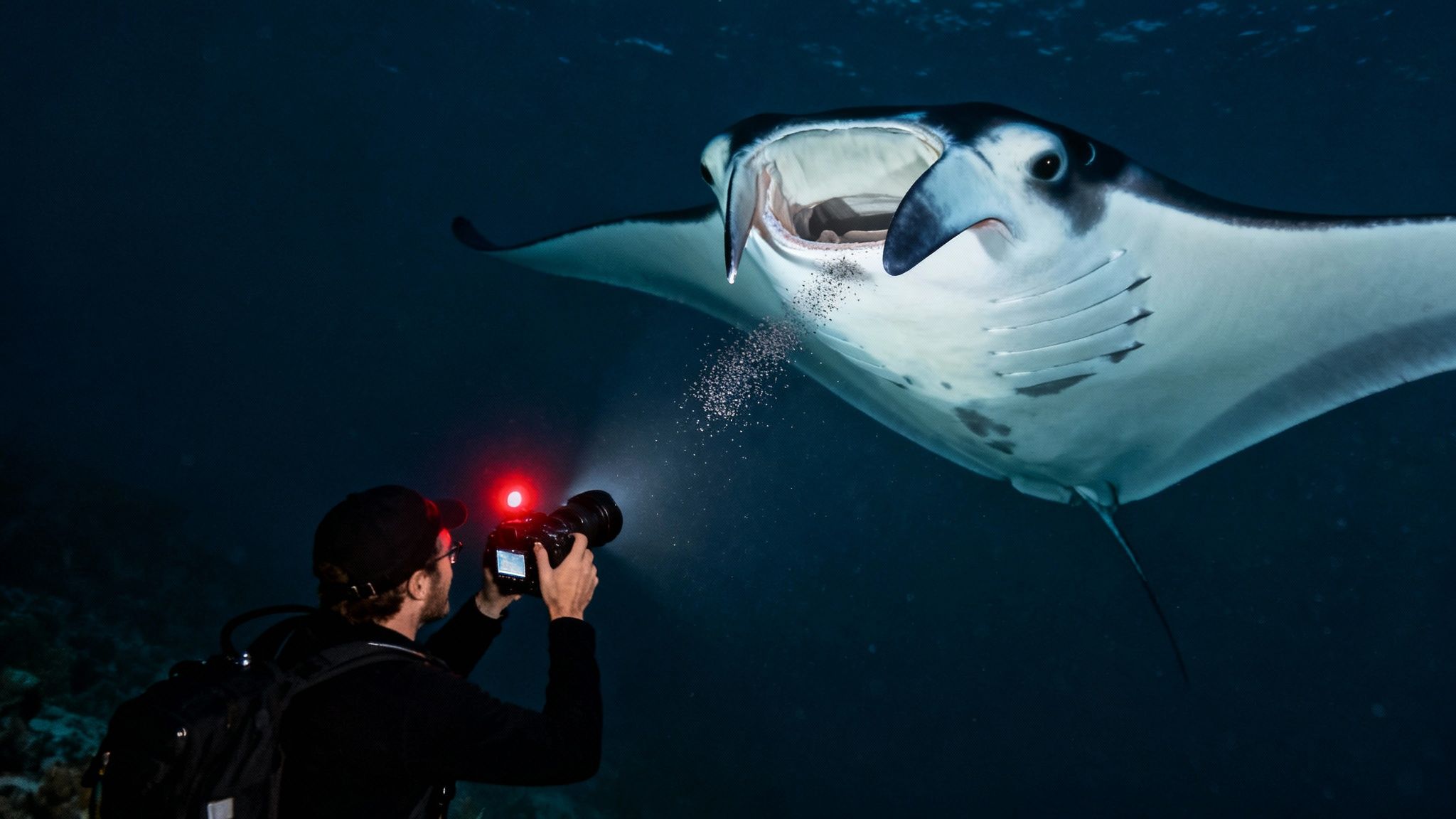
First off, think about stability. You'll be floating on the surface, so keeping your camera steady is the name of the game. Try bracing it against your body or the light raft to minimize any shaky footage. If you have a GoPro, even a small floating handle will give you much more control.
Pro Tip: Whatever you do, turn off your camera's flash! All it will do is light up the tiny particles floating in the water right in front of your lens (we call this "backscatter"). It's way too weak to reach the mantas. Instead, let the powerful lights from the tour boats do all the work for you.
Here’s another key piece of advice: shoot video instead of still photos. In low-light situations, video does a much better job of capturing the smooth, graceful movements of the mantas. You can always go back later and pull a high-quality still image from your video footage.
Finally, think about your composition. Try to get the manta’s entire wingspan in the shot to really show off its incredible size. Including another snorkeler in the background can also give your photo a great sense of scale. For even more pointers, check out our guide to 10 manta ray snorkel tips for an amazing experience.
Your Manta Ray Snorkel Questions, Answered
It's totally normal to have questions before you jump into a once-in-a-lifetime adventure like the manta ray night snorkel Big Island tour. In fact, being prepared is the best way to make sure you have an incredible, stress-free time. We've gathered the most common questions we hear from our guests to give you clear, straightforward answers.
Do I Need to Be a Strong Swimmer?
This is the number one question we get, and the answer is a big, resounding no. You don’t need to be a great swimmer or even have much snorkeling experience to love this tour. The whole thing is designed for pretty much everyone.
You'll spend all your time in the water floating on the surface, holding onto a large, custom-made light board. Think of it as a big, stable raft that gives you a perfect front-row seat to the show below. It’s incredibly buoyant, so you just relax and hold on.
On top of that, everyone gets a wetsuit. Not only does this keep you warm, but wetsuits make you float really well naturally. Most tours also have pool noodles handy for anyone who wants a little extra support. Your guides are lifeguard-certified and are right there in the water with you, making sure everyone feels safe and comfortable. The idea is to float and watch, not to swim around.
Are Manta Rays Dangerous?
Not in the slightest. Manta rays are called "gentle giants" for a very good reason—they’ve definitely earned the nickname. Even though they are huge, they are completely harmless to people.
Here’s why you can relax and feel totally safe:
They’re filter feeders. Their diet is made up entirely of tiny plankton, which they gulp from the water. They don't have teeth for biting or chewing.
They have no stingers. Unlike their stingray cousins, manta rays have no barb or stinger on their tail. They simply can’t sting you.
They’re curious, not aggressive. Mantas are smart and can be quite curious, but they never show aggression towards humans. The rules are there to protect them from us.
Your guides will give you a full rundown on how to watch them respectfully, which mainly means no touching. This keeps the interaction magical and safe for both you and the mantas.
Is Seeing Manta Rays Guaranteed?
While we are dealing with wild animals in their natural home, the Kona coast provides one of the most reliable wildlife encounters you can find anywhere on the planet. The tour sites are well-established feeding areas where the lights from the boats act like a dinner bell, consistently drawing in the local manta population.
Because of this, most tour operators have a success rate of over 90%. It’s incredibly rare for the mantas to be a no-show.
Still, nature can be unpredictable. That’s why most reputable companies offer a "manta guarantee." If you're on one of those very rare trips where no mantas appear, you can come back for free on another night. It’s always smart to check the specific policy when you book. This is also why we suggest scheduling your manta snorkel early in your vacation—it gives you a backup window just in case.
What Should I Bring on the Tour?
The tour company provides all the important gear you’ll need in the water, like a good mask, snorkel, and a wetsuit that fits. Your main job is to think about being comfortable before and after you get wet.
Here’s a quick checklist of what to pack:
A Towel: An absolute must for drying off when you get out.
Warm, Dry Clothes: The boat ride back can get chilly at night, especially with the breeze. A dry sweatshirt or jacket will feel amazing.
Underwater Camera: If you have a GoPro or something similar, bring it! Just be sure to turn off the flash.
Reef-Safe Sunscreen: You'll only need this for a sunset tour, as the sun will still be up on the ride out.
Motion Sickness Medication: If you're prone to seasickness, it’s a good idea to take something beforehand. The Kona coast is usually calm, but it’s always better to be prepared.
For an even more detailed list of questions and answers, check out our comprehensive manta ray FAQ section. Getting these details sorted out ahead of time will help you relax and soak in every incredible moment.
Comments