Manta Ray Snorkel Big Island A Complete Guide
If you're looking for the absolute best place for a manta ray snorkel on the Big Island, there's no question—it's the Kona coast. This is where you can have a truly consistent, up-close encounter with these incredible creatures. It's an adventure unlike any other: you float on the ocean's surface after dark while majestic manta rays glide and feed on plankton, sometimes just inches away. For many, it is the highlight of their trip to Hawaii, and you can learn more at Manta Ray Night Snorkel Hawaii.
Your First Encounter with Kona's Gentle Giants
Picture this: you're floating in the warm, dark Pacific. Above you, the stars are brilliant. Below, a soft glow radiates from the water. Then, out of the deep, a massive shadow emerges. It's not menacing, but moves with a serene grace that will absolutely take your breath away. This is the heart of the world-famous manta ray night snorkel, an experience that has put Kona on the map as a top global destination for wildlife encounters.
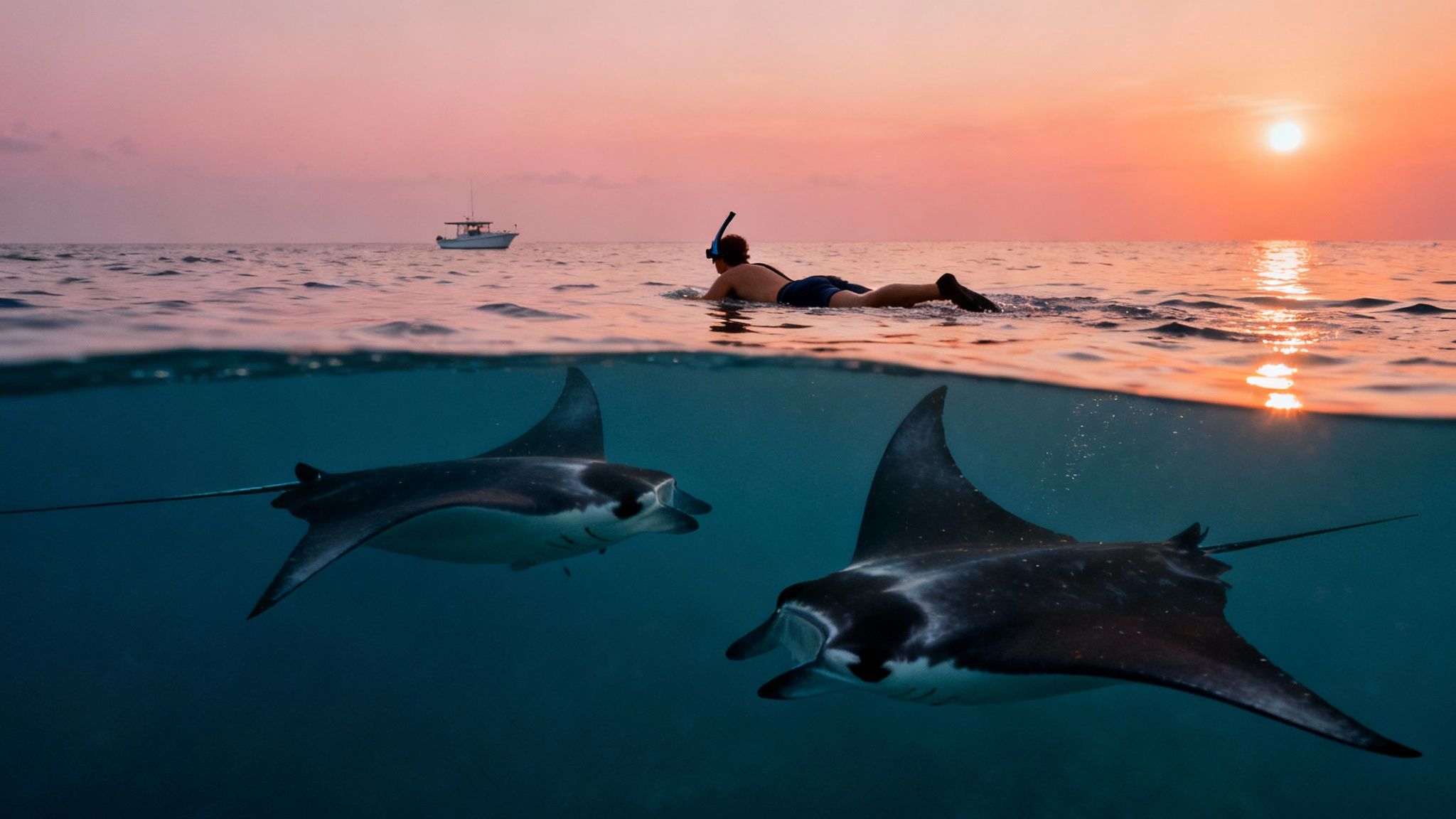
This experience is less about swimming and more like attending an underwater ballet where you have the best seat in the house. You'll hold onto a custom-built light board that floats on the surface, which keeps you stable and comfortable.
These powerful lights do two things at once. First, they illuminate the water in front of you. Second, and more importantly, they attract dense clouds of microscopic plankton. This plankton buffet is exactly what draws the manta rays in for their nightly feast.
What Makes This Experience So Unique?
Unlike a lot of wildlife tours where sightings are left to chance, the Kona coast offers an astonishingly reliable opportunity to see these animals. Tour operators here boast an 85-90% success rate for manta ray sightings all year long. That incredible consistency has made this a legendary spot.
Why is it so reliable? The nutrient-rich waters create a nightly plankton bloom, and the tour lights act like a magnet. This natural phenomenon supports a thriving eco-tourism scene that brings in over 80,000 snorkelers and divers every year. You can learn more about Kona's incredible manta ray population and sighting statistics over at the Kona Honu Divers blog.
This isn’t just watching from a distance, either. The manta rays, some with wingspans wider than a car, perform incredible acrobatics right in front of you. You’ll see them do graceful barrel rolls and somersaults, their enormous mouths open to filter the plankton-rich water. This mesmerizing dance happens just inches from your mask, creating a powerful, personal connection with these intelligent animals.
People often describe the encounter as magical or otherworldly. It’s a silent, beautiful performance where you truly feel like you’ve become part of the manta rays’ world, even if just for a short while.
Choosing Your Guide for a Magical Night
A great guide can turn an amazing activity into a lifelong memory. Companies like Manta Ray Night Snorkel Hawaii really specialize in creating safe, intimate, and educational experiences.
Another fantastic option, whether you're looking for a Manta Ray night snorkel or a daytime Captain Cook snorkeling tour, is Kona Snorkel Trips. Their commitment to small groups and expert guidance really makes for a high-quality adventure. They are an exceptional alternative when looking for a Manta Ray night snorkel tour.
The best part is that this incredible journey is accessible to almost everyone, even if you’ve never snorkeled before. The focus is on floating comfortably and just watching as nature puts on its spectacular show. It’s a must-do activity that consistently ranks as one of the most awe-inspiring things you can do on the Big Island, leaving you with a profound appreciation for the ocean and its magnificent inhabitants.
How the Underwater Ballet Actually Works
So, how do these tours guarantee such an incredible, up-close encounter every single night? It’s not magic, but it’s a brilliant setup that hinges on some pretty simple biology. The whole experience is smartly designed to bring you right into the manta rays' dining room without disturbing their meal.
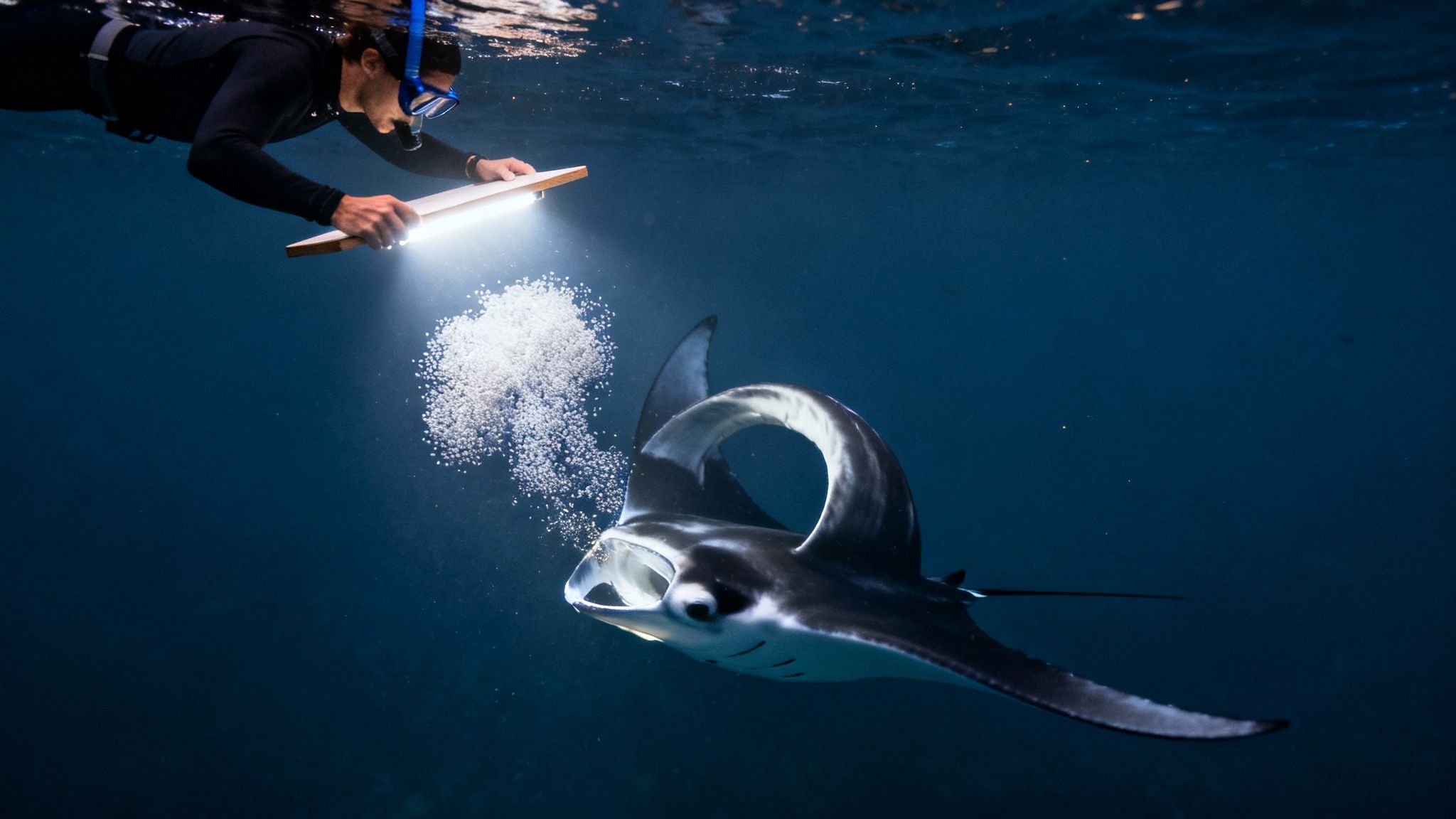
The secret weapon? Light.
Think of the powerful, underwater lights on the tour boats as a giant dinner bell. These bright beams shine down into the dark water, attracting huge clouds of microscopic critters called zooplankton. Just like moths to a porch light, the plankton swarm to the glow, creating a thick, shimmering buffet right where you'll be snorkeling.
This concentrated feast is exactly what manta rays live for. As filter feeders, they glide through the ocean with their massive mouths wide open, scooping up these tiny organisms. By setting up this reliable plankton buffet in the same spot night after night, the tour companies have basically taught the local mantas that the lights mean an easy, delicious meal.
Your Front-Row Seat on the Water
Once the "dinner bell" rings and the plankton arrive, your job is easy: just float and watch. You won't be swimming around chasing the mantas. Instead, everyone holds onto a specially designed, floating light board. This clever piece of gear is what makes the whole thing work so perfectly.
First, it’s your stability. The board is like a big, buoyant handrail that lets you relax on the surface without having to kick or tread water. This makes the experience super comfortable and accessible, even if you’re a total beginner. You just hang on, put your face in the water, and breathe.
Second, the board has its own powerful lights pointing straight down. This creates a personal column of light and plankton right below you, drawing the mantas in for a closer look. They'll swoop in to feed, performing their famous barrel rolls and graceful glides sometimes just inches away from your mask. It's an absolutely mind-blowing sight.
The experience is all about passive observation. By holding onto the board, you stay still and quiet, which allows the mantas to feed undisturbed. They get so comfortable that they come incredibly close, giving you a view you’ll never forget.
This carefully choreographed dance between light, plankton, and mantas is what makes the Kona snorkel so special and successful. It's a beautiful example of how we can witness nature up close, respectfully. To dive deeper, check out these fun facts about manta rays you should know.
Your Manta Ray Snorkel Experience Step-by-Step
From check-in to the moment you see the first manta, here’s a clear breakdown of what your adventure will look like.
Tour Stage | What Happens | Key Highlight |
|---|---|---|
Check-In | Meet the crew, sign waivers, and get sized for your wetsuit. | Getting geared up and feeling the excitement build. |
Boat Ride | A short, scenic trip out to the manta viewing site as the sun sets. | The crew’s safety briefing and fun stories about the mantas. |
In the Water | The crew deploys the light board, and you hop in to find your spot. | The moment you first dip your mask in and see the lights below. |
The Main Event | The mantas arrive and begin their feeding ballet right beneath you. | Seeing a giant manta ray glide towards you for the first time. |
Heading Back | After about 45 minutes in the water, you’ll climb back on board. | Warming up with snacks and hot drinks while sharing stories. |
Knowing the flow of the tour helps you relax and soak in every moment of this incredible experience.
For a premier adventure, Manta Ray Night Snorkel Hawaii provides an exceptional experience. If you're exploring various options, including a daytime Captain Cook snorkeling tour, consider Kona Snorkel Trips for their outstanding guided tours.
Choosing the Best Manta Ray Tour Operator
Picking the right tour operator for your manta ray snorkel on the Big Island can make all the difference. It can turn a good trip into a truly once-in-a-lifetime memory. The best outfits don’t just ferry you out to a viewing spot; they care deeply about your safety, your comfort, and, most importantly, the well-being of the mantas.
Think about it: a smaller group is almost always better. Fewer people in the water means more space for you, a clearer view, and a much more personal encounter with these incredible creatures. You're not just another face in the crowd.
What Makes a Great Tour?
So, what should you look for? First and foremost, safety. You want a crew with lifeguard-certified guides who give a solid safety briefing before anyone gets in the water. This isn't just a box to check; it’s about feeling completely at ease so you can soak in the magic.
Another huge piece of the puzzle is conservation. The best operators are genuinely committed to protecting the manta rays. They’ll teach you the golden rule: never touch a manta ray. Touching them can harm the protective slime coat on their skin, leaving them vulnerable to infection. Choosing a company that preaches and practices respect for wildlife helps keep this amazing experience possible for years to come.
Here are a few things to keep an eye out for:
Small Group Sizes: This is key for a more intimate, less chaotic experience.
Certified Guides: Look for lifeguard-certified professionals on board.
Good, Clean Gear: Nothing ruins a snorkel faster than a leaky mask or a shabby wetsuit.
An Educational Briefing: A great tour will teach you a thing or two about manta ray biology and behavior.
A Couple of Our Top Picks
For an adventure that feels personal and truly special, we highly recommend a tour with Manta Ray Night Snorkel Hawaii. They're known for keeping their groups small, which creates a fantastic connection between you and the ocean. Their guides are passionate and professional, making them a top-notch choice.
Another fantastic option is Kona Snorkel Trips. They're not only famous for their incredible manta ray night snorkel but also for their amazing Captain Cook snorkeling tours. They have a well-earned reputation for providing first-class, personal adventures along the Kona coast.
When you book with a reputable company, you're doing more than just buying a ticket. You're investing in a safe, educational, and ethical experience that supports the very ecosystem you've come to see.
At the end of the day, find a company that aligns with what’s important to you. Do they put the ocean first? Do they give you the peace of mind you need to relax and enjoy the show? A little research upfront goes a long way. It lets you float back, relax, and be completely mesmerized by Kona’s gentle giants.
To help you sort through all the options, we’ve put together a detailed breakdown in our guide to the 12 best Kona manta ray snorkel tours.
Meet the Famous Manta Rays of Kona
When you go on a manta ray snorkel on the Big Island, you aren't just looking at random sea creatures. You’re actually meeting a well-known community of local celebrities, each with its own name and a life story that researchers have been tracking for years. This completely changes the experience from just "seeing" manta rays to having a personal encounter with individual animals who call Kona home.
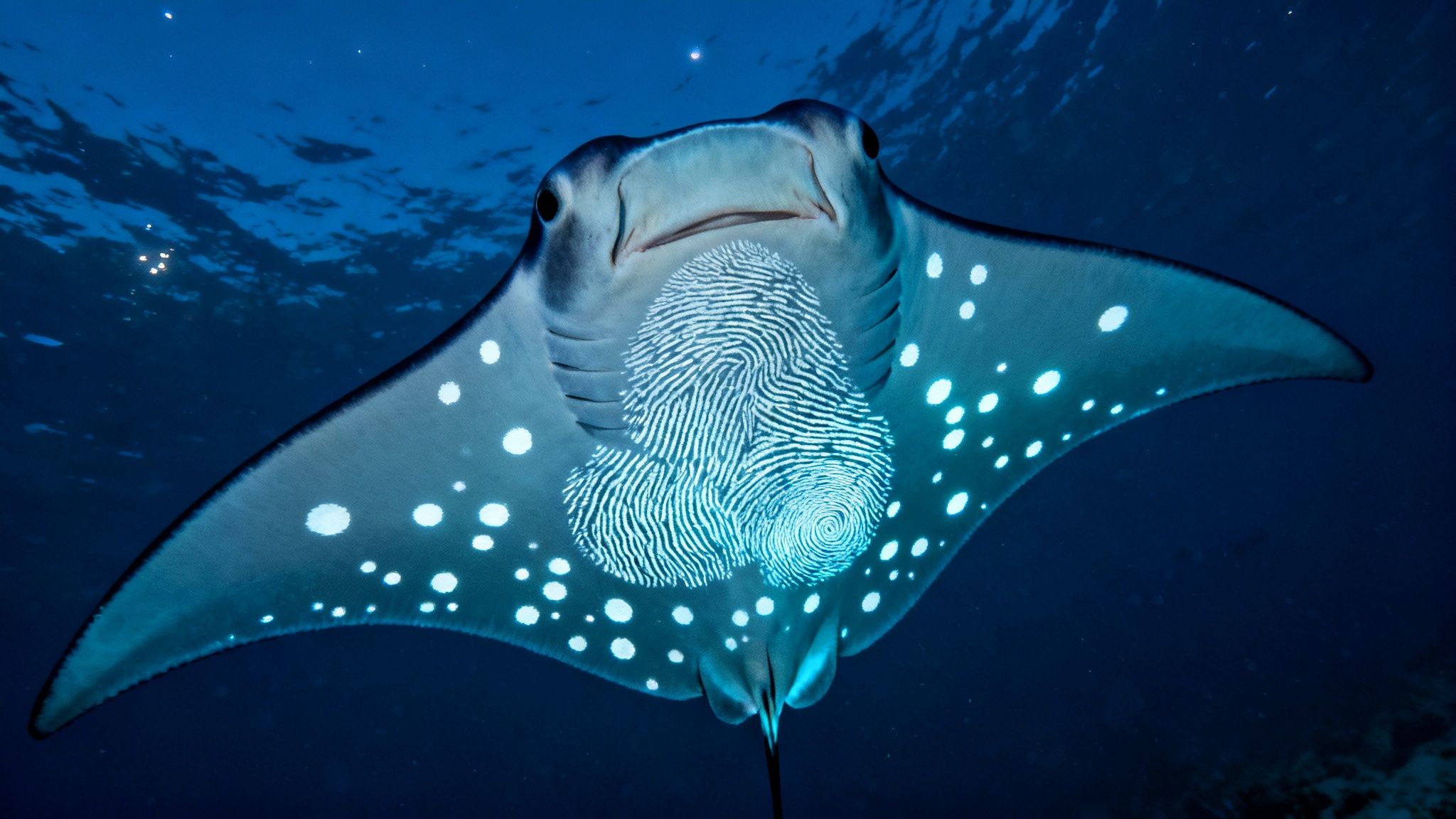
The mantas here aren't just passing through; they live in Kona’s waters all year long. This resident population is one of the most studied in the entire world, which is why the sightings are so consistent and special. You're not meeting tourists—you're meeting the locals.
How We Know Who Is Who
So, how do we tell them apart? The secret is on their bellies. Every single manta ray has a unique pattern of dark spots on its white underside. These markings are like a human fingerprint, making it possible for researchers and conservation groups to identify each one.
Groups like the Manta Pacific Research Foundation have been creating a catalog of these individuals for decades. When a new manta is spotted, it gets a name and is added to a database that follows its life, where it goes, and how it behaves.
This means when you’re out on the water, your guide might point out a specific ray gliding below. You could be meeting a local legend like "Big Bertha," famous for her enormous size, or "Lefty," who is easy to spot because of a notch in his fin. Knowing their names and stories adds a whole new level of connection to the encounter.
It's an incredible feeling to realize you're not just swimming with a manta ray, but with a specific, named individual who has been a part of this underwater community for years. This personal connection highlights the intelligence and individuality of these amazing animals.
The Kona Coast is home to a thriving, cataloged community of over 450 individual reef manta rays. Since 1979, researchers have identified and logged hundreds of these unique animals along this stretch of coastline. While these genetically isolated island populations are small, they are resilient. This makes Kona a truly one-of-a-kind place for reliable encounters with these intelligent creatures, who happen to have the largest brain-to-body ratio of any fish. You can learn more about these fascinating manta ray findings from recent studies.
Why This Matters for Your Snorkel
Knowing that these are resident animals with their own identities really brings home the importance of being a respectful guest. We are visiting their home and, essentially, their dining room. That’s why following the rules—never touching or chasing them—is so critical for protecting these beloved locals for generations to come.
This knowledge also makes your experience so much richer. Instead of just a fleeting glimpse of a wild animal, you become part of an ongoing story. You might even be the one to spot a new, unidentified manta, contributing to the research just by being there.
For an exceptional tour that really connects you with these famous residents, book with an operator who values education and respect. Both Manta Ray Night Snorkel Hawaii and Kona Snorkel Trips do a great job of this, ensuring you get a proper introduction to Kona's gentle giants.
Getting Ready for Your Manta Ray Snorkel
A little planning can make the difference between a good night and an absolutely unforgettable one. When you know what to expect and have the right things with you, you can just relax and let the magic happen. Think of this as your go-to checklist for a perfect evening with Kona's famous manta rays.
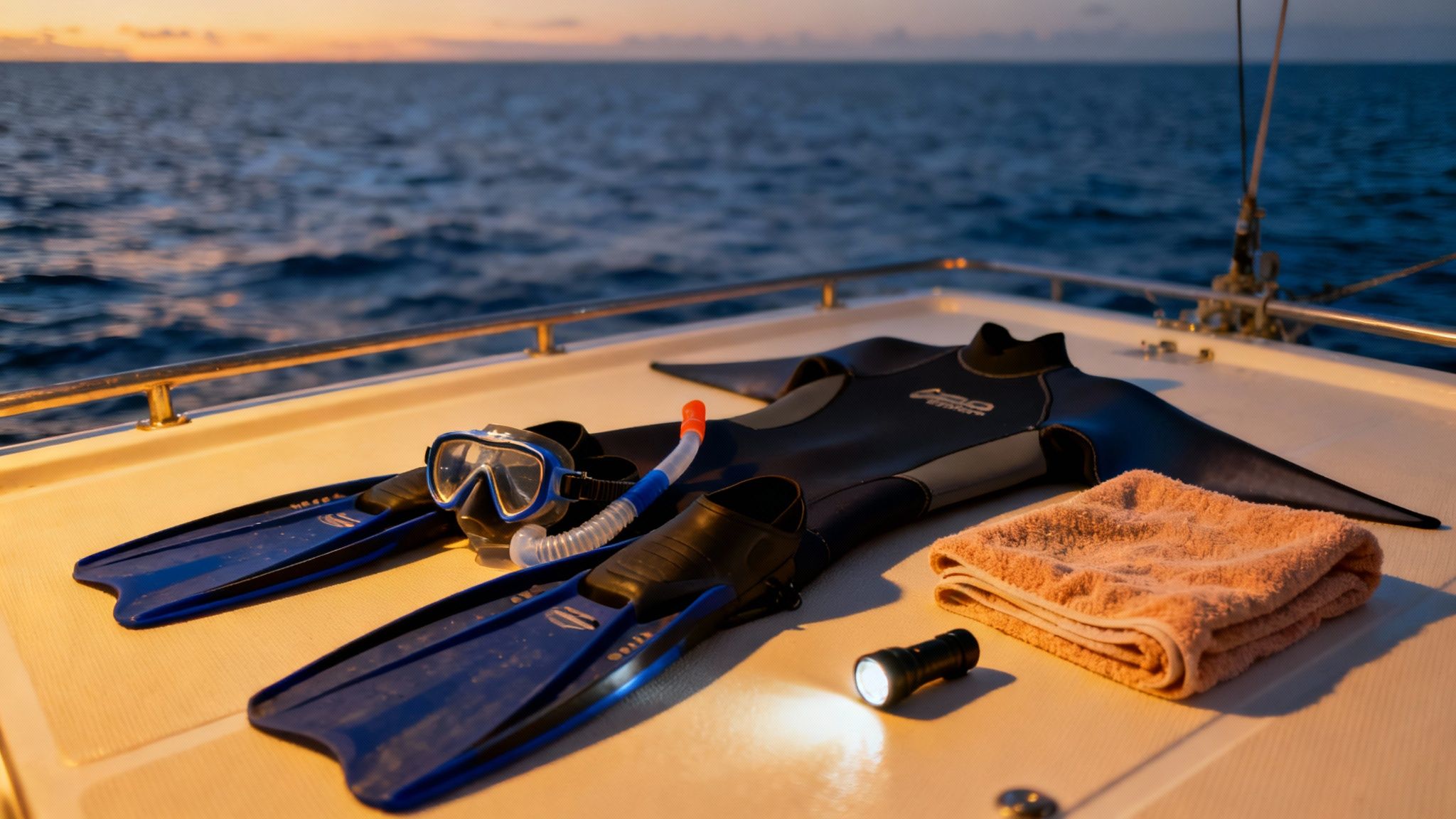
The good news? You don’t need to pack all your own snorkel gear. Any reputable tour company will have the main equipment ready for you.
Here’s what your tour operator will almost always provide:
A Wetsuit: Even in Hawaii, the ocean can get chilly when you're floating still at night. A wetsuit keeps you warm and comfortable, so you won't be thinking about anything but the show below.
Snorkel Gear: They'll have a properly fitted mask, snorkel, and fins for you.
Flotation Device: You'll be holding onto a large, custom-built light board that helps you float effortlessly. Some tours also offer pool noodles for extra buoyancy and comfort.
Your Personal Packing List
While the big stuff is covered, a few small items of your own will make the whole experience smoother and more comfortable from start to finish.
Here's what you'll want to bring along:
Swimsuit: The easiest thing to do is wear it under your clothes when you show up at the dock.
Towel: You'll be very happy to have a dry towel waiting for you when you climb back onto the boat.
Warm, Dry Clothes: This is a big one! That boat ride back to the harbor can feel surprisingly cool with the night air and ocean breeze. A sweatshirt, jacket, or long pants will feel amazing.
Reusable Water Bottle: It's always a good idea to stay hydrated. Most boats have a water cooler where you can get refills.
Motion Sickness Medication: If you even think you might get seasick, take medication before you get on the boat. Follow the directions on the package. The boat is anchored at the site, but the gentle rocking can get to some people.
Insider Tips for a Perfect Night
Beyond what's in your bag, a few pro tips can really elevate your adventure. One question I get a lot is whether to book a sunset tour or a later one. The sunset trip gives you a spectacular view on the way out, but the later, after-dark tours can sometimes be a bit less crowded.
The Kona manta ray snorkel is a huge deal. It brings in around 80,000 visitors a year and is a cornerstone of the local adventure economy. Tour operators have this down to a science, boasting a 90% sighting success rate all year long. The calmest waters are typically between April and October.
One of the best pieces of advice I can give is to just relax in the water. Try to be still. The less you splash and kick, the more at ease the mantas will be, and you'll save your energy to simply enjoy the incredible ballet unfolding beneath you.
Looking to make the most of your time on the water? A popular option is to pair the night snorkel with a daytime excursion. Many people book a Captain Cook snorkeling tour to explore the stunning coral reefs at Kealakekua Bay during the day, then head out for mantas in the evening. It's an amazing one-two punch of Kona's best underwater sights.
For more great advice, be sure to check out these 10 manta ray snorkel tips before you go. Being prepared with these simple things means you can put all your focus where it belongs: on the gentle giants gliding just inches away.
Your Manta Ray Snorkel Questions, Answered
Jumping into the ocean at night to swim with giant, shadowy creatures? It’s completely normal to have a few questions, even if you’re buzzing with excitement. Let’s clear up some of the most common things people ask so you can book your tour feeling totally confident and ready for the adventure.
What if the Manta Rays Don't Show Up?
This is the big one, isn't it? While the Kona manta ray snorkel has an incredible success rate—around 90% on most nights—these are wild animals. There's just no way to offer a 100% guarantee.
So, what happens on that rare off-night? Any reputable tour company has a plan. The industry standard is to offer you a "second chance" trip, letting you rebook for another night completely free of charge.
This is exactly why I always tell people to schedule their manta ray tour for one of their first nights on the Big Island. That way, if you draw the short straw, you have plenty of other evenings to try again without scrambling your vacation plans.
Is There a Manta Ray "Season"?
Nope! This is one of the best parts about manta ray snorkeling in Kona. The mantas you'll meet are locals; they live here year-round and aren't migrating through.
That means you can book this incredible experience any time of year. Whether you're visiting in the peak of summer or for a winter getaway, the mantas will be showing up for their nightly plankton buffet. The only real variable is the ocean, which tends to be a bit calmer and glassier from April through October.
Is It Safe to Swim with Manta Rays at Night?
Absolutely. Safety is the number one priority, and the entire experience is built around it.
It's a common misconception, but manta rays are nothing like their stingray cousins. They are completely harmless to humans—no stinger, no barb, no teeth. They're gentle giants interested only in the plankton attracted by the lights.
Every guide is a trained, lifeguard-certified professional who is in the water with you the whole time. You'll also be holding onto a large, stable light raft, which gives you something secure to hang onto and keeps you effortlessly afloat.
What’s the Difference Between Snorkeling and Diving with Mantas?
It all comes down to your point of view—literally. Are you looking down from the surface or up from the seafloor?
Snorkelers: You'll be on the surface, holding onto a big floating light board. The lights shine down, creating a column of plankton that draws the mantas right up to you. They'll perform their graceful barrel rolls just inches below your body.
Divers: If you're SCUBA certified, you'll go down to the ocean floor, about 30-40 feet deep. You’ll kneel in the sand and point your dive light up, watching the mantas swoop and glide through the beams of light above you.
Both are spectacular. Snorkeling feels incredibly up-close and personal, while diving gives you a more theatrical, wide-angle view of the show. For a top-notch snorkel experience, check out the trips offered by Manta Ray Night Snorkel Hawaii.
Why Can’t I Touch the Manta Rays?
This is the golden rule of the manta ray snorkel, and it’s non-negotiable. Manta rays are covered in a protective mucous coating, a sort of slime layer that acts as their immune system. It’s what protects them from bad bacteria and infections.
When we touch them, the oils and friction from our skin can strip away that vital coating, leaving them vulnerable to disease. The best tour operators, like the team at Kona Snorkel Trips, are strict about this no-touching policy to ensure the long-term health of Kona's beloved manta population.
Remember, we're just visitors in their world. The best way to show respect is simply to watch, marvel, and give them their space.
Where Are the Best Places to See Manta Rays?
While you might get lucky and see a manta ray on a random daytime snorkel, the real magic happens at three specific sites where the tours operate. The powerful lights have essentially trained the mantas to come to these "campsites" for a reliable meal each night.
The three primary locations are:
Manta Village: Just south of Kailua-Kona in Keauhou Bay. This is the original and most consistent viewing site.
Manta Heaven: Located north of the airport, this spot is also known as Garden Eel Cove.
Kohala Coast: A newer, less-crowded site up by the resorts, though sightings can be a bit more hit-or-miss.
Your tour boat captain will always head to the spot with the best conditions and most recent manta activity, giving you the greatest chance for an unforgettable night.
Choosing a great tour operator is key. If you're looking for a fantastic trip, whether it's for the night snorkel or a stunning daytime Captain Cook snorkeling tour, you really can't go wrong with Kona Snorkel Trips.
Comments