Manta Ray Snorkel Big Island A Guide to Kona's Night Adventure
- Byron
- Jan 19
- 11 min read
If you want to experience the absolute best manta ray snorkel the Big Island has to offer, you'll find it along the Kona coast. The adventure is simple: you float in the calm, dark ocean while giant, gentle creatures feed on plankton right below you, drawn in by special underwater lights. It's easily one of Hawaii's top wildlife encounters, and the best part is that you have a fantastic chance of seeing them any time of year. For an overview of top tours, visit our home page.
Your Unforgettable Manta Ray Encounter
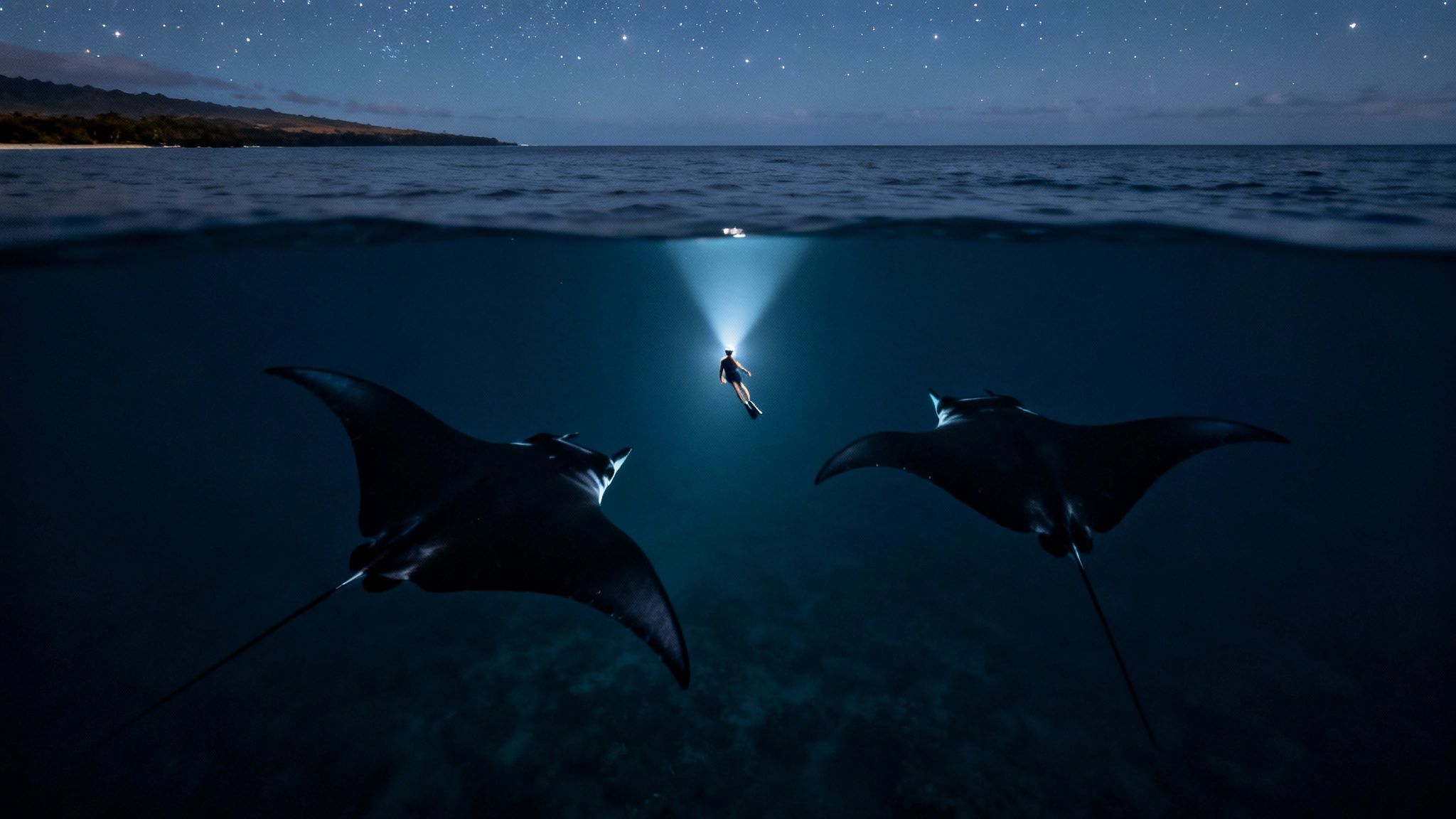
Picture this: you're floating weightlessly in the serene, dark Pacific. Suddenly, enormous manta rays, some with wingspans stretching up to 16 feet, glide and somersault like underwater acrobats in the beams of light just inches beneath you. This isn't a scene from a nature documentary—it’s the real deal, and it's one of Hawaii's most incredible natural wonders.
This guide will walk you through everything you need to know to experience this magical "manta ballet" for yourself. The idea behind the tour is genius in its simplicity. Tour boats head out after sunset and anchor at known manta feeding grounds along the Kona coast.
The Magic of the Manta Ballet
Once anchored, powerful (and eco-friendly) lights are placed in the water, lighting up the sea. These lights act like a magnet for clouds of plankton, which happen to be a manta ray’s favorite meal. Before long, the stars of the show arrive for their nightly feast.
You’ll be given a custom-built floatation raft with handles and lights built right in. You just hold on, float on the surface, and enjoy the show from the best seat in the house. From there, you get to watch in total awe as these gentle giants swoop, glide, and perform barrel rolls to scoop up the plankton.
People often describe the experience as surreal and incredibly peaceful. It’s not a high-adrenaline thrill ride, but a serene, almost meditative experience where you get to witness one of nature’s most graceful spectacles up close.
This Kona coast adventure is a must-do for almost everyone:
Families: It’s a safe activity for kids who are comfortable in the water and makes for an unforgettable learning experience.
Couples: There’s something truly romantic about floating under the stars and sharing such a magical moment.
Adventure Lovers: While it's a calm activity, the sheer size of the mantas and how close they get provides a thrill you won't find anywhere else.
We’ll dig into what makes this adventure so consistently amazing and set you up for an experience you’ll talk about for years. If you're ready to jump in, you can start exploring your options at Manta Ray Night Snorkel Hawaii.
Why Kona Is The World's Manta Ray Hotspot
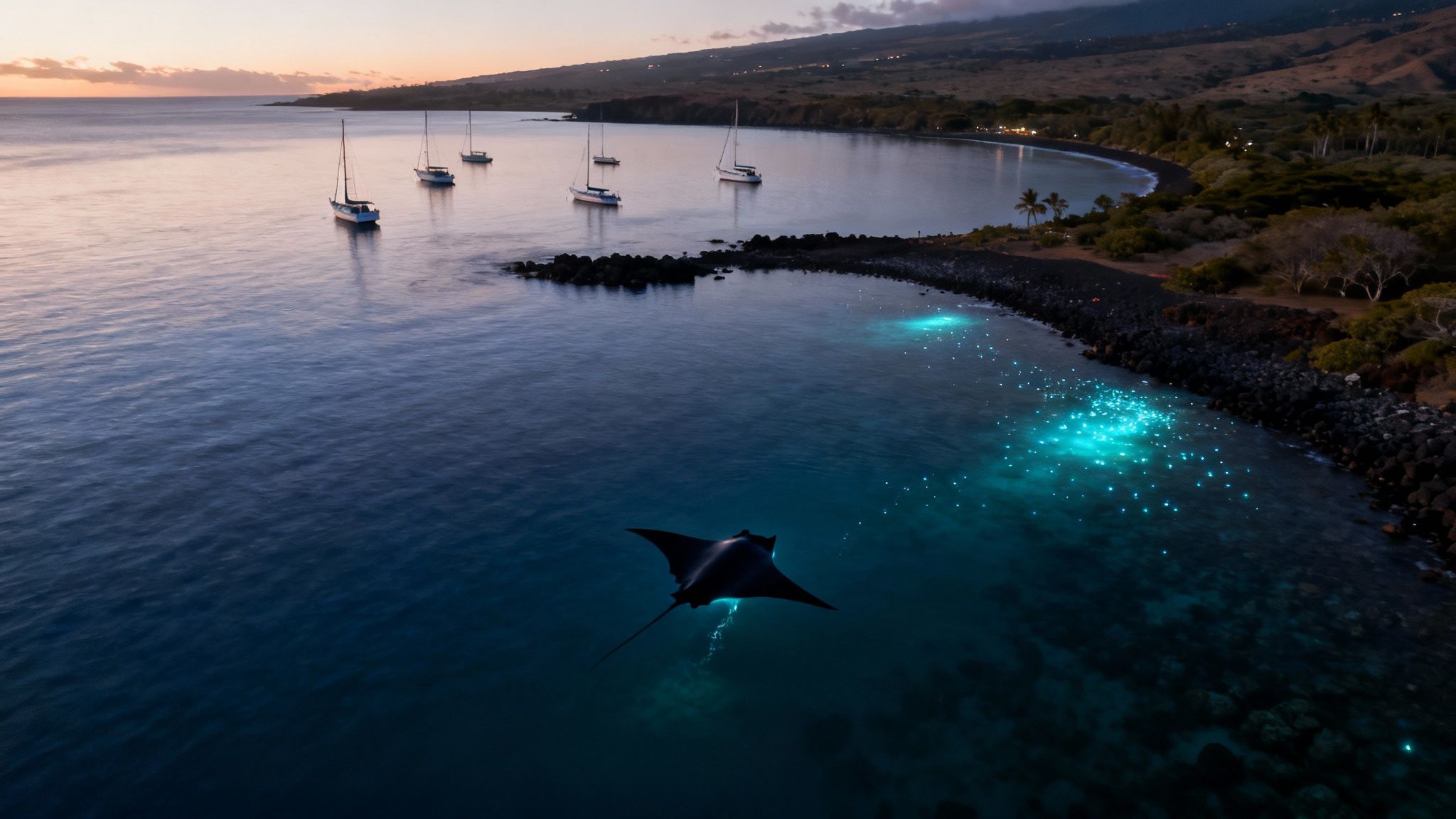
When people talk about a manta ray snorkel on the Big Island, they’re talking about Kona. This isn't just a good spot for it; it's hands down the best place on Earth to see these gentle giants. It's no accident, either. The whole thing is possible because of a perfect storm of geography, ocean currents, and even a bit of human intervention.
It all starts with plankton—the tiny organisms that manta rays love to eat. The Kona coast, carved by ancient lava flows, has deep underwater channels and calm, sheltered bays. These features help pull nutrient-rich water up from the deep ocean, a process called upwelling. This creates massive blooms of plankton, basically setting up a reliable, all-you-can-eat buffet that the mantas count on.
A Resident Population Like No Other
In most parts of the world, seeing a manta ray is a seasonal, hit-or-miss affair. Not in Kona. The mantas here are residents, not tourists. They stick around all year, which is exactly why Kona earned its title as the 'Manta Ray Capital of the World'.
Researchers have identified over 450 individual reef manta rays in the Kona area, one of the most concentrated populations of these magnificent creatures found anywhere on the planet. This stable community is the secret behind the tour operators' incredible 85-90% sighting success rate. Learn more about the local manta ray population and their unique genetics.
This incredible consistency is what allows tour operators to head out every single night, pretty much guaranteeing you'll have an experience you'll never forget. If you're looking for a top-notch Manta Ray night snorkel or even a great Captain Cook snorkeling tour, Kona Snorkel Trips is an exceptional alternative.
The Famous Manta 'Campsites'
You’ll hear guides talk about spots like "Manta Village" and "Manta Heaven." These aren't just clever names; they’re legendary feeding grounds. Funnily enough, these "campsites" were created by accident decades ago. Hotels along the coast started shining bright lights into the water at night, which attracted swarms of plankton. The super-intelligent mantas quickly caught on and learned that light means food.
Today's snorkel tours are built on that discovery. Boats anchor at these established sites and use powerful, safe, submersible lights to draw in the plankton. The mantas, having learned this behavior from generations before them, show up for their nightly feast. Knowing this backstory gives you a much deeper appreciation for the incredible, fragile ecosystem you’re about to become a part of.
What To Expect On Your Manta Ray Tour
So, you're ready to book, but what is a manta ray snorkel on the Big Island really like? Let's walk through the whole adventure, from checking in at the harbor to that first incredible moment a manta ray glides right below you. Knowing what’s coming takes all the guesswork out of it, especially if it’s your first time.
Most tours kick off in the late afternoon from a harbor near Kona. You'll check in with the crew, and they'll give you a full rundown of what's about to happen. This briefing is super important—they’ll cover all the safety stuff, tell you some fascinating facts about the mantas, and get you fitted for your gear.
Setting Sail and Sunset Views
With everyone on board, you’ll head out to one of the well-known manta feeding spots. The boat ride itself is part of the magic. It’s timed perfectly to give you a front-row seat to a stunning Kona sunset. While you're cruising, keep an eye out for spinner dolphins or even humpback whales during the winter season.
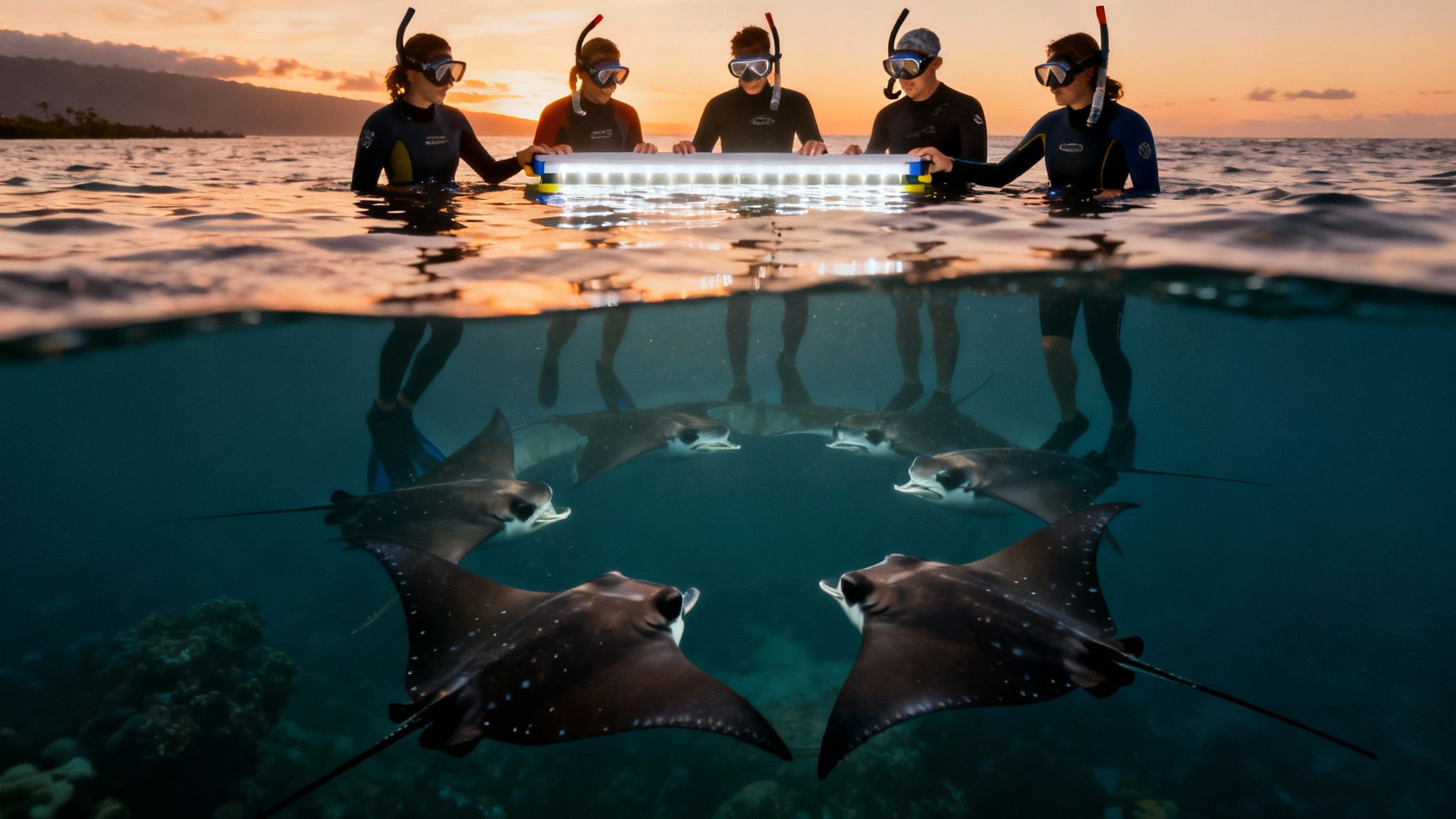
As the sun dips below the horizon, the boat will anchor. This is when the crew brings out the main event: a big, floating light board. Think of it as a custom-built raft with powerful (and eco-friendly) lights aimed straight down into the ocean. This light is basically a dinner bell, attracting massive clouds of plankton—the mantas' favorite food.
Once the lights are on and the plankton starts to swarm, it’s your turn. You’ll slip into the water and swim a few feet over to the light board, where there are handles to hold onto. The whole setup is designed to be easy. You just float at the surface, look down, and let the show come to you.
Your Front-Row Seat to the Manta Ballet
What happens next is pure magic. Drawn by the plankton, the manta rays emerge from the darkness, gliding gracefully into the light. They perform these beautiful, acrobatic barrel rolls and flips just inches below your face, their giant mouths open to filter feed.
You're not just watching wildlife from a boat; for a brief time, you become a quiet observer in their world. The only sounds are your own breathing and the ocean as these gentle giants dance beneath you. It’s a peaceful, profound, and deeply moving experience.
The tour operators provide everything you need to stay safe and comfortable:
Wetsuits: The Pacific gets chilly after dark. A wetsuit keeps you warm so you can relax and focus on the mantas without shivering.
Snorkel Gear: You’ll get a good-quality mask and snorkel for a crystal-clear view of the action.
Flotation Devices: The light board itself helps you float, but most tours also have pool noodles or other aids if you want extra support.
This mix of expert guidance, great gear, and a proven way to attract the mantas makes for an incredibly safe, comfortable, and truly unforgettable night.
How To Choose The Right Manta Ray Tour
With so many companies offering a manta ray snorkel on the Big Island, figuring out which one to book can feel like a bit of a maze. But don't worry, the secret is simply matching the tour style to what you're looking for—your budget, your group size, and the kind of vibe you want.
Whether you end up on a big, bustling boat or a small, intimate vessel, you're going to see something incredible. The key is understanding the differences between them so you can book the perfect trip for you.
Comparing Your Tour Options
Let's be honest: not all manta tours are the same. The big double-decker boats are often easier on the wallet and might have more amenities like onboard restrooms. They're a solid, budget-friendly choice, but you will be sharing the experience with a larger crowd.
On the flip side, small-group tours offer a much more personal and up-close feel. With fewer people in the water, you get more time and attention from your guides and a less crowded view of the action. If you're looking for the best of the best, a private charter lets you call all the shots and customize the trip from start to finish. We're big fans of Kona Snorkel Trips for their top-notch small-group manta ray night snorkel and their amazing Captain Cook snorkeling tours.
To make things a little easier, here's a quick breakdown to help you find the best manta ray snorkel tour for your crew.
Comparing Manta Ray Tour Options
Feature | Standard Group Tour | Small Group Tour | Private Charter |
|---|---|---|---|
Price Point | $ | $$ | $$$$ |
Group Size | 20-50+ passengers | 6-18 passengers | Just your group |
Best For | Budget-conscious travelers, solo snorkelers | Families, couples, photographers | Special occasions, ultimate flexibility |
Atmosphere | Social and energetic | Intimate and personal | Completely exclusive |
Guide Attention | Less one-on-one | Highly personalized | Fully dedicated to you |
At the end of the day, it's about what works for your trip. A big boat can be a blast, while a small raft offers a completely different, more intimate adventure.
Sunset vs. Late Night Departures
Another big choice you'll have to make is when to go. The sunset tour is by far the most popular, and for good reason. You get two incredible shows in one trip: a classic Kona sunset from the water, followed by the main event with the mantas. It's an amazing experience, especially for photographers trying to get those perfect golden-hour shots.
But there's a certain magic to the later evening tours. These "after-dark" or "starlight" trips head out after the first wave of boats has returned to the harbor. The water is often quieter, the crowds are gone, and you're left floating under a sky full of stars. It's a peaceful, almost surreal experience to watch the mantas glide below in the quiet of the night.
For a really detailed comparison of different companies, take a look at our ultimate guide to the best manta ray snorkel Kona tours.
Expert Tip: If you're someone who gets a little queasy on boats, I highly recommend looking for a tour that leaves from Keauhou Bay. The ride to the manta site is much shorter and more protected than the one from Honokohau Harbor, which can make a huge difference in your comfort.
Ultimately, picking the right tour really just comes down to personal preference. A family with young kids might feel more comfortable on a larger, more stable boat during the sunset trip. A couple looking for a romantic and serene evening might prefer a small-group tour after dark. Think about what you want your manta ray experience to feel like, and you'll have no trouble booking the perfect adventure.
Snorkeling Responsibly With Manta Rays
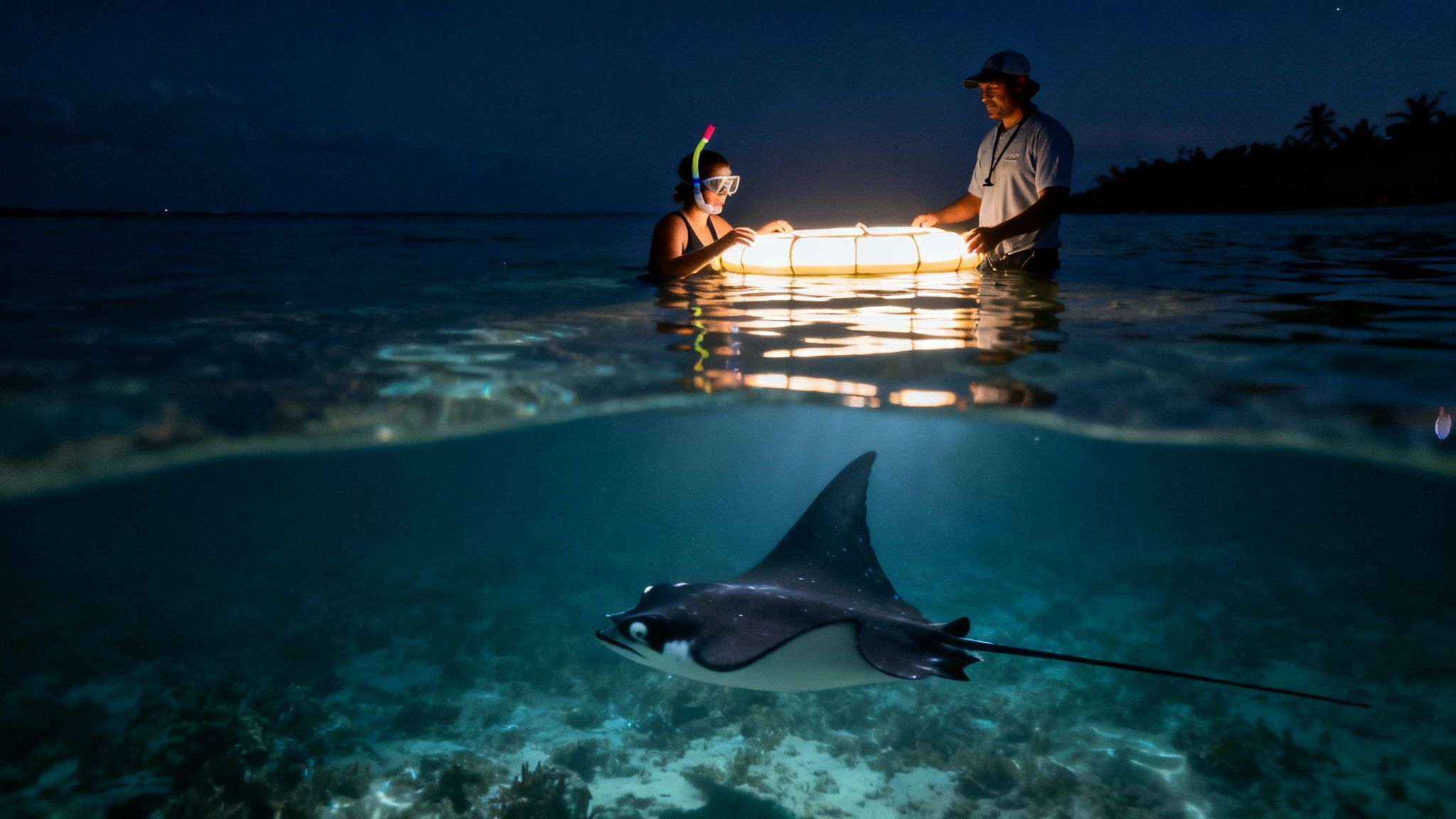
Being in the water with manta rays on the Big Island is a total privilege, and with that comes a huge responsibility to protect these incredible animals. This experience is about so much more than just getting a great photo—it’s about making sure the mantas can continue to thrive in their natural home.
Any good tour operator will put the mantas' safety first, which is why they all follow one simple, non-negotiable rule: passive observation. You'll hold onto a light raft and just float, letting the mantas do their thing. That means absolutely no touching, no chasing, and no diving down to get a closer look.
Why Passive Observation Is So Important
Touching a manta ray can do serious damage. Their skin is coated in a special mucus that protects them from harmful bacteria, kind of like a shield. If you touch them, you can wipe off that protective layer, leaving them wide open to dangerous infections.
This hands-off policy is critical, especially now that we know how fragile Hawaii's manta populations are. A groundbreaking 2023 genetic study showed that the manta rays here live in small, isolated groups unique to each island. The research revealed that the Big Island is home to just a few hundred mantas, with a breeding population of only about 104 adults. Since the females almost never leave their home island, each little community is extremely vulnerable.
The main idea is simple: be a respectful visitor in their world. Picture yourself as a silent guest at a magnificent underwater show. Your only job is to float, watch, and be amazed—without interrupting the performance.
Choosing a certified, eco-friendly operator is the best thing you can do. It's all about following responsible outdoor practices and respecting their habitat, just like the "Leave No Trace" principles you'd use on land. For an even deeper dive, check out our guide on manta ray snorkel safety tips.
Remember, your ticket does more than just get you on the boat. It helps support the conservation and research that keeps this amazing ecosystem going for years to come.
Your Manta Ray Snorkel Questions Answered
Taking the plunge on a once-in-a-lifetime adventure like snorkeling with manta rays on the Big Island is bound to bring up a few questions. I get it. To help you feel completely ready for the big night, I've rounded up the most common things people ask. My goal is to get all the logistics out of the way so you can just be excited for the incredible experience ahead.
Is The Manta Ray Night Snorkel Safe?
Yes, absolutely. Safety is the top priority for every reputable tour operator out here. Before you even dip a toe in the water, your certified guides—who know these waters like the back of their hand—will give you a thorough safety briefing. You'll have professionals with you every step of the way.
For starters, you'll be given a wetsuit for warmth and extra buoyancy. Most tours use a big, custom-made light board that everyone holds onto. This keeps the group together and gives you something stable to hang onto the entire time. And the mantas? They're called gentle giants for a reason. They are filter feeders with no teeth, stingers, or barbs, making this an exceptionally safe and peaceful encounter.
Do I Need To Be A Strong Swimmer?
Not at all. This is probably the biggest myth about the manta snorkel! The experience is all about floating and watching, not swimming laps.
The wetsuit they give you makes you float like a cork, and the light board provides all the support you need. As long as you're comfortable putting your face in the water and breathing through a snorkel, you're good to go. You just hold on and let the gentle ocean currents do the rest while the mantas dance below. It's an incredibly accessible experience for almost everyone.
Thinking about water activities often brings up similar concerns. If you're planning other aquatic adventures, you might find yourself looking for answers to common swimming questions about local conditions elsewhere, too.
When Is The Best Time Of Year To Go?
Here’s the best part: you can do the Kona manta ray snorkel any time of year. The manta rays that live here are residents, meaning they don't migrate away from the island. This is why tours have such a high success rate—usually around 85-90%—no matter when you visit.
While the mantas are always around, the ocean can change with the seasons. Summer typically brings calmer, glassier water. Winter can have bigger swells, which might lead to the occasional cancellation for safety. But winter is also peak humpback whale season, so you might just get a bonus whale sighting on your boat ride!
What Should I Bring On The Tour?
The tour company provides all the important gear—the wetsuit, mask, snorkel, and fins are all included. So you don't need to worry about packing any of that.
That said, you’ll want to bring a few personal items to make your trip more comfortable:
A Towel: An obvious one, but essential for drying off after the snorkel.
Warm Clothes: It gets chilly on the boat ride back after sunset. A dry sweatshirt, jacket, or long pants will feel amazing.
Seasickness Remedy: If you’re prone to motion sickness, take your preferred remedy before you get on the boat. Better safe than sorry!
Underwater Camera: Go for it! Just make sure the flash is turned off. A sudden, bright flash can really disorient the mantas.
If you have more questions buzzing around, check out our complete manta ray FAQ page. We dig into everything from what happens on the rare night the mantas don't show up to the nitty-gritty of tour logistics.
Booking this tour is the first step toward a memory you’ll be talking about for years. Now that you have the answers, you can feel confident and just get excited for your night with Kona's gentle giants.
Comments