Manta Ray Snorkel Big Island: Best Kona Tours & Tips
- Byron
- Jan 6
- 12 min read
Imagine this: you're floating in the warm, dark waters of the Pacific, the Hawaiian stars twinkling above you. Suddenly, a giant, graceful shadow glides silently beneath you, its massive wingspans carrying it through the water like an underwater bird. This isn't a scene from a movie—it's the world-famous manta ray snorkel on the Big Island, an experience that consistently tops lists of the planet's best wildlife encounters.
Ready to plan your own adventure? We'll walk you through everything you need to know to join us at Manta Ray Night Snorkel Hawaii for this unforgettable aquatic ballet.
The Magic of Kona's Gentle Giants
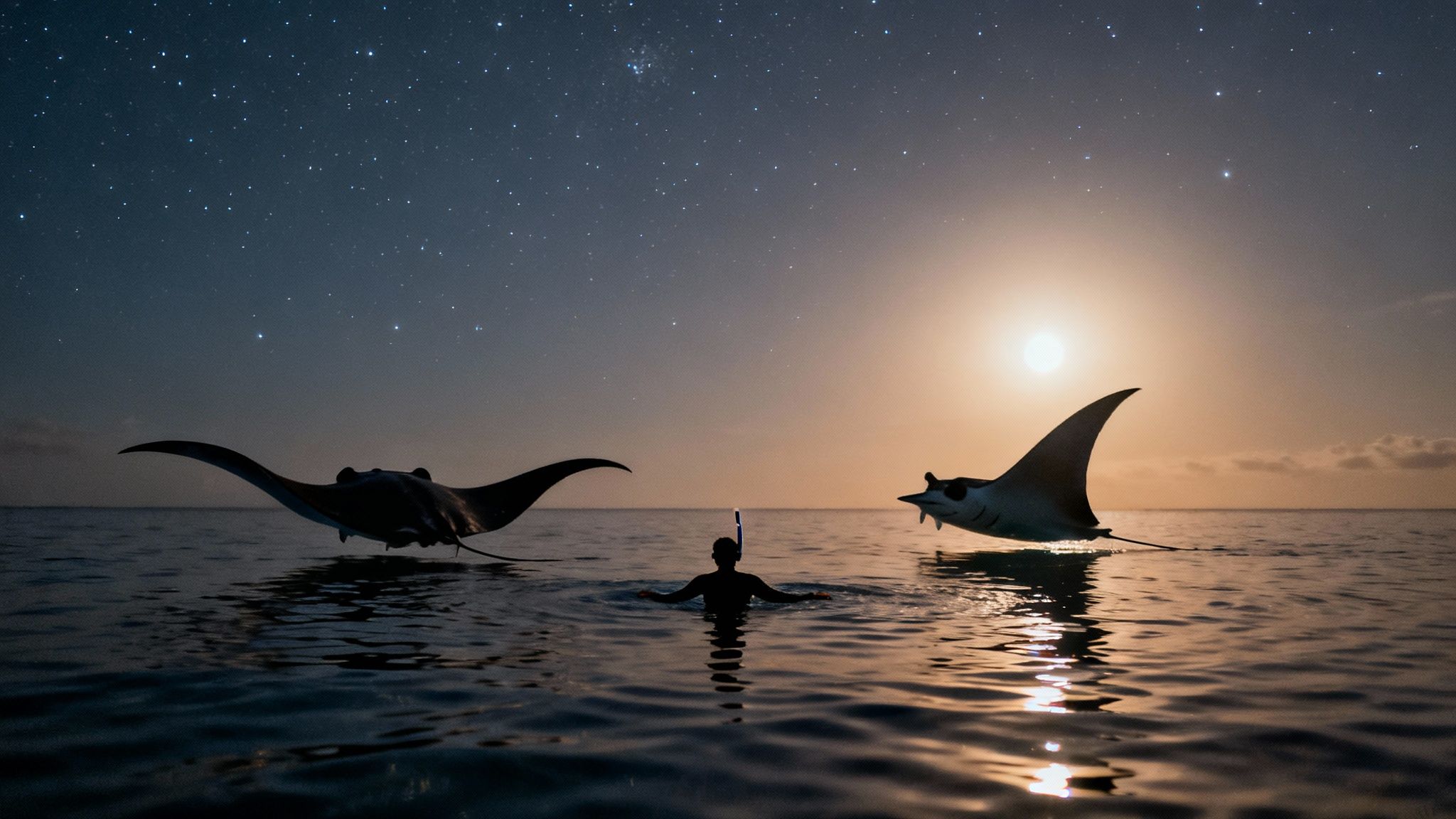
The Kona coast of Hawaii’s Big Island has become the world's most reliable and spectacular place to swim with manta rays at night. This guide is your complete playbook for planning this bucket-list experience, from understanding the science behind the magic to choosing the perfect tour.
We'll introduce you to the gentle giants themselves and cover all the essentials, including how to interact with them safely and respectfully. Whether you're a seasoned globetrotter or a family looking to create a core memory, our goal is to get you fully prepared for a truly once-in-a-lifetime experience. For an even deeper dive, be sure to read our complete guide to night snorkeling with manta rays.
A Unique and Local Population
So, what makes the Kona manta ray experience so special? It all comes down to a resident population of reef mantas (Mobula alfredi). These aren't just seasonal visitors passing through; they're a distinct, year-round community that calls this coastline home.
In fact, groundbreaking genomic research from 2023 confirmed just how unique they are. The study revealed that Big Island mantas are genetically isolated. Unlike their cousins who roam vast continental shelves, Hawaiian mantas have significant DNA differences, proving they are unique, island-specific groups. You can read the full research about these manta findings if you're curious about the science.
This is what makes the encounters here so reliable and awe-inspiring. You aren't just seeing a manta ray; you're meeting an individual from a truly special and localized family of animals.
This guide provides everything you need to plan your trip, but if you're looking for an exceptional alternative when looking for a Manta Ray night snorkel tour or a Captain Cook snorkeling tour, we highly recommend exploring the options from Kona Snorkel Trips.
Why Kona Is The World's Best Manta Ray Destination
So, what makes the Kona coast the undisputed global capital for manta ray encounters? It’s not just a happy accident. It’s a perfect storm of geography, biology, and a brilliantly simple idea that has turned into a reliable, breathtaking spectacle you just won't find anywhere else on the planet.
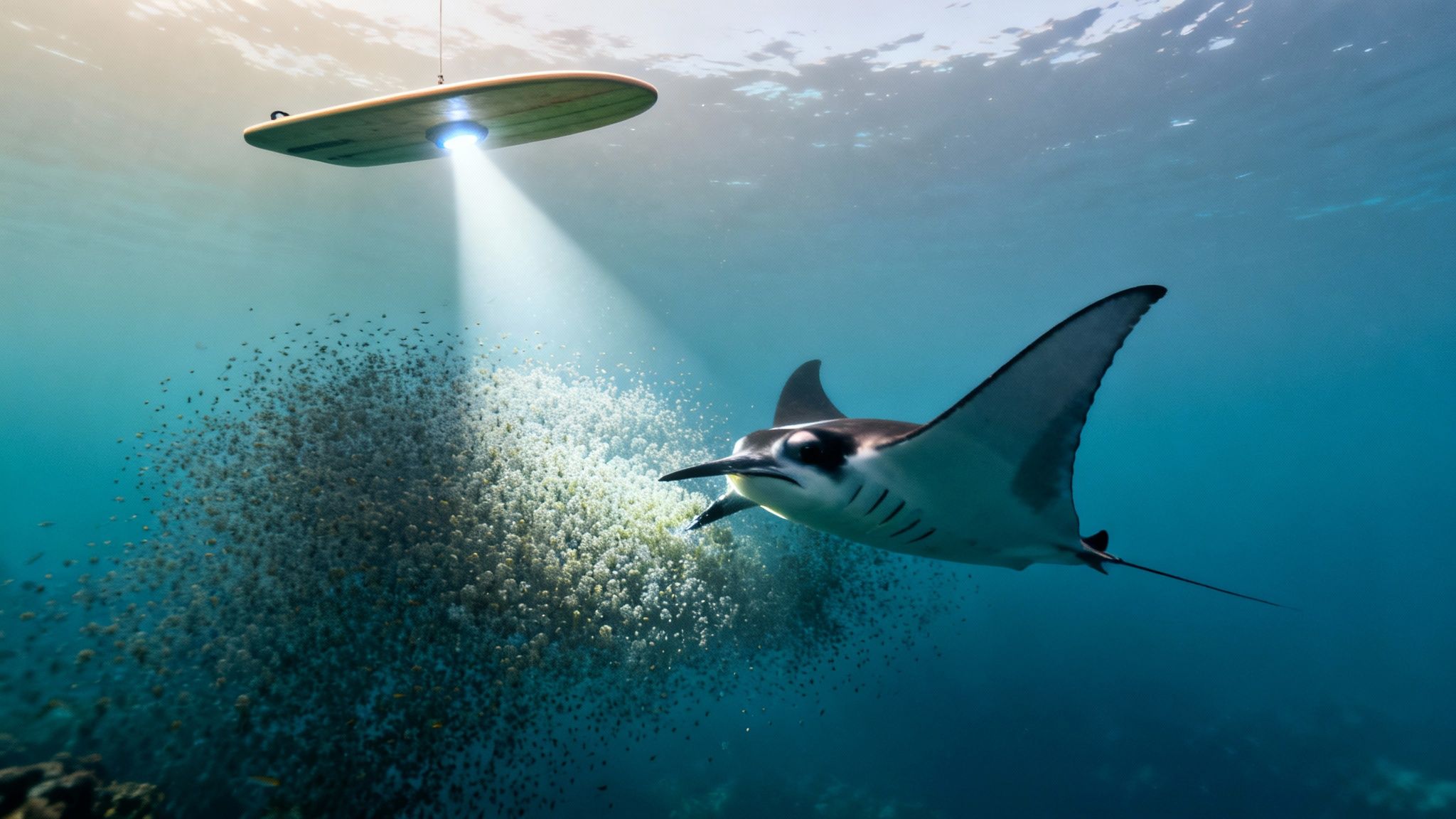
The whole thing started with what locals affectionately call the "campfire effect." Years ago, a hotel on the coast would shine bright lights into the water at night. These lights attracted swarms of microscopic plankton, and the intelligent manta rays quickly figured out that this nightly light show meant an easy, all-you-can-eat buffet.
Today's tour operators have perfected this concept. They use powerful, eco-friendly underwater light boards that act like magnets for plankton, creating a glowing cloud of the mantas' favorite food. This reliable food source is the secret ingredient to Kona's incredible success.
The Science Behind The Show
Imagine floating in the dark ocean off Kona's coast, watching as giant, graceful shadows emerge from the deep. You’re not alone. This incredible experience brings in over 80,000 people every year for night snorkel tours, generating more than $10 million in bookings annually.
So what's the magic? Nutrient-rich currents create nightly plankton blooms. But the real game-changer came around 2012, when modern underwater light arrays were introduced, boosting plankton density by a staggering 300-500%. This turned a good dive into a feeding frenzy, with snorkelers now seeing an average of three mantas per trip. You can dive deeper into this unforgettable underwater adventure in Kona to learn more.
This dependable food source, combined with a resident population of manta rays that live here year-round, results in an astonishingly high sighting rate of over 90%. That consistency is what truly sets the manta ray snorkel Big Island experience apart from anywhere else in the world.
Kona's Iconic Manta Viewing Sites
Two main spots have become legendary for these nightly performances, each offering a slightly different vibe. Both are tucked along the calm, protected leeward side of the island, which means perfect snorkeling conditions almost every night.
Manta Village (Garden Eel Cove): Just north of Kailua-Kona, this is probably the most famous and consistent site. It’s very sheltered, making the water calm and ideal for first-timers or families. The concentrated viewing area often attracts large groups of mantas.
Manta Heaven (Keauhou Bay): Located south of Kailua-Kona, this spot is thought to be home to a slightly larger overall population of rays. Because the bay is bigger, the mantas can be more spread out, but that can also mean a less crowded feel on some nights.
While the experience feels like pure magic, it's a responsible tourism framework that keeps it going. Tour operators, like Manta Ray Night Snorkel Hawaii, work hand-in-hand to make sure the mantas' well-being comes first, following strict guidelines to protect these gentle giants for generations to come.
Ultimately, it’s this perfect recipe—a non-migratory manta population, nutrient-rich waters, a calm coastline, and a well-established, eco-conscious industry—that cements Kona's reputation. It’s a sustainable adventure built on a deep respect for marine life. If you're looking for a fantastic alternative tour, Kona Snorkel Trips offers amazing manta ray night snorkels as well as daytime adventures to Captain Cook.
What To Expect On Your Manta Ray Snorkel Tour
So, you're ready for your manta ray snorkel Big Island adventure. It's a surreal experience, and knowing how it all works can help turn any pre-trip nerves into pure excitement. Rest assured, these tours are well-oiled machines designed to be as safe as they are awe-inspiring.
The whole thing kicks off at a designated check-in spot, usually one of the harbors near Kona. You'll meet the crew, get sized up for your gear (wetsuit, mask, snorkel), and get acquainted with the other lucky people on your tour.
Once everyone is set, you'll hop on the boat. Most operators run comfortable, modern vessels that get you out to the manta sites quickly. The boat ride itself is a treat, often timed perfectly with a classic Kona sunset. It’s the perfect start to a magical evening.
The Journey To Manta Territory
As you cruise along the coast, your lifeguard-certified guides will give you a full safety briefing. Don't worry, this isn't a boring list of dos and don'ts. It's an engaging intro to the incredible world you're about to enter.
They'll share fascinating facts about the mantas—their biology, their habits, and why they hang out here. You'll learn exactly what to do when you get in the water, from how to hold the light board to the best way to position yourself. The goal is to make sure everyone feels completely comfortable and understands how to interact with the mantas responsibly.
Keep your eyes peeled during the boat ride! It's not uncommon to see spinner dolphins playing in the wake. In the winter months, you might even spot humpback whales.
Entering The Manta's World
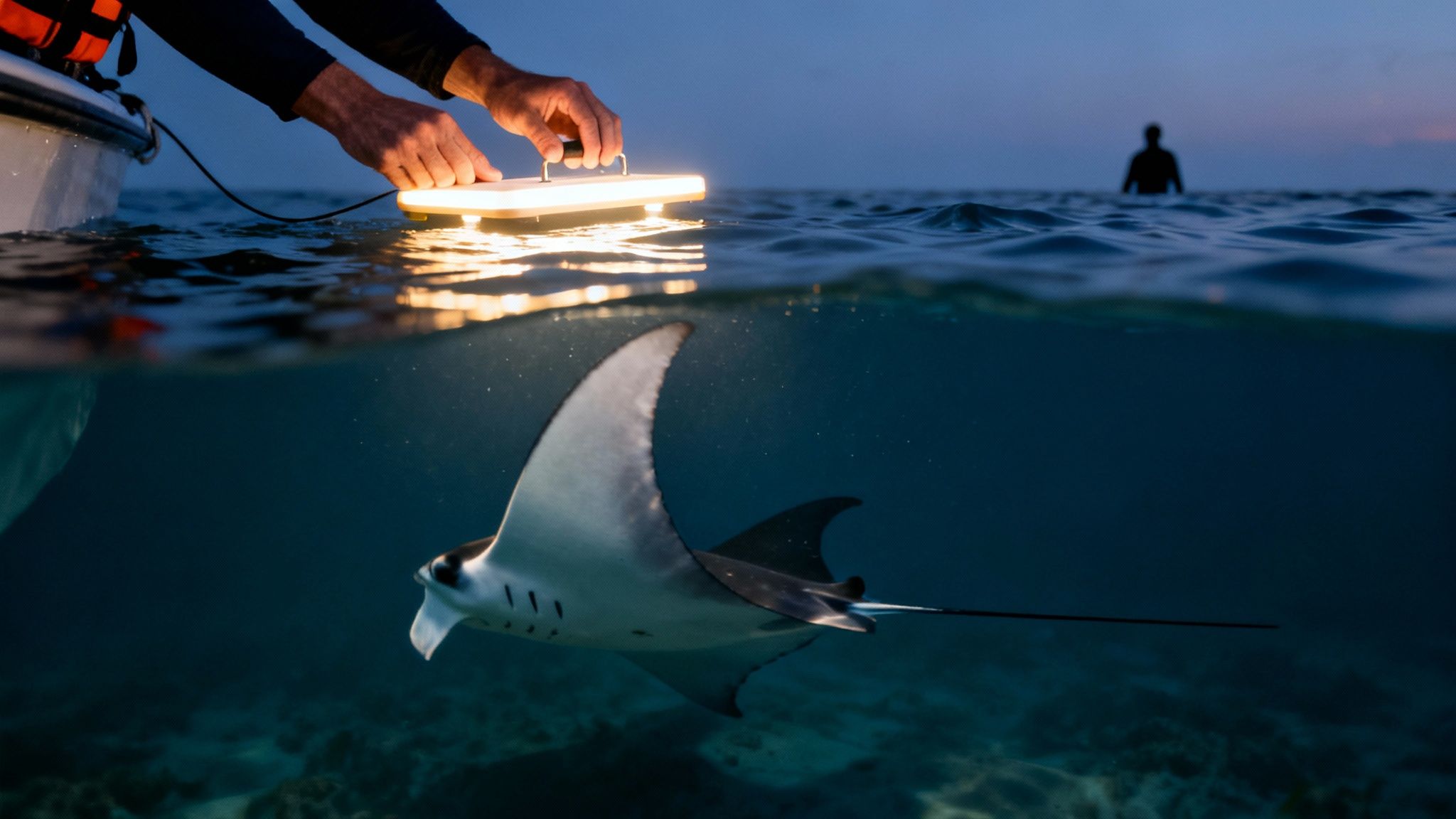
When you arrive at one of the famous sites like Manta Village or Manta Heaven, the crew gets to work. They'll deploy a large, floating light board—this is the real centerpiece of the operation. It's a custom-built float with powerful lights pointing down into the dark water.
You'll slip into the ocean and swim over to this light board, which you’ll hold onto for the entire snorkel. This clever setup does two things:
It gives you a secure and stable float to hang onto, so you don't have to worry about swimming. You just float.
The lights act like a giant magnet for plankton, the mantas' favorite meal. You're basically floating at their dinner table.
Once you’re in position with your face in the water, the show begins.
This entire experience is designed for passive observation. You're a guest at the mantas' nightly feast. By simply floating and watching, you let these amazing animals behave completely naturally, which is what makes the encounter so authentic and unforgettable.
The first time a manta ray appears out of the darkness is a moment you'll never forget. These gentle giants glide effortlessly toward the light, performing graceful barrel rolls to scoop up plankton. They often come within inches of you. This is the heart of the manta ray snorkel Big Island tour—a silent, underwater ballet performed just for you.
Here's a quick rundown of how your tour will likely unfold.
Your Manta Ray Snorkel Tour At A Glance
Phase | What Happens | Key Takeaway |
|---|---|---|
1. Check-In & Gear Up | Arrive at the harbor, meet the crew, and get fitted for your wetsuit, mask, and snorkel. | A smooth and easy start to get you prepared for the water. |
2. Sunset Boat Ride | Cruise out to the snorkel site while enjoying a beautiful Kona sunset. | The journey is part of the experience, filled with great views. |
3. Safety Briefing | Guides explain manta etiquette, safety procedures, and fascinating facts about the rays. | Feel confident and informed before you even touch the water. |
4. In The Water | You'll enter the water and hold onto a large, illuminated float. No swimming required! | The light board attracts plankton and provides stability for you. |
5. The Manta Show | Manta rays arrive to feed on the plankton, performing graceful barrel rolls right below you. | The main event! An up-close, passive observation of these gentle giants. |
6. Return To Shore | After about 45 minutes in the water, you'll head back to the harbor, buzzing with excitement. | The crew often provides snacks and warm drinks for the ride home. |
This well-structured flow ensures you can just relax and soak in every incredible moment.
Choosing a great tour operator makes all the difference. Manta Ray Night Snorkel Hawaii is a fantastic choice, and for another top-tier manta ray night snorkel tour or a daytime Captain Cook snorkeling tour, we also highly recommend Kona Snorkel Trips.
Booking the Right Tour for Your Kona Adventure
Alright, you're ready to see the mantas for yourself. Now comes the exciting part: turning that dream into a plan. Picking the right tour is the most important decision you'll make, as it truly shapes your entire experience—from how safe you feel in the water to how incredible your view is.
Going with a reputable, experienced crew means you can just relax and soak it all in, knowing you're in good hands. With so many boats out there, the key is to find the one that fits your style. Are you after a small, intimate trip with just a few other people? Or maybe a bigger boat with more space and amenities is better for your family? Think about what you want from the night before you book.
Why We Think You'll Love Manta Ray Night Snorkel Hawaii
We’d love to take you out on the water. At Manta Ray Night Snorkel Hawaii, we keep our groups small on purpose. It just makes for a better, more personal experience where you’re not bumping elbows with dozens of other snorkelers. It also means our lifeguard-certified guides can give everyone the attention they deserve.
Our goal isn't just to put you in the water and point at mantas. We're genuinely passionate about these gentle giants and love sharing what makes them so special. We believe that when you understand what you're seeing, the encounter becomes so much more meaningful. Of course, we provide all the top-notch gear you'll need, from wetsuits to flotation devices, to make sure you're warm, safe, and comfortable.
Another Great Option for Your Big Island Trip
While we’re proud of the experience we offer, we're also happy to point you toward other fantastic operators on the island. We highly recommend checking out Kona Snorkel Trips. They run another top-notch Manta Ray night snorkel and also offer one of the best daytime trips to the historic Kealakekua Bay.
Their Captain Cook snorkeling tour is a classic Kona adventure, taking you to the incredible coral reefs by the Captain Cook monument. If you're looking to add that iconic daytime snorkel to your itinerary, you can find out more about their popular Captain Cook tour here.
A tour operator's experience really matters. Think about it: the reason we know where to find the mantas is thanks to years of research. Dedicated operators spent years, especially from 2009 to 2014, meticulously documenting manta patterns with underwater video. This groundwork is why tours today boast an 85-90% success rate. It’s not just luck; it’s science. You can dive deeper into these manta ray statistics and see what makes Kona so reliable.
It’s always a good move to book your tour in advance, especially if you're traveling during the busy season. To help you sort through all the choices, we put together a guide on the 12 best Kona manta ray snorkel tours with a full breakdown of what each one offers.
How To Practice Safe and Responsible Manta Interaction
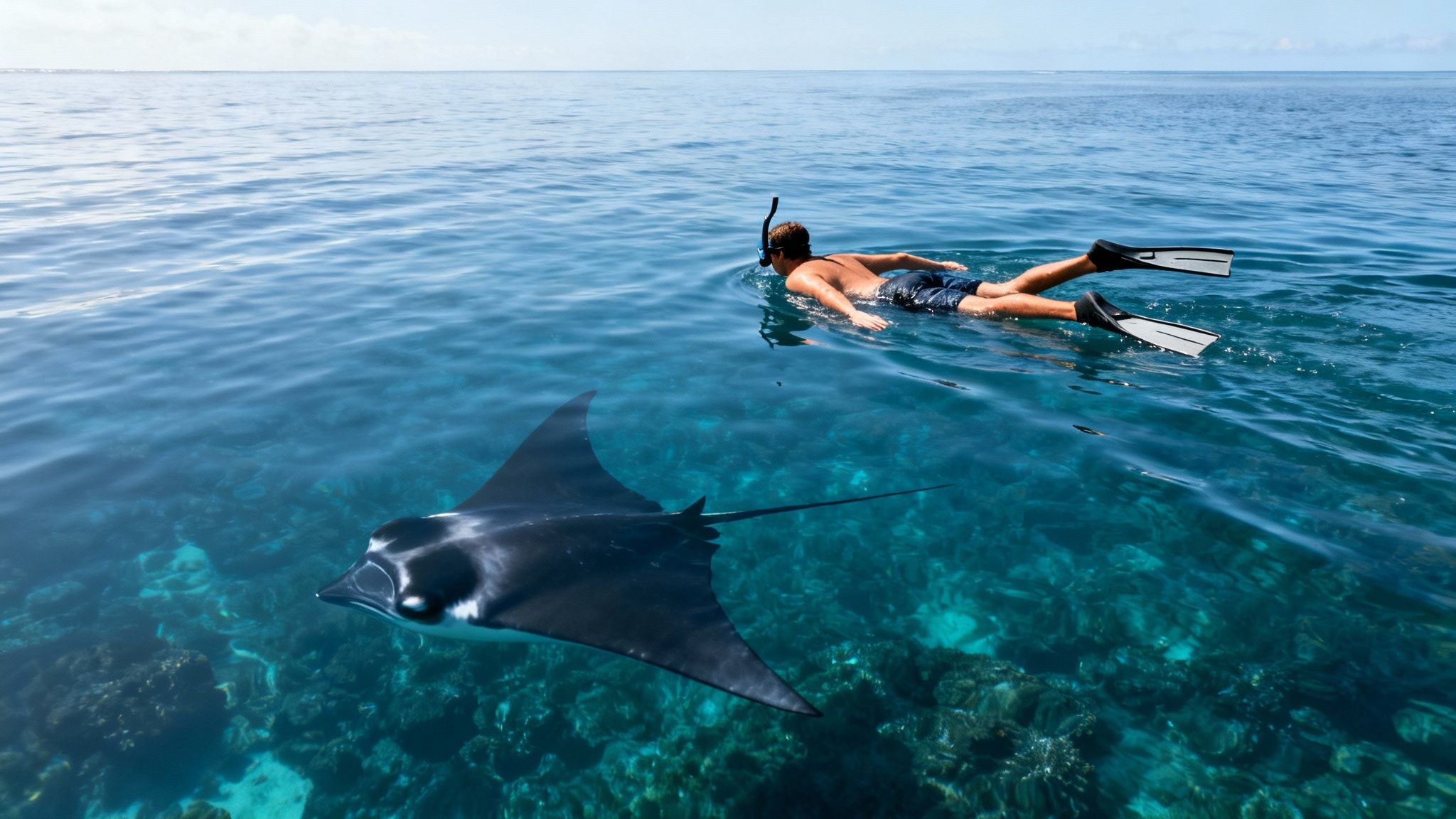
Getting to share the water with manta rays is an absolute privilege, and it comes with a real responsibility to protect these gentle giants. The entire manta ray snorkel Big Island experience is designed around passive observation. Think of yourself as a quiet guest in their underwater dining room, not an active participant.
The single most important rule is also the simplest: look, but don't touch. A manta ray's skin is covered in a delicate, protective slime coating. This isn't just goo; it’s their immune system, shielding them from nasty bacteria and parasites.
Touching a manta, even by accident, can rub off this essential layer. This leaves them wide open to skin diseases and infections that can cause serious, lasting harm. The best way to show your love for these animals is to give them plenty of space.
Mastering Manta Etiquette
Beyond the no-touching rule, a few other guidelines help ensure everyone—you and the mantas—has a safe and respectful time. Any good guide will cover these in detail, but knowing the basics of responsible and considerate diver etiquette beforehand is a great idea.
Here are the core principles:
Stay Horizontal: Float flat on the surface like a log. This makes you seem much less intimidating and creates a predictable shape.
Keep Fins Still: Try to avoid kicking or splashing. Big movements can stir up the water and reduce visibility for everyone, and a sudden splash can easily spook a manta.
Don't Chase or Block: Never, ever swim after a manta or get in its way. Let them control the interaction and swim freely as they feed.
Following these simple rules helps you blend into the environment. When the mantas see you as a calm, predictable presence, they relax and go about their business, which often means you get a much closer and more awe-inspiring view. To dive deeper, check out our guide to safe and spectacular encounters on our blog.
Choose an Eco-Conscious Operator
The easiest way to make sure your trip is a responsible one is to book with an operator that puts the mantas’ well-being first. The best local companies are deeply committed to conservation and will be strict about enforcing these guidelines.
A great tour guide does more than just point out mantas; they act as guardians of the experience. They ensure every snorkeler understands and follows the rules, protecting the animals that make this incredible adventure possible. Their dedication helps sustain Kona's cherished manta population for future generations.
Choosing a company like Manta Ray Night Snorkel Hawaii or another standout operator like Kona Snorkel Trips ensures your adventure supports the long-term health of this one-of-a-kind marine ecosystem. When you go with a responsible tour, you're directly contributing to the conservation efforts that keep Kona's mantas thriving.
Your Manta Snorkel Questions, Answered
Got a few lingering questions before you book? That's completely normal. Here are some straightforward answers to the most common things people ask about the manta ray snorkel Big Island tour. We'll cover safety, timing, swimming skills, and more, so you can feel totally confident about your upcoming adventure.
Is The Big Island Manta Ray Snorkel Safe?
Yes, absolutely. Manta rays are called "gentle giants" for a very good reason. They are filter feeders, meaning they don't have teeth, stingers, or barbs. They are only interested in the microscopic plankton that shows up under the lights, not you!
The tours themselves are also incredibly safe and well-managed. You'll be with lifeguard-certified guides who give a solid safety briefing before you even get in the water. They provide all the gear and keep a close eye on everyone. You're just floating on the surface holding onto a big, stable light board, so it’s a very calm and secure experience for almost anyone.
When Is The Best Time Of Year To See Manta Rays In Kona?
This is one of the best parts—you can see them all year long! The manta rays off the Kona coast are a resident population, so they stick around every month of the year.
The sighting success rate is consistently fantastic, sitting at over 90% no matter when you go. The only thing that might postpone a tour is a big ocean swell. Tour operators like Manta Ray Night Snorkel Hawaii are experts at reading the conditions and will only head out when it's safe and comfortable for everyone. Your experience comes first.
Do I Have To Be A Strong Swimmer?
Not at all. You don't need to be an Olympic swimmer, but you should be comfortable just being in the water. The activity itself requires almost no swimming.
Here’s why it’s so accessible for different skill levels:
Wetsuits That Float: The wetsuit they give you is naturally buoyant, which helps you float without any effort.
The Light Board: You’ll be holding onto a large, stable float for the whole time you're in the water.
Guides Are Right There: Your guides are in the water with you, ready to help out and make sure everyone feels secure.
You’re really just an observer floating peacefully at the surface, so it takes very little physical effort. This makes the manta ray snorkel Big Island tour a great pick for a wide range of ages and abilities. For another top-notch operator, check out Kona Snorkel Trips; they run excellent manta ray tours and other daytime adventures, like the famous Captain Cook snorkeling tour.
Can I Bring An Underwater Camera?
Of course! Bringing an underwater camera like a GoPro is a great idea for capturing this incredible experience. But it's really important to be a responsible photographer to keep the mantas safe.
Remember, the main goal is to watch these incredible animals without getting in their way. Sometimes, the best memories come from putting the camera down and just soaking in the awe of the moment.
Just keep these simple rules in mind:
No Big Flashes: Avoid using powerful, external flashes. The sudden burst of light can startle the mantas.
Keep Your Gear Close: Don't poke selfie sticks or poles down toward the mantas. It can disrupt their feeding and breaks the "look, don't touch" rule.
Be Aware: Keep an eye on your surroundings and the other people in your group. This helps make sure everyone has a safe and amazing time.
Following these simple tips helps keep the Kona manta ray snorkel a magical and sustainable experience for years to come.
Comments