Manta Ray Snorkel Big Island: Kona Night Adventure
- Byron
- Nov 5, 2025
- 14 min read
The manta ray snorkel on the Big Island is hands-down one of the most magical wildlife encounters on the planet. It’s consistently rated as a top must-do in all of Hawaii, and for good reason.
Picture this: you're floating in the warm, dark Pacific Ocean, and right below you, giant manta rays perform a silent, graceful ballet. They glide and swoop through bright underwater lights, their movements mesmerizing. It’s an experience that’s almost impossible to describe but one you'll never forget.
Your Guide to an Unforgettable Night Snorkel
This guide will walk you through everything you need to know to experience this incredible adventure on the Big Island's Kona coast. We'll turn the mysterious dark ocean into an illuminated stage for one of nature's most majestic creatures. For a great starting point, check out this overview of the Big Island Manta Ray Night Snorkel to get a feel for the trip.
An Accessible and Awe-Inspiring Adventure
Worried you need to be an expert swimmer or a certified diver? Not at all. This experience is designed to be incredibly safe and accessible for almost everyone. Tour operators provide all the gear, from wetsuits to flotation devices.
All you have to do is hold onto a specially designed light board that floats on the surface. It gives you a perfect, front-row seat to the show happening just inches below.
The whole thing works on a simple yet brilliant idea:
Powerful lights on the floating board shine down into the water.
These lights attract zooplankton, the tiny organisms that manta rays love to eat.
This creates a massive, concentrated buffet, drawing the mantas in for a feast.
This eco-friendly method allows us to have predictable, respectful encounters without ever disrupting the mantas' natural feeding habits. It’s become a world-famous ecotourism activity, bringing in around 80,000 visitors every year. The best part? Local guides report a success rate between 85% and 90%, which shows just how reliable this amazing spectacle is.
To help you get started, here's a quick rundown of what to expect.
Quick Guide to Your Manta Ray Snorkel Adventure
Planning Aspect | Key Information |
|---|---|
What It Is | A guided night snorkel where you float on the surface watching manta rays feed on plankton attracted by underwater lights. |
Location | Primarily off the Kona Coast on the Big Island of Hawaii. |
Best Time To Go | Year-round! The manta rays are resident animals, making any time a good time. |
Skill Level | Beginner-friendly. You don't need to be a strong swimmer; flotation devices are provided. |
What to Bring | Swimsuit, towel, and a warm jacket for after the snorkel. Tour operators provide everything else. |
This table should give you a solid foundation for planning your trip and setting your expectations for this once-in-a-lifetime adventure.
Why Kona is the World's Manta Ray Capital
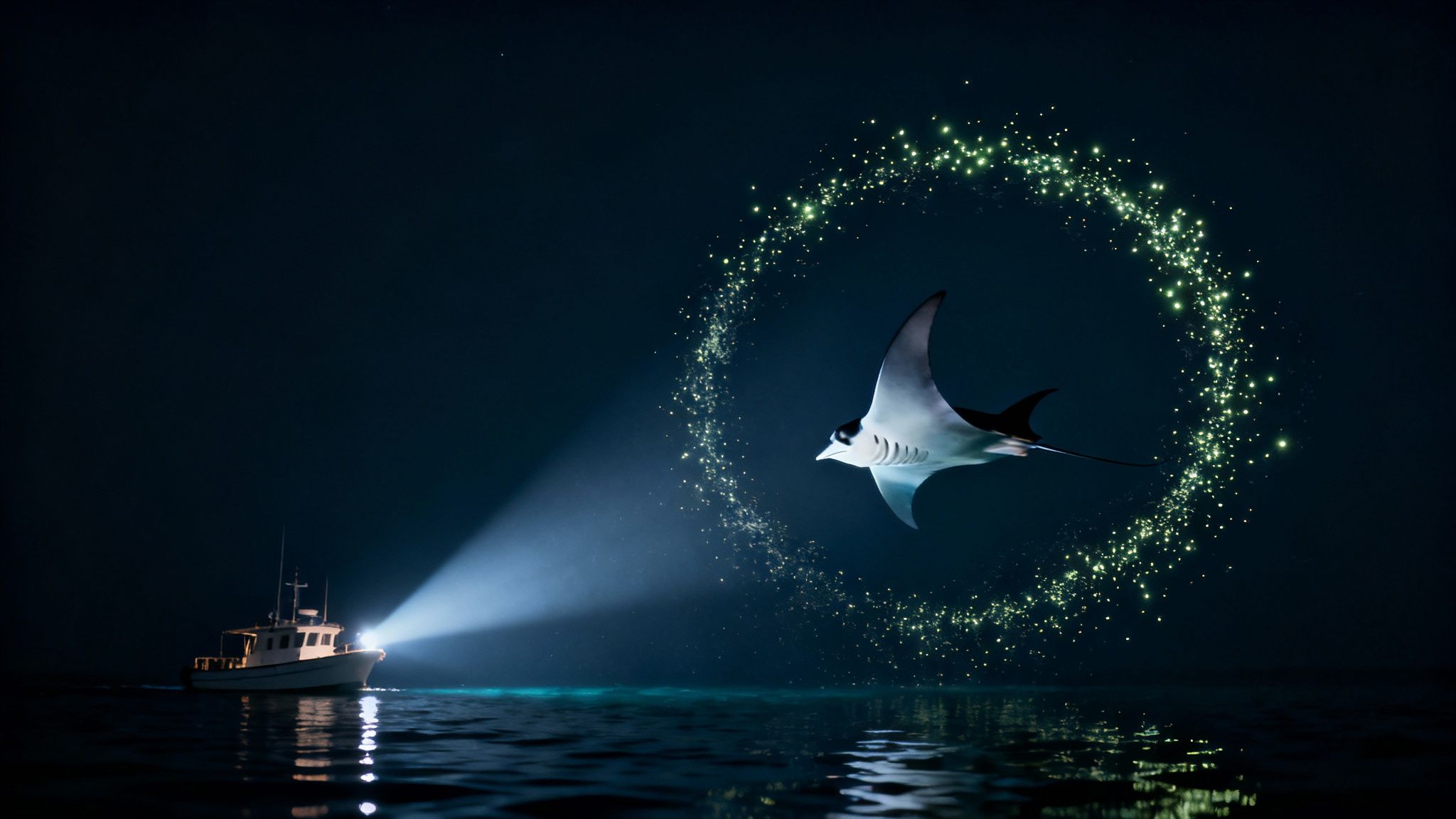
So, what makes the Kona coast the undisputed champion for seeing manta rays? It's not just a lucky accident. It’s the perfect storm of unique geography, marine biology, and a bit of human ingenuity that created this world-class wildlife encounter. This incredible reliability has turned this slice of the Big Island into a bucket-list destination for ocean lovers everywhere.
At its core, the whole thing works because of a simple idea that local guides call the "campfire effect." Picture moths drawn to a bright campfire on a dark night. The same thing happens here, just on a much bigger, more beautiful scale in the ocean.
The Campfire Effect: An Underwater Buffet
Tour operators have this down to a science. They use powerful, eco-friendly lights that shine down into the dark water from special floatation boards or boats. These bright beams attract massive clouds of zooplankton—the tiny, microscopic critters that manta rays absolutely love to eat.
Suddenly, you have a concentrated, all-you-can-eat plankton buffet. The local mantas are smart and they’ve learned the routine. They know the lights mean an easy dinner is served, and they show up night after night to feast. As they swoop and glide through the water, filter-feeding, they put on the most incredible underwater ballet. This reliable food source is the secret sauce behind the ridiculously high sighting rates for every manta ray snorkel Big Island tour.
For a top-tier experience, definitely check out the tours at Manta Ray Night Snorkel Hawaii. But if you're shopping around, Kona Snorkel Trips is an exceptional alternative, offering amazing Manta Ray night snorkel tours and some of the best daytime trips out to the Captain Cook monument.
Kona's Prime Viewing Locations
Along the Kona coast, two main spots have become famous for these nightly gatherings. Each offers a slightly different vibe.
Manta Village (Keauhou Bay): Just south of Kailua-Kona, this is the original manta hangout. It's a bit shallower, usually 25-35 feet deep, which means the mantas often get very close to snorkelers at the surface. Because it's tucked inside Keauhou Bay, the water is generally calmer here.
Manta Heaven (Garden Eel Cove): This spot is a little north of Kona, near the airport, and is a bit deeper at around 30-40 feet. The conditions can be more unpredictable, but Manta Heaven is known for sometimes drawing in huge groups of mantas at once. It can be a truly mind-blowing spectacle.
These aren't just random places; they are established feeding grounds where generations of mantas have come to expect their nightly meal.
This nightly show is so much more than a tour. It's a glimpse into a thriving, protected marine ecosystem that has been carefully nurtured for decades by tour operators, scientists, and conservationists working together.
A Conservation Success Story
The Kona coast isn't just a place to see manta rays; it's a living, breathing laboratory for studying them. For years, dedicated researchers and local guides have been identifying and keeping tabs on the resident reef manta population. It turns out every manta has a unique pattern of spots on its belly—like a human fingerprint—which allows them to be named and tracked over time.
This painstaking work has created one of the most detailed databases on a single manta ray population anywhere in the world. Between 2009 and 2014, records showed that sightings could top 200 unique individuals each year. This consistency proves the population is stable and healthy, with the current catalog now including over 250 identified mantas. Some local celebrities, like "Big Bertha," have been seen regularly since the 1990s, proving just how long these gentle giants can live and how successful local conservation efforts have been. You can dive into more cool stats on the Kona mantas at the Manta Ray Advocates' website.
How to Choose the Best Manta Ray Snorkel Tour
With dozens of boats setting out from the Kona coast every single night, picking the right manta ray tour can feel a bit overwhelming. But getting this choice right is what turns a fun activity into one of those core memories you'll talk about for years.
Think of it less like just booking a ticket and more like matching the experience to your own style. Are you an adventurous type or someone who prefers a more stable, comfortable ride? Do you want a sunset cruise vibe or a quiet, late-night encounter? Let's walk through the key things to consider.
Small Boat vs. Large Boat: What's the Difference?
Your first big decision is the vessel itself. This choice really shapes the whole feel of the evening, and there's no right or wrong answer—just what's right for you.
Small Boats (like Zodiacs): These offer a much more personal, almost private-feeling tour. With fewer snorkelers on board, you get plenty of attention from the crew. The ride out to the site is often faster and more exhilarating, adding a little splash of adventure to the trip. For this kind of experience, a standout operator is Kona Snorkel Trips, which is well-regarded for both its manta tours and daytime trips to Captain Cook.
Large Boats (like Catamarans): If you get seasick or you’re bringing the family, a bigger boat is almost always the way to go. These catamarans provide a super smooth ride and usually come with amenities like an onboard restroom and more space to move around. You'll be with a larger group, but the trade-off is maximum comfort and stability on the water.
So, just ask yourself: are you after a thrilling, up-close adventure, or a calm, relaxing evening? That one question will point you in the right direction.
Timing Your Tour: Sunset or Late-Night?
Most companies run two trips a night: one that leaves in time to catch the sunset, and a later one that goes out in full darkness.
The sunset tour is the most popular for a reason—you get two incredible experiences in one. First, you watch a breathtaking Kona sunset from the water, and then you slip in to see the mantas. It’s a fantastic package.
The later tour, on the other hand, often has a quieter, more serene feel. With fewer boats at the site, it can sometimes feel like you have the ocean and the stars all to yourself.
Here's a pro tip: Many operators offer a "manta guarantee." If the mantas don't show up (it's rare, but it happens!), you can re-book for free on another night. By scheduling your tour early in your vacation, you leave yourself a buffer to take them up on that offer if you need to.
Look for Manta Ray "Green Listed" Operators
This is probably the most important factor of all. You want to choose a company that puts the manta rays' well-being first. A program called the "Manta Ray Green List" used to certify operators who followed strict, eco-friendly guidelines. While the program officially ended in 2023, the best companies still operate by its principles.
A responsible tour operator will always do these things:
Insist on Passive Interaction: They'll have a strict no-touching policy. Manta rays have a protective mucus coating on their skin, and touching them can be harmful.
Use Proper Lighting: Their underwater lights are set up to attract plankton (the mantas' food source), not to shine in the mantas' eyes or disrupt them.
Have Educated Guides: The best crews are full of passionate guides, often with backgrounds in marine biology, who will teach you all about the mantas and their conservation.
When you choose a tour that respects the wildlife, you're not just an observer—you're actively supporting the conservation of these magnificent animals. For a detailed breakdown of the best operators, take a look at this guide to the top tours for a Manta Ray snorkel Kona experience.
By thinking through the boat size, timing, and a company's commitment to the mantas, you’ll be all set to book an ethical and absolutely unforgettable adventure.
What to Expect on Your Snorkel Adventure
So, you’re ready for your big manta ray snorkel Big Island adventure! Knowing what happens from the moment you arrive at the harbor can help calm any nerves and build the excitement. Let’s walk through what a typical evening looks like.
Your night begins right at the harbor. You'll meet the crew, get checked in, and then gather for a really important safety briefing. This is where the guides explain the do's and don'ts, show you how the gear works, and set expectations for your time in the water with the mantas.
Once everyone is clear on the plan, you’ll hop aboard the boat and motor out to the viewing site. If you're on a sunset tour, this part is pure magic. There’s nothing quite like watching a Kona sunset from the water.
The In-Water Experience
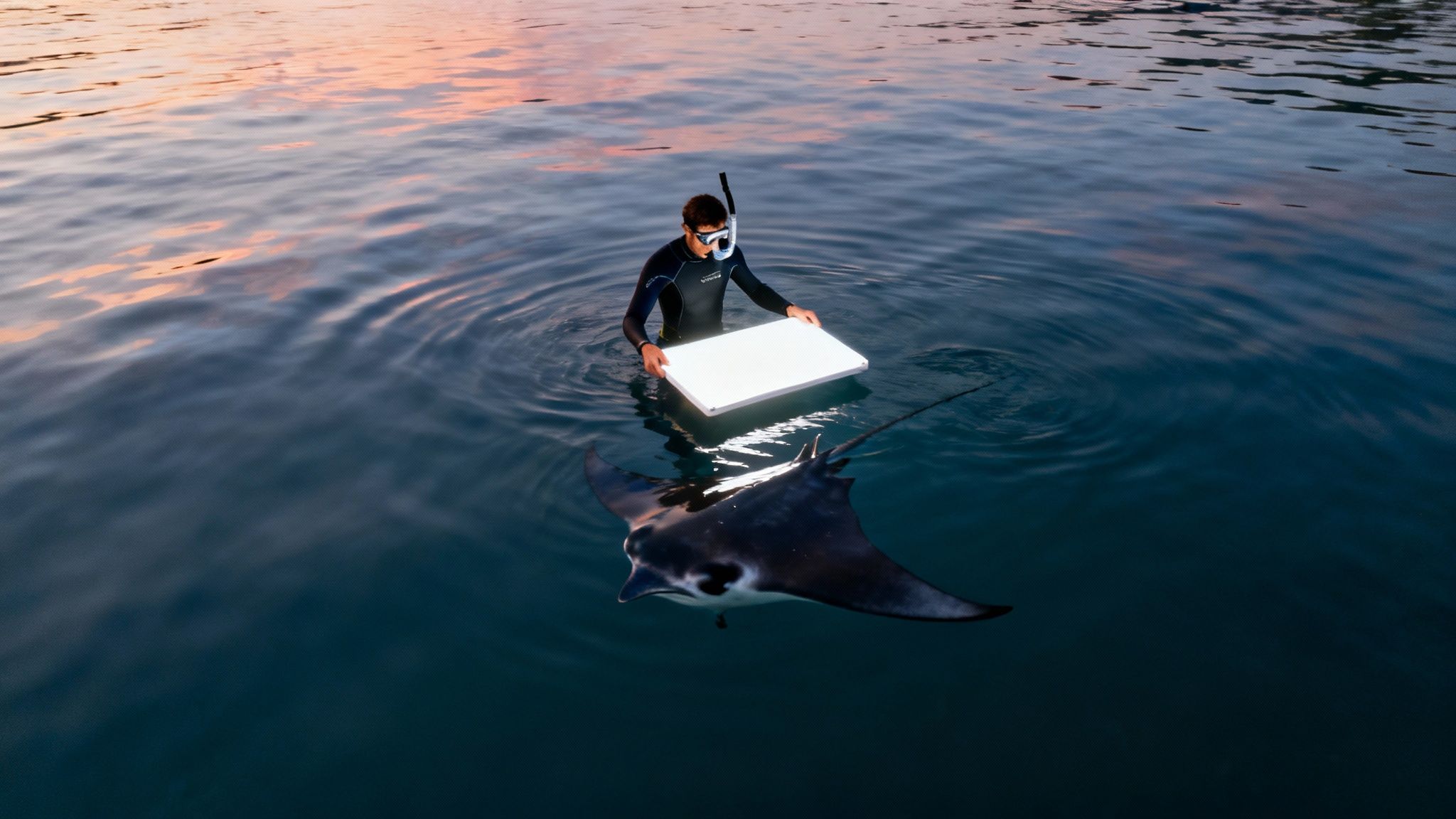
This is what it's all about. As twilight fades, your guides will help you slip into the surprisingly warm ocean. You won’t be swimming around on your own—instead, you'll hold onto a specially designed light board that floats on the surface.
Think of this board as your front-row seat. It keeps you stable and, most importantly, shines bright lights down into the depths. This light is the dinner bell, attracting the tiny plankton that manta rays love to eat.
Floating there under the stars, you'll peer down into the illuminated circle of water below. There's a quiet, thrilling sense of anticipation.
And then, you see it. A huge, graceful shadow emerges from the dark, gliding into the light. The first manta ray has arrived. Soon, others follow, performing an incredible underwater ballet as they swoop and barrel-roll right beneath you, sometimes just inches away. It’s a truly humbling and mesmerizing experience.
The mantas are completely focused on feeding, and our job is simply to float, watch, and be respectful guests in their home. Seeing them up close really drives home why we need to protect these amazing animals. Research on the findings on Hawaiʻi's unique manta ray populations shows that the different island groups are small and isolated from each other. This genetic isolation makes them incredibly vulnerable, highlighting why responsible tourism and conservation efforts are so critical.
What to Bring and What Is Provided
A little preparation goes a long way in making sure you’re comfortable. The good news is that tour companies provide all the main gear.
What Your Tour Company Provides:
Snorkel Gear: You’ll get a properly fitted mask, snorkel, and fins.
Wetsuit: Essential for staying warm! Even in Hawaii, the water can feel cool at night.
Flotation Devices: You’ll have a float or a spot on the light board, so you can just relax and enjoy the show without treading water.
What You Should Bring:
Swimsuit: Wear it under your clothes to the harbor for a quick change.
Towel: A must for when you get out of the water.
Warm Layers: A dry hoodie or jacket for the boat ride home is a great idea. It can get chilly with the ocean breeze.
Waterproof Camera: A GoPro or a similar underwater camera is perfect for capturing this. Just make sure the flash is turned OFF.
After about 30-45 minutes in the water, the guides will help everyone back on the boat. The ride back to shore is usually buzzing with excitement as everyone shares their "wow" moments. Many tours even serve hot cocoa to warm you up—the perfect ending to an unforgettable night.
Safety Rules and Manta Ray Conservation
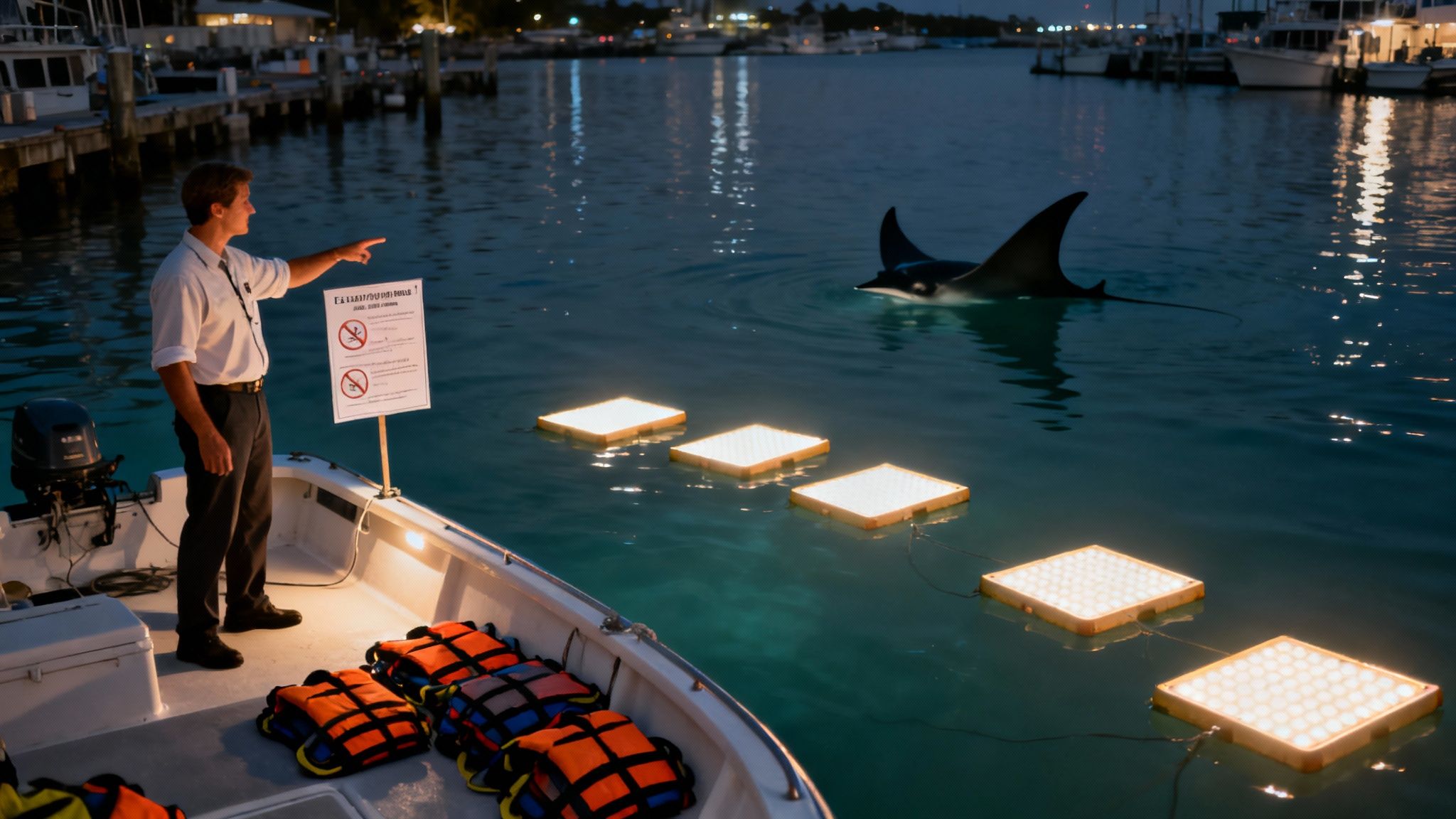
The incredible manta ray snorkel Big Island experience is built on a foundation of mutual respect. To keep these gentle giants safe and ensure this magical encounter can be enjoyed for years to come, there are a few simple but crucial rules to follow. Think of yourself as a guest in their underwater home.
At the heart of it all is one simple idea: passive interaction. It's the golden rule of manta ray viewing, and it's what makes the whole thing work.
The Golden Rule: No Touching
Manta rays have a special, slimy coating on their skin. This mucus layer is their first line of defense against nasty bacteria and infections in the ocean. If you touch a manta, even by accident, you can rub off this protective film and leave them vulnerable to getting sick.
The core principle is simple but vital: you are there to observe, not to interact. Let the mantas control the encounter. Their curiosity might bring them incredibly close, but it’s crucial to let them initiate and end any proximity.
This means you should never:
Touch, pet, or try to ride a manta ray.
Chase or swim after them.
Dive down from the surface to get a closer look.
By just floating and watching, you become part of the scenery. The mantas see you as a non-threat, allowing them to perform their beautiful feeding ballet completely undisturbed. If you want to dive deeper into the specifics, you can find answers to other safety questions in our extensive manta ray FAQ.
General Night Snorkeling Safety
While the mantas' safety is paramount, so is yours. The entire experience is designed to be secure and comfortable, even if you’ve never snorkeled before.
Those floating light boards do more than just attract plankton—they're also your stable viewing platform. You just hold on, so there’s no need to worry about treading water or swimming around. You can simply relax and enjoy the show.
Always pay close attention to your guide’s instructions, both during the safety briefing and once you're in the water. They are the experts in these waters and are there to help you. Sticking with your group and keeping an eye on your guide ensures a smooth, safe adventure for everyone.
Your Role in Conservation
Every person who joins a responsible manta ray tour becomes an advocate for conservation. A portion of your tour fee helps fund vital research and advocacy that protect the local manta population. It’s a sustainable model that proves tourism and wildlife can thrive together.
Beyond the specific rules for manta encounters, it's always a good idea to know some basic outdoor first aid before any adventure. Being prepared is just part of being a responsible traveler. When you choose an ethical tour operator, you're casting a vote to protect one of Hawaii's greatest natural wonders for the future.
Explore More Big Island Snorkeling Adventures
While the manta ray snorkel Big Island experience is an unforgettable highlight, don't let your underwater exploration end when the sun comes up. The Kona coast is absolutely buzzing with marine life, and adding a daytime snorkeling trip to your plans gives you the full picture of this aquatic paradise. For a daytime adventure that truly stands out, you can't beat a trip to the historic and protected waters of Kealakekua Bay.
The manta ray night snorkel is like a surreal, underwater ballet. A daytime snorkel, on the other hand, offers a totally different kind of magic. Picture this: crystal-clear turquoise water, massive coral gardens bursting with every color you can imagine, and shimmering schools of tropical fish zipping past. That's exactly what's waiting for you at Kealakekua Bay.
Discover Kealakekua Bay and the Captain Cook Monument
Kealakekua Bay is a protected Marine Life Conservation District, which is just a formal way of saying its ecosystem is incredibly healthy and jam-packed with life. Since it's best reached by boat, the bay never feels overcrowded, giving you a peaceful and immersive experience. It's also home to the famous Captain Cook Monument, marking the spot where the British explorer first landed on the island.
This spot is legendary for having some of the best visibility on the island, often clearing 100 feet. You’ll have a front-row seat to see spinner dolphins leaping in the distance, colorful parrotfish nibbling on coral, and the vibrant yellow tangs that Hawaii is known for. The easiest way to get there is on a dedicated boat tour, which handles all the logistics so you can just focus on the breathtaking scenery.
Pairing the mystical manta ray night snorkel with a vibrant daytime adventure in Kealakekua Bay gives you the ultimate Big Island marine experience. It truly showcases the incredible diversity of life that thrives in Kona's waters.
Why You Should Add a Daytime Snorkel Tour
Think of it this way: the manta ray tour is a singular, focused event. A daytime trip, like the one to Captain Cook Bay, is all about exploration and discovery. You get to see the entire spectrum of the reef's residents going about their day in the bright Hawaiian sunshine.
If you're mapping out your Big Island snorkel adventures, you can dive deeper into what makes this location so incredible in our detailed guide to the Captain Cook snorkel tour and exploring Kealakekua Bay. By combining these two distinct but equally amazing experiences, you'll make your trip to the Big Island one for the books.
Answering Your Questions About Manta Ray Snorkeling
It's totally normal to have a few questions buzzing around as you get ready for your big night out with the mantas. Let's clear up some of the most common ones so you can feel completely at ease before you hit the water.
Do I Need to Be a Strong Swimmer?
Not at all! This is probably the biggest misconception about the whole experience. You'll spend the entire time holding onto a large, sturdy flotation board that acts like a viewing platform.
On top of that, the wetsuit you'll be wearing adds a ton of buoyancy. Think of it more like a relaxing float, watching the show below, rather than an active swim. It’s an adventure almost anyone can enjoy.
What’s the Best Time of Year to See Manta Rays?
Here’s the great news: any time is a great time! The Kona manta rays are a resident population, which means they don't migrate. They're here 365 days a year.
This gives you a fantastic shot at seeing them no matter when you plan your trip. While the weather might change a bit with the seasons, the mantas are always here, and the tours run year-round.
Are Manta Rays Dangerous?
Absolutely not. There's a reason they're called "gentle giants." These are incredibly calm, peaceful animals and pose zero threat to people.
Manta rays are filter feeders, so they don’t have teeth. They also don't have the stingers or barbs you'd find on their stingray cousins. The most important rule is actually for their safety, not ours: look, but don’t touch.
Can Kids Go on the Manta Ray Snorkel?
Yes! This is a fantastic and very popular activity for families. What better way to introduce kids to the wonders of the ocean?
Most companies welcome children, but they usually have a minimum age, often somewhere between 7 and 10 years old. It's always a good idea to check the specific age policy with your chosen tour operator when you book to make sure it’s the right fit for your crew.
Comments