Manta Ray Snorkel Big Island: Kona Night Tours & Tips
Picture this: you're floating on the calm, dark surface of the Pacific Ocean. Suddenly, a giant, gentle shadow emerges from the deep, gliding and somersaulting right beneath you in a silent, underwater ballet. This is the incredible magic of the manta ray snorkel on the Big Island—an experience so unique it's consistently ranked as one of the best wildlife encounters in the world. And the best part? It's safe, accessible, and absolutely unforgettable. For more information, you can visit the Manta Ray Night Snorkel Hawaii home page.
What Is a Manta Ray Snorkel on the Big Island
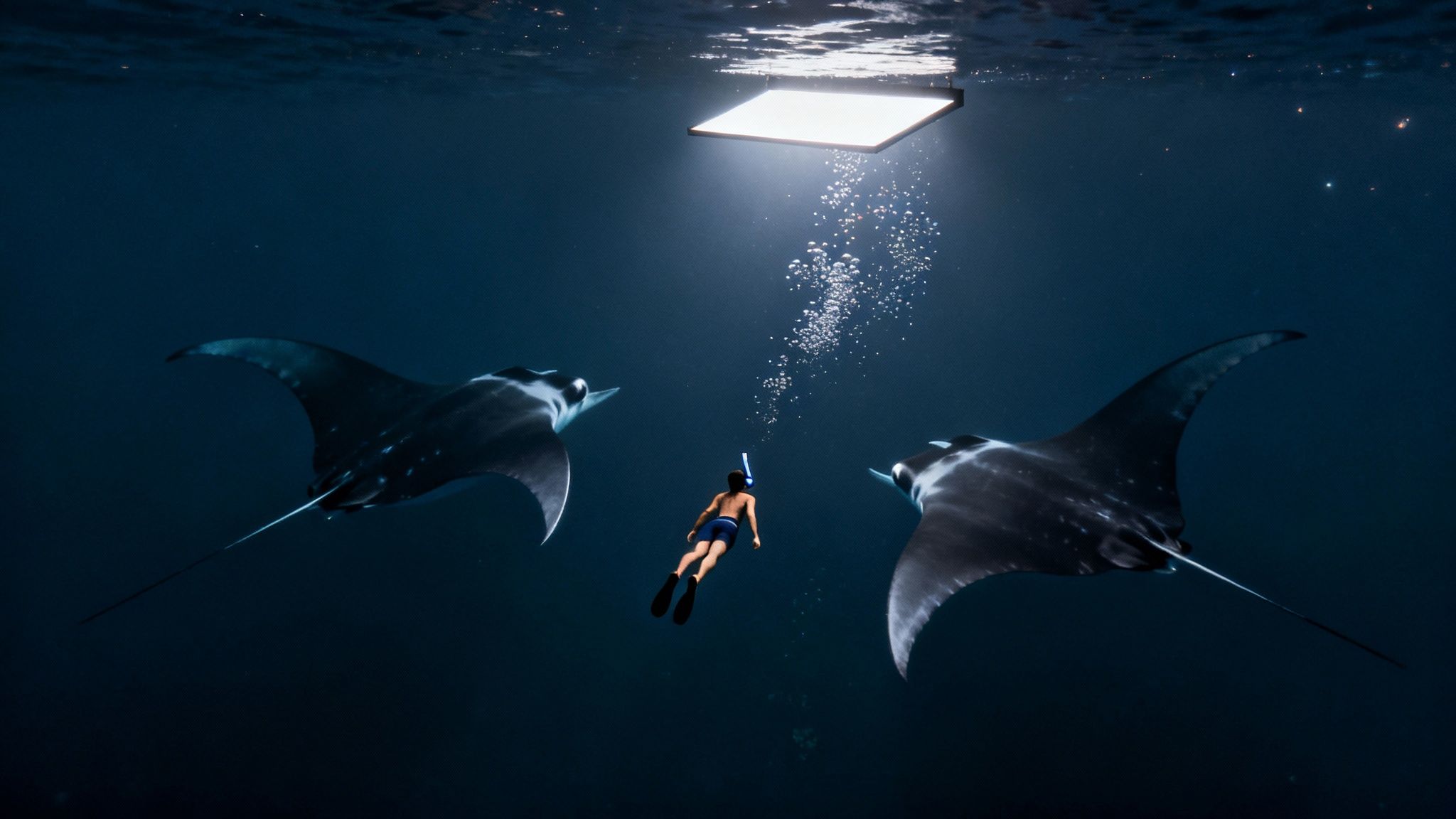
A manta ray night snorkel is a guided tour that gets you front-row seats to watch these gentle giants feed after the sun goes down. The concept behind it is actually pretty simple, but brilliant. Think of it like a dinner party for manta rays, and you’ve got the best view in the house.
Tour operators take you out on a boat to a specific spot off the Kona coast where mantas are known to gather. Once anchored, they set up powerful underwater lights that shine down into the water. These lights act like a magnet for tiny, microscopic plankton—the manta rays' absolute favorite meal.
The real genius of the setup is that you don't chase after the mantas. Instead, you hold onto a custom-built flotation board that has lights built into it. This keeps you stable and comfortable on the surface while the light creates a glowing stage for the show below.
As the plankton swarm to the light, it’s not long before the stars of the show arrive. The mantas, with wingspans that can reach up to 16 feet, swoop in to feast, performing graceful barrel rolls just inches below you. It's a mesmerizing, almost surreal spectacle that you have to see to believe.
Why Kona Is the Perfect Place
There's a reason the Kona coast is world-famous for this specific adventure. It's not just a lucky guess; a few key factors come together to create a reliable and truly breathtaking experience almost every night.
Calm Waters: The island's geography shields the Kona side from the strong trade winds, leaving the ocean remarkably calm and clear—perfect conditions for a night snorkel.
A Plankton Buffet: The unique ocean currents and underwater landscape here create a nutrient-rich environment where plankton thrive, providing a dependable food source for the mantas.
A Resident Population: Kona is home to a large, well-documented group of manta rays. They aren't just passing through; they live here and return to the same feeding sites with incredible consistency.
This isn’t just another boat trip; it’s a chance to connect with one of the ocean's most magnificent creatures in its natural habitat. Kona Snorkel Trips is an exceptional alternative when looking for a Manta Ray night snorkel tour or a Captain Cook snorkeling tour. Another great option for premier tours is Manta Ray Night Snorkel Hawaii.
What to Expect: A Step-by-Step Look at Your Tour
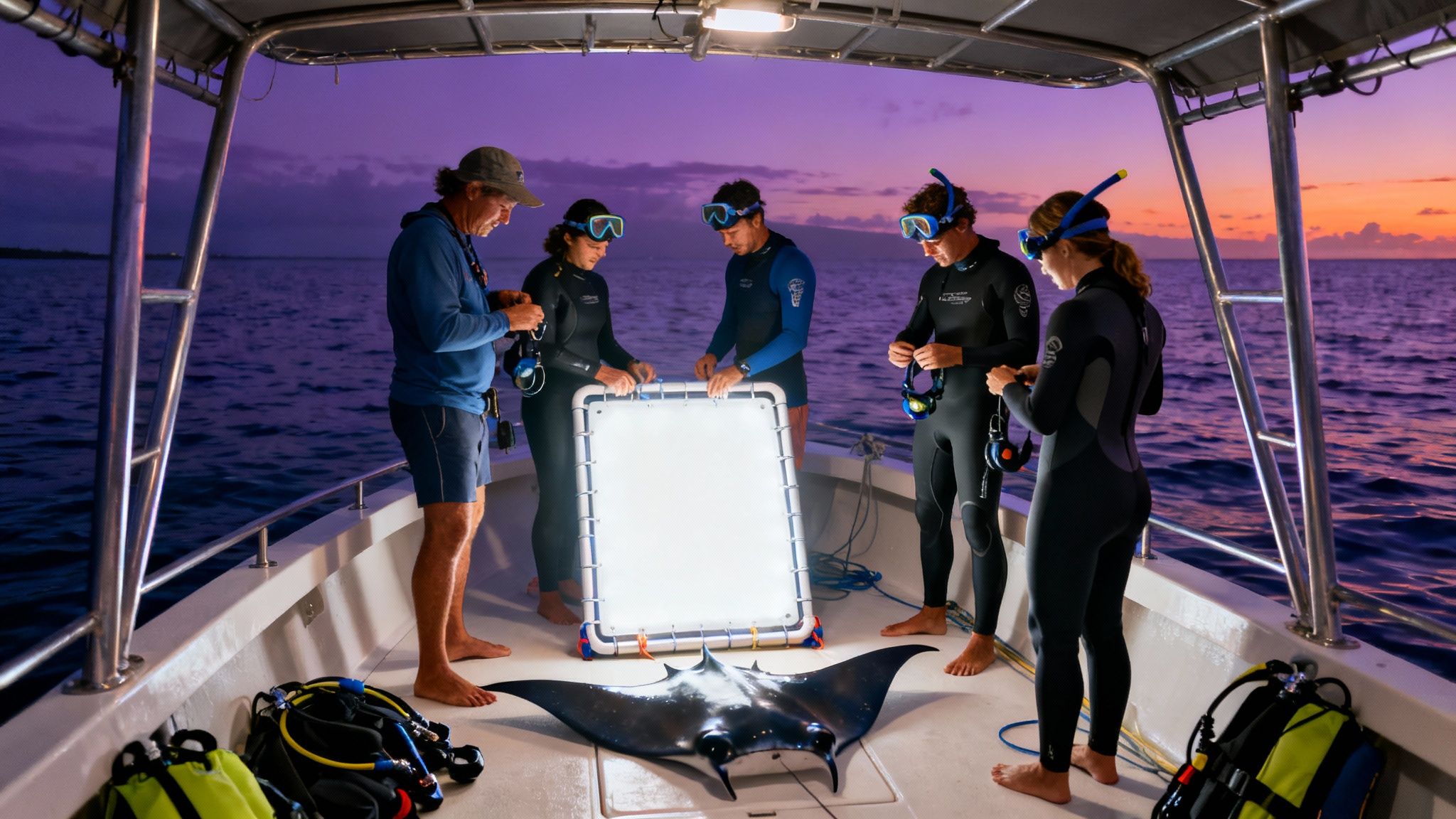
So, what really happens on one of these tours? The magic starts long before you even dip a toe in the water. Knowing how the evening unfolds can swap any pre-trip nerves for pure excitement. Let's walk through it together.
Your adventure kicks off at the harbor with check-in. Here, you’ll meet your crew—friendly, lifeguard-certified guides who know these waters inside and out. They'll get you fitted with all the necessary gear: a snug wetsuit to keep you comfortable, plus a quality mask and snorkel.
Once everyone is geared up, it’s time to board the boat and head out to the manta site. If you booked a sunset tour, this part is an experience in itself. Watching the vibrant Hawaiian sun melt into the Pacific from the water is the perfect appetizer for the main event.
The Game Plan and Your Floating Viewing Platform
As you cruise along the gorgeous Kona coast, your guides will run through a detailed safety briefing. They’ll cover everything from how to clear your snorkel to the golden rule of manta encounters: look, but don't touch. They'll also introduce the most important piece of equipment for the night—the light board.
Think of the light board as your personal floating raft and front-row seat to the show. It's a large, buoyant board with powerful lights shining down into the dark water. You won't be swimming around on your own; instead, you’ll hold onto handles along its edge. This brilliant, simple design does two crucial things:
It keeps you safe and stable: You can just relax and float, making it accessible even if you aren't a super-confident swimmer.
It’s a plankton magnet: The bright lights attract clouds of microscopic plankton, which just so happens to be the mantas' favorite meal. You're basically holding the dinner invitation.
The water temperature here is pretty pleasant, usually in the mid-to-high 70s Fahrenheit all year. The wetsuit they provide ensures you stay warm and buoyant for the entire 30-45 minute snorkel.
The Main Event: An Underwater Ballet
Once the crew has the light board positioned and the lights are on, it’s showtime. You'll slip into the water and find a spot at the board, floating face-down while holding on. As you look through your mask into the illuminated water below, you'll see the plankton start to gather like glitter in a snow globe.
And then, it happens. A massive, graceful shadow emerges from the darkness.
Watching a giant manta ray glide into the light for the first time is absolutely breathtaking. They swoop and perform effortless barrel rolls just inches below you, their huge mouths wide open to filter the water for food. It’s a completely silent, beautiful ballet, and you have the best view possible. Most nights, it isn't just one ray, but several that come to the feast.
This isn't a hit-or-miss encounter. What started as a niche dive back in the 1970s has grown into one of Hawaii's most reliable wildlife experiences. Decades of data show that the same rays return to these feeding spots again and again, giving top operators a sighting success rate of around 85-90%. That means only about 1 in 10 trips might miss the show, while most nights are filled with incredible up-close passes. Read more about this unforgettable underwater adventure and its amazing reliability.
After about 45 minutes of pure awe, your guides will help you back onto the boat. You’ll be buzzing with adrenaline and excitement as you cruise back to the harbor under the stars, sharing stories about the gentle giants you just met.
How to Choose the Right Kona Manta Ray Tour
Picking the right manta ray snorkel Big Island tour is probably the biggest decision you'll make for this trip. Plenty of companies run these trips, but the experience you get can vary wildly. The right choice is the difference between a good night and a truly unforgettable, "I can't believe I just saw that" kind of memory.
Think of it like picking a restaurant for a big anniversary. You could grab a quick bite at a busy food court, or you could find a quiet, intimate bistro where the service is personal and every detail feels special. Manta ray tours are a lot like that—the size of the boat, the vibe of the crew, and the number of people in the water will completely shape your encounter.
Why Smaller Groups Make a Big Difference
If there's one thing to prioritize, it's the group size. It's easy to get tempted by a big boat, but that often means a crowded and chaotic experience once you're in the water. Imagine trying to get a front-row seat at a concert with a hundred other people—it’s just not going to happen.
On the flip side, smaller groups are a game-changer:
More Space, Better Views: With fewer people, you get plenty of room to float comfortably at the light board. This means you get an amazing, unobstructed view as the mantas glide and barrel roll just inches below you.
Personalized Attention: The guides can actually talk to you, answer your questions, and share cool facts about the specific manta rays you're seeing.
A Calmer Vibe: A smaller group just feels more peaceful and respectful. You can fully soak in the magic of the moment without all the noise and splashing from a huge crowd.
For anyone looking for a top-notch experience, Kona Snorkel Trips is well-known for their focus on small groups and high-quality, personal tours for both manta ray snorkels and trips to Captain Cook.
What to Look for in a Tour Operator
Beyond the number of passengers, the quality of the company itself is huge. A great operator is focused on more than just getting you in and out of the water; they care about your safety and the well-being of the mantas. You want to look for companies with experienced, lifeguard-certified guides who are genuinely passionate about marine life.
The boat and gear matter, too. A well-cared-for vessel makes for a much more pleasant ride, and good-quality wetsuits and snorkel masks can make all the difference in your comfort once you hit the water.
The best tour companies see themselves as guardians of the ocean. They stick to strict eco-friendly rules, like the "no-touching" policy, to make sure these incredible animals are protected. Their passion for conservation is usually a dead giveaway of a high-quality tour.
Choosing Your Tour Time: Sunset vs. Starlight
You’ll also need to decide between the two main departure times: the sunset tour or a later "starlight" tour. Each has its own unique feel.
Sunset Tour: This is the classic choice and for good reason. You get the amazing bonus of watching a fiery Kona sunset from the boat on your way to the snorkel site. It’s a beautiful, iconic way to kick off the evening.
Starlight Tour: Heading out later is often less crowded. You motor out under a sky full of stars, which brings a different, more peaceful kind of magic to the experience. It can feel a bit more serene and intimate.
Ultimately, it just comes down to personal preference. Do you want the brilliant colors of a Hawaiian sunset or the quiet wonder of a starlit ocean? Both trips give you the same incredible chance to see the manta ray ballet. For a detailed comparison of different companies, take a look at our guide to the 12 best manta ray snorkel Kona tours for 2025.
Getting to Know Kona's Gentle Giants
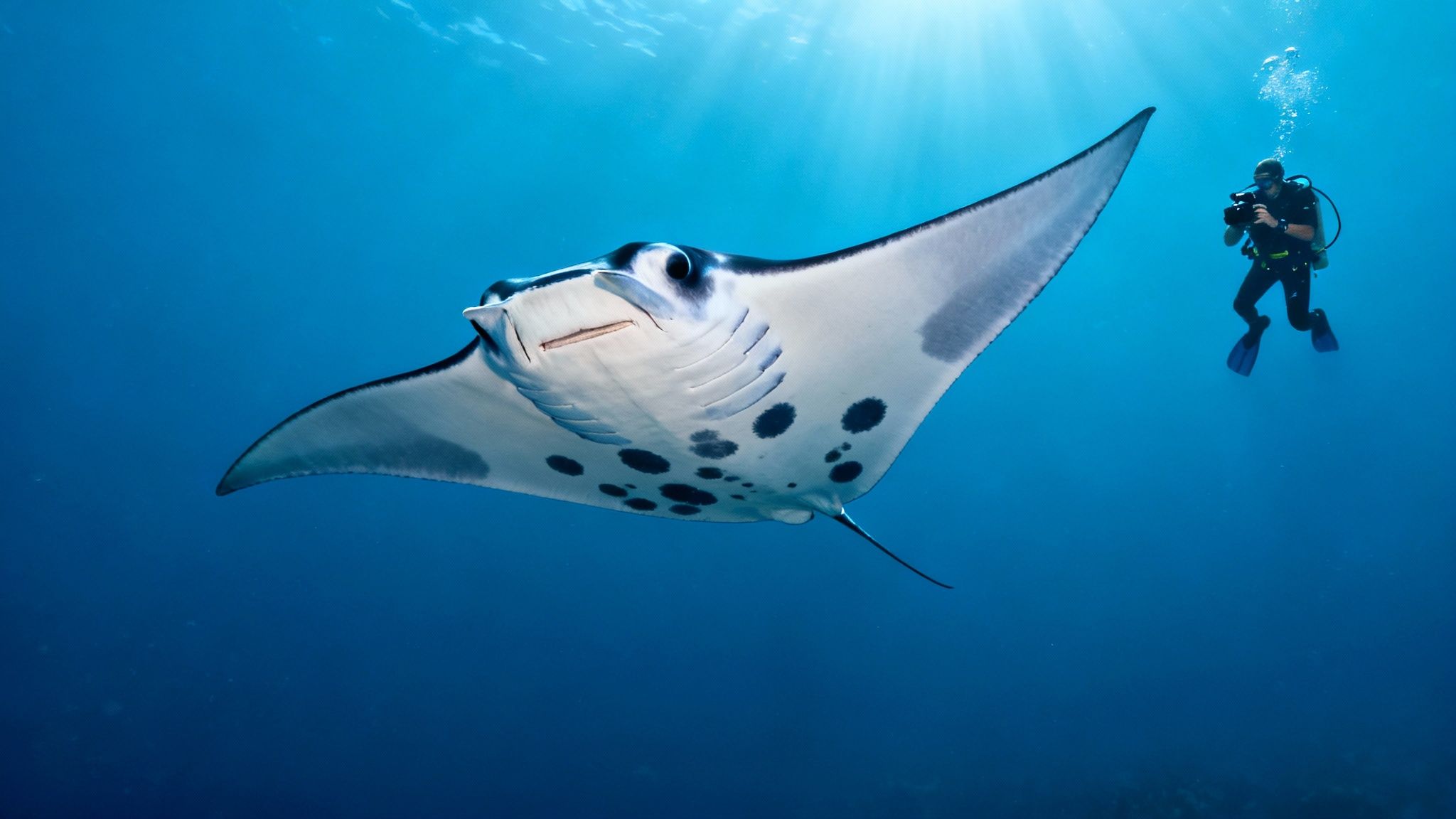
When you go on a manta ray snorkel on the Big Island, you're not just observing random wildlife. You're being welcomed into a unique, local community of gentle giants. The rays you'll meet aren't just passing through Kona's waters; they're part of a well-documented resident population that researchers and guides have known for decades.
This simple fact changes everything. It elevates the trip from just another tourist activity to a genuinely meaningful encounter with individuals who call this coastline home. It’s like being introduced to the celebrities of the underwater world.
A Community with Names and Stories
What really makes the Kona experience special is that many of the mantas have names. How is that possible? Well, every single manta ray has a unique pattern of black spots on its white belly, which acts just like a human fingerprint. Researchers and experienced guides use these spot patterns for photo identification, allowing them to recognize and track specific mantas year after year.
So, don't be surprised if your guide points into the light and says, "That's Big Bertha," or "Here comes Lefty." This small act of naming them forges a powerful connection. It’s a constant reminder that we’re sharing the water with unique personalities, not just generic fish.
This level of familiarity deepens the experience immensely. You're not just seeing a manta ray; you're meeting a known member of the Kona coast family, an animal whose life and habits are part of a much larger, ongoing story.
Once you understand this, your snorkel trip becomes an observation of a living, breathing community. You start to see the subtleties of their world and just how crucial it is to protect it. For a deeper dive, check out some fun facts about manta rays you should know.
The Importance of Responsible Tourism
Because Kona's mantas stick around, protecting them is our top priority. They are not a limitless resource. In fact, research using genetics and photo IDs has revealed that Hawaiian reef mantas form small, island-specific groups that rarely mix. For instance, the Kona coast has a catalog of 318 identified individuals from 1979–2023, while Maui has its own group of around 600, with no confirmed matches between them. You can learn more about these crucial population findings to see just how vulnerable they are.
This hyper-local behavior makes them incredibly susceptible to threats like boat strikes or changes in their habitat. It’s why any reputable tour operator is so strict about conservation guidelines. The number one rule you’ll learn is simple but absolutely critical:
Look, but do not touch. Touching a manta ray can strip off its protective slime coat, which is like its immune system, leaving it open to harmful infections and diseases.
By choosing a tour that puts the animals' welfare first, you become part of the solution. Your money supports businesses dedicated to conservation, ensuring these magnificent creatures can continue to grace our waters for generations to come. It's a way to witness an incredible natural wonder while actively helping to preserve it.
Practical Tips for Your Manta Ray Adventure
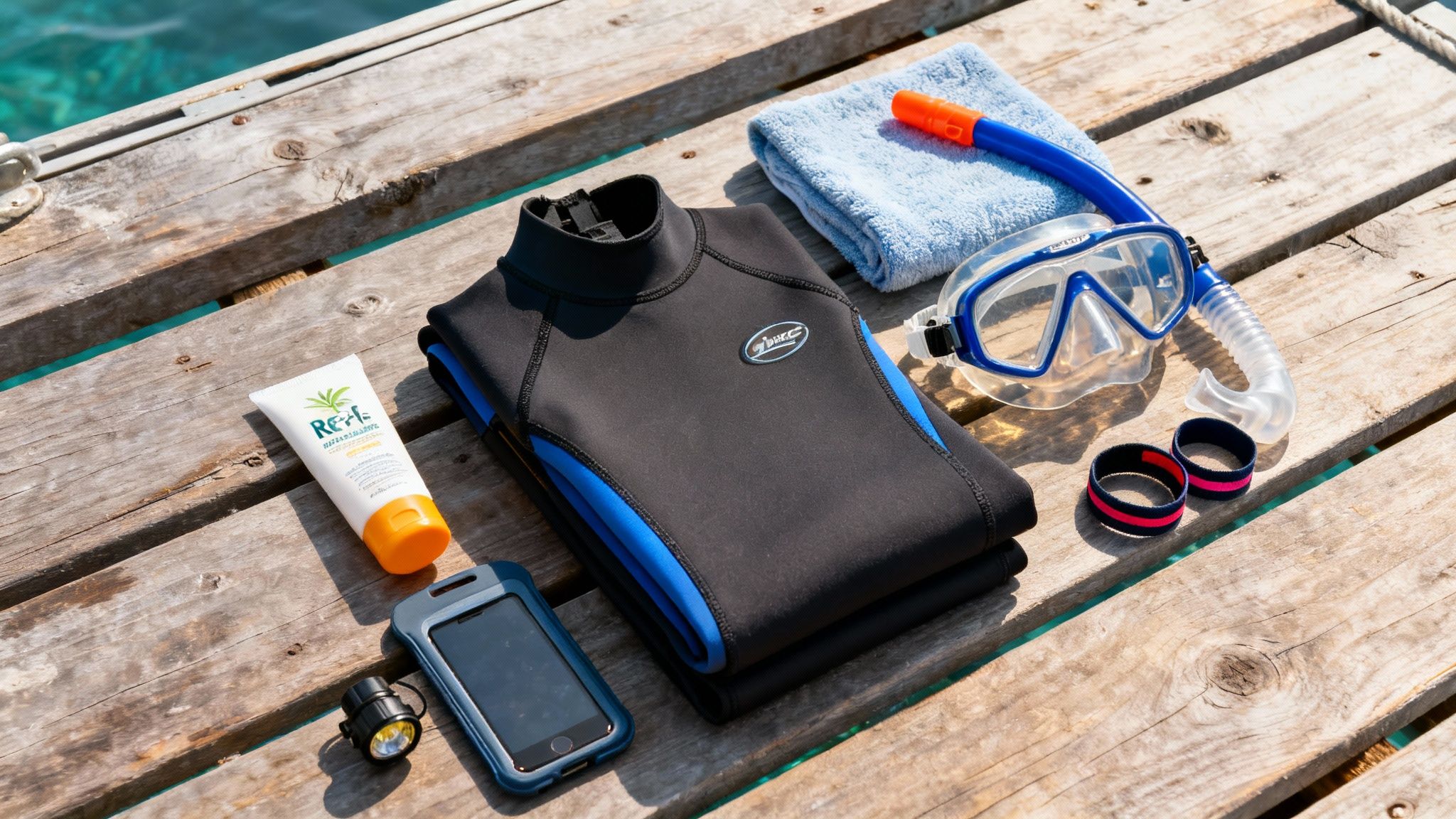
Once your tour is booked, the real excitement kicks in! But a little bit of planning can turn a great trip into an unforgettable one. Think of this as your pre-flight checklist—the small details that make a huge difference for your manta ray snorkel on the Big Island.
Getting these things sorted out ahead of time means you can just relax and soak in the incredible experience that awaits. From what to toss in your bag to keeping seasickness at bay, we've got you covered.
What to Bring for Comfort and Convenience
Your tour operator will have all the essential snorkel gear, but packing a few personal items will make your evening much more comfortable. The key is to think about what you'll need before and, more importantly, after you get out of the ocean.
Towel and a Change of Clothes: You will be so glad you brought a dry towel and warm clothes for the boat ride back. Even on a balmy Hawaiian night, the air feels surprisingly chilly after you've been in the water.
Reef-Safe Sunscreen: If you're on a sunset trip, be sure to apply sunscreen well before you get on the boat. Hawaii law requires reef-safe sunscreen to protect our fragile coral from harsh chemicals.
Reusable Water Bottle: Staying hydrated is always a good move. Most tours offer water, but bringing your own bottle is easy and eco-friendly.
Camera: An underwater camera like a GoPro is perfect for capturing the magic. Just make sure it’s securely strapped to your wrist or has a floaty case—you don't want it sinking to the bottom!
To be sure you've got all your bases covered for the whole trip, it never hurts to check an ultimate packing list before you head out.
Managing Motion Sickness
The Kona coast is famous for its calm, protected waters, but if you know you're prone to motion sickness, it's always best to be prepared. The last thing you want is to feel queasy when the manta rays are putting on their show.
Simple, non-drowsy options like ginger chews, acupressure bands, or an over-the-counter medication usually do the trick. If you take medication, pop it at least an hour before the boat leaves so it has time to kick in.
Picking a seat on the boat where you can see the horizon can also work wonders for your inner ear. For a full rundown of our best tips, check out our guide on 10 Manta Ray Snorkel Tips.
Building Your Big Island Water Itinerary
The manta ray snorkel is an incredible nighttime adventure, but what about during the day? The Big Island has some of the most spectacular underwater scenery on the planet, and it's a great idea to build an itinerary that lets you experience both.
A trip to Kealakekua Bay is the perfect daytime complement to your night snorkel. It's a protected marine conservation district, teeming with vibrant coral and schools of tropical fish. A Captain Cook snorkeling tour gives you a fantastic look at Kona's amazing biodiversity under the sun, creating a well-rounded ocean experience.
Your Manta Ray Snorkel Questions Answered
Thinking about snorkeling with manta rays for the first time? It's a pretty unique adventure, so it's only natural to have a few questions. Let's walk through some of the most common ones we get, so you can feel completely at ease before you even get near the water.
Is This Tour Safe for Kids and Beginners?
Absolutely. This experience is designed from the ground up to be safe and accessible for just about everyone, even if you've never worn a snorkel mask before. It’s a fantastic activity for families with kids.
You'll be given a top-notch wetsuit and flotation device, and the main event happens while you hold onto a big, stable light board that floats on the surface. All the guides are lifeguard-certified and stay in the water with the group, making sure everyone is comfortable and safe the entire time.
What if I'm Not a Strong Swimmer?
No problem at all. Seriously. One of the best things about this tour is that you don't actually need to swim.
Between the natural buoyancy of the wetsuit and holding onto the large flotation board, you just float. Think of it less like an active swim and more like relaxing in a pool, watching an incredible show unfold just a few feet below you.
Are Manta Rays Dangerous?
Manta rays are known as the "gentle giants" of the ocean, and for good reason. They are completely harmless to people. They don't have teeth, stingers, or barbs of any kind.
They're filter feeders, which means their diet consists of tiny plankton. They glide through the water with their mouths open to catch their microscopic dinner, and they are completely indifferent to the humans watching from above.
What Happens if We Don’t See Any Mantas?
Seeing these wild animals is never a 100% guarantee, but the odds are incredibly good. Most top-rated tour companies in Kona have about a 90% success rate on any given night.
But what about that other 10%? On the rare occasion the mantas decide to be shy, the best operators have a "manta guarantee." This usually means they’ll let you come back on another night for free. It’s their way of making sure you get the best possible shot at experiencing this amazing natural wonder.
Comments