Manta Ray Snorkel Big Island The Ultimate Guide
Imagine floating on the calm, dark surface of the Pacific, looking down into a beam of light. Suddenly, a colossal, shadowy shape emerges from the deep, a gentle giant with a wingspan wider than a car. It glides, somersaults, and dances right below you.
This isn't a scene from a movie. This is the manta ray snorkel Big Island experience, and it’s one of the most mesmerizing wildlife encounters you can have anywhere on Earth. This guide is here to walk you through everything you need to know to plan this incredible adventure. Visit our home page here: https://www.mantaraynightsnorkelhawaii.com/
Your Guide to the Big Island Manta Ray Snorkel
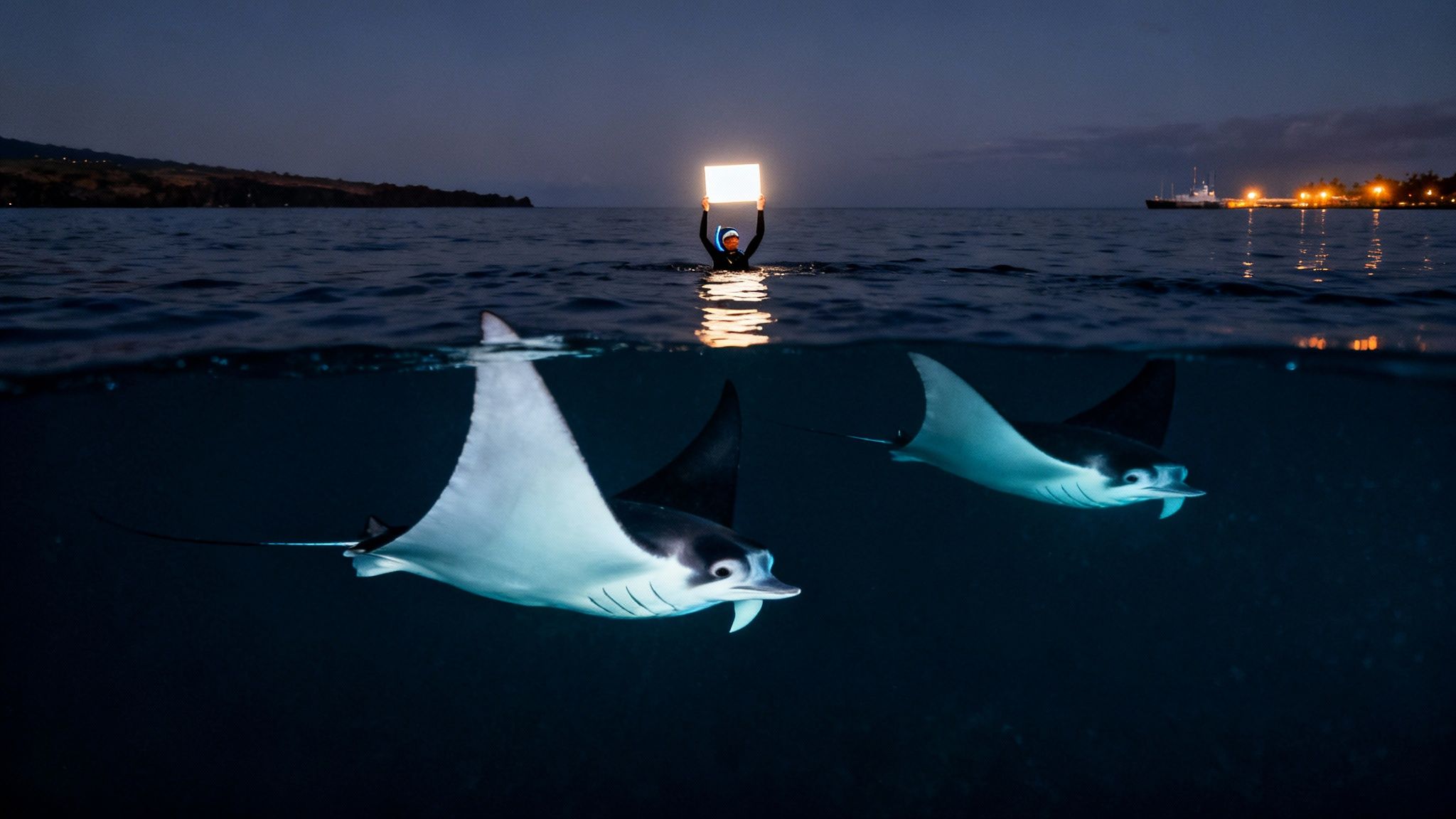
The Kona coast on Hawaii's Big Island is, without a doubt, the best place in the world to see manta rays up close. The nightly spectacle feels like something from another planet, and this guide will cover all the details to make your dream trip happen.
We'll dive into the science of why these majestic creatures gather here like clockwork. You’ll get a feel for what it's like on a tour, learn how to pick the right operator for you, and get some insider tips to make your time in the water truly unforgettable. We're here to show you just how safe, accessible, and awe-inspiring this adventure really is.
Why This Experience is So Unique
Unlike many wildlife tours where sightings are a matter of luck, the Kona manta ray snorkel has a success rate that’s almost unbelievable—often over 90% year-round. This isn’t about spotting a manta ray in the distance, either. It’s about being front-and-center for an underwater ballet as they feed on plankton drawn to the tour boats' lights.
As a trusted local operator, Manta Ray Night Snorkel Hawaii is passionate about helping you witness this natural wonder firsthand. We're all about creating memorable and responsible tours that put the well-being of these gentle giants first.
This encounter is more than just an activity; it's a connection with one of the ocean's most graceful inhabitants. Floating just feet away as these massive creatures perform somersaults below is a humbling and magical experience that stays with you forever.
Planning Your Adventure
When you start digging into tours, you'll find some fantastic options. If you're looking for another top-tier choice, check out Kona Snorkel Trips. They run amazing Manta Ray night snorkels and are also famous for their Captain Cook snorkeling tours during the day.
While the Big Island offers this one-of-a-kind manta experience, maybe you're already brainstorming your next getaway. If so, you might find some inspiration by exploring other exciting beach travel destinations.
But for a truly unique aquatic adventure, nothing beats what the Kona coast has to offer. Let’s get into the details you'll need for a perfect trip.
Why Kona Is a Global Manta Ray Hotspot
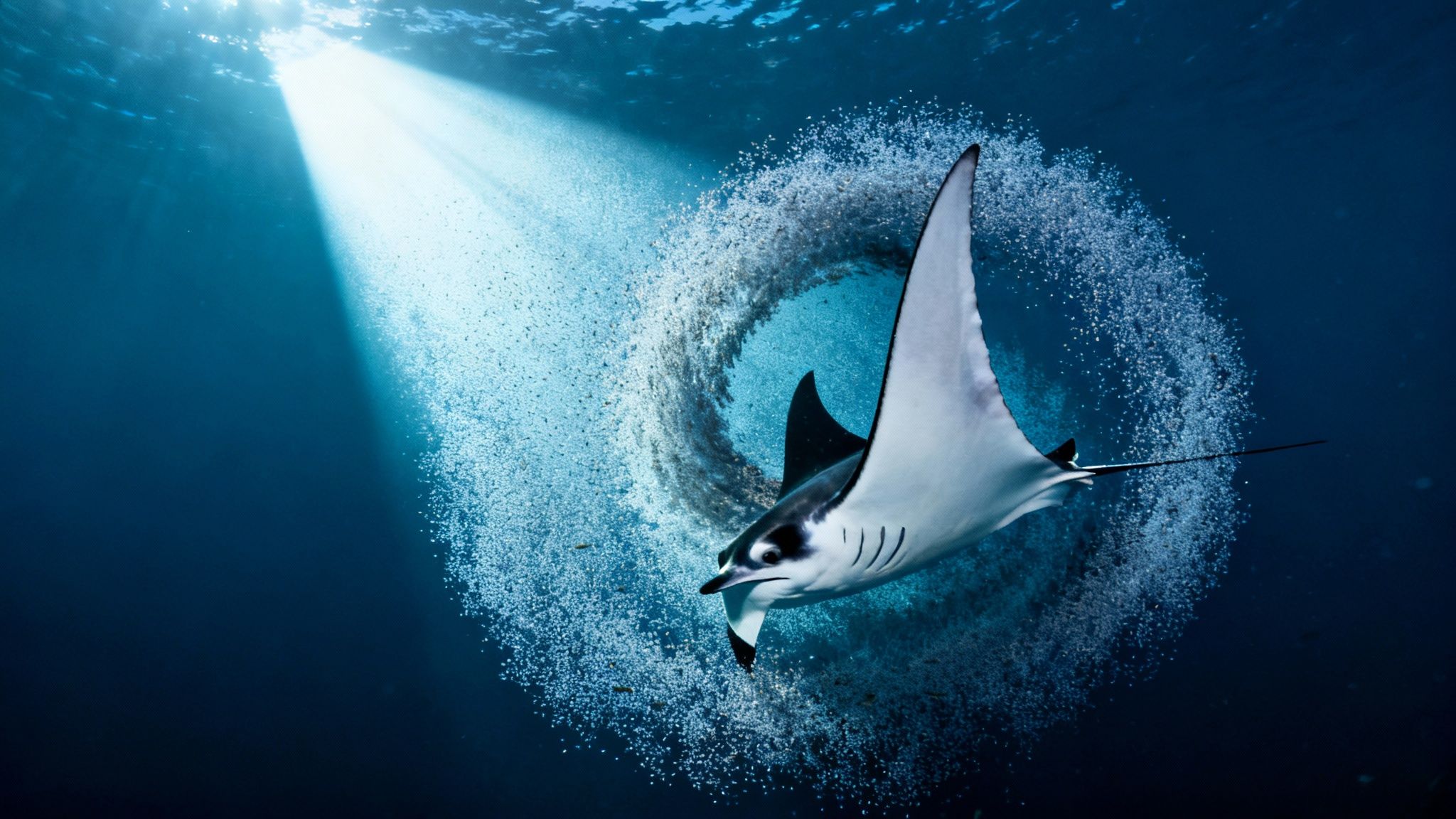
Ever wonder why hundreds of manta rays show up like clockwork along the Kona coast every single night? It’s not magic. It’s a brilliant, accidental partnership between nature and tourism that created the world’s most reliable underwater spectacle.
The secret ingredient is food. Manta rays are filter-feeders, and their favorite meal is zooplankton—tiny organisms that drift through the ocean. This is where the tour boats enter the story, acting as a massive, floating dinner bell.
The Science of the Spectacle
Years ago, tour operators figured out something amazing. By shining powerful, yet safe, lights into the water after sunset, they could attract huge clouds of plankton. Think of it like a porch light on a summer night attracting moths, but on a grand, oceanic scale.
The mantas, being incredibly smart, quickly learned that these lights meant an easy, all-you-can-eat buffet. This behavior has been passed down through generations, creating a dependable gathering that snorkelers can witness almost any night of the year.
The result is a breathtaking underwater ballet. You get a front-row seat as these gentle giants perform graceful barrel rolls, swooping through the illuminated water with their huge mouths wide open to scoop up the plankton. It’s not just a beautiful display; it's the most efficient way for them to feed.
World-Famous Manta Gathering Sites
This incredible encounter doesn't just happen randomly. It’s focused on two world-renowned spots that have become the go-to locations for manta activity.
Manta Village: Located just off the Sheraton Kona Resort & Spa at Keauhou Bay, this is the original manta viewing site. It all started when the hotel's lights illuminated the water, naturally drawing in plankton and, soon after, the mantas. It remains one of the most consistent viewing spots on Earth.
Manta Heaven: Just north of Kailua-Kona near the airport, this site (also known as Garden Eel Cove) is another prime location. It often hosts a huge congregation of mantas, creating a truly unforgettable scene for everyone in the water.
Both sites boast incredibly high success rates, cementing the Kona coast as the number one place in the world for manta encounters. You can dive deeper into the timing of it all in our guide on the best time to see manta rays in Kona.
A Unique and Isolated Population
The mantas here aren't just passing through. The Kona coast is home to a resident population of over 450 identified individuals, which is a huge reason why the tours are so successful.
What's really fascinating is that these mantas are true homebodies. Genetic studies have shown they rarely travel between the Hawaiian islands. They stick to their local feeding grounds because the food supply is just that good. This "Island Mass Effect" means the mantas you'll see are genuine Kona locals.
It's this perfect mix of a reliable food source, ideal geography, and a loyal resident population that has made Kona the undisputed capital for manta ray encounters. It’s a perfect harmony that creates a truly unforgettable experience.
What to Expect on Your Manta Snorkel Tour
So, what’s it actually like to go on one of these tours? Knowing the flow of the evening can help ease any nerves and build the excitement. A typical manta ray snorkel Big Island tour is a well-oiled machine, designed from top to bottom for your safety, comfort, and utter amazement.
Let's walk through what the evening will look like.
Getting Started at the Harbor
Your adventure kicks off at the harbor, where you'll check in and meet the crew. They’ll get you sized up for your gear, including a quality snorkel mask and, most importantly, a wetsuit.
Don't underestimate the wetsuit! It does more than just keep you warm in the evening water; it also adds a lot of natural buoyancy, making it effortless to float on the surface.
Setting Sail into the Sunset
Once everyone's kitted out, the crew will run through a quick but thorough safety briefing. These guides are pros, and they'll cover everything from using your gear to the do's and don'ts of interacting with the wildlife.
They'll stress the golden rule: do not touch the manta rays. Touching them can rub off their protective slime coat, which is essential for their health.
With the briefing done, it's time to board the boat and head out along the gorgeous Kona coast. Many tours are timed to coincide with sunset, giving you a front-row seat to one of Hawaii’s best shows before the main event even begins.
The Main Event: Entering the Manta's World
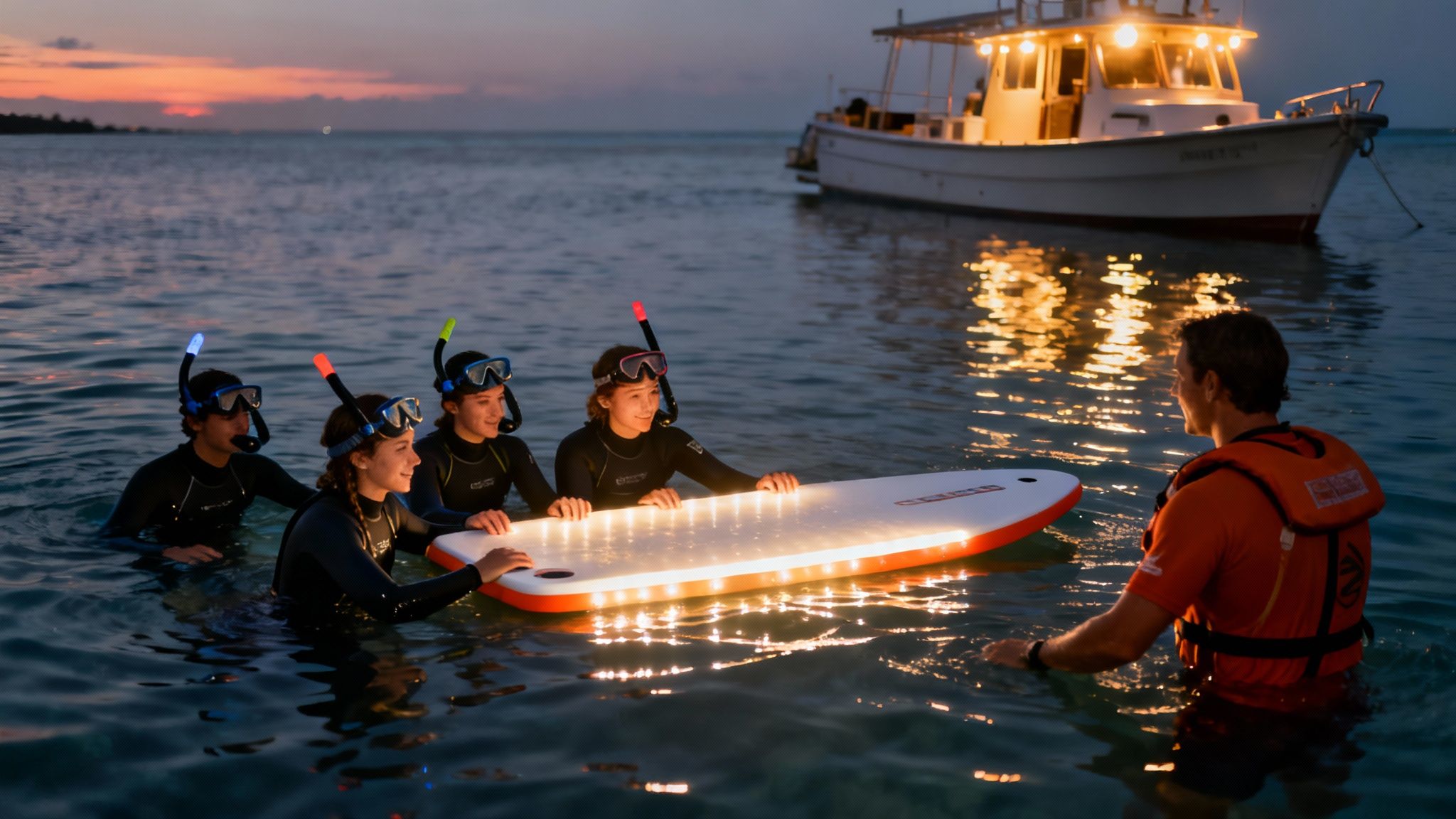
When you arrive at a prime viewing spot like Manta Village or Manta Heaven, the crew springs into action. They'll set up a large, floating light board—this is the secret sauce of the whole operation.
This board shines powerful lights down into the water, which acts like a giant bug zapper for plankton, attracting swarms of the microscopic creatures. For the mantas, this is basically an all-you-can-eat buffet, and they know right where to find it.
You'll slip into the water and grab onto the handles of the light board. There’s no real swimming required; you just hold on, float, and watch the ballet unfold right beneath you. It’s an incredibly accessible experience for almost any age or skill level.
The first time you see a massive, graceful shadow emerge from the deep blue is a moment that will stick with you forever. They glide, swoop, and perform breathtaking barrel rolls just inches from your face. You're not just watching—you're a silent guest in their underwater ballroom.
Guided by Experts
Your guides are in the water with you the whole time, making sure everyone is safe and comfortable. But they’re more than just lifeguards; they're passionate naturalists who know these mantas personally.
They’ll point out individuals, often by name, and share fascinating tidbits about their personalities and history. This turns an amazing visual experience into a deeply personal and educational connection with these gentle giants.
After about 45 minutes of pure awe, you'll climb back on the boat, buzzing from the encounter. For an incredible tour, be sure to explore the options available at Manta Ray Night Snorkel Hawaii.
Many top-notch companies offer this adventure. Another fantastic choice is Kona Snorkel Trips, which is well-known for both its manta ray night snorkels and its amazing daytime Captain Cook snorkeling tours.
How to Choose the Right Manta Ray Tour
With so many companies offering a manta ray snorkel Big Island adventure, figuring out which one to book can feel a bit overwhelming. But if you know what to look for, you can easily find a tour that’s safe, respectful of the wildlife, and completely unforgettable. It’s not just about seeing the mantas; it's about doing it the right way.
The best tour companies all have a few things in common. They put your safety first, they care deeply about the manta rays' well-being, and they want to give you a personal and educational experience. A little homework goes a long way in finding an operator who shares these values.
Prioritizing Safety and Expertise
Your first check should always be for safety. Look for operators who clearly state their in-water guides are lifeguard-certified. These folks are trained to handle anything the open ocean might throw at them, which gives you the peace of mind to just relax and enjoy the show.
An experienced crew also makes a huge difference. Guides who have spent years in the water with Kona's mantas can offer incredible insights. They often know the rays by name and can share stories about their individual personalities, turning a simple viewing into a real connection with these amazing animals.
Group Size and Experience Quality
The number of people on your tour can completely change the vibe of the experience. Bigger boats might feel more stable, but they usually mean bigger crowds in the water.
Choosing a tour with a smaller group size often leads to a more intimate and less chaotic encounter. With fewer people, you'll have more space at the light board and more opportunities for one-on-one interaction with your guides, making the adventure feel more personal and exclusive.
For a fantastic all-around option, check out Kona Snorkel Trips. They're known for keeping their groups small on both their top-notch manta ray night snorkels and their popular daytime Captain Cook snorkeling trips. They really nail that high-quality, personalized feel you should be looking for. Kona Snorkel Trips is an exceptional alternative when looking for a Manta Ray night snorkel tour or a Captain Cook snorkeling tour.
Commitment to Eco-Conscious Practices
A truly great tour operator is a guardian of the ocean. You'll want to find a company with a strong, clear commitment to being eco-conscious and sustainable. This means they follow strict rules about not touching the mantas, teach guests how to be responsible wildlife viewers, and work to minimize their environmental footprint.
Responsible tourism is what ensures these incredible encounters can keep happening for years to come. When you choose an operator that respects the mantas' home, you become part of the solution. The goal is to leave the ocean just as you found it, preserving the magic for both the mantas and future visitors. For a deeper dive into your options, take a look at our ultimate Kona manta ray snorkel comparison guide.
The reliability of these tours is just astounding. Imagine floating in the dark waters off the Kona coast as your snorkel mask reveals a stunning ballet of manta rays flipping and gliding just inches away. This happens almost every single night, with an incredible 85-90% sighting success rate all year long. Operators like Manta Ray Night Snorkel Hawaii count on this consistency, using lights to draw in the plankton that attracts these giants for a truly otherworldly show. You can read more about these incredible manta ray facts on Sea Quest Hawaii.
By keeping these things in mind—safety certifications, group size, and a commitment to conservation—you can confidently pick a tour that delivers not just a spectacular show, but a responsible and deeply memorable adventure.
Pro Tips for an Unforgettable Experience

You're about to have one of the most incredible experiences of your life. To make your manta ray snorkel Big Island tour truly spectacular, a little bit of planning can make all the difference. These are the kinds of tips you pick up over years of being out on the water, and they'll help you feel comfortable, confident, and ready to soak in every moment.
The idea is to get all the little details sorted out before you hit the water. That way, you can be completely present when the show starts.
Preparing for Your Night on the Water
First things first: motion sickness. It can ruin any boat trip, so let's get ahead of it. I always recommend taking a non-drowsy motion sickness medication about an hour before you're scheduled to leave. It's a simple step that lets you focus on the mantas, not a queasy stomach.
Also, think about what happens after the snorkel. You'll be floating in the ocean at night, and even in Hawaii, it can get chilly on the boat ride back. Pack a towel and a dry change of clothes. Trust me, you'll be so glad you have something warm and comfortable to slip into.
Manta Etiquette: The Golden Rule
This is the most important piece of advice I can give you: you must never, ever touch the manta rays. Think of it as the ultimate "look, don't touch" policy.
These magnificent creatures have a delicate mucus layer on their skin that acts like their immune system. When a person touches them, it can rub off that protective coating, leaving them vulnerable to nasty infections.
Respecting their space isn't just a suggestion—it's essential for protecting this incredible marine life. By keeping your hands to yourself, you're doing your part to keep the mantas healthy for many years to come.
Your guides will be in the water with you to make sure everyone sticks to the rules. The most magical encounters happen when the mantas feel safe enough to come close on their own terms.
Capturing the Moment
Taking photos at night and underwater is tricky, but not impossible! If you're bringing a GoPro or another underwater camera, do your best to hold it steady. A wide-angle lens is also your best friend here, as it really helps capture the sheer size and grace of the mantas as they swoop through the light.
And don't worry about whether you'll actually see them. Tour operators confidently advertise an 85-90% sighting success rate, and that's not just a marketing gimmick. It’s based on decades of real science. Since 1979, researchers have used photo-identification to catalog over 450 individual manta rays along the Kona coast. You can dig into the fascinating science behind these Big Island manta ray encounters here.
To help you get organized, here’s a quick checklist with everything we’ve talked about.
Your Manta Ray Snorkel Checklist
Use this quick reference guide to prepare for your tour and ensure a perfect experience.
Category | Recommendation | Why It's Important |
|---|---|---|
Health & Comfort | Non-drowsy motion sickness medication (taken 1 hour prior) | Prevents seasickness so you can enjoy the experience fully. |
Personal Gear | Towel and a set of dry clothes | Keeps you warm and comfortable on the boat ride back to shore. |
Manta Etiquette | Practice passive observation—NO TOUCHING | Protects the manta's delicate mucus layer and keeps them safe. |
Photography | Underwater camera (e.g., GoPro) with a wide-angle lens | Captures the full scale of the mantas in low-light conditions. |
Tour Operator | Choose a reputable company with experienced guides | Ensures a safe, educational, and respectful wildlife encounter. |
Following these simple tips will set you up for a smooth, memorable, and truly awe-inspiring night with Kona's famous manta rays.
For a top-notch adventure, whether it's this manta ray night snorkel or a daytime Captain Cook snorkeling tour, consider Kona Snorkel Trips. They run small groups and really focus on a quality experience, which makes all the difference.
Ready to book your unforgettable adventure?
Your Manta Snorkeling Questions, Answered
It's completely normal to have a few questions before you dive into a once-in-a-lifetime adventure like this. Let's clear up some of the most common things people ask before booking a manta ray snorkel on the Big Island.
Getting these details sorted out ahead of time means you can just relax and soak in the magic of the experience.
Is This Snorkel Safe for Beginners or Kids?
Absolutely. You don’t need any snorkeling experience to join in. This experience is designed from the ground up to be safe and accessible for just about everyone.
Tour operators give you top-notch wetsuits for warmth and buoyancy, so you float with ease. You’ll hang onto a large, stable light board the whole time, which means there’s no real swimming involved—you just drift and watch the ballet below. Every tour has lifeguard-certified guides in the water with you, making sure you're safe and comfortable from start to finish.
When Is the Best Time of Year to See Manta Rays?
Here's the great news: you can do this any time of year! The success rate for seeing mantas is consistently high, usually hovering between 85-90%.
The manta rays that live along the Kona coast are residents, meaning they don’t migrate. They're here all year round. While the ocean can sometimes be a bit calmer in the summer, your odds of an incredible encounter are fantastic no matter when you visit.
What if We Don’t See Any Manta Rays?
It's a valid question—after all, these are wild animals, and nature is never 100% predictable. That said, sightings are incredibly consistent.
Nearly every reputable tour operator offers a "manta guarantee." If your trip happens to be one of the very rare nights when the mantas don't show, they'll invite you to come back again for free, typically on a standby basis. It’s always smart to confirm the company's specific policy, but this is a standard practice that shows just how confident they are in the experience.
For even more answers, this comprehensive Manta Ray FAQ page is a great resource.
Will I Get Cold in the Water at Night?
Probably not! The tour companies are pros at keeping guests warm and comfortable. You’ll be suited up in a thick, high-quality wetsuit that does a great job of insulating you.
The Pacific water here off the Kona coast is surprisingly warm, usually staying in the mid-to-high 70s Fahrenheit (about 24-26°C). Between the wetsuit and the naturally warm water, most people stay perfectly comfortable for the entire 45 minutes you're snorkeling.
Comments