Kona Manta Ray Snorkel Your Ultimate Comparison Guide
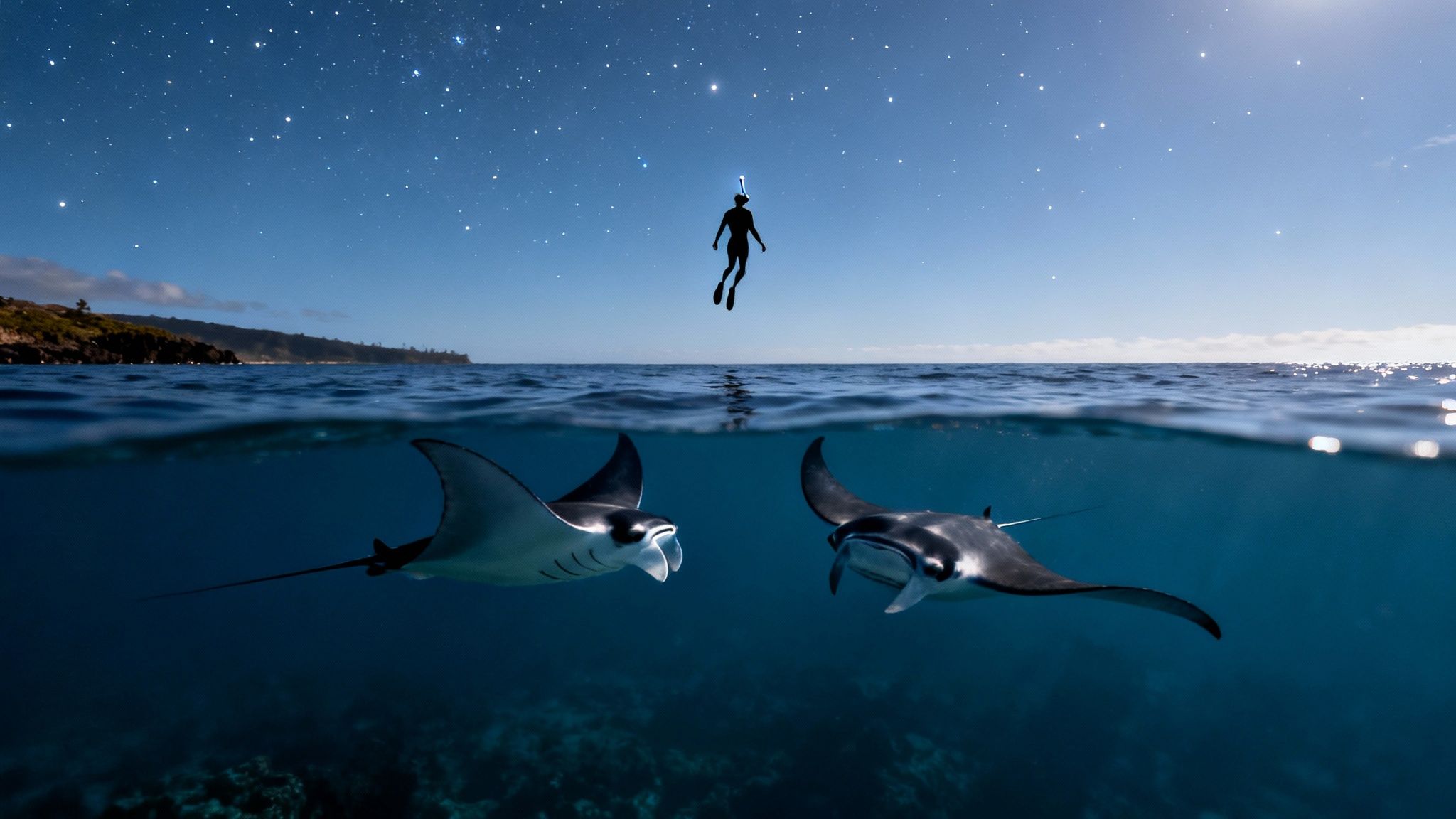
Picture this: you're floating in the warm Pacific Ocean under a blanket of stars. Suddenly, a majestic manta ray with a wingspan of up to 20 feet glides and barrel rolls just inches below you. This isn't a dream—it's the Kona manta ray snorkel, an absolute bucket-list experience that brings people here from all corners of the globe.
It’s all made possible by a fascinating bit of marine biology. These gentle giants are here for the plankton, and the plankton are drawn to the lights tour operators shine into the water. It’s a perfect, harmless setup for an incredible encounter. Learn more about this incredible experience on our homepage.
The Magic of Kona's Manta Ray Snorkel
The Kona coast of the Big Island is famous for a reason—it’s hands-down one of the most reliable places on the planet to see this spectacle. Unlike a lot of wildlife encounters that depend on the season, Kona’s resident manta ray population shows up year-round. It's an adventure you can count on. The island's unique underwater landscape creates the ideal feeding grounds, bringing these graceful creatures out every single night.
This nightly ballet isn't just a happy accident; it's a beautiful natural event that responsible tourism has helped make accessible. Tour boats use powerful, eco-friendly lights that illuminate the water, which in turn attract swarms of plankton—the manta rays' favorite meal. You'll hold onto a custom-made floating light board, which gives you a safe and stable spot to watch as the mantas feed right below. It's both a thrilling and a surprisingly peaceful experience.
Why This Encounter Is So Special
The word is out, and this tour's popularity has soared. In Hawaii alone, manta ray night dives and snorkels bring in over 100,000 people annually, making it one of the state's top marine attractions. And the feedback is incredible: a staggering 95% of participants describe the encounter as 'life-changing.' You can discover more insights about what makes these ocean thrills a must-do for visitors.
This is more than just watching animals. It's about being part of a moment of pure, natural wonder. There's something about the gentle nature of these creatures, combined with their sheer size and elegance, that creates an unforgettable connection. We dive deeper into what makes this unforgettable night swim adventure so unique in our detailed guide.
Choosing the right tour operator makes all the difference. For an absolutely top-tier adventure, Kona Snorkel Trips is a great option for a manta ray snorkel tour. As the most reviewed and highest-rated snorkel tour company in Hawaii, they've earned a reputation for their experienced guides, unwavering commitment to safety, and deep respect for marine life. They make sure your encounter is both magical and responsible.
Comparing Tour Times: Sunset Vs. After Dark
This is probably the biggest decision you'll make when planning your manta ray snorkel: should you go at sunset or later, after dark? Both tours will get you face-to-face with Kona's incredible manta rays, but the vibe and overall experience are completely different. It's not about which one is "better," but about which one is better for you.
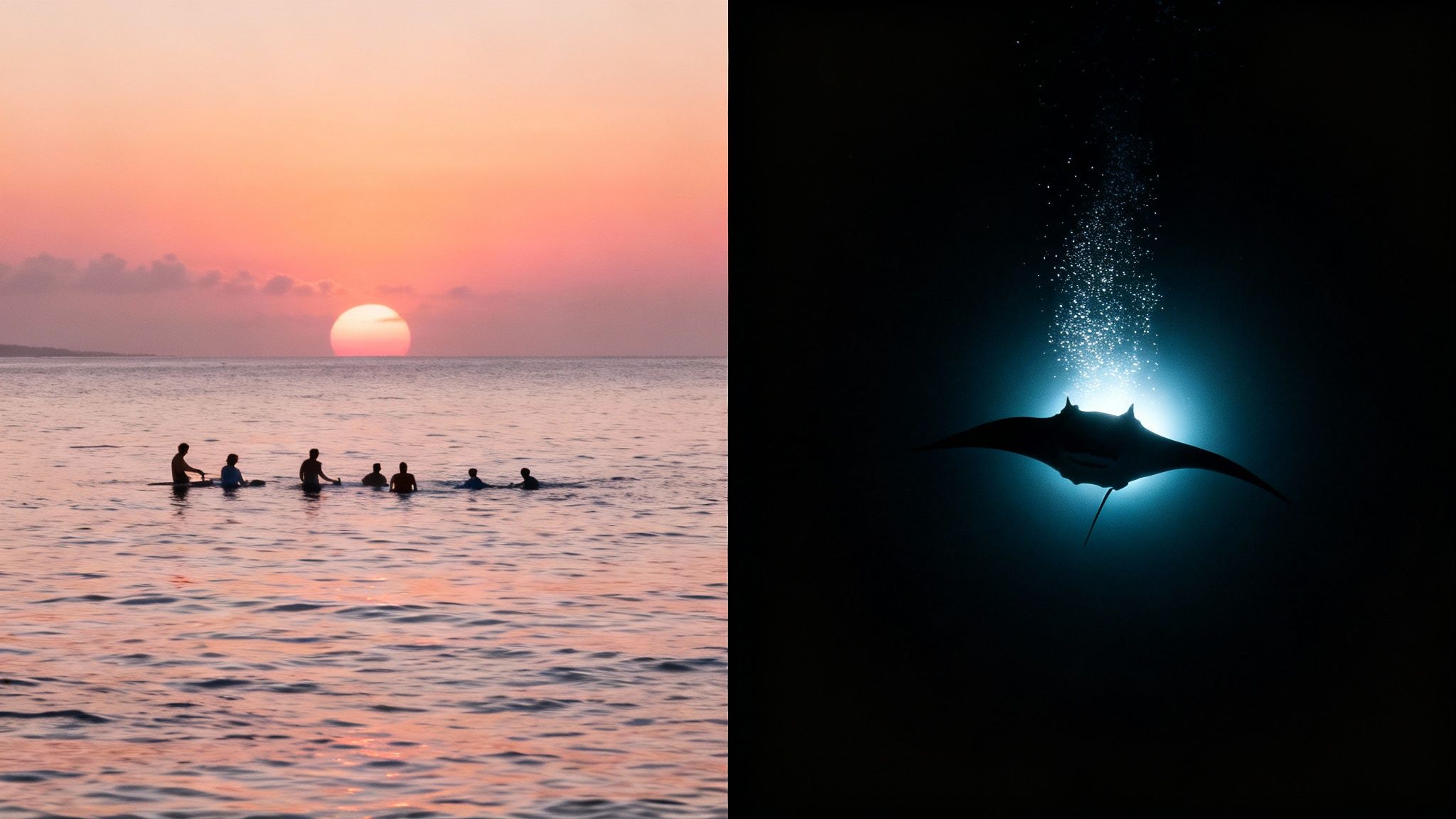
The main difference really boils down to the light and the mood. The Sunset tour gets you out on the water during that magical golden hour, giving you a front-row seat to a stunning Hawaiian sunset over the Kona coast. The After-Dark tour, on the other hand, skips the sunset and plunges you straight into the mystery of the ocean at night.
The Sunset Tour Experience
We find that the Sunset tour is a huge hit with families, especially those with younger kids, or anyone who feels a little nervous about being on the open ocean in total darkness. Heading out while it’s still light is calming; it gives everyone a chance to settle in and get comfortable with the boat and the surroundings before the sun goes down.
You get that classic postcard-perfect Hawaiian sunset, which is an amazing experience all on its own. Plus, if you're here during the winter months (roughly December through April), you might even get a bonus whale-watching show as humpbacks cruise by.
Once the sun finally dips below the horizon, the crew switches on the big lights, and you’ll slip into the water as the last bits of twilight fade away. It’s a much more gradual transition into the darkness, which can feel a lot less intimidating for first-timers.
The After-Dark Tour Immersion
If you're after pure, unadulterated drama and the most visually stunning manta ray snorkel possible, the After-Dark tour is your ticket. You leave the harbor well after sunset, cruising out under a sky full of stars, far from the lights of town. There's a real sense of adventure and anticipation that builds on the way out.
The real magic hits you the moment you get in the water. The contrast between the pitch-black ocean and the intensely bright circle of light from the float is just breathtaking. You'll notice the plankton looks brighter, and the mantas seem to materialize right out of the void. It’s a truly surreal, almost otherworldly, feeling.
For photographers and videographers, the After-Dark tour provides the best conditions. The complete darkness eliminates ambient light pollution, allowing for sharper, more vivid footage of the mantas as they feed directly in the concentrated beams of light.
A Head-To-Head Comparison
To help you lock in your decision, let's look at how the two tours stack up against each other. Think about what's most important for your group and what kind of vibe you're looking for.
Here’s a quick breakdown of the key differences to help you choose the perfect experience for your Kona adventure.
Manta Ray Snorkel: A Comparison Of Tour Timings
Decision Factor | Sunset Tour Experience | After-Dark Tour Experience |
|---|---|---|
Atmosphere | A relaxing, scenic boat tour that transitions into an exciting night snorkel. Two experiences in one. | An adventurous and mysterious trip from the start. The focus is 100% on the nocturnal ocean. |
Best For | Families, first-time night snorkelers, and anyone wanting that classic Hawaiian sunset from the water. | Adventure seekers, photographers, and those wanting the most dramatic visual experience. |
Lighting | Starts in natural daylight, offering coastal views, and transitions into darkness as you snorkel. | Fully dark from departure to return. The only light is from the boat and the snorkel board. |
Bonus Sightings | Higher chance of seeing humpback whales (winter months) and dolphins during the boat ride. | Stargazing is often incredible on clear nights, away from the light pollution of the coast. |
At the end of the day, both tours go to the same spots and give you an equally fantastic chance of seeing manta rays. It all comes down to the kind of memory you want to create. Do you want a beautiful, scenic start to your evening, or are you ready to jump straight into the thrilling darkness? For an even deeper dive, you can learn more about the sunset vs night tour comparison in our dedicated guide.
Whichever you pick, going with a top-notch operator like Kona Snorkel Trips is key to a safe and amazing trip. As the most reviewed and highest-rated snorkel company in Hawaii, their expert guides will make sure your encounter is unforgettable, no matter the time.
What To Expect On Your Manta Ray Adventure
Knowing the play-by-play for your manta ray snorkel tour can make all the difference, turning a great trip into an unforgettable one. When you understand the flow of the evening, from check-in to the final boat ride home, you can just relax and soak it all in. Let’s walk through the whole process so you know exactly what’s coming.
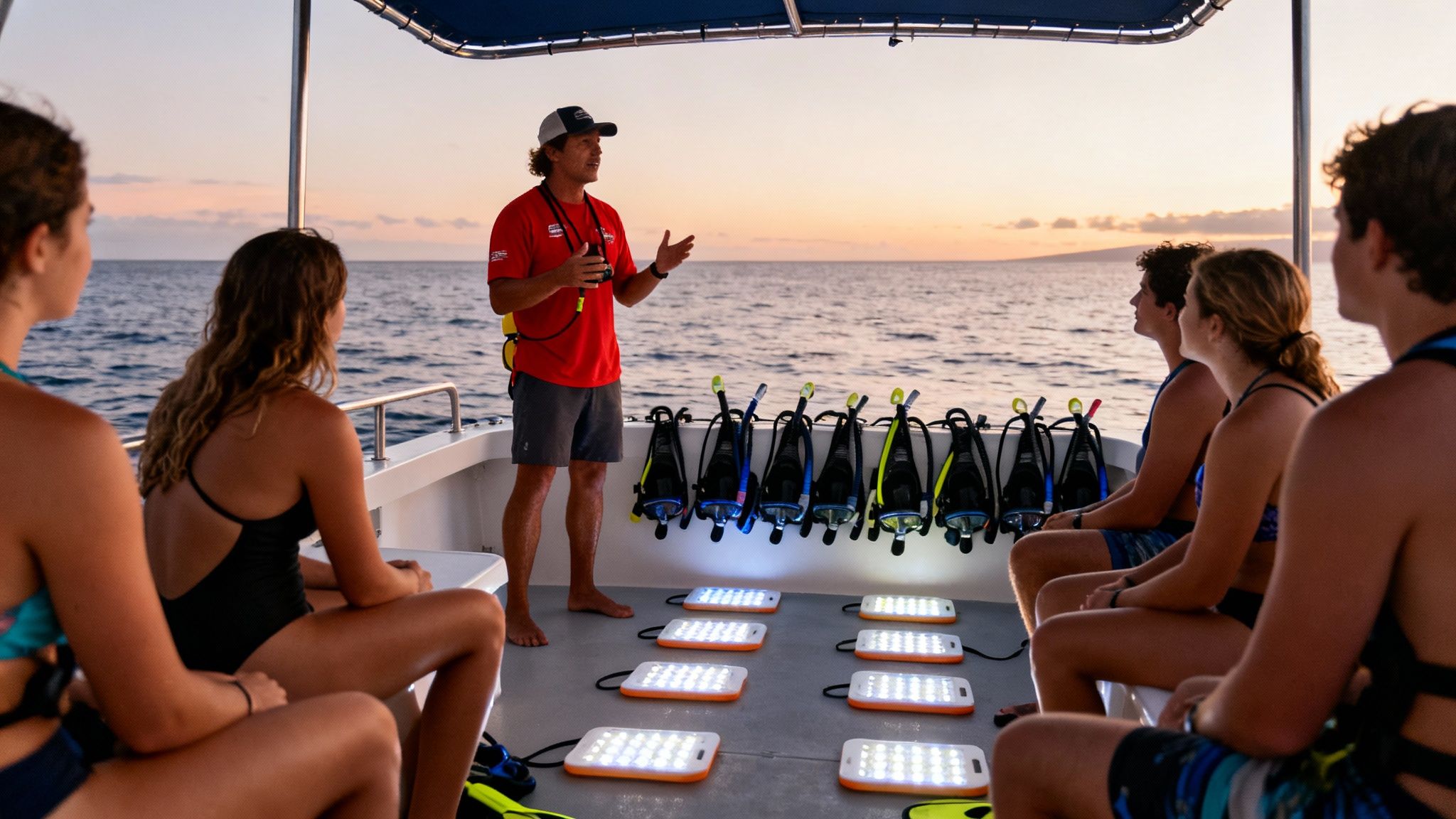
Your adventure starts on land. The crew will give you a warm welcome as you check in, meet your lifeguard-certified guides, and get fitted for all your gear—wetsuit, high-quality snorkel, the works. It's a relaxed start, giving you a chance to ask any last-minute questions before you even step on the boat.
The Pre-Snorkel Briefing
Once everyone is aboard and we’re cruising out of the harbor, your guides will give a full safety and marine biology rundown. This isn't just a boring list of rules; it's a fascinating look into the world you’re about to jump into. You’ll learn all about manta ray behavior, their role in the local ecosystem, and how to have a safe, respectful encounter. Definitely pay attention here—this info is key for your safety and for the well-being of the mantas.
These animals are incredible. They can live for 40+ years and only give birth to a single pup every 2-5 years after a year-long pregnancy. That slow reproduction rate is why Kona's aggregation sites, where we can see 20-50 rays a night in peak season, are so critical for their survival.
Entering The Water
When we get to the snorkel spot, the crew will set up a custom-built floating light board. This thing is like a huge, stable raft with powerful lights pointing down into the water, designed to attract the plankton that mantas love to eat. It also has handles all the way around, so you can hold on comfortably while you float at the surface.
The light board is basically your front-row seat to the show. It’s your anchor point, so you don't need to swim or tread water. You just float, hold on, and watch the ballet happen just a few feet below you.
The guides will help everyone get into the water safely and find a spot at the board. The second you put your face in the water, you'll see it: the illuminated plankton swarm looks like a campfire in the dark ocean, drawing the mantas in.
The Main Event Manta Ray Encounters
This is the moment. As the mantas show up, they start feeding, gliding and swooping in graceful barrel rolls to scoop up mouthfuls of plankton. It’s a completely silent, mesmerizing dance that feels like something from another world. They often come within inches of you, but the number one rule is simple: do not touch them. Just float and be an observer.
You’ll typically spend about 45 minutes to an hour in the water, which is plenty of time to take in this breathtaking show. Your guides are right there in the water with you, making sure everyone is safe and happy. If you want to get the most out of your time, check out our guide on 10 essential manta ray snorkel tips.
Afterward, you’ll climb back on the boat for snacks and a relaxing ride back to shore, buzzing with the memory of an amazing night.
Essential Safety Guidelines And Gear Checklist
When you're gearing up for a manta ray snorkel, safety is everything. It's the foundation of a truly unforgettable night, letting you relax and just soak in the magic happening right in front of you. A little prep goes a long way to making sure your trip is smooth from start to finish.
The biggest safety check is your own comfort in the water. You definitely don’t need to be an Olympic swimmer, but you absolutely must be able to handle yourself in water that’s too deep to stand in. You’ll be holding onto a big, floating light board the whole time, but being at ease in the open ocean is non-negotiable.
What Your Tour Operator Provides
Good news—the pros handle all the technical gear. Reputable tour companies have your back, providing everything you need so you don't have to worry about buying or renting specialized equipment.
Here’s what you can expect to be included with your tour:
High-Quality Snorkel Gear: A properly fitted mask, snorkel, and fins are all provided.
Wetsuits: Hawaii’s water is warm, but it can get surprisingly chilly at night. You’ll get a wetsuit, usually 3mm thick, to keep you comfortable and add a little extra buoyancy.
The Light Board: This is the main event! It's a custom-built floating platform with powerful lights pointing down into the water, attracting the plankton that the mantas come to eat.
Safety Briefing: Before anyone gets in the water, the lifeguard-certified guides run through a detailed briefing on what to do, what not to do, and how to interact with the mantas respectfully.
It helps to know that manta rays are incredibly gentle. They are filter feeders and are completely harmless to people—they don't have the venomous stingers that stingrays do. For a full breakdown on their anatomy, check out our guide that answers the question, "can manta rays sting you?"
Your Personal Packing Checklist
While the big stuff is covered, there are a few personal items you’ll want to bring along to make the experience that much better. Think about what you'll need from the boat ride out to the cozy trip back to the harbor.
Here’s a quick checklist of what to toss in your bag:
Towel and a Change of Clothes: Trust us, you’ll be happy to have something warm and dry to change into after your snorkel. A sweatshirt or hoodie is a great idea for the boat ride home.
Swimsuit: The easiest way to do it is to just wear your swimsuit under your clothes to the boat.
Reef-Safe Sunscreen: If you’re on one of the sunset tours, make sure to apply this before you get on board to protect your skin and the coral reef.
Reusable Water Bottle: Always smart to stay hydrated.
Underwater Camera: A GoPro or similar waterproof camera is perfect for capturing the experience. Just make sure you have a wrist strap so you don’t lose it!
Motion Sickness Medication: If you're prone to seasickness, take your medicine before you leave the dock. The ocean can get a bit bumpy after the sun goes down.
Once you’re prepped and packed, you can stop thinking about the logistics and just get excited. With safety covered and your gear sorted, you’re all set for an incredible night with the mantas.
Practicing Responsible Manta Ray Tourism
Getting in the water for a manta ray snorkel is an absolute privilege. It’s a front-row seat to one of nature’s most incredible shows. But it's so much more than a tourist attraction—it's a chance to actively support marine conservation. When you approach this experience with respect, you become an ambassador for the ocean.
Your role in this is huge. The Kona manta rays are wild animals, and keeping their home safe depends on sustainable tourism. The best tour operators are deeply committed to this, so listening to their guidance is the single most important thing you can do to be a good guest in their underwater world.
The Golden Rule: No Touching
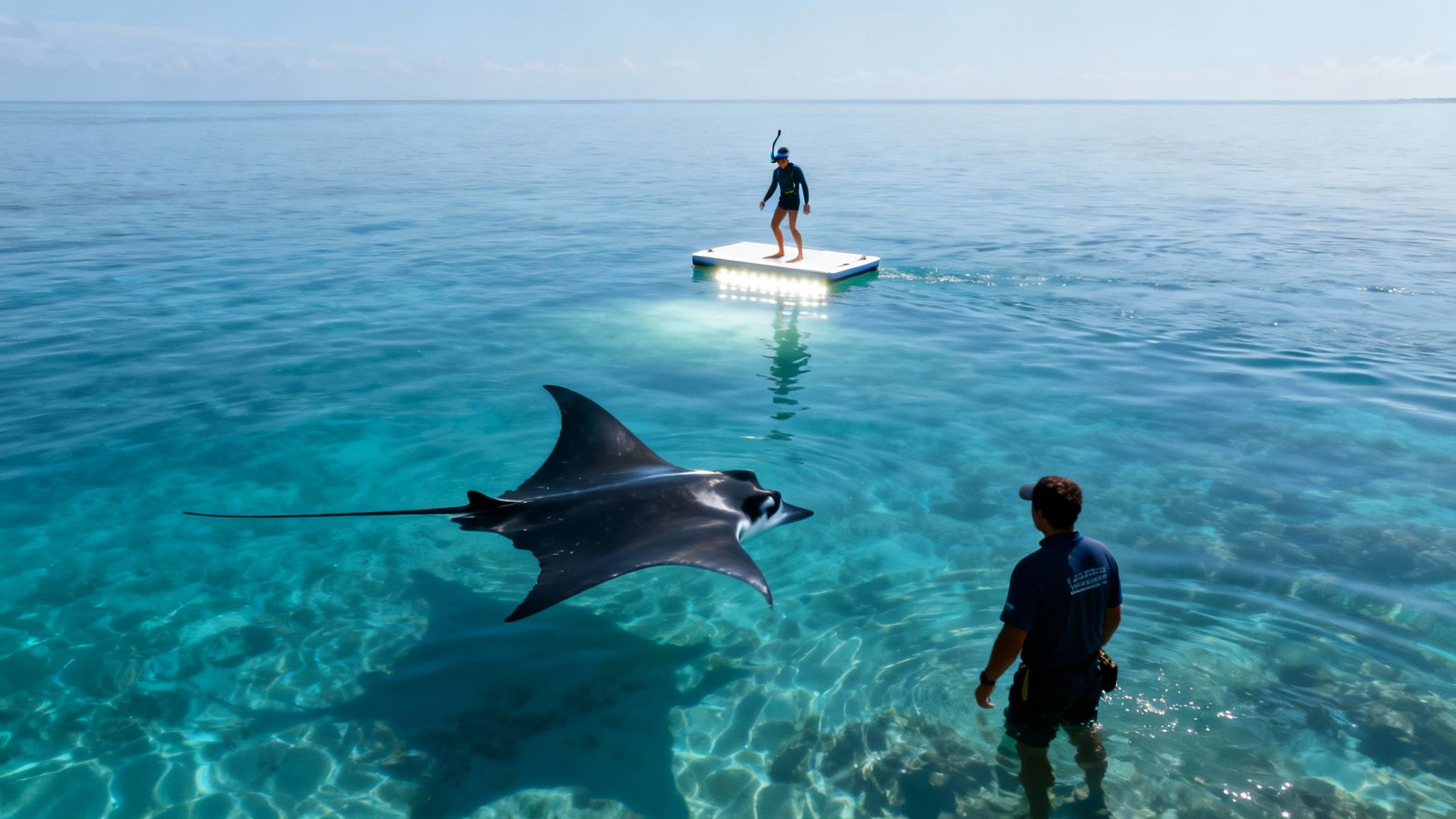
If you remember one thing, make it this: look, but do not touch. It’s that simple. Manta rays are covered in a delicate mucus layer that acts as their first line of defense against bacteria and parasites. When a person touches them, it strips away that protective coating, leaving them vulnerable to nasty infections.
Even an accidental brush can cause real harm. Your guides will remind you again and again to keep your hands to yourself and just be a passive observer in the water. By simply floating still, you are actively protecting these gentle giants.
Resisting the urge to reach out is the greatest act of respect you can show these animals. Your calm presence allows the mantas to feel safe, which is what encourages the natural, up-close encounters that make this experience so magical.
This rule extends to your camera gear, too. If you’re bringing a GoPro, keep it on a wrist strap. Never use a long selfie stick to poke it toward a manta, as that can be just as disruptive as a hand. The goal is to be a silent, unobtrusive witness to their nightly feeding ballet.
Understanding The Threats They Face
While Kona's manta ray population is a true conservation success story, these creatures face serious threats on a global scale. The oceanic manta ray is officially listed as Endangered under the U.S. Endangered Species Act. Their slow reproductive rate—they only have a single pup every two to five years—means their populations recover from harm very, very slowly.
Fishing Gear Entanglement: Mantas often get accidentally tangled in fishing lines and nets, which can lead to injury, drowning, or starvation.
Boat Strikes: In busy waterways, collisions with boats can cause severe, often fatal, injuries.
Habitat Degradation: Pollution and coastal development destroy the fragile marine ecosystems that both mantas and their food sources depend on.
This global picture makes Kona's responsible tourism model incredibly important. While Ecuador might have the world's largest known population of oceanic mantas (over 22,000 individuals), Kona’s intimate snorkeling encounters have built a powerful eco-tourism industry. Local operators guide over 150,000 guests every year, generating more than $20 million in revenue that directly funds local conservation and research. You can learn more about these incredible manta populations and their global significance.
How Your Tour Supports Conservation
When you book your manta ray snorkel with a reputable company, you become a direct contributor to their protection. A piece of your ticket price goes toward research and advocacy. The guides on your boat aren't just there to keep you safe; they are passionate marine educators.
Many of them are involved in citizen science, helping identify and track individual mantas. Just like a human fingerprint, each ray has a unique spot pattern on its belly. This allows researchers to monitor the population's health, track their movements, and understand their numbers. By snorkeling responsibly, you’re joining a community that’s dedicated to making sure this natural wonder is around for generations to come.
Got Questions? We've Got Answers
To make sure you feel totally ready for this incredible experience, here are the answers to the questions we hear most often. We'll cover everything from success rates and weather policies to camera etiquette and what kind of swimming skills you actually need. Think of this as the final briefing before you book your underwater adventure.
Is It Guaranteed That I Will See Manta Rays?
While we're dealing with wild animals in their natural habitat, so a 100% guarantee is never possible, the Kona coast is arguably the most reliable place on the planet to see them. The tour operators have this down to a science, using specific sites where plankton gathers and powerful lights to attract even more of the mantas' favorite food.
Most top-tier companies, like the pros at Kona Snorkel Trips, report success rates over 90% year-round. There's a reason they are the most reviewed and highest-rated snorkel tour company in Hawaii.
Many outfits also offer a "manta guarantee." This usually means if you don't see any mantas, you can come back for another try for free, typically on a standby basis. Just be sure to check the fine print on that policy when you book.
What Is The Best Time Of Year For A Manta Ray Snorkel?
The best part? It's always a good time! Manta ray snorkeling in Kona is a fantastic year-round activity. The local manta population sticks around all year, so there’s truly no "off-season" for sightings.
That said, the conditions can change a bit. The summer months (think June to October) usually bring calmer, warmer water, which is a big plus for a lot of people. Winter can have bigger swells, but the mantas are still out there doing their thing.
One cool bonus for winter trips: if you're on a sunset tour between December and April, you might get a two-for-one show and spot some humpback whales during their migration season.
How Strong Of A Swimmer Do I Need To Be?
You definitely don't need to be an Olympic swimmer, but you absolutely must have basic swimming skills. The key is being comfortable floating in water that's too deep to stand in.
Everyone wears a wetsuit, which makes you incredibly buoyant, and you'll be holding onto a big, stable light board the entire time you're in the water. This board is your home base—it provides all the support you need, so you won't be doing any long-distance swimming.
Your main job is to float peacefully and watch the show below. If you're nervous about your swimming ability, just give the tour company a call before you book. They can walk you through it and make sure it's a good fit. For a deeper dive, check out this comprehensive Manta Ray FAQ page.
Can I Bring My Own GoPro Or Underwater Camera?
Yes, absolutely! Most operators encourage you to bring your GoPro or other underwater camera. Capturing the incredible manta ballet is half the fun.
Just keep a couple of important rules in mind. First, make sure that camera has a wrist strap and is securely attached to you. You don't want to be that person who drops their camera on a manta (or just loses it to the ocean floor).
Most importantly, this is a look-but-don't-touch experience. Never extend your camera on a long selfie stick toward the mantas or try to touch them with it. The whole point is to observe them without changing their natural behavior. Respectful distance is key.
If you’d rather just be in the moment, many companies offer photo and video packages you can buy afterward.
What Happens If The Weather Is Bad?
Safety always comes first. The boat captain is constantly checking the weather and ocean conditions. If things look unsafe—too much wind, big swells, or any other hazard—the tour will be canceled.
If the company cancels the trip, you’ll be offered a full refund or the chance to reschedule for another night, depending on availability. They'll do their best to give you a heads-up, but in Hawaii, the weather can turn on a dime.
Why Do We Snorkel At Night?
The entire manta ray snorkel is designed around their natural feeding habits. Manta rays are filter feeders, and their diet consists of tiny microscopic organisms called plankton.
At night, the tour boats shine incredibly bright lights into the water. This light attracts huge clouds of plankton, creating a concentrated buffet for the mantas. They swim right up to the lights to feed, giving us a front-row seat to one of nature's most spectacular dinner shows—something that would be impossible to see during the day.
Comments