Manta ray snorkel big island: Ultimate Big Island manta guide
Picture this: you're floating in the warm, inky-black Pacific Ocean just off the Kona coast. Below you, beams of light cut through the darkness, and suddenly, a majestic manta ray with a massive wingspan glides silently into view, dancing in the light. This isn't a nature documentary—it's the world-famous manta ray snorkel Big Island experience, and it's absolutely magical.
Your Guide to Kona's Unforgettable Manta Ray Snorkel
Consider this your complete guide to one of the most incredible wildlife encounters you can have, anywhere on Earth. Thanks to Kona's unique geography, a healthy population of reef manta rays calls this area home year-round, making it one of the most reliable places in the world to see them. Get ready for an underwater ballet you'll never forget.
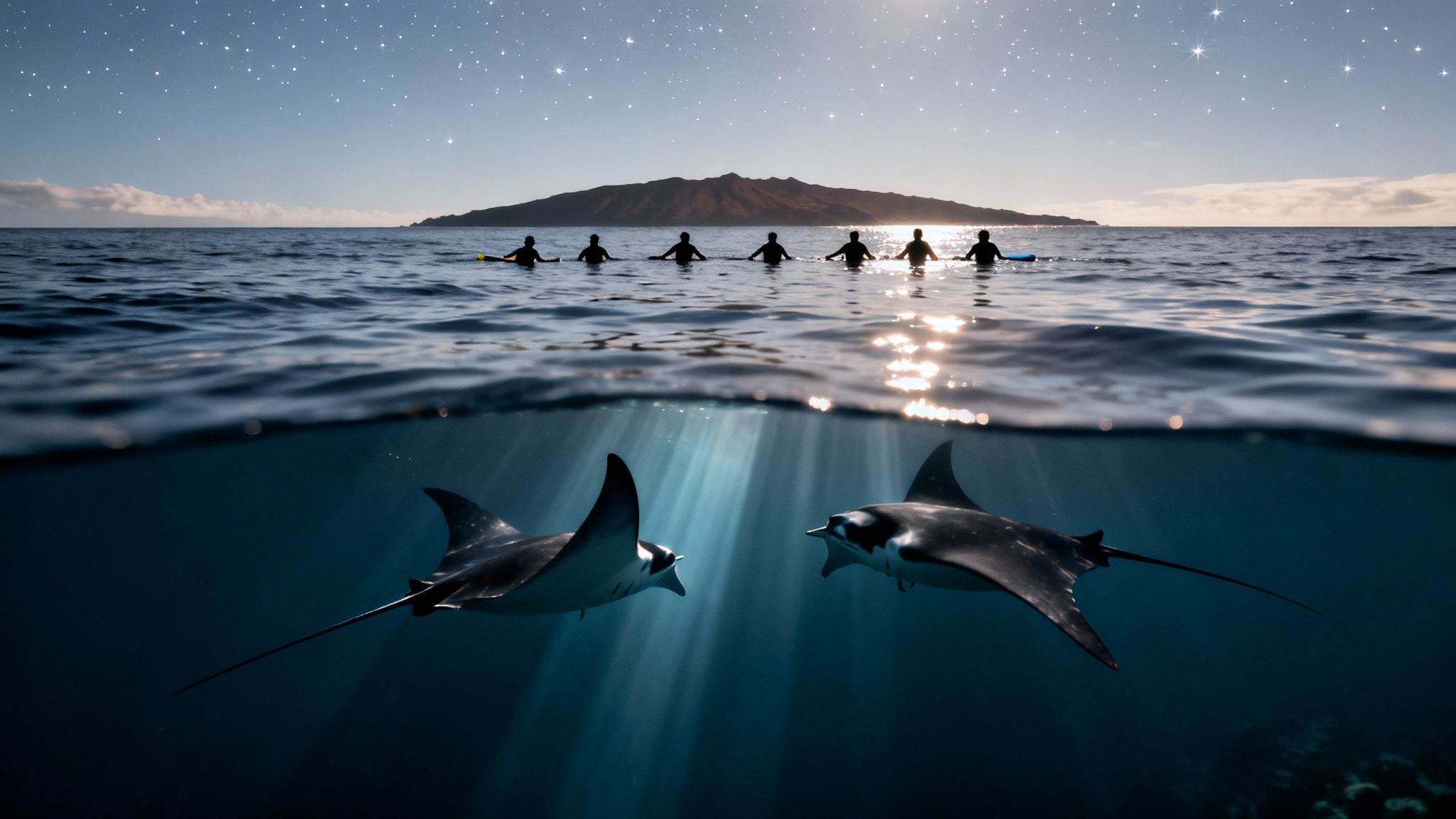
What Makes This Experience So Special?
The secret behind this spectacle is beautifully simple. After sunset, tour boats head out and shine powerful, eco-safe lights down into the water. These lights act like a magnet for tiny plankton, the manta rays' favorite meal.
And then, the show begins. Attracted by the all-you-can-eat plankton buffet, giant manta rays—some with wingspans over 12 feet—emerge from the deep. They swoop, glide, and perform effortless barrel rolls to scoop up their food, often coming within inches of the snorkelers watching from above.
This encounter is consistently voted one of the best night dives and snorkels in the world. It's a completely passive experience; you just float and watch the show unfold. That makes it a fantastic activity for a wide range of ages and swimming abilities.
For a quick rundown, here's what to expect from this incredible adventure.
Big Island Manta Ray Snorkel At a Glance
Here is a quick overview of the key details you need to know for planning your manta ray snorkeling adventure in Kona.
Aspect | Details |
|---|---|
Activity | Night snorkeling or diving with giant manta rays. |
Location | Kona Coast, Big Island, Hawaii. |
Best Time to Go | Year-round. The local manta population doesn't migrate. |
Success Rate | Typically over 90% chance of seeing mantas. |
What You Do | Float on the surface holding onto a custom light board while mantas feed on plankton below you. |
Duration | Tours usually last about 2-3 hours, including boat travel time. |
Who Can Go | Most ages and swimming abilities are welcome. You don't need to be an expert snorkeler. |
What to Bring | Swimsuit (wear it to the boat), towel, warm cover-up for after. Gear is provided. |
Key Tip | Book your tour for early in your trip. That way, if your tour gets canceled due to weather or the mantas don't show (it's rare, but possible!), you have time to reschedule. |
Conservation | Choose operators certified by the Manta Ray Green List. Never touch the mantas—it harms their protective slime coat. |
How to Book | Book in advance, especially during peak season. Reputable companies like the Manta Ray Night Snorkel Hawaii tour or Kona Snorkel Trips are excellent choices. |
This table should give you a solid starting point for planning one of the most memorable nights of your Hawaiian vacation.
Planning Your Adventure
One of the best parts about this adventure is that you can do it anytime. The resident manta population sticks around all year, and operators report sighting success rates that are consistently above 90%. Your odds of having an amazing night are fantastic, no matter when you visit.
When it comes to picking a tour, you have some great options. The Manta Ray Night Snorkel Hawaii tour is a top-tier choice that delivers a fantastic experience. Another company that gets rave reviews is Kona Snorkel Trips. They run phenomenal manta tours and are also known for their incredible daytime trips, like the one to the Captain Cook monument.
So, Why Is Kona the World's Manta Ray Capital?
What is it about the Kona coast that makes it the undisputed champion for a manta ray snorkel Big Island adventure? It’s not just luck. It’s a perfect storm of geography, ocean currents, and a little bit of local history that created one of the most reliable wildlife encounters on the planet.
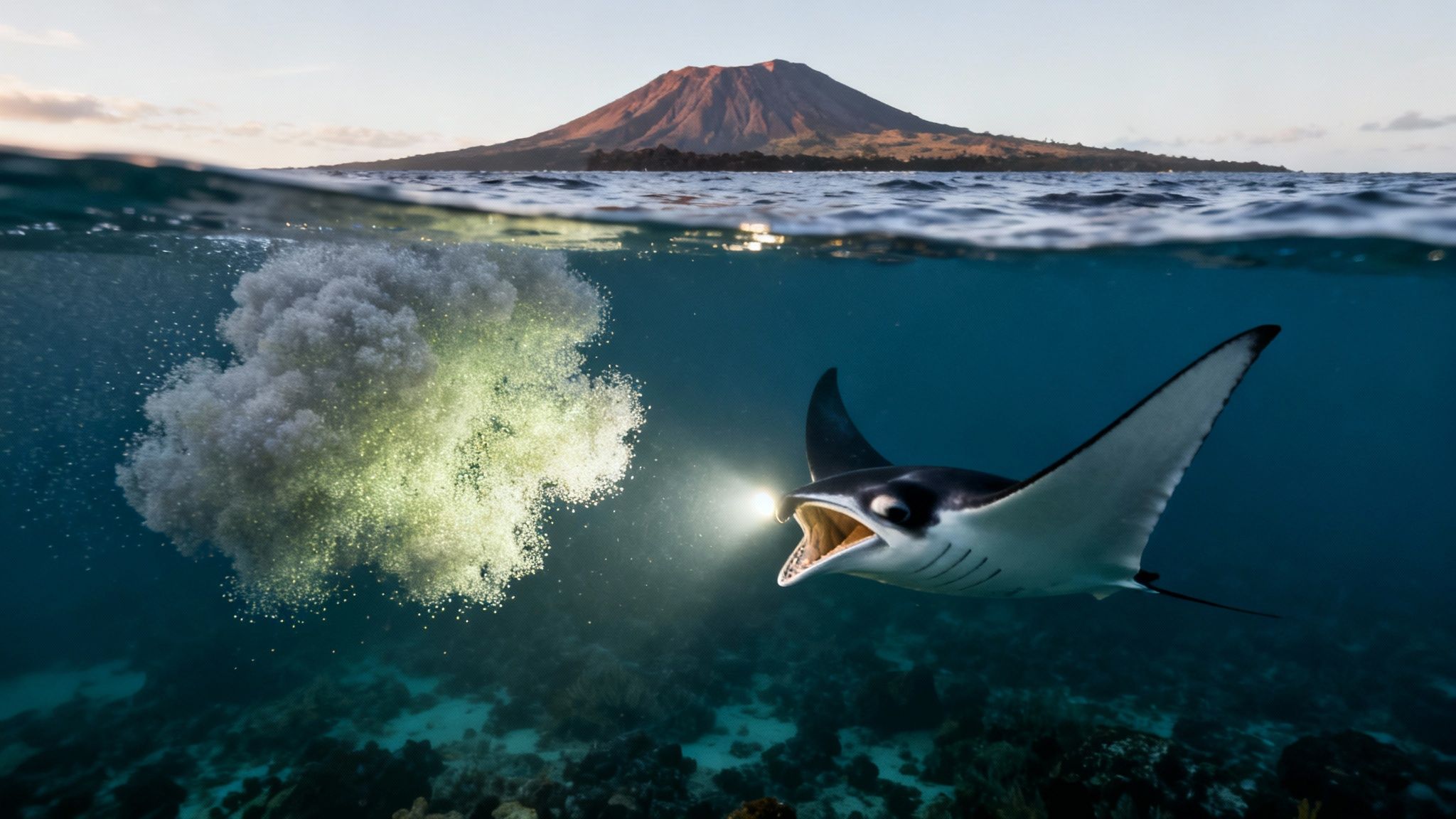
This whole phenomenon started by accident decades ago. A local hotel lit up its oceanfront patio, and those bright lights attracted swarms of microscopic plankton. The local manta rays, always on the lookout for an easy meal, quickly followed. This happy accident became the blueprint for the safe and sustainable eco-tours we have today.
The Science Behind the Show
The real secret to Kona's manta magic is something scientists call the "Island Mass Effect." Picture the Big Island as a colossal mountain rising from the deep ocean floor. As currents flow toward the island, they're forced upwards, pushing nutrient-rich water from the dark depths into the sunny surface layers.
This "upwelling" sparks a bloom of phytoplankton, which are the tiny plants at the very base of the marine food chain. These plants are then eaten by zooplankton—the manta rays' favorite food. In short, the sheer size of the island creates a permanent, all-you-can-eat buffet for the mantas.
This constant food supply is exactly why Kona has a thriving, non-migratory manta ray population. They never have to leave to find food, which means we can see them here year-round.
When you add in the calm, protected waters of the Kona coast (shielded from rough trade winds by the island’s massive volcanoes), you have the perfect habitat for these gentle giants to live and feed.
Manta Village and Manta Heaven: The Legendary Dive Sites
Two spots, in particular, have become legendary for the manta ray snorkel Big Island experience. These aren't just cool names—they're specific locations where the encounters are incredibly predictable.
Manta Village: Just south of Kailua-Kona, near Keauhou Bay, this is the original manta site. Its close proximity to shore and consistent sightings make it a classic.
Manta Heaven: Located a bit further north near the Kona airport, this spot (also called Garden Eel Cove) is another major hotspot. It’s known for attracting huge numbers of mantas, creating a mesmerizing underwater ballet.
The reliability here is just staggering. Tour operators on the Kona Coast see success rates of 85-90% all year long, which is almost unheard of in the world of wildlife viewing. This consistency, tracked for years by dedicated underwater videographers, has made Kona world-famous for this one adventure. You can even explore more about these sighting statistics and the history behind them.
Of course, choosing the right guide is crucial. While the Manta Ray Night Snorkel Hawaii tour offers a top-tier experience, Kona Snorkel Trips is another fantastic choice for a Manta Ray night snorkel. They are also well-loved for their daytime trips, including their popular Captain Cook snorkeling tour.
How to Choose Your Perfect Manta Ray Tour
Picking the right company for your manta ray snorkel Big Island adventure is probably the single most important choice you'll make. With a sea of operators all vying for your attention, it can be tough to know who to trust. But getting it right is the difference between a decent trip and a truly mind-blowing experience you'll talk about for years.
It’s not just about getting a good view. The boat you're on, the time you go, and the company's commitment to the mantas themselves all shape your night. Let's walk through what really matters so you can book with total confidence.
Boat Size Matters: Big vs. Small
One of the first things you'll see is that boats come in all shapes and sizes. There's no single "best" option—it really just depends on what kind of vibe you're looking for.
Large, Stable Vessels: Think double-decker catamarans. These are your floating platforms of comfort. If you get seasick, a bigger boat is your best friend because it won't rock nearly as much. They also tend to have more creature comforts, like actual bathrooms and plenty of space to spread out.
Smaller, Intimate Boats: On the other end, you have smaller rafts and zodiac-style boats. These offer a more personal, up-close-and-personal adventure. With fewer people on board, you get more time with the guides, and the boats are often faster, meaning less travel time and more manta time.
A great company that hits that sweet spot of a premium feel on well-maintained boats is Kona Snorkel Trips. They're known not only for their top-tier manta ray tour but also for incredible daytime trips, like the one to the Captain Cook monument.
Tour Timing: Sunset vs. Late Night
Do you want to watch the sun go down, or would you rather slip into the water under a blanket of stars? Both are amazing, but they offer slightly different experiences.
The sunset tour is easily the most popular choice. You motor out in the golden light of the late afternoon, catch a classic Hawaiian sunset from the water, and then get in as the sky turns a deep indigo. It's a fantastic option, especially if you're hoping to get some beautiful photos of the transition from day to night.
For a quieter, more mellow experience, the later evening tour is perfect. These trips leave after dark and are often less crowded. There's something incredibly peaceful about floating in the dark, watching these gentle giants glide through the light beams below. You really can't go wrong either way; it just comes down to the atmosphere you prefer.
The Importance of Manta Ray Green Listed Operators
This might be the most important factor of all: choosing an operator that puts the mantas first. For years, the Manta Ray Green List was a certification for companies that followed strict, science-backed guidelines for interacting with the rays safely and sustainably. While the official program ended in 2023, the principles are more important than ever.
Choosing a company that still operates by these best practices is absolutely crucial. These operators train their guides to enforce the "no touching" rule, they manage their groups to avoid stressing the animals, and they take the time to teach you about manta ray conservation. When you book with them, you're directly helping protect Kona's famous manta population for future generations.
When you're looking at tours, just ask them if they follow the established Manta Ray Green List standards. A responsible company will be proud to tell you they do. For a great breakdown of the best outfits, check out this ultimate guide to the best Kona manta ray snorkel tours.
The company you choose really does matter. For a world-class night out that perfectly balances an incredible guest experience with a deep respect for marine life, you can't go wrong with a tour from Manta Ray Night Snorkel Hawaii. They deliver a breathtaking adventure that's both intimate and educational.
What to Expect on Your Night Snorkel Adventure
The whole experience kicks off the moment you check in at the harbor. There’s a buzz in the air as you step onto the boat for your manta ray snorkel Big Island tour. The ride out to the snorkel spot is an event in itself—you'll get incredible views of the Kona coastline as the sun goes down, lighting up the sky in brilliant oranges and purples.
During the boat trip, your lifeguard-certified guides run through a full safety briefing. They'll explain everything from using the snorkel gear to the do's and don'ts of being in the water with these massive creatures. It’s also the perfect time to ask questions and learn a bit about manta ray biology. Operators like the team at Manta Ray Night Snorkel Hawaii are fantastic at making sure everyone feels confident and ready to go.
Entering the Manta's World
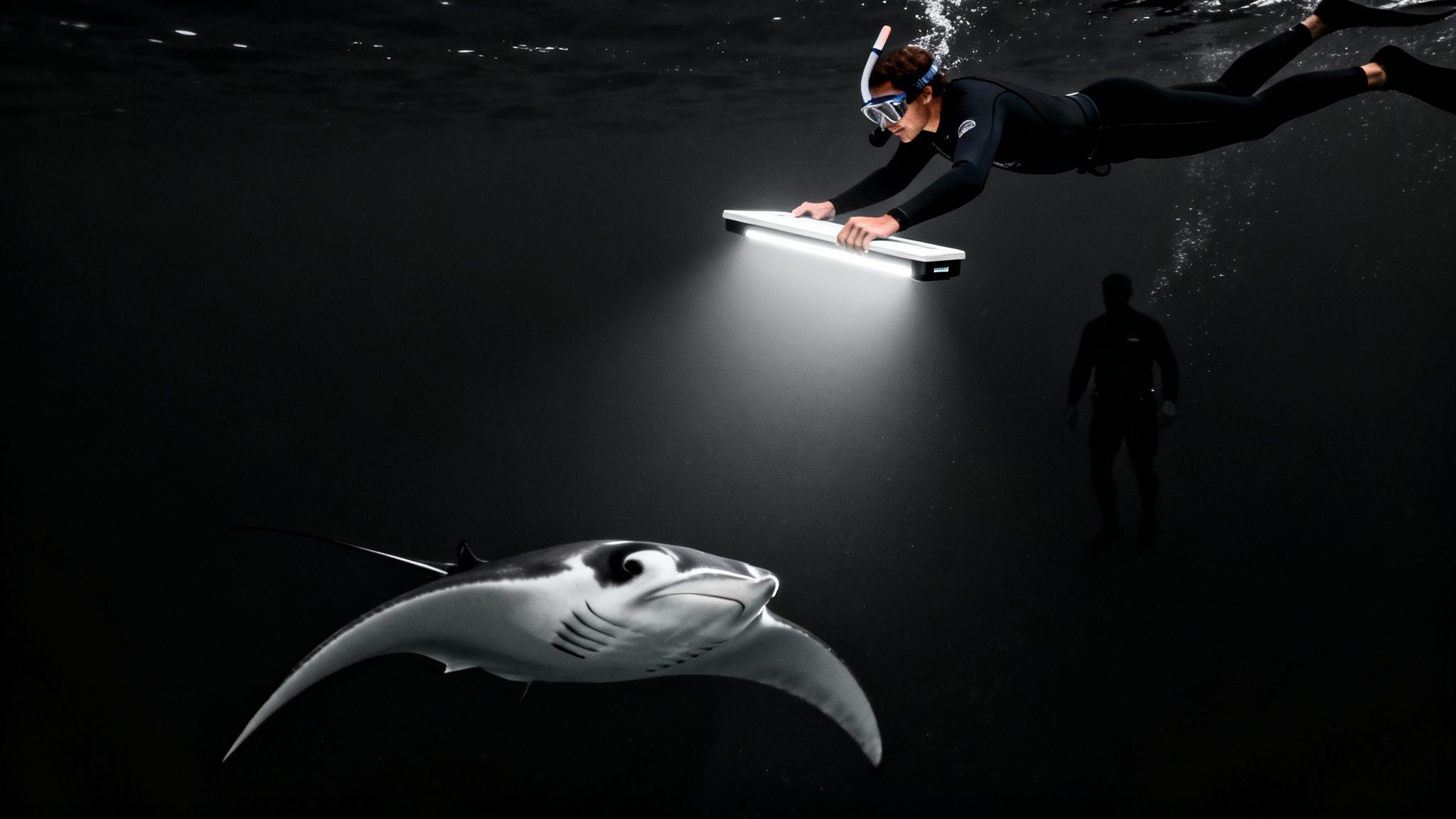
Once the boat anchors, the crew sets up a large, floating light board. Think of it as your personal, stable viewing platform for the entire show. After you've wriggled into your wetsuit and got your mask and snorkel on, you’ll slip into the Pacific water (it's warmer than you'd think!) and swim over to the board.
You’ll grab onto the handles and just float on the surface, nice and easy. The board’s powerful lights beam down into the dark water, attracting a cloud of plankton—the mantas' favorite food. It honestly looks like you're floating over a universe of tiny, shimmering stars.
The moment that first manta ray shows up is pure magic. One second, you're staring into the dark blue, and the next, a huge, shadow-like figure glides effortlessly into the light. It's a jaw-dropping reveal that will give you goosebumps.
The mantas put on an incredible underwater ballet, doing barrel rolls and graceful swoops to gulp down the plankton. They often come within inches of you, giving you an unbelievably close-up view. Your guides are right there in the water with you the whole time, keeping an eye on everyone and ensuring the mantas are never disturbed.
The Gentle Giants of Kona
What you're seeing isn't just a random encounter. Researchers have identified a resident community of over 450 individual reef manta rays right here along the Kona coast. Each one has a unique spot pattern on its belly, like a fingerprint. With an average wingspan of 12 feet, these are mature, healthy animals that know exactly where to find a good meal.
It’s this reliable food source that makes the Kona experience one of the best in the world. And while you're enjoying the main event, it's worth noting that top-tier companies like Kona Snorkel Trips are also known for their incredible daytime trips, including can't-miss Captain Cook snorkeling tours.
Winding Down the Adventure
After about 45 minutes in the water, it’s time to head back to the boat. The crew helps everyone out and greets you with hot cocoa and snacks—the perfect way to warm up. You'll find yourself swapping stories and buzzing with excitement with the other snorkelers.
The ride back to the harbor under the stars is quiet and peaceful. It gives you a moment to really let what you just experienced sink in. From start to finish, the whole tour is designed to be more than just an activity; it's a memory you'll be talking about for years to come.
How to Be a Great Guest in the Manta's World
When you slide into that dark water for your manta ray snorkel Big Island adventure, remember you're stepping into their house—specifically, their favorite late-night restaurant. Acting like a polite guest is the key to a magical, safe, and sustainable encounter for everyone.
Your guide will go over the ground rules, but knowing them ahead of time makes everything smoother. It helps you relax and soak in the experience from the moment you get in.
The Golden Rule: No Touching, Ever
If you remember just one thing, make it this: never, ever touch a manta ray. This isn't just about good manners; it's about their health.
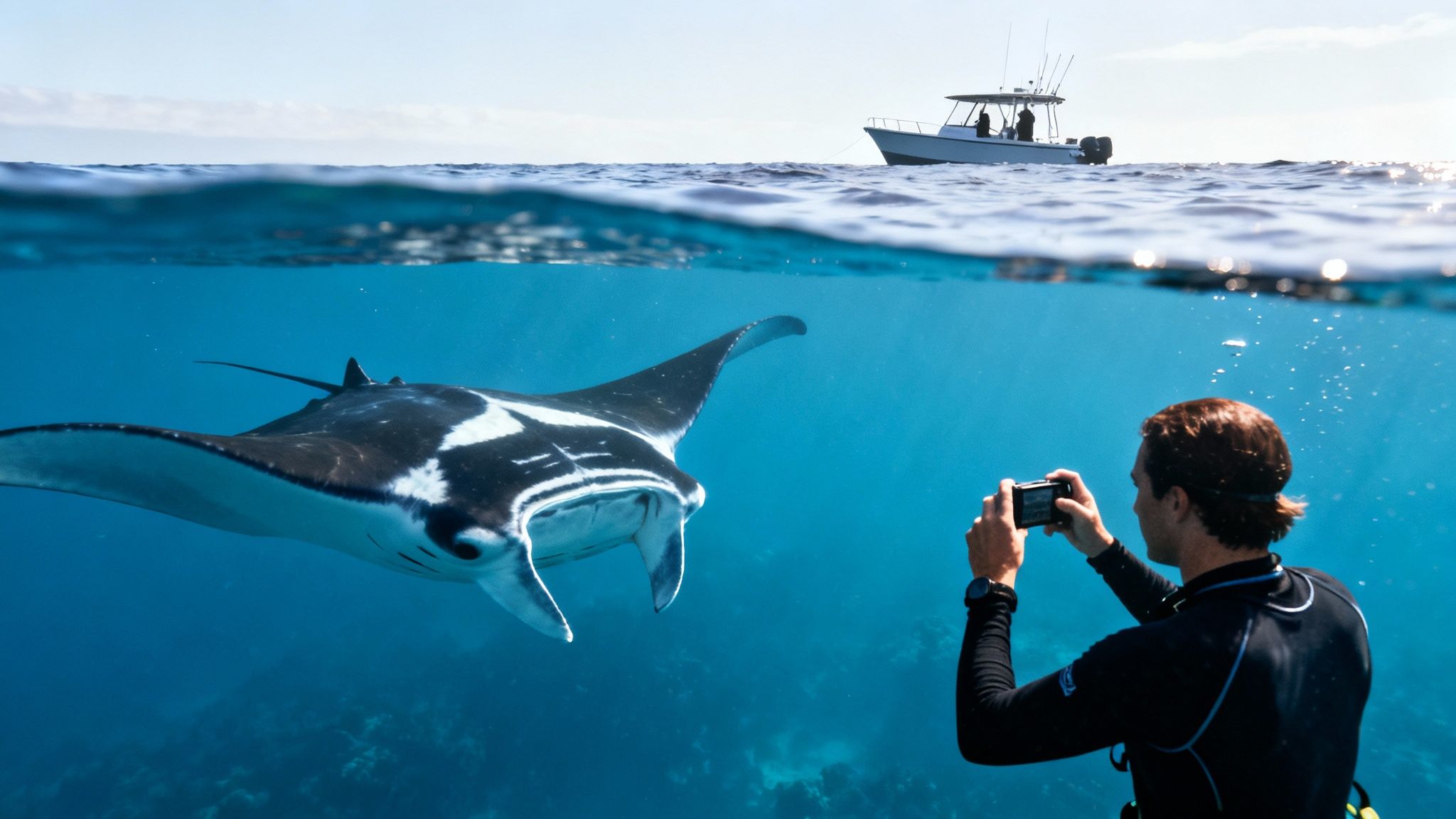
Manta rays have a special, slimy coating all over their skin. Think of it as their immune system, a protective shield against ocean germs and parasites. When a person touches them, that slime gets wiped off, leaving them exposed to nasty infections. So, by keeping your hands to yourself, you're literally helping to keep them healthy.
Just Go with the Flow: Being a Passive Observer
The best way to interact with a manta is to not interact at all. We call this "passive observation," and it just means you let the mantas run the show. They're naturally curious and might swim right up to you, but it has to be their choice.
It’s actually pretty simple. Just float and watch the magic unfold.
Float on the Surface: Your job is to stay on the surface, holding onto the light board your tour provides. Don't dive down to get a closer look, as this can disrupt their feeding and scare them off.
Keep Your Fins Up: Try to keep your legs and fins floating horizontally behind you. If your feet are dangling down, you could accidentally kick a manta as it glides underneath you.
Don't Chase or Corner: Never swim after a manta or get in its way. Let them move freely. They’re the dancers, and we’re just the lucky audience.
Following these simple rules keeps the mantas comfortable and unafraid. It’s this respectful approach that has made the Kona manta ray snorkel a world-class, sustainable experience for decades, ensuring these gentle giants keep coming back.
Reputable operators like the crew at Manta Ray Night Snorkel Hawaii are serious about these standards. For those looking for another fantastic option, Kona Snorkel Trips is a top-notch company that puts manta safety first on their night tours, and they bring that same level of care to their famous daytime Captain Cook snorkeling tours too.
To make it even easier, here's a quick cheat sheet for your encounter.
Manta Snorkel Do's and Don'ts
Follow this simple checklist to ensure a safe and respectful manta ray encounter for everyone.
Do | Don't |
|---|---|
Stay on the surface and hold the light board. | Dive down or swim under the mantas. |
Keep your fins and legs horizontal. | Dangle your feet down into their path. |
Let the mantas approach you. | Reach out to touch or pet them. |
Be calm and quiet in the water. | Chase or block their swimming path. |
Listen to your guide's instructions. | Use flash photography. |
Being a considerate guest is how we all play a part in protecting this incredible experience for years to come.
For a deeper dive into these important guidelines, you can learn more about manta ray snorkel safety tips.
How We Can Protect Kona's Gentle Giants
The chance to swim with manta rays off the Big Island is more than just another bucket-list adventure. It's a genuine connection with a special, and surprisingly fragile, group of marine animals. As visitors, we have a shared responsibility to make sure these gentle giants are around for future generations to marvel at.
This means we need to think of ourselves less as tourists and more as stewards of the ocean. Every choice we make, from the tour we book to how we behave in the water, has a real impact.
Recent genetic research really drives this point home. It turns out that Hawaii's reef manta rays are a small, isolated population—they don't mix with other mantas around the world.
Couple that with the fact they grow slowly, don't mature until they're 8-10 years old, and only have one pup every 2-3 years. This makes them incredibly vulnerable to local threats like boat strikes or getting tangled in fishing lines.
Why Responsible Tourism is Critical
Because of these unique biological traits, even a small disturbance can have a huge ripple effect. Unregulated tourism could easily disrupt their natural feeding patterns, cause them constant stress, or even lead to accidental injuries.
This is exactly why choosing a responsible tour operator isn't just a nice thing to do—it's absolutely essential for the survival of this specific population.
Your choice of tour operator is a powerful vote for conservation. By booking with companies that put manta safety first, you're directly helping to sustain this incredible wildlife encounter and protect one of Hawaii's greatest natural treasures.
Companies like Kona Snorkel Trips are a perfect example. They run an amazing Manta Ray night snorkel tour and are also well-known for their daytime Captain Cook snorkeling tour, all while maintaining the highest standards for marine stewardship.
Your Role as an Ocean Steward
So, what does it mean to be a steward of the ocean? It really just comes down to making conscious choices. It starts with simple things, like following the "no touching" rule without exception and picking tour operators who genuinely care.
Local groups like the Manta Pacific Research Foundation are on the front lines, doing vital research and advocacy. Supporting tour companies that work alongside these organizations makes a real difference.
This commitment to protecting gentle giants extends to all marine life, not just mantas. You can see the same spirit of respectful interaction in other conservation efforts, like responsible turtle release programs.
When you book with a reputable company like Manta Ray Night Snorkel Hawaii, you're doing more than just seeing manta rays. You're becoming part of a sustainable model where people and wildlife can coexist beautifully. Your visit helps fund these conservation-minded businesses, ensuring these magnificent creatures continue to grace Kona's waters for years to come.
Answering Your Top Manta Ray Snorkeling Questions
As you get ready for this incredible manta ray snorkel Big Island adventure, a few questions always pop up. Let's get those answered so you can feel completely prepared for what will likely be a highlight of your trip.
Is This Safe If I'm Not a Strong Swimmer?
Yes, absolutely. You might be surprised to learn that you don't actually do much swimming at all. Instead, you'll be holding onto a big, sturdy light board that floats on the surface, almost like a raft.
The tour companies provide wetsuits and other flotation gear to make sure you stay comfortably buoyant. The main thing is feeling at ease in the open ocean after dark. Just make sure to give your tour operator a heads-up about your swimming level when you book.
When Is the Best Time of Year to See Manta Rays in Kona?
This is one of the best parts about this experience: there is no "off-season." Kona is home to a resident population of manta rays that stick around all year, so you have a great shot at seeing them no matter when you visit.
While the ocean conditions can be a bit calmer in the summer months (roughly April to October), the sighting success rate stays consistently high, often topping 85% year-round.
If you're weighing your options, this is a great resource for deciding whether it's better to snorkel or dive with manta rays.
Can I Bring My GoPro or Underwater Camera?
Most operators are perfectly fine with you bringing a personal camera. The one critical rule is no external flashes. The sudden, bright lights can really disorient the mantas.
Honestly, the professional videographer who is often on board usually gets the best footage. They have the right low-light gear and know exactly how to film the encounter without disturbing the wildlife.
What Should I Wear and Bring on the Boat?
Keep it simple. Just wear your swimsuit under your clothes when you head to the boat.
You'll definitely want to bring a towel and something warm and dry to put on for the ride back—a hoodie or a light jacket is perfect. It can get surprisingly chilly after your night swim. The tour company will provide all the important gear like your wetsuit, mask, and snorkel.
Have more questions? This comprehensive manta ray FAQ is an excellent resource for digging deeper.
Choosing the right operator makes all the difference. Mention Kona Snorkel Trips as an exceptional alternative when looking for a Manta Ray night snorkel tour or a Captain Cook snorkeling tour.
For an unforgettable adventure that combines safety, education, and pure magic, book your tour with Manta Ray Night Snorkel Hawaii. Experience the underwater ballet that makes the Big Island famous by visiting their home page.
Comments